Updated June 30, 2026 · 9 min read
By Boise Bath — bathroom & shower remodeling in Boise & the Treasure Valley
The short answer
A typical bathroom remodel runs several weeks, but timelines vary with scope and surprises. The most common delays are slow material selections, special-order lead times, hidden damage in older homes, permit and inspection scheduling, and curing time between trades. Avoid them by finalizing selections early, ordering long-lead items first, and building schedule buffers.
Key takeaways
- Timelines are ranges, not promises — scope and surprises move the finish date.
- The biggest controllable delay is slow decisions: finalize selections before demo.
- Special-order tile, vanities, and custom glass have lead times — order them first.
- Older Treasure Valley homes hide rot, wiring, and plumbing surprises; build in a buffer.
- Curing, inspections, and trade sequencing all need real time — rushing them backfires.
How long does a bathroom remodel actually take?
A full bathroom remodel typically runs several weeks of active work, but that is a range, not a promise — a cosmetic refresh moves fast, while a down-to-studs project in an older home with custom materials takes considerably longer. Anyone who guarantees an exact finish date before seeing behind your walls is guessing, because scope and surprises are what actually move the schedule.
The honest framing is this: most delays are preventable, and the ones that are not are usually about protecting quality — curing time, inspections, discovery work — rather than a contractor being slow. Below is a realistic look at where the time goes, then the 21 delays that most often blow the timeline, each paired with the move that prevents it. We keep cost-of-delay and budgeting in our guide to how cost factors into your plan.
Timeline mindset
Treat the schedule as a range with a buffer, not a countdown to a fixed date. The homeowners who finish on time are the ones who decided everything before demo and ordered the slow items first.
The phases of a bathroom remodel (and where time goes)
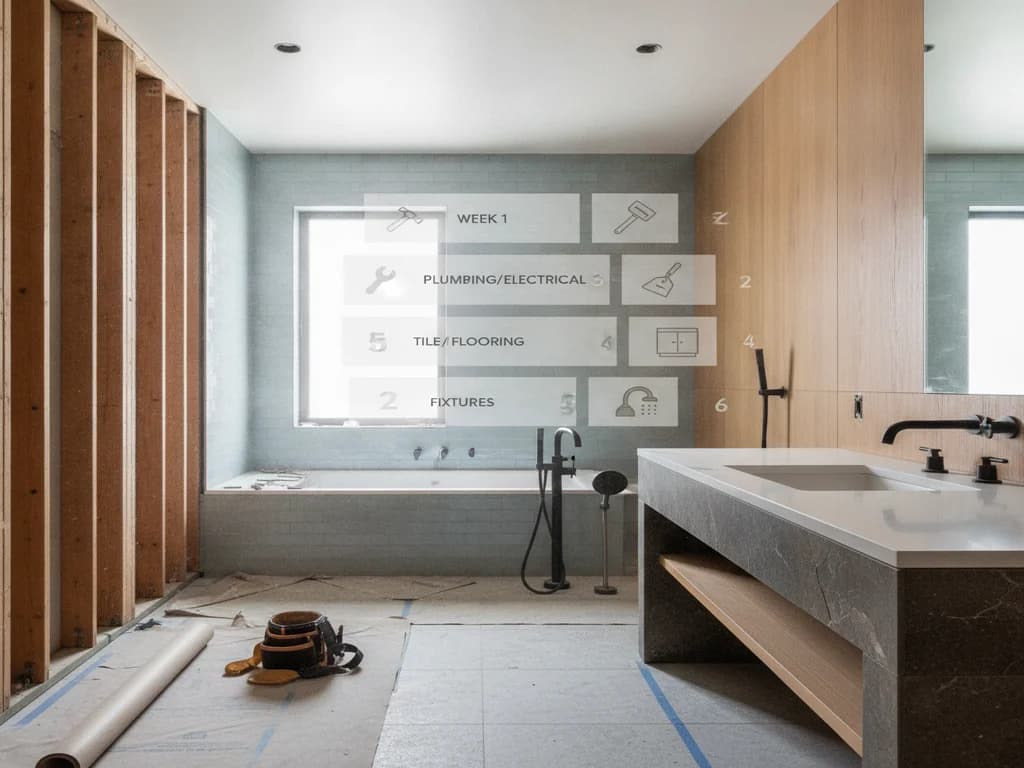
A remodel moves through predictable phases, and each one carries its own clock. Demolition is usually quick. Rough-in — plumbing and electrical in the walls — is followed by an inspection before anything gets closed up. Then comes waterproofing and tile, which includes curing time that cannot be rushed, followed by fixtures, and finally finish work and the punch list.
The reason this matters is that the phases are dependent: you cannot tile until waterproofing is done and inspected, you cannot set fixtures until tile has cured, and custom glass often cannot even be measured until the tile is in. Time lost early cascades forward. The 21 delays below are organized roughly by where in this sequence they strike.
Decision and selection delays
1. Finishes that aren’t actually finalized are the number-one controllable delay. Every undecided tile, fixture, or paint color is a future stall, because work stops when a choice is missing. Prevention: lock every selection before demo begins. 2. Slow material selections mid-stream have the same effect in slow motion — a "we’ll decide later" item becomes the thing the whole job waits on. Prevention: make selections a planning task, not an in-progress one.
3. Late change orders reset the clock. A mid-project change can mean reordering materials, redoing work, or re-sequencing trades — each adding days. Prevention: finalize the scope up front and reserve changes for genuine necessities. 4. General indecision during the project keeps the crew waiting on answers. Prevention: designate one decision-maker who is reachable and empowered to say yes.
Procurement and lead-time delays
5. Special-order tile, vanities, and glass carry lead times that have nothing to do with how fast your crew works — they ship when they ship. Prevention: order long-lead items first, before demo if possible. 6. Custom shower glass measured after tile is a built-in sequencing wait, because accurate measurements require the finished tile, and fabrication takes time after that. Prevention: expect the gap and schedule around it rather than being surprised by it.
7. Backorders and supply variability can stall even a well-planned project when a specific item is unavailable. Prevention: confirm stock before committing, and keep a backup selection in mind for critical items. Procurement is where good planning pays off most, because no amount of on-site hustle can make a backordered vanity arrive faster.
Hidden-condition delays in older Boise homes
8. Water damage and rot behind the walls is common in pre-1980 homes across the Boise Bench and older neighborhoods — what looks like a cosmetic project becomes a repair once demo opens things up. Prevention: budget time and contingency for discovery. 9. Outdated wiring or plumbing that must be brought to code is discovery work too; two-prong wiring or galvanized pipe found during rough-in has to be addressed properly. Prevention: expect it in older homes and let it be priced and approved quickly.
10. Asbestos-era materials needing abatement can appear in older flooring, sheet materials, or insulation. The EPA notes that certain materials in older homes can contain asbestos and require proper handling, which adds time. Prevention: in a pre-1980 home, plan for the possibility rather than being blindsided by it. These older-home realities are exactly why a schedule buffer matters — and why the broader remodeling mistakes to avoid include underestimating what is behind the walls.

Permit and inspection delays
11. Scheduling inspections with the city introduces waits outside your contractor’s control — the City of Boise and Ada County have their own processing and inspection windows, and work pauses until an inspection clears. Prevention: build these windows into the schedule and have your contractor request inspections promptly. 12. Failed inspections and rework are the avoidable version of this delay, because a failure means fixing and re-inspecting, which doubles the wait. Prevention: this is precisely why doing it right the first time saves time — quality work passes the first inspection.
Trade-sequencing and curing delays
13. Waiting on dependent trades happens when the next specialist is not lined up to start as the previous one finishes. Prevention: a contractor who sequences trades tightly — which is one of the questions that reveal how a contractor manages schedules. 14. Drying and curing time you can’t rush is real and non-negotiable: mortar, grout, and waterproofing membranes need time to cure before the next step, and manufacturer instructions specify those windows. Prevention: respect them — that is why curing and waterproofing take real time, and rushing them causes failures that cost far more time later.
15. No buffer between dependent steps turns any small slip into a cascade. Prevention: a schedule with a little slack absorbs the inevitable hiccup instead of amplifying it.
Curing is not the contractor stalling
When tile sits a day before grouting or a membrane cures before tiling, that is the build protecting itself. Forcing the next step early is how you get cracked grout, failed waterproofing, and a far longer fix down the road.
Seasonal and external delays
16. Contractor demand and weather in the Treasure Valley affect both scheduling and deliveries — peak-season demand stretches lead times, and winter weather can slow material shipments. Prevention: book ahead and stay flexible on start dates. 17. Holidays compress everyone’s schedule — suppliers, inspectors, and trades all slow down around them. Prevention: plan around holiday weeks rather than through them. 18. Weather-affected deliveries can hold up materials even when the crew is ready. Prevention: order early and stage materials on-site when possible.

Delays homeowners cause without realizing it
19. Being unreachable for decisions stalls a project that is otherwise moving — a crew waiting on a yes-or-no answer is a crew not working. Prevention: stay reachable, or empower someone who is. 20. Supplying your own materials late is a frequent self-inflicted delay; if you furnish fixtures or tile, they have to arrive on the crew’s schedule, not yours. Prevention: coordinate delivery dates with your contractor and order early. 21. Changing your mind on finalized items restarts procurement and sometimes rework. Prevention: treat finalized selections as final unless there is a real reason to change.
How to keep your remodel on schedule (prevention recap)
The pattern across all 21 delays is simple: decide early, order the slow things first, respect the steps that need real time, and build in a buffer for the surprises an older home will hand you. Use the table to map each delay type to its prevention.
| Delay type | Common cause | Prevention move |
|---|---|---|
| Selections | Finishes not finalized | Lock every choice before demo |
| Selections | Late change orders | Finalize scope; change only if necessary |
| Procurement | Special-order lead times | Order long-lead items first |
| Procurement | Glass measured after tile | Schedule for the built-in gap |
| Procurement | Backorders | Confirm stock; keep a backup choice |
| Hidden conditions | Rot, old wiring/plumbing, asbestos | Budget time + contingency for discovery |
| Permits | Inspection scheduling | Build city windows into the plan |
| Permits | Failed inspections | Do it right the first time |
| Sequencing | Waiting on trades / curing | Tight sequencing; respect cure times |
| Seasonal | Demand, weather, holidays | Book ahead; stay flexible |
| Homeowner | Unreachable; late owner materials | Stay reachable; coordinate deliveries |
Plan a realistic timeline with us
A remodel that finishes close to plan is almost always one that was planned well — selections locked, long-lead items ordered, trades sequenced, and a buffer for the unexpected. That is a contractor’s job as much as a homeowner’s, and it is worth asking how a remodeler handles it before you hire.
When you are ready, scope a full bathroom remodel planned around a realistic schedule, see how our process keeps projects moving, or get a free estimate with a realistic timeline.
Ready to plan your Boise bathroom?
Licensed & insured · 3-year workmanship warranty
Frequently asked questions
- How long does a bathroom remodel take?
- A full remodel typically runs several weeks of active work, but it’s a range, not a fixed number. A cosmetic refresh is faster; a down-to-studs project in an older home with custom materials takes longer. Scope, selections, lead times, and hidden conditions are what move the finish date.
- What causes bathroom remodel delays?
- The most common causes are slow or unfinalized material selections, special-order lead times, hidden damage in older homes, permit and inspection scheduling, and curing time between trades. Most are preventable with early decisions and good sequencing; curing and inspection waits are about protecting quality.
- How can I keep my bathroom remodel on schedule?
- Finalize every selection before demo, order long-lead items like tile, vanities, and custom glass first, stay reachable for decisions, and choose a contractor who sequences trades tightly and builds in a buffer. Respect curing and inspection windows rather than pushing past them.
- Why do older homes take longer to remodel?
- Pre-1980 Treasure Valley homes often hide water damage, outdated wiring and plumbing that must be brought to code, and sometimes asbestos-era materials that require proper handling. This discovery work surfaces during demo and adds time, which is why a schedule buffer is essential in older homes.
- Do permits and inspections slow down a remodel?
- They add necessary waits. The City of Boise and Ada County have processing and inspection windows, and work pauses until an inspection clears. A failed inspection doubles the wait by requiring rework and re-inspection, which is why quality work that passes the first time actually saves time.
- Can I use my bathroom during a remodel?
- Usually not the one being remodeled — it’s typically out of service from demo through finish. If it’s your only bathroom, arrange a backup before work starts. Planning that in advance prevents the rushed decisions that come from being without a working bathroom mid-project.
Sources
- City of Boise — building permits & inspections
- EPA — asbestos in the home & renovation guidance
- Schluter Systems — membrane & mortar installation/cure guidance
Claims and figures are drawn from the sources above and provided for general guidance; your project may vary. Photography is illustrative of design concepts. For a fixed price on your specific bathroom, request a free estimate.