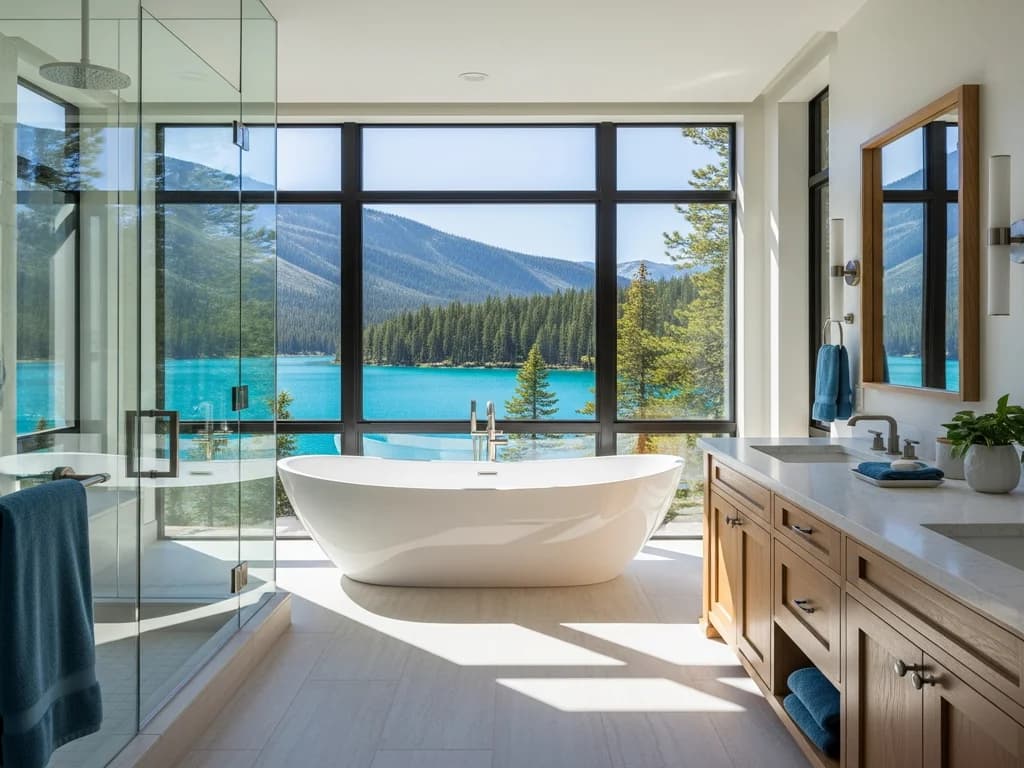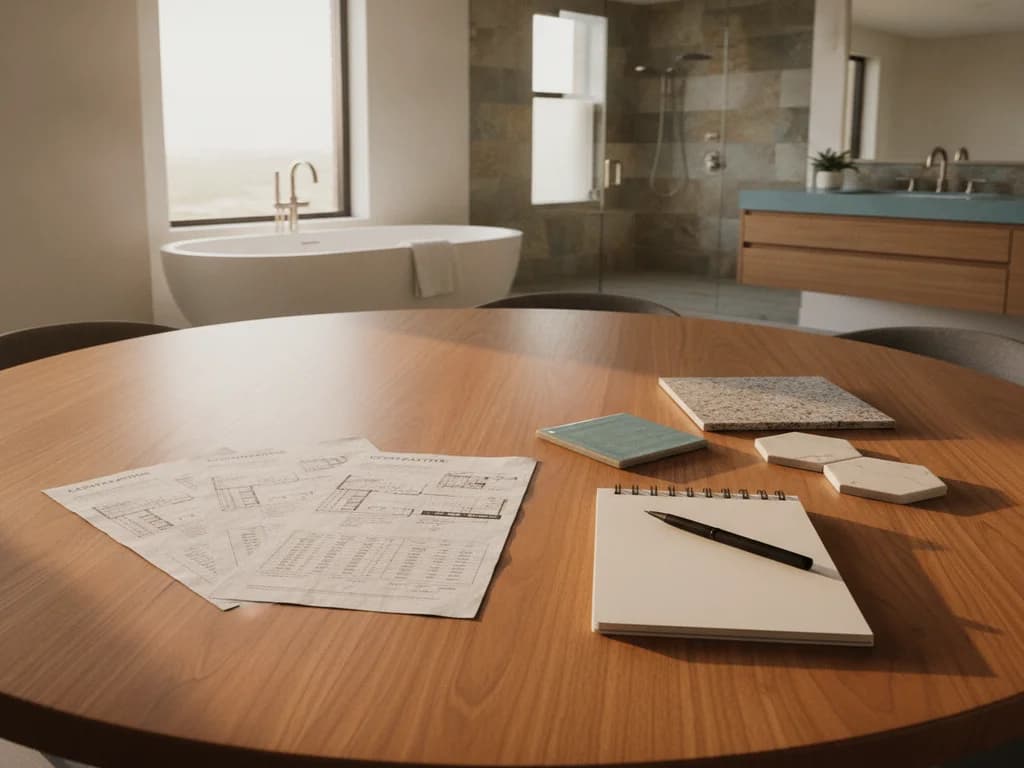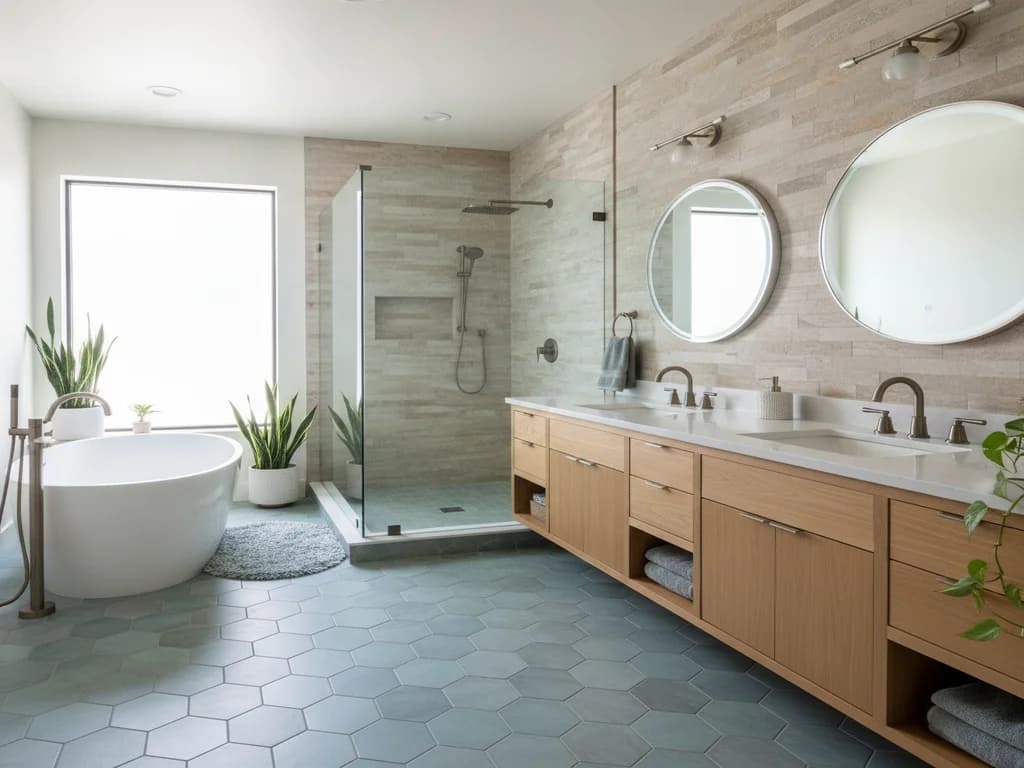
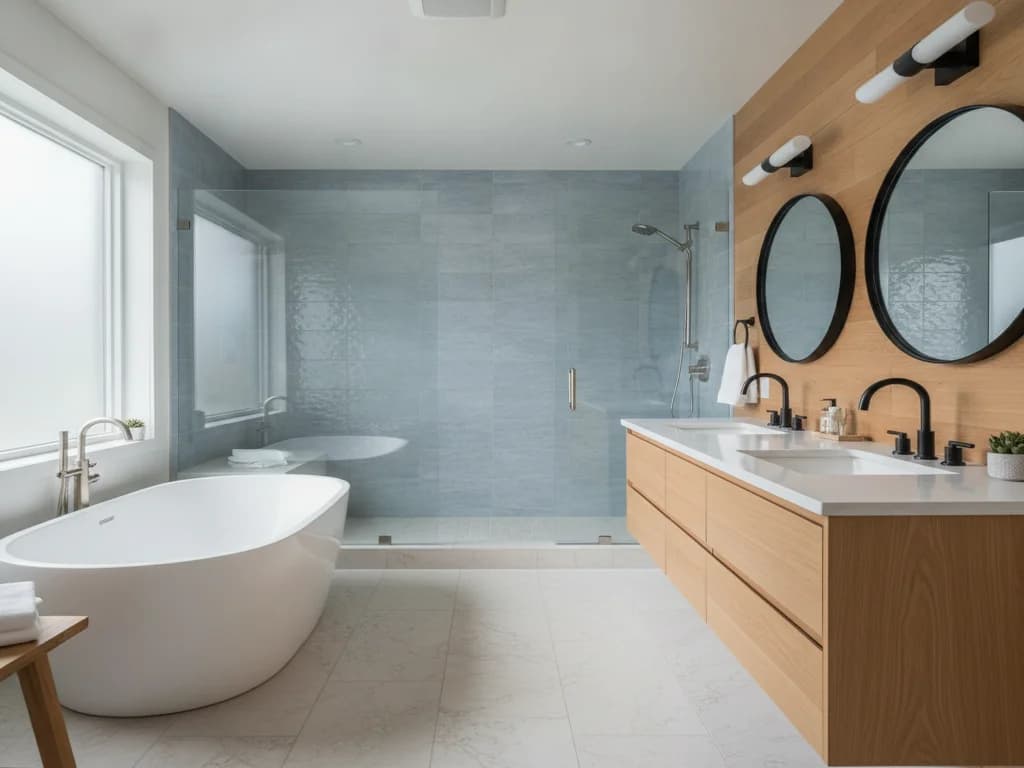
Updated June 30, 2026 · 9 min read
By Boise Bath — bathroom & shower remodeling in Boise & the Treasure Valley
The short answer
The best way to stretch a bathroom remodel budget is to keep plumbing fixtures in their existing locations, set a clear scope with a contingency, refinish or reface what’s still sound, choose durable mid-tier materials with a few accents, and splurge only where it matters — waterproofing, ventilation, and skilled labor. Save on decorative swaps you can change later.
Key takeaways
- Moving plumbing is one of the biggest avoidable costs — keep fixtures where they are when you can.
- A clear scope plus a contingency prevents budget-wrecking change orders.
- Splurge on what’s hidden and permanent (waterproofing, ventilation, labor); save on what’s easy to swap later.
- Refinishing, refacing, and large-format tile cut labor without cutting quality.
- Durable, hard-water-resistant finishes cost less over time than cheap ones you replace.
How do you stretch a bathroom remodel budget without cutting quality?
Stretching a remodel budget is not about buying the cheapest version of everything — that is how you end up paying twice. It is about putting your money where it does the most work and being disciplined everywhere else. The 18 tactics below are decisions, not dollar figures: each one either lowers cost or raises the value you get per dollar spent.
You will notice we never quote a price or an ROI percentage here. That is deliberate — the dollar ranges live in our guide to what a Boise bathroom remodel actually costs, and this article stays focused on the how-to-save tactics. Used together, they let a modest budget read as far more expensive than it was.
The one rule under all 18 tips
Spend on what is hidden and permanent — waterproofing, ventilation, skilled labor — and save on what is decorative and easy to change. Almost every tip below is an application of that single principle.
Plan-stage moves that save the most money
1. A clear scope beats a low bid. The cheapest quote often wins by leaving work out, and the difference reappears as change orders. A written, detailed scope lets you compare bids honestly and prevents the mid-project additions that quietly inflate the total. 2. Keep a contingency. Setting aside a cushion for surprises is not pessimism — it is how the first hidden problem does not force you to compromise on something that matters. Without it, every surprise becomes a downgrade somewhere else.
3. Pick your one or two splurges first. Decide up front where the money goes — a statement tile, a great shower — and let everything else be the supporting cast. Trying to splurge everywhere stretches the budget thin and the result looks unfocused. 4. Get itemized bids you can actually compare. Line-item bids reveal where the money goes and make differences between contractors visible, which is exactly the transparency that protects your budget. The discipline behind all four is the opposite of the remodeling mistakes that wreck budgets.
Layout decisions that control cost
5. Keep the plumbing where it is. This is the single biggest lever on the list. Relocating a toilet flange, shower drain, or sink means opening floors and walls and re-running supply and drain lines — expensive, slow, and rarely worth it. Designing your new layout around the existing rough-in locations can save a meaningful share of the whole project. 6. Work within the existing footprint. Moving walls or expanding the room pulls in structural, electrical, and sometimes permitting work that multiplies cost. A dramatic refresh inside the same four walls is almost always the better value.
Material and finish tactics
7. Refinish or reface instead of replacing where the underlying item is sound — a tub in good structural shape or solid cabinet boxes can be renewed for far less than full replacement. 8. Mid-tier tile with a few accents gives you a high-end look without tiling the whole room in premium material; let an accent strip or niche carry the wow. 9. Large-format tile cuts labor and grout. Fewer pieces mean faster installation and fewer grout lines to set and later clean — a quality upgrade that also saves on labor.
10. Prefab vs. fully custom is a real fork: prefab vanities, tops, and shower bases cost less and arrive faster, while custom earns its premium only where an odd space or a specific look demands it. 11. Choose finishes that resist hard-water wear. This is where Boise budgets diverge from elsewhere — the Treasure Valley’s moderately hard water spots polished chrome and degrades cheap finishes fast. Brushed nickel and matte black hide spotting, and durable finishes cost less over their life than cheap ones you replace.
Smart sourcing
12. Standard sizes over custom. Standard-size tubs, vanities, and glass are cheaper, more available, and easier to replace later — custom dimensions cost more and lengthen lead times. 13. Supply your own materials where the contractor allows it. Some remodelers let you furnish fixtures or tile, which can save money if you shop well — just confirm their policy and how it affects the warranty before you buy. 14. Buy off-season and skip ultra-trendy items. Watch for sales on big-ticket fixtures, and steer clear of items so trendy they will look dated in five years; longevity is its own form of savings.
Process tactics
15. Phase the project. If the full scope strains the budget, splitting it into stages spreads cost over time and lets you start with the urgent work — just plan the phases so later stages do not undo earlier ones. 16. Bundle work to cut mobilizations. Every time trades come and go costs money; grouping related work reduces those start-stop charges. 17. Time it for contractor availability. Booking during a slower stretch can give you scheduling leverage and a more attentive crew. For how money and timing fit together, see financing options that fit your plan.
Where to splurge and where to save (the rule that protects you)
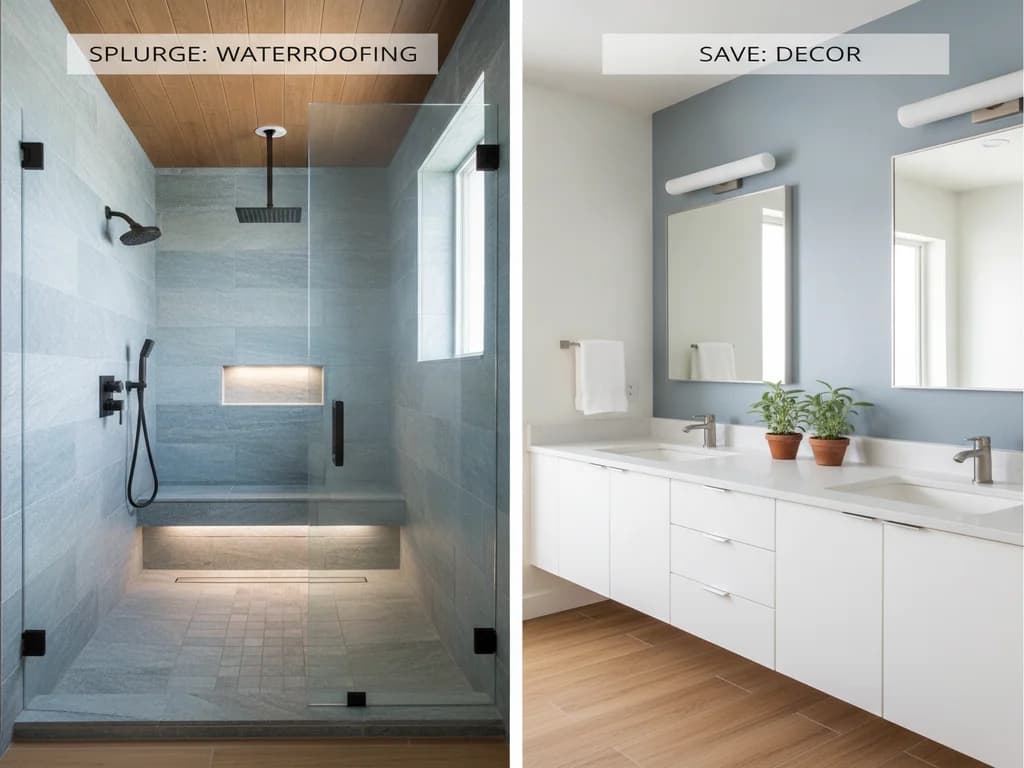
18. Apply the splurge/save rule ruthlessly. Some categories are no-cut zones because failing on them is far more expensive than doing them right. Waterproofing tops that list — don’t cut corners on waterproofing, because a moisture failure behind tile is a tear-out, not a touch-up. Ventilation is next: ENERGY STAR notes that efficient exhaust fans protect the room and run cheaply over time. Skilled labor is the third, since redoing failed work erases any upfront savings.
On the save side, decorative swaps — hardware, mirror, paint, accessories, light fixtures — are easy and cheap to change later, so they are exactly where to economize now. The table makes the split explicit.
| Splurge (hidden / permanent) | Why | Save (decorative / swappable) |
|---|---|---|
| Waterproofing system | A failure means full tear-out | Cabinet hardware & pulls |
| Ventilation / exhaust fan | Protects the whole room from moisture | Mirror & accessories |
| Skilled labor (tile, plumbing) | Redoing failed work erases savings | Paint & decor |
| Durable, spot-resistant finishes | Outlast cheap ones in hard water | Trendy light fixtures |
Honest caveat
Sometimes "cheaper" costs more. Skimping on waterproofing, ventilation, or labor is the classic example — it lowers today’s invoice and raises tomorrow’s. The tactics here save money; cutting these corners only defers it.
Plan your budget-smart remodel
Put these tactics together and the pattern is clear: protect the layout and the hidden systems, economize on the swappable surfaces, and plan tightly enough that surprises do not force compromises. That is how a budget remodel still looks and lasts like a good one.
When you are ready to apply them to your space, scope a full bathroom remodel scoped to your budget, check which upgrades add the most resale value before you commit, and request a free, itemized estimate so every dollar is accounted for.
Ready to plan your Boise bathroom?
Licensed & insured · 3-year workmanship warranty
Frequently asked questions
- How can I save money on a bathroom remodel?
- Keep plumbing fixtures in their existing locations, lock a clear scope with a contingency, refinish or reface what’s still sound, use large-format and mid-tier tile with a few accents, and source standard-size fixtures. Then save on decorative items you can swap later while protecting the hidden, permanent work like waterproofing.
- What’s the biggest cost driver in a bathroom remodel?
- Moving plumbing is one of the largest avoidable costs, because relocating a toilet, shower drain, or sink means opening floors and walls and re-running lines. Designing around the existing rough-in locations is usually the single most effective way to control the budget.
- Where should I splurge and where should I save?
- Splurge on what’s hidden and permanent — waterproofing, ventilation, skilled labor, and durable finishes — because failing on those is expensive to fix. Save on decorative, easily swapped items like hardware, mirrors, paint, accessories, and trendy light fixtures, which you can upgrade later for little money.
- Is it cheaper to refinish or replace a bathtub?
- When the tub is structurally sound, refinishing or refacing is generally far cheaper than full replacement and avoids disturbing surrounding tile and plumbing. If the tub is cracked, leaking, or you’re changing the layout, replacement (or a tub-to-shower conversion) usually makes more sense.
- Does keeping the same layout really save money?
- Yes — significantly. Working within the existing footprint and rough-in locations avoids the structural, plumbing, and electrical work that relocating fixtures or moving walls pulls in. You can achieve a dramatic refresh inside the same four walls for far less than a reconfiguration.
- Should I supply my own bathroom materials to save money?
- It can save money if your contractor allows it and you shop well, but confirm their policy first — some won’t warranty owner-supplied items, and a wrong or late-arriving order can cause delays that cost more than you saved. Get the arrangement in writing before purchasing.
Sources
- EPA WaterSense — water-efficient bathroom fixtures
- ENERGY STAR — ventilating fans
- National Kitchen & Bath Association — planning guidelines
Claims and figures are drawn from the sources above and provided for general guidance; your project may vary. Photography is illustrative of design concepts. For a fixed price on your specific bathroom, request a free estimate.