- Why do so many Eagle bathroom plans include accessibility features?
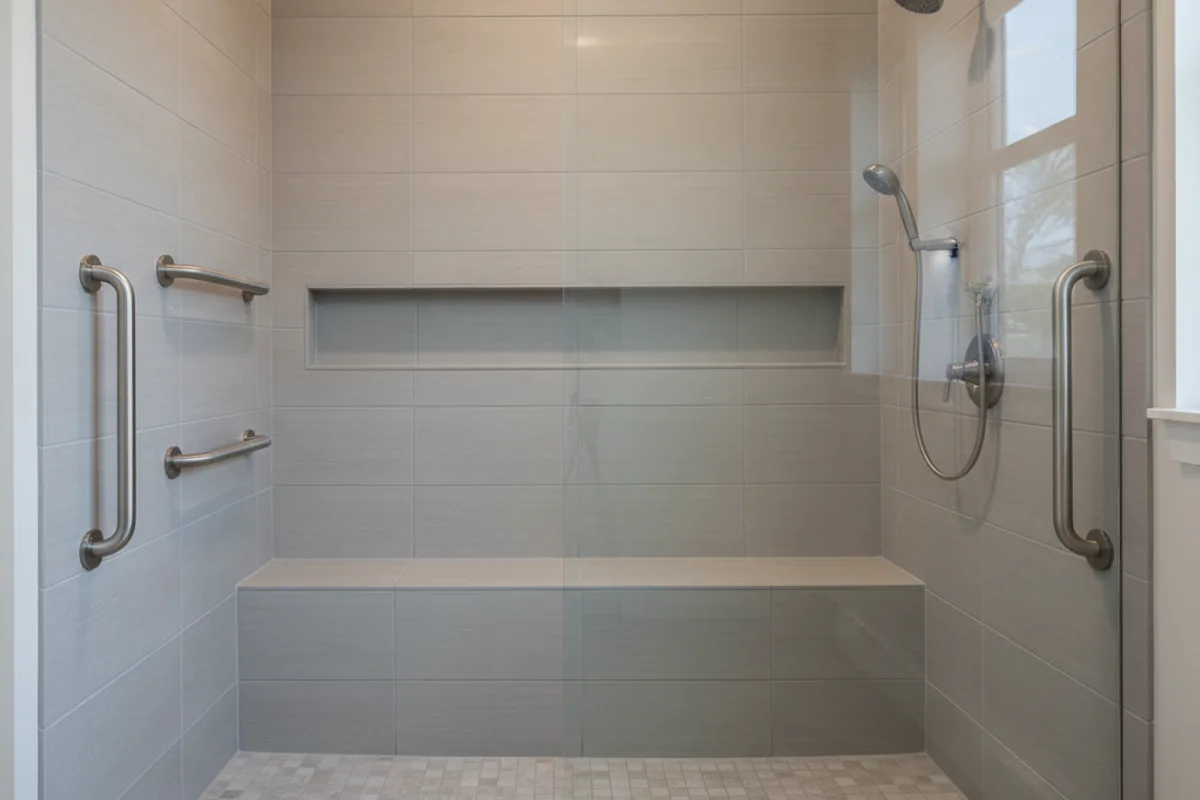
- Because the households are there: more than four in ten Eagle households include someone 65 or older in the Census Bureau's latest estimates. A curbless or low-threshold shower, a bench and blocking for grab bars fit easily into a primary-bath remodel and read as design choices rather than medical ones.
- Do you work in Eagle's foothill and acreage areas?
- Yes. Many Eagle-address properties in the foothills and on acreage are unincorporated Ada County land, which changes who issues the permit, and a rural home may rely on a private well or septic system. We confirm both before designing any plumbing work.
- How long does Eagle take to review a bathroom remodel permit?
- There is no published answer: the City of Eagle Building Department does not post a guaranteed review timeline or a universal fee table for remodels, because both depend on the scope. We confirm scope with the department before applying and build the schedule around its response. Treat any review time quoted on a third-party site as a guess.
- What does it cost to remodel a primary bathroom in an Eagle home?
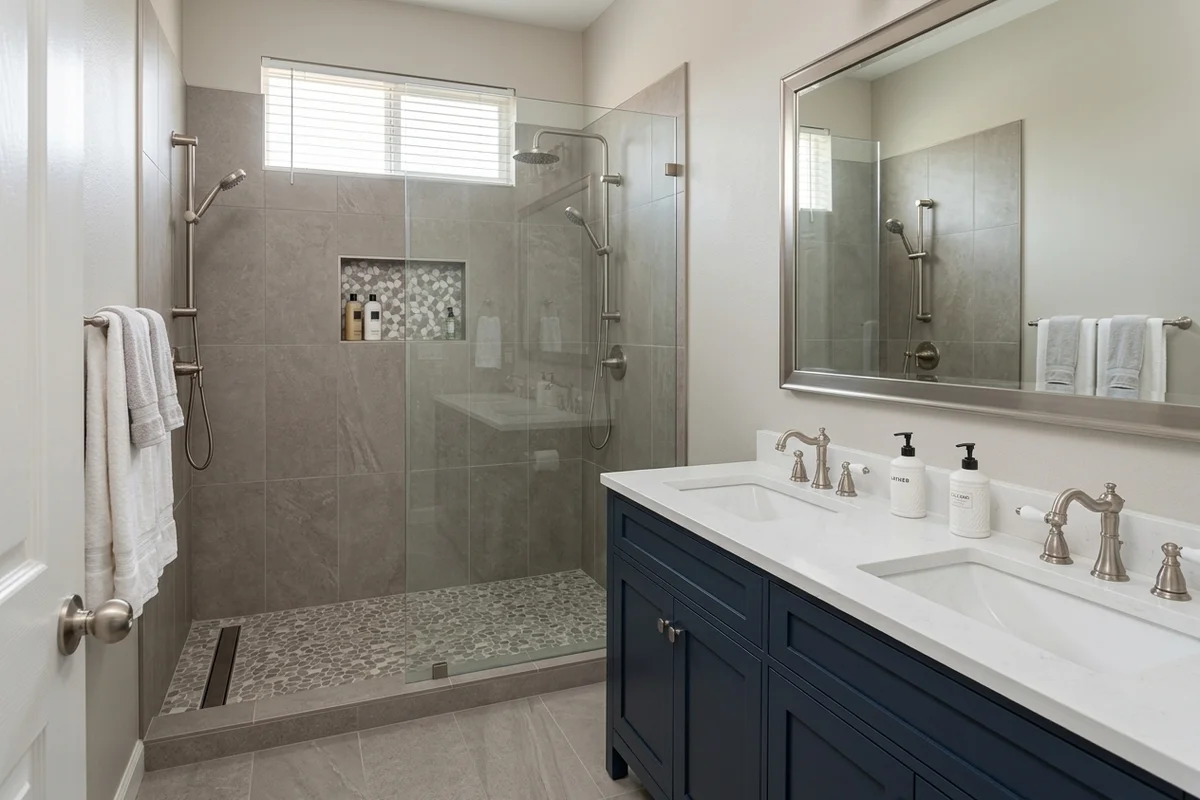
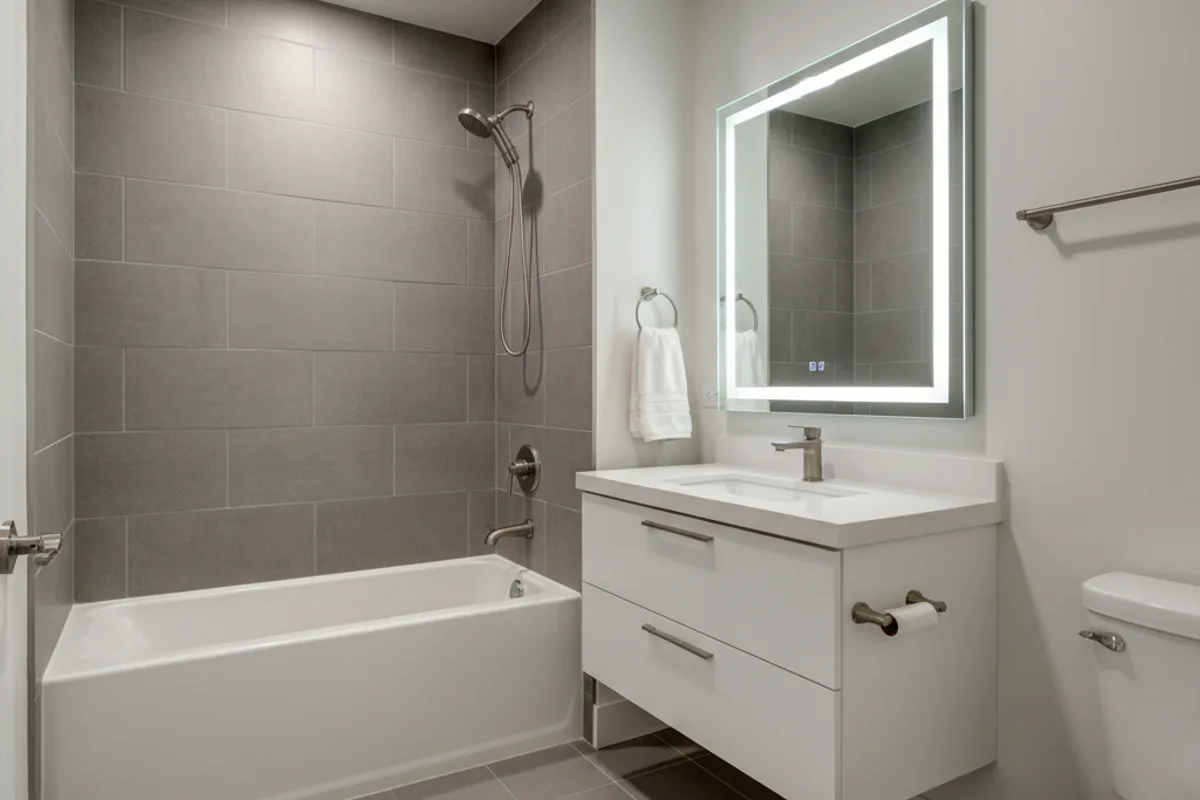
- A master bathroom remodel is priced at $28,000 – $60,000+. Where a project lands depends on the size of the shower, the glass, the amount of stone and tile, and whether the layout changes, such as removing a garden tub or moving a drain. If only the shower is being rebuilt, a walk-in or custom tile shower runs $12,000 – $22,000.
- Can we take out the garden tub and put in a bigger shower?
- Yes, and it suits Eagle's 1990s and 2000s custom homes, where garden tubs and oversized layouts are common. Removing the tub frees floor area for a larger tiled shower, or for a freestanding tub in a different spot. Because drains and supply lines move, the work needs a permit, which we pull and manage as part of the project.
- Does unpermitted bathroom work affect my homeowners insurance?
- It can. The City of Eagle Building Department warns that property insurers may not cover work completed without permits and inspections, and a bathroom is the highest-water-risk room in the house. Unpermitted work also tends to surface at resale through inspection reports and seller disclosures. Permitting correctly the first time is cheaper than legalizing the work afterward.