Updated July 6, 2026 · 8 min read
By Boise Bath — bathroom & shower remodeling in Boise & the Treasure Valley
The short answer
A comfortable Boise bathroom in winter combines electric radiant floor heat, a wall-mounted towel warmer, and warm-white (2700–3000K) lighting to offset flat winter light. Keep the exhaust fan running after every shower — indoor humidity from steam still needs venting even in a dry climate — and insulate any plumbing along exterior walls against occasional hard freezes.
Key takeaways
- Electric radiant floor heat is the practical, single-bathroom answer to Boise winters — it costs $8–$15/sq ft installed, adds no floor height, and needs little maintenance.
- A towel warmer is a small, high-payoff upgrade: it adds supplemental warmth and helps towels dry faster, which cuts down on mildew and damp odor.
- Warm-white lighting (roughly 2700–3000K) counters the Treasure Valley's flat winter daylight better than cooler bulbs do.
- Winter is not a reason to skip the exhaust fan — a hot shower still dumps moisture into the room regardless of how dry the outdoor air is.
- Any supply lines running through exterior walls or a crawlspace should be insulated against the Treasure Valley's occasional hard freezes.
Why does a Boise bathroom feel colder than the rest of the house in winter?
Bathrooms are usually the smallest heated room in the house, with the most hard, cold surfaces — tile, stone, glass — and the least insulation of any interior space, since exterior walls and windows are common. In a mild climate that is a minor annoyance. In the Treasure Valley's cold semi-arid winters, it is a genuine daily discomfort.
The National Weather Service's Boise climate summary records a record low of −25°F and confirms the area sees real winter weather, including rain-to-snow transitions and occasional Arctic cold-front intrusions. Add the dry, high-desert conditions the same NWS data describes — low humidity and large day-to-night temperature swings — and a cold tile floor on a January morning is not an exaggeration; it is exactly what the climate predicts.
This is comfort, not a safety issue
None of the upgrades below are about code or damage prevention — they are about whether stepping into the bathroom on a cold morning feels good. That is a legitimate remodel goal on its own.
Is a heated floor worth it for a single Boise bathroom?
1. Electric radiant floor heat is the practical answer for one room. Warmup and Fixr both price electric systems at roughly $8–$15 per square foot installed, with a typical bathroom (90–100 sq ft) running about $2,000–$6,500 all-in. The cable or mat adds no meaningful floor height, heats up quickly, and needs little to no maintenance — exactly the profile a single-bathroom remodel wants. Hydronic radiant heat is more efficient over a large, continuously heated area, but it needs a boiler most single bathrooms do not already have, which is why electric wins here almost every time. Our heated bathroom floor guide goes deeper on the electric-vs-hydronic decision and how systems like Schluter's DITRA-HEAT keep the tile above crack-free.
What is the highest-payoff small upgrade after a heated floor?
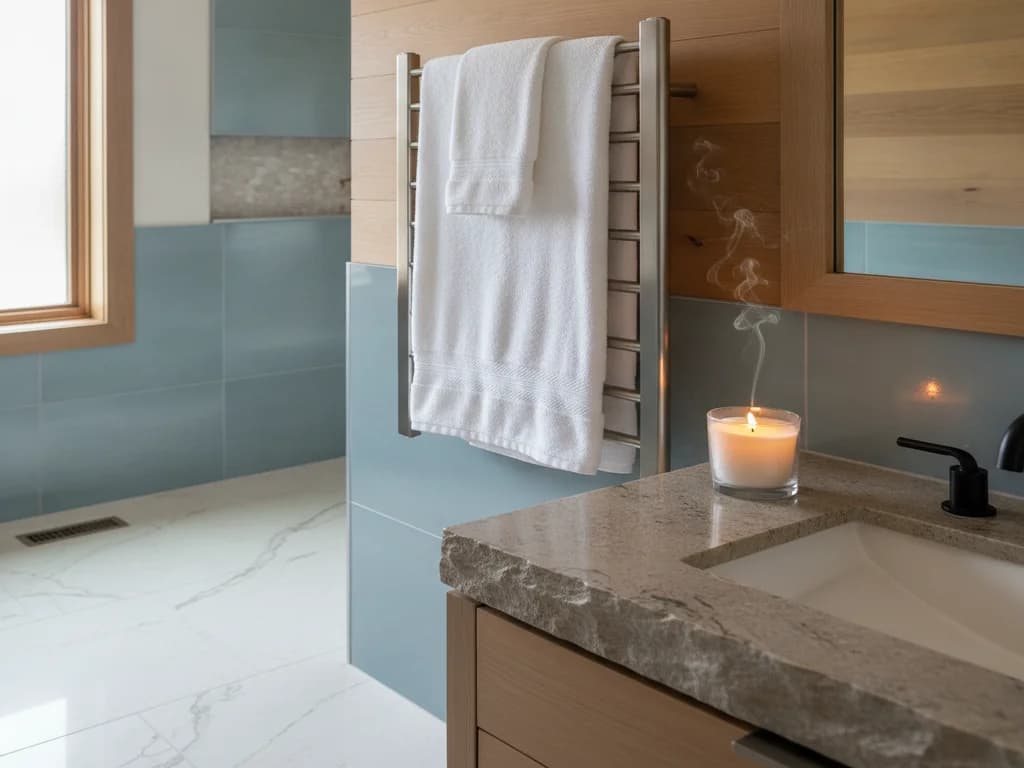
2. A towel warmer adds supplemental heat and fights winter dampness. Bob Vila notes that a rack-style towel warmer radiates heat from both its horizontal and vertical bars, adding real ambient warmth to a cold bathroom, and helps towels dry faster — which cuts down on the odor, bacteria, and mildew that come with a damp towel left folded over a bar. 3. Choose plug-in electric for a retrofit, hydronic if you are already opening walls. This Old House describes plug-in electric towel warmers as the simple, no-plumbing option, while hydronic units tie into the home's hot water heating system for even, energy-efficient warmth — a better fit when the walls are already open during a fuller remodel.
Does lighting actually affect how warm a bathroom feels?
4. Warm-white light (roughly 2700–3000K) reads warmer than the Treasure Valley's winter daylight. ENERGY STAR's residential lighting guidance recommends choosing color temperature deliberately rather than defaulting to a cool-white bulb, and a warm-to-neutral temperature specifically counters the flat, cool light common on short winter days. 5. Layer task, ambient, and accent lighting on dimmers. A single overhead fixture left at full brightness on a dark winter morning feels clinical; a layered setup — vanity sconces, a dimmed ceiling fixture, maybe a lit niche — makes the same room feel considerably more inviting without changing a single material.
Should you still run the exhaust fan in winter?
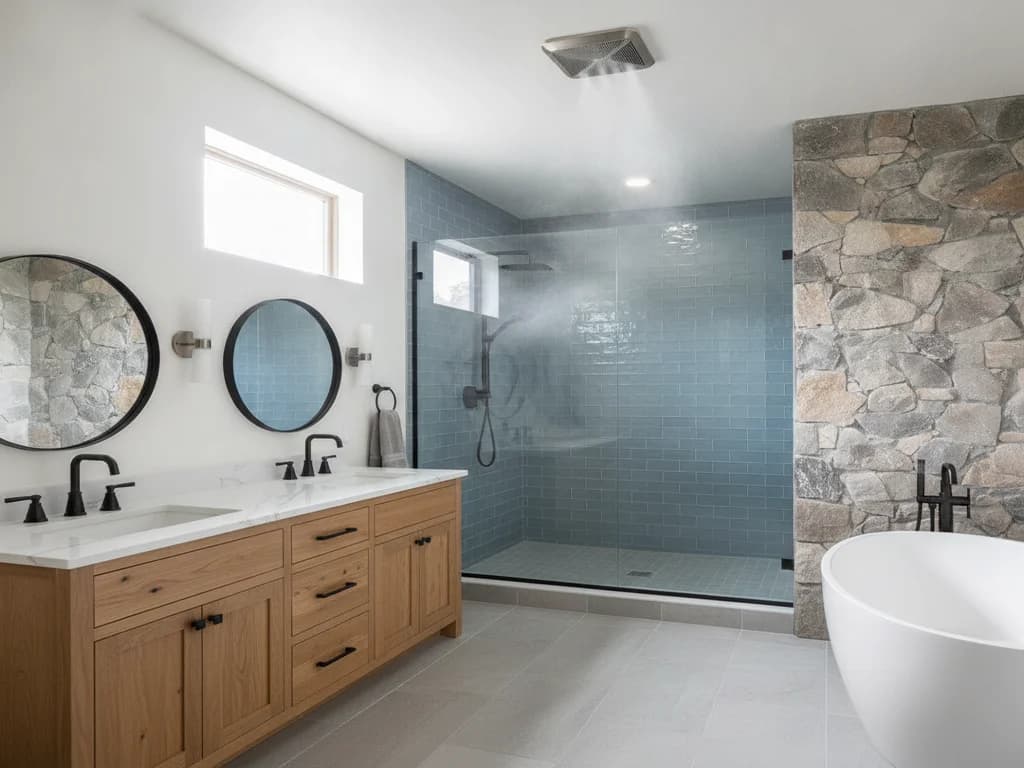
6. Yes — every time, without exception. It is tempting to skip the fan in winter to hold onto the room's heat, but a hot shower dumps the same amount of moisture into the air regardless of the season, and that humidity still needs somewhere to go. Skipping the fan just trades a warmer room for condensation on the mirror, walls, and eventually inside the wall cavity. 7. Size it correctly and keep the duct insulated. ENERGY STAR's guidance calls for roughly 1 CFM per square foot of floor area, and the duct run — especially through a cold, unconditioned attic — needs to be insulated so warm, moist air does not condense and drip back before it reaches the exterior cap. Our bathroom ventilation tips cover fan sizing, duct routing, and termination in full.
8. A humidity sensor or timer solves the "did I leave the fan on" problem. Running the fan for about 20 minutes after a shower clears the air fully; a humidity-sensing fan or a simple countdown timer automates that without anyone needing to remember the switch — useful on a rushed winter morning.
Does winter's dry outdoor air mean the bathroom doesn't need moisture control?
This is the one that trips people up: Boise's winter outdoor air is dry, but a bathroom's moisture problem is created indoors, by the shower itself, and it does not care what the weather is doing outside. Ventilation (getting shower steam out) and whole-home humidity (how dry the air feels between showers) are two separate issues. The EPA's indoor air quality guidance points to roughly 30–50% relative humidity as a comfortable, mold-resistant range for a home; if the rest of the house feels uncomfortably dry in winter, a whole-home humidifier addresses that separately from — not instead of — a properly vented bathroom fan.
Do you need to worry about frozen pipes in a bathroom remodel?
9. Insulate any supply lines in exterior walls or a crawlspace. The same NWS data behind Boise's occasional hard freezes means plumbing routed through an uninsulated exterior wall — common when a vanity or shower sits on an outside wall — is worth protecting properly. A remodel, when the wall is already open, is the easiest and cheapest time to add that insulation; retrofitting it later means opening a finished wall again.
| What winter does to the room | Remodel choice that responds |
|---|---|
| Cold tile floor first thing in the morning | Electric radiant floor heat ($8–$15/sq ft installed) |
| Damp, cold towels | Wall-mounted electric or hydronic towel warmer |
| Flat, cool winter daylight | Warm-white (2700–3000K) layered, dimmable lighting |
| Shower steam still needs to vent | Correctly sized fan, insulated duct, humidity sensor or timer |
| Exposed plumbing at risk in a hard freeze | Insulate supply lines in exterior walls and crawlspaces |
Cost and sizing figures are drawn from the cited Warmup, Fixr, and ENERGY STAR sources; climate facts are drawn from the cited NWS Boise climate summary.
What if you are planning a fuller remodel anyway?
10. Build winter comfort in during selection, not after. A heated floor, a hardwired towel warmer, and a properly ducted fan are all far easier and cheaper to install while the walls and floor are already open than to retrofit into a finished room later. 11. This is exactly the kind of detail a primary suite remodel is built around. If you are already planning a larger primary bathroom project, see our master bathroom retreats for how heated floors, layered lighting, and the rest of a comfort-focused build come together in one project.
Ready to plan your Boise bathroom?
Licensed & insured · 3-year workmanship warranty
Frequently asked questions
- What is the best heated floor system for a Boise bathroom in winter?
- Electric radiant heat, in almost every single-bathroom case. Warmup and Fixr price it at roughly $8–$15 per square foot installed, with a typical bathroom running about $2,000–$6,500 total. It adds no floor height, heats up quickly, and needs little maintenance — hydronic systems are more efficient over large, continuously heated areas but require a boiler most single bathrooms do not already have.
- Should I still run my bathroom fan in winter if the outdoor air is already dry?
- Yes. Outdoor dryness has nothing to do with the moisture a hot shower creates indoors — that steam still needs to vent outside regardless of the season. Skipping the fan to conserve heat just trades warmth for condensation on mirrors, walls, and eventually inside the wall cavity.
- Are towel warmers actually worth adding to a Boise bathroom?
- For winter comfort, yes. Per Bob Vila, a rack-style towel warmer radiates real ambient heat into the room and helps towels dry faster, which reduces the mildew and damp odor that come with a folded, damp towel. Plug-in electric units suit a simple retrofit; hydronic units are worth considering if you are already opening the walls for a fuller remodel.
Sources
- Warmup — Electric vs. Hydronic Radiant Floor Heating (manufacturer)
- Fixr — Radiant Floor Heating Cost
- Bob Vila — The Best Towel Warmers, According to Our Hands-On Tests
- This Old House — How To Install a Towel Warmer
- ENERGY STAR — bathroom ventilation fan specifications & sizing
- ENERGY STAR — residential lighting and LED guidance
- EPA — mold prevention & indoor humidity guidance
- National Weather Service — Boise Climate Summary
Claims and figures are drawn from the sources above and provided for general guidance; your project may vary. Photography is illustrative of design concepts. For a fixed price on your specific bathroom, request a free estimate.