Updated July 5, 2026 · 8 min read
By Boise Bath — bathroom & shower remodeling in Boise & the Treasure Valley
A heated tile floor is one of the most-requested small upgrades in a bathroom remodel — and for good reason in a place with a real winter. But "radiant heat" covers two genuinely different systems, electric and hydronic, and they are not interchangeable decisions.
Below is an honest, source-backed comparison of the two, plus the local angle: why a single-bathroom retrofit in the Treasure Valley almost always points toward electric rather than hydronic.
Key takeaways
- Electric radiant floor heat costs $8–$15/sq ft installed, adds no floor height, heats up fast, and needs little to no maintenance — the practical choice for a single bathroom.
- Hydronic radiant heat is more efficient over large, continuously heated areas but requires a boiler ($3,200–$9,000) and annual maintenance ($400–$500/year) — rarely worth it for one bathroom alone.
- A typical bathroom heated-floor installation runs about $2,000–$6,500 (electric), per Fixr.
- Boise's real winters (record low −25°F) make a heated floor a genuine comfort upgrade, not a luxury gimmick — but the local case favors electric for a single-room remodel specifically.
- Systems like Schluter's DITRA-HEAT pair the electric cable with a crack-preventing uncoupling membrane, so the tile above the heat stays protected from thermal movement.
Electric vs. hydronic: quick comparison
| System | Installed cost | Best for | Maintenance |
|---|---|---|---|
| Electric | $8–$15 / sq ft | Bathrooms, kitchens, single-room remodels, quick heat-up | Little to none if installed correctly |
| Hydronic | $6–$20 / sq ft (system) + $3,200–$9,000 boiler | Whole-home, continuous heating in colder climates | Annual boiler tune-up ($400–$500) + occasional repairs |
Per-square-foot figures are from Fixr and Warmup (2026). A typical bathroom (90–100 sq ft) runs roughly $2,000–$6,500 installed per Fixr, though hydronic systems only make financial sense when tied into a home's existing boiler system.
Electric radiant floor heat
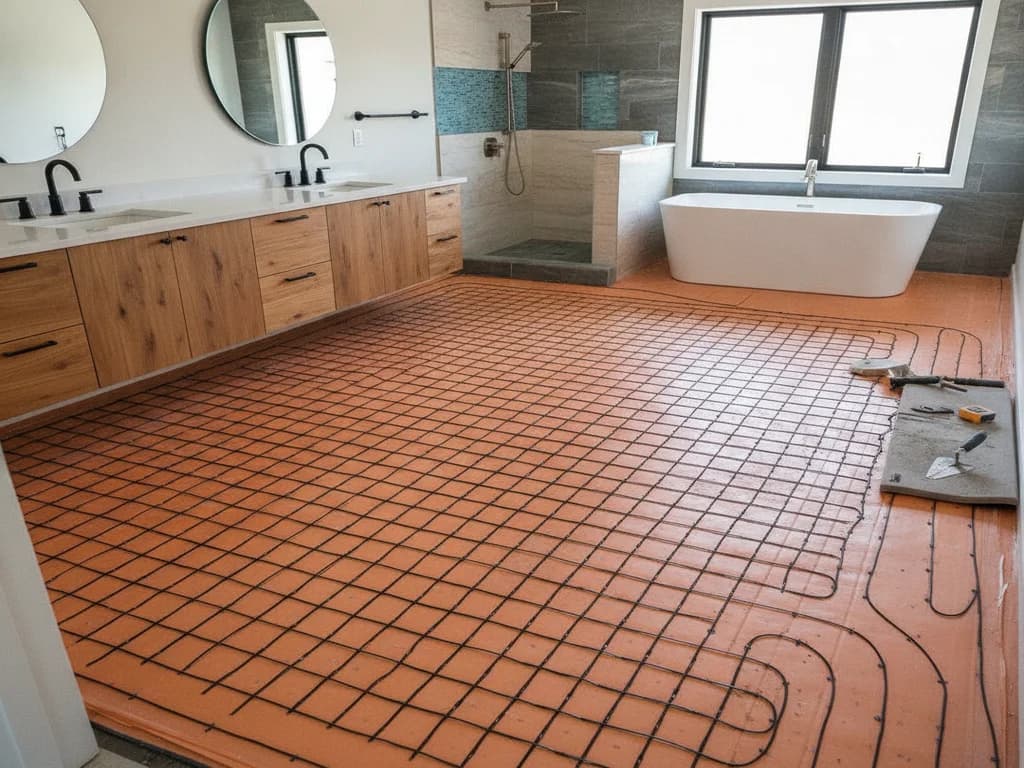
Electric systems use thin cables — either loose cable in a grid or embedded in a mat — wired directly to your home's electrical panel. Because the cable or mat adds essentially no floor height, it is the system of choice for remodels and single-room retrofits where you cannot afford to raise the floor. Warmup notes electric systems heat up quickly, which suits a room like a bathroom that is used for short, intense bursts rather than continuously. One caveat if your bathroom is already finished: adding radiant heat beneath a floor that is already tiled is more constrained than it sounds, since the cable normally goes in during the flooring install.
Per Warmup, a small electric installation (about 35 sq ft) runs roughly $780–$925 in system cost plus a thermostat ($252–$298), with professional electrical connection taking 4–6 hours at $50–$100/hour. Fixr prices electric systems at $8–$15 per square foot installed. The trade-off is running cost: electric heat draws directly from your home's electricity, so Warmup estimates $90–$250 per month to run a system across a 1,500 sq ft home for about 4 hours a day — though a single bathroom floor costs a small fraction of that whole-home estimate.
Electric floor heat under tile: how it stays crack-free
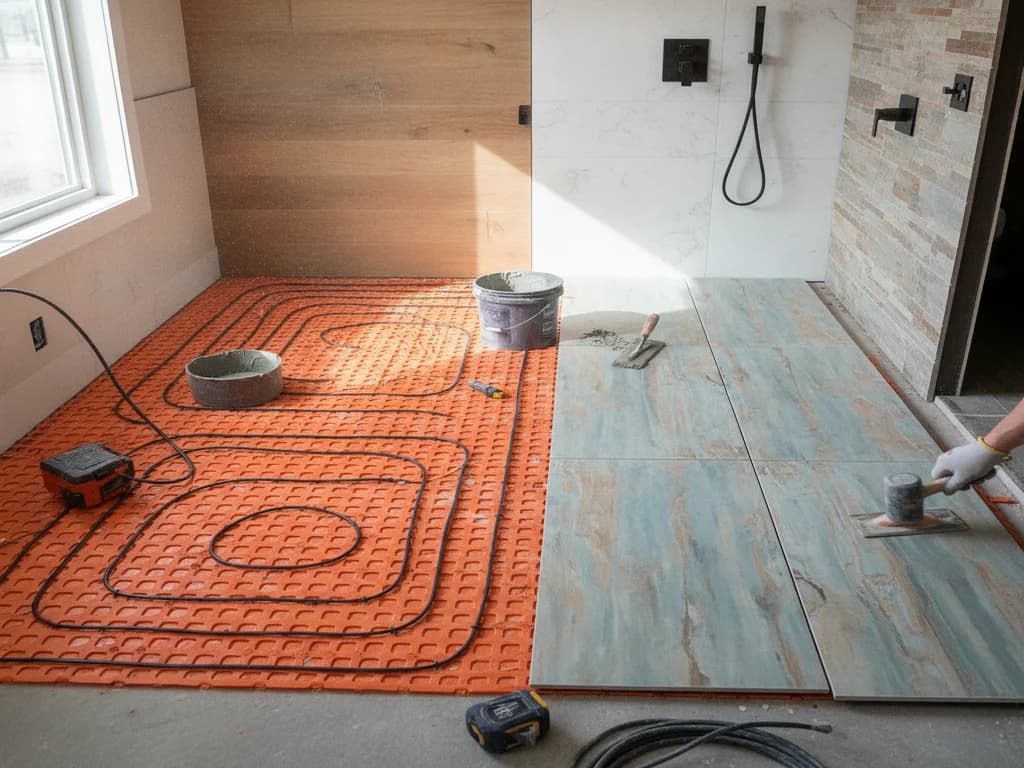
Schluter's DITRA-HEAT system integrates the electric heating cable with an uncoupling membrane — the same technology used to prevent tile and grout cracking from a home's natural movement. That combination lets the cable go in without leveling compound and protects the tile from the thermal stress of the floor heating and cooling.
Hydronic radiant floor heat
Hydronic systems run flexible PEX tubing under the floor, circulating hot water supplied by a boiler. Warmup prices the tubing at $7–$22 per square foot plus a boiler at $3,200–$9,000 — a boiler is the expensive, unavoidable piece of the system, which is why hydronic rarely makes sense for a single bathroom unless the home already has one.
Where hydronic wins is efficiency and comfort over large, continuously heated areas: Warmup notes it is more cost-effective for whole-home primary heating in colder climates, and Fixr's per-square-foot figure ($6–$20) is actually lower than electric's once a system is already sized for a whole house. The downsides are real, though — more complex installation involving boiler integration, and ongoing maintenance: Warmup cites $400–$500 for an annual boiler tune-up, something an electric system simply does not need.
The Idaho winter angle: why electric usually wins for a bathroom remodel
The Treasure Valley genuinely gets cold. The National Weather Service's Boise climate summary lists a record low of −25°F (December 22, 1990) and confirms the area sees real winter weather with rain-to-snow transitions and occasional Arctic cold-front intrusions, even though sub-zero readings at the airport were rare across the stretch the NWS cites (just once between 1991 and 2008). A cold tile floor first thing on a January morning is a genuine, not exaggerated, discomfort here.
For a single-bathroom remodel, though, that cold-winter reality argues for electric heat, not hydronic. A bathroom remodel is exactly the "single room, no floor-height to spare, want it warm fast" scenario Warmup describes as electric's strength — and unless your home already has a boiler serving other rooms, adding one just to heat one bathroom floor rarely pencils out against a $2,000–$6,500 electric installation (Fixr's bathroom-specific range). Hydronic remains the better call only if you are heating a larger, continuously used space and already have (or are planning) a whole-home hydronic system.
Frequently asked questions
- Is electric or hydronic heated floor better for a bathroom remodel?
- Electric, in almost every single-bathroom case. It costs $8–$15 per square foot installed, adds no meaningful floor height, heats up quickly, and needs little to no maintenance. Hydronic is more efficient over large, continuously heated areas, but requires a boiler ($3,200–$9,000) that rarely makes sense to add just for one bathroom.
- How much does a heated bathroom floor cost?
- Per Fixr, a typical bathroom (90–100 square feet) runs roughly $2,000–$6,500 installed for an electric system, which includes the cable/mat, thermostat, and professional electrical connection.
- Do heated floors crack tile in a climate with big temperature swings?
- Not with a properly designed system. Schluter's DITRA-HEAT pairs the electric heating cable with an uncoupling membrane specifically engineered to absorb the thermal movement of a heated floor, protecting the tile and grout above it from cracking.
Sources
- Warmup — Electric vs. Hydronic Radiant Floor Heating (manufacturer)
- Schluter — Floor Warming / DITRA-HEAT (manufacturer)
- Fixr — Radiant Floor Heating Cost
- National Weather Service — Boise Climate Summary
Claims and figures are drawn from the sources above and provided for general guidance; your project may vary. Photography is illustrative of design concepts. For a fixed price on your specific bathroom, request a free estimate.