Updated July 16, 2026 · 7 min read
By Boise Bath — bathroom & shower remodeling in Boise & the Treasure Valley
The short answer
Electric radiant floor heat is the best bathroom heating option when you are remodeling — silent, even warmth under the coldest surface in the room. In an existing bathroom, a hardwired electric wall heater delivers the most heat for the least disruption. Heat lamps warm the step-out-of-the-shower moment, and towel warmers are comfort add-ons, not room heaters.
Key takeaways
- Match the heater to the moment: radiant floors fix cold tile all day, wall heaters warm the whole room fast, heat lamps cover the wet thirty seconds after a shower.
- Electric radiant floor heat is a remodel-time decision — it installs under new tile, which is why it belongs in every flooring conversation and few retrofit ones.
- A hardwired wall heater is the best retrofit: real heating capacity, thermostat control, and typically a few hundred to around a thousand dollars installed, per HomeAdvisor.
- Towel warmers are luxury, not heating — they warm towels and take the edge off a small room, but no towel bar substitutes for an actual heat source.
- Every option here is electrical work in a wet location — dedicated circuits, GFCI/AFCI protection, and clearances per the NEC make this professional territory.
- In Idaho’s winters, bathrooms on exterior walls or over garages need real added heat; the central furnace alone rarely keeps a tile bathroom comfortable at 6 a.m. in January.
The short answer: radiant floors in a remodel, a wall heater in a retrofit
Bathroom heating is really four different products solving three different problems. Radiant floor heat solves the cold-surface problem — tile that reads as ice every morning. Wall heaters and heat lamps solve the cold-air problem, at whole-room and step-out-of-the-shower scale respectively. Towel warmers solve a comfort problem, not a heating one.
The clean decision rule: if the floor is coming up anyway, electric radiant is the best money in the room; if it is not, a hardwired wall heater gives you the most warmth for the least disruption, with a heat lamp as the lighter-touch alternative over the drying-off zone. Towel warmers stack on top of any of these.
The Idaho framing matters here. Treasure Valley winters put bathrooms — especially ones on exterior walls, over garages, or at the end of long duct runs — well below comfortable, and January mornings are exactly when you notice. Central heat balances the house; these options fix the one room the furnace never quite reaches. The broader cold-weather playbook lives in Idaho winter bathroom comfort.
Electric radiant floor heat: the remodel-time winner
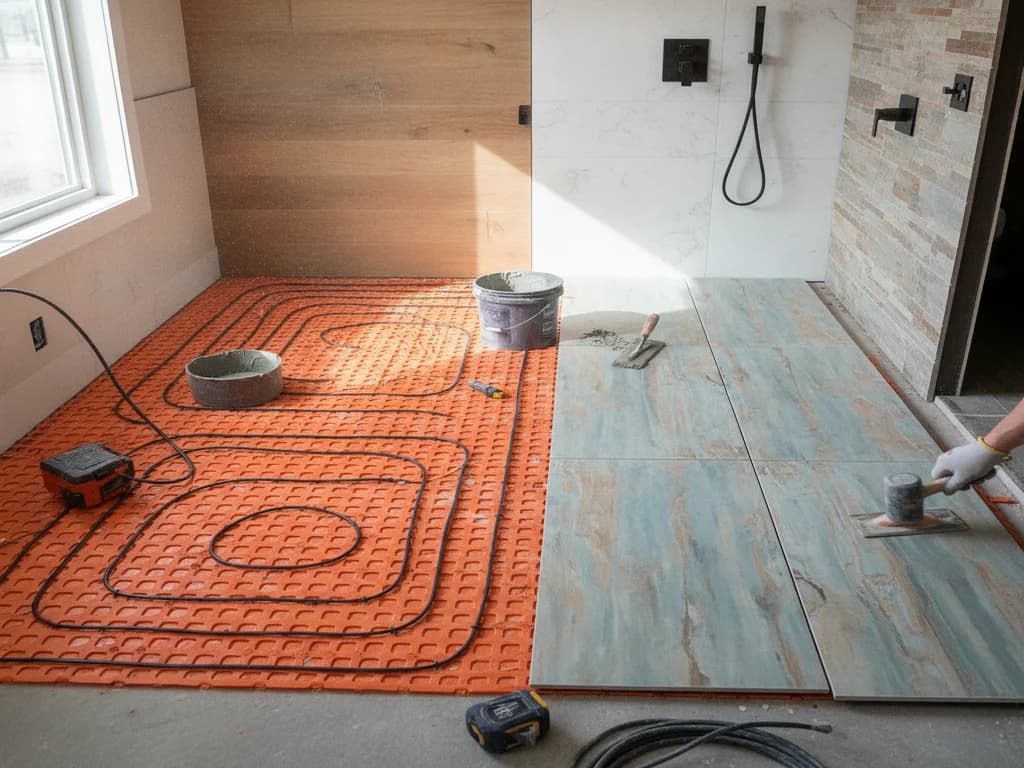
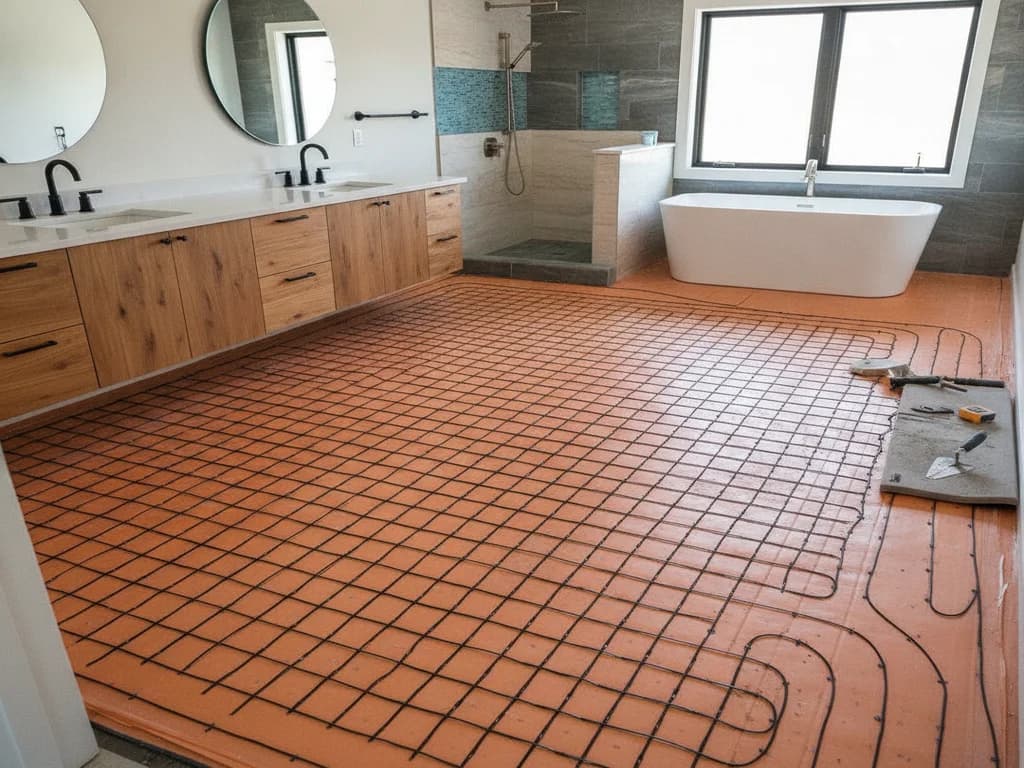
Radiant floor heat inverts the problem: instead of fighting cold air, it warms the coldest surface you touch. Electric mats or cables go down under new tile, a dedicated thermostat (usually programmable, with a floor sensor) runs the schedule, and the floor holds a silent, even warmth with no blower, no glowing element, and nothing on the walls. Under porcelain tile — the material that makes bathroom floors cold in the first place — it is the difference between wincing and walking barefoot.
The catch is timing: the system installs under the finished floor, so it is essentially a remodel-time decision. That is also why it is the best-value option in that window — adding the mat while tile is already being replaced costs a fraction of what any retrofit path would. Per HomeAdvisor, electric radiant floor heating typically runs roughly $8–$15 per square foot installed as part of flooring work, and a bathroom’s small footprint keeps the total contained.
Whether it earns its cost, how the systems compare, and what the monthly operating picture looks like is a full topic of its own — the heated bathroom floor guide covers that depth. And if your floor is staying put, note the narrow exceptions before ruling it out: heated floors under existing tile explains what is and isn’t possible without a full tear-out.
Wall heaters: the best heat-per-dollar retrofit
A hardwired electric wall heater — recessed into the wall cavity, fan-forced or radiant-panel style, on its own thermostat — is how you add real heating capacity to an existing bathroom without touching the floor. Modern units are far quieter and better-looking than the buzzing builder-grade boxes of the 1990s, and a properly sized one takes a bathroom from furnace-cold to comfortable in minutes.
This is the value pick. Per HomeAdvisor, installed costs for an electric wall heater typically land in the low hundreds to around a thousand dollars depending on the unit and the wiring run — a fraction of any floor-opening project, for the largest heating effect of any retrofit option. It suits the classic Treasure Valley problem bathroom: the one over the garage or on a north-facing exterior wall that the 2000s builder gave a single undersized supply duct.
Two honest caveats. Wall heaters heat air, not surfaces — the tile still starts cold, even if the room warms fast. And placement is a code matter: clearances from towels, doors, and fixtures, plus the circuit to feed it, are specified work. Skip plug-in space heaters as a permanent answer entirely; a portable heater on a bathroom outlet is a stopgap, not a heating plan.
Bathroom heating is electrical work in a wet location
Every option on this page — radiant mats, wall heaters, heat lamps, hardwired towel warmers — involves dedicated circuits, GFCI/AFCI protection, and wet-location clearances governed by the National Electrical Code. This is licensed-electrician territory, not a weekend wiring project: heat plus moisture plus improvised wiring is the wrong combination to experiment with.
Heat lamps: thirty seconds of warmth, done cheaply
The ceiling heat lamp is the most misunderstood option because it is judged as a room heater, which it is not. An infrared bulb (or a modern fixture with heat, light, and exhaust functions in one housing) warms whatever is directly beneath it — which makes it nearly perfect for its actual job: the wet, dripping half-minute between the shower and the towel.
Its virtues are its simplicity: heat that arrives instantly with a switch, modest cost, and — when replacing an existing ceiling fixture location — the least invasive install of any hardwired option. Its limits are just as clear: warmth ends at the edge of the lamp’s cone, it does nothing for the room’s air or surfaces, and running it long is an inefficient way to chase whole-room comfort it cannot deliver.
One spec note: if you are considering an all-in-one fan/light/heat unit, weigh the ventilation side of that box on its own merits first — a combo unit with a weak fan solves the wrong problem. The exhaust fan guide explains why airflow and sones should lead that decision, with heat as the tiebreaker rather than the headline.
Towel warmers: comfort tier, and honest about it
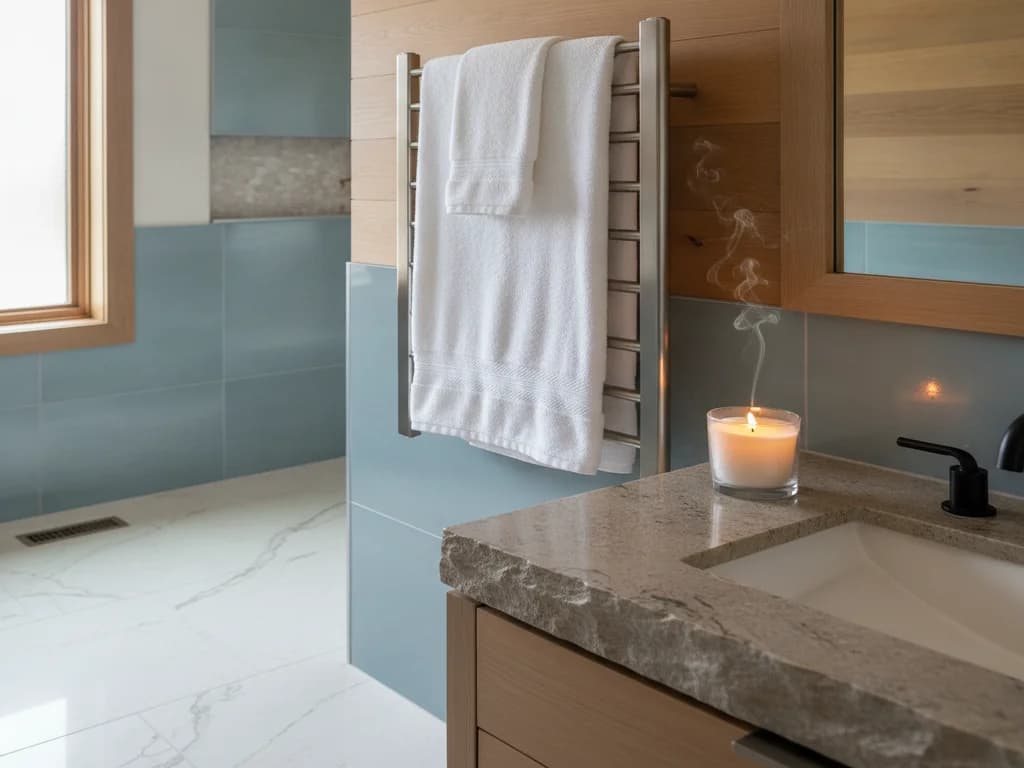
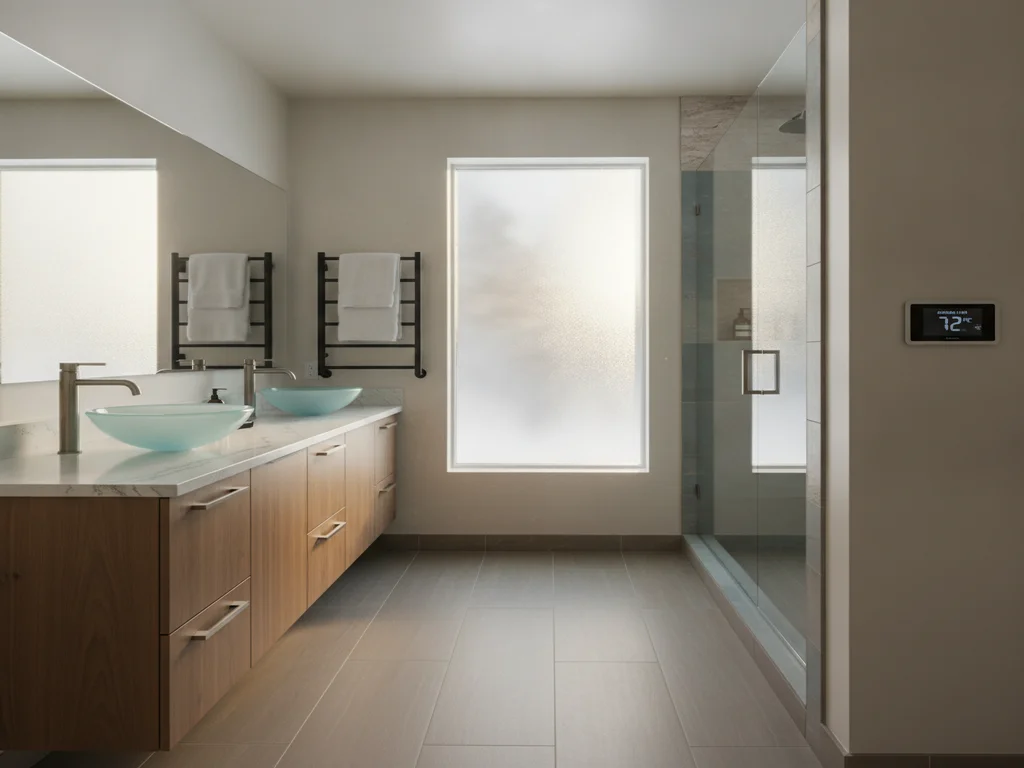
Towel warmers — wall-mounted hydronic-style electric racks, freestanding units, or built-in drawer warmers — are the luxury layer of bathroom heating. A warmed towel on a January morning is a genuinely great daily experience, and in a small bathroom a wall rack takes a real edge off the air. What it is not is a heating system: capacity is a fraction of a wall heater’s, and no towel bar warms a floor.
Costs span a wide band — per HomeAdvisor, roughly $100–$300 for plug-in freestanding units up to $1,000 or more for hardwired wall installations once wiring is included. Hardwired models on a timer are the ones that get used daily; plug-ins with a cord across the wall tend to become decoration.
The full landscape of warming extras — racks, warming drawers, and how they pair with radiant floors — is covered in towel warmers and heated features. The honest ranking here: buy the room’s actual heat source first, and let the towel warmer be the reward layer on top.
The picks compared
All four options, one table:
| Option | Best for | Typical installed cost (per HomeAdvisor) | Limits |
|---|---|---|---|
| Electric radiant floor | Remodels — silent, even, all-day warmth under new tile | Roughly $8–$15 per sq ft during flooring work | Remodel-time only; needs dedicated circuit + thermostat |
| Electric wall heater | Retrofits — fastest whole-room warmth, no floor work | Roughly low hundreds to ~$1,000 with wiring | Heats air, not surfaces; placement and clearances per code |
| Ceiling heat lamp | The step-out-of-shower moment on a budget | Modest — least invasive at an existing ceiling box | Spot warmth only; not a room heater |
| Towel warmer | Comfort layer — warm towels, edge off small rooms | Roughly $100–$300 plug-in; $1,000+ hardwired | Not a heat source; hardwired units need an electrician |
Cost ranges per HomeAdvisor cost guides; actual figures vary with wiring runs, unit selection, and local labor. All hardwired options require licensed electrical work under NEC wet-location rules.
Matching the option to your bathroom
The picks, applied to real situations:
- Full bathroom remodel underway: electric radiant floor, decided before tile day — the one window where it is cheap to say yes and expensive to say later.
- Cold bathroom, no remodel planned: a hardwired wall heater on its own thermostat — the most warmth per dollar without opening a floor.
- Bathroom that is fine except the post-shower chill: a heat lamp over the drying-off zone — instant, targeted, inexpensive.
- Primary bath aiming for the full winter-spa effect: radiant floor plus a hardwired towel warmer on a timer — the pairing that makes January mornings a feature.
- Budget refresh where heating is one line among many: see where a heat lamp or towel warmer fits among the other upgrades under $5,000 before committing to bigger electrical work.
- Bathroom over a garage or on a north exterior wall: treat added heat as a requirement, not a luxury — that room loses the furnace fight every winter.
Ready to plan your Boise bathroom?
Licensed & insured · 3-year workmanship warranty
Frequently asked questions
- What is the most efficient way to heat a bathroom?
- For the hours a bathroom is actually used, targeted electric heat on a schedule beats trying to condition the room around the clock. Radiant floor systems on a programmable thermostat warm the room for the morning window and shut down; wall heaters on a thermostat do the same for air temperature. The inefficient options are portable space heaters run constantly and heat lamps left on to chase whole-room warmth.
- Is a heated bathroom floor worth it in Idaho?
- If you are already remodeling the floor, it is one of the best comfort-per-dollar upgrades in the project — Idaho winters make cold tile a daily reality for months, and radiant heat fixes the exact surface you touch barefoot. As a standalone retrofit it rarely pencils, because the floor must come up. The full cost-and-payoff analysis is in the heated bathroom floor guide.
- Are bathroom wall heaters safe?
- Properly installed hardwired units are — they are designed for the application, with thermostats, high-temperature cutoffs, and code-specified clearances from towels and combustibles. The safety risks come from improvisation: portable plug-in heaters used as permanent fixtures near water, or DIY wiring in a wet location. Bathroom electrical work falls under NEC wet-location rules and belongs with a licensed electrician.
- Is a heat lamp or a wall heater better for a bathroom?
- They solve different problems. A heat lamp warms the spot directly beneath it — ideal for the thirty seconds after a shower, useless for the room. A wall heater warms the whole room’s air in minutes but does nothing special for the step-out moment. If the bathroom is genuinely cold, choose the wall heater; if the room is fine and only the drying-off chill bothers you, the heat lamp is cheaper and simpler.
- Do towel warmers heat the room?
- Not meaningfully. A wall-mounted electric towel warmer softens the air in a small bathroom and keeps towels dry and warm, but its output is a fraction of an actual heater’s — it is a comfort accessory, not a heat source. Buy it for the warm towel, which it delivers brilliantly, and pair it with a real heating option if the room itself is cold.
- Can I just use a space heater in the bathroom?
- As a temporary stopgap, carefully and never unattended — but not as the plan. Portable heaters near water and on shared bathroom circuits are a persistent safety concern, and they signal the room needs a permanent solution. A hardwired wall heater delivers the same warmth safely on its own circuit, with a thermostat, for a modest installed cost — the upgrade that retires the extension-cord era.
Sources
- HomeAdvisor — True Cost Guide
- National Fire Protection Association (NEC)
- This Old House — Bathrooms
- Schluter Systems
Claims and figures are drawn from the sources above and provided for general guidance; your project may vary. Photography is illustrative of design concepts. For a fixed price on your specific bathroom, request a free estimate.