Updated July 16, 2026 · 7 min read
By Boise Bath — bathroom & shower remodeling in Boise & the Treasure Valley
The short answer
Under $5,000, the highest-impact bathroom upgrades are a new vanity with countertop, updated faucet and lighting, professional regrouting and recaulking, a glass shower door replacing a curtain, and fresh bath-rated paint. The winning strategy is two or three done well — a vanity-paint-lighting combination changes more than a thin version of everything.
Key takeaways
- Five thousand dollars is refresh territory, not remodel territory — a midrange full bathroom remodel runs well into five figures, per Zonda’s Cost vs. Value data.
- The vanity zone is the best single investment: a new vanity, top, faucet, and mirror updates the wall your eye lands on first.
- Regrouting and recaulking is the sleeper pick — per HomeAdvisor it costs a few hundred to around a thousand dollars and makes original tile read years newer.
- Swapping a shower curtain for a glass door is the one enclosure-level change that fits this budget, typically roughly $600–$2,300 installed per HomeAdvisor.
- Paint is the cheapest lever in the room and the one most often specified wrong — bath-rated formula, correct sheen, correct primer.
- Do not spend refresh money on a bathroom with active problems — a leak, soft floor, or failing shower pan makes any cosmetic spend disposable.
What $5,000 realistically buys — and what it does not
Honesty first: $5,000 does not buy a bathroom remodel. Industry cost data puts even a midrange full-bath remodel well into five figures — Zonda’s Cost vs. Value report has tracked it in the tens of thousands for years — and local numbers behave the same way, as the Boise bathroom remodel cost guide breaks down. Anything that moves plumbing, replaces the tub or shower system, or re-tiles the room blows through this budget on the first line item.
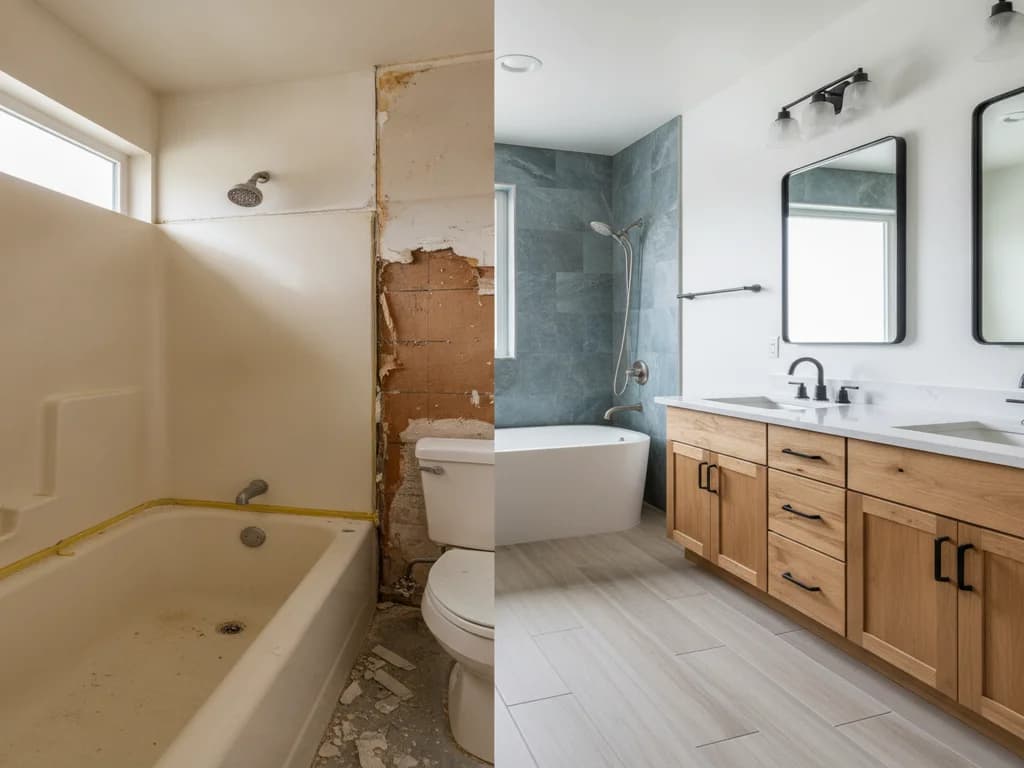
What $5,000 does buy is everything that sits on the surface of a structurally sound bathroom: the vanity zone, the fixtures, the grout lines, the glass, and the paint. Those surfaces happen to be most of what you see — which is why a well-aimed refresh can read like a much bigger project than it was.
The picks below are ordered by impact per dollar. Every cost figure is a range attributed to its source, because refresh budgets die by underestimating: real quotes vary with your bathroom’s condition, and $5,000 disappears fast when a “simple swap” uncovers a problem.
Best single upgrade: the vanity zone
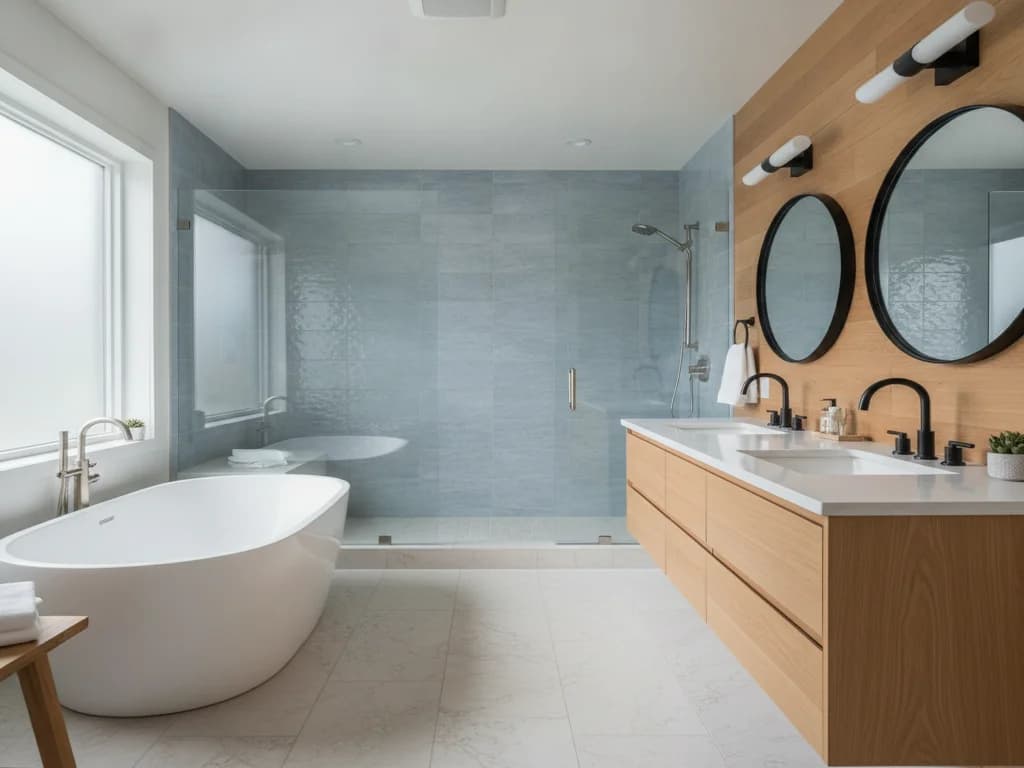
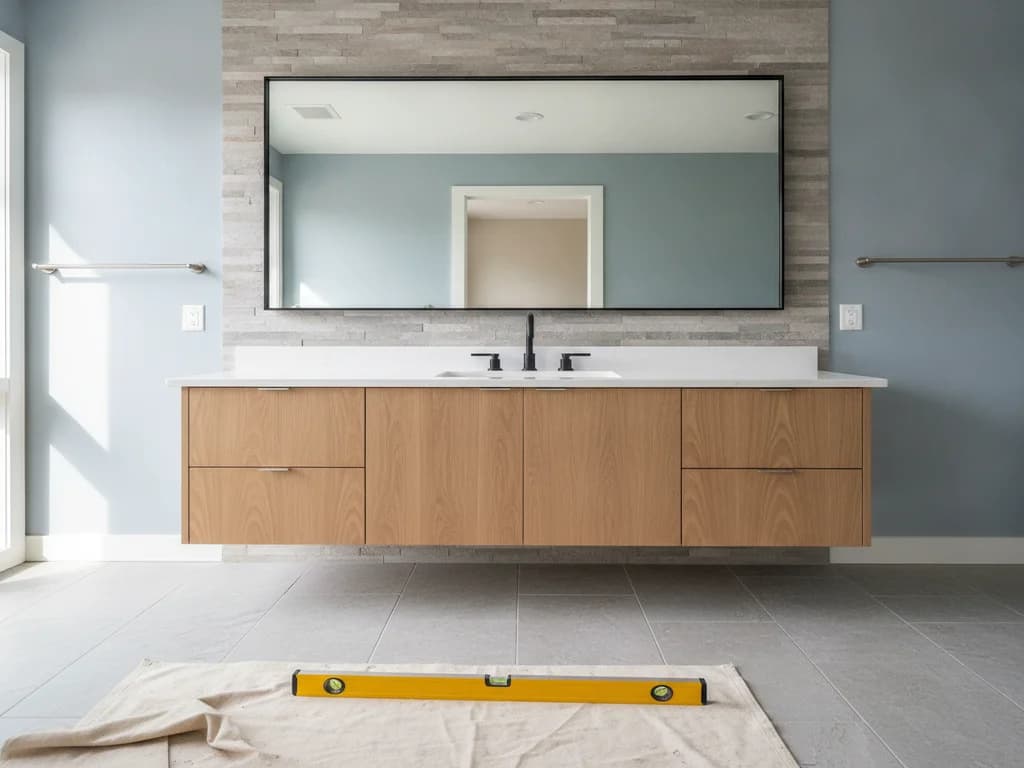
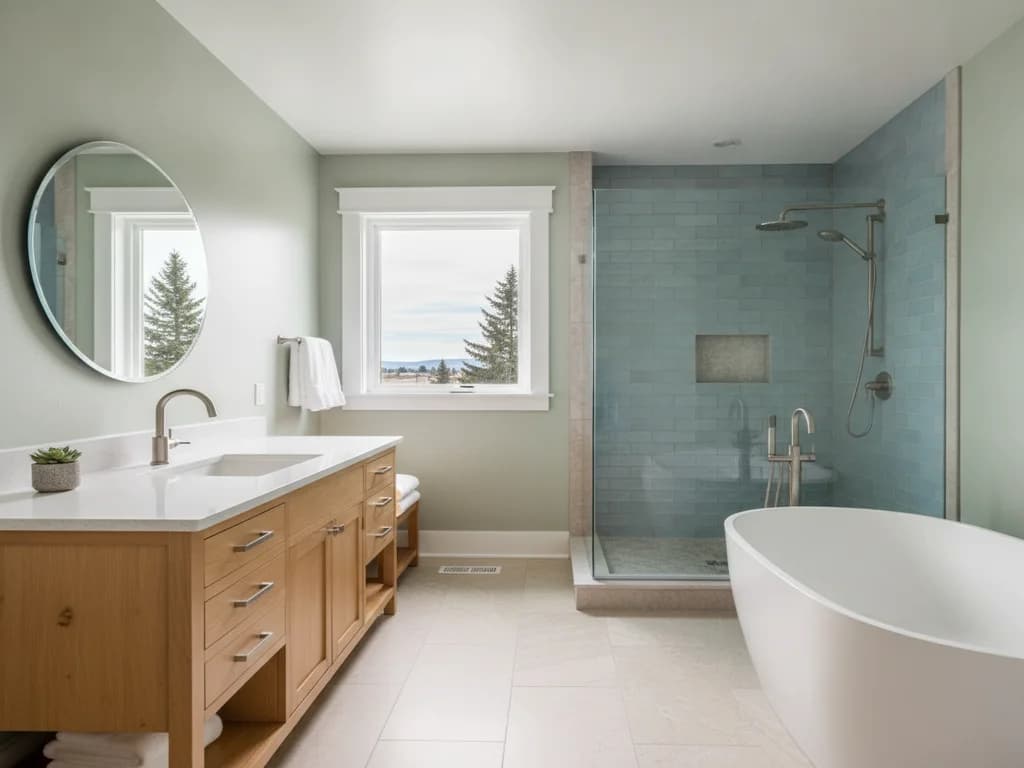
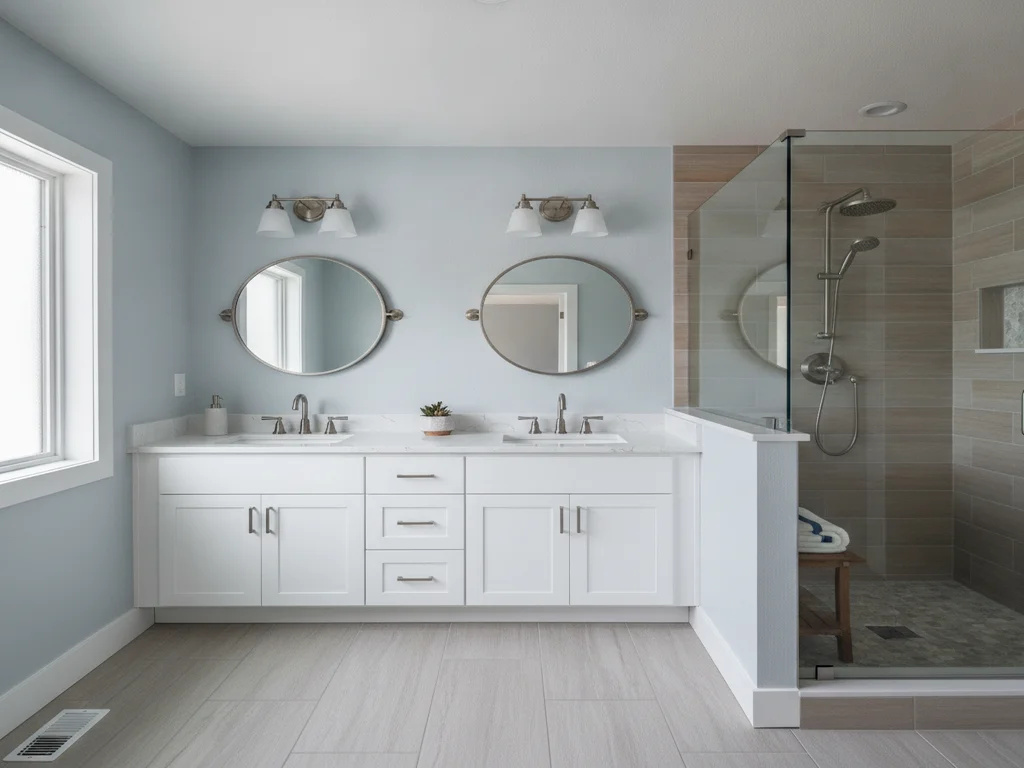
If you make one change, make it the vanity wall — vanity, countertop, faucet, and mirror as a unit. It is the first surface the eye lands on, it dates a bathroom faster than anything except tile, and it is the one furniture-scale piece you can replace without touching the room’s waterproofing. A builder-grade oak cabinet from 2004 swapped for a current shaker unit with a stone-look top re-styles the entire room.
Per HomeAdvisor, replacing a bathroom vanity typically runs roughly $300–$3,800 installed, with standard-size prefab units with tops landing in the middle of that band — which means a quality vanity swap can anchor this budget while leaving room for one or two companion upgrades. What the job involves, including the plumbing reconnections that make it more than furniture assembly, is covered in replacing a bathroom vanity.
One budget-stretcher worth knowing: if the cabinet box is solid and you only hate the top, replacing just the vanity top plus a new faucet gets most of the visual for a fraction of the spend. Materials-wise, this is also the moment to choose the counter surface deliberately — the vanity material rundown covers what holds up.
Fixtures and lighting: the finish-level multiplier
Faucets, shower trim, towel bars, and light fixtures are the jewelry of the room, and mismatched or corroded metal quietly drags everything down. Unifying the finishes — one metal family across faucet, hardware, and lighting — is the cheapest coherence money can buy. Per Angi, a straightforward bathroom faucet replacement typically runs roughly $150–$500 installed, and hardware swaps are an afternoon.
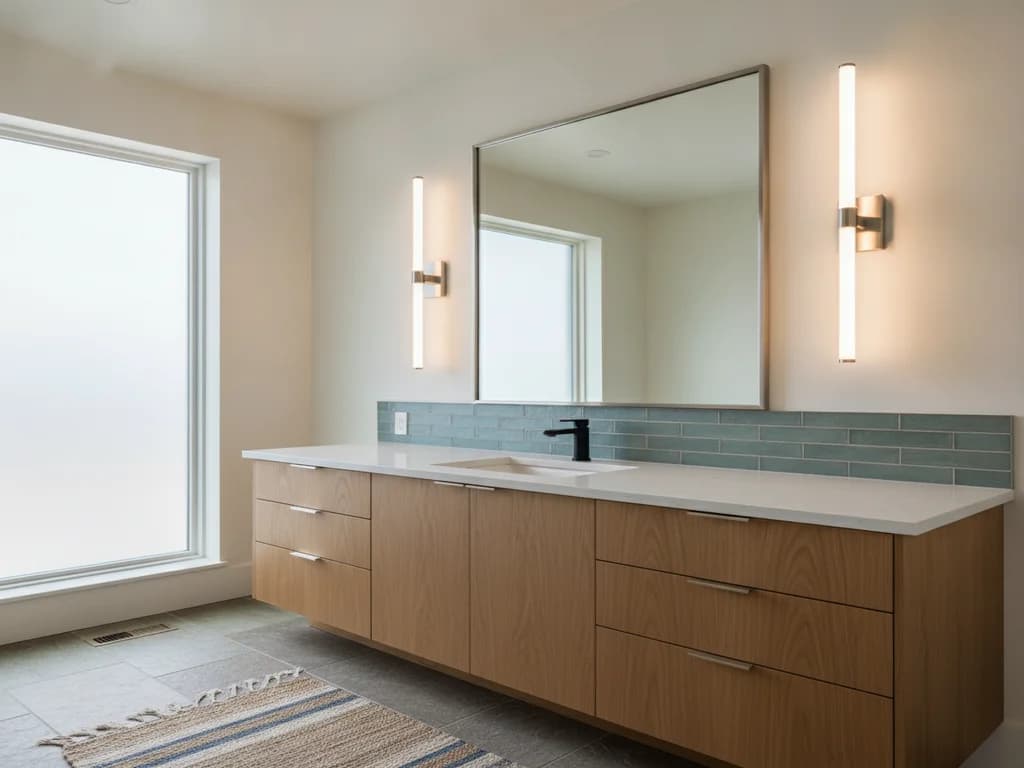
Lighting deserves specific attention because most older bathrooms got one bad strip light and nothing else. Replacing the vanity fixture with proper side-mounted or well-diffused overhead lighting changes how the room — and everyone in the mirror — looks every single morning; the makeup lighting guide covers placement and color temperature specifics.
This tier is also where a heat lamp or a hardwired towel warmer can sneak into the budget if comfort is the pain point — the bathroom heating options roundup ranks those by situation. The rule for the whole tier: electrical work in a bathroom is licensed-electrician work, so batch the fixture swaps into one visit.
The sleeper pick: professional regrouting and recaulking
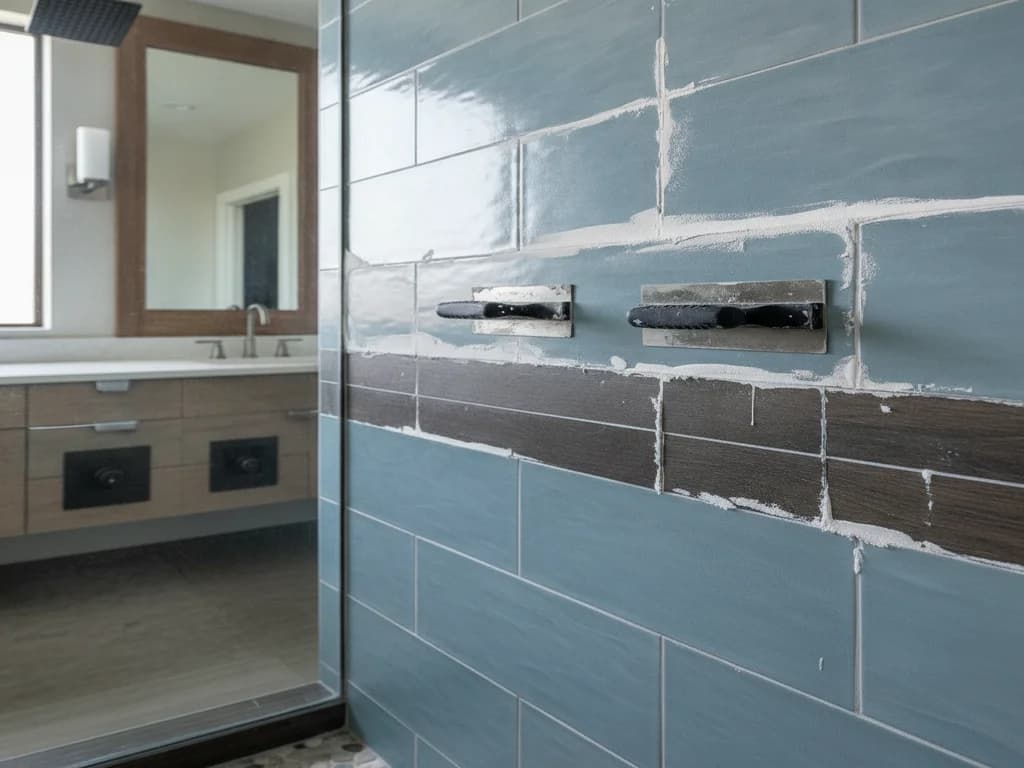
Nothing on this list has a bigger gap between cost and perceived result than regrouting. Grout is the surface that ages first — darkening, staining, cracking — and because it outlines every tile, tired grout makes good tile read as a tired bathroom. Cutting out failed grout and repacking it, plus fresh caulk at every change of plane, makes original tilework look years newer.
Per HomeAdvisor, professional regrouting typically runs roughly $250–$1,000 depending on the area involved — genuinely small money in remodel terms. What the work involves, and the difference between honest regrouting and smearing new over old, is covered in replacing bathroom grout; whether your tile qualifies for the refresh or actually needs replacement is the regrout-or-retile decision.
The honesty requirement: regrouting is a cosmetic renewal for sound tile, not a repair for failed waterproofing. If grout lines keep cracking in the same places, if tiles sound hollow, or if there is any softness in the surrounding floor or walls, the problem is behind the tile — and that is remodel territory, not refresh territory.
Never spend refresh money on a bathroom with an active problem
A slow leak, a soft spot in the floor, a shower that smells musty, grout that re-cracks after repair — these are symptoms of water going where it shouldn’t, and no cosmetic upgrade survives on top of them. Diagnose first. Five thousand dollars of surface work on a failing bathroom is five thousand dollars you will spend again during the eventual remodel.
The one enclosure upgrade that fits: a glass shower door
Full shower replacements do not fit this budget — but swapping a shower curtain for a glass door does, and it is the single change most likely to make a bathroom read “renovated” at a glance. Glass opens sightlines, shows off the tile you already own, and retires the perpetually dingy curtain-and-rod assembly.
Per HomeAdvisor, installed shower door costs typically run roughly $600–$2,300, with framed and semi-frameless units at the lower end and frameless styles at the top. On a standard alcove tub or shower with sound tile at the mounting points, it is a contained, one-visit job — the full walkthrough, including when a tub makes a door impractical, is in replacing a shower curtain with a glass door.
Budget note for hard-water country: spend the small upcharge for a hydrophobic glass coating. Treasure Valley water spots glass fast, and the coating is the difference between a squeegee habit and a scrubbing habit.
The cheapest lever: paint, specified correctly
Paint is the smallest line on this list and the one that touches the most square footage. A full repaint — walls, ceiling, trim — resets the room’s entire backdrop, and in a bathroom the spec matters as much as the color: bath-rated formula, satin on walls, semi-gloss on trim, flat bath-ceiling paint overhead, stain-blocking primer where needed. The full spec logic is in the bathroom paint guide.
Even hiring it out, a bathroom’s modest wall area keeps professional interior painting in the hundreds, per Angi’s interior painting cost guides — which is why paint belongs in nearly every combination below. It is the upgrade that makes the other upgrades look intentional, tying a new vanity and old tile into one deliberate palette.
The one trap: painting over problems. Peeling paint, recurring ceiling spots, or bubbling texture are moisture symptoms, and a fresh coat over them is temporary by definition. Fix the ventilation or the leak first — then paint once.
The picks, priced and ranked
Everything above in one table, with sourced ranges:
| Upgrade | Typical cost (sourced) | What it changes | Watch out for |
|---|---|---|---|
| Vanity + countertop (installed) | Roughly $300–$3,800, per HomeAdvisor | The room’s focal wall — biggest single visual reset | Plumbing reconnections; odd sizes pushing into custom pricing |
| Faucet, hardware & lighting refresh | Faucet roughly $150–$500 installed, per Angi | Finish coherence; dramatically better mirror lighting | Mixing metal families; DIY electrical |
| Professional regrout + recaulk | Roughly $250–$1,000, per HomeAdvisor | Original tile reads years newer | Hollow tiles or re-cracking grout = deeper problem |
| Glass shower door (replacing curtain) | Roughly $600–$2,300 installed, per HomeAdvisor | The “renovated at a glance” effect | Skip the hydrophobic coating and regret it |
| Full repaint, bath-rated spec | Hundreds, per Angi interior painting guides | Resets the whole backdrop; ties upgrades together | Painting over moisture symptoms |
Ranges per HomeAdvisor and Angi cost guides; actual quotes vary with bathroom condition, sizes, and local labor. A midrange full bathroom remodel, for contrast, runs well into five figures per Zonda’s Cost vs. Value report.
How to combine them — and when to save for the remodel instead
The strong combinations pair one anchor with one or two multipliers. Vanity + paint + lighting is the classic full-visual refresh. Glass door + regrout + paint transforms a shower-centric bathroom without touching the shower system. Regrout + fixtures + paint is the maximum-thrift version that still reads renovated. What kills refresh budgets is spreading thin — five half-done upgrades photograph like none.
Squeezing the most from whichever combination you choose is its own discipline — where to splurge, where builder-grade is fine, how to sequence trades — and the budget tips guide covers that playbook in full.
And sometimes the honest answer is: don’t. If the bathroom’s bones are the problem — a failing shower, a layout that fights you, tile you hate wall to wall — then $5,000 of cosmetics is a deposit on disappointment, and the repair-or-remodel decision deserves a real look first. Run your numbers through the cost calculator both ways; a refresh should be a choice, not a consolation.
Ready to plan your Boise bathroom?
Licensed & insured · 3-year workmanship warranty
Frequently asked questions
- Can you remodel a bathroom for $5,000?
- Not in the full sense — industry data like Zonda’s Cost vs. Value report puts even midrange full-bath remodels well into five figures, and anything touching plumbing, tile, or the shower system exceeds $5,000 quickly. What the budget genuinely covers is a surface refresh: vanity and top, fixtures, regrouting, a glass shower door, and paint, done in a well-chosen combination of two or three.
- What is the best bathroom upgrade for the money?
- For visual impact, the vanity zone — cabinet, countertop, faucet, and mirror replaced as a unit re-styles the wall your eye finds first, typically for roughly $300–$3,800 installed per HomeAdvisor. For sheer cost-to-effect ratio, professional regrouting is the sleeper: a few hundred to around a thousand dollars, per HomeAdvisor, and original tile reads years newer.
- Does replacing a shower curtain with a glass door add value?
- It is the one enclosure-level change that fits a refresh budget, and it disproportionately changes how renovated a bathroom feels — glass opens the room and showcases existing tile. Per HomeAdvisor, installed doors typically run roughly $600–$2,300 depending on framing style. In hard-water areas like the Treasure Valley, add a hydrophobic coating so the glass stays presentable without scrubbing.
- Should I refresh my bathroom or save for a full remodel?
- Refresh if the bones are sound and the complaints are cosmetic — dated vanity, tired grout, bad lighting. Save for the remodel if there is an active problem (leaks, soft floors, a failing shower) or if you hate the layout or the tile itself, because surface spending on those bathrooms gets demolished later. When in doubt, price both paths honestly before spending anything.
- What bathroom upgrades should I not do on a budget?
- Anything that opens waterproofing on the cheap: partial tile patches over unknown substrate, discount shower pans, or handyman plumbing relocations. These create the exact failures that force premature remodels. Also skip thin versions of everything — five half-upgrades read as none. A budget bathroom refresh succeeds by doing fewer things at full quality, on a bathroom that is structurally sound.
Sources
Claims and figures are drawn from the sources above and provided for general guidance; your project may vary. Photography is illustrative of design concepts. For a fixed price on your specific bathroom, request a free estimate.