Updated July 16, 2026 · 7 min read
By Boise Bath — bathroom & shower remodeling in Boise & the Treasure Valley
The short answer
Replacing a shower curtain with a glass door means removing the rod, confirming the tub deck or curb can carry glass, and installing a sliding door, hinged screen, or fixed panel sized to the opening. On a sound tiled shower it is a one-day install; on a flexing fiberglass flange, glass may not be advisable. Most homeowners never go back.
Key takeaways
- Glass needs solid, level mounting surfaces — a tiled curb or cast-iron tub deck carries it easily, a flexing fiberglass flange may not.
- On a tub, the realistic options are a sliding bypass door or a hinged glass screen; on a curbed shower, the full door menu opens up.
- Glass transforms light: a curtain is a fabric wall across the room, while a clear panel lets the whole bathroom read as one space.
- The cleaning trade changes shape — no more mildewed liner to launder or replace, but glass wants a quick squeegee habit, especially in hard-water areas.
- If the tub or surround is near the end of its life, put the glass money toward the remodel — glass is the last thing installed, not the first.
Why swap the curtain for glass?
Three reasons come up over and over. Light: a curtain — even a clear liner behind a fabric one — is a visual wall that cuts the room in half, while glass lets a small bathroom read as one open space. Cleanliness: liners mildew, hems wick, and the wet fabric clinging to your leg mid-shower has no equivalent in the glass world. And containment: a properly installed door with sweeps seals better than any weighted curtain.
There is also the way the room reads. Builder-grade bathrooms across the Treasure Valley shipped with a tub, a surround, and a curtain rod — and glass is often the single change that moves one from "original" to "updated" without touching the tile.
The honest counterpoints: glass is a permanent fixture at a real price, it wants a squeegee habit, and on a tub it makes bathing kids or pets and cleaning the tub itself a little more awkward than a curtain you can shove aside. For most households the trade is easily worth it — but it is a trade.
Can your tub or shower actually support a glass door?
This is the first question a pro answers on site, because glass is heavy and unforgiving about what it mounts to. A tiled shower curb or a cast-iron or steel tub deck is a solid, stable base. Wall-side, the vertical channels or hinges need to anchor into tile with solid backing — studs or blocking — behind the mounting points.
The problem case is the one-piece fiberglass or acrylic tub-shower unit. Its deck and walls flex underfoot and under hand pressure, and glass hardware anchored to a flexing shell works loose, leaks at the seals, or stresses the glass. Some glass installers decline these units outright; others will install only certain top-supported slider systems. If your unit flexes, take the hesitation seriously.
Level matters too. Doors are square; a tub deck that slopes noticeably or a curb that was never flat means visible tapered gaps or custom-scribed glass. None of this rules the project out — it just determines which systems fit and whether stock or custom glass is the answer.
Flexing fiberglass and glass doors do not mix
If you can press on your tub deck or surround walls and feel movement, that shell is a poor anchor for glass hardware. Fasteners loosen, seals shear, and in the worst case the shell cracks at the mounting holes. On a flexing unit, the better plan is usually the remodel conversation — not a glass door bolted to a failing shell.
Keeping the tub: sliders and hinged screens
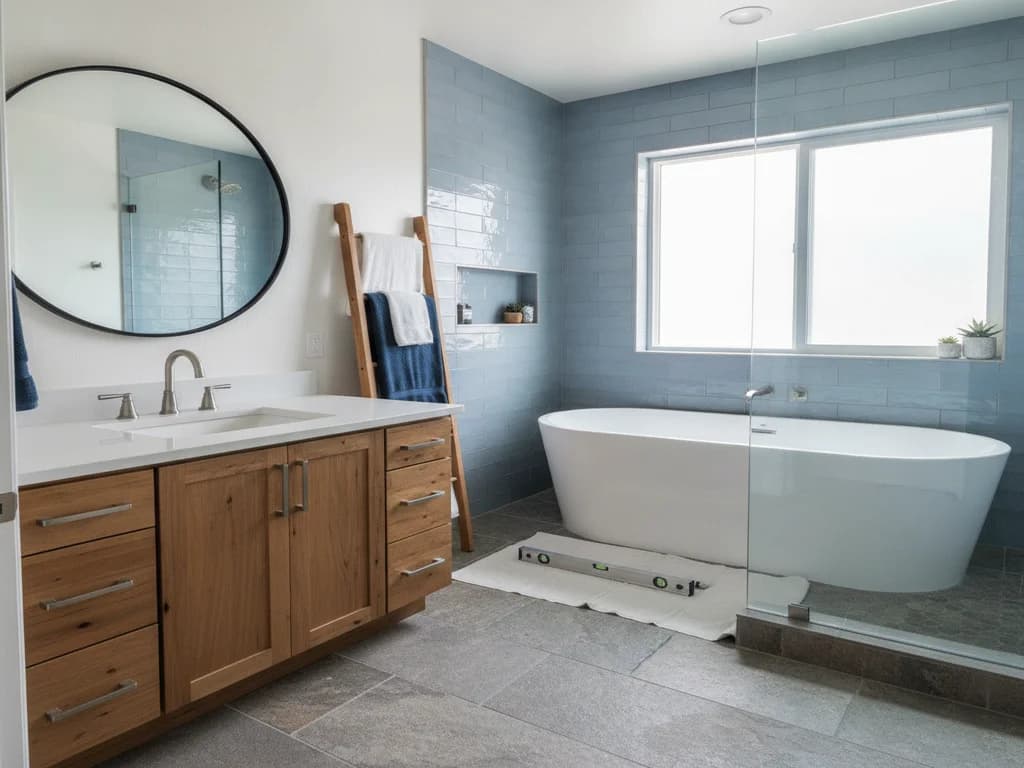
On a standard 60-inch alcove tub, two configurations dominate. A sliding bypass door — two glass panels on a track spanning the full opening — gives complete spray containment and no swing space requirement. Modern frameless-look sliders with top rollers have shed most of the grimy-bottom-track reputation of the old framed versions.
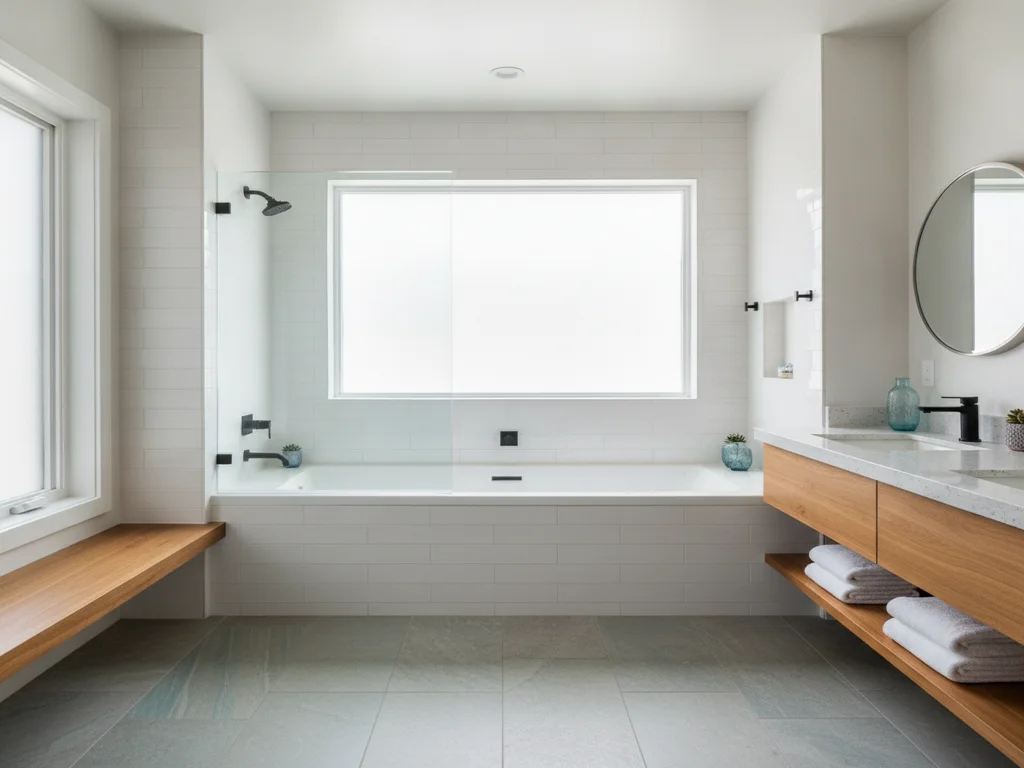
The lighter-touch option is a hinged glass screen: a single panel covering roughly half the opening, hinged to swing inward and outward, leaving the rest open. It keeps spray off the floor at the showerhead end, makes the tub easier to access and clean, and looks the most current. The trade-off is that it contains less than a full slider — enthusiastic shower users may find some splash at the open end.
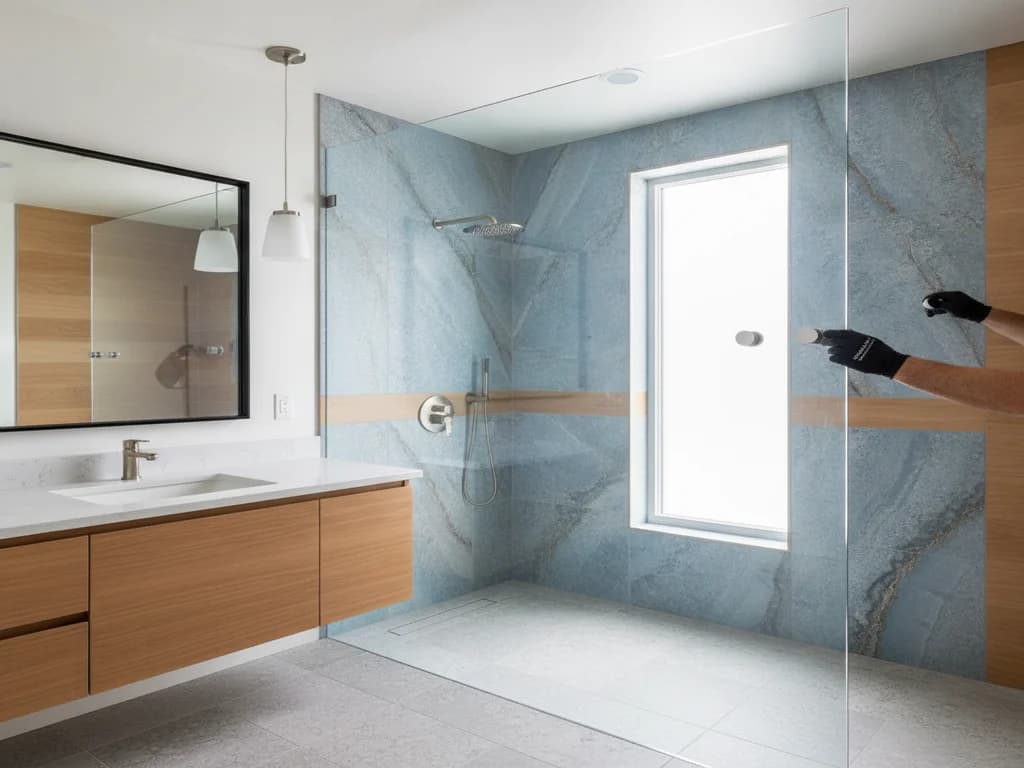
Fixed panels — a stationary pane with no moving parts — split the difference and are the simplest install of all, though they suit showers better than tubs, where stepping over the wall past a fixed pane can feel tight.
| Option | Where it fits | Containment | Notes |
|---|---|---|---|
| Sliding bypass door | Alcove tubs and wide showers | Full | No swing space needed; track needs cleaning |
| Hinged tub screen | Alcove tubs | Partial | Most current look; easiest tub access |
| Hinged shower door | Curbed shower openings | Full | Needs clear swing space in the room |
| Fixed panel | Walk-in and curbed showers | Partial | Simplest install; no moving parts |
If it’s a shower, not a tub
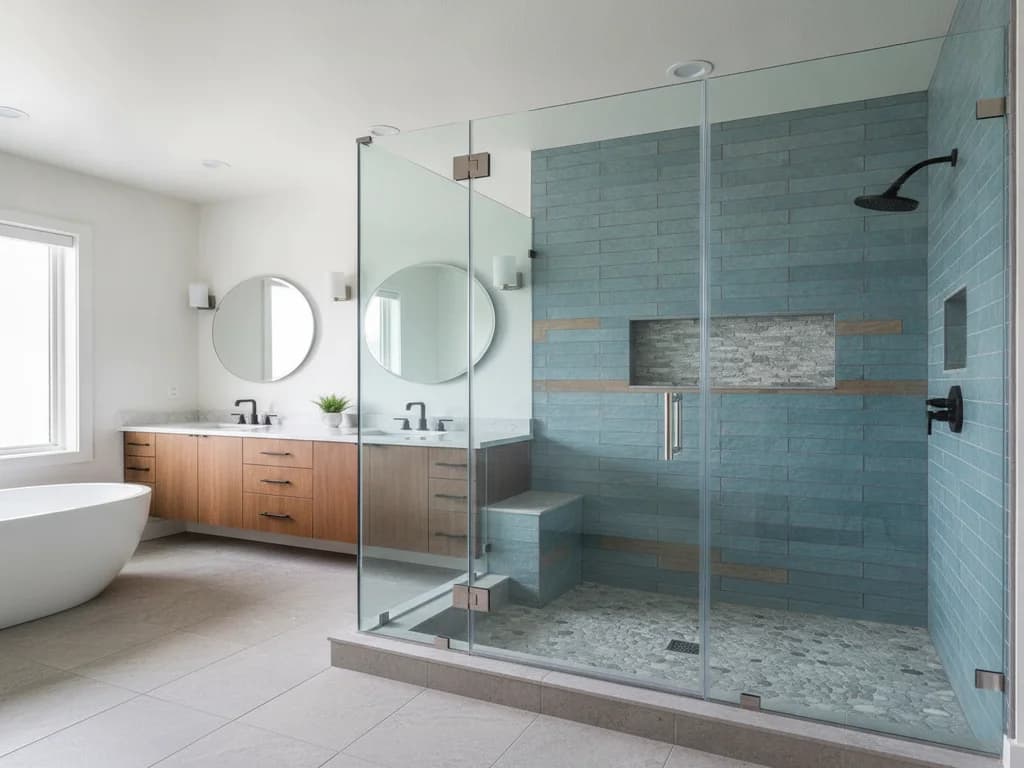
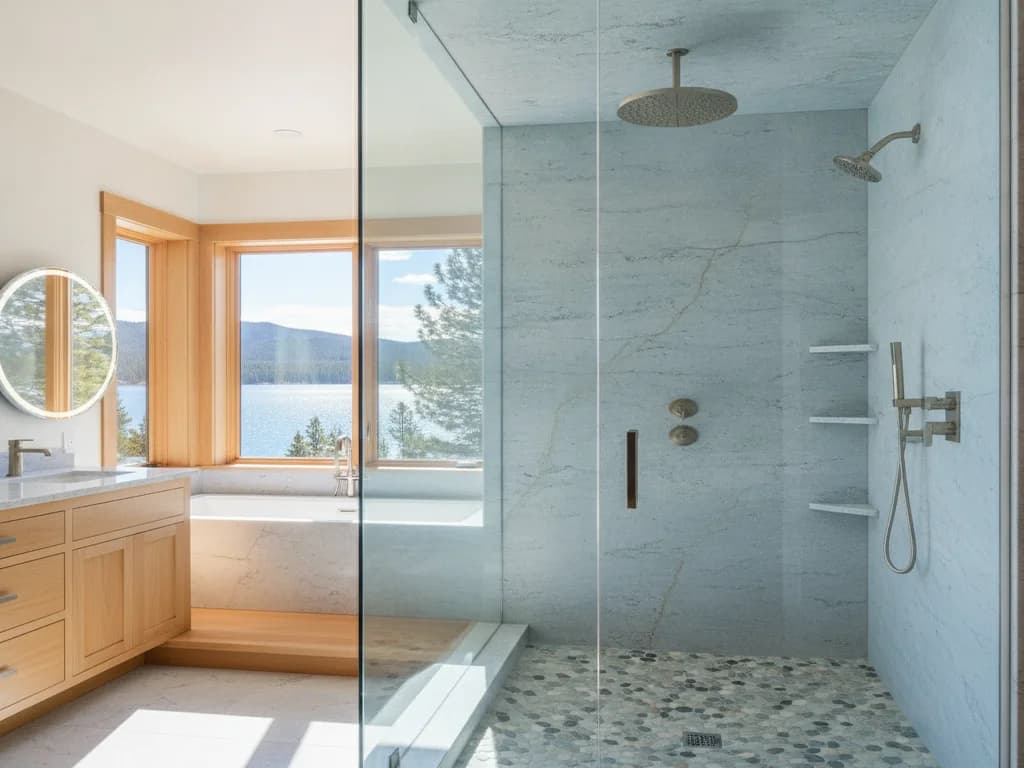
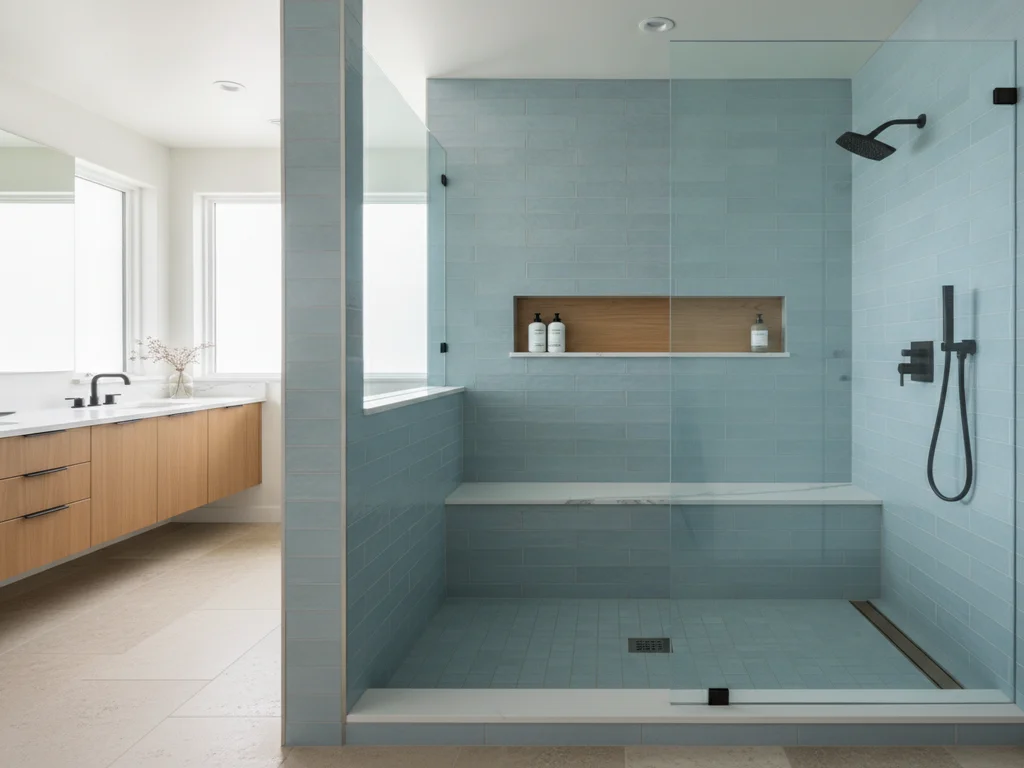
A curtain hanging across a curbed shower stall is usually a sign the original door died and was never replaced — which makes this the easy case. The curb gives glass a proper base, and the full menu opens up: hinged doors, sliders for wide openings, and door-plus-fixed-panel combinations. We compare styles, frame levels, and configurations in shower door types.
The one preserved advantage of the curtain — a completely unobstructed opening — is worth weighing if anyone in the house benefits from wide, hardware-free access. In that case a partial fixed panel, or planning toward a true doorless layout in a future remodel, may serve better than a door.
What glass should you get?
Every option here uses tempered safety glass; beyond that, the decisions are thickness, frame level, clarity (standard glass has a green cast; low-iron costs more and reads crystal clear), and coatings. Those specs interact with price and with each system’s hardware, and we keep the full breakdown in the shower glass enclosure guide.
One spec deserves a flag here: a factory hydrophobic coating. USGS classifies much of southwest Idaho’s water as hard, and hard water is what turns neglected shower glass cloudy. A coating plus a 20-second squeegee habit keeps glass looking new; skipping both is how glass ends up permanently etched.
The cleaning reality, honestly
A curtain-and-liner setup is low effort until it is not — liners mildew and get replaced, fabric curtains need laundering, and the wet folds never fully dry in a busy bathroom. Glass inverts the pattern: a small daily habit (squeegee or microfiber wipe) in exchange for never buying a liner again and a shower that always looks open and clean.
Skip the habit and hard-water spotting builds toward permanent etching — recoverable early, not late. Our shower glass care guide covers the maintenance routine and which products are safe on coated glass.
Cost, and when to fold this into a bigger project
As a standalone upgrade, national cost guides from HomeAdvisor and Angi put installed glass doors roughly between $600 and $1,400 for common tub sliders and stock shower doors, with custom frameless work running $1,000 to $3,000 or more. Against the price of curtains and liners that is real money — but it is also one of the cheapest projects that visibly changes a bathroom.
The timing question matters more than the price. Glass is the final trade in any bathroom project, so if the surround is dated, the tub is worn, or a tub-to-shower conversion is on the someday list, install glass at the end of that project — not before it. New glass on a failing shower comes right back off when the remodel starts.
What the process looks like
- 1
Evaluate the opening and mounting surfaces
The installer checks what the glass will anchor to — tub deck or curb flatness and material, wall plumb, and solid backing at the mount points — and flags flexing fiberglass shells before anything is ordered.
- 2
Choose the configuration
Slider, hinged screen, hinged door, or fixed panel gets matched to the opening width, the room’s swing space, and how the household actually uses the tub or shower.
- 3
Measure for the exact unit
Stock kits are confirmed against the opening’s true dimensions; custom glass is measured to the millimeter, including any out-of-plumb walls, then fabricated — typically a one-to-two-week wait.
- 4
Remove the rod and prep the walls
The curtain rod comes down and its anchor holes are patched — or filled and hidden behind the new wall channel where the layout allows. Tile at the mounting points is cleaned and confirmed sound.
- 5
Install the glass
Wall channels or hinges are anchored into backing, panels are set plumb and level, the door is hung and adjusted, and sweeps and seals are fitted so water sheds back into the tub or pan.
- 6
Seal and cure
Perimeter joints are sealed per the system’s spec and the sealant cures — usually overnight — before the first shower. The installer walks through operation, adjustment, and care.
Ready to plan your Boise bathroom?
Licensed & insured · 3-year workmanship warranty
Frequently asked questions
- Can you put a glass door on any bathtub?
- Most, but not all. A cast-iron, steel, or solid acrylic tub with a level deck and tiled walls takes glass readily. One-piece fiberglass tub-shower units are the exception — their decks and walls flex, which loosens hardware and stresses glass, and many installers will not mount glass to them. An on-site assessment settles it.
- How much does it cost to replace a shower curtain with a glass door?
- Per HomeAdvisor and Angi cost data, installed glass doors commonly run about $600 to $1,400 for tub sliders and stock shower doors, while custom frameless doors and screens run roughly $1,000 to $3,000 or more depending on glass size, thickness, and hardware. Local fixed bids beat national averages for budgeting.
- Is a glass shower door really easier to keep clean than a curtain?
- Different, and for most people better. You retire the mildew-prone liner and the laundering cycle entirely; in exchange, glass wants a quick squeegee after showers — especially with hard Treasure Valley water, which spots and eventually etches neglected glass. The habit takes seconds and keeps the glass looking new for years.
- Does replacing a curtain with glass add home value?
- It reads as an upgrade rather than an appraisal line item. Glass modernizes a builder-grade bathroom visibly and photographs far better than a curtain, which matters at listing time. Remodeling-impact research from groups like NAR consistently shows bathrooms among the interior projects buyers respond to — glass is the low-cost end of that lever.
- What happens to the holes where the curtain rod was?
- A tension rod leaves nothing but a cleaning wipe. A screw-mounted rod leaves anchor holes that the installer fills; in tile, the patch is caulked or color-matched, and in drywall above the surround it is patched and touch-up painted. Occasionally the new door’s wall channel lands over the old holes and hides them entirely.
- Can I do a glass screen on a tub instead of a full door?
- Yes — a hinged single-panel screen at the showerhead end is the most current-looking option and the easiest to live with for tub access and cleaning. It contains most spray but not all; households with enthusiastic shower users or handheld sprayers aimed outward may prefer a full bypass slider.
Sources
- HomeAdvisor — True Cost Guide
- Angi — Cost Guides
- USGS Water Science School — Hardness of Water
- NAR — Remodeling Impact Report
Claims and figures are drawn from the sources above and provided for general guidance; your project may vary. Photography is illustrative of design concepts. For a fixed price on your specific bathroom, request a free estimate.