Updated September 12, 2026 · 7 min read
By Boise Bath — bathroom & shower remodeling in Boise & the Treasure Valley
The short answer
Bathtub replacement means disconnecting the drain and overflow, demolishing enough of the surround or deck to free the old tub, checking the exposed plumbing and subfloor, setting the new tub level, and rebuilding the finishes around it. Most swaps take two days to a week, need a plumbing permit, and get harder moving from alcove to drop-in to corner tubs.
Key takeaways
- The tub type — alcove, drop-in, corner, or freestanding — decides most of the scope, because it dictates how much surround, deck, or tile has to come out to free the tub.
- A like-for-like alcove swap is the simplest version; drop-in and corner tubs add deck demolition and rebuild on top of the tub itself.
- If the complaint is cosmetic — a dull, stained, or chipped finish on a structurally sound tub — refinishing can be the smarter first question.
- The demo stage is the one chance to inspect and fix the subfloor, drain, and valve before a new tub hides them for decades.
- Boise and neighboring Treasure Valley cities require a plumbing permit when the drain, trap, or valve is altered — which nearly every replacement does.
Replace or refinish: which problem do you actually have?
Before pricing a replacement, be honest about what is wrong with the tub. A structurally sound cast-iron or steel tub with a dull, stained, or lightly chipped finish is a refinishing candidate — the surface gets restored without demolition. A tub that flexes underfoot, has spider cracks in the base, leaks at the drain, or sits in a failing surround needs to come out.
The full decision framework — including how long a refinish actually lasts and where it stops making sense — lives in our guide to bathtub refinishing vs. replacement. This article assumes replacement is the answer and walks through what that project involves.
What kind of tub do you have? It decides everything
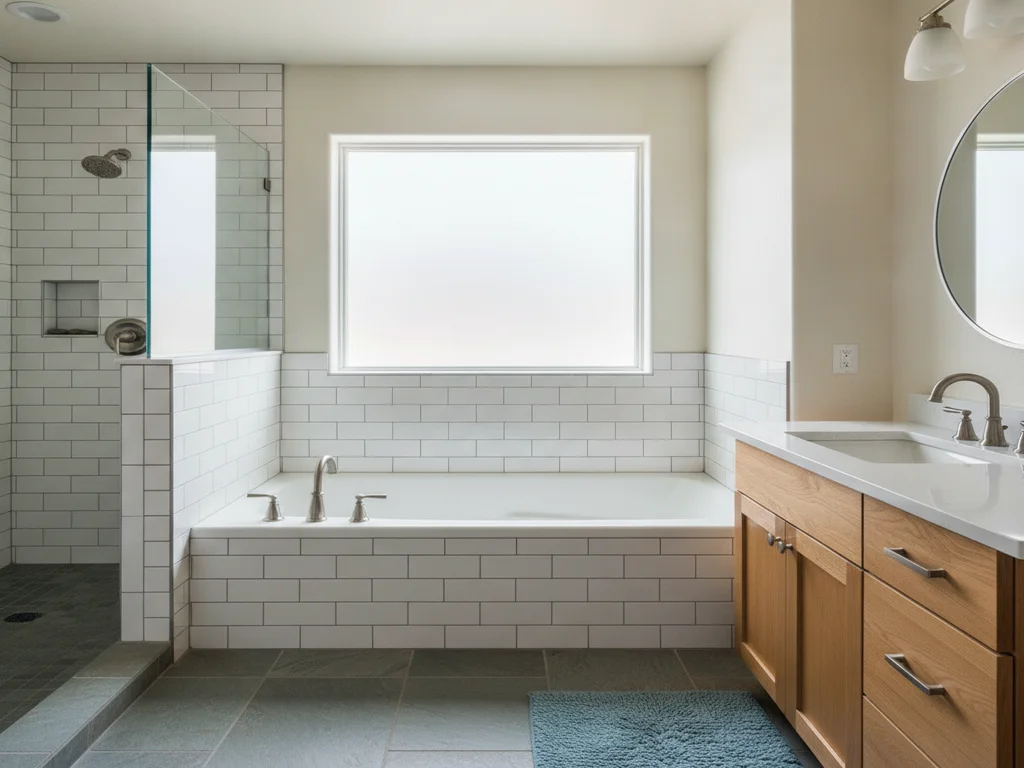
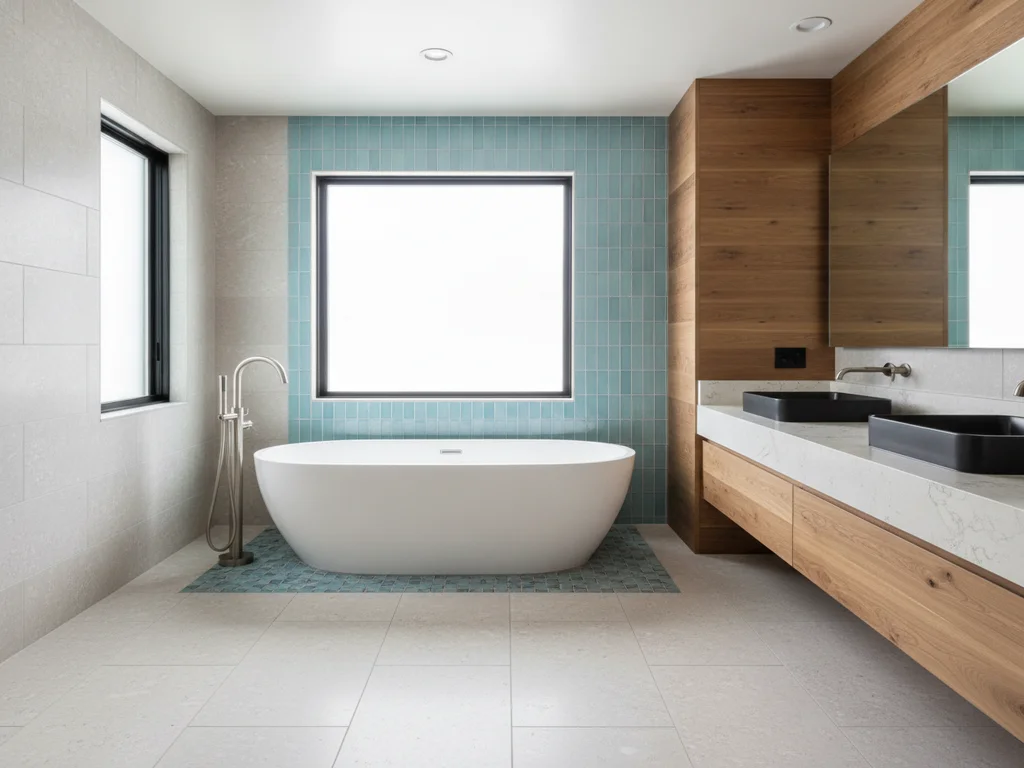
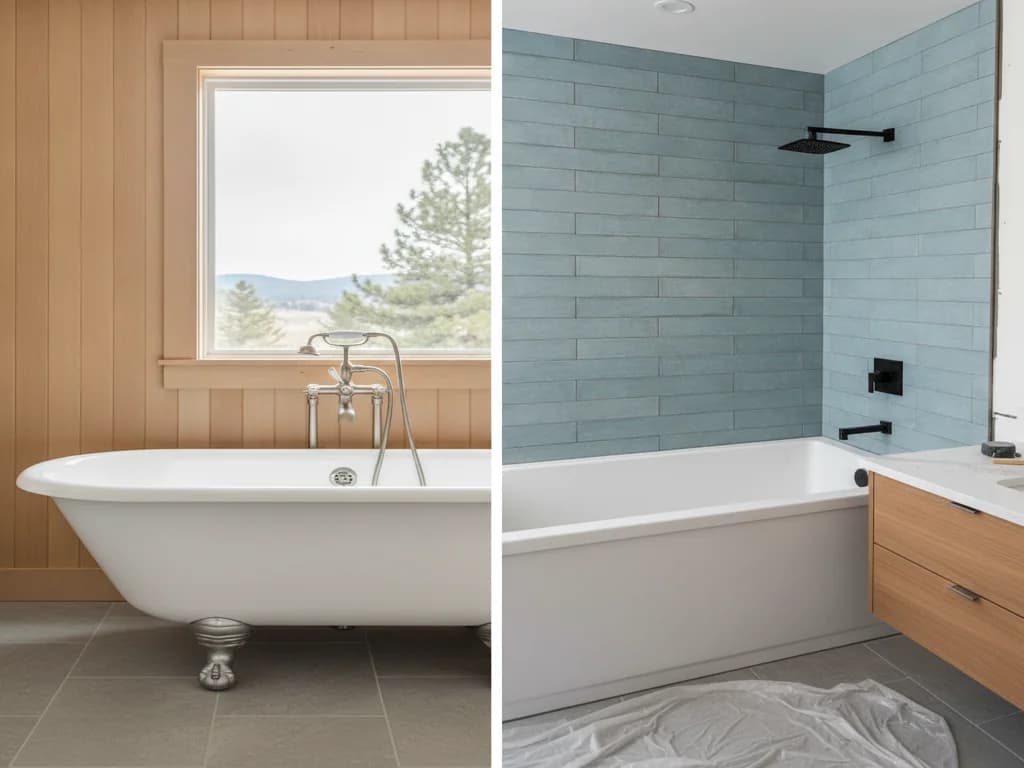
Bathtub replacement is really four different projects wearing one name. The install style of your existing tub — not the material — sets how invasive the demo is, how much finish work follows, and how long you are without a bathroom.
We break down each version in its own guide: replacing an alcove bathtub for the standard three-wall swap, replacing a drop-in tub for platform and deck-mounted tubs, and replacing a corner tub for the odd-footprint case.
| Tub type | What has to come out with it | Relative scope |
|---|---|---|
| Alcove (three-wall) | Some or all of the wall surround above the tub flange | Simplest |
| Drop-in / platform | The tiled or paneled deck the tub sits in, plus the skirt | Moderate to heavy |
| Corner tub | A corner deck plus finishes on two walls; replacements are size-limited | Heavy |
| Freestanding | Little beyond the tub filler connections and floor patching | Lightest demo |
Scope also grows with tile: a fully tiled surround or deck rarely survives demolition and gets rebuilt.
What does the demolition stage involve?
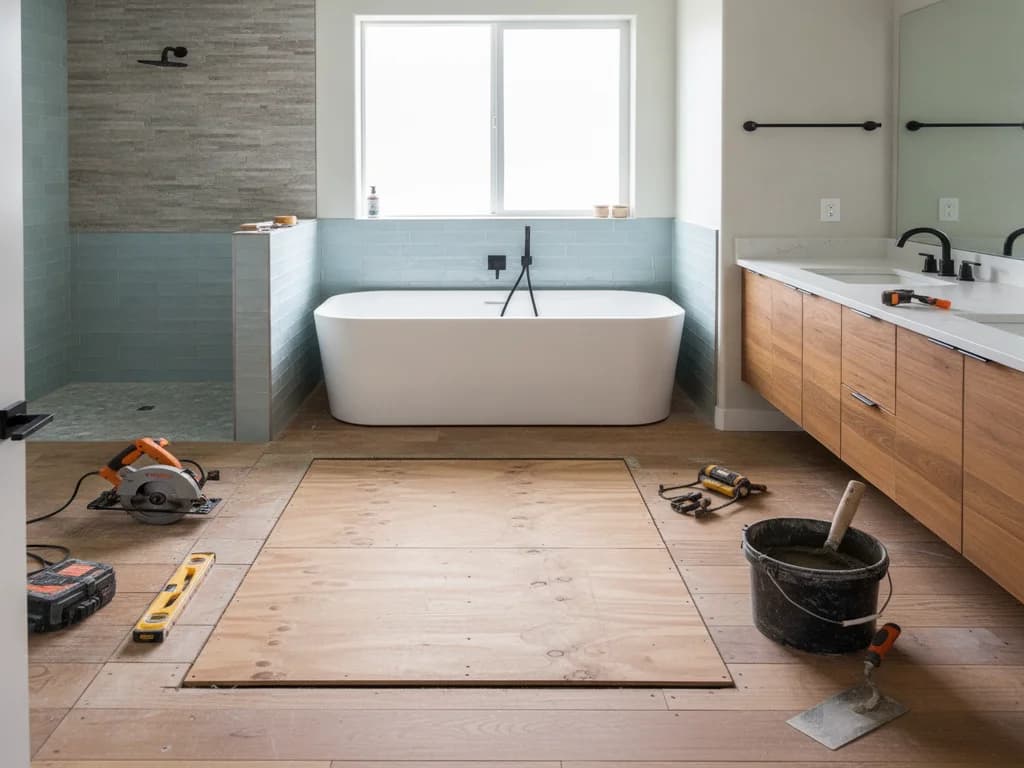
The water gets shut off, the drain and overflow are disconnected from below or through an access panel, and then the crew removes whatever finish material is holding the tub captive — the bottom courses of a tile surround for an alcove tub, or the deck top and skirt for a drop-in. Old tubs are heavy and awkward: a cast-iron tub often gets broken up in place with the room protected, while steel and acrylic tubs come out whole.
In homes built before the 1980s, demo can disturb old materials — some vintage tile setting beds, mastics, and flooring layers used asbestos, which the EPA recommends leaving to trained handling rather than dry-breaking. A licensed contractor knows what to test before tearing in.
Demo is your inspection window
Once the old tub is out, the subfloor, joists, trap, and valve are exposed for the only time in decades. Soft decking, a corroded trap, or an outdated valve should be fixed now, not after the new tub seals them in. Ask your contractor for photos of the open alcove before anything goes back.
What plumbing work comes with a new tub?
Almost every replacement touches the plumbing, even a like-for-like swap. The waste-and-overflow assembly is replaced rather than reused — new tubs and old assemblies rarely align, and a decades-old trap is cheap insurance to renew while it is exposed. If the new tub drain lands in a different spot, the trap gets relocated.
The valve is the judgment call. If the wall is already open, replacing a worn two-handle or builder-grade valve with a modern pressure-balanced one — the type Kohler, Delta, and Moen build to current code — costs far less now than as a standalone job later.
Because the drain, trap, and overflow are altered, the City of Boise Planning & Development Services requires a plumbing permit, with equivalents in Meridian, Nampa, Eagle, and the surrounding cities. Your contractor pulls it and schedules the rough-in inspection before anything closes up.
What happens to the walls and floor around the tub?
Plan on finish work, not just a tub swap. An alcove tub carries a surround from the rim up, and the demo almost always claims at least the bottom of it — matching 20-year-old tile is rarely realistic, so most projects rebuild the surround in full. Drop-in and corner tubs bring their decks with them.
The floor is the other edge to think about. If the new tub has a smaller footprint or the old one leaked for years, flooring repair enters the scope — we cover that specific problem in replacing the floor around a bathtub.
Material choices for the new tub itself — acrylic, enameled steel, cast iron, solid surface — are their own decision with real trade-offs in weight, feel, and durability; see bathtub materials compared before you order.
Should you replace like-for-like, or change the layout?
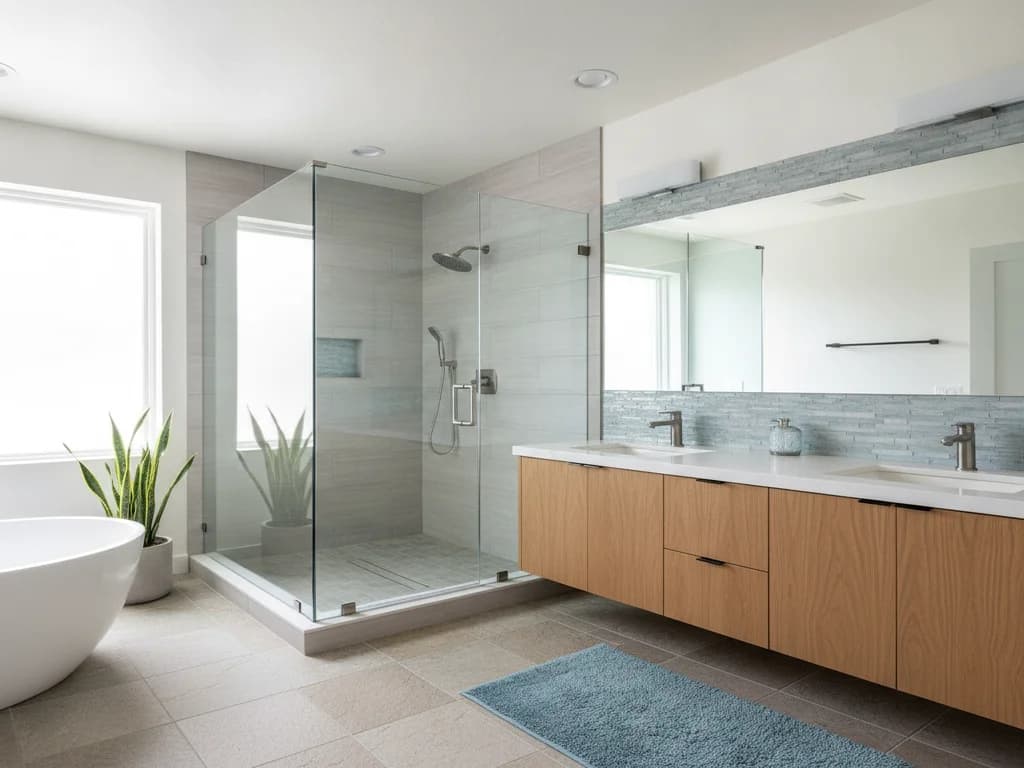
A replacement is the cheapest moment you will ever have to change what the space is. If nobody has taken a bath in years, converting the alcove to a walk-in shower costs meaningfully less as part of this project than as a separate one later — the demo and plumbing access overlap almost completely. We cover that path in replacing a bathtub with a walk-in shower.
The reverse is also true: keep at least one tub in the house if resale matters, since family buyers routinely filter for one. If the tub being replaced is your only one, like-for-like (or an upgrade in place) is usually the right call.
Timeline and what drives the cost
A straightforward alcove swap with a panel surround runs about two to three days; a tiled surround stretches it to roughly a week with cure times; drop-in and corner projects with deck rebuilds run longer. Hidden subfloor repair is the most common schedule surprise.
On cost, national guides such as HomeAdvisor and Angi put bathtub replacement broadly in the low thousands for a basic alcove swap up to five figures once tile, deck rebuilds, or premium tubs enter the picture — a range too wide to budget from. The tub type, the surround material, and what demo uncovers drive where you land; a fixed local bid beats a national average. The full breakdown is in our bathtub replacement cost guide.
What the process looks like
- 1
Confirm replacement over refinishing
The contractor checks whether the tub is structurally failing or just cosmetically tired, and whether the surround and subfloor are sound — sometimes the honest answer is a refinish, not a tear-out.
- 2
Identify the tub type and pick the new one
Alcove, drop-in, corner, or freestanding sets the scope. The new tub, surround material, and fixtures are selected and measured against the space and the path into the house before demo starts.
- 3
Protect the home and demolish
Floors and the path out are protected, the drain and overflow are disconnected, and the tub comes out along with whatever surround or deck holds it — cast iron often broken up in place, lighter tubs removed whole.
- 4
Inspect and rough in the plumbing
With the alcove open, the trap, drain line, and valve are evaluated and renewed or relocated as needed, a new waste-and-overflow is roughed in, and the permit inspection happens here.
- 5
Repair framing and subfloor
Soft or water-damaged decking is replaced, joists are checked for the filled-tub load, and a level ledger or deck framing is set so the new tub has solid, even bearing.
- 6
Set the new tub level
The tub is set — bedded in mortar where the manufacturer calls for it — shimmed dead level, fastened, connected to the drain and overflow, and fill-tested before any wall closes.
- 7
Rebuild the surround or deck
Backer board and waterproofing go up from the rim, then tile or a panel system is installed; drop-in and corner projects rebuild the deck top and skirt around the new tub.
- 8
Trim, seal, and close the permit
Valve trim, spout, and accessories go on, every joint is sealed, and the final inspection plus a full fill-and-drain test close out the job.
Ready to plan your Boise bathroom?
Licensed & insured · 3-year workmanship warranty
Frequently asked questions
- How long does it take to replace a bathtub?
- A like-for-like alcove swap with a panel surround typically runs two to three days. A tiled surround pushes the project to roughly a week because of cure times between waterproofing, tile, and grout. Drop-in and corner tubs with deck rebuilds run longer, and hidden subfloor repairs are the most common thing that adds a day or two.
- Can you replace a bathtub without replacing the tile around it?
- Rarely in a way worth doing. Freeing an alcove tub means removing at least the bottom courses of the surround, and matching discontinued tile cleanly is a long shot. Most projects budget for a full new surround — which is also the only way to renew the waterproofing behind it, where the real failures happen.
- Do I need a permit to replace a bathtub in Boise?
- Yes in nearly every real project. Renewing the waste-and-overflow, moving a trap, or swapping the valve all count as altering plumbing, which requires a permit through City of Boise Planning & Development Services or your city’s building department. A licensed contractor pulls the permit and handles the rough-in and final inspections.
- Is it cheaper to refinish a bathtub than replace it?
- Substantially, when the tub qualifies. Refinishing restores the surface of a structurally sound tub for a fraction of replacement cost, per national cost guides like HomeAdvisor — but it does nothing for a flexing base, a failing surround, or a leaking drain. Our refinishing vs. replacement guide walks through exactly when each one wins.
- What is the hardest type of bathtub to replace?
- Corner tubs, followed by drop-ins. Both sit in built decks that have to be demolished and rebuilt, and corner tubs add an odd footprint with limited like-for-like replacements on the market. A standard alcove tub is the simplest swap, and a freestanding tub is the lightest demo of all.
Sources
- HomeAdvisor — True Cost Guide
- Angi — Cost Guides
- City of Boise — Planning & Development Services
- EPA — Asbestos
- Kohler
Claims and figures are drawn from the sources above and provided for general guidance; your project may vary. Photography is illustrative of design concepts. For a fixed price on your specific bathroom, request a free estimate.