Updated July 5, 2026 · 8 min read
By Boise Bath — bathroom & shower remodeling in Boise & the Treasure Valley
The short answer
Refinishing a structurally sound bathtub costs $335–$630 and can last 10–15 years — the smart move for cosmetic wear, especially on a vintage or cast iron tub worth keeping. Replacement runs $1,390–$10,734 and is the better call for cracked, leaking, or moldy tubs. A tub-to-shower conversion is worth pricing too if you don't need a tub at all.
Key takeaways
- This Old House and Bob Vila both price professional bathtub refinishing at essentially the same rate — a $480–$481 national average, roughly $335–$630 — while Fixr and Bob Vila put full replacement at $5,000–$7,000 and $5,660 on average (range $1,390–$10,734), respectively.
- Refinishing works best on a tub that's structurally sound but cosmetically tired — chipping, scratches, a dull finish, or discoloration; Bob Vila specifically calls out tubs with "beautiful detailing and attractive shapes," its example being vintage and clawfoot tubs, as good refinishing candidates.
- This Old House is blunt about when to skip it: if the tub is leaking or moldy, "you'll have to replace it soon anyway" — refinishing a structurally compromised tub just delays a replacement you'll still need.
- A professional refinish lasts 10–15 years per Bob Vila (This Old House says a 10-year minimum, up to 15–20 for reglazing), while a DIY kit is a 2–3 year stopgap — a meaningfully shorter fix for a fraction of the cost.
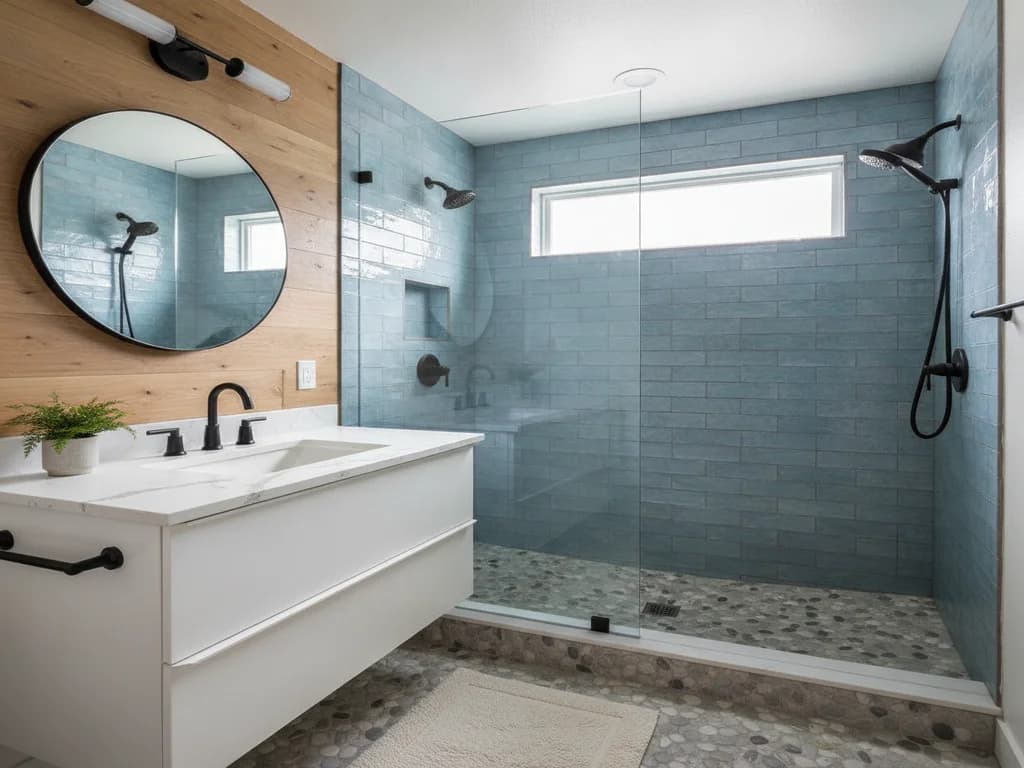
- Neither refinishing nor a like-for-like replacement changes your layout; if what you actually want is more usable space, Boise Bath's tub-to-shower conversion turns the same footprint into a walk-in shower instead of restoring or swapping the tub.
Bathtub refinishing vs. replacement — the honest starting point
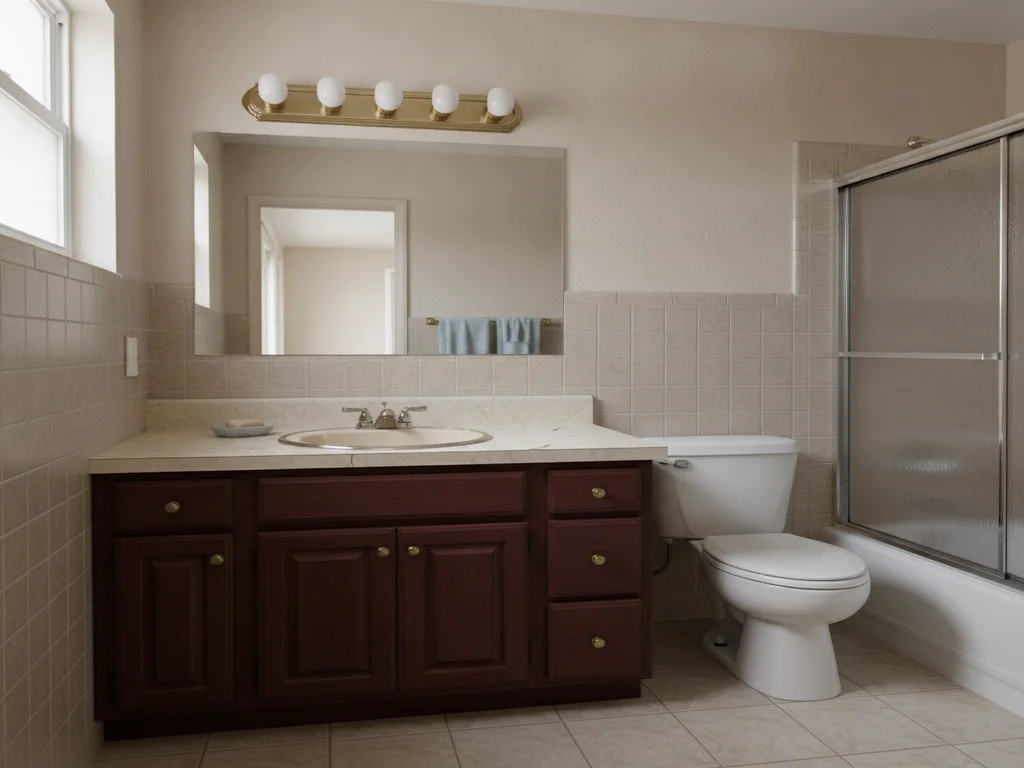
A worn, stained, or dated bathtub has three real paths forward: refinish the surface you have, replace it with a new one in the same footprint, or replace it with something different entirely — most often a walk-in shower. The first two get compared constantly; the third is worth putting on the table too, since it's often the option that actually solves the problem people are refinishing or replacing a tub to fix.
This comparison is deliberately honest about when refinishing is the smarter call, not just the cheaper one — because for a lot of tubs, especially older cast iron ones, it genuinely is.
How to read this comparison
If your tub is structurally sound and just looks tired, refinishing is usually the right first call — especially on a vintage or cast iron tub worth keeping. If the tub is cracked, leaking, or you want a different size, shape, or material, replacement is worth the extra cost. And if you never use the tub at all, converting it to a shower solves a different problem than either option does.
Quick comparison
A side-by-side on the factors that actually decide this for most homeowners.
| Factor | Refinishing | Replacement |
|---|---|---|
| Typical cost | $335–$630, avg ~$480 (This Old House, Fixr, Bob Vila) | $1,390–$10,734, avg $5,660 (Bob Vila); $5,000–$7,000 (Fixr) |
| Timeline | Usually 1–3 days, tub unusable while it cures | Days to over a week with demo, plumbing, and surround work |
| Lifespan | 10–15 yrs professional (Bob Vila); 2–3 yrs DIY kit | 10–15 yrs fiberglass; 20–50 yrs jetted (Bob Vila) |
| Best for | Cosmetic wear on a structurally sound tub — including vintage cast iron worth preserving | Cracked, leaking, or structurally damaged tubs; changing size or material |
| Disruption | Low — no demo, plumbing untouched | Higher — removal, disposal, possible plumbing work |
| Changes the layout? | No — same tub, new surface | Only with a different size or shape; a full conversion changes it entirely |
Cost: what does each one actually run?
This Old House prices bathtub refinishing at $335–$630, averaging $480, broken down by material: fiberglass $250–$600, porcelain $350–$600, cast iron $300–$650, enamel $350–$600 — with a bath-shower combination running $500–$1,000. Fixr lands in the same neighborhood at $350–$650 (avg $480), and Bob Vila is close behind at $335–$628 (avg $481), pricing acrylic at $400–$700 and steel at $300–$700. Cheaper alternatives exist too: This Old House prices a bathtub inlay at $100–$200 and a liner at $1,700–$2,500, while a basic DIY refinishing kit runs under $100 — though Bob Vila notes labor is about 80% of a professional refinishing job, and DIY work sacrifices most of that professional durability.
Replacement costs far more. Bob Vila's national average is $5,660, with a typical range of $1,390–$10,734 and outliers as low as $750 or as high as $20,000; Fixr's simpler estimate lands at $5,000–$7,000. Bob Vila breaks down where that money goes: $50–$100 to remove the old tub (more for cast iron, which often has to be broken up with a sledgehammer), $100–$4,200 to dispose of the materials, $300–$800 in surface prep, $500–$2,000 for a new surround, and $400–$1,900 in plumbing work — on top of the tub itself, which ranges from $200–$800 for a basic tub up to $1,500–$17,000 for a jetted one.
Boise Bath doesn't offer refinishing — a coating job isn't a structural fix, and it's a specialty trade of its own. What we do build is a full tub-to-shower conversion, published at $8,000–$15,000, for households who've decided a tub — refinished or new — isn't what they actually want in that space.
When refinishing genuinely wins
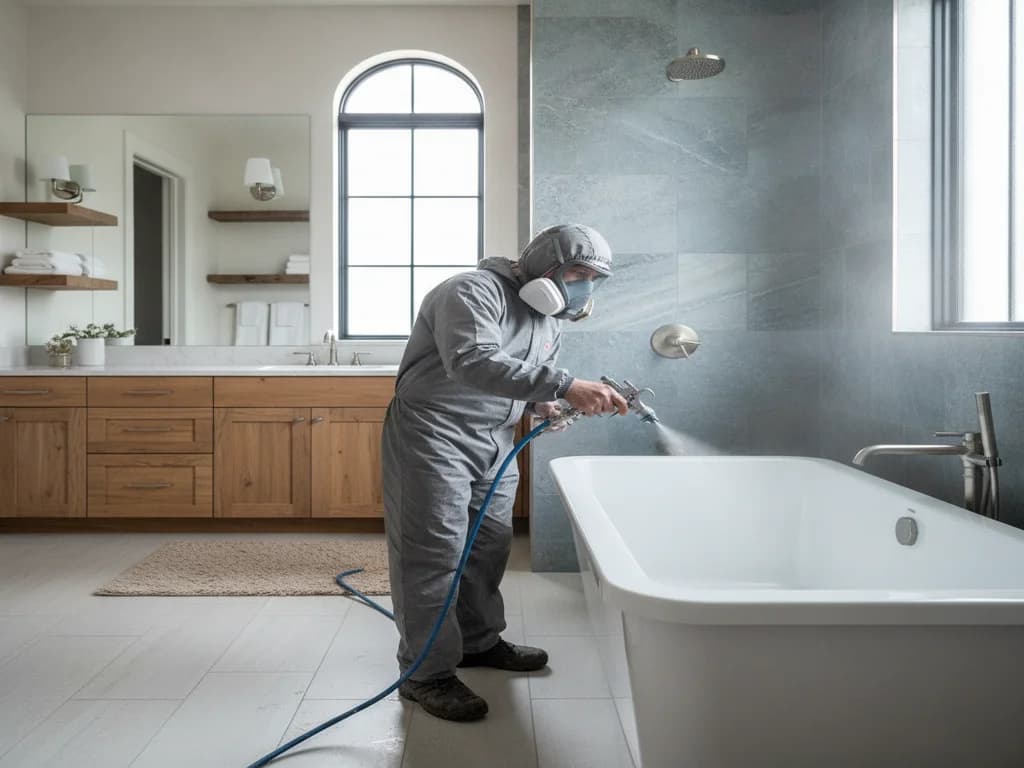
Refinishing is the right call more often than the replacement industry likes to admit. This Old House's own guidance says it plainly: refinishing suits a tub with chipping, scratches, a dull finish, or discoloration — cosmetic problems, not structural ones. Bob Vila goes further, specifically calling out tubs with "beautiful detailing and attractive shapes" as good refinishing candidates: think a vintage clawfoot or a cast iron built-in with real character, where the tub itself is worth keeping and the finish is the only thing that's failed.
That's the honest case for refinishing a vintage cast iron tub: This Old House's own clawfoot refinishing price tops out at $650, while sourcing a comparable antique or reproduction clawfoot can run well past that. Cast iron is also durable enough that the base metal usually outlasts several finishes. If budget is the deciding factor and the tub has no structural problems, refinishing at roughly a tenth of the replacement cost is a legitimately smart move, not just a cheap one.
When replacement genuinely wins
Skip refinishing if the tub is cracked, leaking, or moldy — This Old House is direct about this: a compromised tub means "you'll have to replace it soon anyway," so refinishing it first just adds a cost you didn't need to spend. Significant structural damage, or plumbing that already needs to come out, points the same direction.
Replacement also wins when you want something refinishing can't give you: a different size, shape, or material — moving from a builder-grade tub to a soaking or jetted one, for instance — or a tub that's simply reached the end of its working life. And if you're already planning a fuller bathroom remodel, replacing the tub as part of that project makes more sense than paying for a standalone refinish you'll demo anyway; NerdWallet's Cost vs. Value–sourced data shows a mid-range bathroom remodel can recoup up to 80% of its cost at resale, a return refinishing alone doesn't factor into.
The third option: what if you don't want a tub at all?
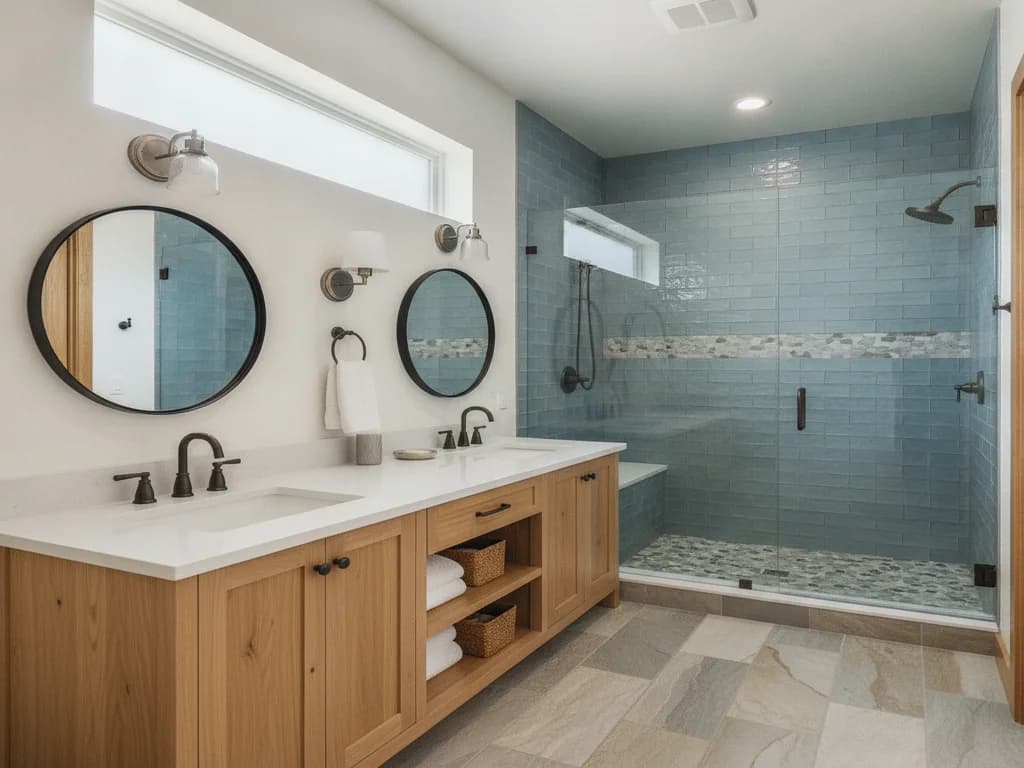
Refinishing and replacement both assume you want to keep a bathtub in that spot. For a lot of households — especially if the tub already goes unused — that's the wrong assumption. A tub-to-shower conversion removes the tub entirely and replaces it with a walk-in shower in the same footprint, sidestepping the refinish-or-replace decision by solving the actual problem: an underused tub taking up space that could be a shower you'll use every day.
See our tub-to-shower conversion ideas and what a conversion costs in Boise if that's a real option worth weighing against refinishing or replacing the tub itself.
The bottom line
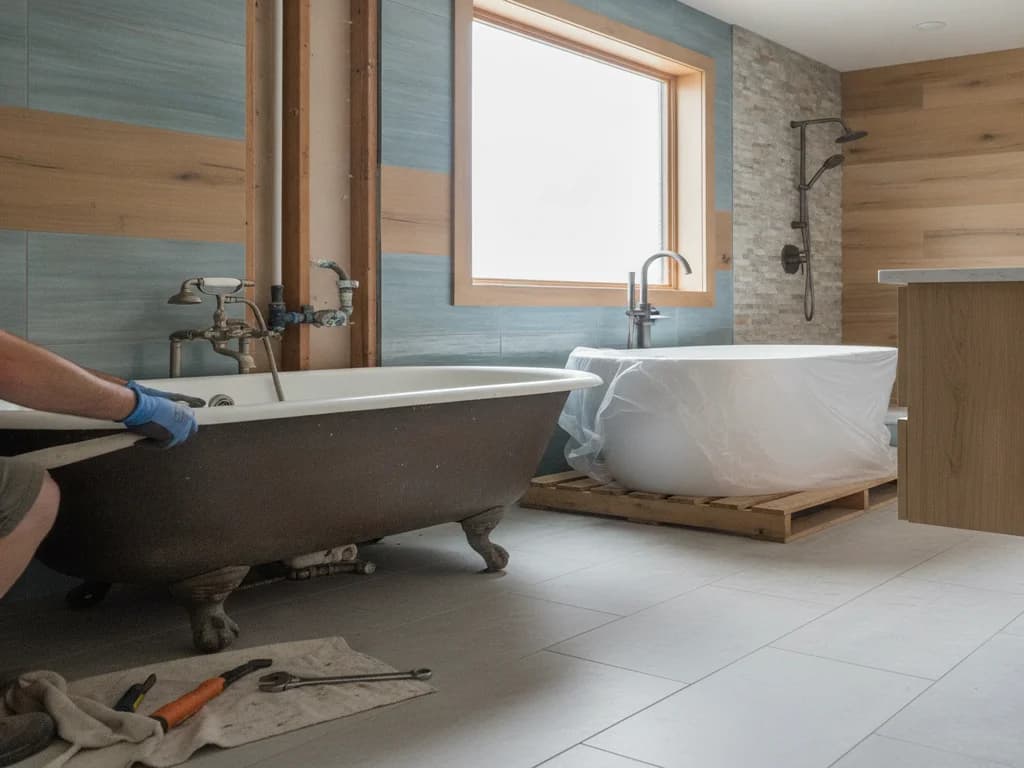
Start with the tub's condition, not its age. If it's structurally sound and just looks worn — especially if it's a vintage or cast iron tub worth preserving — refinishing at a few hundred dollars is the honest, practical choice. If it's cracked, leaking, or you want something different, budget for a real replacement instead of a refinish that won't hold. And if the tub itself is the problem — you never use it — a tub-to-shower conversion is worth pricing out before you spend on either option.
Ready to plan your Boise bathroom?
Licensed & insured · 3-year workmanship warranty
Frequently asked questions
- Is it cheaper to refinish a bathtub or replace it?
- Refinishing, by a wide margin. This Old House and Bob Vila both average bathtub refinishing around $480, with a typical range of $335–$630. Full replacement averages $5,660 per Bob Vila (range $1,390–$10,734) or $5,000–$7,000 per Fixr — roughly ten times the cost of a professional refinish.
- Is it worth refinishing a vintage or cast iron bathtub?
- Often, yes. Bob Vila specifically recommends refinishing for tubs with "beautiful detailing and attractive shapes," and This Old House prices cast iron and clawfoot refinishing at $300–$650 — far less than sourcing a comparable antique or reproduction tub. Refinishing only makes sense if the tub itself is structurally sound; skip it if there's cracking, leaking, or mold.
- How long does a refinished bathtub last?
- A professional refinish lasts 10–15 years with proper care, per Bob Vila, and This Old House puts reglazing specifically at 15–20 years. A DIY refinishing kit is a shorter-term fix — Bob Vila estimates just 2–3 years — which is worth weighing against its small upfront savings.
Sources
- This Old House — How Much Does Bathtub Refinishing Cost? (2026)
- Fixr — How Much Does It Cost to Refinish a Bathtub?
- Bob Vila — How Much Does Bathtub Refinishing Cost?
- Bob Vila — How Much Does It Cost to Replace a Bathtub?
- NerdWallet — Bathroom Remodel Cost in 2026: Is It Worth It?
Claims and figures are drawn from the sources above and provided for general guidance; your project may vary. Photography is illustrative of design concepts. For a fixed price on your specific bathroom, request a free estimate.