Updated July 16, 2026 · 7 min read
By Boise Bath — bathroom & shower remodeling in Boise & the Treasure Valley
The short answer
Replacing a tub surround runs roughly $600–$3,000 installed nationally for panel systems, per HomeAdvisor, while tiled surrounds typically land higher once demo, backer, and waterproofing are included. Panel material, wall condition behind the old surround, and whether the valve gets replaced while the walls are open drive the final number.
Key takeaways
- HomeAdvisor’s national data puts panel tub surround replacement roughly between $600 and $3,000 installed, with material tier driving most of the spread.
- A tiled surround costs more than panels: This Old House prices ceramic and porcelain tile at $12–$30 per square foot installed, before demo, backer, and waterproofing.
- The condition of the walls behind the old surround is the biggest unknown — leaking seams usually mean prep work before anything new goes up.
- The valve decision is a one-time window: replacing an old tub/shower valve while the walls are open costs far less than opening them again later.
- A surround swap only makes sense over a tub worth keeping — a worn or damaged tub under new walls is the classic sequencing mistake.
What does a tub surround cost to replace?
HomeAdvisor’s national cost data puts tub surround replacement roughly between $600 and $3,000 installed for panel systems — the glue-up or fastened wall kits that cover the alcove walls above the tub. The spread inside that range is mostly material: basic fiberglass kits at the bottom, solid-surface and stone-look composite panels at the top.
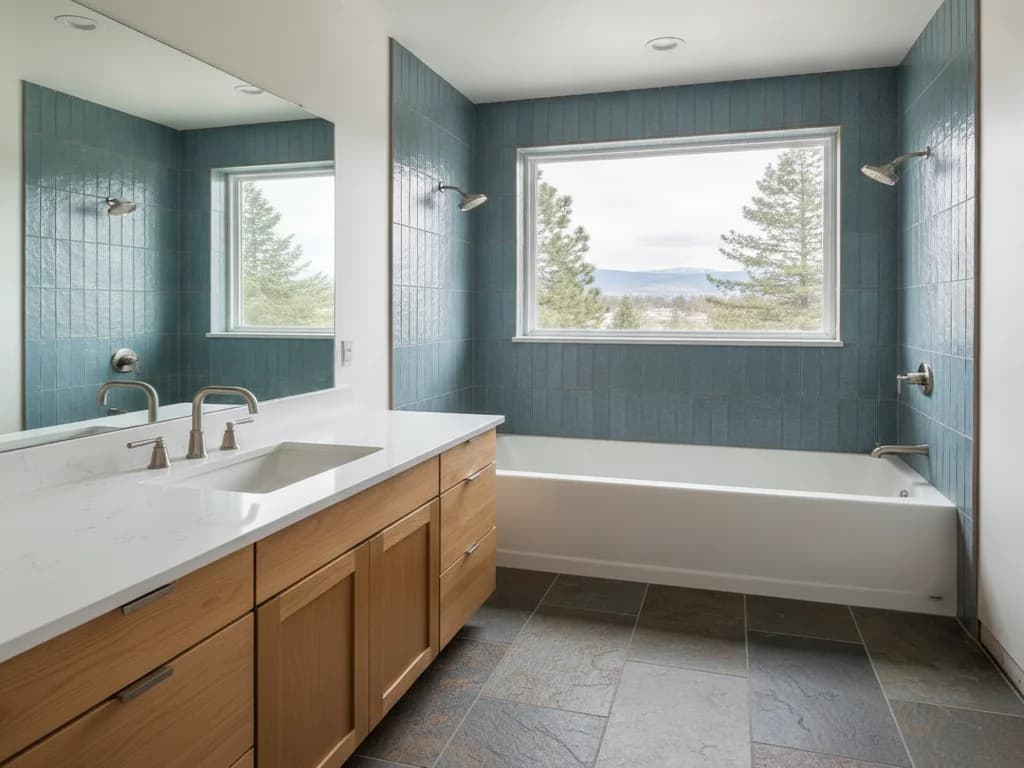
A tiled surround is the tier above panels. Tile is priced by area — This Old House puts ceramic and porcelain at $12–$30 per square foot installed and natural stone at $20–$50 — and a tiled surround also carries demo, cement backer, and a waterproofing layer that panel kits do not itemize the same way. On a typical three-wall alcove, that stack lands tiled surrounds meaningfully above the panel range.
What the replacement actually involves — and how to tell a surround problem from a tub problem — is covered in our guide to replacing a tub surround. This article stays on the money.
Cost by surround tier
Surround options ladder up in four tiers, and the jumps between them are driven by material and by how much wall assembly work sits behind the finished surface:
| Surround tier | National range (installed) | Source |
|---|---|---|
| Basic fiberglass / PVC panel kit | Roughly $600–$1,500 | HomeAdvisor |
| Acrylic panel system | Roughly $1,000–$3,000 | HomeAdvisor |
| Solid-surface / composite panels | Top of the panel range and above | Angi |
| Tiled surround (ceramic/porcelain) | $12–$30 per sq ft installed for the tile, plus demo, backer, and waterproofing | This Old House |
National figures. A typical three-wall tub alcove carries roughly 50–80 square feet of wall surface, which is why the per-square-foot tile math adds up quickly.
Panels vs. tile: how to think about the gap
Panels win on speed and price: a panel surround over sound walls is a one- to two-day job with no grout to maintain, and modern composite panels read far closer to tile than the flimsy kits of twenty years ago. For a rental, a hall bath, or a budget-focused refresh over a good tub, panels are the honest value play.
Tile wins on looks, longevity, and design range — and costs more because it is a built assembly, not a covering. Behind the tile goes cement backer and a waterproofing membrane, and the tile itself is set piece by piece. You are paying for a wall system, which is also why a failing tiled surround costs more to redo than a failing panel one.
The middle path some homeowners miss: high-end composite panels over a properly prepped wall capture most of tile’s visual upgrade at panel-tier labor. Where each option genuinely fits is a design call — the budget just needs to know which tier it is standing in.
The wall behind the surround: the biggest unknown
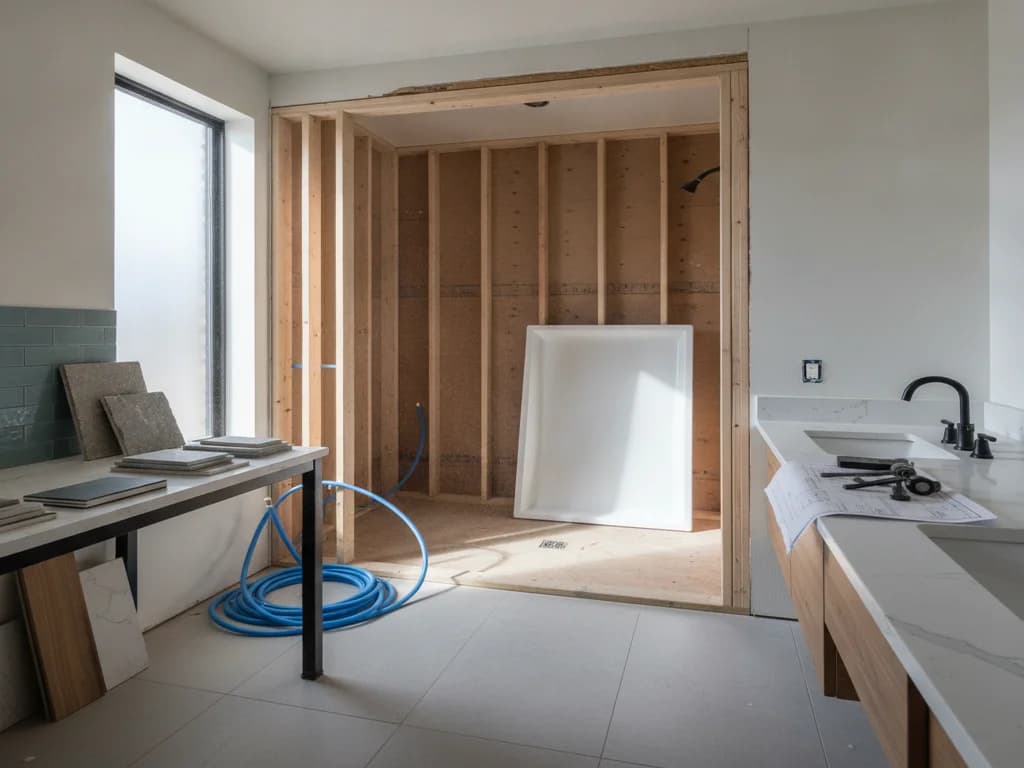
The number-one escalator in surround replacement is what demo reveals. Old surrounds usually come down because seams leaked or panels cracked — and if water has been getting behind the walls, the drywall or backer behind them is compromised. New panels need a sound, plumb substrate; new tile needs proper backer and waterproofing. Neither goes over damp framing honestly.
Budget-wise, that means the same surround swap can be a straightforward one-day install on one house and a wall-rebuild-plus-surround on another. A contractor should probe or open the walls before quoting a fixed number — a bid that assumes perfect walls is a bid that changes on demo day.
Never re-cover a wet wall
A new surround over moisture-damaged walls seals the problem in — mold and rot keep working behind a surface you just paid for. If the old surround leaked, wall repair belongs in the budget before anything new goes up.
The valve window: the upgrade that is cheap now and expensive later
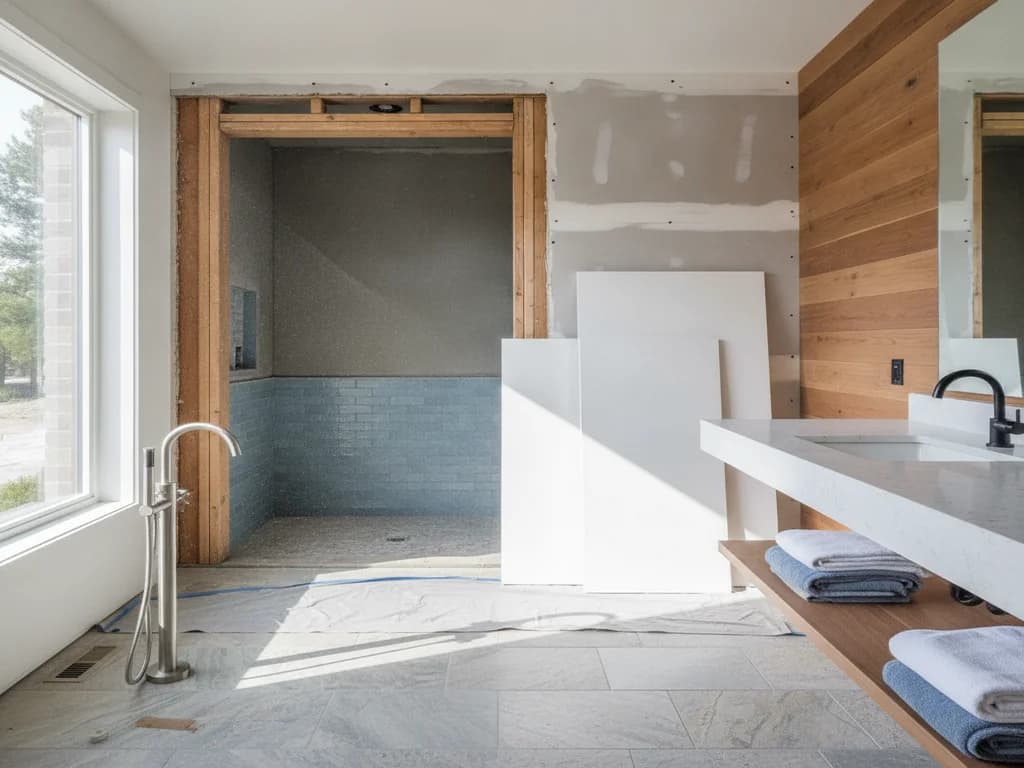
With the surround off, the tub/shower valve is sitting exposed in an open wall — the only cheap access it will ever have. If the valve is an older two-handle unit or has been temperamental, replacing it during the surround job adds a plumbing line item; replacing it two years later means cutting open the wall you just finished.
The same window applies to smaller decisions: a new tub spout and diverter, blocking for future grab bars, or a shower head height change. None of these are expensive while the wall is open, and all of them are annoying afterward. A good bid asks about the valve; a great homeowner asks first.
Surround vs. tub: make sure you are fixing the right thing
A surround swap only pays off over a tub worth keeping. If the tub itself is chipped, stained beyond cleaning, or an awkward builder-grade unit you have never liked, new walls above it just frame the problem. Whether the tub can stay is its own decision — covered in our guide on replacing a tub surround without replacing the tub — and if the tub goes too, you are pricing a different project, covered in our bathtub replacement cost breakdown.
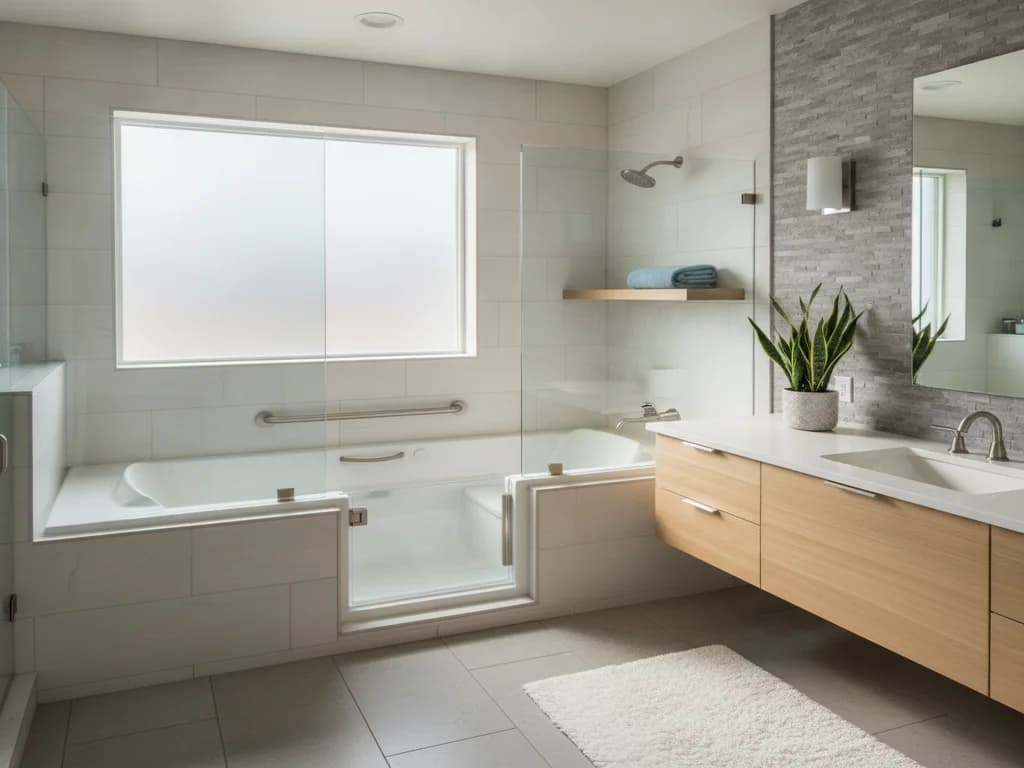
And if nobody has taken a bath in that tub in years, the surround failing is the natural decision point for a tub-to-shower conversion instead — the demo work overlaps heavily, so the surround budget becomes a down payment on the layout you actually want.
Getting a real number for your tub surround
Nationally: roughly $600–$3,000 installed for panel systems per HomeAdvisor, more for tile at This Old House’s $12–$30 per square foot plus the assembly behind it. Where your project lands depends on the tier you choose, what is behind the old walls, and what you decide to handle while they are open.
Boise Bath provides fixed-price quotes through a free in-home estimate — wall condition checked and valve conversation had before the number is set, so it holds. For a broader project starting point, our bathroom remodel cost calculator takes two minutes.
Ready to plan your Boise bathroom?
Licensed & insured · 3-year workmanship warranty
Frequently asked questions
- How much does it cost to replace a tub surround?
- Roughly $600–$3,000 installed nationally for panel systems, per HomeAdvisor — basic fiberglass kits at the bottom, acrylic and composite panels toward the top. A tiled surround runs higher: This Old House prices ceramic and porcelain at $12–$30 per square foot installed, plus demo, backer board, and waterproofing behind the tile.
- Is a tile tub surround worth the extra cost over panels?
- If you plan to stay in the home and the bathroom matters to you, tile buys design range and longevity that panels cannot match. If the goal is a clean, durable, low-maintenance refresh — especially over a good tub in a secondary bath — modern composite panels deliver most of the visual upgrade at a fraction of the assembly cost. Neither answer is wrong; they are different tiers.
- Can I put a new tub surround over the existing one?
- Cover-over products exist, but layering a new surround over an old one that leaked traps moisture against the wall — the failure that took down the first surround keeps working behind the second. The durable path is removing the old surround, verifying the walls are dry and sound, and installing the new system on a proper substrate.
- What makes a tub surround quote come in higher than the national range?
- Almost always the wall behind it: moisture damage from the old surround’s seams means drywall or backer replacement, and sometimes framing repair, before the new surround goes up. Valve replacement, a window in the wet wall, and premium panel or tile selections are the other common adders. A bidder who probes the walls first is pricing the real job.
- Should I replace the tub at the same time as the surround?
- If the tub is in good shape and you like it, no — that is the whole appeal of a surround-only job. But if the tub is chipped, stained, or one you have always disliked, replacing both at once shares the demo and plumbing access, and avoids paying for new walls around a tub you replace two years later. The tub decision should come before the surround quote.
Sources
- HomeAdvisor — True Cost Guide
- Angi — Cost Guides
- This Old House — Bathrooms
- Tile Council of North America (TCNA)
Claims and figures are drawn from the sources above and provided for general guidance; your project may vary. Photography is illustrative of design concepts. For a fixed price on your specific bathroom, request a free estimate.