Updated July 6, 2026 · 8 min read
By Boise Bath — bathroom & shower remodeling in Boise & the Treasure Valley
The short answer
Shower tile cost is driven by waterproofing (membrane and backer board), tile material and format, pattern complexity, and built-in features like niches and benches. Fixr (2026) prices a full shower tiling project at $1,800–$5,000, with niches running $100–$400 each and benches $100–$500 — on top of $4–$15 per square foot in base labor.
Key takeaways
- Fixr (2026) prices a full shower tiling project at $1,800–$5,000, averaging $2,700 — a wider range than a bathroom floor because a shower has to be watertight, not just wear-resistant.
- Waterproofing is not optional in a shower: This Old House prices a backer board and waterproofing system at $800–$1,500 installed, on top of the tile itself.
- A built-in shower niche runs $100–$400 and a bench $100–$500, per Fixr — modest individually, but each is its own framing, waterproofing, and tile-cutting step.
- Pattern complexity stacks on top of material cost: Fixr prices herringbone and diagonal layouts at roughly +20% over a straight layout, with accent walls adding +20–30%.
- This is a shower-specific companion to our broader bathroom tile installation cost factors piece — that one covers tile labor cost bathroom-wide; this one is about what is unique to a wet, waterproofed shower enclosure.
Why does shower tile cost more than other tiled surfaces?
A shower is not just a tiled room — it is a tiled enclosure that has to hold water back completely, every day, for decades. Fixr (2026) prices a full shower tiling project at $1,800–$5,000 with a $2,700 average, but notes the range runs from a builder-grade $900 job up to $10,000 for a pebble-and-marble build — a wider spread than most tiled surfaces in the house, because a shower stacks waterproofing, plumbing coordination, and built-in features on top of the tile itself.
We have a companion piece on bathroom tile installation cost factors that covers labor drivers across a bathroom generally — substrate prep, format, and pattern. This article is narrower on purpose: the 7 factors below are what specifically drives cost inside a shower enclosure, where every one of them touches water management in a way a bathroom floor tile job does not.
The shower-specific difference
A bathroom floor gets wet occasionally and dries. A shower is designed to be soaked daily and stay watertight behind the tile indefinitely. That single requirement is why waterproofing, niches, benches, and pattern all cost more inside a shower than the same features would elsewhere in the room.
1. Waterproofing integration
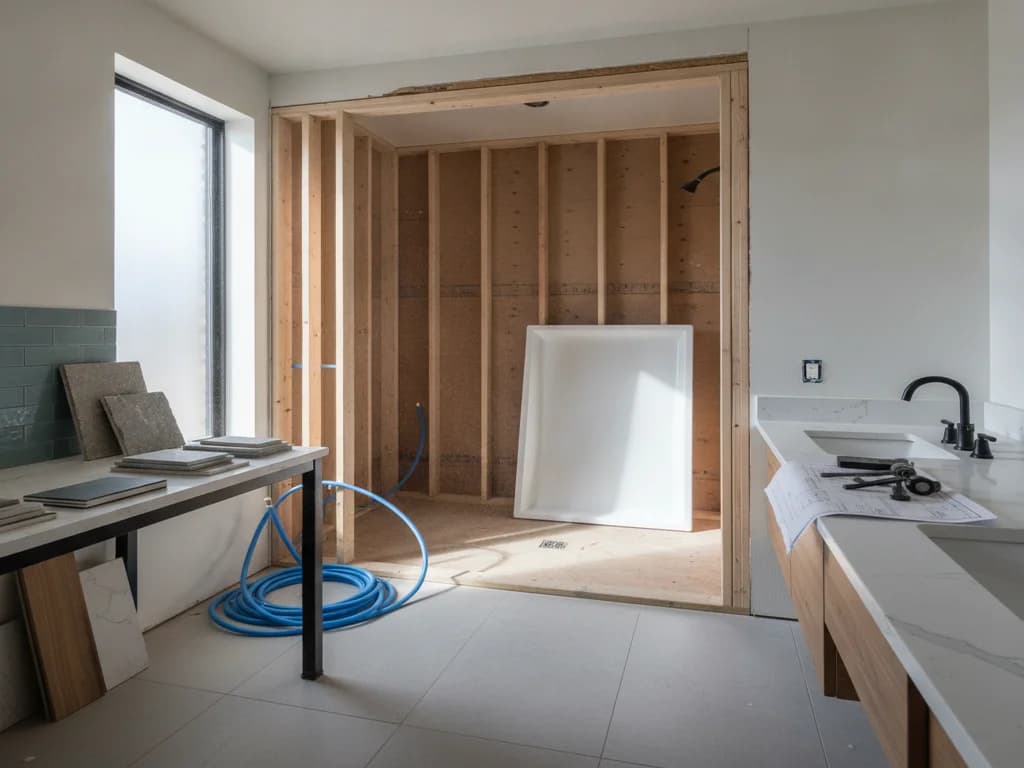
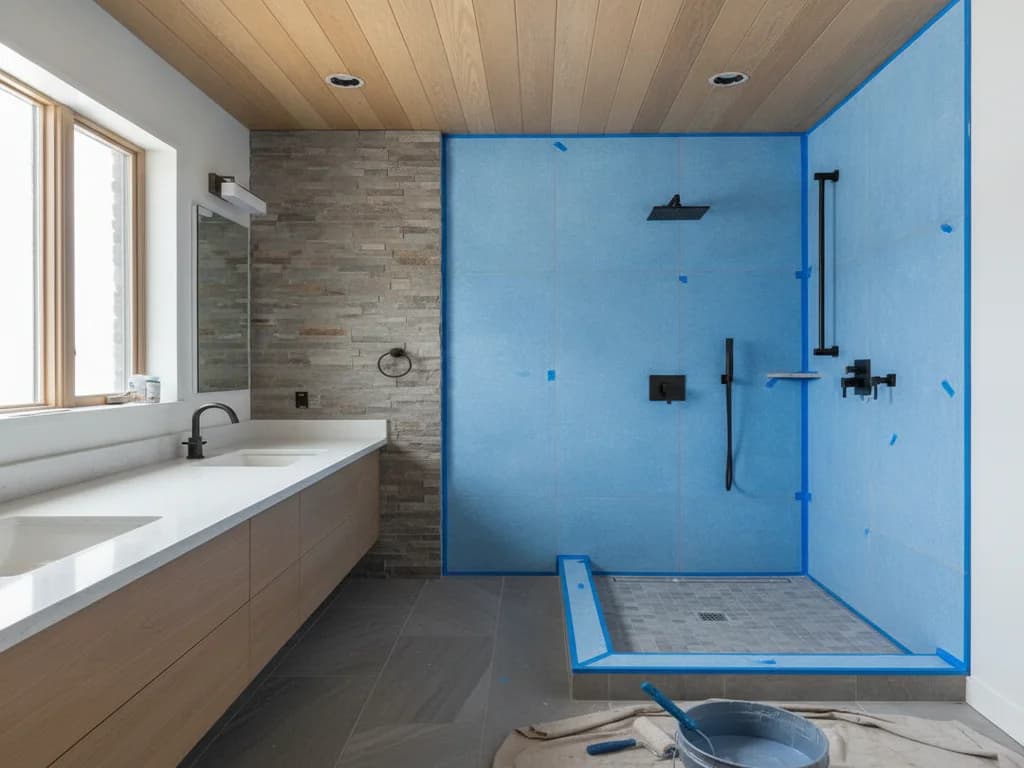
Waterproofing in a shower is not a coating applied after the fact — it has to be built into the wall assembly before a single tile goes on. This Old House describes the sequence: install cement backer board across the entire shower surround, then apply a waterproofing membrane (a paint-on product like Redgard is common) "according to the manufacturer's guidelines," curing before tile ever touches the wall.
This Old House prices a backer board and waterproofing system at $800–$1,500 installed — a meaningful line item before any tile cost is added. Fixr separately prices the membrane material itself at around $10 a roll, which shows how much of that $800–$1,500 figure is precision labor rather than material: getting the membrane fully sealed at every seam, corner, niche, and bench edge is what keeps water out of the wall assembly for good.
2. Shower niches
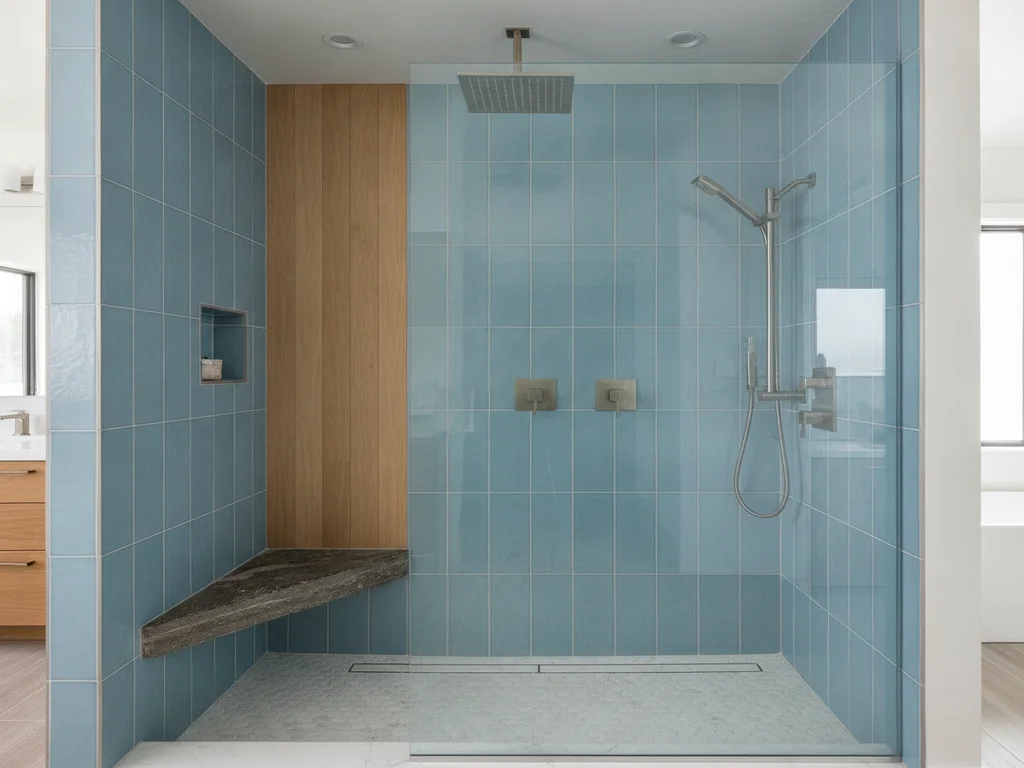
A recessed niche for shampoo and soap looks like a simple design feature, but building one means framing a recess into the wall, waterproofing every interior surface of that recess (more corners than a flat wall), and cutting tile to fit inside it — often in a contrasting or accent tile. Fixr (2026) prices a shower niche at $100–$400 each, a modest number that reflects a compact footprint but real added labor relative to its size.
Niche placement also has to be planned before the wall closes up, since blocking sometimes needs to go in behind the recess depending on where it lands relative to studs — one more reason this is a decision made early rather than added as an afterthought once tile is underway.
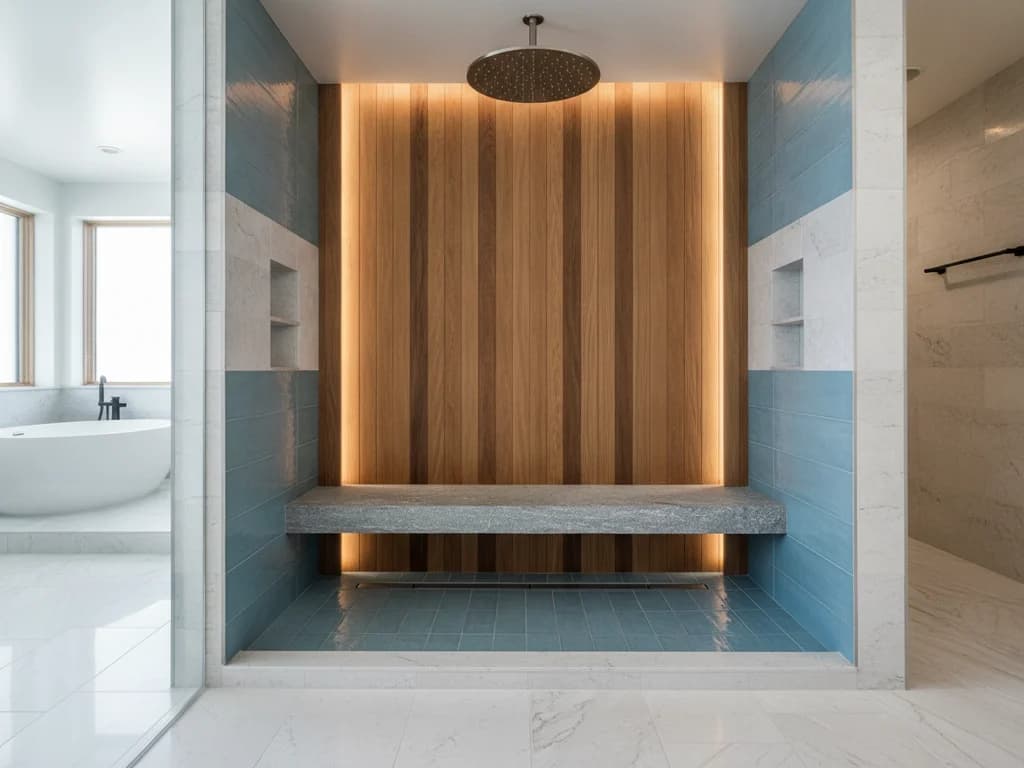
3. Shower benches
A built-in bench adds a horizontal surface, a slope for water drainage off that surface, and waterproofing on every edge where the bench meets the wall and floor. Fixr (2026) prices a shower bench at $100–$500 — like the niche figure, this is the incremental line item cost, and it assumes the bench is built as part of the shower's existing framing and waterproofing process rather than added after the fact.
A freestanding teak or stone bench set on the shower floor avoids the framing and waterproofing work entirely, which is why it is the lower-cost, lower-commitment alternative to a built-in bench when budget is the deciding factor — see our shower niche ideas guide for how niches and benches are often planned together on the same wall.
4. Tile material
Material changes the per-square-foot number directly. Fixr (2026) prices installed shower tile at $4.25–$110 per square foot for ceramic, $17–$46 for porcelain, $13–$65 for marble, $17–$65 for granite, $19–$65 for glass, and $42–$70 for pebble tile — glass and pebble sit at the high end because both require extra setting and finishing care, while ceramic's wide range reflects everything from builder-grade to premium designer product under one material category.
Base labor runs $4–$15 per square foot across most of these materials, per Fixr, before any of the other factors on this list are added on top.
5. Pattern complexity
A straight, stacked layout is the labor baseline for shower tile; any pattern on top of that adds a percentage. Fixr (2026) prices a running bond layout at +10–15%, a diagonal or herringbone layout at roughly +20% each, a full accent wall at +20–30%, and a decorative border at +10–30% — and these stack, so a herringbone accent wall with a contrasting border can run well past 30% over the equivalent straight, unbordered layout.
| Pattern / feature | Typical cost adder |
|---|---|
| Running bond | +10–15% |
| Diagonal | +20% |
| Herringbone | +20% |
| Accent wall | +20–30% |
| Decorative border | +10–30% |
Source: Fixr (2026). Percentages are additive on top of the base per-square-foot labor rate for the material chosen.
6. Shower pan and drain
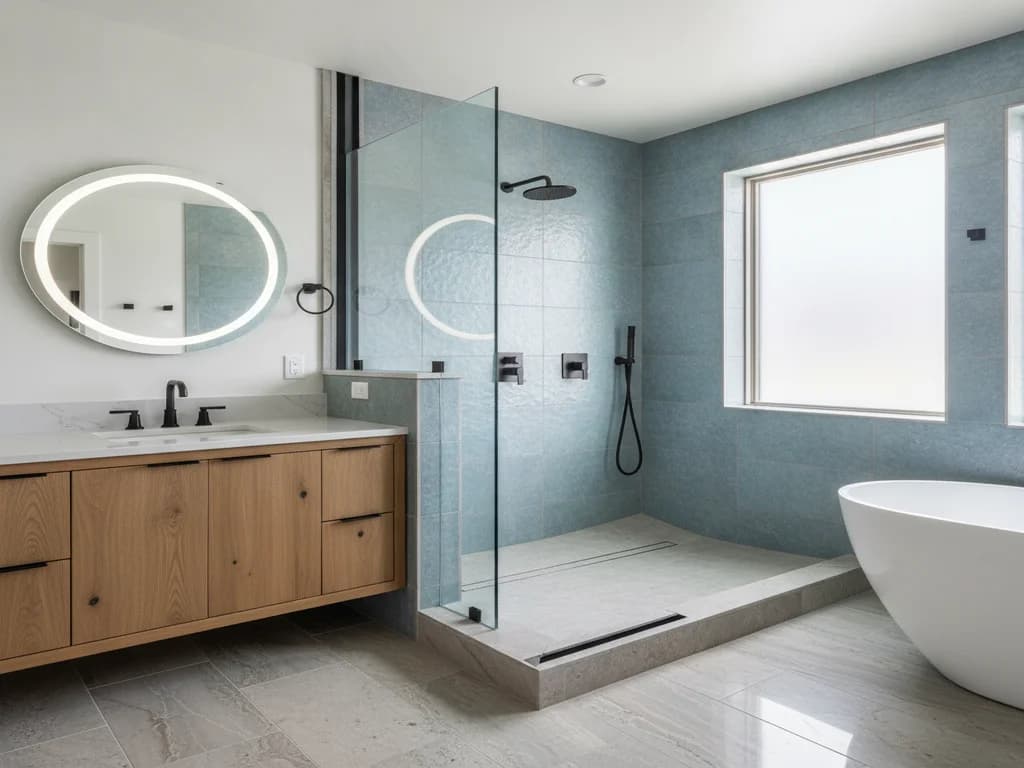
The sloped floor a shower drains onto is its own build, separate from the wall tile. This Old House prices a prefabricated shower pan at $800–$1,500 installed, versus $1,200–$3,000 for a custom-tiled shower floor built with a traditional mortar bed — the custom option costs more because it is built and sloped on site rather than dropped in as a manufactured unit, but it allows a linear drain and full-size matching tile that a prefab pan cannot.
7. Plumbing coordination
Every valve, shower head, and body spray location has to be roughed in and pressure-tested before the wall closes and the waterproofing membrane goes on — which means tile installation on a shower has to be sequenced around the plumber's rough-in, not run independently of it. A remodel that relocates a shower valve or adds a second shower head mid-project after tile planning has already started is one of the more common sources of schedule and cost friction on a shower job specifically, because it can mean reopening a wall that was already waterproofed.
This is also why a fixed, itemized shower quote is worth insisting on rather than a rough per-square-foot estimate: the plumber and tile setter have to agree on exact valve, niche, and shower-head heights before either trade starts, and a bid that has not gone through that coordination step is more likely to run into change orders once work begins.
The 7 factors at a glance
If you are comparing two shower tile bids, this is the fastest way to see where the numbers diverge — a "cheaper" quote is often missing one of these line items rather than pricing the same scope more efficiently.
| Factor | Typical cost | Source |
|---|---|---|
| Full shower tiling project | $1,800–$5,000 ($2,700 avg) | Fixr |
| Backer board + waterproofing system | $800–$1,500 | This Old House |
| Shower niche | $100–$400 each | Fixr |
| Shower bench | $100–$500 | Fixr |
| Prefab shower pan | $800–$1,500 | This Old House |
| Custom-tiled shower pan | $1,200–$3,000 | This Old House |
| Base tile labor | $4–$15 per sq ft | Fixr |
Ranges reflect 2026 national data from Fixr and This Old House. Actual pricing depends on shower size, tile material, and local labor rates.
How to budget for a tiled shower specifically
The most reliable way to compare shower tile bids is to ask whether each one separately itemizes waterproofing, the pan, and any niche or bench — the difference between two quotes for a "similar" shower is almost always one of these being included in one bid and assumed-but-unstated in the other.
For the broader bathroom-wide version of this analysis, see bathroom tile installation cost factors; for niche layout ideas once your budget range is set, see shower niche ideas. When you are ready to spec a shower for your own bathroom, a custom tile and stonework project prices these factors against your actual space rather than a category average.
Ready to plan your Boise bathroom?
Licensed & insured · 3-year workmanship warranty
Frequently asked questions
- How much does it cost to tile a shower?
- Fixr (2026) prices a full shower tiling project at $1,800–$5,000, averaging $2,700, though a builder-grade ceramic shower can run as low as $900 and a premium pebble-and-marble build can reach $10,000. Waterproofing, niches, benches, and pattern all move that number beyond the tile's per-square-foot price.
- How much does a shower niche or bench add to the cost?
- Fixr (2026) prices a shower niche at $100–$400 each and a shower bench at $100–$500 — modest line items individually, but each adds its own framing, waterproofing, and tile-cutting step relative to a flat tiled wall.
- Why does shower tile cost more than a bathroom floor?
- A shower has to stay fully watertight indefinitely, not just wear well. This Old House prices a backer board and waterproofing system at $800–$1,500 installed before any tile is added, and every feature inside the shower — niches, benches, the pan — has to be waterproofed on top of that, which a bathroom floor tile job does not require to the same degree.
Sources
- Fixr — Shower Tiling Cost (2026)
- Fixr — Cost to Install a Walk-In Shower (niche & bench pricing) (2026)
- This Old House — Shower Tile Installation
- This Old House — Walk-In Shower Cost (2026)
- TCNA — Handbook for Ceramic, Glass & Stone Tile Installation
- ICC — 2021 International Plumbing Code
Claims and figures are drawn from the sources above and provided for general guidance; your project may vary. Photography is illustrative of design concepts. For a fixed price on your specific bathroom, request a free estimate.