Updated July 5, 2026 · 8 min read
By Boise Bath — bathroom & shower remodeling in Boise & the Treasure Valley
The short answer
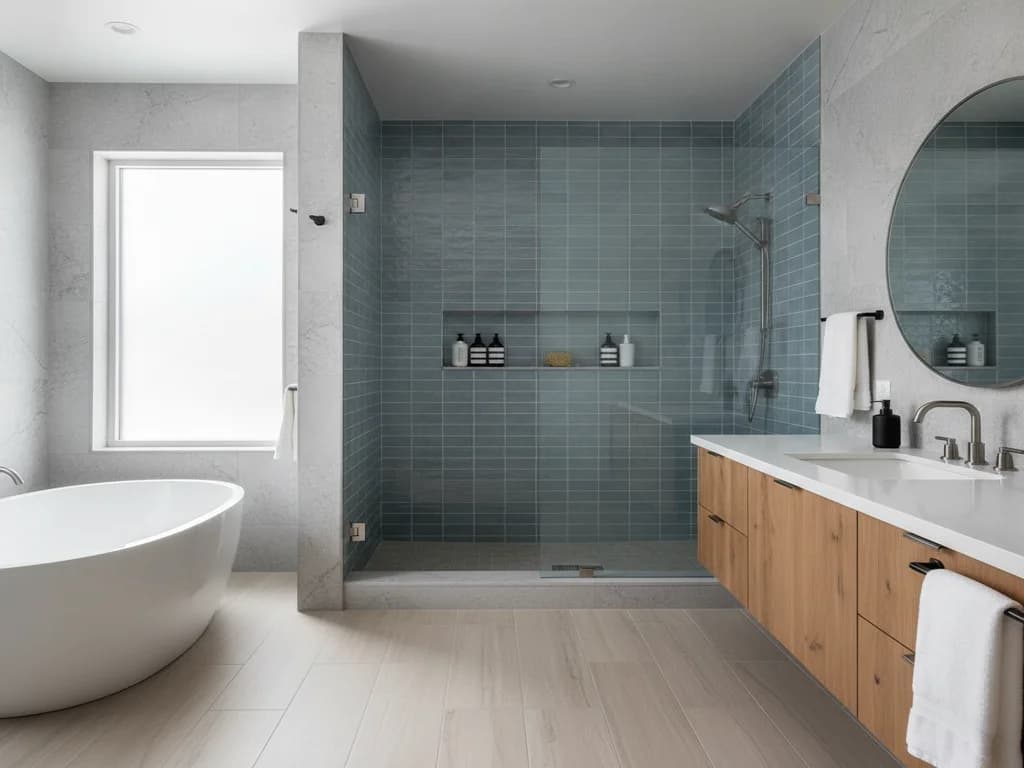
The best shower niche ideas start with placement, not decoration: set the niche at chest height, out of the direct spray, on a non-exterior wall, sized for real bottles rather than a single candle. From there, align it with your tile grid, add a lighted or mosaic accent, and consider a second niche for a shared or larger shower.
Key takeaways
- Placement decides whether a niche looks built-in: chest height, out of direct spray, and on an interior wall where possible.
- Size the niche for the bottles you actually own — Bob Vila calls an undersized niche a common "design fail."
- A double niche, side-by-side or stacked, suits shared showers and narrower stalls better than one oversized single niche.
- Aligning the niche to your tile grid and finishing its corners cleanly matters as much as any style choice.
- A lighted niche removes a shower's most common dark corner, but it is electrical work that should be planned before the wall closes up.
What separates a niche that looks built-in from one that looks bolted-on?
A shower niche is one of the simplest features in a bathroom remodel, and one of the easiest to get wrong. Bob Vila's rundown of niche options makes the basic case plainly: niches "keep your shampoos and soaps off the floor and right at hand where you need them" — but the same guide also warns that a niche sized for a single candle rather than real bottles ends up looking like an afterthought rather than a built-in feature.
The ideas below are grouped the way the decision actually unfolds: where the niche goes, how big it needs to be, whether one is enough, how it lines up with your tile, and what finishes make it feel intentional rather than added on.
How to use this list
Placement and sizing decide whether a niche reads as built-in; tile and lighting decide whether it reads as designed. Get the first two right before spending much time on the second two.
Where should a shower niche go?
1. Set the niche at roughly chest height. Most niches land comfortably between shoulder and waist height — high enough to reach without bending, low enough to use standing in the shower. 2. Keep it out of the direct line of the showerhead spray. A niche that takes the full force of the water every day stays wetter longer and is more prone to standing water and mineral buildup — an easy problem to design around before tile goes up. 3. Avoid exterior walls where possible. Cutting a recessed niche into an exterior wall reduces the insulation in that section of wall, which can invite moisture and condensation problems over time; an interior wall avoids the issue entirely.
Best for: every niche, regardless of size or style — these three placement calls cost nothing extra and prevent the most common niche regrets.
How big should a shower niche be?
4. Size the niche for the bottles you actually own, not a single hero product. Bob Vila's guide is blunt about the most common niche mistake: a niche too small "to comfortably hold real bottles looks like a design fail," no matter how nicely it's tiled. Measure your actual shampoo, conditioner, and body wash bottles before finalizing dimensions. 5. In a genuinely small shower, resist the urge to go oversized. An enormous niche can visually overwhelm a compact stall the same way an undersized one looks stingy — proportion to the wall, not just to your product collection.
Best for: a single, well-proportioned niche in most standard and small showers; larger households or bigger showers should look at the double options below.
Is one niche enough, or should you add a second?
6. A single niche covers most households and is the simplest to align with tile and lighting. 7. A double niche installed side-by-side works well when a shower is shared by two people who each want their own space for products — Bob Vila notes a double niche "can install either horizontally or vertically, so you can decide on the best shower niche placement for your needs." 8. Stacking two niches vertically — one at chest height, one lower — is the better move in a narrower shower where side-by-side width isn't available, and it also suits a tall, narrow shower wall that would otherwise waste height.
| Configuration | Best for | Placement notes |
|---|---|---|
| Single niche | Most households, standard showers | Chest height, centered on a usable wall section |
| Double, side-by-side | Shared showers, two people | Split at a shared height or offset per person |
| Double, stacked vertically | Narrow or tall, narrow shower walls | Upper niche at chest height, lower niche below |
| Multi-compartment | Larger showers, families | Internal shelf dividers for organized storage |
How do you align a niche with your tile layout?
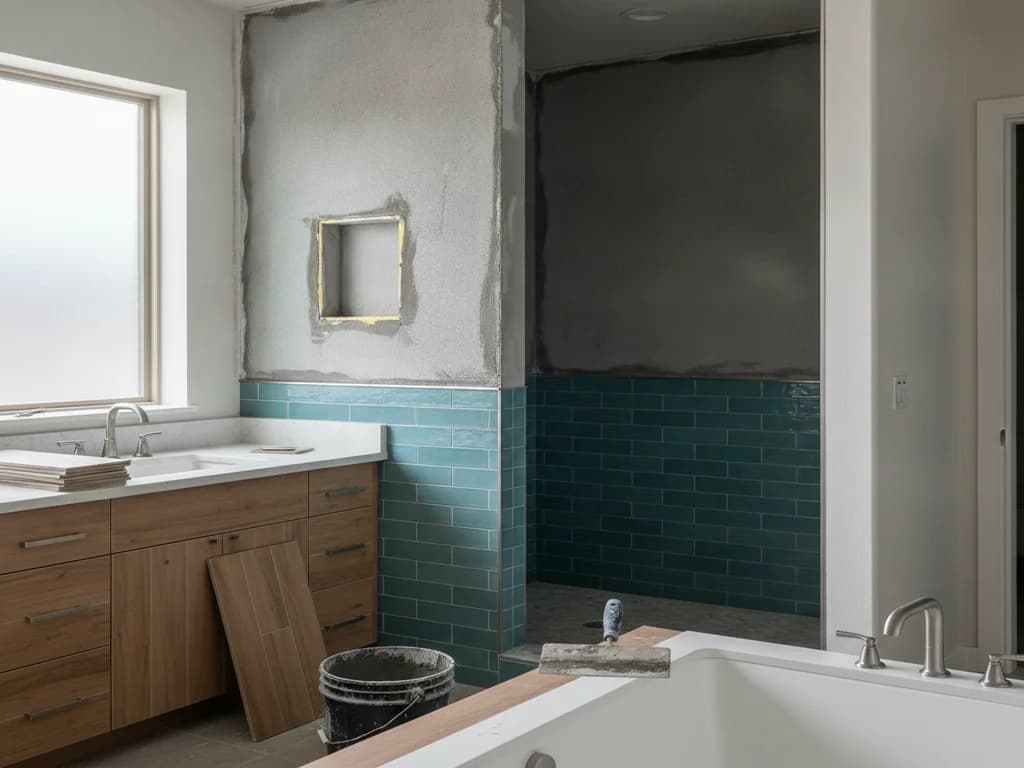
9. Plan the niche's borders to land on grout lines, not mid-tile, so the opening reads as part of the tile grid rather than a hole cut into it. This matters most at the niche's outside corners, where the wall tile meets the niche's return walls at a 90-degree angle. Today's Homeowner's tiling guide flags this exact seam as the detail that most often gives a niche "an unfinished look" if it's handled wrong — exposed, unglazed tile edges at that corner read as a mistake even when the rest of the install is clean. A mitered corner or a bullnose trim edge is the standard fix, and it is worth confirming with your installer before tile goes up, not after.
Best for: every niche — this is a finishing detail, not a style choice, and it separates a professional install from a DIY-looking one regardless of how the niche is otherwise designed.
What tile treatment works best inside the niche?
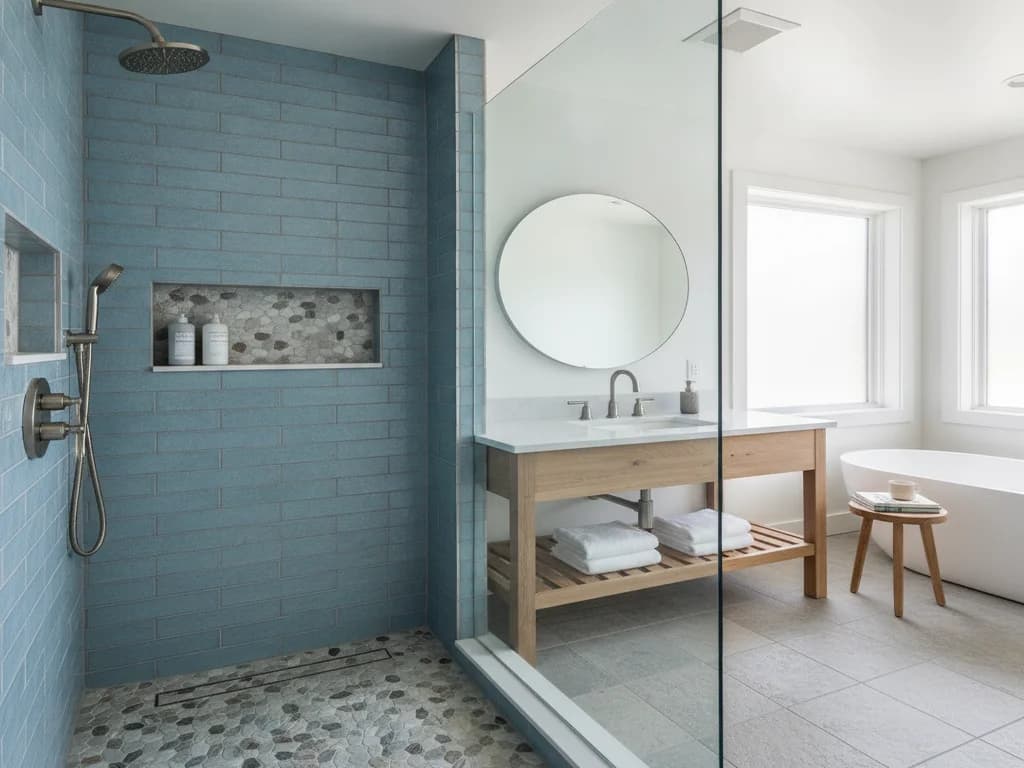
10. Match the field tile for a quiet, built-in look, or 11. contrast it with an accent tile or mosaic to turn the niche into a small focal point. This Old House's tile-design coverage notes that a mosaic used "as a focal point in a specific area, such as behind the vanity or in the shower" can "make a statement without overwhelming the entire space" — exactly the scale a niche calls for. Mixing materials inside the niche, such as a glass or stone mosaic against a porcelain field tile, adds texture without requiring a redesign of the whole shower. Whichever direction you choose, dry-lay the tile first: New York tile contractor Joe Cangialosi's guidance on mosaic work — laying sheets out dry before setting them, to "see where the sheets come together and to avoid visible cuts" — applies just as much to a niche as to a full wall, since it is the only way to avoid an awkward cut at the opening's edge.
Best for: a contrast tile or mosaic when the niche is meant to be a design feature; matching field tile when the goal is a quiet, seamless surface.
What material should the niche itself be?
12. A pre-fabricated, tile-ready niche pan is the most common and flexible option — Bob Vila notes these are built "ready to tile in any way you desire, from rustic or vintage-inspired to contemporary," which means the niche can match any tile decision made later in the project. 13. A natural stone insert, such as marble, gives the niche "an immediate touch of elegance," per Bob Vila, though the same guide cautions that installing a marble insert is more involved than a standard tile-in niche because of its weight — worth flagging to your installer early. A stainless steel shelf insert is the alternative for a cleaner, more contemporary look that, per Bob Vila, "won't rust or lose its luster over time," and needs no tile at all.
Best for: tile-ready niches in most remodels; stone or steel inserts when the niche is meant to read as a deliberate material statement rather than an extension of the wall tile.
Should a shower niche be lit?
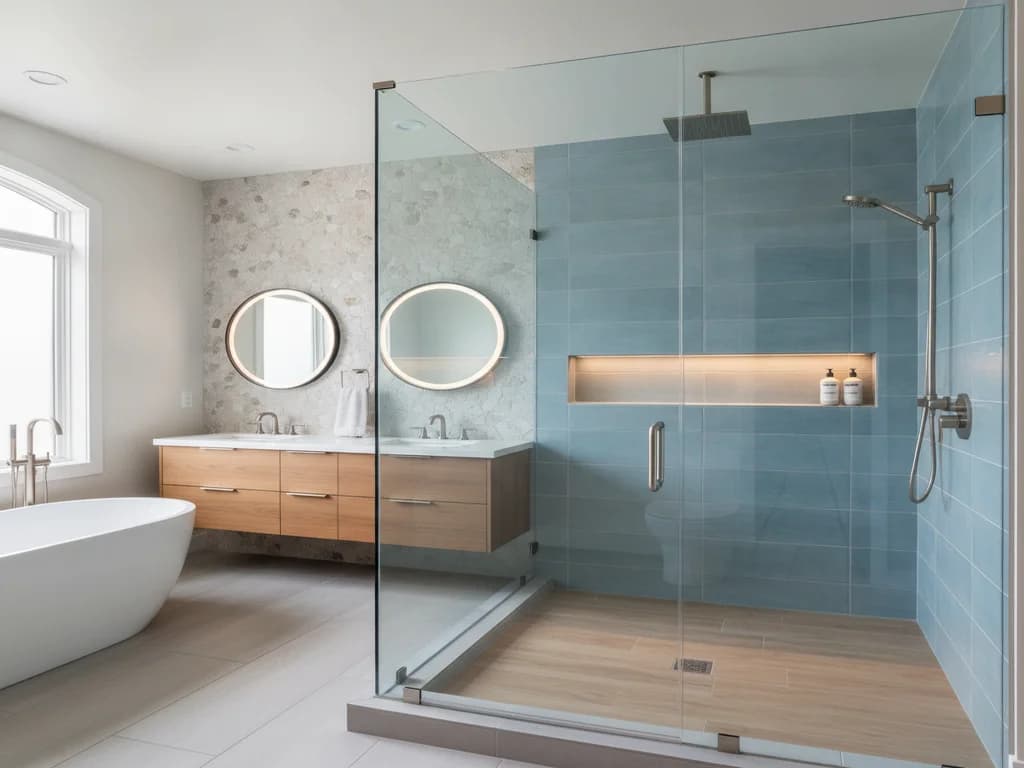
14. A lighted niche eliminates one of the shower's most common dead zones. Bob Vila makes the case directly: a lighted niche means "no more dark corners, no more mildew hiding in the dimness, no more squinting to make out which bottle is the shampoo and which is the conditioner." A low-voltage LED strip along the top or side of the niche is the most common approach, and it reads as an especially current detail in a contemporary shower. This is genuinely electrical work in a wet location, though — plan for it with a licensed electrician before the wall closes up, not as an afterthought.
Best for: a chest-height niche in a primary or frequently used shower where the extra step, and cost, of wiring pays off daily.
What shapes and configurations feel most current?
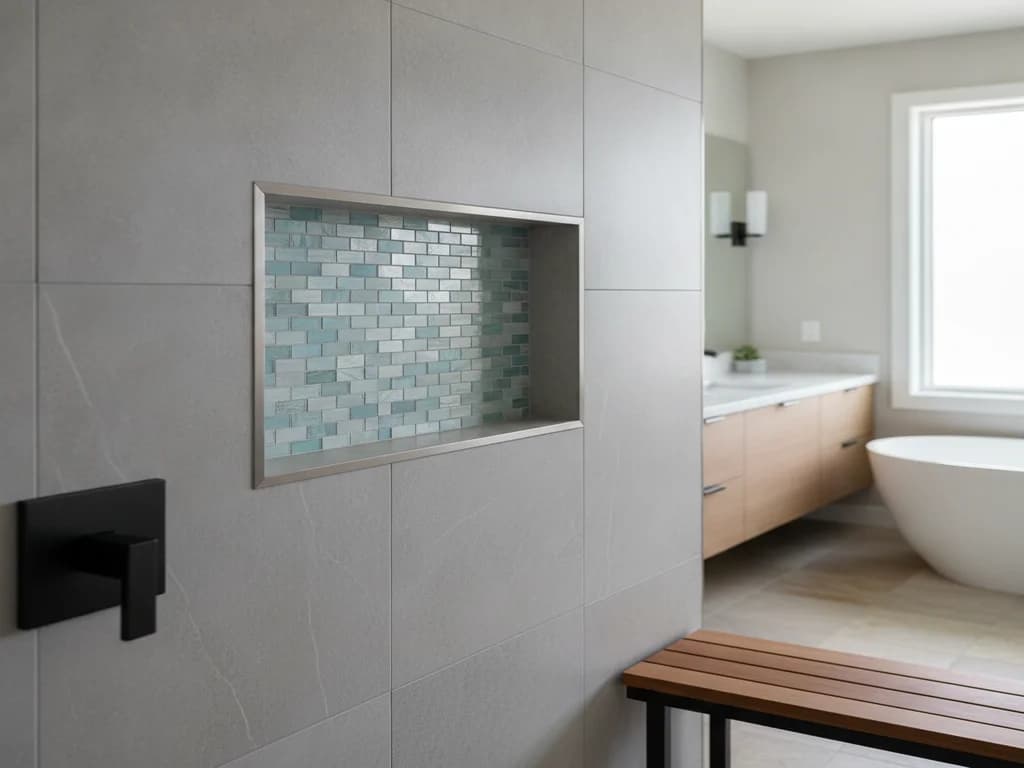
15. A tall, narrow niche running vertically makes efficient use of a shower's height rather than its width, and suits a compact stall where a wide niche would eat into usable shower space. It holds the same handful of bottles as a wider niche while taking up less of the wall's visual real estate — a detail worth weighing alongside the double-niche options above if your shower is on the smaller side.
How does a niche fit into the rest of your shower design?
A niche is one decision inside a larger set of choices about tile pattern and shower layout, and it works best when it's planned alongside both rather than added in afterward. If you haven't settled on a tile pattern yet, see our bathroom tile pattern ideas for how herringbone, large-format, and mosaic layouts each frame a niche differently. And if the whole shower is still up for grabs — enclosure style, bench, lighting — our walk-in shower ideas roundup covers the bigger picture the niche sits inside. Working with a shower that's already tiled? Cutting a niche into an existing shower wall is its own project, and we cover what it involves separately.
How do these ideas come together?
Quiet and built-in: single chest-height niche, field-matched tile, mitered corners, no accent.
Shared and practical: double side-by-side niche split between two users, tile-ready pan, one shared LED strip.
Statement piece: single niche with a contrasting glass mosaic, dry-laid for symmetry, lit from above.
A custom tile and stonework build is where niche placement, tile alignment, and lighting get planned together instead of as separate decisions.
Ready to plan your Boise bathroom?
Licensed & insured · 3-year workmanship warranty
Frequently asked questions
- How high should a shower niche be?
- Most niches sit at roughly chest height — comfortably reachable without bending, and clear of the showerhead's direct spray. The exact height should also account for who uses the shower most and where the tile grid naturally lands, since the niche's borders should align with grout lines rather than cut across tiles.
- How big should a shower niche be?
- Big enough to hold your actual shampoo, conditioner, and body wash bottles — not just a single small item. Bob Vila's guide notes that an undersized niche "looks like a design fail" regardless of how well it's tiled, so measure real bottles before finalizing dimensions, and avoid an oversized niche that overwhelms a genuinely small shower.
- Should you tile a shower niche to match the wall or contrast it?
- Either works. Matching the field tile keeps the niche quiet and built-in; a contrasting mosaic or accent tile turns it into a small focal point. This Old House notes a mosaic accent can "make a statement without overwhelming the entire space" when used in a contained area like a niche.
Sources
- Bob Vila — 10 Shower Niche Ideas for Built-in Bathroom Storage
- This Old House — Bath Tile Design Ideas
- Today's Homeowner — How to Tile a Shower Niche Without Bullnose
Claims and figures are drawn from the sources above and provided for general guidance; your project may vary. Photography is illustrative of design concepts. For a fixed price on your specific bathroom, request a free estimate.