Updated September 12, 2026 · 9 min read
By Boise Bath — bathroom & shower remodeling in Boise & the Treasure Valley
The short answer
The most durable bathroom materials are porcelain tile for walls and floors, quartz or porcelain-slab countertops, solid-surface or quality panel shower walls, and solid-brass and vitreous-china fixtures. They resist moisture, wear, and Boise’s hard water with minimal maintenance, making them the best long-term value in a bathroom remodel.
Key takeaways
- Non-porous surfaces (porcelain, quartz, vitreous china) last longest with the least upkeep.
- Quartz and porcelain-slab counters resist stains and water far better than porous stone.
- Solid-brass faucet bodies outlast zinc and plastic internals, especially in hard water.
- Durability and maintenance are linked — the lowest-maintenance material is usually the longest-lasting.
- Use this roundup to shortlist, then read the matching material guide for the final pick.
What makes a bathroom material "durable"?
Durability in a bathroom is really four things at once: how well a material resists moisture, how it stands up to daily wear, how much maintenance it needs to stay that way, and — for hard surfaces — how little water it absorbs. A material that scores well on all four lasts decades and looks good doing it. One that fails on any single measure becomes the thing you redo first.
This is a roundup, not a deep dive. For each material below you get one reason it lasts, a "best for" verdict, and a maintenance reality check — then a link to the guide that owns the full decision. If you want to shortlist for longevity and read the details later, you are in the right place. When you are ready to commit, the per-material guides carry the nuance.
A note on lifespans
Where we give a lifespan range, it is drawn from the NAHB Study of Life Expectancy of Home Components. Real-world life depends on installation quality, water conditions, and care — treat ranges as planning figures, not guarantees.
Which shower wall material lasts longest?
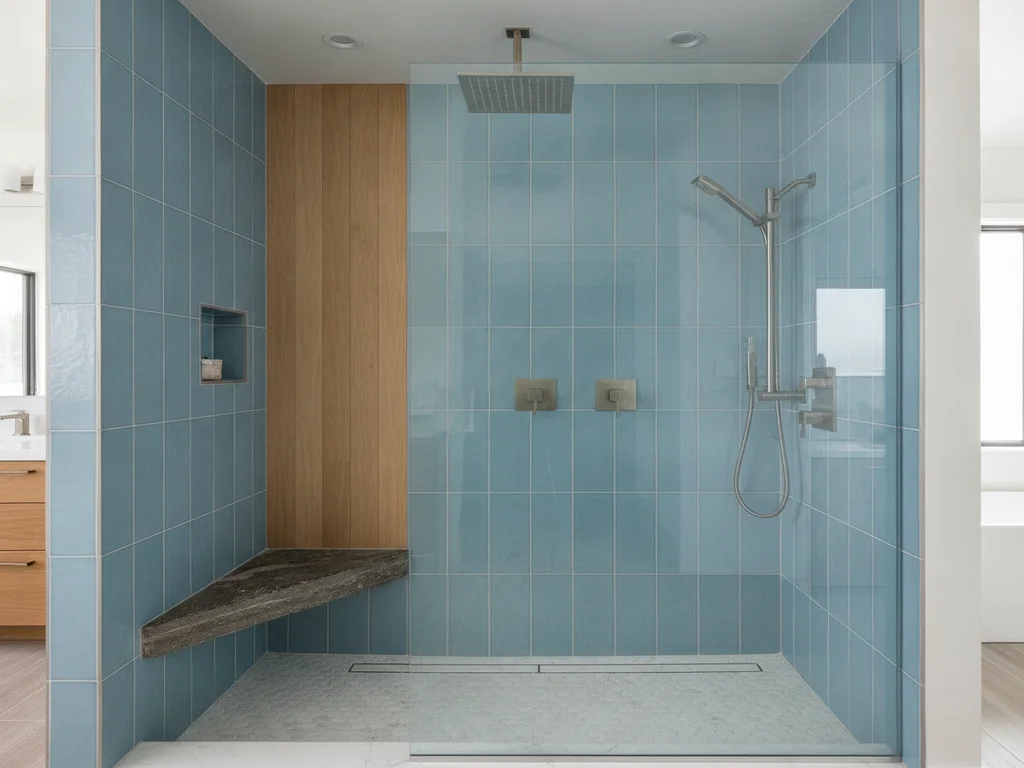
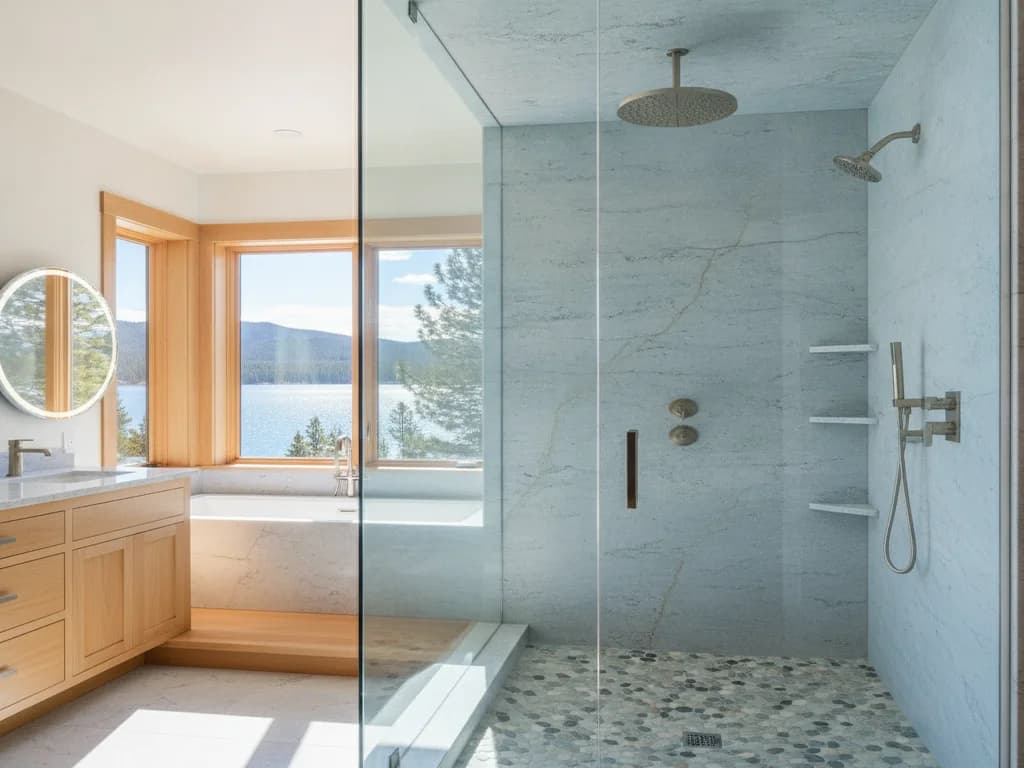
1. Porcelain tile leads for shower walls because it absorbs almost no water and resists wear, staining, and the mineral residue Boise’s hard water leaves behind. Best for: homeowners who want a custom look that lasts and do not mind maintaining grout. 2. Solid-surface and quality solid panels are the low-seam, low-maintenance alternative — fewer grout lines to clean and very durable. Best for: anyone prioritizing easy upkeep over a fully custom tile look. For the full comparison, see compare the top shower wall materials.
Is porcelain tile really more durable than ceramic?
3. Porcelain tile is fired denser and harder than standard ceramic. The Porcelain Tile Certification Agency defines true porcelain by a water absorption of 0.5% or less, which is what makes it so resistant to moisture, freeze-thaw, and wear. Ceramic is perfectly good for many walls, but for floors and wet zones porcelain’s lower absorption is the durability edge. Best for: floors, shower walls and pans, and any surface that gets wet often.
What’s the most durable bathroom flooring?
4. Porcelain floor tile is the longevity benchmark: hard, water-resistant, and easy to keep clean for decades. 5. Quality luxury vinyl (LVT/LVP) with a waterproof core is the durable, warmer-underfoot, budget-friendlier alternative. Best for: porcelain where you want maximum life and a premium feel; LVT where comfort, cost, and DIY-friendliness matter. The full trade-offs — including slip resistance — live in the most durable bathroom flooring options.
How long does luxury vinyl flooring hold up in a bathroom?
6. Luxury vinyl earns its place because the better products pair a 100% waterproof core with a wear layer measured in mils — the thicker the wear layer, the longer it shrugs off scratches and traffic. In a bathroom, its water resistance and forgiving feel underfoot are real advantages. It will not match porcelain’s outright lifespan, but for the money it is one of the most durable choices available.
Which countertop lasts the longest in a bathroom?
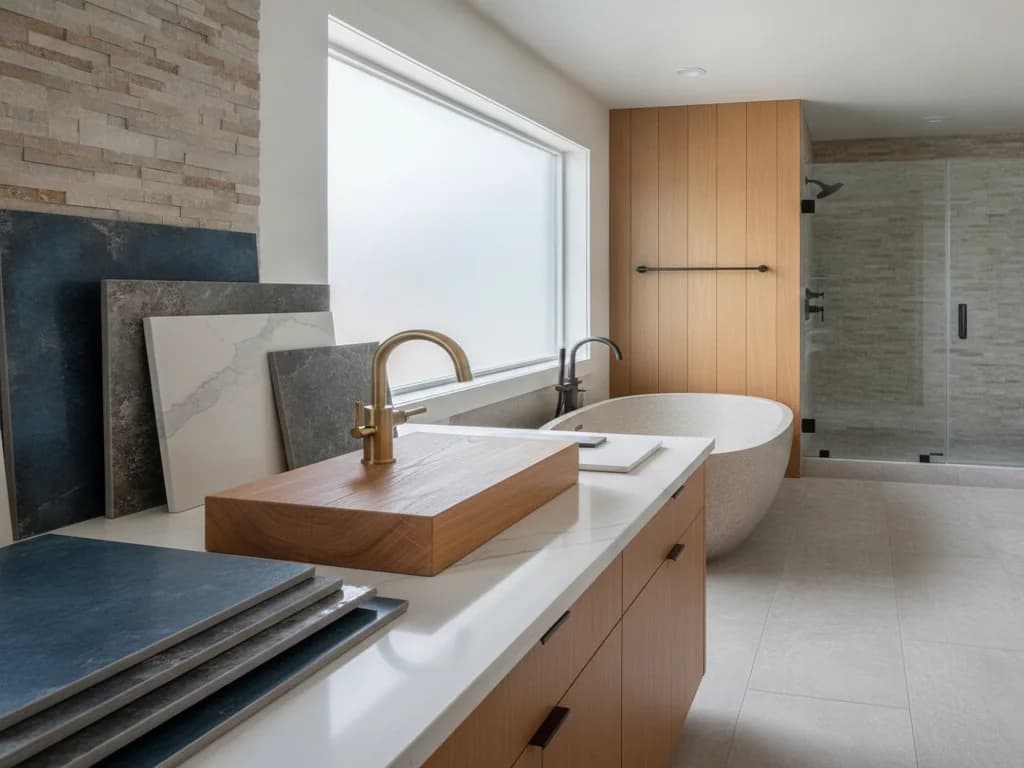
7. Quartz (engineered stone) is the durability champion for vanity tops: non-porous, stain- and scratch-resistant, and it never needs sealing. 8. Porcelain slab is similarly tough, very heat- and UV-stable, and exceptionally low-absorption. Best for: quartz in almost any bathroom; porcelain slab where you want large, seamless, ultra-low-maintenance surfaces. See bathroom countertop materials for the head-to-head.
Why does quartz beat porous natural stone for longevity?
9. Quartz vs porous natural stone comes down to absorption. Many natural stones are porous and need periodic sealing to resist water and stains; quartz is non-porous by construction, so it resists both without an annual sealing ritual. In a wet, hard-water bathroom that maintenance gap compounds over the years. Best for: homeowners who want stone looks without the upkeep schedule.
What tub material lasts longest?
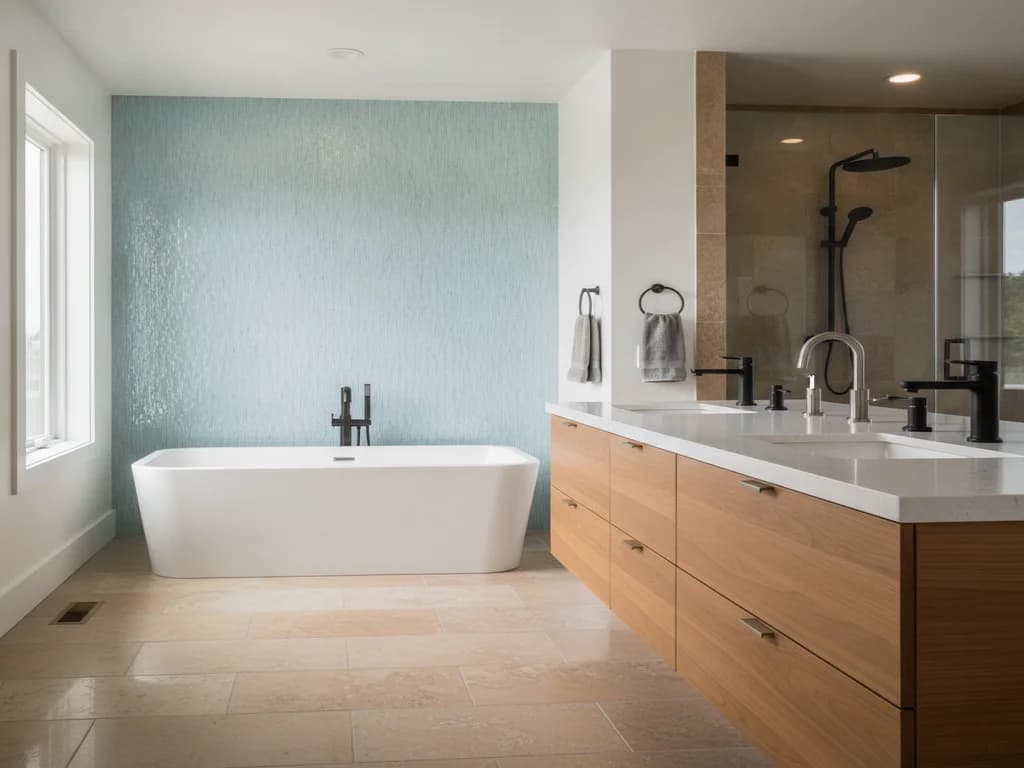
10. Cast iron tubs are the heirloom choice — the enamel-coated cast body is extremely durable and holds heat well, though it is heavy and harder to retrofit. 11. Quality acrylic tubs are lighter, warmer to the touch, more repairable, and resist chipping. Best for: cast iron where weight is not an obstacle and longevity is everything; acrylic for most modern remodels balancing durability, comfort, and installation.
Which faucet and shower-valve materials last?
12. Solid-brass faucet and valve bodies outlast zinc-alloy or plastic internals, particularly in hard water, where cheaper metals corrode and seize faster. The body and cartridge are what determine how long a faucet works, not the finish on the outside. Best for: anyone in the Treasure Valley’s mineral-rich water who does not want to replace fixtures early. Manufacturer spec sheets from Kohler, Delta, and Moen will tell you what a valve body is made of — it is worth checking.
Why is vitreous china the standard for sinks and toilets?
13. Vitreous china is the default for toilets and many sinks because the glazed, fired-ceramic surface is non-porous, sanitary, and highly resistant to staining and wear. It is essentially glass-hard on the outside, which is why a well-made china fixture can last for decades of daily use. Best for: virtually every bathroom — it is the durable baseline.
Which finishes resist wear and water spotting?
14. PVD-coated and brushed/matte finishes wear and spot the best. PVD (physical vapor deposition) coatings resist scratching and tarnish far better than standard electroplating, and brushed or matte textures hide the hard-water spotting that plagues polished chrome. We keep the full finish breakdown in its own article — see bathroom faucet and fixture finishes compared — but for durability, PVD plus a brushed texture is the long-game pick.
What grout and sealing choices extend tile life?
15. High-performance or epoxy grout keeps a tile installation looking and performing well for longer. It resists staining, cracking, and moisture better than untreated cement grout, which matters in hard water where pale cement grout discolors quickly. Pairing the right grout with proper movement joints (a separate, important detail covered in our tile mistakes article) is how tile reaches its full lifespan.
How does Boise’s hard water affect material longevity?
16. In hard water, non-porous wins. Treasure Valley city water can run hard — Kuna reports an average of 8.05 grains per gallon, which the city classifies as hard — and the dry climate means surfaces see real seasonal humidity swings. That environment rewards low-absorption surfaces (porcelain, quartz, vitreous china), solid-brass valve internals, and finishes that hide spotting. The reasoning behind those choices is laid out in how Idaho’s climate and hard water affect material choice.
Durability comparison: lifespan vs maintenance
The table below summarizes the roundup. Lifespan ranges reflect the NAHB Study of Life Expectancy of Home Components and general industry data; actual life depends on installation and care.
| Material | Typical lifespan | Maintenance | Best for |
|---|---|---|---|
| Porcelain tile (walls/floors) | Decades to lifetime | Low (clean grout) | Wet zones, floors, custom looks |
| Luxury vinyl (LVT/LVP) | 15–25+ years | Very low | Comfort + value flooring |
| Quartz countertop | Decades | Very low (no sealing) | Most vanity tops |
| Porcelain slab counter | Decades | Very low | Seamless, ultra-low-maintenance tops |
| Cast iron tub | 50+ years (refinishable) | Low | Heirloom durability |
| Acrylic tub | 10–30 years | Low | Most modern remodels |
| Solid-brass faucet body | 15–20+ years | Low | Hard-water reliability |
| Vitreous china (sink/toilet) | Decades | Very low | The durable baseline |
Lifespan ranges per NAHB Study of Life Expectancy of Home Components and industry sources; figures are planning estimates, not guarantees.
Which materials give the best long-term value, not just looks?
If value means lowest lifetime cost and least hassle, the pattern is consistent: porcelain tile, quartz or porcelain-slab counters, vitreous-china fixtures, and solid-brass valve bodies. None of them are the cheapest line item up front, but each tends to outlast and out-perform the budget alternative, so you replace less and maintain less. A full bathroom remodel built to last leans on exactly these surfaces.
How do I prioritize durability on a budget?
Spend where failure is most expensive and most disruptive: the shower waterproofing and tile, the floor, and the valve bodies inside the walls. Those are the things you do not want to open the walls to fix. You can be more flexible on visible, easy-to-swap items like a vanity top in a low-use bath or hardware you can change in an afternoon. For how this maps to real dollars, see how much a Boise bathroom remodel costs, and when you are ready, request a free estimate.
Ready to plan your Boise bathroom?
Licensed & insured · 3-year workmanship warranty
Frequently asked questions
- What is the most durable bathroom flooring?
- Porcelain tile is the most durable bathroom flooring — hard, very low water absorption, and easy to maintain for decades. Quality luxury vinyl with a waterproof core is the durable, warmer, more budget-friendly alternative. The best choice depends on your priorities; our flooring guide compares them in depth.
- Is quartz or natural stone more durable for a bathroom countertop?
- Quartz is generally more durable for a bathroom because it is non-porous and never needs sealing, so it resists water and stains without ongoing maintenance. Many natural stones are porous and require periodic sealing. Porcelain slab is another very low-maintenance, highly durable option.
- How long do bathroom materials typically last?
- It varies widely by material. Drawing on the NAHB Study of Life Expectancy of Home Components and industry data, porcelain tile, quartz, and vitreous china can last decades, cast iron tubs 50+ years, and quality luxury vinyl 15–25+ years. Installation quality and care strongly affect real-world life.
- What shower wall material lasts the longest?
- Porcelain tile and quality solid-surface or solid panels are the longest-lasting shower wall options. Porcelain resists moisture and wear but needs grout maintenance; solid surface offers fewer seams and easier upkeep. See our shower wall materials guide for the full comparison.
- Are solid-brass faucets worth it in hard water?
- Yes. Solid-brass faucet and valve bodies resist corrosion far better than zinc-alloy or plastic internals, which matters in the Treasure Valley’s hard water. The body and cartridge determine how long a faucet lasts, so check the manufacturer’s spec sheet for the internal material, not just the finish.
- Which bathroom materials need the least maintenance?
- Non-porous surfaces need the least maintenance: quartz and porcelain-slab counters (no sealing), porcelain tile, vitreous-china fixtures, and PVD-coated brushed or matte finishes that hide hard-water spots. As a rule, the lowest-maintenance material in a bathroom is usually also the longest-lasting.
Sources
- City of Kuna — Water Reports (average hardness 137.73 mg/L, 8.05 gpg)
- NAHB — Study of Life Expectancy of Home Components
- Porcelain Tile Certification Agency (PTCA) — porcelain water-absorption definition
- National Kitchen & Bath Association — material & planning guidelines
- EPA WaterSense — fixture efficiency & specifications
Claims and figures are drawn from the sources above and provided for general guidance; your project may vary. Photography is illustrative of design concepts. For a fixed price on your specific bathroom, request a free estimate.