Updated July 6, 2026 · 8 min read
By Boise Bath — bathroom & shower remodeling in Boise & the Treasure Valley
The short answer
The most durable rental-bathroom finishes have the fewest failure points: pressed, glazed porcelain tile ("widely considered the most durable flooring material," per Bob Vila), epoxy grout (stain- and chemical-resistant, unlike porous cement grout), solid-surface counters that sand out scratches, and commercial-grade valves built for that duty cycle.
Key takeaways
- Porcelain is "widely considered the most durable flooring material on the market," per Bob Vila, and higher-wear-rated porcelain lines add frost- and chemical-resistance suited to any high-traffic space — a real advantage in a bathroom that sees a new set of feet every few days.
- This Old House describes epoxy grout as "known for its superior strength, chemical resistance, and inability to stain," and specifically calls it out as a fit for "commercial kitchens, swimming pools, and high-traffic areas" — the same category a guest bathroom effectively falls into.
- Cement grout is the opposite story: This Old House notes it is "porous and can absorb liquids, leading to staining and potential mold" — exactly the kind of slow failure that shows up after repeated, unsupervised guest use.
- Solid-surface counters are practically nonporous and, per Bob Vila, can be "sanded down using a random-orbital sander and fine-grain sandpaper" to remove scratches or minor burns — a repair a granite or laminate counter can't make the same way.
- Delta positions its commercial faucet and valve line specifically for "the most challenging environments," including a dedicated Multi-Family category built around exactly the heavier, less-careful duty cycle a rental sees.
Why a rental bathroom wears differently
A short-term rental bathroom gets a different kind of use than a family bathroom does. It is used by people with no long-term stake in how it looks in a year, cleaned by a turnover crew working against a tight window rather than a homeowner's routine, and subjected to whatever a given guest's habits happen to be — heavy product use, left-open shower doors, hot bath oils, or simply less care than an owner would take with their own materials. None of that requires exotic materials to solve. It requires choosing finishes that fail slowly, or don't fail at all, under exactly that kind of unsupervised, repeated use.
This is a materials question, not a Treasure Valley market question — the same finishes hold up whether the property is a Downtown Boise condo, a Garden City bungalow, or a cabin closer to the foothills. What follows is what actually survives that use, by surface.
The one-line version
Choose the fewest-failure-point option at every surface: glazed porcelain over anything porous, epoxy grout over cement, solid-surface or quartz over anything that can't be repaired in place, and commercial-duty valves over standard residential trims.
Floors and walls: pressed, glazed porcelain
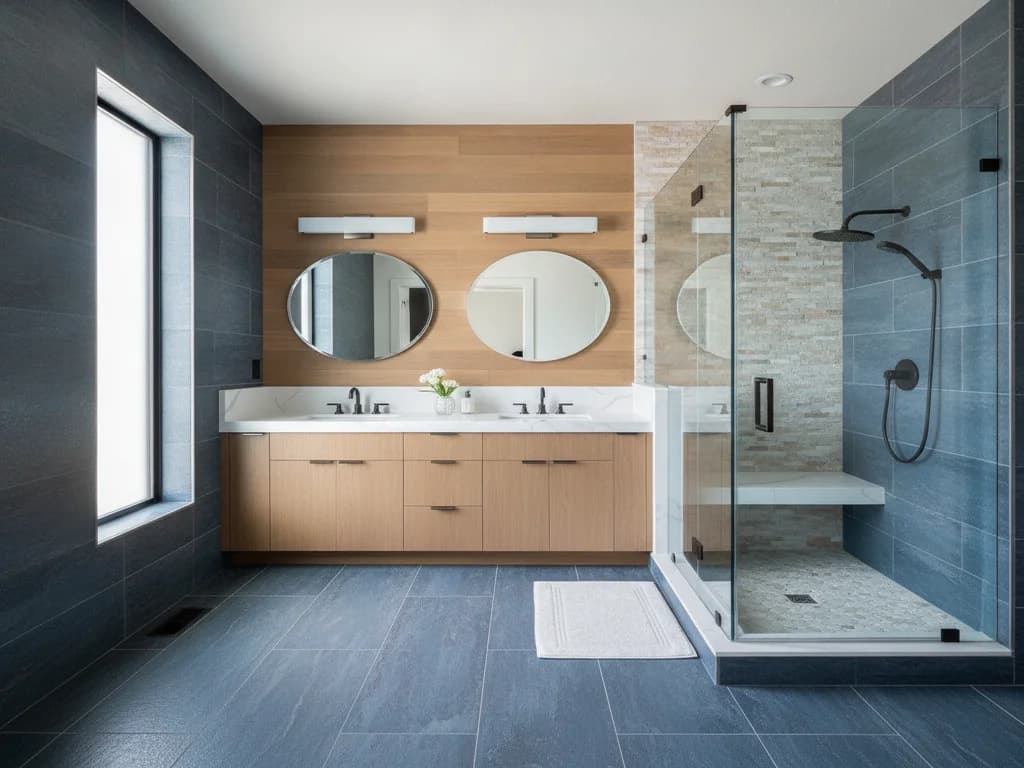
Porcelain tile is the strongest starting point for a rental bathroom floor or shower wall. Bob Vila is direct about where it ranks: "porcelain is widely considered the most durable flooring material on the market." It is fired at a higher temperature than standard ceramic, which is what gives it the density and hardness behind that reputation — and higher-wear-rated glazed lines add "Class 4 wear resistance alongside frost- and chemical-resistance to suit virtually any high-traffic area," per the same source.
The practical case for a rental is straightforward: porcelain resists scratching, staining, and water damage under repeated use better than most alternatives, and it cleans up with routine products rather than specialized care between guest turns. Our most durable bathroom materials roundup covers how porcelain compares across other surfaces in the bathroom, not just the floor.
Grout: epoxy over cement, without exception
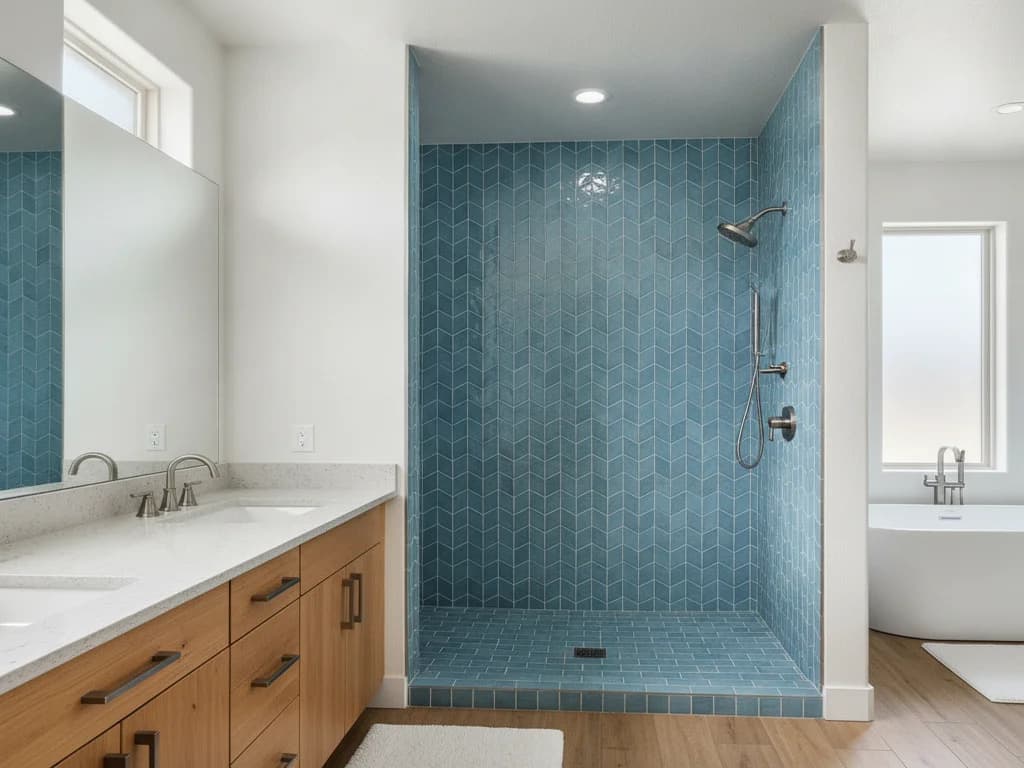
Grout is one of the more common places a rental bathroom starts to look tired even when the tile itself is fine. This Old House's grout guide explains why epoxy is worth the switch: it is "known for its superior strength, chemical resistance, and inability to stain," and the same guide specifically names the kind of space it is built for — "areas exposed to harsh chemicals or high moisture, such as commercial kitchens, swimming pools, and high-traffic areas." A guest bathroom, cleaned repeatedly with whatever products a turnover crew has on hand, sits squarely in that category.
Cement grout is the more common default, and it is also the more common failure point: This Old House notes it is "porous and can absorb liquids, leading to staining and potential mold" — a slow-motion problem that shows up as dingy grout lines within a year or two of guest use, long before the tile itself needs replacing. Our epoxy vs. cement grout comparison covers install difficulty and cost in more depth if the trade-off is close for your project.
Countertops: solid-surface earns its keep
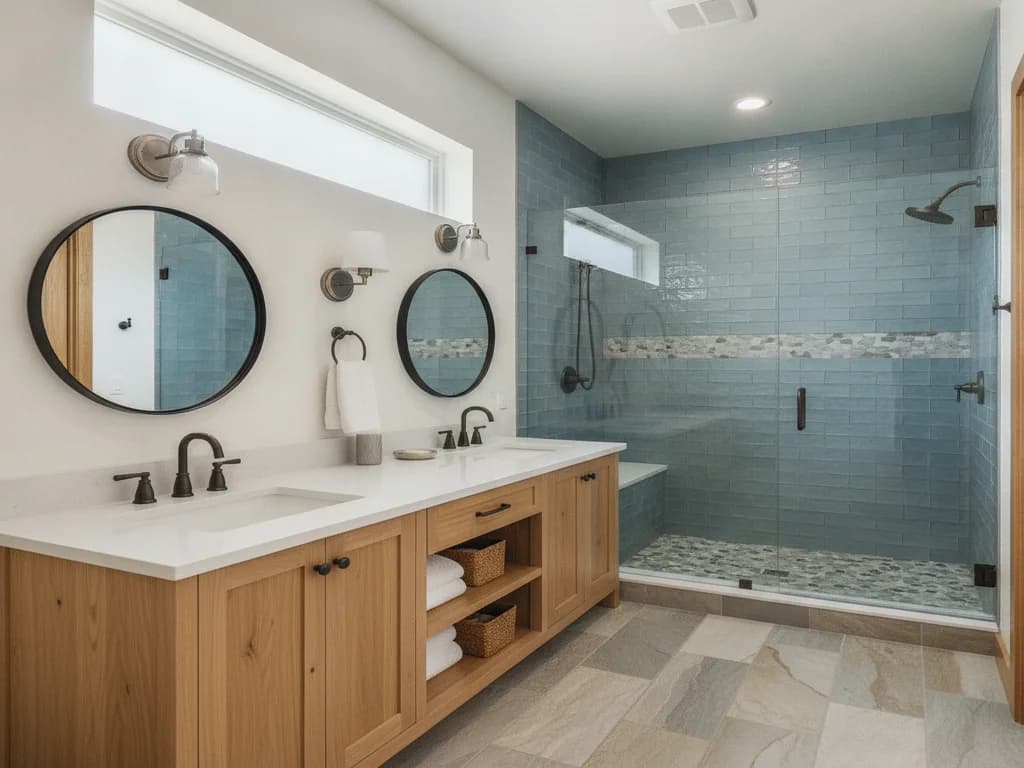
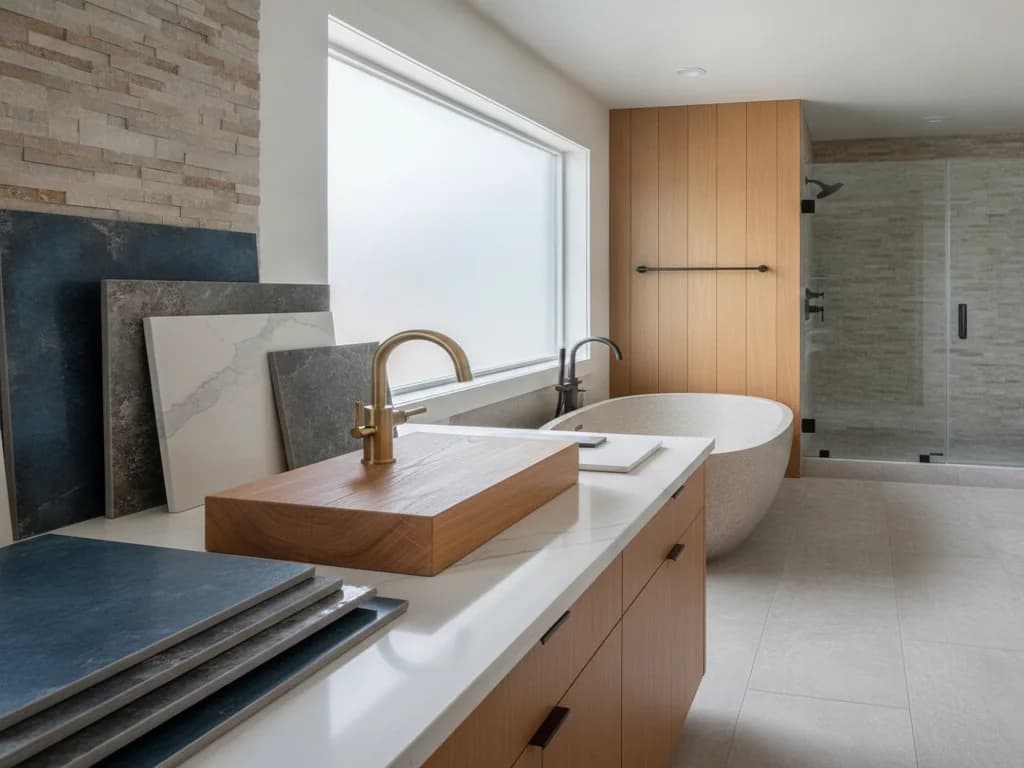
A rental vanity counter takes a specific kind of abuse — hair tools set down without a trivet, dropped toiletry bottles, the occasional cigarette burn nobody admits to. Solid-surface counters handle that differently than stone or laminate does, because damage can usually be repaired in place rather than requiring replacement. Bob Vila's guide notes solid surface "can tolerate heat as high as 212 degrees Fahrenheit" and that scratches or minor burns "can be sanded down using a random-orbital sander and fine-grain sandpaper," making it "extremely easy to repair" compared with materials that show permanent damage.
It is also practically nonporous — "they're practically nonporous, so they are easy to keep clean," per the same guide — and, unlike granite or marble, "do not need to be sealed." For a rental, that combination (repairable plus low-maintenance) matters more than raw hardness, since the realistic damage a counter takes is scuffs and heat marks, not structural gouging.
Fixtures and valves: build for the duty cycle, not the look
The valve behind a shower trim matters as much as the finish on it. Delta's own commercial product positioning makes the duty-cycle case directly: "Delta® understands the unique demands of the commercial market. Our products go beyond excellent design to incorporate smart thinking and exceptional performance that stand the test of time, even in the most challenging environments." The company maintains a dedicated Multi-Family category within its commercial line — built specifically for the kind of heavier, less-careful use a rental or shared property sees, as distinct from a standard single-family residential valve rated for occasional, careful use.
A standard residential cartridge is not necessarily a bad choice for a rental, but it is worth knowing the distinction exists: a valve built and rated for commercial or multi-family duty is engineered around the exact scenario a turnover property creates, rather than the lighter cycle a homeowner's own bathroom sees.
What tends to break first
In practice, the earliest failures in a rental bathroom tend to follow a pattern: cement grout discoloring and mildewing well before the tile itself looks worn, standard residential valve cartridges wearing out faster under a heavier, less-gentle cycle than they were rated for, and porous or laminate counter surfaces showing permanent scuffs and heat marks that a solid-surface or quartz counter would have shrugged off. None of these are dramatic failures — they are the slow, cosmetic wear that makes a property look tired to the next guest long before anything is actually broken.
The fix at remodel time is the same at every surface: pick the option with the fewest ways to fail under repeated, unsupervised use, even if it costs a little more upfront than the standard choice.
| Surface | Durable pick | Why |
|---|---|---|
| Floor / shower walls | Pressed, glazed porcelain | "Most durable flooring material," resists scratching, staining, and water damage — Bob Vila |
| Grout | Epoxy | "Superior strength, chemical resistance, and inability to stain" — This Old House |
| Vanity counter | Solid-surface | Nonporous, no sealing needed, and scratches/burns sand out — Bob Vila |
| Valves / trim | Commercial-grade | Built for "the most challenging environments," per Delta's own commercial positioning |
The bottom line
A rental bathroom does not need to look institutional to survive guest turnover — it needs the fewest failure points at every surface: glazed porcelain instead of anything porous, epoxy grout instead of cement, solid-surface or quartz instead of anything that can't be repaired in place, and a valve rated for the actual duty cycle rather than the lightest one on the shelf. Those choices cost more up front and cost far less in years two through five.
If you are planning a remodel for a Boise-area rental property, see our full bathroom remodeling services — durability at every surface is part of that conversation from the first estimate, not a change order after the first guest turnover.
Ready to plan your Boise bathroom?
Licensed & insured · 3-year workmanship warranty
Frequently asked questions
- What's the most durable bathroom flooring for a short-term rental?
- Pressed, glazed porcelain tile — Bob Vila describes it as "widely considered the most durable flooring material on the market," and notes higher-wear-rated lines add frost- and chemical-resistance suited to high-traffic spaces. It resists scratching, staining, and water damage under the kind of repeated, unsupervised use a rental bathroom gets.
- Is epoxy grout worth it for a rental bathroom?
- Yes, in most cases. This Old House describes epoxy grout as offering "superior strength, chemical resistance, and inability to stain," and specifically names high-traffic, frequently cleaned spaces as its best fit. Cement grout, by contrast, is "porous and can absorb liquids, leading to staining and potential mold" — a slower, more visible failure under guest-turnover cleaning.
- What bathroom fixtures fail first in a high-turnover rental?
- Grout is usually the earliest visible failure, since cement grout stains and mildews well before the tile itself wears out. Standard residential valve cartridges and porous or laminate counter surfaces tend to follow — both wear faster under a heavier cycle than a lighter, single-family use pattern. Choosing epoxy grout, solid-surface counters, and commercial-rated valves upfront avoids all three.
Sources
- Bob Vila — 7 Ultra-Durable Flooring Options for Your Next Project
- This Old House — A Comprehensive Guide to Grout: Texture, Color, and Resistances
- Bob Vila — Important Things to Know About Solid Surface Countertops
- Delta Faucet — Commercial (manufacturer)
- TCNA — Handbook for Ceramic, Glass & Stone Tile Installation
- EPA — A Brief Guide to Mold, Moisture and Your Home
Claims and figures are drawn from the sources above and provided for general guidance; your project may vary. Photography is illustrative of design concepts. For a fixed price on your specific bathroom, request a free estimate.