Updated September 12, 2026 · 8 min read
By Boise Bath — bathroom & shower remodeling in Boise & the Treasure Valley
Most bathroom material guides are written for everywhere and nowhere. This one is for the Treasure Valley specifically — because two local conditions, hard water and a dry, high-desert climate, quietly decide which surfaces and finishes look good in five years and which look tired.
Below is an honest, source-backed look at how Boise-area water and climate behave, and the material and finish choices that respond best to them. Water hardness depends on which system or well supplies your home, so we show what each city’s own water report publishes rather than one number for everyone.
Key takeaways
- Treasure Valley water hardness depends on the system: Kuna reports an average of 8.05 grains per gallon (hard by its own classification), Nampa reports none to 7.08, and we could not find a current published figure for Boise — test before you assume.
- Hard water mainly causes cosmetic spotting and scale on glass and fixtures; the water remains safe to drink.
- The dry, high-desert climate with big temperature swings accelerates grout and caulk cracking, so seal grout and use flexible caulk at joints.
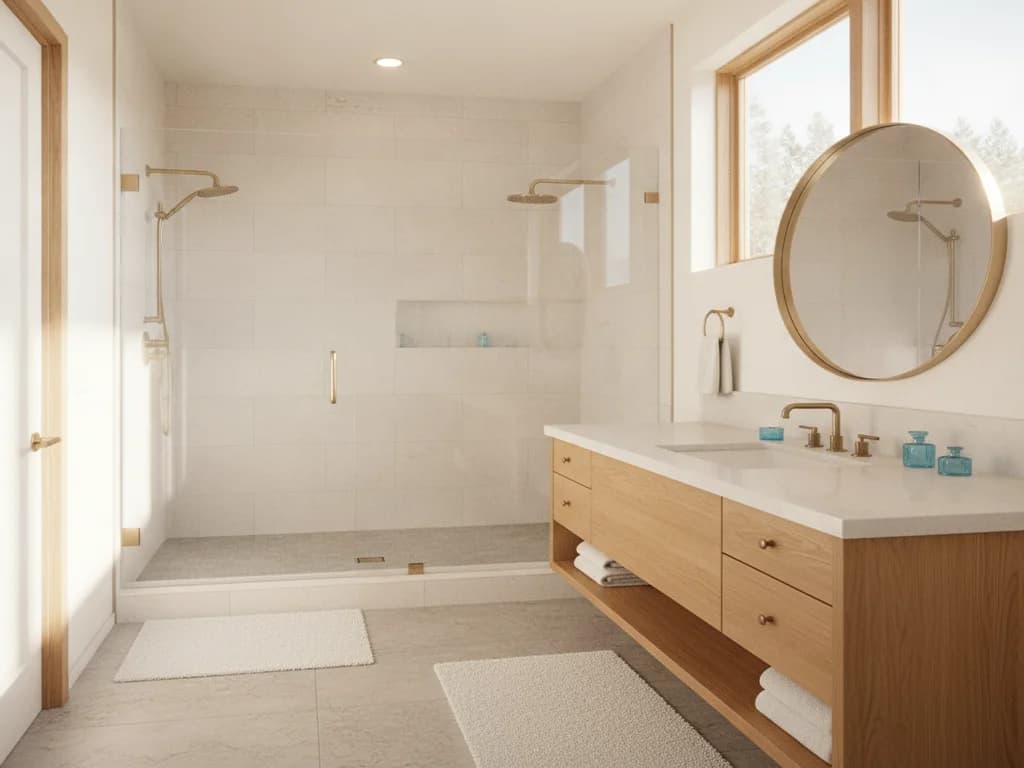
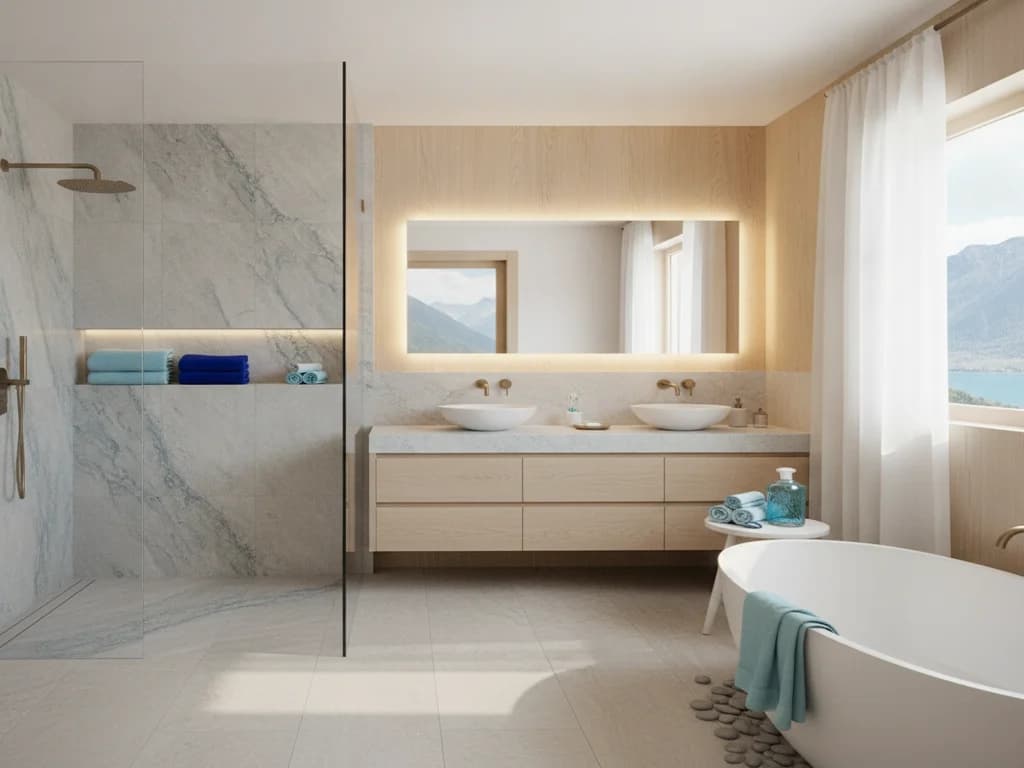
- Pick spot-hiding finishes (brushed nickel, matte black, brushed gold), low-iron coated glass, and non-porous quartz or porcelain tops to stay ahead of local conditions.
Is Boise water hard? (the honest answer: it varies)
There is no single hardness number for the Treasure Valley, because homes here are served by separate city water systems and private wells, each drawing on its own sources. The figures worth trusting are the ones the utilities publish themselves.
The City of Kuna reports average hardness of 137.73 mg/L, about 8.05 grains per gallon, which it classifies as hard. The City of Nampa’s 2025 water quality report states that hardness from its 17 groundwater wells ranges from none to 7.08 grains per gallon. For Boise we could not find a current published figure: Veolia Water Idaho’s public water-quality pages did not list one when we checked in September 2026, and Eagle’s 2025 water quality reports do not include one either.
For context, USGS classifies 61–120 mg/L as "moderately hard," 121–180 mg/L as "hard," and above 180 mg/L as "very hard," which puts Kuna’s average in the hard band. Nampa’s report prints its own scale in grains per gallon, where 7.0–10.5 counts as hard, so its top figure sits just inside that band. A home test is the only way to know what your own tap delivers.
Why testing matters for material choices
You will not know your exact hardness without a test, so choose materials and finishes that stay forgiving even if your water turns out to be hard. The recommendations below are built to hold up either way.
How hard water actually affects a bathroom
Hard water carries dissolved calcium and magnesium. The water is still safe to drink — the issue is cosmetic and maintenance-related. As water evaporates on a surface, those minerals are left behind, and over time they react and accumulate in a few predictable places.
- White spotting and mineral scale on glass shower doors and chrome fixtures as droplets dry.
- Soap scum on tile and glass, formed when minerals react with soap.
- Scale buildup on fixtures and inside plumbing over the long term.
Boise's climate: dry, high-desert, big swings
Boise sits at roughly 2,871 feet in a cold semi-arid (high-desert) climate. Per the National Weather Service Boise climate summary, the area sees low annual precipitation (about 11 inches), very low summer humidity (often below 25%, dipping toward 15%), large day-to-night temperature swings, and occasional hard freezes — with the last hard freeze of spring averaging around mid-to-late April.
Those facts have direct building-science implications for a bathroom. Low humidity combined with big temperature swings speeds up drying, shrinkage, and cracking in grout and caulk, and can dry out and check natural-wood vanities over time. The occasional hard freeze means any plumbing routed through exterior walls or crawlspaces should be properly insulated.
Problem → material/finish response
| Local condition | Recommended response |
|---|---|
| Hard-water spotting on glass | Low-iron ("ultra-clear") glass with a hydrophobic coating |
| Mineral spots on fixtures | Brushed/satin nickel, matte black, or brushed gold over polished chrome |
| Dry-climate grout/caulk cracking | Sealed high-quality or epoxy grout; flexible silicone at movement joints |
| Moisture/dryness cycling on tops | Quartz (engineered) or porcelain vanity tops over natural wood |
| Water that tests hard | Consider water conditioning/softening (test first) |
| Occasional hard freezes | Insulate plumbing in exterior walls and crawlspaces |
Conditions are drawn from the cited city water reports, the USGS hardness classification, and the NWS Boise climate summary; the responses are standard building-science choices, not guarantees for any specific home.
Recommended materials and finishes
- Shower glass: low-iron ("ultra-clear") enclosures with a factory or applied hydrophobic coating shed water faster, so minerals have less chance to dry and spot.
- Vanity tops: quartz (engineered) or porcelain are non-porous and dimensionally stable, which suits a climate that cycles between humid showers and very dry room air — a kinder environment for them than for natural wood tops.
- Grout and caulk: sealed high-quality grout (or epoxy grout) plus a quality flexible silicone caulk at movement joints resists the dry climate's tendency to shrink and crack.
- Fixture finishes: brushed/satin nickel, matte black, and brushed gold hide water spots far better than polished chrome, which shows every mineral droplet.
- Water conditioning: where your water tests hard, a softener or conditioner can reduce scale and spotting — test your specific supply first so you size it correctly.
- Freeze protection: insulate any supply lines that run through exterior walls or crawlspaces to guard against occasional hard freezes.
Frequently asked questions
- Is Boise's water hard?
- We could not find a current published hardness figure for Boise — Veolia Water Idaho’s public water-quality pages did not list one when we checked in September 2026. Nearby city systems that publish a number show why it matters: Kuna reports an average of 8.05 grains per gallon, which it classifies as hard, and Nampa reports none to 7.08 grains per gallon. A home test is the only way to know your specific number.
- What shower glass is best for hard water?
- Low-iron ("ultra-clear") glass paired with a hydrophobic coating is the most forgiving choice. The coating helps water sheet off quickly so dissolved minerals have less time to dry into spots, which means fewer hard-water deposits and easier cleaning.
- Why do grout and caulk crack faster in a dry climate?
- Boise's low humidity and large day-to-night temperature swings (per the NWS Boise climate summary) speed up drying and shrinkage and put more movement stress on joints. Sealed high-quality or epoxy grout, plus a flexible silicone caulk at movement joints rather than rigid grout, helps the bathroom absorb that movement without cracking.
- What faucet finish hides water spots best?
- Brushed or satin nickel, matte black, and brushed gold hide mineral spotting far better than polished chrome. Chrome's mirror finish shows every dried droplet, while textured and matte finishes break up reflections so spots are less visible between cleanings.
- Should I install a water softener for my bathroom?
- It is worth considering if your water tests hard, since softening reduces scale on fixtures and spotting on glass. Test your specific supply first — hardness differs between water systems and private wells — so you can decide whether conditioning is worthwhile and size any system correctly.
- Do I need to worry about freezing pipes in a Boise bathroom?
- Only where plumbing runs through exterior walls or crawlspaces. The NWS Boise climate summary notes occasional hard freezes, with the last spring hard freeze averaging around mid-to-late April, so insulating exposed supply lines is sensible protection.
Sources
- City of Kuna — Water Reports (average hardness 137.73 mg/L, 8.05 gpg)
- City of Nampa — 2025 Water Quality Report (PWS ID3140080)
- Veolia Water Idaho — Water Quality Reports
- USGS — Water Science School: Hardness of Water
- National Weather Service — Boise Climate Summary
Claims and figures are drawn from the sources above and provided for general guidance; your project may vary. Photography is illustrative of design concepts. For a fixed price on your specific bathroom, request a free estimate.