Updated September 9, 2026 · 8 min read
By Boise Bath — bathroom & shower remodeling in Boise & the Treasure Valley
The most expensive misconception in bathroom remodeling is that a tiled shower is waterproof because it’s tile. It isn’t. Tile and grout are water-permeable — water passes through them every time you shower. What actually keeps your walls and framing dry is a continuous waterproof barrier hidden behind and beneath the tile.
Get that barrier right and a shower lasts for decades. Get it wrong — or skip it — and water quietly reaches the backer board and framing, where rot and mold spread for years before anything shows on the surface. This guide explains, with cited sources, how professionals waterproof a shower, how the three main systems compare, and how to tell if yours is failing.
Key takeaways
- The membrane behind the tile — not the tile — is what keeps water out of your framing.
- Sheet membranes (e.g. Schluter KERDI) are the gold standard for durability and crack isolation; their factory-uniform thickness removes installer guesswork.
- Liquid membranes (RedGard, Hydro Ban) are excellent and fast when applied to the specified thickness — under-application is their #1 failure mode.
- Whatever the system, a flood test after waterproofing and before tile is the standard way to verify the shower actually holds water.
The core principle: the membrane keeps water out, not the tile
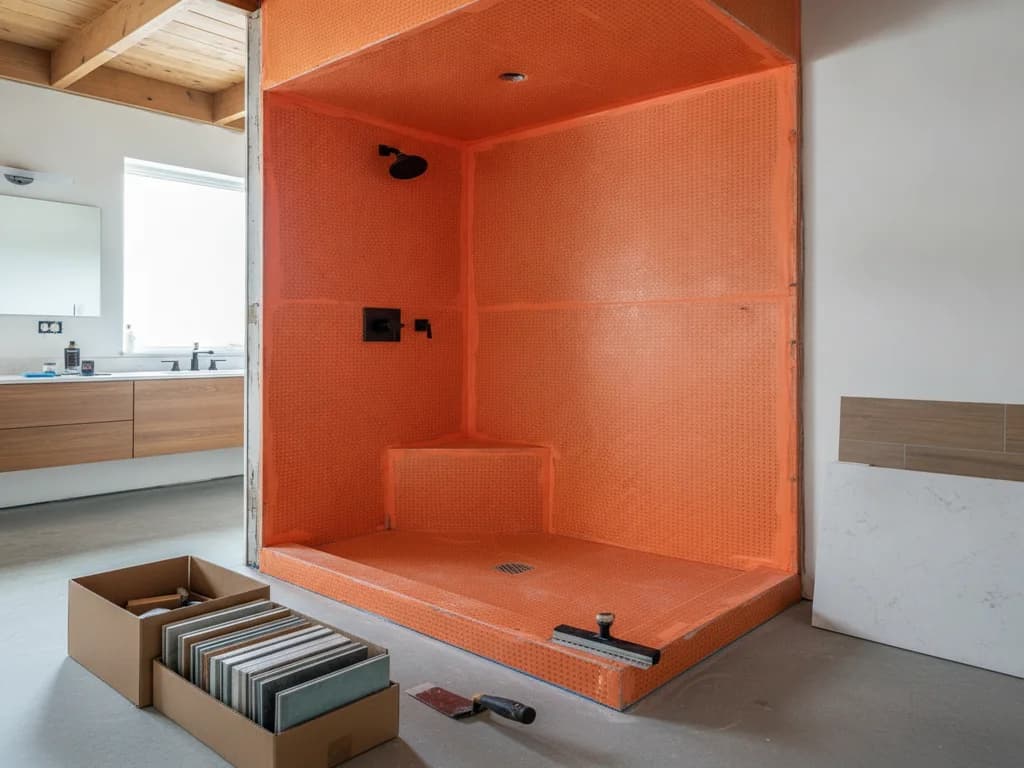
Fine Homebuilding is blunt about it: tile and grout are not a waterproofing layer. Modern best practice is to install a continuous waterproof barrier — across the pan, up the walls, sealed at every seam, corner, and penetration — before the tile ever goes on. The tile is the finish; the membrane is the waterproofing.
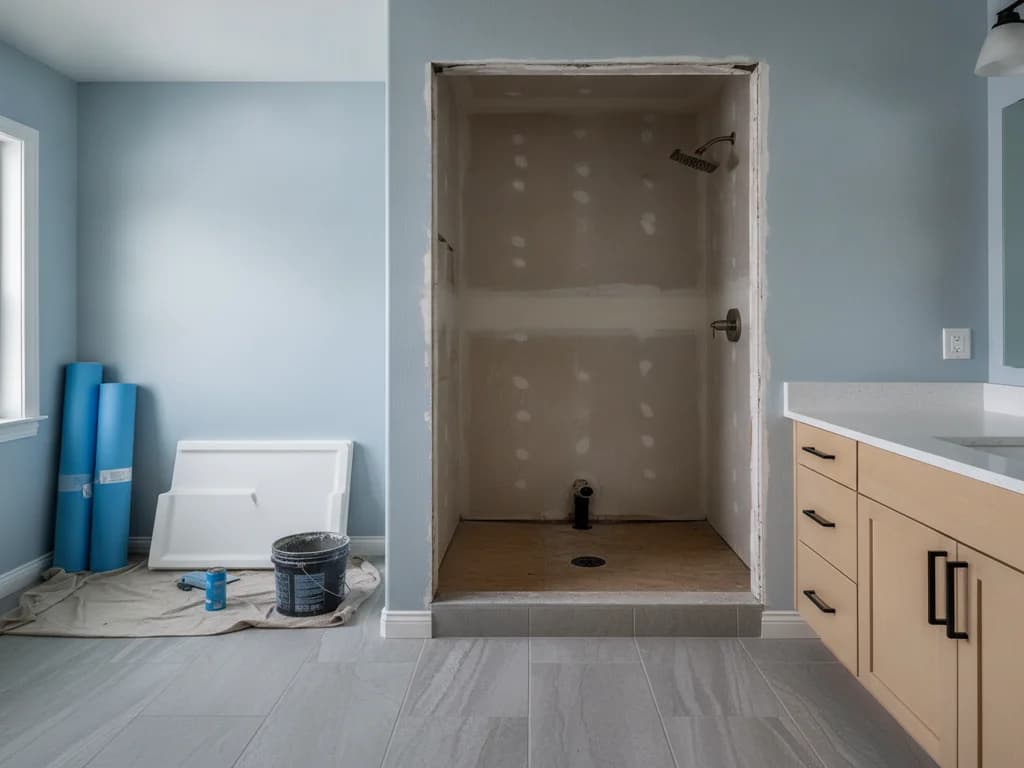
This matters because water that gets past the grout has to be stopped by something. In a properly built shower, that something is an engineered membrane that the tile is bonded to. In a poorly built one, there’s nothing behind the tile but backer board and studs — which is exactly how showers rot from the inside out.
The one sentence to remember
Tile is the finish. The membrane behind it is the waterproofing. A beautiful tile job over bad (or missing) waterproofing still fails.
The three waterproofing systems compared
There are three families of shower waterproofing in common professional use: sheet (bonded) membranes, liquid (trowel-applied) membranes, and the traditional mortar-bed method with a PVC pan liner. All three can produce a waterproof shower when done correctly. They differ in cost, durability, and how much they depend on the installer’s skill. For a head-to-head look at the two most-requested brand systems, see our Schluter vs. RedGard comparison.
| System | How it works | Strengths | Watch-outs |
|---|---|---|---|
| Sheet / bonded membrane (e.g. Schluter KERDI) | A modified-polyethylene sheet fleeced on both sides is embedded in thin-set over walls and pan; seams sealed with KERDI-BAND. Also acts as a vapor retarder. | Fine Homebuilding calls sheet membranes the highest level of waterproofing, durability, and crack isolation. Factory-uniform thickness; complete engineered system (drain, bands, corners); ICC-ES listed; Schluter offers a 10-year limited system warranty. | Highest cost; steeper learning curve; must be fully embedded with no voids or wrinkles to perform. |
| Liquid / trowel-applied membrane (e.g. RedGard, Laticrete Hydro Ban) | A liquid membrane is rolled or brushed on in two coats over the backer board and pan, curing to a continuous film. | Lowest cost; conforms to any shape; fast — Hydro Ban can be flood-tested in as little as 2 hours at 70°F or above, and exceeds ANSI A118.10 and A118.12. | Fine Homebuilding notes liquids are less durable than sheets. The #1 failure cause is under-application — applied too thin it’s only water-resistant, not waterproof — plus pinholes. Quality depends on the installer hitting the right mil thickness. |
| Traditional mortar bed / PVC pan liner (the old “mud” method) | A pre-slope mortar bed is built, a PVC/CPE liner laid over it, then a second mortar bed on top, draining through a clamping drain with weep holes. | Time-proven; no proprietary kit required; works in any shape or size. | Labor-intensive (two mud beds plus the liner) and slow. The waterproofing sits below a mortar bed that can stay saturated, and there are more failure points if the pre-slope or weep holes are done wrong. |
System descriptions from Fine Homebuilding’s “Three Ways to Waterproof Tile Showers,” Schluter (KERDI), and Laticrete (Hydro Ban). See Sources.
Sheet membranes: the gold standard
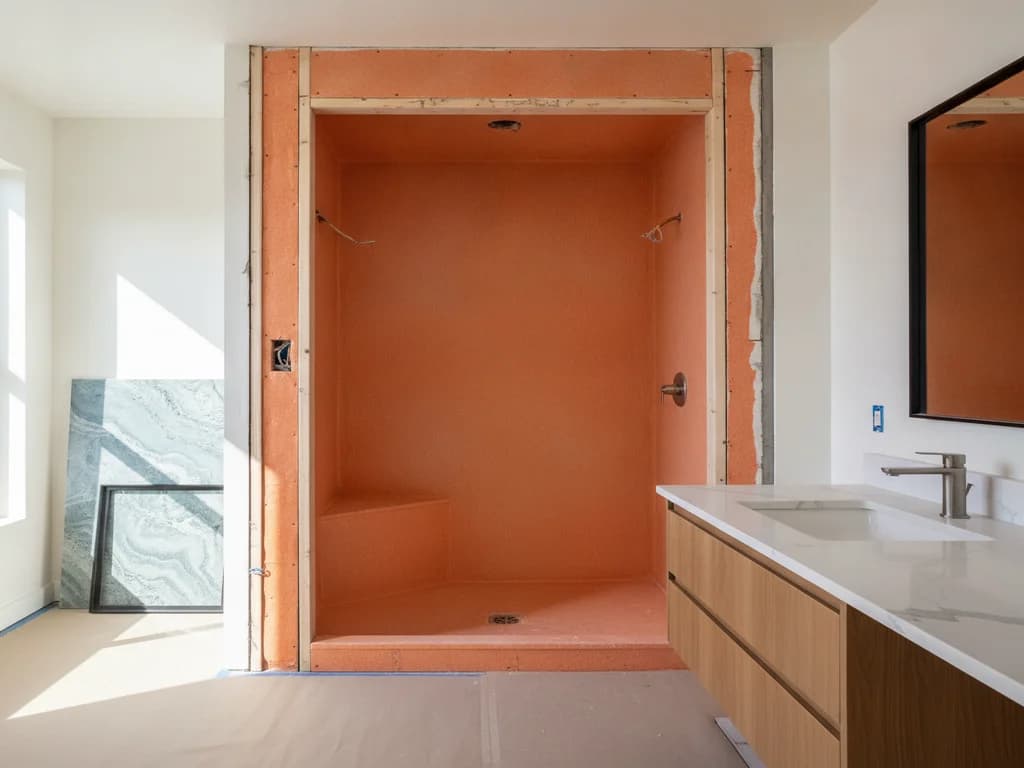
A sheet membrane like Schluter KERDI is a modified-polyethylene sheet with a fleece webbing on both sides that anchors it into thin-set mortar. Because it comes off the roll at a uniform factory thickness, there’s no guesswork about whether it was applied thick enough — a problem that plagues liquids. It also functions as a vapor retarder.
Schluter sells it as a complete engineered system: matching drain, KERDI-BAND for seams, and preformed inside/outside corners, so every transition has a designed solution. The product is ICC-ES listed, and Schluter offers a 10-year limited system warranty when the components are installed together. Fine Homebuilding rates sheet membranes as the highest level of waterproofing, durability, and crack isolation of the three approaches.
The trade-offs are real: it costs more than a liquid, has a steeper learning curve, and only works if it’s fully embedded in thin-set with no voids or wrinkles behind it.
Liquid membranes: great when applied to spec
Liquid membranes — RedGard from Custom Building Products and Laticrete Hydro Ban are the common names — are rolled or brushed onto the backer board and pan in two coats. They’re the lowest-cost option, they conform to any shape, and they’re fast: Hydro Ban can be flood-tested in as little as 2 hours at 70°F or above, and Laticrete states it exceeds ANSI A118.10 and A118.12.
The catch is that a liquid is only as good as its applied thickness. Fine Homebuilding notes liquids are less durable than sheets, and the single most common failure mode is under-application — spread too thin, the membrane is merely water-resistant rather than waterproof — along with pinholes left in the film. A liquid system done to the manufacturer’s specified mil thickness is excellent; one rushed or applied too thin is a future leak.
The traditional mortar-bed method
The old-school approach builds a pre-slope mortar bed, lays a PVC or CPE liner over it, then tops it with a second mortar bed, draining through a clamping drain with weep holes. It’s time-proven, needs no proprietary kit, and adapts to any size or shape of shower.
The downsides are labor and failure points. It requires two mud beds plus the liner, so it’s slow. And the waterproofing layer sits below a mortar bed that can stay saturated, which means more opportunities for trouble if the pre-slope is flat or the weep holes get clogged.
TCNA best-practice specs
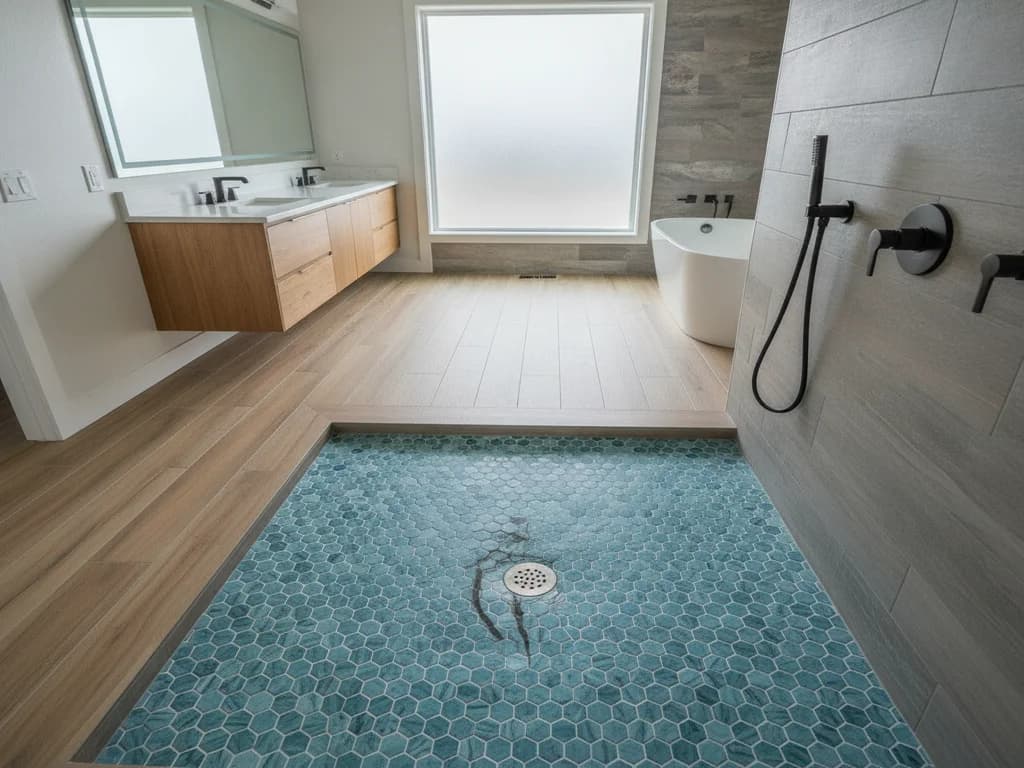
- Curbless / zero-threshold showers: TCNA methods call for a continuous bonded membrane on the floor and walls, with waterproofing extended at least one foot beyond the shower onto the bathroom floor (per CTaSC/TileLetter curbless guidance).
- Slope: the tile industry targets 1/4 inch per foot toward the drain (TCNA). Note that this is stricter than the plumbing code — the Uniform Plumbing Code, which Idaho’s plumbing code is based on, requires only that the finished receptor floor slope “not less than 1/8 inch per foot… nor more than 1/2 inch per foot” (UPC 408.5). A floor built to the code minimum can pass inspection and still hold water, which is why 1/4 inch per foot is the number worth specifying. Curbless layouts often use a linear drain to achieve a single-plane slope.
- Verify before tiling: the industry-standard check is a flood test after waterproofing and before any tile goes on — dam the drain, fill the pan, and confirm it both holds water and drains fully.
Why it matters — and the warning signs of a failing shower
When waterproofing is skipped or botched, water reaches the backer board and framing, where rot and mold spread out of sight long before you notice anything. Fine Homebuilding notes that pre-1990s showers torn open during remodels often reveal horrifying mildew and mold growth and rotted framing — damage that was invisible from the bathroom.
That’s why the warning signs are worth knowing. They rarely appear in the shower itself first; they show up at the edges and below.
- A persistent musty smell in or near the bathroom
- Loose or hollow-sounding tiles
- Cracked or crumbling grout
- Soft, swollen, or spongy drywall around the shower
- Peeling or bubbling paint near the enclosure
- Water stains or brown/yellow discoloration on the ceiling of the room below
- Recurring mold that comes back no matter how often you clean it
Common root causes
Under-applied liquid membrane, a cracked or improperly built pan, unsealed seams, the wrong backer board, or a missing pre-slope. Each one lets water reach framing it was never supposed to touch.
Frequently asked questions
- Is tile waterproof?
- No. Tile and grout are water-permeable, not waterproof — water passes through them. What keeps a tiled shower dry is a continuous waterproof membrane installed behind and beneath the tile across the walls, pan, seams, and penetrations. Per Fine Homebuilding, the tile is the finish and the membrane is the waterproofing.
- What is the best shower waterproofing system?
- There’s no single best for every job, but Fine Homebuilding rates sheet (bonded) membranes such as Schluter KERDI as the highest level of waterproofing, durability, and crack isolation. Liquid membranes like RedGard and Laticrete Hydro Ban are lower-cost and faster and perform very well when applied to the manufacturer’s specified thickness. The traditional mortar-bed and PVC-liner method is time-proven but more labor-intensive.
- What is a flood test?
- A flood test is the industry-standard check done after the waterproofing is installed and before any tile goes on. The drain is dammed, the pan is filled with water, and the installer confirms that it holds water without leaking and then drains fully. It’s the most reliable way to verify a shower is actually waterproof before it gets covered with tile.
- How do I know if my shower is leaking behind the tile?
- Watch for a persistent musty smell, loose or hollow-sounding tiles, cracked grout, soft or swollen drywall around the shower, peeling or bubbling paint, water stains or brown/yellow discoloration on the ceiling of the room below, and mold that keeps coming back. These usually mean water has reached the backer board or framing. Common causes include an under-applied liquid membrane, a cracked pan, unsealed seams, the wrong backer board, or a missing pre-slope.
- Why do cheap showers fail?
- Usually because the waterproofing was skipped, rushed, or applied too thin. Fine Homebuilding notes the most common liquid-membrane failure is under-application — too thin, the membrane is only water-resistant, not waterproof. Once water gets past it, it reaches backer board and framing, where rot and mold spread out of sight. Older showers opened during remodels frequently reveal extensive hidden mold and rotted framing.
- What slope does a shower floor need?
- Shower floors require 1/4 inch of slope per foot toward the drain under IPC and TCNA guidance, so water always runs to the drain rather than pooling. Curbless, zero-threshold layouts often use a linear drain to achieve a clean single-plane slope, and TCNA methods call for the bonded membrane to extend at least one foot beyond the shower onto the bathroom floor.
Sources
- Fine Homebuilding — Three Ways to Waterproof Tile Showers
- Schluter — KERDI Waterproofing Membrane (manufacturer)
- Laticrete — Hydro Ban (manufacturer)
- CTaSC / TileLetter — Curbless Shower Guidance (TCNA methods)
- TCNA — Handbook for Ceramic, Glass & Stone Tile Installation (shower waterproofing methods)
- ICC — 2021 International Plumbing Code (shower slope requirements)
Claims and figures are drawn from the sources above and provided for general guidance; your project may vary. Photography is illustrative of design concepts. For a fixed price on your specific bathroom, request a free estimate.