Updated July 16, 2026 · 7 min read
By Boise Bath — bathroom & shower remodeling in Boise & the Treasure Valley
The short answer
Replacing a shower pan runs roughly $1,000–$3,500 installed nationally, per HomeAdvisor. Acrylic pans sit at the low end; tile-ready foam and mud-bed pans with new tile sit at the top. Drain relocation, subfloor rot, and rebuilding the bottom course of wall tile are the escalators that push totals past the headline range.
Key takeaways
- HomeAdvisor’s national data puts shower pan replacement roughly between $1,000 and $3,500 installed, depending on pan type and tile scope.
- This Old House prices the pan itself at $800–$1,500 for a prefab unit versus $1,200–$3,000 for a custom-built pan.
- The pan never comes out alone: wall waterproofing laps over it, so the bottom course of wall tile is usually part of the job.
- Subfloor rot is the biggest cost wildcard — the pan failed because water was getting through, and the bill depends on how long it ran.
- Because escalators are invisible until demo, a fixed local quote after an inspection beats any national average for budgeting.
What does shower pan replacement cost?
National cost guides put shower pan replacement roughly between $1,000 and $3,500 installed, per HomeAdvisor. The low end is a straightforward acrylic pan swap in a standard alcove; the high end is a tile-ready or mud-bed pan rebuilt with new floor tile and the wall tie-in that comes with it.
That headline range assumes the job stays contained to the pan. In practice, the final number is driven less by the pan you choose and more by what the failed pan already did — which is why this article covers both halves: what each pan type runs, and the scope escalators that show up once the floor is open.
If you are still diagnosing rather than pricing — trying to confirm whether the pan is actually the problem — start with our guide to replacing a shower pan, which covers failure signs and the replacement process itself.
Cost by pan type
Three systems can go back in, and they carry different price behavior. This Old House prices the pan component at $800–$1,500 for a prefab unit and $1,200–$3,000 for a custom-built pan; the installed totals below fold in demo, drain work, and the surface that goes on top.
| Pan type | Pan component (national) | Where the installed total lands |
|---|---|---|
| Acrylic / composite pan | $800–$1,500 (This Old House) | Low end of the $1,000–$3,500 range (HomeAdvisor) — no tile stage |
| Tile-ready foam pan | $1,200–$3,000 as a custom pan (This Old House) | Middle to top of range — adds floor tile and wall tie-in |
| Traditional mud bed | $1,200–$3,000 (This Old House) | Top of range — most labor hours, plus tile |
National figures. Boise Bath quotes a fixed price for the whole assembly after inspecting the shower — pan, tie-ins, and surface included.
Why the pan never comes out alone
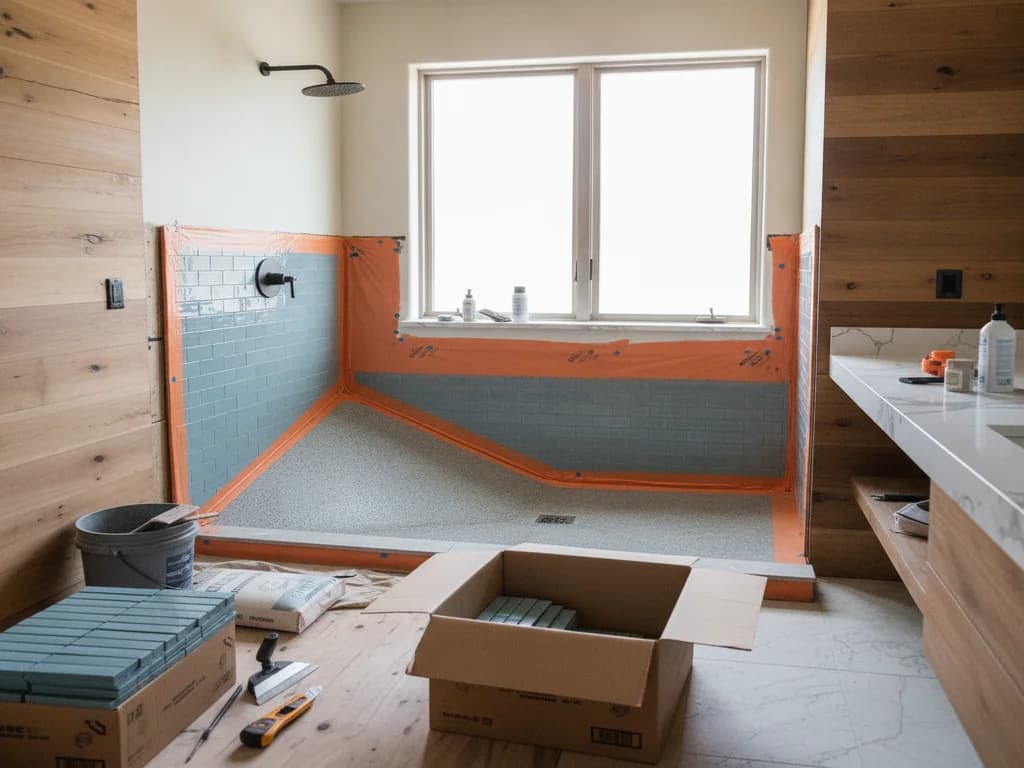
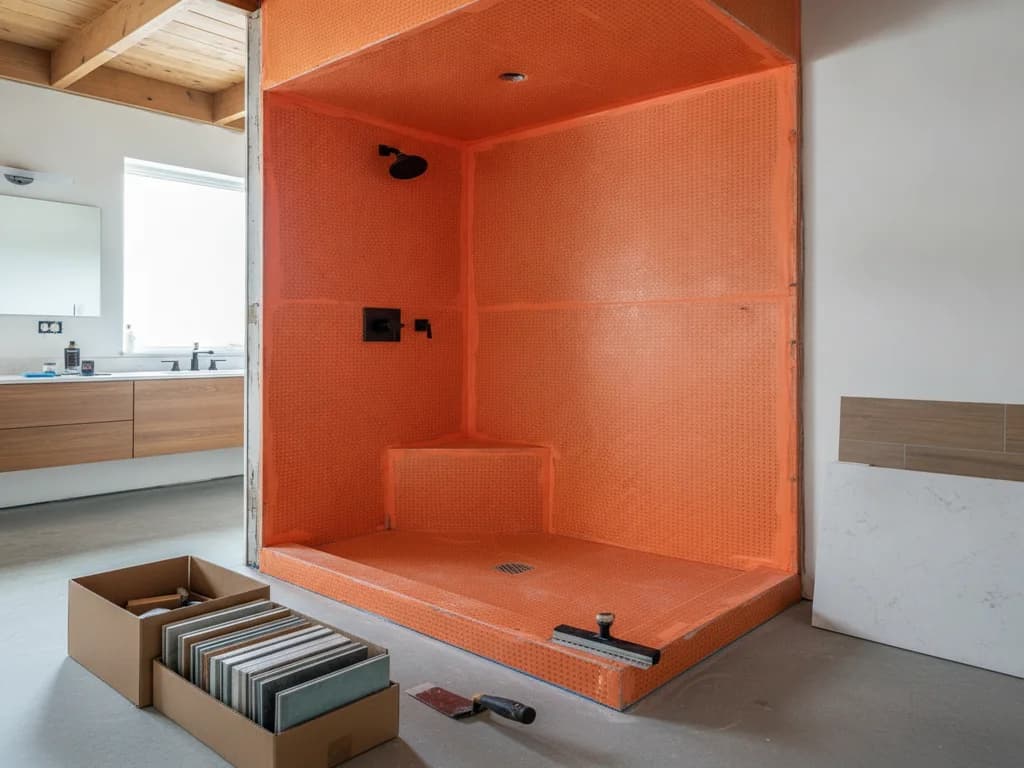
Here is the scope reality that surprises homeowners: the wall waterproofing laps over the pan like shingles, so replacing the pan means opening the bottom course or two of wall tile so the new assembly can tie together correctly. Tile method standards from the Tile Council of North America treat the pan and lower walls as one continuous system for exactly this reason.
That tie-in is a real line item — demo, matching or contrasting tile, and a setter’s time to blend the repair. Whether your existing wall tile can survive the operation, and what happens when a discontinued tile cannot be matched, is the whole subject of our guide on replacing a shower pan without retiling. The short version: usually the walls stay, but the bottom band is part of the pan budget, not an add-on.
Budget for the tie-in, not just the pan
A quote that prices only the pan and floor is a quote that grows later. The wall waterproofing lap — and the tile band that covers it — belongs in the number from day one. Ask every bidder how they handle it.
The escalators: what pushes the total past $3,500
The pan failed because water was going where it should not. What that water did while the pan was failing is the real cost variable, and none of it is visible until demo:
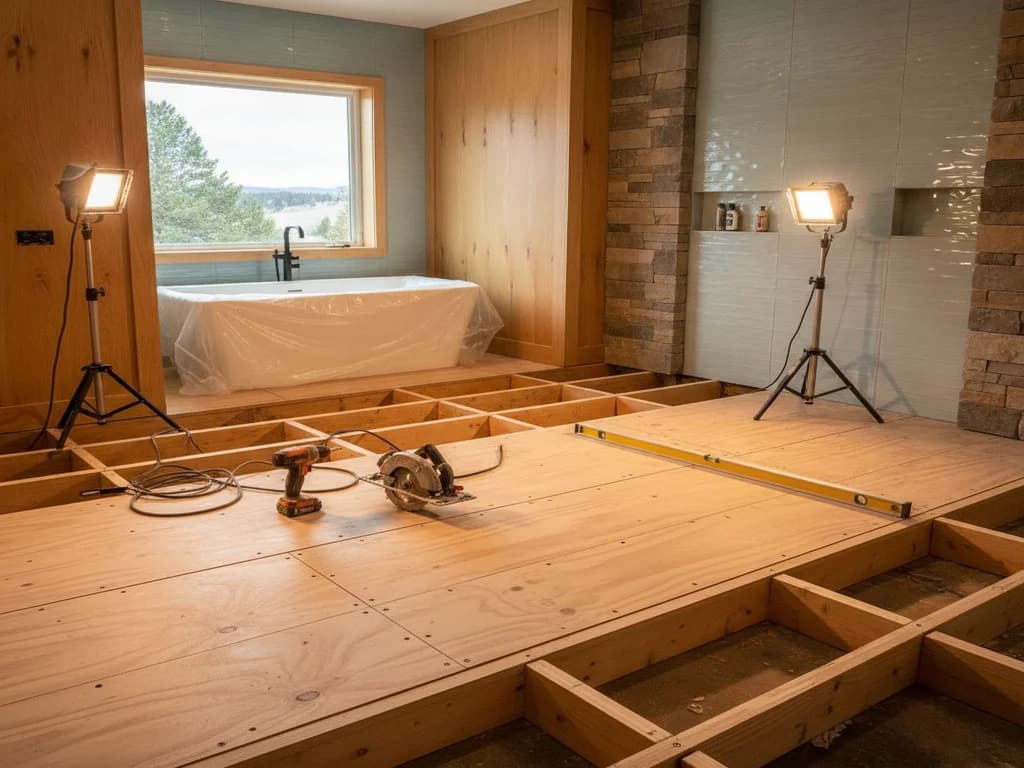
- Subfloor and framing repair — soft plywood or rotted joists must be cut out and rebuilt while the floor is open; extent depends on how long the leak ran (see our bathroom subfloor replacement cost breakdown)
- Drain relocation — moving the drain to suit a new pan size or a curbless conversion adds plumbing labor and permit scope
- New waterproofing above the pan — if the wall membrane is as old as the failed pan, tying new into failed is false economy (our shower waterproofing cost breakdown covers that stage)
- Mold remediation — long-running leaks in enclosed cavities can require treatment beyond simple material replacement
- Tile matching — when the existing wall tile is discontinued, the tie-in band becomes a design decision, and sometimes a larger tile scope
- Upstairs bathrooms — ceiling repair in the room below is a separate trade if the leak announced itself downstairs
Permits and what they add
Drain or trap work triggers a plumbing permit in Boise through the City of Boise Planning & Development Services, and the equivalent office in surrounding Treasure Valley cities. A licensed contractor pulls the permit and schedules inspections as part of the job — the direct fee is modest against the project total, but unpermitted drain work is the kind of shortcut that surfaces at resale.
A pan swap that reuses the existing drain location keeps this simple. A layout change — bigger pan, relocated drain, curbless entry — adds the inspection step to the schedule.
Pan-only fix vs. folding it into a shower replacement
A pan replacement already includes the disruptive parts of a shower project: demo, plumbing access, waterproofing tie-ins, and days of the bathroom being out of service. If the rest of the shower is dated — original valve, worn wall tile, framed glass you have wanted to replace — pricing the full rebuild alongside the pan-only fix is worth the ten minutes it takes.
The math often lands closer than expected, because the pan job carries the fixed costs either way. Our shower replacement cost breakdown covers what the full like-for-like rebuild runs nationally.
Getting a real number for your shower pan
The national $1,000–$3,500 band (HomeAdvisor) is a planning range, and the escalators above are exactly why it cannot be your budget. The honest number comes from someone confirming the pan is actually the failure, probing for subfloor damage, and pricing the tie-in scope — then standing behind that price.
Boise Bath provides fixed-price quotes through a free in-home estimate: the pan system, the wall tie-in, and any subfloor repair scoped up front, so the number does not move after demo day.
Ready to plan your Boise bathroom?
Licensed & insured · 3-year workmanship warranty
Frequently asked questions
- How much does it cost to replace a shower pan?
- Roughly $1,000–$3,500 installed nationally, per HomeAdvisor — acrylic pans at the low end, tile-ready foam or mud-bed pans with new tile at the top. This Old House prices the pan component itself at $800–$1,500 prefab versus $1,200–$3,000 custom-built. Drain moves, subfloor rot, and wall-tile tie-ins push totals higher.
- Does replacing a shower pan include replacing the tile?
- The floor tile, yes — it sits on the pan and comes out with it. The wall tile mostly stays, but the bottom course or two typically comes off so the wall waterproofing can lap over the new pan. That tie-in band should be in every quote; a pan-only price that ignores it will grow at demo.
- Why do shower pan quotes vary so much?
- Because the visible job is only half the scope. Two identical showers can carry very different bills depending on what the leak did to the subfloor, whether the drain moves, whether the wall waterproofing gets tied in or replaced, and whether existing tile can be matched. Bidders who probe before quoting price the same job; bidders who do not are guessing.
- Is it cheaper to replace the pan or the whole shower?
- The pan alone is cheaper as a line item — but the gap is smaller than it looks, because demo, plumbing access, and waterproofing tie-ins are in both projects. If the valve, wall tile, or glass are also near end-of-life, a combined rebuild usually beats doing two disruptive projects a few years apart.
- How much does subfloor damage add to a pan replacement?
- It depends entirely on how long the pan leaked — from a small plywood patch to joist repair. That variability is exactly why national averages cannot budget this job. A contractor who probes the floor and inspects from below where possible can scope most of it before demo, which is what a fixed quote should be built on.
- Can I just reseal or coat a failing shower pan instead?
- Surface coatings and drain patches treat the symptom — the failure is at the bottom of the assembly, under the tile and setting bed, where coatings cannot reach. Meanwhile the subfloor stays wet and the repair grows. Resealing makes sense for cosmetic wear on a sound pan, not for a pan that is actually leaking.
Sources
- HomeAdvisor — True Cost Guide
- This Old House — Bathrooms
- Tile Council of North America (TCNA)
- City of Boise — Planning & Development Services
Claims and figures are drawn from the sources above and provided for general guidance; your project may vary. Photography is illustrative of design concepts. For a fixed price on your specific bathroom, request a free estimate.