Updated July 16, 2026 · 7 min read
By Boise Bath — bathroom & shower remodeling in Boise & the Treasure Valley
The short answer
Bathroom subfloor replacement runs roughly $500–$3,000 nationally, per Angi and HomeAdvisor, covering demolition, new decking, and fasteners for a typical bathroom. The range moves fast when rot spreads: joist repair adds roughly $1,000–$10,000 depending on damage, and the area around the toilet flange is the most common trouble spot.
Key takeaways
- National guides put bathroom subfloor replacement at roughly $500–$3,000, per Angi and HomeAdvisor — roughly $3–$10 per square foot for the decking work itself.
- The subfloor is rarely the whole bill: the finished flooring above it has to come out and be replaced, which often costs more than the subfloor work.
- Rot that reaches the joists is the big escalator — sistering or replacing framing members runs roughly $1,000–$10,000 nationally depending on extent.
- The toilet flange zone is the most common failure point, and repairs there usually include flange work and a toilet reset on top of the decking itself.
- The true scope is only fully visible after demolition, so good bids state unit pricing for rot discovered along the way.
- National ranges are planning bands — a fixed price requires opening up or probing the actual floor.
What does subfloor replacement cost nationally?
Angi and HomeAdvisor both put subfloor replacement at roughly $500–$3,000 for a typical bathroom, which works out to roughly $3–$10 per square foot for demolition of the damaged decking, new plywood or OSB, and fastening. A contained soft spot near the tub sits at the bottom of that band; replacing the full floor of a hall bath sits near the top.
The honest caveat: that range covers the subfloor only. Because the subfloor lives under your finished floor, every subfloor project is also a flooring project — and in a bathroom, often a toilet-reset project too. The all-in number is usually the subfloor range plus a bathroom flooring replacement on top.
What a subfloor bid includes — and what stacks on top
A clean way to read any subfloor quote is in three layers: the decking work itself, the framing below it if rot has spread, and the finish work above it that has to be rebuilt either way.
| Scope layer | National range | When it applies |
|---|---|---|
| Spot subfloor repair (small section) | Roughly $300–$1,000 | Contained soft spot, joists sound |
| Full bathroom subfloor replacement | Roughly $500–$3,000 | Widespread damage or full-gut remodel |
| Joist sistering / repair | Roughly $1,000–$10,000 | Rot has reached the framing below |
| Toilet flange replacement + reset | Roughly $150–$500 | Damage centered at the toilet — very common |
| New finished flooring above | See flooring cost guide | Always — the old floor comes out to get down there |
National ranges per Angi and HomeAdvisor cost guides. Layers stack: a flange-centered rot repair commonly includes decking, flange, reset, and flooring lines.
Escalator #1: rot that reaches the joists
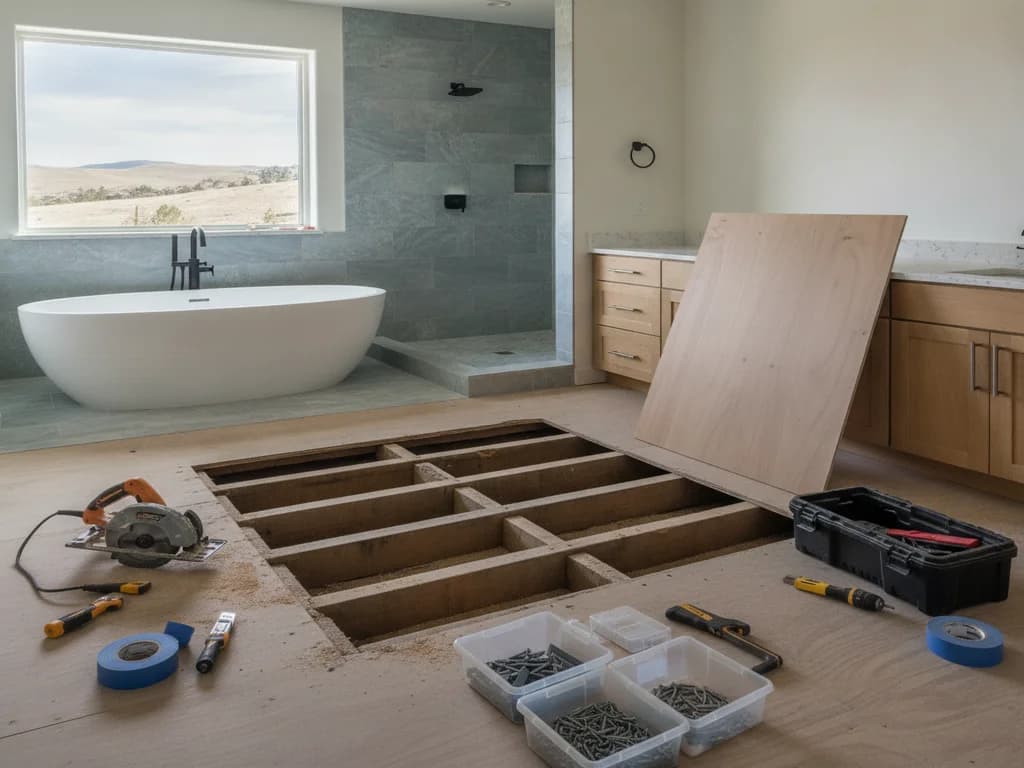
Subfloor decking is sacrificial by design — it is the layer that takes the water damage so the structure does not. But a leak that runs long enough soaks through the decking and into the joists below, and that changes the project from carpentry into structural repair.
Joist repair is usually sistering — fastening new lumber alongside the weakened member — or full replacement of the damaged section. National guides put framing repair at roughly $1,000–$10,000 depending on how many joists are involved and how accessible they are, per Angi. Over a crawl space the access is workable; over a finished ceiling or a slab-edge condition, the labor climbs.
The line between the two scopes is exactly why probing matters. The difference between a $1,500 decking job and a $6,000 structural job can be one wet joist, and you want that answered before the bid is signed, not after. The full inspect-and-repair sequence is covered in replacing a rotten bathroom floor.
A bouncy floor is a framing question, not a flooring question
Soft spots mean decking damage, but bounce or visible sag means the joists are suspect. Get the framing answer first — it is the single biggest swing in the whole budget.
Escalator #2: the toilet flange zone
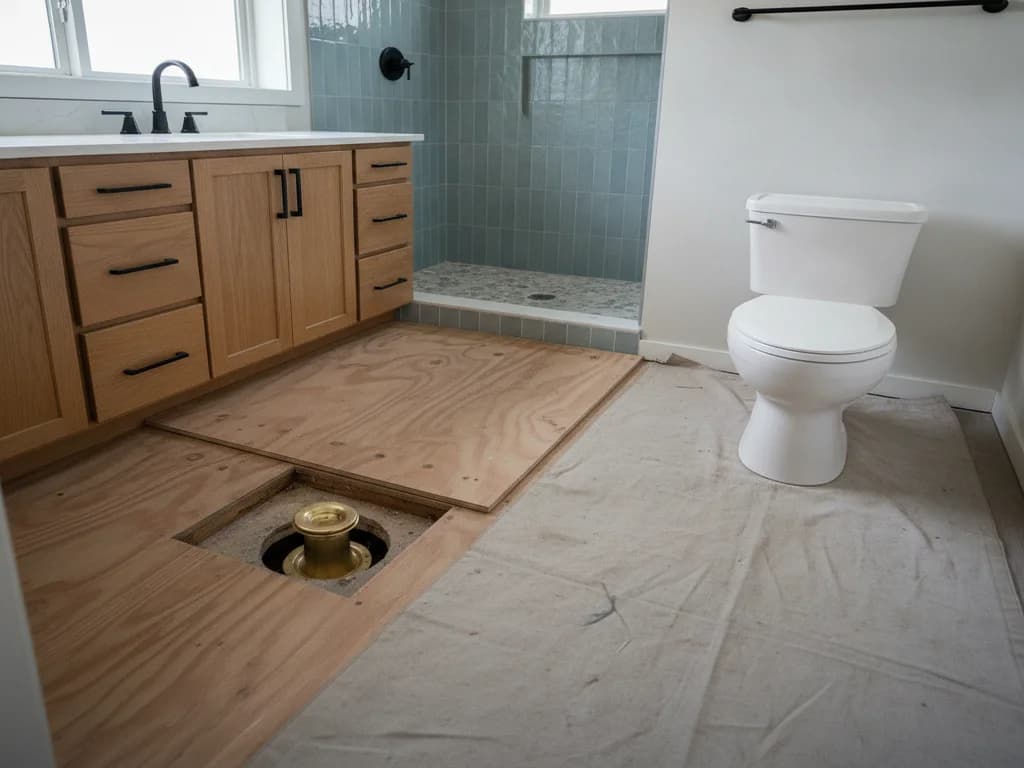
The most common place a bathroom subfloor fails is a ring around the toilet. A wax seal that gave out years ago, or a toilet that has been rocking on a loose flange, wicks small amounts of water into the decking at every flush — slow enough that nothing shows until the floor feels soft or the toilet starts to move.
Repairs there carry extra lines beyond decking: the closet flange itself often needs replacement or a repair ring, the toilet has to be pulled and reset on a new seal, and the drain connection gets inspected while it is exposed. National guides put flange work at roughly $150–$500, per HomeAdvisor, on top of the decking repair. The full anatomy of that repair is in replacing a bathroom floor under the toilet.
If the toilet itself is old or was part of the problem, replacing it during the repair costs far less than a separate visit later — the toilet replacement cost breakdown covers what that adds.
Why the finished floor is on the bill either way
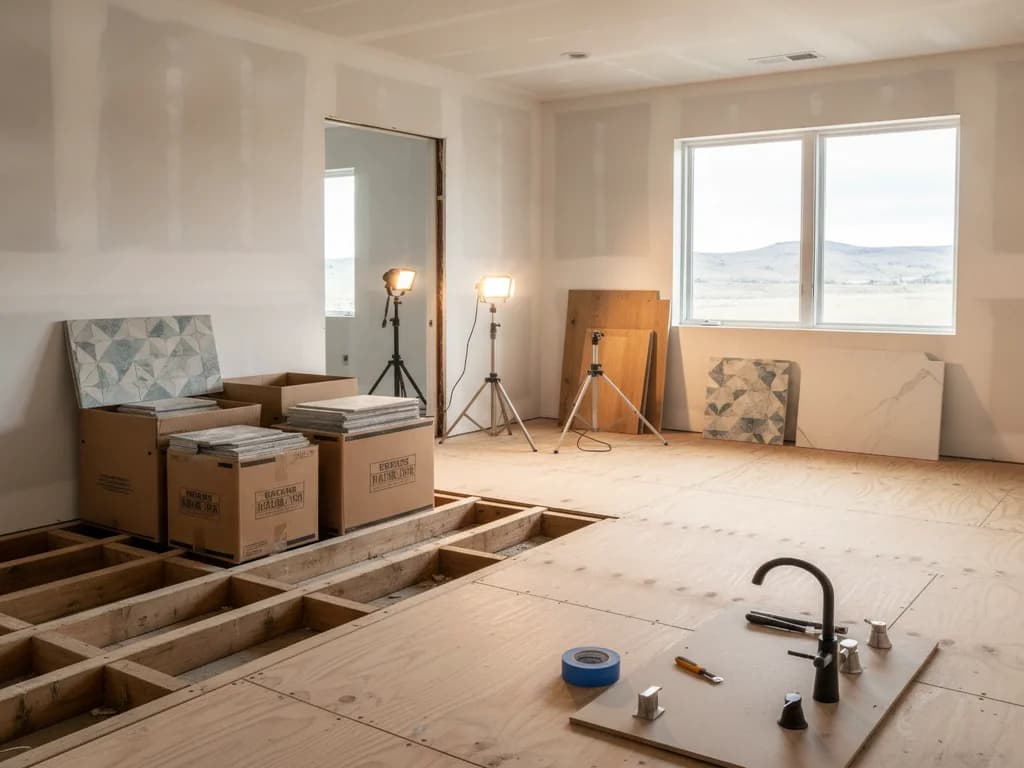
There is no way to replace a subfloor without removing everything above it — tile, vinyl, underlayment, baseboard, and usually the toilet and possibly the vanity. That demolition is part of the subfloor scope, but the rebuild is its own: new finished flooring, transitions, trim, and resets.
This is why subfloor damage so often converts a repair into a remodel decision. If the flooring has to come out anyway and the room is fifteen years old, putting the same dated floor back is the option most homeowners skip. A full bathroom remodel prices the rebuild once instead of twice.
What the replacement process involves
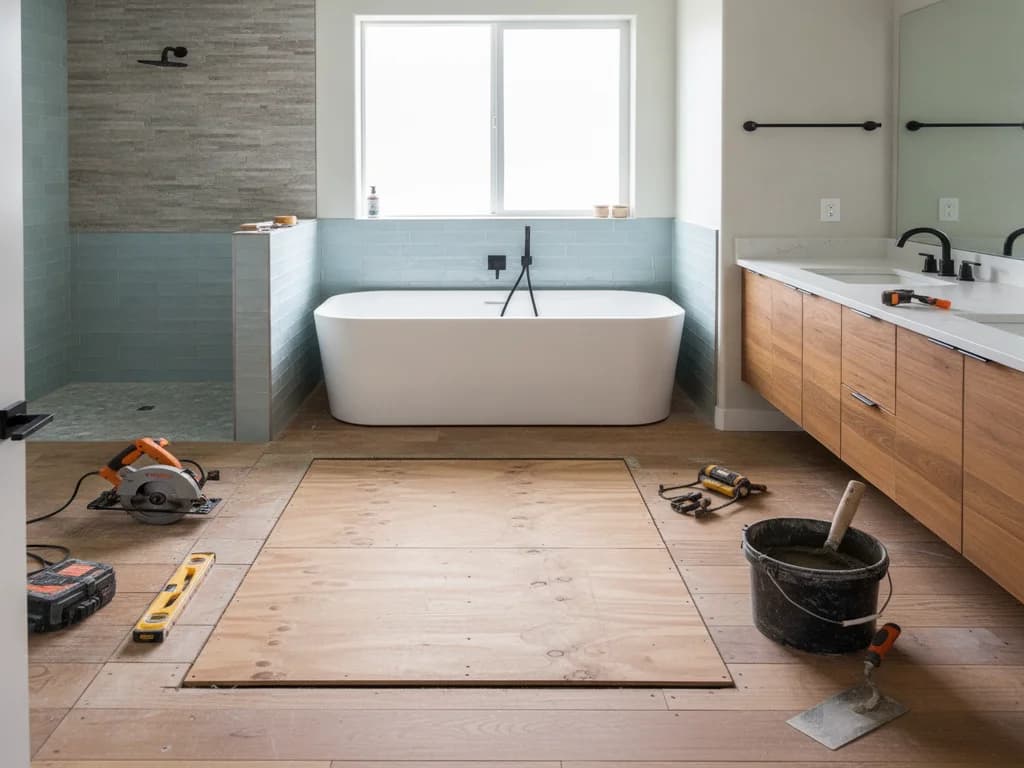
A professional job runs moisture-source diagnosis first — replacing decking under an active leak just schedules the next repair — then demolition, cutting damaged decking back to sound joists, framing repairs if needed, new decking glued and fastened, and the finished floor rebuilt above. The step-by-step sequence and timeline live in replacing a bathroom subfloor.
Expect honest bids to carry a stated unit price for additional rot found after demolition. The floor hides its condition until it is open, and a bid that pretends otherwise is a bid that changes later.
Getting from a national range to a real number
Every figure above is a national planning band — none of the sources price a Boise-specific project, and subfloor scope in particular cannot be priced from a range because the damage is hidden by definition. Boise Bath quotes subfloor and rot repair at a fixed price through a free estimate, with probing up front and discovery pricing stated in writing before demolition starts.
Ready to plan your Boise bathroom?
Licensed & insured · 3-year workmanship warranty
Frequently asked questions
- How much does it cost to replace a bathroom subfloor?
- Nationally, roughly $500–$3,000 for the decking work in a typical bathroom — about $3–$10 per square foot — per Angi and HomeAdvisor. The all-in number is higher because the finished flooring above must be removed and replaced, and rot that reaches the joists adds roughly $1,000–$10,000 of framing repair.
- What does it cost to fix a rotted floor under a toilet?
- The decking repair itself is often at the small end — a contained section runs roughly $300–$1,000 nationally — but the flange zone adds lines: closet flange repair or replacement at roughly $150–$500 per HomeAdvisor, a toilet pull and reset, and patched or replaced finished flooring. Budget the bundle, not just the wood.
- How do I know if the joists are damaged too?
- Soft spots underfoot point to decking; bounce, visible sag, or a toilet that keeps loosening after being reset point to framing. A contractor confirms by probing from below through the crawl space or after demolition. It is the most important question in the whole estimate — joist repair is the largest single cost swing.
- Does subfloor replacement include new flooring?
- No — subfloor ranges cover demolition, decking, and fastening. The tile or vinyl above it has to come out to do the work and cannot go back, so new finished flooring is always part of the real project total. In practice the flooring rebuild often costs as much as or more than the subfloor repair itself.
- Can you replace just part of a bathroom subfloor?
- Yes, when damage is contained — the damaged section is cut back to the nearest sound joists and new decking is fitted and fastened, typically at the low end of national ranges. It only holds up if the moisture source is fixed and the surrounding decking is genuinely dry, which is what probing before the bid is for.
Sources
Claims and figures are drawn from the sources above and provided for general guidance; your project may vary. Photography is illustrative of design concepts. For a fixed price on your specific bathroom, request a free estimate.