Updated July 16, 2026 · 7 min read
By Boise Bath — bathroom & shower remodeling in Boise & the Treasure Valley
The short answer
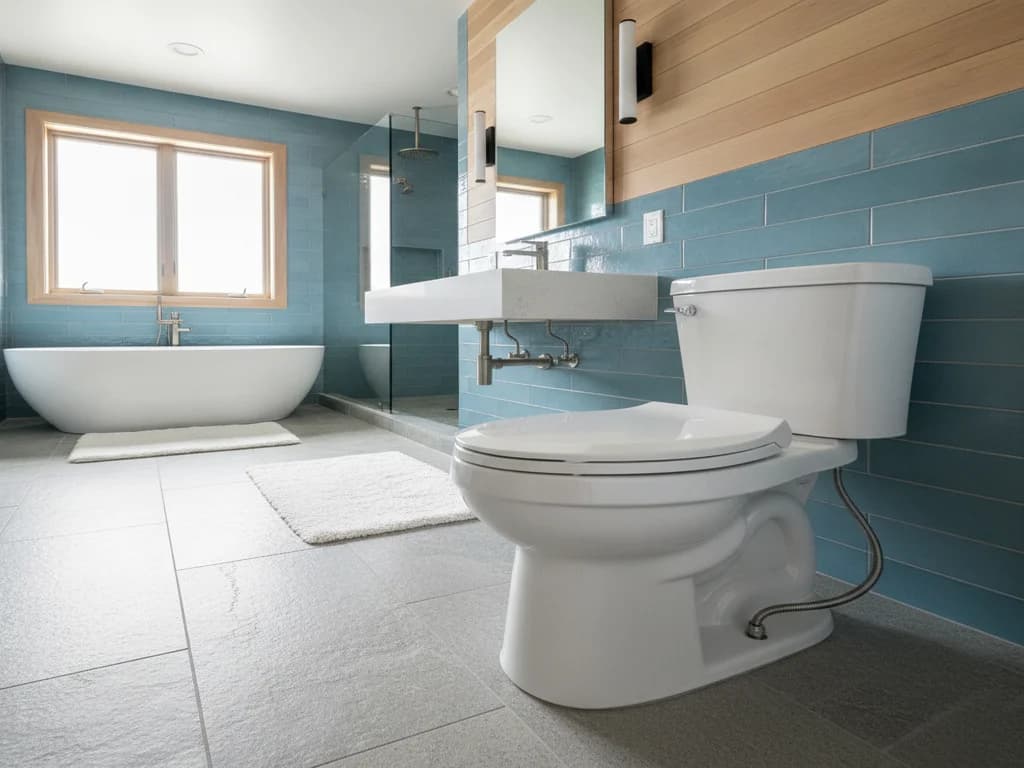
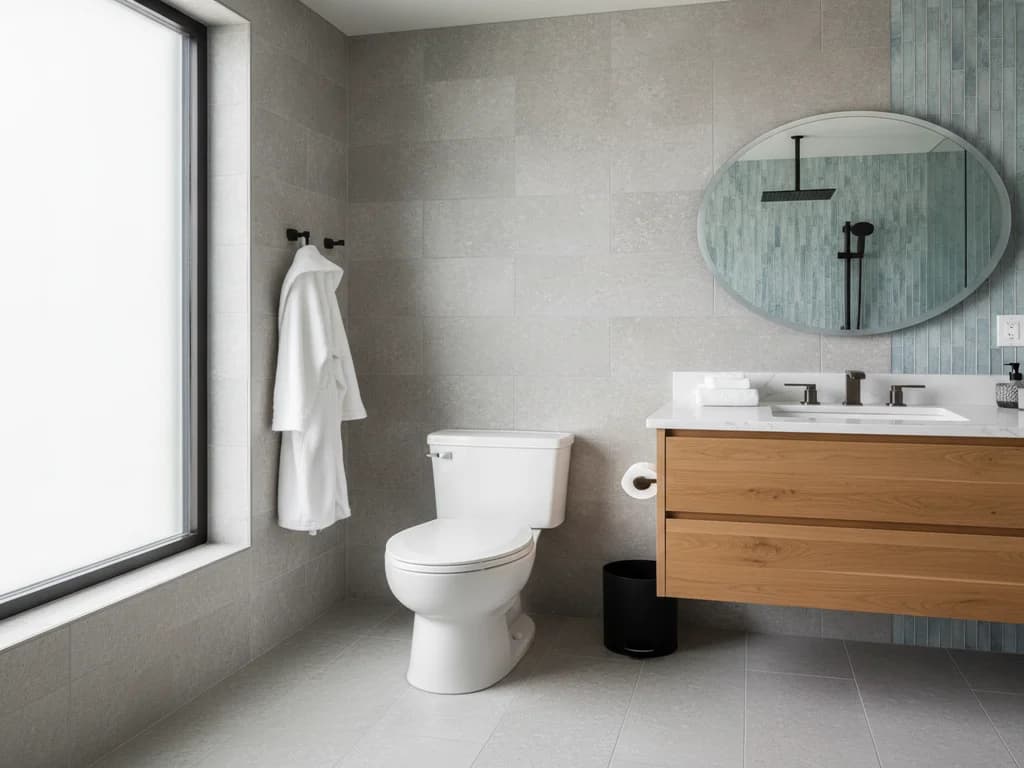
Toilet replacement nationally runs roughly $200–$600 in installation labor plus $100–$3,000 or more for the toilet itself, per HomeAdvisor — most homeowners land between $400 and $1,000 all-in for a quality two-piece model professionally installed. A damaged closet flange or rotted subfloor under the toilet is the escalator that moves the bill past that band.
Key takeaways
- National guides put professional toilet installation labor at roughly $200–$600, per HomeAdvisor and Angi, on top of the unit price.
- The unit itself spans tiers: roughly $100–$300 for a basic two-piece, $300–$800 for comfort-height and better one-piece models, and $1,000–$3,000+ for wall-hung and smart toilets.
- A like-for-like swap is one of the cheapest projects in the bathroom — which is why hidden flange or subfloor damage feels so disproportionate when it appears.
- Closet flange repair adds roughly $150–$500 nationally, and rot in the floor around the flange adds its own repair scope beyond that.
- Pre-1994 toilets can use 3.5–7 gallons per flush versus 1.28 for a WaterSense model, per the EPA — old units cost money at every flush.
- National ranges are planning bands — rough-in fit and floor condition are what a real quote has to confirm.
What does toilet replacement cost nationally?
HomeAdvisor puts professional toilet installation labor at roughly $200–$600, with Angi's data in the same band, and the toilet itself running anywhere from about $100 to $3,000 or more depending on tier. Stack those together and most straightforward replacements land between $400 and $1,000 all-in for a quality two-piece unit, professionally installed with a new wax seal and supply line.
That makes a toilet swap one of the cheapest line items in the whole bathroom — cheaper than almost anything involving tile or waterproofing. The catch is what the old toilet can be hiding underneath, which is where the escalator section below comes in.
Toilet cost by unit tier
The unit price spread is wider than most homeowners expect, and the tiers buy meaningfully different things — not just styling.
| Tier | Unit price (national) | What it buys |
|---|---|---|
| Basic two-piece, round bowl | Roughly $100–$300 | Functional, standard height, builder-grade internals |
| Midrange two-piece, elongated / comfort height | Roughly $300–$600 | Taller seat, better flush engineering, WaterSense options |
| One-piece / premium | Roughly $500–$1,200 | Seamless body, easier cleaning, quieter and stronger flush |
| Wall-hung or smart toilet | Roughly $1,000–$3,000+ | In-wall carrier or bidet/heated features; installation cost rises too |
National ranges per HomeAdvisor and Angi. Wall-hung units need an in-wall carrier and framing work, so their installed cost climbs well beyond the standard labor range.
What installation labor covers
The roughly $200–$600 national labor range, per HomeAdvisor, covers pulling the old toilet, scraping and inspecting the flange, setting the new unit on a fresh wax or waxless seal, connecting a new supply line, leveling, and leak-testing. Disposal of the old unit is usually included but worth confirming on any bid.
The inspection in the middle of that list is the valuable part. The few minutes when the old toilet is off and the flange is exposed are the only honest look at the drain connection and the floor around it — which is exactly what a professional replacement is structured around.
The escalators: flange and floor
Two discoveries move a toilet swap past the standard band, and both live under the old unit where nobody can see them in advance.
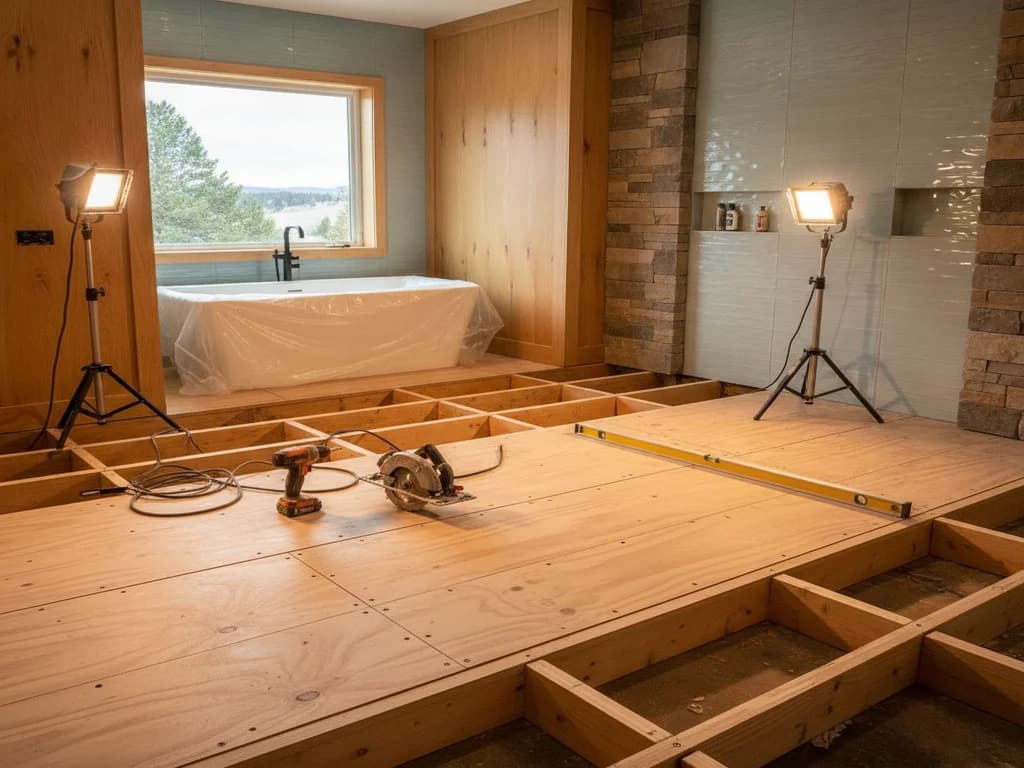
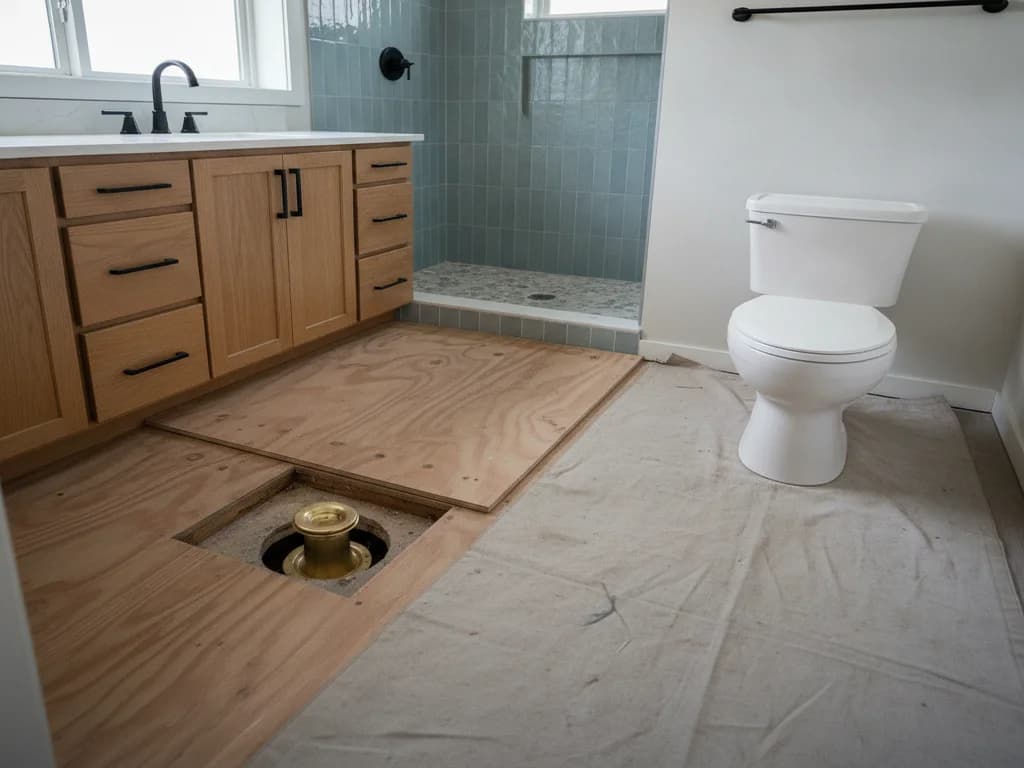
The first is the closet flange — the ring that anchors the toilet to the drain. Cracked, corroded, or set too low, it needs a repair ring or full replacement, which national guides put at roughly $150–$500, per HomeAdvisor. The second is the floor itself: a seal that failed years ago wicks water into the decking around the flange, and soft or rotted subfloor there is its own repair scope with its own budget, covered in bathroom subfloor replacement cost.
A toilet that rocks, or any water appearing at the base, is the classic advance warning of both. Shimming or caulking over it hides progressing damage — if that is your symptom, read the floor sections before pricing toilets.
A rocking toilet is not a toilet problem
Rocking means the flange or the floor under it has failed. Replacing the toilet without fixing that just sets a new toilet on a bad foundation — insist on the flange-and-floor inspection in any quote.
The water math: what an old toilet costs you monthly
Replacement economics are not just the invoice. Per the EPA's WaterSense program, toilets are the largest single water user in most homes, and pre-1994 models can use 3.5 to 7 gallons per flush versus 1.28 for a WaterSense-labeled unit. For a household flushing an old-generation toilet all day, the upgrade pays some of its own cost back on the utility bill.
Whether your specific toilet is worth replacing on age, repair history, or water use — versus just fixing the flapper — is its own decision, and should I replace my toilet walks the repair-versus-replace line honestly.
Fit checks before any toilet is purchased
Two measurements protect the budget. Rough-in distance — from the wall to the drain center, usually 12 inches — has to match the new unit; 10- and 14-inch rough-ins exist in older Treasure Valley homes and limit the catalog. And bowl shape matters in small rooms: an elongated bowl adds a couple of inches of projection that a tight powder room may not have.
Neither check costs anything, and both prevent the most common toilet-swap mistake: a unit that has to go back to the store. If the swap is part of a larger update anyway, folding it into a full bathroom remodel means the flange, floor, and fixture questions all get answered in one project.
Getting from a national range to a real number
The figures above are national planning bands — none of the sources price a Boise-specific install, and the flange-and-floor question can only be answered at your actual toilet. Boise Bath provides fixed-price quotes through a free estimate, with the escalator scenarios priced in writing up front rather than discovered on the invoice.
Ready to plan your Boise bathroom?
Licensed & insured · 3-year workmanship warranty
Frequently asked questions
- How much does it cost to replace a toilet?
- Nationally, roughly $200–$600 in professional installation labor plus the unit — about $100–$300 for a basic two-piece, $300–$800 for midrange comfort-height models, and $1,000–$3,000+ for wall-hung or smart toilets, per HomeAdvisor and Angi. Most homeowners land between $400 and $1,000 all-in for a quality standard replacement.
- What can make a toilet replacement cost more than quoted?
- The two escalators are under the old unit: a damaged closet flange, which adds roughly $150–$500 nationally per HomeAdvisor, and rotted subfloor around the flange, which is its own repair scope beyond that. A rocking toilet or water at the base beforehand is the usual warning sign of both.
- How much does a comfort-height toilet cost versus standard?
- The premium is modest — midrange comfort-height two-piece models run roughly $300–$600 nationally versus $100–$300 for basic standard-height units, per HomeAdvisor, and installation labor is identical. For aging knees or accessibility planning, it is one of the cheapest meaningful upgrades in the bathroom.
- Is it worth replacing a toilet that still works?
- Sometimes — pre-1994 toilets can use 3.5–7 gallons per flush versus 1.28 for a WaterSense model, per the EPA, so an old unit costs money at every flush even when it works. Cracked porcelain or a recurring repair cycle also justify replacement. If none of those apply, a repair is usually the honest answer.
- Why do wall-hung toilets cost so much more to install?
- The tank and carrier frame mount inside the wall, which means opening the wall, framing in the carrier, and moving the drain connection — carpentry and plumbing work a floor-mounted swap never touches. That is why the unit runs roughly $1,000–$3,000+ nationally and the installed total climbs well past standard labor ranges.
Sources
Claims and figures are drawn from the sources above and provided for general guidance; your project may vary. Photography is illustrative of design concepts. For a fixed price on your specific bathroom, request a free estimate.