Updated July 16, 2026 · 7 min read
By Boise Bath — bathroom & shower remodeling in Boise & the Treasure Valley
The short answer
Replace a toilet when the bowl or tank is cracked, when repairs keep recurring, or when it predates modern efficiency — pre-1994 toilets can use several times the water of a WaterSense model at 1.28 gallons per flush. Installation means pulling the old unit, inspecting the flange and floor, setting a new seal, and testing. A rocking or base-leaking toilet needs the floor checked first.
Key takeaways
- Cracked porcelain — bowl or tank — ends the repair conversation; everything else is a judgment call on age and repair frequency.
- Toilets are the largest single water user in most homes, and pre-1994 models can use 3.5 to 7 gallons per flush versus 1.28 for a WaterSense-labeled toilet, per the EPA.
- A rocking toilet or water at the base is a floor and flange symptom, not a toilet symptom — shimming or caulking over it hides progressing damage.
- The flange-and-subfloor inspection while the old toilet is off is the most valuable ten minutes of the whole job.
- Rough-in distance — usually 12 inches from wall to drain center — has to match before any toilet is purchased.
- A like-for-like swap is quick and affordable, which makes it easy to bundle into any larger bathroom project.
Repair or replace: where the line actually is
Most toilet complaints are repairs, and honest contractors say so. A running toilet is usually a flapper or fill valve; a weak flush can be mineral-clogged rim jets; a sweating tank is a humidity issue. None of those justify replacement on their own.
Replacement earns its keep in three situations: cracked porcelain anywhere (a hairline in a tank or bowl only ever widens), a repair cycle that keeps recurring — new internals every year or two on an aging unit — and old-generation water use, where the toilet works fine but costs you money at every flush.
There is also a fourth, quieter trigger: fit. If the household has changed — aging knees, accessibility needs — a standard-height bowl may be the wrong fixture even in perfect health. That decision has its own trade-offs, covered in comfort height vs. standard toilets.
| Symptom | Usually a repair | Usually a replacement |
|---|---|---|
| Runs constantly | Flapper or fill valve | Only if repairs keep recurring |
| Weak or incomplete flush | Clogged rim jets, low tank level | Old low-performing first-gen low-flow models |
| Cracked tank or bowl | — | Always — cracks propagate |
| Rocks or shifts | Never just shim it | Flange/floor inspection first, then decide |
| Water at the base | Sometimes a wax ring reset | If the floor or flange below is damaged |
| High water bills | — | Pre-1994 units are strong candidates |
The water math on old toilets
Toilets are the biggest indoor water user in most homes — nearly 30 percent of household indoor consumption, per the EPA’s WaterSense program. That makes flush volume the rare spec that pays you back on a fixture.
The generations break down simply. Toilets made before 1994 commonly use 3.5 to 7 gallons per flush. The federal standard since then is 1.6. WaterSense-labeled models are certified at 1.28 or less while meeting independent flush-performance testing — the EPA estimates replacing an old inefficient toilet can save a household roughly 13,000 gallons a year.
Early low-flow skepticism was earned — first-generation 1.6-gallon models from the 1990s often flushed poorly. Modern trapway and glazing engineering has closed that gap, which is why the performance certification behind the WaterSense label matters more than the number on the box.
Why a rocking toilet is never just a toilet problem
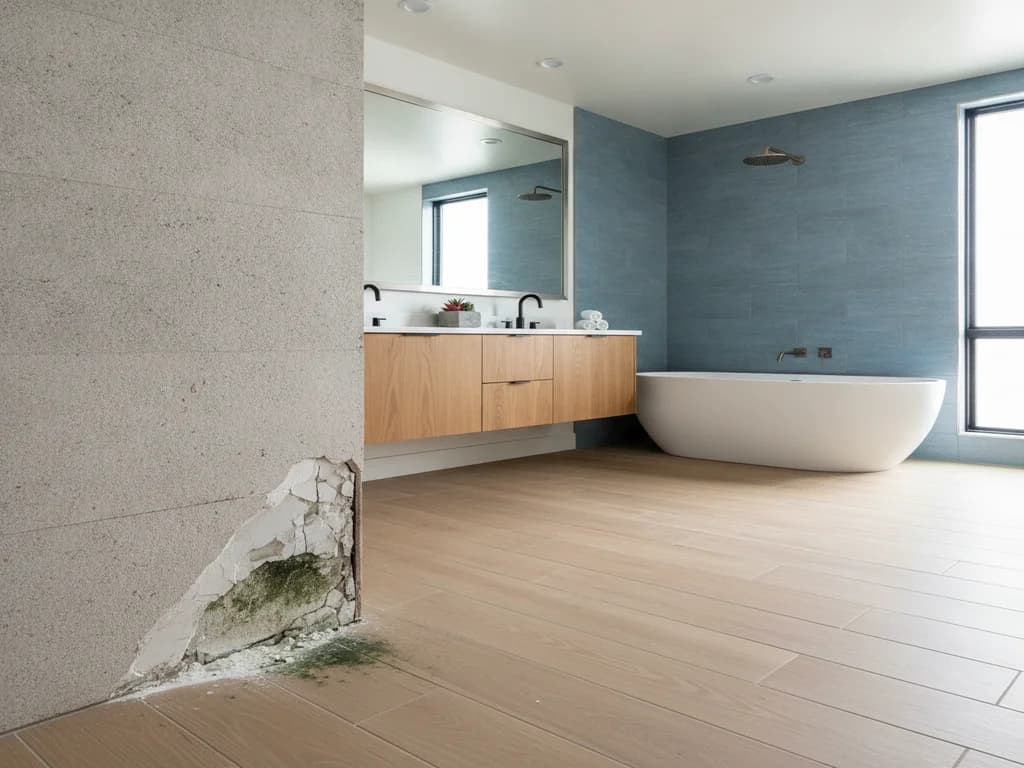
A toilet that rocks, shifts, or leaks at the base is telling you about what is underneath it. The usual chain: the wax ring seal breaks from movement, small amounts of water escape at every flush, and the subfloor around the flange softens — which lets the toilet move more, which breaks the seal further. The cycle only runs one direction.
The tempting fixes make it worse. Shims stop the wobble without stopping the leak. A bead of caulk around the base hides the escaping water and traps it against the subfloor. Both buy silence while the floor keeps rotting.
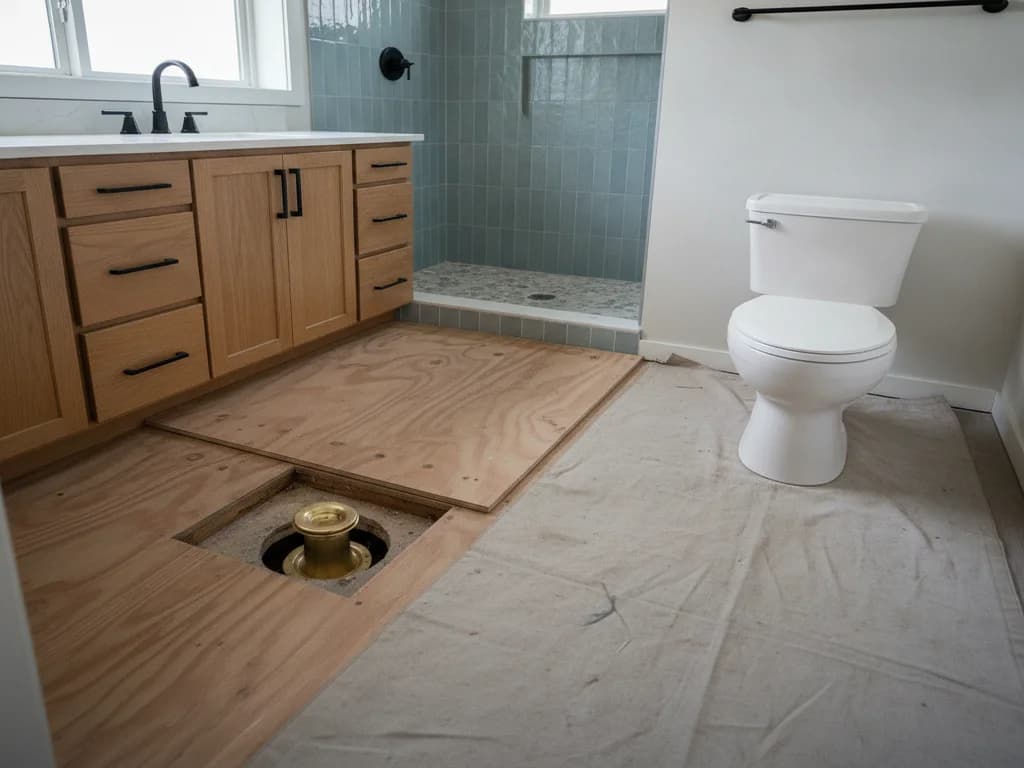
The right sequence is to pull the toilet and look: at the flange (cracked, corroded, or sitting below floor level), and at the subfloor around it (dark, soft, or crumbling). A sound floor means a flange repair and a proper reset. A soft floor is a different project entirely — we cover that repair in replacing the bathroom floor under a toilet, and the broader warning signs in signs of bathroom water damage.
Never caulk a rocking toilet into place
Caulking the full perimeter of a moving toilet seals the evidence in, not the water out. Leaks at a broken wax ring escape into the subfloor either way — the caulk just removes the one visible symptom you had. The wobble is a summons to look underneath, not a gap to fill.
Picking the replacement: the specs that actually matter
Before any toilet is bought, the rough-in has to match — the distance from the finished wall to the center of the drain, almost always 12 inches but occasionally 10 or 14 in older homes. A mismatched rough-in either will not fit or leaves an awkward gap at the wall.
Beyond that, the decisions are bowl shape (elongated is more comfortable; round-front saves inches in tight bathrooms), height, and flush platform. Height is worth real thought — the difference between standard and chair-height bowls changes daily comfort, and the full comparison lives in comfort height vs. standard toilets.
One forward-looking detail: if a bidet seat is anywhere on your radar, choose an elongated bowl and make sure there is an outlet within reach — retrofitting power later is the expensive part. What those seats need is covered in bidet seats: what to know.
What professional installation actually involves
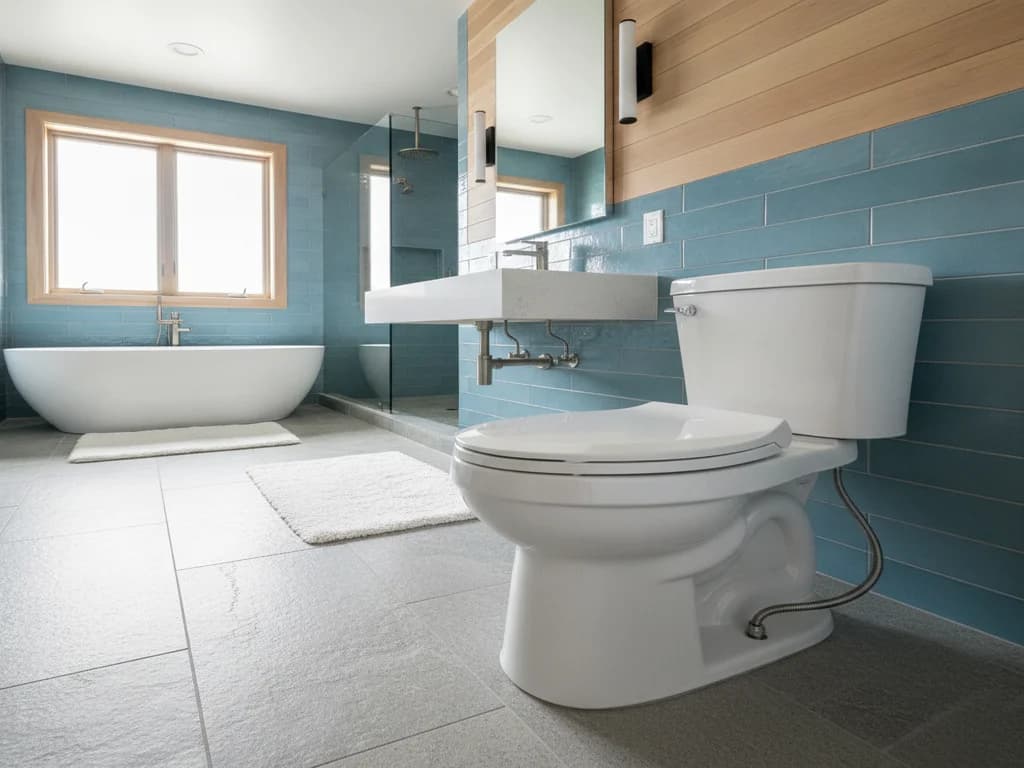
A toilet swap looks simple from the outside — and when the flange and floor are healthy, it is a quick job. The professional difference is in what happens during the ten minutes the drain is open: checking the flange for cracks and height, reading the subfloor, replacing the supply line and shutoff valve if they are aging, and setting the new seal so the toilet lands solid on the first try.
The physical work runs: water off, tank and bowl drained, old unit pulled, old wax scraped, flange inspected and repaired or shimmed to correct height, new wax or rubber seal set, toilet dropped plumb onto the closet bolts, tightened evenly (overtightening cracks porcelain), connected, and flush-tested for seepage at the base.
A straight like-for-like swap on a sound floor generally does not require a permit in Boise, but flange repairs that alter the drain, or any relocation, put the work under a plumbing permit through City of Boise Planning & Development Services or your city’s equivalent. A licensed contractor makes that call before starting, not after.
When a toilet swap should fold into a bigger project
A toilet is one of the cheapest fixtures in the room to replace, which cuts both ways: it is an easy standalone job, and it is nearly free to bundle. If the floor under the toilet turns out to be soft, the flooring repair drives the schedule and the toilet reinstall rides along. If new bathroom flooring is on the horizon, the toilet should come off and reset over the new floor anyway — never installed around.
And if the bathroom is heading toward a remodel within a couple of years, sequence matters: putting a new toilet on an old floor you are about to replace means paying to pull and reset it. A full bathroom remodel replaces the toilet as a standard line item, timed after tile and before trim.
What the process looks like
- 1
Measure the rough-in and select the fixture
The wall-to-drain-center distance is verified — usually 12 inches — then bowl shape, height, and flush performance are chosen to fit the space and the household.
- 2
Shut off, drain, and pull the old toilet
The supply is shut off, tank and bowl are emptied, the supply line is disconnected, and the old unit is unbolted and lifted off the flange.
- 3
Inspect the flange and subfloor
With the drain exposed, the closet flange is checked for cracks, corrosion, and correct height, and the surrounding subfloor is probed for softness or staining — the findings decide whether this stays a swap.
- 4
Repair the flange if needed
A damaged or low flange is repaired, extended, or replaced so the new toilet has a solid, correctly positioned anchor — the single most common shortcut in bad installs.
- 5
Set the new seal and place the toilet
A fresh wax or rubber gasket seal goes on, and the toilet is lowered plumb onto new closet bolts in one motion so the seal compresses evenly without smearing.
- 6
Bolt down, connect, and level
The bowl is tightened alternately and moderately — porcelain cracks under uneven torque — then a new supply line is connected, ideally with a fresh quarter-turn shutoff valve.
- 7
Test and finish
Multiple flushes with a dry check around the base and at the supply, the seat installed, and the base left observable — a full caulk perimeter is only applied where required, with a gap at the back so a future leak can show itself.
Ready to plan your Boise bathroom?
Licensed & insured · 3-year workmanship warranty
Frequently asked questions
- How long does a toilet last?
- The porcelain itself can last many decades — the internals cannot. Flappers, fill valves, and seals wear out on a cycle of years, and that is normal maintenance. Replacement is about cracks, recurring repairs, and water use: a functioning pre-1994 toilet still costs you at every flush compared to a 1.28-gallon WaterSense model, per the EPA.
- Is it worth replacing an old toilet just to save water?
- Often, yes. The EPA’s WaterSense program puts toilets at nearly 30 percent of indoor home water use, and pre-1994 models use 3.5 to 7 gallons per flush against 1.28 for a WaterSense-certified toilet — savings the EPA estimates at roughly 13,000 gallons a year for a household. On an old unit, the fixture eventually pays for itself.
- Why is my toilet rocking, and can I just shim it?
- Rocking means the connection between toilet, flange, and floor has failed somewhere — loose bolts at best, a broken flange or softened subfloor at worst. Shims stop the visible movement without addressing why it moved, and if the wax seal is compromised, water keeps escaping into the floor. The toilet needs to come up so the flange and subfloor can be seen.
- Do I need a permit to replace a toilet in Boise?
- A straight like-for-like swap on an existing, sound flange typically does not require one. The permit line gets crossed when drain plumbing is altered — a flange replacement that cuts into the closet bend, or relocating the toilet — which falls under City of Boise Planning & Development Services or your city’s building department. A licensed contractor determines this up front.
- What is a comfort-height toilet, and should I get one?
- Comfort height (also called chair height) puts the seat roughly at standard chair level — a few inches taller than a standard bowl. It is easier on knees and hips and is the common pick for aging-in-place, though it is not automatically right for shorter users or kids’ bathrooms. Our comfort height vs. standard guide walks through who each height actually suits.
- How long does it take to replace a toilet?
- On a healthy flange and floor, a professional swap is commonly done within an hour or two, per national guides like HomeAdvisor. The variable is what the open drain reveals: a flange repair adds time the same day, while a soft subfloor turns the visit into a floor-repair conversation before any new toilet goes down.
Sources
Claims and figures are drawn from the sources above and provided for general guidance; your project may vary. Photography is illustrative of design concepts. For a fixed price on your specific bathroom, request a free estimate.