Updated July 6, 2026 · 7 min read
By Boise Bath — bathroom & shower remodeling in Boise & the Treasure Valley
The short answer
Comfort-height (chair-height) toilets measure roughly 17–19 inches from floor to seat, versus about 14–16 inches on a standard toilet — the same range the U.S. Access Board sets as accessible for public restrooms. The extra height eases sitting and standing for most adults and is the more resale-friendly default, though households with young children may prefer a lower seat.
Key takeaways
- Standard toilets measure roughly 14–16 inches from floor to seat; comfort-height (chair-height) toilets measure roughly 17–19 inches, per Bob Vila and This Old House.
- The U.S. Access Board sets 17–19 inches as the accessible seat-height standard for public water closets, with a residential exception permitting a lower seat in homes.
- Comfort height is not a code requirement in a private home — it is a comfort and resale choice that happens to land in the same range ADA sets for public buildings.
- Bob Vila notes comfort height suits most adults, especially those with knee, hip, or back strain, while a lower seat can still be easier for young children.
- Pair the decision with the rest of the fixture plan — cross-reference our aging-in-place bathroom ideas if you are designing for changing mobility, not just today's comfort.
What actually separates the two
Every toilet has a fixed dimension that gets less attention than flush rate or bowl shape: the height from the floor to the top of the seat. That single number is what "comfort height" and "standard height" refer to, and the difference between them is only a few inches — but those inches change how much a person's knees and hips have to do to sit down and stand back up.
Bob Vila's toilet buying guide puts it plainly: a standard-height toilet measures "approximately 14 to 15 inches tall," while a comfort-height (also called chair-height) model measures "approximately 17 to 19 inches tall." This Old House frames the same gap slightly differently — "comfort height toilets have a seat height of 17–19 inches from the floor to the seat, compared to standard toilets at around 15 inches" — but the two to four inches of extra height is the consistent story across both sources.
The one-line version
Comfort height sits roughly at chair height (17–19 in.); standard height sits a few inches lower (roughly 14–16 in.). Neither is "wrong" — the right one depends on who uses the bathroom.
Quick comparison
The practical differences, side by side.
| Standard height | Comfort / chair height | |
|---|---|---|
| Seat height (floor to seat) | ~14–16 in. | ~17–19 in. |
| Matches ADA accessible range? | No | Yes — same 17–19 in. range as the public-restroom standard |
| Easiest for | Children, shorter adults | Most adults, especially those with knee, hip, or back strain |
| Common in new construction | Less common today | Increasingly the default new-install choice |
Why the ADA number matters even in a private home
The 17–19 inch comfort-height range is not a coincidence — it is the same figure the U.S. Access Board sets for accessible water closets in public buildings. Per the Access Board's accessibility guidance, the seat height for an accessible water closet "must be 17 inches 19 inches high measured to the top of the seat," and a residential dwelling unit is specifically permitted a lower toilet seat height under that standard's own exception — meaning homes are not required to install comfort height, even though it happens to land in the accessible range.
That distinction matters for how you should think about the decision: comfort height is not a code you have to meet at home. It is a convenience and durability choice that happens to double as an accessibility feature if mobility ever becomes a concern — which is exactly why it shows up so often in both everyday remodels and dedicated accessible-bathroom projects.
Who actually benefits from the extra height
Bob Vila's guidance is direct about the audience: a comfort-height toilet "is often ideal for adults because it allows one to sit at standard chair height, reducing strain on the legs and back," and the guide notes it is "easier to sit down on and stand up from, especially for folks with mobility issues." Taller adults in particular tend to prefer the extra height since a standard-height bowl can feel low enough to require more of a squat.
The trade-off runs the other way for children. This Old House's toilet coverage and Bob Vila both flag that a lower, standard-height seat can be easier for kids to use independently — their feet reach the floor and the seat itself is closer to their scale. A household with young children and no immediate mobility concerns may reasonably choose standard height for that reason alone, or add a step stool and child seat insert to a comfort-height model instead of avoiding it entirely.
There is no universally "correct" answer
This is a household-fit decision, not a right-vs-wrong one. Weigh who uses the bathroom most, at what ages, and whether the room might need to serve changing mobility down the road.
The resale and long-horizon angle
Because comfort height has become the more common new-construction and remodel default, it is the safer bet if you are thinking about how the bathroom will read to a future buyer — a low, dated-feeling toilet is a small but noticeable detail in an otherwise updated bathroom, the same way an old faucet finish stands out in a new room. It is a minor factor next to layout, tile, and vanity quality, but it is a nearly free one to get right during a remodel, since comfort-height models are priced the same as standard-height models in most manufacturer lineups.
The bigger long-horizon case is aging in place. A bathroom you remodel in your forties may still be the one you are using in your seventies, and a comfort-height toilet installed now is one less thing to retrofit later. Our aging-in-place bathroom ideas guide covers the fuller set of features — grab bar blocking, curbless showers, roll-under vanities — that pair with comfort height in a bathroom built to last through changing mobility, not just today's taste.
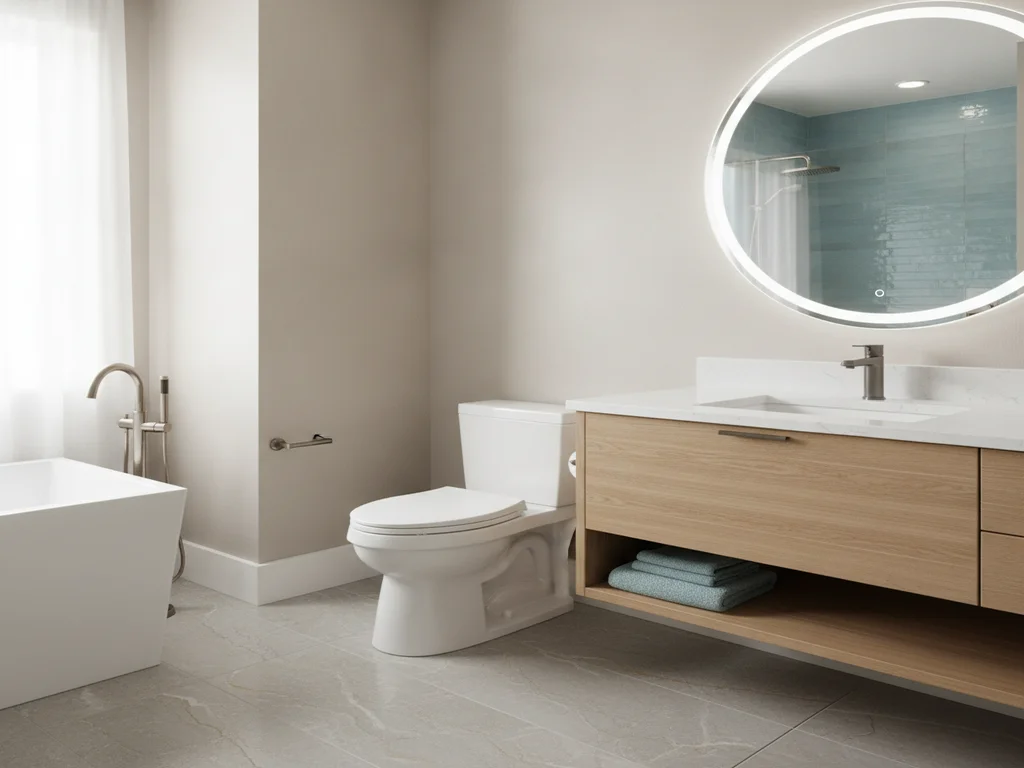
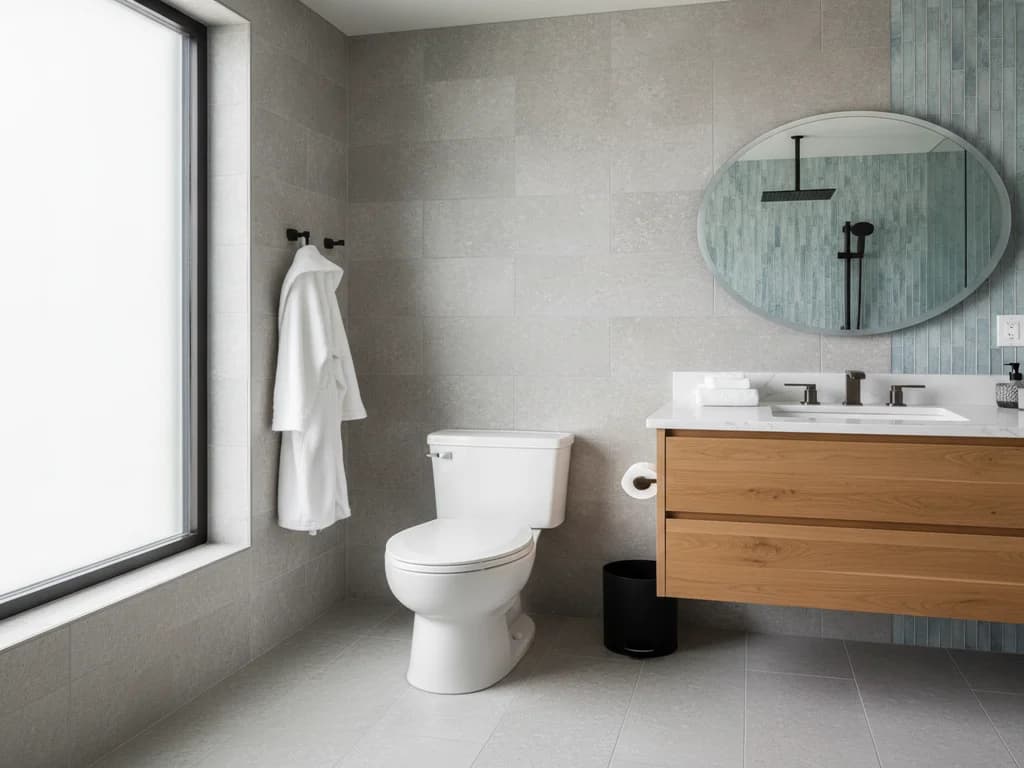
None of this requires choosing between "accessible" and "attractive." A comfort-height toilet looks identical to a standard one on the showroom floor — the difference lives entirely in the bowl height, not the style, color, or flush technology, so upgrading it costs nothing in design flexibility.
How to decide for your bathroom
If most users are adults, if anyone in the household has knee, hip, or back discomfort, or if you are remodeling with the next 15–20 years in mind, comfort height is the more forward-looking default — and it is the choice most manufacturers now treat as standard rather than an accessibility add-on. If the bathroom primarily serves young children, or if a specific family member finds the taller seat awkward, standard height remains a perfectly reasonable choice, especially paired with a step stool for kids.
Either height works in nearly any bathroom layout, so this decision rarely constrains anything else in a remodel plan. Rough-in distance, bowl shape (round vs. elongated), and flush technology are chosen independently of seat height, so you are never trading one for another — our walkthrough of the whole toilet decision covers those other specs in order. When you are ready to finalize fixtures for a full bathroom remodel, we walk through toilet height alongside everything else — bowl shape, flush type, and rough-in — as part of one fixture conversation, not a separate decision.
Ready to plan your Boise bathroom?
Licensed & insured · 3-year workmanship warranty
Frequently asked questions
- What is the height difference between comfort height and standard height toilets?
- Roughly 2 to 4 inches. Bob Vila puts standard height at approximately 14–15 inches from floor to seat and comfort/chair height at approximately 17–19 inches. This Old House gives a similar range: about 15 inches for standard versus 17–19 inches for comfort height.
- Is a comfort-height toilet the same as an ADA toilet?
- They land in the same height range, but they are not automatically the same thing. The U.S. Access Board sets 17–19 inches as the accessible seat-height standard for public water closets, and residential homes are specifically permitted a lower seat under that same standard's exception — so a comfort-height toilet meets the accessible height range without a private home being required to install one.
- Should I choose comfort height or standard height for a family bathroom?
- It depends on who uses it most. Comfort height suits most adults and anyone with knee, hip, or back strain, per Bob Vila. If young children use the bathroom independently, a standard-height seat (or a comfort-height model with a step stool) can be easier for them. There is no code requirement either way in a private home.
Sources
- Bob Vila — The Best Kohler Toilets
- This Old House — The Best Toilets of 2026, Based on Our Research
- U.S. Access Board — ADA Accessibility Guidance (toilet seat height)
Claims and figures are drawn from the sources above and provided for general guidance; your project may vary. Photography is illustrative of design concepts. For a fixed price on your specific bathroom, request a free estimate.