Updated June 30, 2026 · 9 min read
By Boise Bath — bathroom & shower remodeling in Boise & the Treasure Valley
The short answer
Aging-in-place bathroom design removes barriers so the room stays usable as mobility changes. The highest-impact ideas are a curbless zero-threshold shower, a comfort-height toilet, grab bars on solid in-wall blocking, a built-in shower seat, a handheld shower head, wider doorways, and lever faucets — all detailed to ADA-aware dimensions while still looking residential.
Key takeaways
- Aging-in-place design is universal design: barrier-free, attractive, and usable at any mobility level.
- A curbless, zero-threshold shower is the single most impactful aging-in-place feature.
- Install full in-wall blocking now so grab bars can go exactly where they’re needed later.
- Comfort-height toilets, lever faucets, and roll-under vanities reduce strain for everyone.
- Single-story Idaho homes are well-suited to aging in place — plan the bathroom before mobility changes force it.
What does "aging in place" mean for a bathroom?
Aging in place means staying in your own home safely and comfortably as you grow older, instead of moving to assisted living. The National Institute on Aging notes that most older adults prefer to remain at home — and the bathroom is the room that most often decides whether that is possible, because it concentrates the slips, transfers, and reaching that become harder with age.
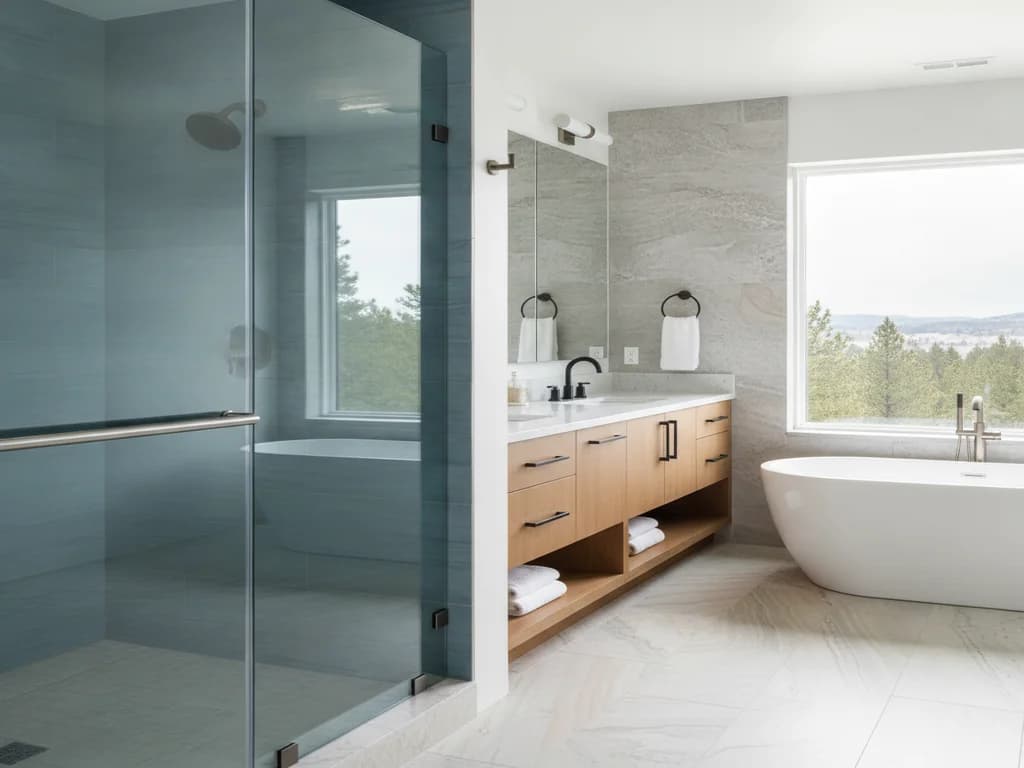
The design philosophy behind a great aging-in-place bathroom is universal design: spaces that work for every body and ability without singling anyone out. A curbless shower helps a wheelchair user and a parent bathing a toddler equally. A comfort-height toilet eases sore knees and tall backs alike. Done well, an accessible bathroom looks like a high-end residential bathroom — not a hospital room.
The 19 ideas below pair each feature with the universal-design principle it serves (reach, balance, transfer, or visibility) and, where one exists, an ADA-aware dimension to plan around. The ADA technically governs public buildings, but its standards are the most reliable reference for the heights, clearances, and placements that make a home bathroom genuinely usable, so we reference them as best-practice targets. This piece is the dedicated playbook for senior and accessible design; for the broader, every-age hazard checklist, see our all-ages bathroom safety features.
Plan before you need it
The best aging-in-place remodel happens before a fall or diagnosis forces it. Building in blocking, clearances, and a curbless entry now costs a fraction of an emergency retrofit — and you get a more beautiful, more usable bathroom in the meantime.
How do you make a barrier-free entry and layout?
Everything starts with getting into the room and into the shower without a step or a squeeze. These are the highest-impact moves.
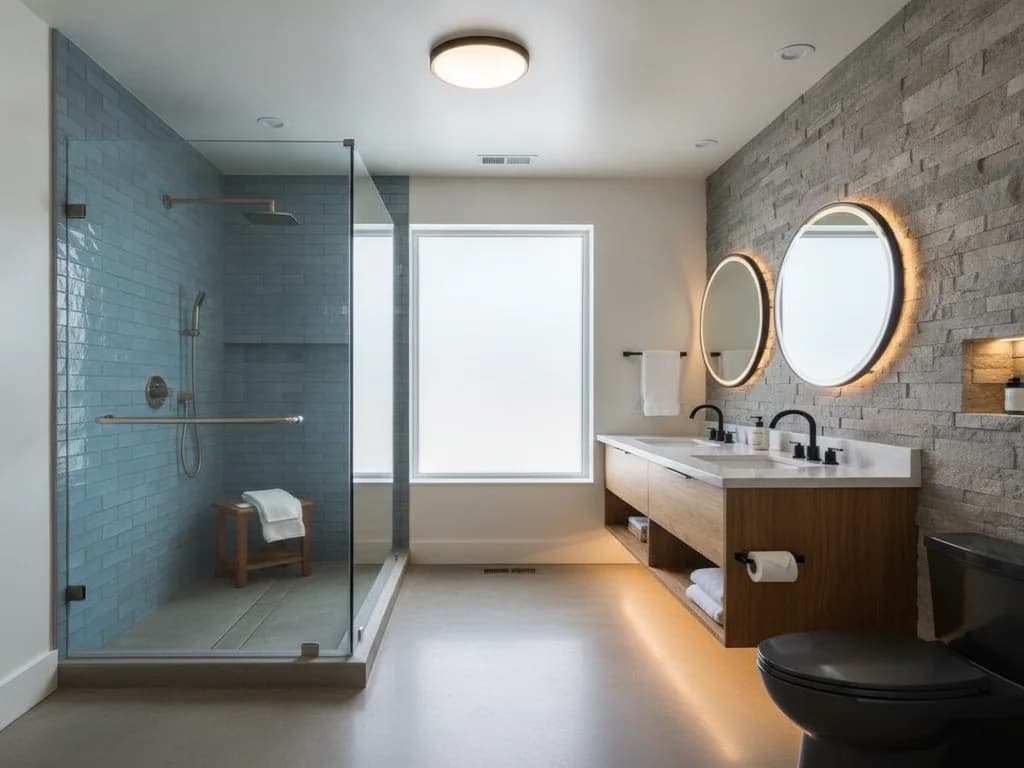
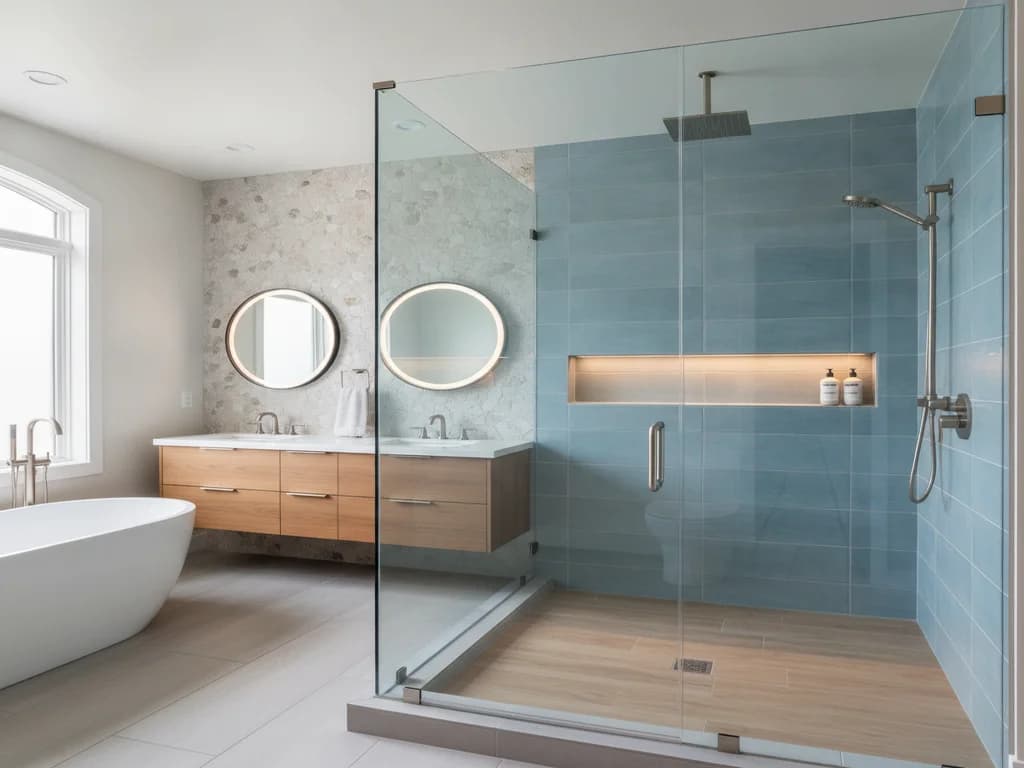
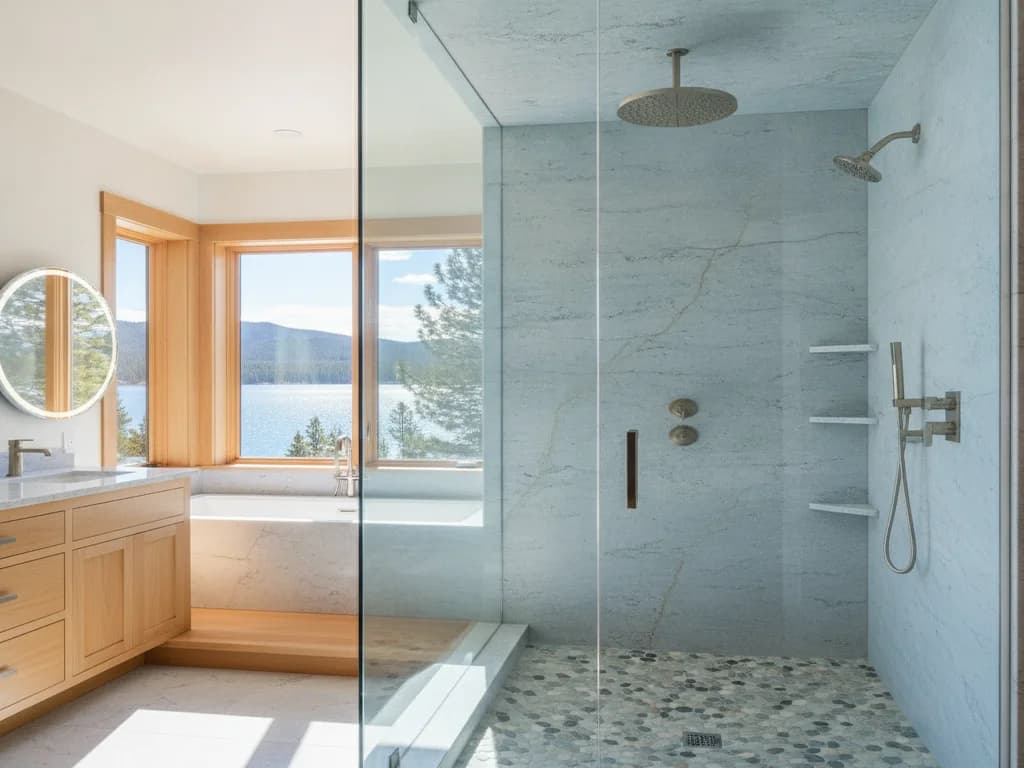
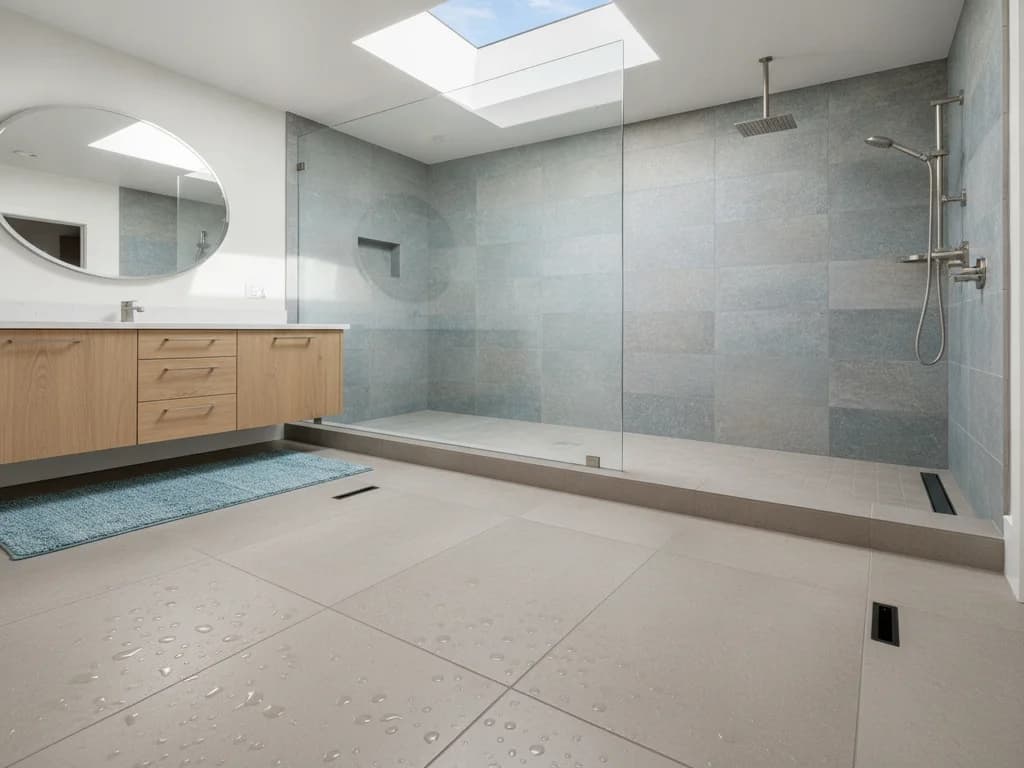
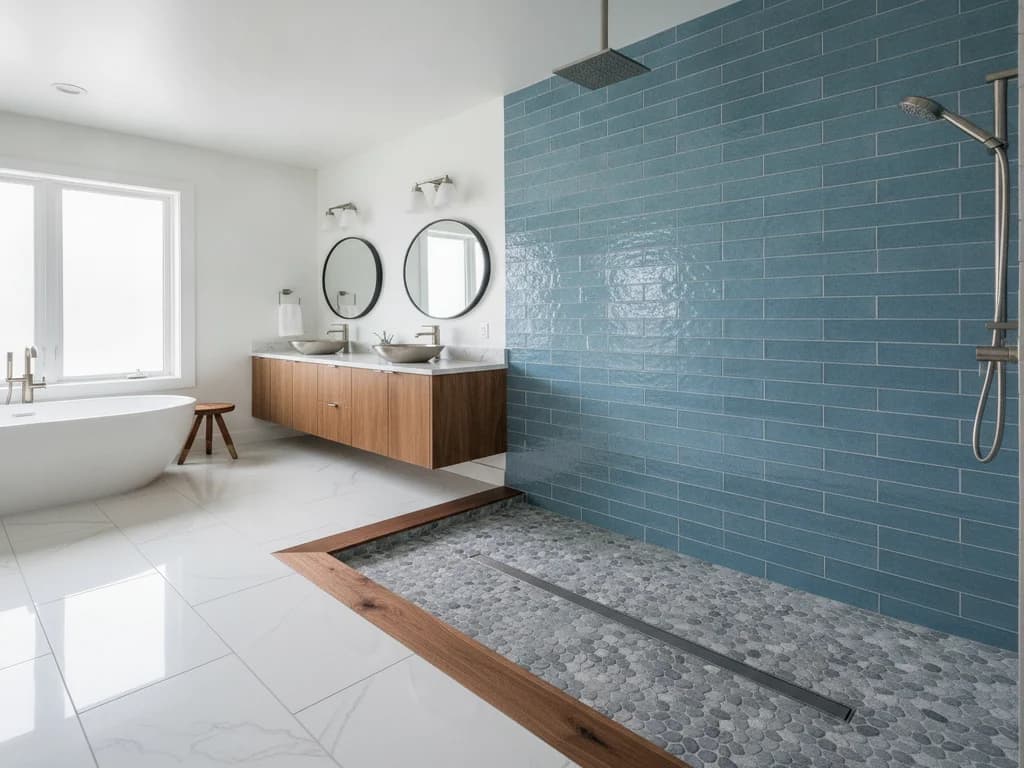
1. A curbless, zero-threshold shower. Removing the curb eliminates the single biggest trip-and-transfer barrier and lets a walker or wheelchair roll straight in. A linear drain and a properly sloped floor make it work; the waterproofing method behind it is detailed in our shower waterproofing guide. *Principle: transfer & balance. ADA-aware: no more than a minimal threshold; level entry preferred.*
2. Roll-in clearance and turning space. An accessible bathroom needs room to maneuver — ADA standards reference a 60-inch turning circle (or T-shaped space) and clear floor space at each fixture. Even a partial move toward those clearances makes the room dramatically easier to use. *Principle: maneuverability.*
3. Wider doorways. A standard 24–28-inch door will not pass a wheelchair or walker. ADA-aware guidance targets a 32-inch clear opening (often a 36-inch door). Widening the door is one of the most overlooked aging-in-place upgrades. *Principle: access.*
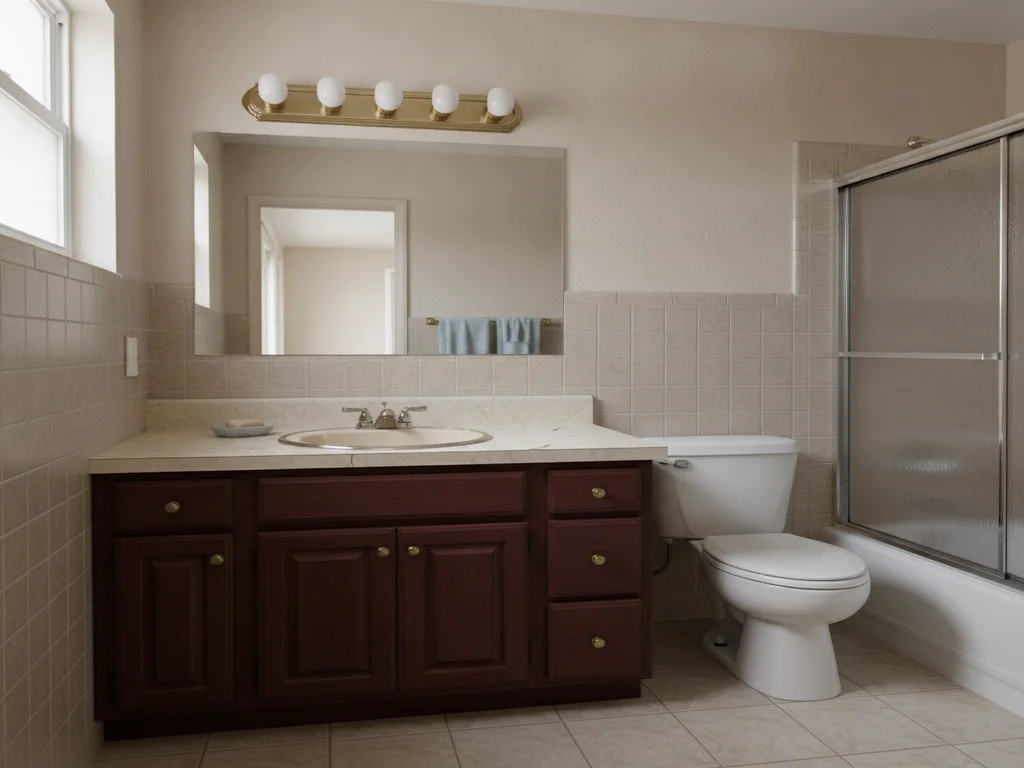
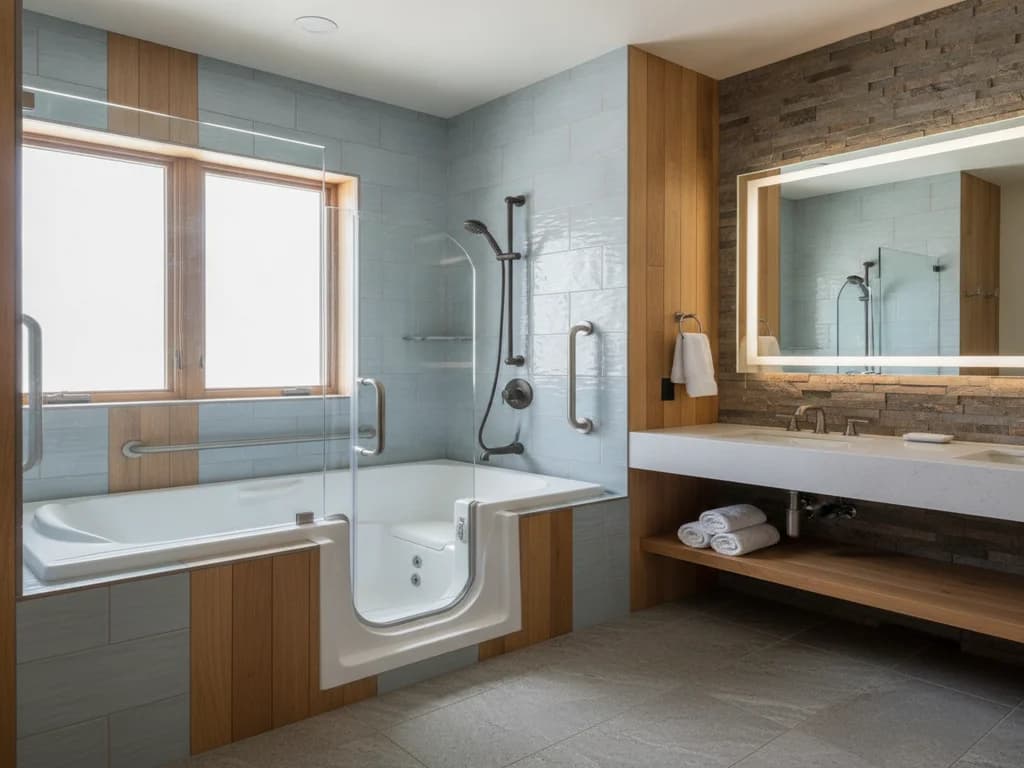
4. Removing the tub when it makes sense. Stepping over a high tub wall is a leading fall scenario. Converting a tub to a curbless shower removes that barrier and frees up space — the right call for most single-bathroom aging-in-place plans, though a household that bathes grandchildren may keep one tub elsewhere. If soaking still matters to you, we cover how to evaluate a walk-in tub before buying one separately. *Principle: transfer.*
How do you design the shower for accessibility?
Inside the shower, the goal is to be able to sit, reach the controls, and bathe safely whether standing or seated.
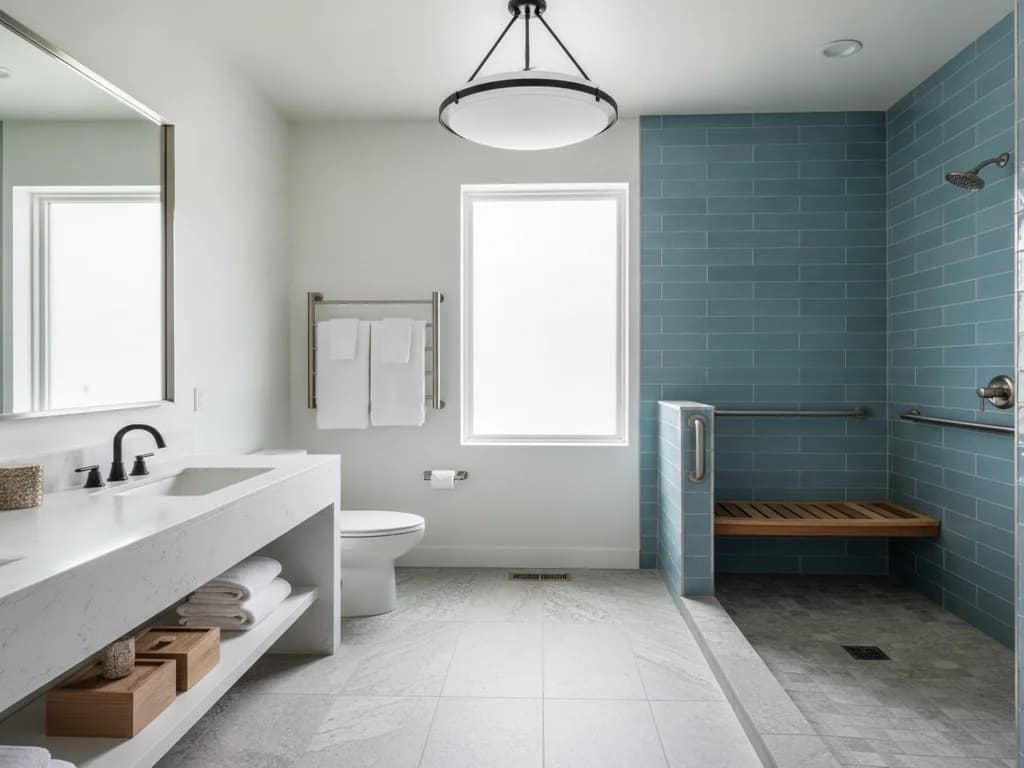
5. A built-in or fold-down shower seat. A solid bench lets you sit to bathe and provides a safe transfer point from a wheelchair. A built-in bench reads as spa-like; a fold-down seat saves space in a compact shower. Position it within reach of the controls. *Principle: transfer & balance. ADA-aware: roughly 17–19 inches seat height.*
6. A handheld shower head plus a fixed head. A handheld on a slide bar lets someone wash while seated or be assisted by a caregiver, and a fixed head preserves a normal standing shower. This dual setup is standard in accessible design. *Principle: reach.*
7. Reachable control and niche heights. Place valves, the handheld, and a storage niche where they can be reached from the seat, not just standing — generally lower and toward the entry. Nothing should require standing on tiptoe or twisting. *Principle: reach.*
8. A linear drain that enables curbless. A trench-style linear drain lets the entire floor slope in one direction, which is what makes a true no-step entry work without ponding. It is the quiet engineering behind the curbless look. *Principle: balance.*
Which fixtures support aging in place?
The right fixtures reduce strain every day — for the homeowner now and for whoever uses the room later.
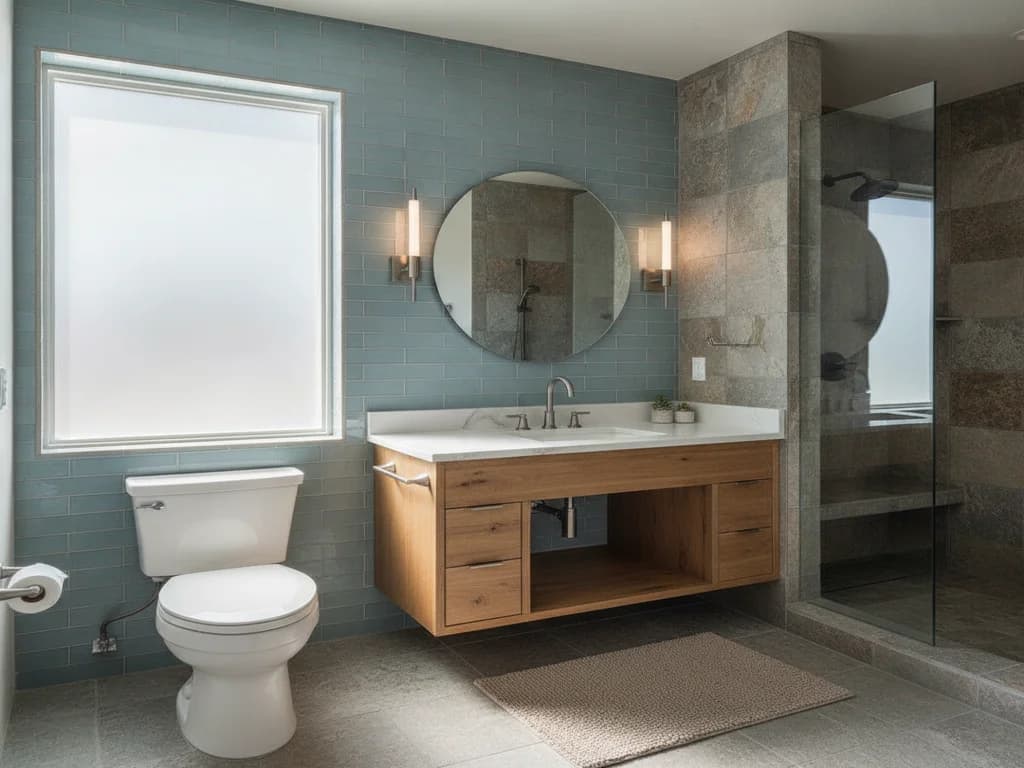
9. A comfort-height (chair-height) toilet. A comfort-height toilet sits taller than a standard one (roughly 17–19 inches to the seat, similar to a chair), so sitting and standing takes far less knee and hip effort. ADA-aware seat heights fall in this range. *Principle: transfer.*
10. A wall-mounted or roll-under vanity. Open knee clearance under the sink lets someone roll a wheelchair up to the basin, and a wall-mounted vanity makes the floor easier to clean and the room feel larger. *Principle: approach & reach.*
11. Lever or touchless faucets. Round knobs require grip and twist that arthritic hands struggle with; a single lever or a touchless faucet needs almost no strength. *Principle: limited grip.*
12. Accessible mirror and storage heights. A mirror that extends lower serves a seated user, and storage placed between roughly knee and shoulder height keeps daily items reachable without bending or climbing. *Principle: reach.*
Talk through an accessible design
Want to see how these ideas fit your home? Talk through an accessible design — free consultation and we’ll help you prioritize the features that matter most for a barrier-free accessible bathroom.
How do you plan grab bars the right way?
Grab bars are the most associated-with-accessibility feature — and the most often done wrong.
13. Full-perimeter in-wall blocking, installed now. The single smartest aging-in-place move is to install solid blocking inside the walls around the toilet, shower, and tub during the remodel — even if you never mount a bar. Blocking is cheap while the walls are open and lets a bar go in exactly where it is needed, later, with no demolition. *Principle: futureproofing.*
14. Decorative, dual-purpose grab bars. Modern grab bars come in finishes that match your fixtures, and some double as towel bars, corner shelves, or toilet-paper holders — so the support is there without the institutional look. ADA standards place bars at specific heights and lengths beside the toilet and in the shower; following those placements keeps them genuinely useful, not just decorative. *Principle: balance & transfer. ADA-aware: roughly 33–36 inches to the top of the gripping surface.*
What helps with low vision and balance?
Vision and balance both change with age, and small design choices make transitions safer.
15. High-contrast edges and thresholds. A subtle color contrast between the floor and the wall, or at the shower entry, helps low-vision users judge depth and avoid missteps — a tile border or a contrasting curbless transition does the job attractively.
16. Layered and night lighting. Even, shadow-free light prevents the dark patches that hide a wet floor, and a motion-activated night light makes the nighttime trip far safer. *Principle: visibility.*
17. Slip-resistant surfaces. Textured, matte, higher-traction flooring is essential underfoot; we keep the material science and slip ratings in our guide to how to keep a curbless floor slip-resistant. *Principle: balance.*
18. Easy-to-reach, intuitive controls. Rocker light switches, accessible thermostats, and controls placed at a consistent, reachable height reduce fumbling for everyone. *Principle: reach.*
19. A clear, uncluttered floor plan. Keeping the floor open — wall-mounted fixtures, no loose rugs, reachable storage — gives walkers and wheelchairs a clean path and removes trip hazards. *Principle: maneuverability.*
What makes Idaho homes good candidates for aging in place?
Idaho’s housing stock is unusually well-suited to aging in place. The Treasure Valley has a deep supply of single-story ranch homes, and Boise’s Bench-era neighborhoods are full of one-level houses — no stairs to manage, which is half the aging-in-place battle solved before you start. That makes the bathroom the main project rather than a whole-home reconfiguration.
Multi-generational living is common here too, with adult children in Meridian or Eagle remodeling a guest or primary bath so an aging parent can move in or visit safely. And Idaho winters raise the stakes: icy walks and slick entries mean a fall indoors is more likely when everyone is moving carefully — one more reason to plan the bathroom before mobility changes force it.
An aging-in-place bathroom planning checklist
Use this recap to scan all 19 ideas by the universal-design principle they serve and the ADA-aware detail to plan around. For the slip-resistance material decisions referenced above, see our bathroom flooring guide; for the budget side, see what an accessible remodel costs in Boise.
| Idea | Universal-design principle | ADA-aware detail |
|---|---|---|
| Curbless / zero-threshold shower | Transfer & balance | Level or minimal threshold |
| Roll-in clearance & turning space | Maneuverability | ~60 in. turning circle |
| Wider doorways | Access | ~32 in. clear opening |
| Tub removal / conversion | Transfer | No high tub wall |
| Built-in / fold-down seat | Transfer & balance | ~17–19 in. seat height |
| Handheld + fixed shower head | Reach | Slide-bar mounted |
| Reachable controls & niche | Reach | Reachable from seated |
| Linear drain | Balance | Enables curbless slope |
| Comfort-height toilet | Transfer | ~17–19 in. seat height |
| Roll-under / wall-mount vanity | Approach & reach | Open knee clearance |
| Lever / touchless faucets | Limited grip | No-twist operation |
| Accessible mirror & storage | Reach | Knee-to-shoulder zone |
| In-wall blocking (now) | Futureproofing | Around toilet, tub, shower |
| Decorative grab bars | Balance & transfer | ~33–36 in. to grip |
| High-contrast edges | Visibility | Contrast at transitions |
| Layered & night lighting | Visibility | Shadow-free, motion-lit |
| Slip-resistant surfaces | Balance | Matte, higher traction |
| Intuitive controls | Reach | Consistent reachable height |
| Uncluttered floor plan | Maneuverability | Clear path, no loose rugs |
ADA dimensions are referenced as best-practice targets for residential design; the ADA itself governs public buildings.
Ready to plan your Boise bathroom?
Licensed & insured · 3-year workmanship warranty
Frequently asked questions
- What is an aging-in-place bathroom?
- An aging-in-place bathroom is designed so you can keep using it safely as your mobility changes, letting you stay in your own home rather than move to assisted living. It uses universal-design features — a curbless shower, comfort-height toilet, grab bars, and good lighting — that are barrier-free yet still look residential and high-end.
- What is the most important aging-in-place bathroom feature?
- A curbless, zero-threshold shower is the single most impactful feature. It removes the biggest trip-and-transfer barrier, lets a walker or wheelchair roll straight in, and works for every age. Paired with a built-in seat, handheld shower head, and grab bars on solid blocking, it makes the bathroom usable for decades.
- What is a curbless or zero-threshold shower?
- A curbless shower has no raised curb or lip at the entry — the bathroom floor flows level into the shower. A linear drain and a properly sloped, fully waterproofed floor keep water contained without a step. It is the foundation of accessible design and also makes any bathroom feel larger and more modern.
- How high should grab bars be placed?
- ADA standards reference grab bars roughly 33–36 inches to the top of the gripping surface, positioned beside the toilet and in the shower at the transfer point. The key requirement is solid in-wall blocking behind them — bars must never rely on drywall anchors alone. Installing blocking during the remodel lets bars go exactly where needed.
- Does an aging-in-place bathroom have to look medical?
- No. Modern accessible design treats accessibility as good design. Decorative grab bars that match your fixtures, a curbless shower with quality tile, a comfort-height toilet, and layered lighting all read as high-end and residential. Done well, an aging-in-place bathroom looks like any beautiful bathroom — the safety is simply built in.
- Should I remove the bathtub when remodeling for accessibility?
- For most single-bathroom aging-in-place plans, yes — stepping over a high tub wall is a leading fall risk, and converting it to a curbless shower removes that barrier and frees space. Households that bathe grandchildren may keep one tub elsewhere in the home. A tub-to-shower conversion is one of the most common accessible upgrades.
Sources
- ADA.gov — 2010 ADA Standards for Accessible Design
- National Institute on Aging — aging in place & home safety
- CDC — older adult falls and injury prevention
Claims and figures are drawn from the sources above and provided for general guidance; your project may vary. Photography is illustrative of design concepts. For a fixed price on your specific bathroom, request a free estimate.