Updated July 16, 2026 · 7 min read
By Boise Bath — bathroom & shower remodeling in Boise & the Treasure Valley
The short answer
Slippery bathroom floor solutions range from quick to permanent: rubber-backed mats help at wet zones but add trip edges; anti-slip etching treatments genuinely improve traction on tile but wear off in one to five years; and replacing the floor with high-traction flooring rated for wet areas is the only fix that lasts. Match the fix to who uses the bathroom.
Key takeaways
- Bathroom falls are a leading home injury: more than one in four adults 65 and older falls each year, per the CDC, and the wet bathroom floor is a prime setting.
- Mats and rugs help only at the wet zones they cover — and a rug without a full rubber backing adds a slip-and-trip hazard instead of removing one.
- Anti-slip etching treatments work by microscopically texturing tile, and they genuinely improve wet traction — but the effect wears away with traffic and cleaning, typically within one to five years.
- Coatings and treatments cannot fix glossy porcelain, polished stone, or worn vinyl equally well; some floors have no good treatment path.
- Modern slip resistance is measurable: wet-area flooring should meet the ANSI wet DCOF threshold of 0.42 or better, per the Tile Council of North America.
- For a household with older adults or mobility concerns, floor replacement plus grab bars and a curbless entry is the durable answer — not an accumulation of mats.
Why the bathroom floor is the fall zone
The bathroom combines everything that makes a fall likely: water on smooth flooring, soap residue that lowers traction further, bare feet, and movements — stepping over a tub wall, turning from the sink, lowering onto a toilet — that load balance in exactly the wrong moments. The stakes rise with age: more than one in four adults 65 and older falls each year, and falls are the leading cause of injury for older adults, per the CDC.
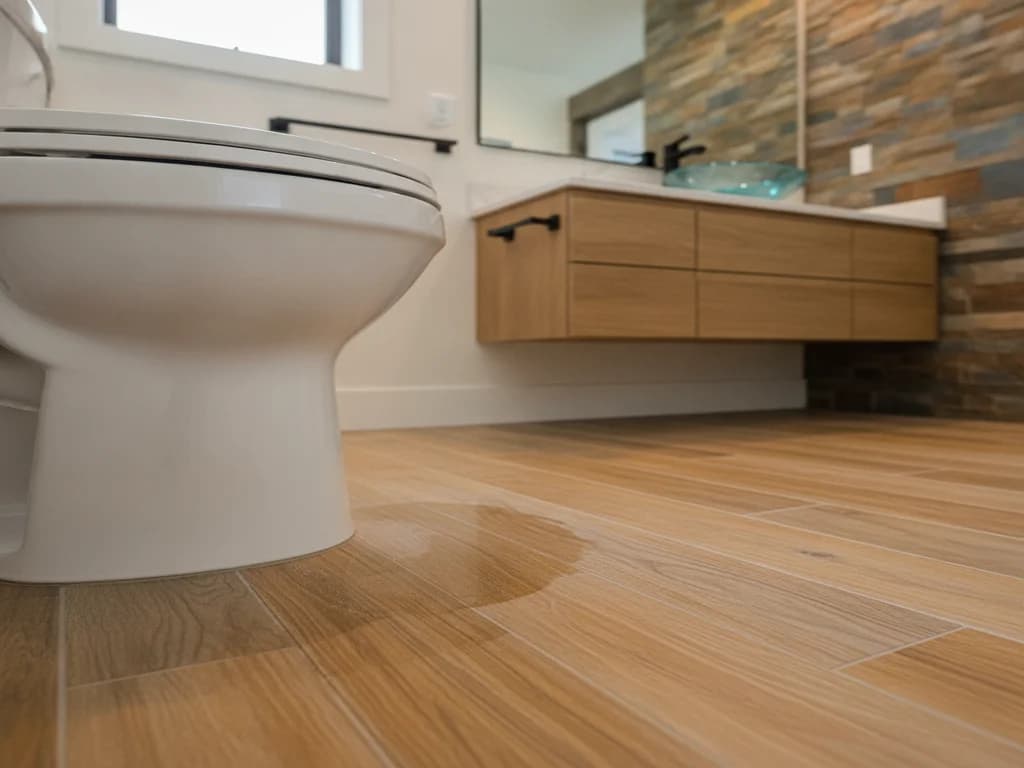
The floor itself sets the baseline risk. Glossy ceramic, polished porcelain, and smooth sheet vinyl can be genuinely safe when dry and genuinely treacherous when wet — and a bathroom floor is wet every day. That gap between dry and wet traction is the whole problem, and every solution below either narrows it, covers it, or replaces the surface that has it.
The honest frame for choosing: quick fixes manage the risk, treatments reduce it temporarily, and replacement removes it. Which tier you need depends on who uses the bathroom and how long the fix has to last.
Tier 1: Mats and rugs — cheap, immediate, and limited
The right mat in the right place does real work. A rubber-backed, machine-washable mat at the tub or shower exit catches the wettest, most dangerous step of the day. Inside the tub or shower, a suction-cup mat or textured strips address the slickest surface in the room. Total cost: tens of dollars, working today.
But the limits deserve equal billing. Mats protect only the square footage they cover — the wet footprints crossing open tile to the vanity are exactly where they are not. Any rug without a full non-slip backing is itself a hazard: a skidding rug or a curled corner converts a slip risk into a trip risk, which is why fall-prevention guidance from the CDC and AARP treats loose throw rugs as something to remove, not add. And mats hide what accumulates beneath them — trapped moisture under a never-lifted bath mat is a classic mildew site.
Verdict: mats are the right first move and a fine permanent supplement, but a bathroom whose safety depends on six overlapping mats is a bathroom asking for a better floor.
Tier 2: Anti-slip coatings and treatments — the honest verdict
Anti-slip floor treatments come in two families. Etching treatments chemically create microscopic texture in the surface of tile or stone — invisible tread that improves wet grip. Applied coatings add a thin textured layer on top of the existing floor. Both are sold with impressive claims, so here is the honest version.
They do work — initially and on the right floor. A properly applied etching treatment measurably improves wet traction on ceramic, porcelain, and many natural stones. But three caveats matter. First, durability: the effect wears with foot traffic and cleaning chemicals, and real-world life typically runs one to five years before reapplication — it is maintenance, not a fix. Second, surface match: treatments depend on the floor’s chemistry, and glossy glazed tile, sealed stone, and vinyl each respond differently — some barely at all; coatings on vinyl can peel and yellow. Third, appearance and upkeep: etched surfaces can hold soap film and look duller, then get cleaned harder, which accelerates the wear cycle.
Verdict: a legitimate mid-term option for a fundamentally sound tile floor that is too slick — especially as a bridge to a planned remodel. It is not a permanent answer, and on the wrong surface it is not much of an answer at all.
Beware the permanent-fix pitch
No coating or etching treatment is permanent — traction fades with traffic and cleaning, and most products need reapplication within one to five years. If a household member has already fallen, or mobility is declining, do not put a wearing treatment between them and the floor. That situation calls for flooring that is slip-resistant all the way through, not surface-deep.
Tier 3: Replacing the floor — the fix that lasts
Every solution above manages a floor that is slippery by nature. Replacement changes the nature. Modern wet-area flooring is engineered for traction and — unlike a treatment — the slip resistance is a property of the material, not a layer on top of it.
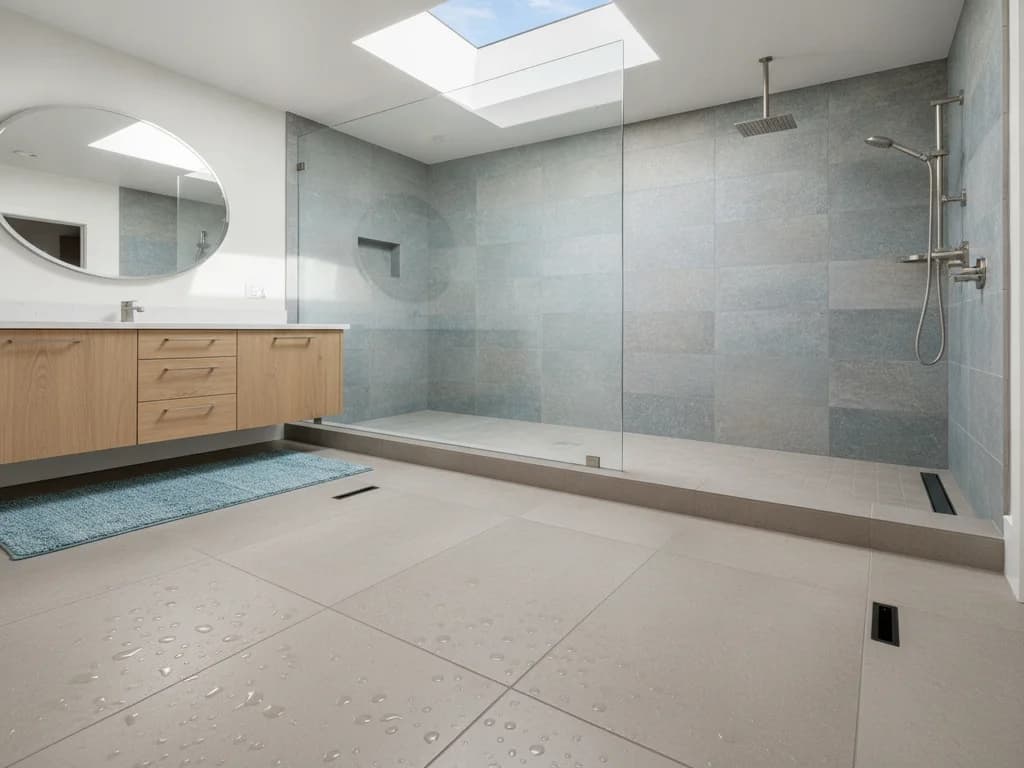
Slip resistance is also now a number rather than a marketing claim: the tile industry’s ANSI A326.3 standard measures wet dynamic coefficient of friction (DCOF), and the Tile Council of North America’s referenced threshold for level interior spaces that get wet is 0.42 or higher. Matte and textured porcelain, mosaic tile (whose dense grout lines act as built-in tread), and quality textured luxury vinyl all clear that bar comfortably. Our guide to the best non-slip bathroom flooring ranks the materials in detail — that page owns the material-by-material comparison, so here we will keep it to the principle: pick a floor rated for wet areas, verified by its DCOF spec, not its showroom shine.
Replacement is obviously the most expensive tier — but it is also the only one that solves the problem for the life of the floor, and it comes bundled with the chance to fix everything else at once: a proper substrate, correctly sloped transitions, and grout chosen for maintenance. If the floor is being replaced anyway for damage or age, choosing a high-traction product costs little more than choosing a slick one.
The floor is only half the fall — the rest of the room
Fall prevention research is blunt on this point: traction underfoot matters, but so does what your hands can reach when balance goes. A safety-focused bathroom pairs the floor with the room around it.
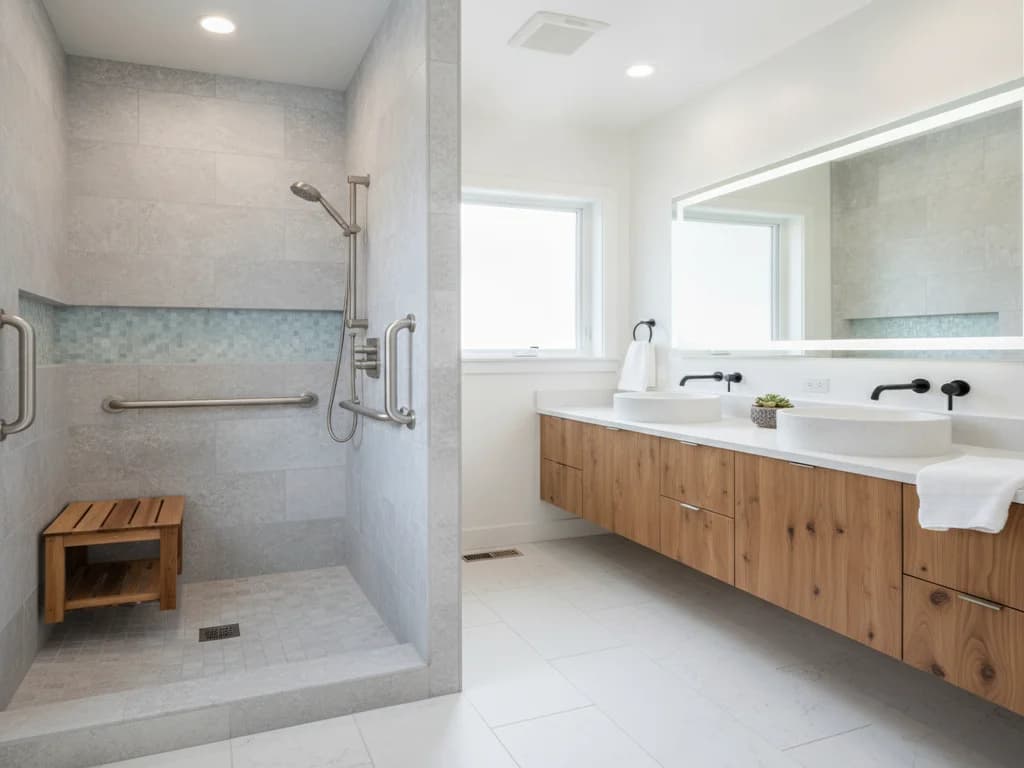
- Grab bars at the toilet and inside and outside the shower — anchored into blocking, not drywall. Placement heights and locations are covered in our grab bar placement guide.
- A curbless shower entry, which eliminates the highest-risk step in the room — the wet-footed climb over a tub wall or curb.
- A shower bench and a handheld shower head, so bathing does not require standing on wet tile for its full duration.
- Lighting that removes guesswork: a well-lit path from bed to bathroom, and a night light — the CDC lists poor lighting among key home fall factors.
- The full checklist — from lever handles to toilet height — is in our roundup of bathroom safety features.
Matching the solution to the household
The right answer depends on who is on the floor. A young household with a slick tile floor and no falls to date can reasonably run tier 1 and stop: good mats at the wet zones, rugs with real backings, and attention when the floor is wet.
A household planning to stay put for decades, or one where a parent visits or will move in, should think a tier higher: a treatment as a bridge if the floor is otherwise sound, with replacement folded into the next remodel. And a household where someone has already slipped — or where age, medication, or mobility issues raise the stakes — should go straight to the durable tier: high-traction flooring, grab bars, and a curbless entry, designed together. One fall-related injury costs more, in every sense, than the remodel that would have prevented it.
That whole-room version of the fix is its own discipline, with its own mistakes to avoid — our guide to aging-in-place remodel mistakes covers the common ones, and our accessible bathroom services page shows how we approach the work.
Ready to plan your Boise bathroom?
Licensed & insured · 3-year workmanship warranty
Frequently asked questions
- How do I make my bathroom floor less slippery without replacing it?
- In order of durability: add rubber-backed mats at the tub exit and vanity; add a textured mat or strips inside the shower; and consider a professional anti-slip etching treatment if the floor is ceramic, porcelain, or stone. The treatment genuinely improves wet traction but wears off within roughly one to five years, so plan on reapplication. Avoid loose rugs without backings — they add trip risk.
- Do anti-slip coatings for tile actually work?
- Yes, with caveats. Etching treatments create microscopic texture that measurably improves wet grip on tile and many stones. But the effect is temporary — foot traffic and cleaning chemicals wear it away over one to five years — and results vary by surface: glossy glazed tile and vinyl respond poorly. Treat coatings as maintenance that buys time, not a permanent fix, and never as the sole safeguard for a high-risk household.
- What is the least slippery flooring for a bathroom?
- Look for flooring that meets the ANSI wet DCOF threshold of 0.42 or higher, per the Tile Council of North America — matte or textured porcelain, mosaic tile with its dense grout joints, and quality textured luxury vinyl all qualify. The rating matters more than the material name: the same porcelain comes in glossy and high-traction finishes. Our best non-slip bathroom flooring guide compares the options in depth.
- Are bath mats enough to prevent bathroom falls?
- They help, but only where they sit. Rubber-backed mats at the shower exit cover the single riskiest step, yet the wet path to the vanity and toilet stays uncovered, and rugs without full non-slip backings add their own hazard. For older adults — over one in four of whom falls each year, per the CDC — mats should supplement grab bars and high-traction flooring, not substitute for them.
- When should I replace a slippery bathroom floor instead of treating it?
- Replace when the fix has to last: someone in the household has fallen or is at elevated risk, the floor is vinyl or glossy tile that treatments serve poorly, or a remodel is on the horizon anyway. Treatments buy one to five years on sound tile; replacement solves the problem for the life of the floor and lets you fix substrate, transitions, and shower entry in the same project.
Sources
- CDC — Older Adult Fall Prevention
- Tile Council of North America (TCNA)
- AARP — Livable Communities / HomeFit
- Consumer Reports
Claims and figures are drawn from the sources above and provided for general guidance; your project may vary. Photography is illustrative of design concepts. For a fixed price on your specific bathroom, request a free estimate.