Updated July 16, 2026 · 7 min read
By Boise Bath — bathroom & shower remodeling in Boise & the Treasure Valley
The short answer
A toilet leaking at the base usually means the wax ring sealing the toilet to the drain has failed — often because the toilet rocks or the flange is broken. Water appearing with each flush confirms it. The fix is a professional pull-and-reset; waiting lets contaminated water soak the subfloor, where rot and mold start within days.
Key takeaways
- Water that appears at the base right after a flush is the signature of a failed wax ring — the seal between the toilet and the drain pipe.
- A rocking toilet is the most common reason wax rings fail; the movement grinds the seal open, so the rocking must be fixed, not just the wax.
- Base leaks push contaminated water into the subfloor, where plywood and OSB swell within days and mold can establish within 24–48 hours, per the EPA.
- Condensation is the one harmless mimic: moisture evenly beaded on the tank and pooling in humid weather, with no connection to flushing.
- Caulking over a base leak hides the evidence while the floor rots — never seal the symptom before fixing the seal.
- A toilet that has leaked for months often needs floor repair, not just a new wax ring; a soft or spongy floor around the bowl is the tell.
First: is it actually leaking from the base?
Water on the floor around a toilet has four possible sources, and they demand very different responses. Before assuming the worst, trace where the water actually starts. Dry everything completely, then check back over the next few hours and after the next flush.
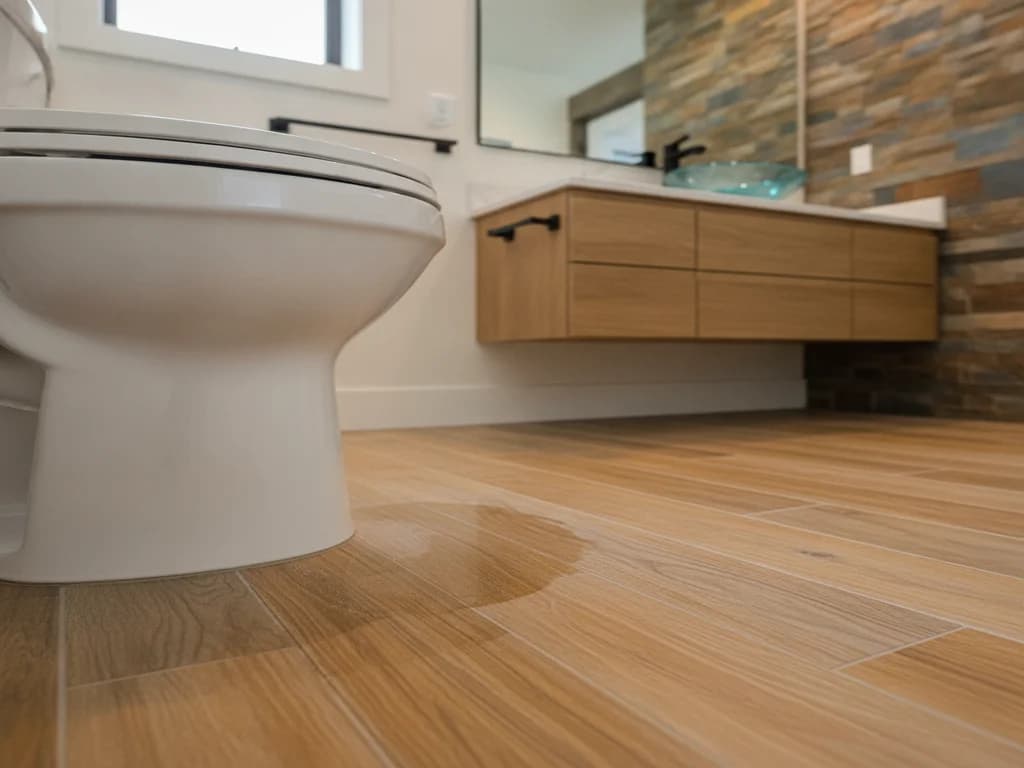
Water beading evenly on the tank and dripping from its underside — worst on humid days or after long showers, unrelated to flushing — is condensation, the one harmless cause. Water tracking down from above the bowl points to the supply line or the tank-to-bowl gasket: drips at the wall connection or the tank bolts, often continuous rather than flush-timed. Water that wells up around the base itself, especially right after a flush, is the real subject of this article — the seal under the toilet has failed.
The flush test is the cleanest diagnostic: dry the floor, flush twice, and watch the base perimeter. Water appearing at the base within a minute of flushing convicts the wax ring. No water after multiple flushes, but recurring dampness anyway, points back to condensation or a slow supply-side drip.
Cause 1: The wax ring has failed
The toilet is sealed to the drain pipe by a compressed ring of wax between the bowl outlet and the closet flange — the fitting that anchors the toilet to the floor and connects it to the drain. The wax does two jobs: it keeps flush water inside the drain, and it keeps sewer gas out of the bathroom. When it fails, each flush pushes a little water through the gap and out around the base.
Wax rings do not really wear out on their own — compressed wax lasts decades undisturbed — but they fail readily when disturbed. The common triggers: a toilet that rocks even slightly (see cause 2), a flange sitting too low after new flooring raised the floor level, a previous installation that never compressed the ring properly, or the seal simply breaking loose when the toilet was bumped or reset without new wax.
A failing wax ring often announces itself on two channels at once: water at the base, and a sewage smell — the same gap passes both. If the smell arrived first or without visible water, that diagnostic path is covered in bathroom smells like sewage.
Cause 2: The toilet rocks — and rocking kills seals
A toilet that shifts when you sit on it is the single most common reason wax rings fail. Wax has no elasticity: every rock of the bowl works the seal like a bottle cap being wiggled loose, and once a channel opens through the wax, it never re-seals itself.
Rocking has its own causes underneath: closet bolts that loosened, a flange that cracked or corroded so the bolts have nothing solid to pull against, an uneven tile floor that left the base bridging a hollow, or — the expensive one — subfloor that has already softened from prior leaking, so the toilet is anchored to mush.
This is why simply tightening the bolts on a rocking toilet is a half-fix at best: if the ring is already compromised, snugging the bowl down over a broken seal stops the motion but not the leak. And over-tightening is its own hazard — porcelain cracks under bolt pressure, which converts a seal problem into a toilet replacement. The right sequence is a pull-and-reset: fix what is making it rock, then seal it fresh.
Do not caulk over a base leak
A full bead of caulk around a leaking base does not stop the leak — it traps the water underneath, hiding the evidence while flush water soaks the subfloor. Caulk belongs on a toilet only after the seal is verified sound (and many codes call for leaving a gap at the back so a future leak shows itself). If water is appearing, the fix is under the toilet, not around it.
Cause 3: A broken or corroded closet flange
Sometimes the wax was never the weak point — the flange it seals against is. Closet flanges crack (plastic ones under overtightened bolts), corrode (older steel ones rust through), or sit at the wrong height after flooring changes bury them below floor level. A damaged flange cannot hold the toilet firmly or give the wax a sound surface to seal against, so new wax rings keep failing on top of it.
The pattern that points to the flange: a toilet that was reset with a new ring and leaked again within months, bolts that will not stay tight, or a toilet that rocks no matter how it is shimmed. The flange verdict only comes when the toilet is pulled — which is one more argument for having the leak professionally diagnosed rather than swapping wax and hoping.
Flange repair is real plumbing: options range from repair rings and spanner flanges over a damaged one to cutting out and replacing the fitting entirely, and the right choice depends on the drain material and what the surrounding floor is doing. Repair costs typically land in the low hundreds, per HomeAdvisor’s cost data — modest, until floor damage joins the scope.
Cause 4: A cracked bowl or tank
The rarest cause is the toilet itself. Hairline cracks in the bowl base — from impact, from overtightened bolts, from age — weep water continuously rather than per-flush. The distinguishing sign: dampness that persists even when nobody has flushed for hours, sometimes with a visible hairline in the porcelain near a bolt hole.
A cracked bowl has no repair; sealants do not hold on porcelain under load. The toilet gets replaced — and since replacement includes a fresh wax ring and a flange inspection anyway, the leak gets solved in the same visit. If your toilet is old, inefficient, or has been trouble before, this is the decision covered in should I replace my toilet, with the numbers in our toilet replacement cost guide.
The rot timeline: what the water is doing while you wait
A base leak is uniquely damaging for its size, for two reasons. First, the water is contaminated — it has been through the bowl. Second, it exits directly into the one place you cannot see: the gap between the toilet base and the subfloor, wicking under flooring where it never dries.
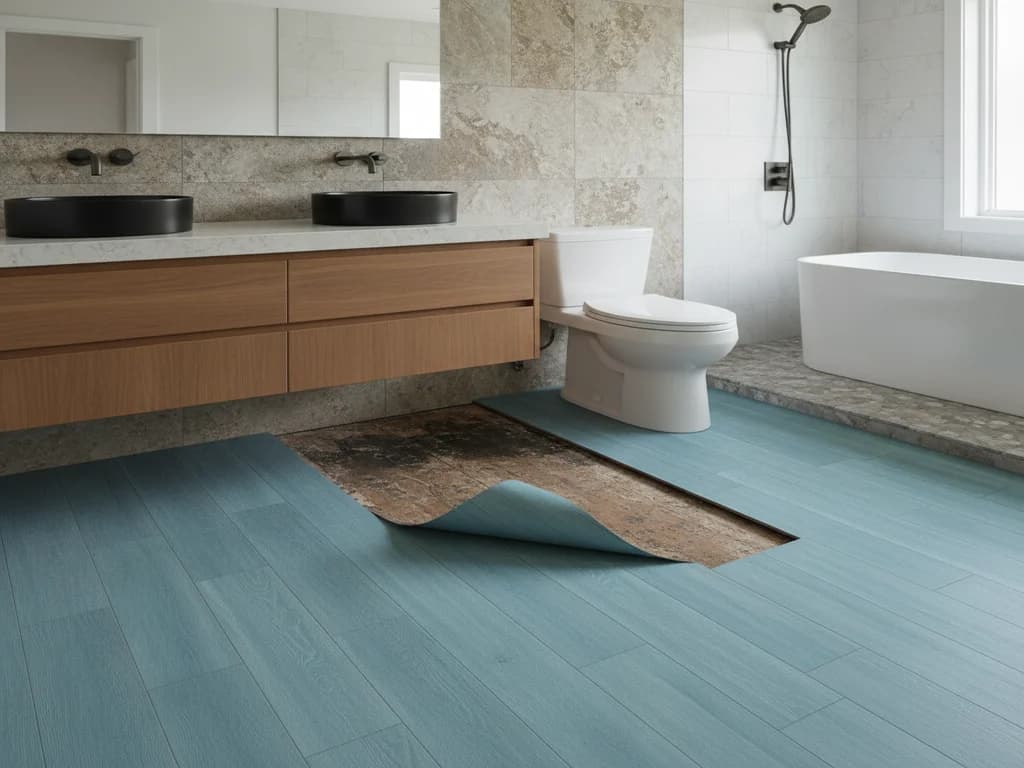
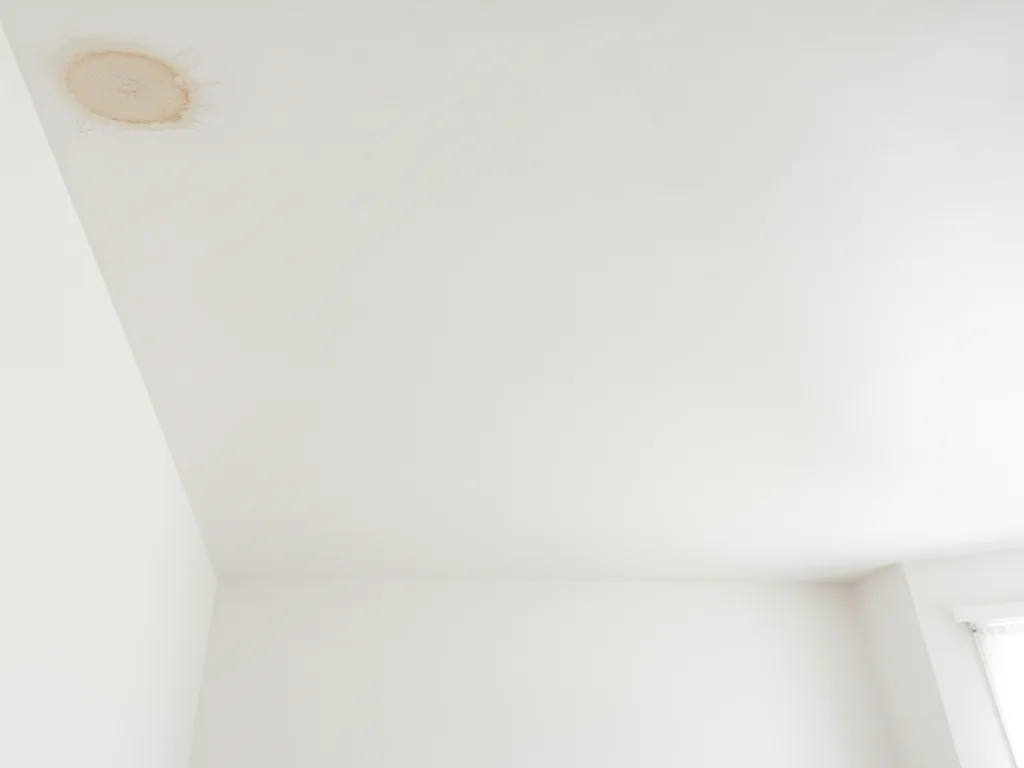
The timeline runs faster than most homeowners expect. Mold can establish on damp material within 24–48 hours, per the EPA. Within weeks, plywood and OSB subflooring absorb enough moisture to swell and delaminate around the flange — which loosens the toilet further, which accelerates the seal failure that started it all. Over months, the decking softens and rots outward from the flange; the classic end state is a spongy floor around the bowl, a toilet that visibly settles or tilts, and staining on the ceiling below if the bathroom is upstairs.
That is why the severity ranking on this problem is simple: a flush-timed base leak is never a wait-and-see item. Caught in days, it is a pull-and-reset. Caught in months, it is the repair covered in replacing the bathroom floor under a toilet — flooring up, damaged decking cut out and replaced, flange rebuilt at the correct height, and only then a toilet reset. A ceiling stain downstairs means the same investigation, covered in water stains under an upstairs bathroom.
What the professional fix looks like — and when it grows
The core repair is routine for a plumber or remodeler: shut off and drain the toilet, pull it, scrape the old wax, inspect the flange and the subfloor around it, correct whatever caused the failure — flange repair, shimming, bolt replacement — and reset the toilet on a new seal, level and immovable. Reseating typically runs in the low hundreds of dollars, per HomeAdvisor; it is one of the cheapest plumbing visits there is, which makes waiting on it a bad trade.
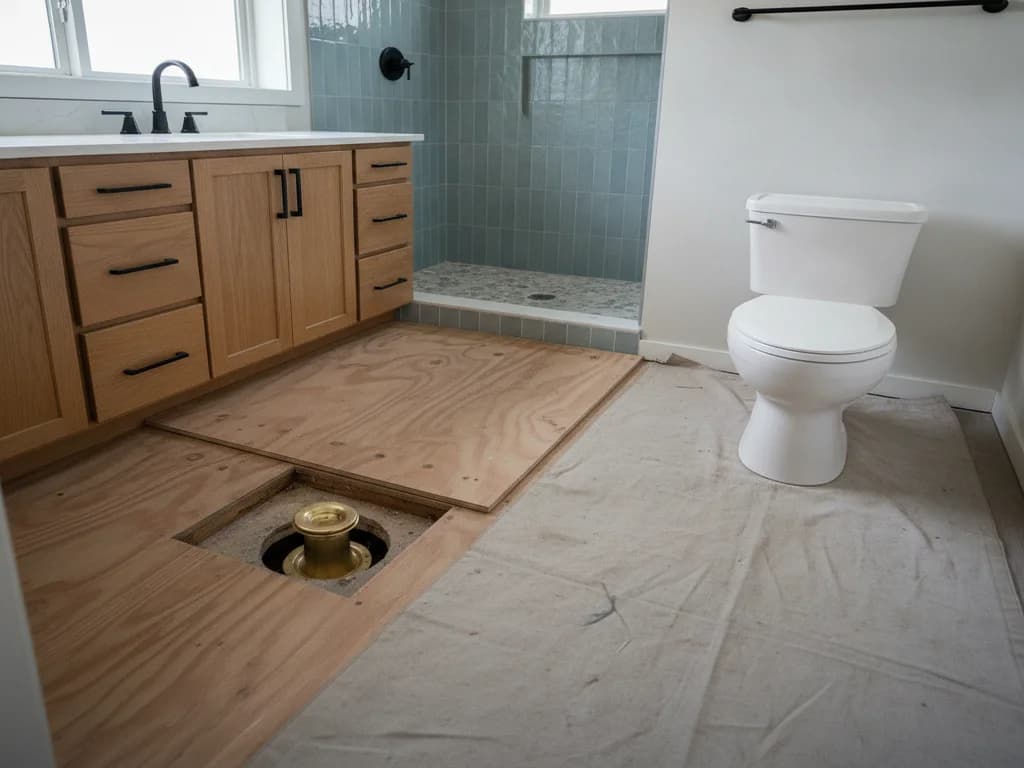
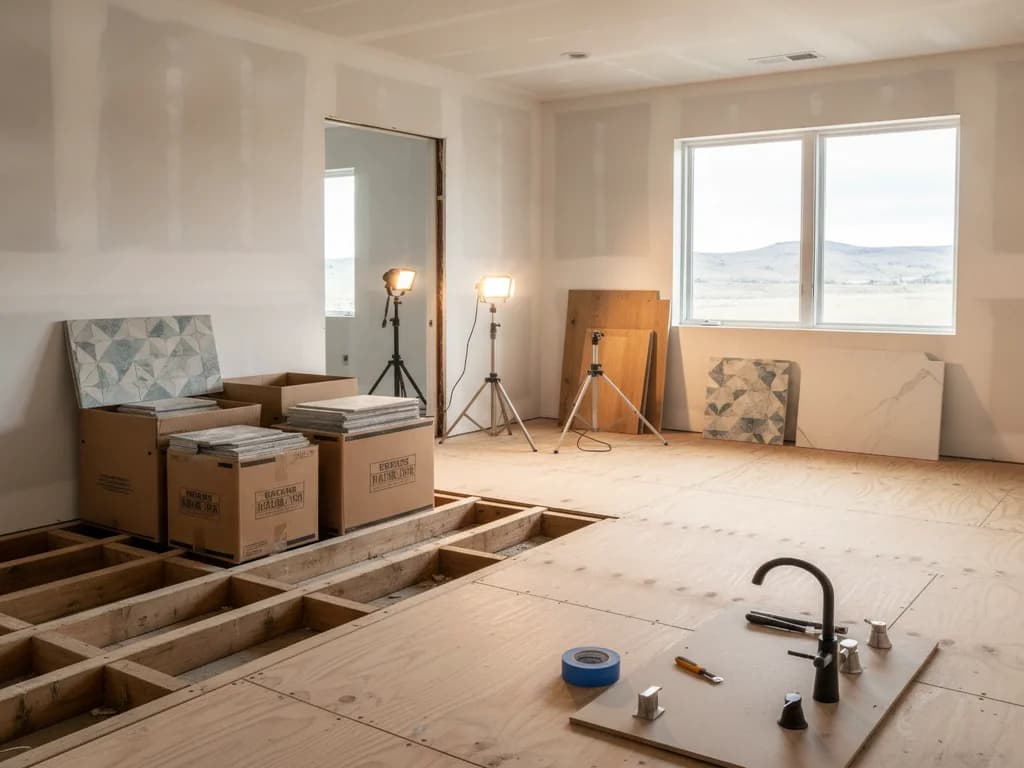
The scope grows only when the floor has already paid the price. Probing that reveals soft decking around the flange converts the job from a reset to a floor repair — and if the bathroom was on your remodel list anyway, this is the natural trigger to do it once and properly: new subfloor, new flooring, correct flange height, and a new toilet if the old one earned retirement. What that project involves is laid out in replacing a toilet.
Either way, the diagnostic rule holds: the leak is a symptom. The durable fix addresses what broke the seal — the rocking, the flange, the floor — not just the wax itself.
Ready to plan your Boise bathroom?
Licensed & insured · 3-year workmanship warranty
Frequently asked questions
- Why does my toilet leak at the base only when flushed?
- Flush-timed leaking is the wax-ring signature. Between flushes the drain carries no water, so a failed seal stays dry; each flush sends water past the broken wax and out around the base. It confirms the leak is at the toilet-to-drain connection rather than the tank or supply line — and it means contaminated water is reaching the subfloor with every flush, so schedule the fix promptly.
- Is a toilet leaking at the base an emergency?
- It is urgent, not an emergency. The volume per flush is small, but the water is contaminated and it lands where it cannot dry — the subfloor. Mold can establish within 24–48 hours per the EPA, and swelling starts within weeks. Use the toilet minimally, keep the area dry, and get it pulled and reset within days rather than months. Months is how a $200 reset becomes a floor repair.
- Can I just replace the wax ring myself?
- The wax ring is the easy part — the diagnosis is not. Rings fail because something made them fail: a rocking bowl, a broken or low flange, or softened subfloor, and each demands a different correction that only shows itself once the toilet is off. A reset that skips the underlying cause leaks again within months. A professional pull-and-reset is inexpensive and includes the flange and floor inspection that makes the fix stick.
- How do I know if the floor under my toilet is damaged?
- Press the flooring around the bowl with your foot: sponginess, flexing, or a soft ring around the base means the subfloor has absorbed water. Other tells: a toilet that keeps loosening after being tightened, visible darkening or lifting of flooring at the base, a persistent musty smell, or a ceiling stain below an upstairs bathroom. Any of these moves the job from a reseal to a floor repair.
- How much does it cost to fix a toilet leaking at the base?
- A straightforward pull-and-reset with a new wax ring typically runs in the low hundreds of dollars, and flange repair adds modestly to that, per HomeAdvisor’s cost data. The price jumps when the leak ran long: subfloor repair, new flooring, and possibly a new toilet turn a service call into a small project. The cost gap between fixing it this month and next year is the whole argument for acting early.
Sources
Claims and figures are drawn from the sources above and provided for general guidance; your project may vary. Photography is illustrative of design concepts. For a fixed price on your specific bathroom, request a free estimate.