
Updated July 16, 2026 · 7 min read
By Boise Bath — bathroom & shower remodeling in Boise & the Treasure Valley
The short answer
A sewage smell in a bathroom means sewer gas is getting past a failed seal. The four usual causes, from most to least common: a dry P-trap in an unused drain, a failed wax ring under the toilet, a blocked plumbing vent, and drain biofilm that mimics sewage. The first is a free fix; the rest need a professional.
Key takeaways
- Every drain in your bathroom relies on a water seal — a P-trap — to block sewer gas; when that seal fails or gets bypassed, you smell sewage.
- A dry P-trap in a rarely used tub, shower, or floor drain is the most common cause, and running water for a minute refills it for free.
- A sewage smell strongest at the toilet base usually means a failed wax ring — and the same gap that leaks gas can leak water into the floor.
- A blocked vent stack lets fixtures siphon their own traps dry; gurgling drains alongside the smell are the giveaway.
- Biofilm in a sink or shower drain smells like sewage but is a cleaning problem, not a plumbing failure.
- A smell that persists after the traps are wet and the drains are clean justifies a professional inspection — sewer gas contains hydrogen sulfide and methane, and the source only gets worse.
Why your bathroom smells like sewage
Your bathroom is connected, permanently and directly, to the sewer. The only things standing between your nose and that pipe are a handful of water seals — the U-shaped P-traps under every sink, tub, and shower, the water in the toilet bowl, and a wax gasket where the toilet meets the drain. Each one holds a small plug of water that sewer gas cannot pass through.
When a bathroom smells like sewage, one of those seals has failed or been bypassed. That is genuinely good news for diagnosis: there are only a few seals in the room, so there are only a few places to check. The four causes below cover nearly every case, ordered from most common and cheapest to fix down to the ones that mean opening things up.
One clarification first: sewer gas is mostly a nuisance at household concentrations, but it contains hydrogen sulfide and methane, and plumbing codes require every fixture to be trapped and vented specifically to keep it out of living space, per the International Code Council’s residential plumbing provisions. A persistent smell is a code-level defect, not a quirk to live with.
Cause 1: A dry P-trap in a drain you rarely use
The most common cause is also the cheapest: the water in a P-trap evaporates, and the empty trap becomes an open pipe to the sewer. It takes a few weeks to a couple of months of disuse — faster in Boise’s dry winters, when indoor humidity drops and evaporation speeds up.
The usual suspects are the fixtures nobody uses: the tub in a guest bathroom, the shower in the basement, a floor drain, the second sink in a double vanity. If the smell lives in a bathroom that sits idle, this is the first thing to check — and the check is the fix. Run water down every drain in the room for a minute or so and give it a day. If the smell disappears, the case is closed, and running those drains monthly keeps it closed.
If a trap keeps drying out unusually fast, or a fixture smells even with regular use, something else is pulling the water out — which points to the venting problem in cause 3.
Cause 2: A failed wax ring under the toilet
The toilet does not have a P-trap under the floor — the trap is molded into the bowl itself, and the connection between the bowl and the drain pipe is sealed by a ring of wax compressed between the toilet base and the closet flange. When that wax seal fails — from age, from a toilet that rocks, or from a flange sitting too low after a flooring change — sewer gas leaks out around the base of the toilet.
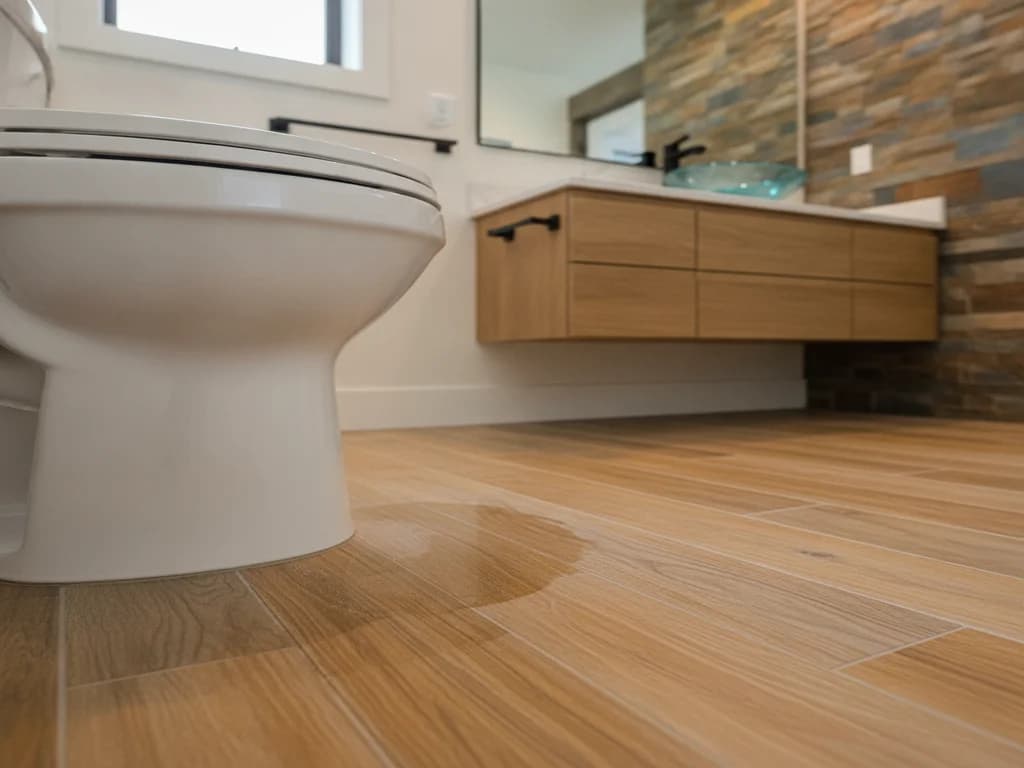
The telltale pattern: the smell is strongest low and close to the toilet, it often comes and goes with pressure changes in the drain system (worse when other fixtures flush or drain), and it may arrive with a second symptom — water seeping at the base after a flush. The gas leak and the water leak come through the same failed seal, which is why a sewage smell at the toilet deserves fast attention; the water side of the failure quietly damages the floor. Our companion article on a toilet leaking at the base covers that half of the problem in full.
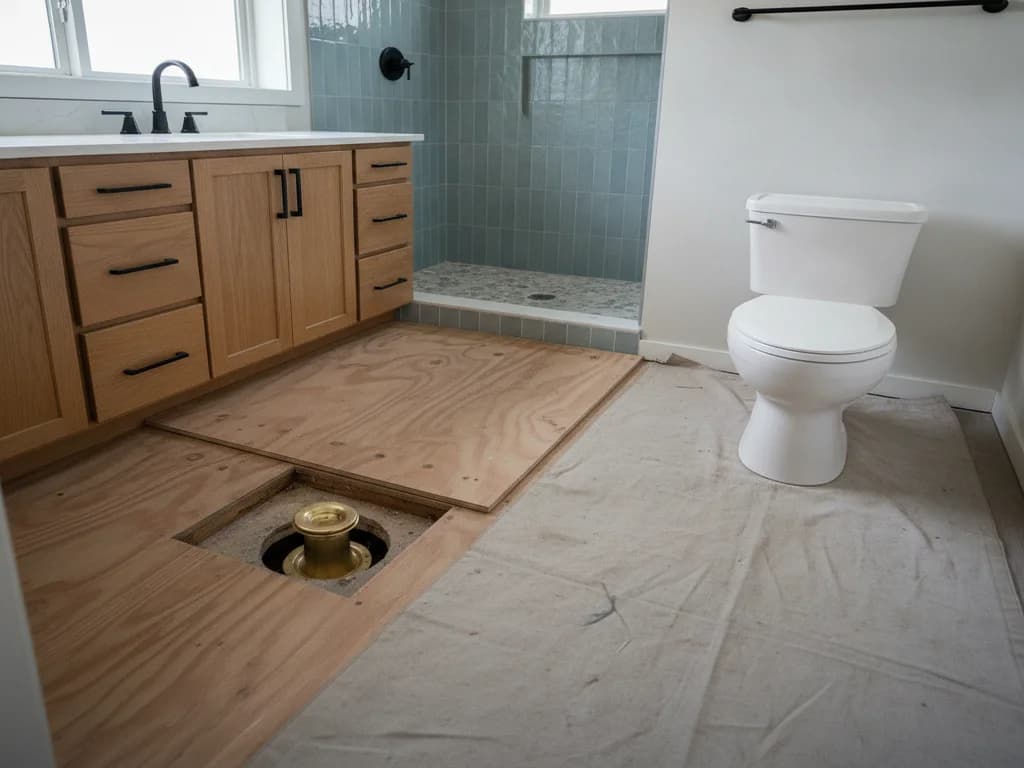
The fix is a professional pull-and-reset: the toilet comes off, the old wax gets scraped, the flange gets inspected (a cracked or corroded flange is often the real culprit), and the toilet is reset on a new seal. It is a routine visit — reseating a toilet typically runs in the low hundreds of dollars, per HomeAdvisor’s cost data — and if the toilet is old or the bowl is damaged, it is the natural moment to swap it, as our guide to replacing a toilet explains.
A rocking toilet plus a sewage smell is one problem, not two
A toilet that moves when you sit on it grinds through its wax seal — the rocking is the cause and the smell is the symptom. Tightening it down over a crushed seal does not restore the seal. Have it pulled, inspected, and reset before the leak side of the failure soaks the subfloor.
Cause 3: A blocked or inadequate vent stack
Every drain system needs air. The vent stack — the pipe that runs from your drain lines up through the roof — lets air in behind draining water so the flow does not pull a vacuum. When that vent is blocked (bird nests, leaves, snow and ice caps in winter, or a decades-old vent that was undersized or never properly connected), draining water siphons the P-traps dry as it passes. The result: traps that empty themselves, and a sewage smell that keeps returning no matter how often you run the taps.
The giveaway symptoms travel together: gurgling from the tub or sink when the toilet flushes, drains that seem slow everywhere at once, a smell that is worst right after heavy water use, and traps that will not stay full. If refilling the traps fixed the smell for a day and it came back, think venting.
This is squarely professional territory. Diagnosing a vent problem means inspecting the roof penetration and sometimes running a camera or smoke test through the stack; fixing it ranges from clearing an obstruction to correcting venting that was never right — common in older Treasure Valley homes that have had DIY bathroom additions over the years. If a remodel is on your horizon anyway, venting corrections fold naturally into the rough-in work, as covered in our guide to replacing bathroom plumbing.
Cause 4: Biofilm — the smell that is not actually sewage
Sometimes the sewer smell is not sewer gas at all. Hair, soap scum, skin oils, and toothpaste feed a bacterial film that coats the inside of drain pipes, the underside of sink stoppers, and the overflow channel in the sink itself. The bacteria produce sulfur compounds — the same rotten-egg note as sewer gas — so the nose cannot tell the difference.
The distinguishing test: get close and sniff the drain itself. A biofilm smell is strongest right at the drain opening and gets worse when you run warm water (which volatilizes the compounds); a true sewer-gas problem tends to fill the room and fluctuate with drain use elsewhere in the house. A slimy black coating on the stopper when you lift it out is the confirmation.
This one is a cleaning problem: pulling and scrubbing the stopper, brushing the drain throat, and flushing the overflow channel. No plumbing seal has failed, nothing needs replacement — though chronic biofilm in a bathroom with poor ventilation often travels with the broader moisture issues covered in bathroom mold: when to worry.
How serious is it? A triage table
Rank your situation against the symptoms. The pattern of the smell — where it is strongest, when it appears, what it travels with — points to the cause more reliably than the smell itself.
| Cause | Telltale pattern | Severity | The fix |
|---|---|---|---|
| Dry P-trap | Rarely used fixture; smell fades after running water | Low — free fix | Run every drain monthly |
| Drain biofilm | Strongest at one drain; slimy stopper; worse with warm water | Low — cleaning job | Clean stopper, drain throat, overflow |
| Failed wax ring | Strongest at toilet base; may pair with water seepage or rocking | Moderate — floor at risk | Professional pull, flange check, reset |
| Blocked vent stack | Gurgling drains; traps siphon dry; smell returns after refilling | Moderate-high — system defect | Professional vent diagnosis and repair |
A smell that persists after traps are refilled and drains are cleaned warrants a professional inspection — the remaining causes cannot be ruled out from above the floor.
When the smell means bigger work
Most sewage smells resolve at one of the four stops above. A few signal something larger: a smell paired with a spongy floor around the toilet means the wax-ring failure has been leaking water long enough to damage the subfloor — that repair is covered in replacing the bathroom floor under a toilet. A smell in multiple rooms, or one that rises from a basement floor drain after heavy use, can point to a partial sewer-line blockage backing gas up through the system. And in older homes, recurring smells alongside chronically sluggish drains sometimes trace to failing cast-iron waste lines — a discovery that changes the conversation from a service call to a plumbing scope.
None of that is a reason to panic; it is a reason to diagnose rather than deodorize. If the bathroom is due for a remodel anyway, this is exactly the category of problem worth folding in — every drain, trap, vent connection, and the flange itself gets opened, corrected, and inspected as part of the work, and the smell leaves with the old floor.
Ready to plan your Boise bathroom?
Licensed & insured · 3-year workmanship warranty
Frequently asked questions
- Why does my bathroom smell like sewage only at night or in the morning?
- Timing points to trap siphonage or evaporation. Overnight, an unused bathroom’s traps sit still — a marginal trap that gets siphoned low by evening drain use finishes evaporating by morning. Pressure and temperature swings also move gas past weak seals more at night. Run every drain in the room; if the morning smell persists, have the venting checked.
- Can a sewage smell in the bathroom make you sick?
- At typical household concentrations, sewer gas is mostly an odor nuisance — but it contains hydrogen sulfide and methane, and plumbing codes require trapped, vented fixtures specifically to keep it out of living space. Treat a persistent smell as a defect to fix, not a smell to mask. Ventilate the room and get the source diagnosed rather than covering it with air fresheners.
- Why does my shower drain smell like sewage?
- Two usual causes: a dry or siphoned P-trap under the shower, or biofilm coating the drain. Run water for a minute — if the smell fades over a day, the trap was dry. If it is strongest right at the drain and the stopper or grate has black slime, it is biofilm and needs cleaning. A smell that returns despite both points to a venting problem.
- Why does the sewage smell come and go?
- Intermittent smells track pressure changes in the drain system. A marginal wax ring leaks gas when a flush pressurizes the line; a partially blocked vent siphons traps only when large volumes drain; wind over the roof vent can push gas past weak seals. Note what the smell follows — a flush, a laundry cycle, a windy day — and share that pattern with your plumber; it shortens the diagnosis.
- Will a new toilet fix a sewage smell?
- Only if the failure is at the toilet — a bad wax ring, a cracked bowl, or a damaged flange connection. A new toilet installed on the same corroded flange or over the same vent problem will smell the same. The right order is diagnosis first: if the toilet is the confirmed source and it is old anyway, replacing it during the reset is efficient — the pull and the seal work are already being done.
Sources
- International Code Council (IRC/IBC)
- HomeAdvisor — True Cost Guide
- This Old House — Bathrooms
- EPA — Mold
Claims and figures are drawn from the sources above and provided for general guidance; your project may vary. Photography is illustrative of design concepts. For a fixed price on your specific bathroom, request a free estimate.