Updated July 16, 2026 · 7 min read
By Boise Bath — bathroom & shower remodeling in Boise & the Treasure Valley
The short answer
Replace the toilet if it predates 1994, has any crack in the porcelain, clogs repeatedly, or needs its second or third repair — pre-1994 models use 3.5 to 7 gallons per flush versus 1.28 for a WaterSense toilet, per the EPA. Keep and repair a modern toilet with a single worn part — a flapper or fill valve.
Key takeaways
- Toilets made before 1994 use 3.5 to 7 gallons per flush; the federal standard since 1994 is 1.6, and EPA WaterSense models use at most 1.28 — old toilets pay for their replacement in water.
- EPA WaterSense estimates that swapping old, inefficient toilets for WaterSense models saves a family roughly 13,000 gallons of water a year.
- Any crack in the tank or bowl ends the debate — porcelain does not heal, and a hairline can let go without warning.
- A flapper or fill valve is a cheap repair on a toilet worth keeping; the second or third repair on an old toilet is money toward a new one.
- A toilet that rocks is a floor-and-flange problem, not a toilet problem — replacing the fixture without fixing the wobble invites the same leak.
- Replacement day is the free upgrade window: comfort height, better bowl shape, and an efficient flush cost little when the toilet is coming off anyway.
The honest heuristic: one cheap repair, yes — a pattern, no
Toilets are simple machines, and most of what goes wrong with them is a cheap part: a flapper, a fill valve, a supply line, a seat. A modern toilet with one worn part is a repair, full stop. The replace decision arrives three ways — age, damage, or pattern. A pre-1994 toilet is wasting water every single flush. A cracked one is a flood with a countdown. And a toilet on its second or third repair, or its umpteenth plunging, is telling you the machine itself is the problem.
That framing keeps the money honest in both directions. Nobody should replace a five-year-old toilet over a worn flapper, and nobody should keep pouring parts into a 1980s water hog because each individual fix seems small.
How old is your toilet? The water math
Age is the one replacement signal you can read off a calendar, because federal law drew a hard line: toilets manufactured for U.S. homes after 1994 flush with no more than 1.6 gallons, and everything before it uses more — often several times more. The EPA’s WaterSense program certifies today’s efficient models at 1.28 gallons per flush or less, and estimates that replacing old, inefficient toilets with WaterSense models saves the average family roughly 13,000 gallons of water a year.
Most toilets have a manufacture date stamped inside the tank — lift the lid and look at the back wall of the tank interior. In Treasure Valley housing that check sorts neatly by era: 1970s and 80s homes that never updated are in the 3.5-to-7-gallon class, early-90s homes straddle the line, and anything built after the mid-90s is at least at the 1.6 standard.
| Era | Gallons per flush | What it means |
|---|---|---|
| Before ~1980 | 5–7 gpf | Every flush uses four to five times the modern standard |
| 1980–1994 | ~3.5 gpf | Better, but still nearly triple a WaterSense flush |
| 1994 and later | 1.6 gpf max | The federal standard under the Energy Policy Act |
| WaterSense-labeled | ≤1.28 gpf | Independently certified for flush performance at low volume |
Figures per EPA WaterSense. Early-generation 1.6 gpf toilets from the mid-1990s flushed poorly and earned low-flow toilets a bad reputation; modern trapway and glazing design solved that years ago.
The repair-vs-replace math, symptom by symptom
Match the symptom to the fix. Running water, a lazy or incomplete flush that a new flapper cures, hissing after the tank fills, a loose seat — these are parts-level repairs measured in tens of dollars, and on a post-1994 toilet they are clearly worth making.
The math flips on three symptoms. Repeated clogging on a toilet that has always been clog-prone is a design problem — usually an early low-flow or a narrow trapway — and no part fixes design. Cracks anywhere in the porcelain are terminal: a hairline in the tank holds today and lets go at 2 a.m. someday, and a cracked bowl can leak sewage into the floor invisibly. And the accumulation case: when a fill valve fix is followed by a flush valve leak and then a tank-to-bowl gasket, you are rebuilding an old machine one part at a time at a cost approaching a new toilet that would also cut the water bill.
Angi’s cost guides put basic toilet repairs anywhere from a cheap DIY part to a few hundred dollars with a plumber’s visit, while a solid new toilet plus installation often lands in the same few-hundred-dollar territory — which is exactly why the second professional repair on an old toilet rarely pencils out.
The wobble is not a toilet problem
One symptom gets its own section because it is so often misread. A toilet that rocks or wobbles is almost never failing at the fixture — it is failing at the connection to the floor: loose closet bolts at best, a broken flange or a wax seal that has lost its grip at worst. And because the wax seal is what keeps every flush inside the drain, a rocking toilet is often leaking a little sewage water into the subfloor with each use, silently.
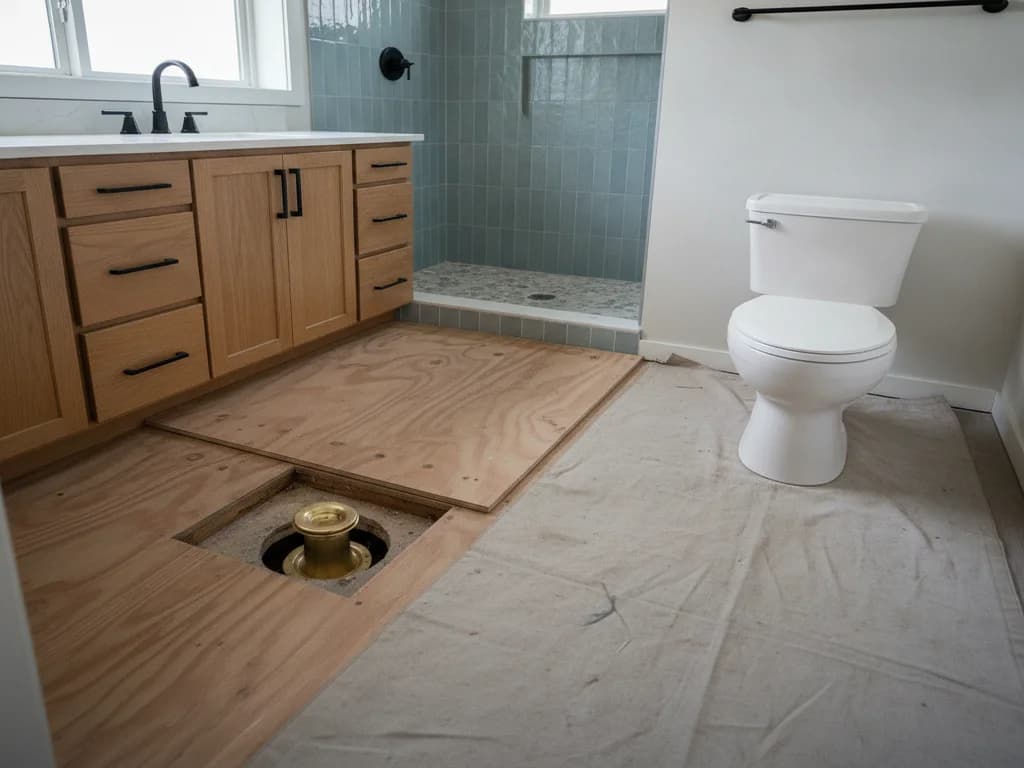
That is why the wobble decision is not repair-or-replace the toilet — it is pull the toilet and inspect. Sometimes the fix is a new seal and flange repair with the same toilet reset on top. Sometimes the floor underneath is soft and the project grows; replacing the bathroom floor under a toilet covers that scenario, and signs of bathroom water damage covers how to tell if it has already spread.
Never re-tighten a rocking toilet and walk away
Cranking down the closet bolts on a wobbling toilet can crack the porcelain base — and it does nothing about the seal that the rocking has already worked loose. The honest fix always involves lifting the toilet to see the flange and the floor. If tightening is all that happens, expect the wobble back, this time with a water stain on the ceiling below.
When replacement wins — and what to buy into
Replacement wins on any crack, on chronic clogging, on the repair pattern, and on the pre-1994 water math. It also wins opportunistically: if the floor is being redone or the bathroom remodeled, the toilet comes off anyway, and reinstalling an old fixture on a new floor is a false economy.
Replacement day is also the one free upgrade window, because every improvement costs least when the old toilet is already off the flange. The big one is bowl height: standard bowls run around 15 inches, while comfort-height models add a couple of inches that knees and hips notice daily — the full trade-off, including who should stick with standard height, is in comfort height vs. standard toilets. Elongated bowls, one-piece designs that clean easier, and better flush engineering are the other choices worth making deliberately rather than grabbing the cheapest box.
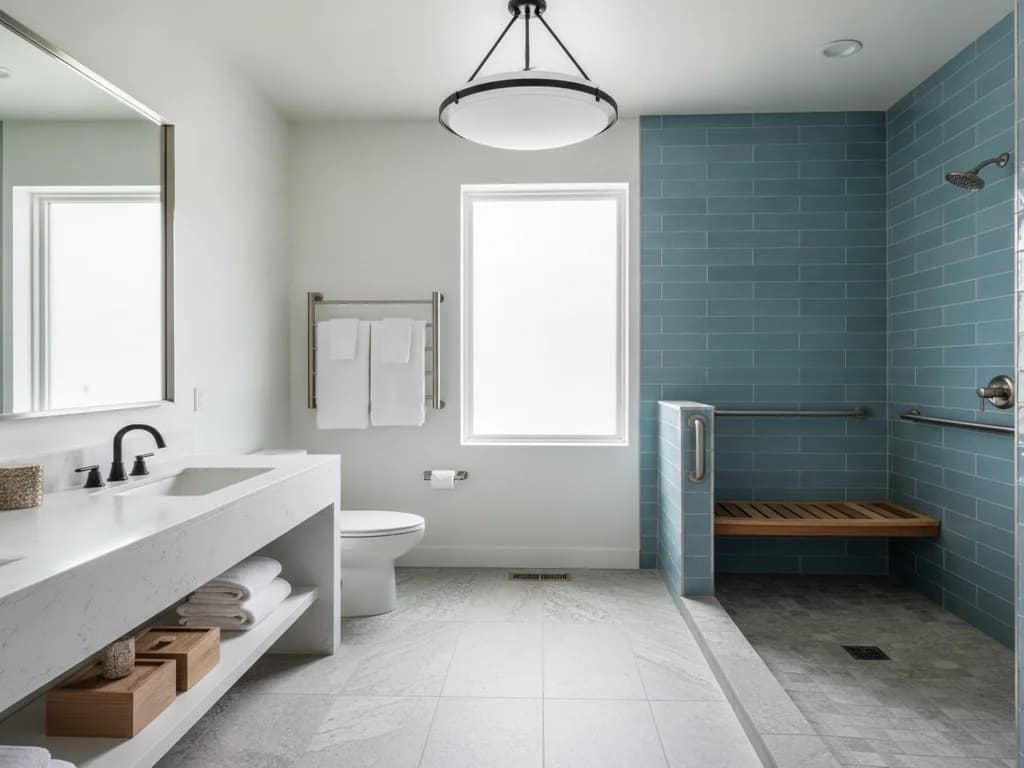
If anyone in the house is planning to age in place, this small swap carries outsized weight — a taller bowl with grab-bar blocking nearby is one of the simplest safety upgrades in the room, a theme covered more broadly in aging-in-place bathroom ideas.
When keeping the old toilet is fine
A post-1994 toilet that flushes well, sits solid, and needs one inexpensive part is a keeper — repair it without guilt. Even an older 1.6-gallon unit that performs reliably can reasonably wait for a natural replacement moment like a flooring project or remodel, since the jump from 1.6 to 1.28 gallons matters less than the jump from 3.5 or 5.
The honest waiting list is short, though. Cracks do not wait, wobbles do not wait, and a 5-gallon relic is costing you money on a schedule of several flushes a day. If the toilet is on that list, the swap itself is one of the quickest fixture projects in the house — the process, from pulling the old unit to setting the seal and testing, is laid out in replacing a toilet.
How a contractor would call it
The check is fast: tank lid off for the date stamp, a hand on the bowl for rock, a look for hairlines at the tank bolts and the base, a flush to watch performance, and a glance at the shutoff and supply line while there. That sorts the toilet into repair, replace, or pull-and-inspect within minutes.
A standalone toilet swap is a small job, and worth doing right — the seal and the flange are where cheap installs fail. If it is part of something bigger, or the floor under it turns out to be the real project, a free estimate scopes it honestly either way.
Ready to plan your Boise bathroom?
Licensed & insured · 3-year workmanship warranty
Frequently asked questions
- How long do toilets last?
- The porcelain itself can serve for decades — it does not wear out so much as get outdated or damaged. The working parts inside the tank are a different clock: flappers, fill valves, and gaskets are consumables that need periodic replacement on any toilet. In practice, toilets get replaced for water efficiency, cracks, chronic clogging, or a remodel long before the porcelain fails on its own.
- How do I tell how old my toilet is?
- Lift the tank lid and look inside — most manufacturers stamp a manufacture date into the porcelain on the back interior wall of the tank, and sometimes under the lid itself. That date tells you which water-use era the toilet belongs to: 3.5 or more gallons per flush before 1994, 1.6 after. If there is no legible stamp, the home’s construction date and any remodel history are the next best guide.
- Do low-flow toilets clog more?
- The first generation from the mid-1990s earned that reputation honestly — manufacturers cut water before redesigning bowls. Modern toilets are engineered for low volume, with larger trapways and better bowl rinse, and EPA WaterSense certification requires models to pass independent flush-performance testing at 1.28 gallons or less. A current WaterSense toilet generally outperforms the 1990s unit it replaces while using less water.
- Is it worth replacing a toilet that keeps clogging?
- If the clogs follow the toilet — it has always been prone, regardless of what drains fine elsewhere in the house — the problem is the fixture’s design, usually an early low-flow or a narrow trapway, and replacement fixes it. If clogs are new, or other fixtures gurgle and drain slowly too, the problem may be downstream in the drain line, and that needs diagnosis first. No new toilet fixes a partially blocked sewer line.
- Should I get a comfort-height toilet when I replace?
- For most adults, yes — the extra couple of inches of bowl height is easier on knees and hips every day, and it is the default choice in aging-in-place design. The exceptions are households with small children and shorter users, where standard height works better. The full comparison, including measurements and who benefits most, is in our comfort height vs. standard toilet guide.
- Can I replace a toilet myself, or do I need a pro?
- A straight swap on a sound floor with a healthy flange is one of the more approachable fixture jobs. The catch is that the failure points are invisible until the old toilet is off: a cracked or corroded flange, a rotted subfloor ring, or a drain that sits too low for the new base. Those turn a swap into repair work fast. If the old toilet rocked or leaked, plan on a professional pull-and-inspect rather than a DIY swap.
Sources
Claims and figures are drawn from the sources above and provided for general guidance; your project may vary. Photography is illustrative of design concepts. For a fixed price on your specific bathroom, request a free estimate.