
Updated July 16, 2026 · 7 min read
By Boise Bath — bathroom & shower remodeling in Boise & the Treasure Valley
The short answer
Replace the bathtub when the problem is structural — cracks, a flexing floor, leaks at the drain or the tile joint, or a fiberglass shell that has delaminated. Keep it when the tub is sound and only the surface is worn; refinishing handles stains, dull finish, and dated color. Water where it should not be is the deciding line.
Key takeaways
- The deciding question is whether the tub still holds and sheds water, not how it looks — finish problems are fixable, structural problems are not.
- A tub floor that flexes or crackles underfoot means the shell or its support has failed, and no coating can fix that from the surface.
- Recurring leaks at the drain, overflow, or tub-to-tile joint are a replacement signal, because the fix requires opening the same walls a new tub needs anyway.
- A sound cast iron or steel tub with a worn finish is a strong refinishing candidate; a cracked fiberglass tub is not.
- If nobody has taken a bath in years, the better replacement is often a walk-in shower rather than another tub.
- Waiting on a leaking tub trades a planned project for an unplanned one — subfloor and framing repairs cost more than the tub does.
The honest heuristic: surface problems stay, structural problems go
Almost every "should I replace my bathtub" question resolves to one test: is the failure in the finish, or in the shell? A dull, stained, or dated surface on a structurally sound tub is a cosmetic problem with a cosmetic fix. A crack, a soft spot, a floor that gives under your weight, or a leak that keeps coming back is a structural problem — and structural problems only move in one direction.
That test matters because the two paths cost very different money and different disruption. Refinishing works on the tub in place in a day or two. Replacement opens the surround, touches plumbing, and usually pulls tile — real remodel scope. Spending remodel money on a tub that only needed a new surface is the classic mistake, and so is coating over a tub that was already failing underneath.
The sections below walk the signals in the order a contractor would check them: age and material, finish condition, leaks, and finally style — because style alone almost never justifies the demolition.
What are the signs my bathtub needs replacing?
Run your tub against this table. One entry in the right-hand column is usually enough to settle it; the left-hand column takes a cluster of problems plus a dated bathroom before replacement makes sense on its own.
| Signal | Points toward keeping it | Points toward replacement |
|---|---|---|
| Finish | Dull, stained, or dated color on a sound shell | Peeling from a previous refinish, or worn through to substrate |
| Cracks | Hairline surface crazing on porcelain | Any crack in fiberglass or acrylic, or a chip that goes through |
| Tub floor | Solid and quiet underfoot | Flexes, crackles, or feels spongy when you stand in it |
| Leaks | One-time caulk failure at the tile joint | Recurring leaks at drain, overflow, or joint despite re-caulking |
| Material | Cast iron or enameled steel — long-lived shells | Builder-grade fiberglass past its service life |
| Style | Wrong color but right size and layout | Wrong fixture entirely — a garden tub nobody uses, a tub where a shower belongs |
A tub with multiple right-column entries has usually earned its replacement even if any single one seems livable.
When refinishing is the smarter call
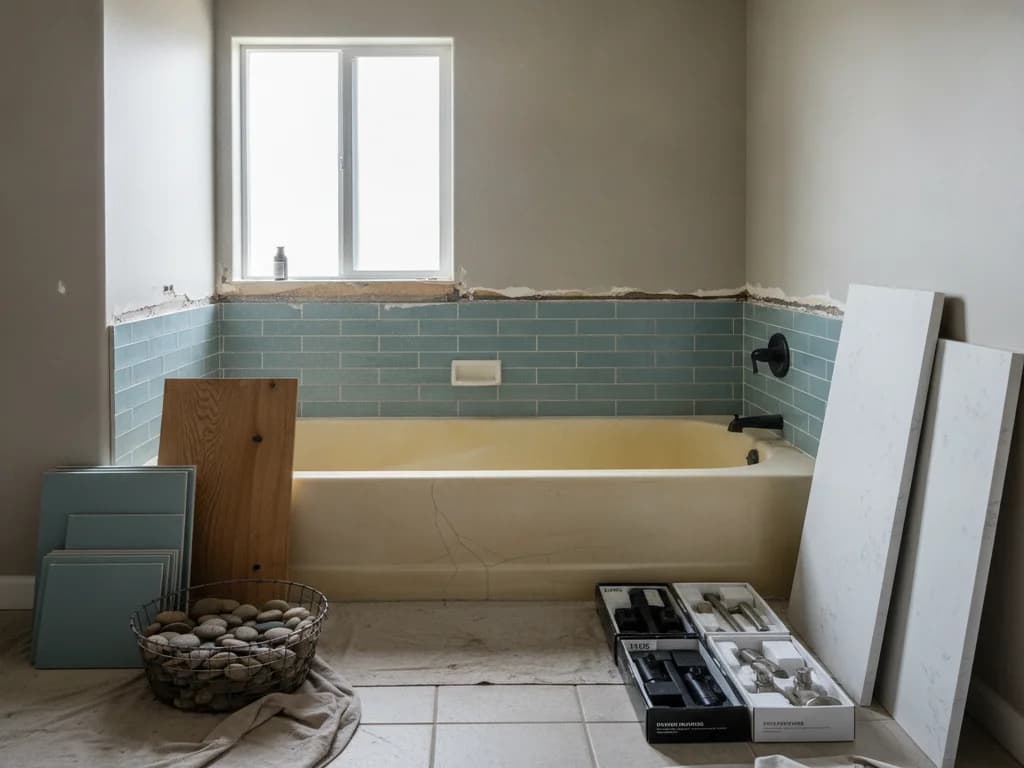
If the shell is sound — no cracks, no flex, no active leaks — and the complaint is stains, dullness, or a 1970s color, refinishing is worth a serious look before you commit to demolition. It is a fraction of the cost of replacement, it happens in place, and on a heavy cast iron tub it preserves a shell that is genuinely better built than most of what would replace it. Our bathtub refinishing vs. replacement comparison covers the costs, lifespans, and trade-offs of that decision in full, so we will not re-argue it here.
The short version: refinishing buys a sound tub another stretch of service at low cost, but it is a coating, not a new tub. It will not survive a second application well, it cannot fix flex or cracks, and it resets the clock on the surface only. If the surround tile, the valve, and the waterproofing behind the walls are also at end of life, refinishing the tub in the middle of a failing assembly just delays the same project.
One honest caveat from Treasure Valley housing stock: hard water is rough on refinished surfaces. Mineral deposits etch and dull coatings faster than factory enamel, so a refinished tub here earns its keep with regular cleaning — worth knowing before you choose that path.
When replacement wins
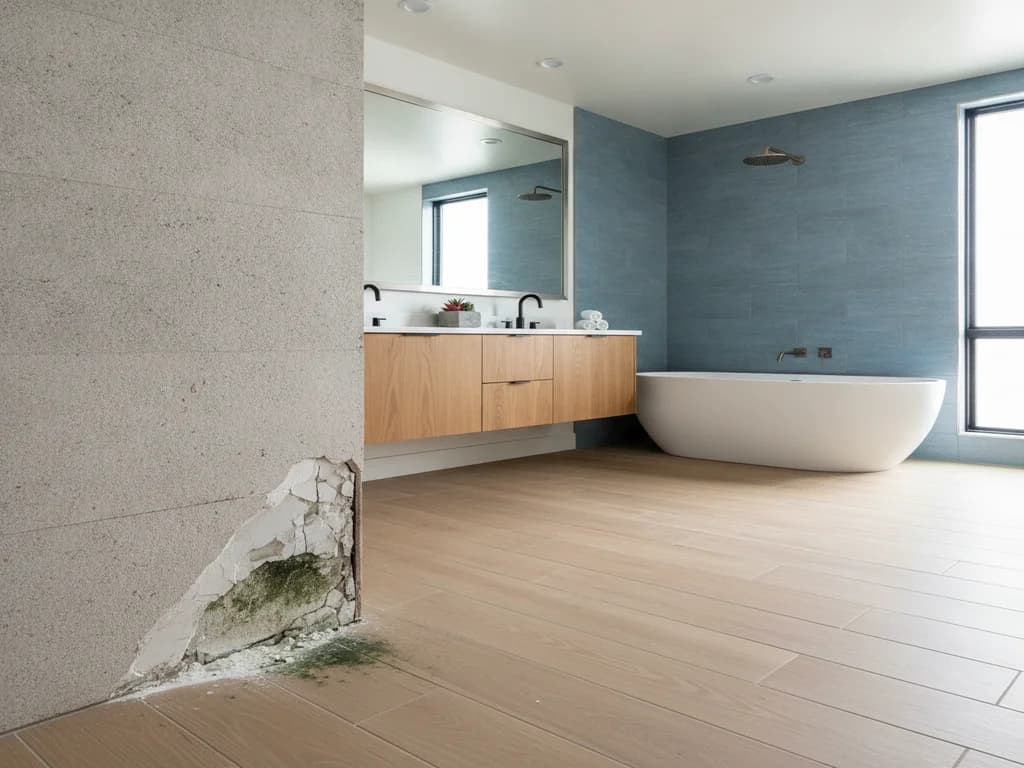
Replacement wins the moment water is getting somewhere it should not. A drain or overflow leak, a tub-to-tile joint that fails no matter how often it is re-caulked, or moisture showing up on the ceiling below — those are not tub problems anymore, they are building problems, and the fix requires opening the assembly. Once the surround is open, replacing the tub is incremental; keeping the old one saves very little. Signs of bathroom water damage covers what those leaks look like before they become obvious.
Replacement also wins when the tub material has simply run out. Builder-grade fiberglass tubs from 1990s and 2000s Treasure Valley construction flex, craze, and crack as the reinforcement fatigues — and a cracked fiberglass shell cannot be reliably coated back to service. The same goes for a tub that has already been refinished once: second coatings adhere poorly, per the refinishing industry’s own guidance, which This Old House echoes in its refinish-or-replace coverage.
Finally, replacement wins when the fixture itself is wrong. If the tub is the wrong size, the layout fights the room, or you are folding the work into a broader update anyway, putting money into the old shell makes no sense. What the swap actually involves — demolition, plumbing, setting, and the surround — is covered in replacing a bathtub.
Should the replacement even be a tub?
Before pricing a new tub, ask the quieter question: when did anyone last take a bath in it? In a lot of homes the honest answer is years, and in that case the highest-value replacement is not another tub — it is a tub-to-shower conversion that turns a fixture nobody uses into one the household uses daily.
The main counterweight is resale: removing the only bathtub in the house narrows the buyer pool for families with small children, which is why the usual advice is to keep at least one tub somewhere in the home. That trade-off has its own decision article in should I remove the only bathtub, and the broader comparison lives in walk-in shower vs. tub-to-shower.
If bathing still matters — kids, soaking, resale caution — then the replacement question becomes which tub: a like-for-like alcove swap is the simplest scope, while freestanding and walk-in tubs change the plumbing and the budget meaningfully.
What waiting actually costs
A dated-but-sound tub costs you nothing to keep; wait as long as you like. A leaking or flexing tub is different, because the damage it causes is not to the tub — it is to the subfloor, the framing, and the ceiling below, none of which show symptoms until the repair is significant. Rot repair regularly costs more than the tub replacement itself, and it turns a planned one-week project into an open-ended one.
The flexing-floor case deserves special mention because it feels livable. Every flex cycle works the drain connection and the shell a little further; the failure mode is a crack or a drain leak that runs quietly into the subfloor. If the floor moves underfoot, treat the tub as being on notice even if nothing is visibly wrong yet.
Recurring caulk failure is a message, not a maintenance chore
If the caulk line between tub and tile keeps cracking or mildewing no matter how often it is redone, the joint is moving — which means the tub is flexing or settling. Re-caulking treats the symptom. Have the movement diagnosed before water finds the gap, because the repair on the other side of that leak is subfloor work, not caulk.
How a contractor would call it
On a site visit, the check takes minutes: stand in the tub and feel for flex, sight the finish for crazing versus cracks, look at the drain and overflow from below if there is access, and read the caulk line for movement. Then the tub gets judged in context — the age of the surround, the valve, and the waterproofing behind it — because the right answer for the tub alone is sometimes the wrong answer for the bathroom.
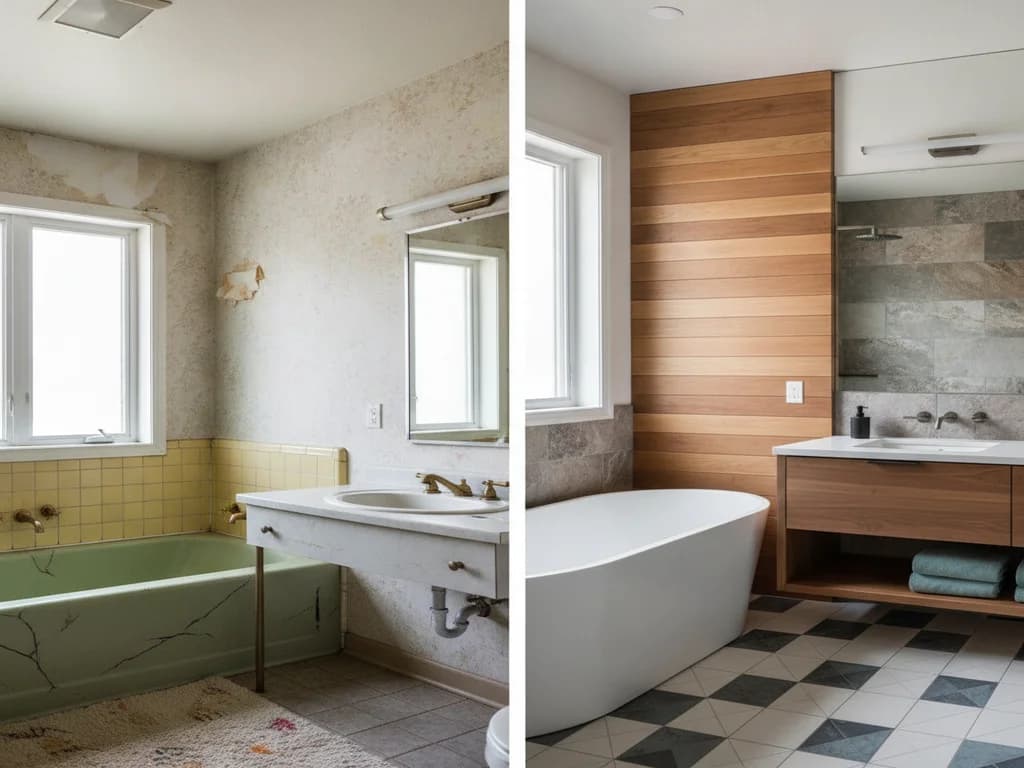
The honest outcomes are: refinish a sound shell in a bathroom that otherwise works; replace the tub when water or structure has failed; and fold the decision into a larger remodel when the whole wet area is at end of life — the signals for that bigger call are in signs you need a bathroom remodel. A free estimate puts real numbers on whichever path your tub is actually on.
Ready to plan your Boise bathroom?
Licensed & insured · 3-year workmanship warranty
Frequently asked questions
- How long does a bathtub last?
- It depends on the shell. Cast iron and enameled steel tubs routinely serve for many decades — the finish wears long before the shell fails. Builder-grade fiberglass and acrylic tubs have shorter working lives; flexing, crazing, and cracking show up as the material fatigues. That is why age alone is a weak signal: a 50-year-old cast iron tub can be a refinishing candidate while a 20-year-old fiberglass tub is done.
- Is it cheaper to refinish or replace a bathtub?
- Refinishing is significantly cheaper as a line item — it is a coating applied in place, versus demolition, plumbing, and surround work for replacement. But the comparison only holds when the tub is structurally sound. Coating a cracked or flexing tub wastes the refinishing money, and if the surround and valve are failing too, replacement folds those fixes into one project. The full cost comparison is in our bathtub refinishing vs. replacement guide.
- Can a cracked bathtub be repaired?
- Small chips in porcelain or acrylic can be patched cosmetically. A true crack — one that goes through the shell or sits in the tub floor — is different: in fiberglass and acrylic it means the material or its support has failed, and patches over structural cracks reopen. A cracked tub floor also usually means water has already been reaching the subfloor, so the honest fix is replacement plus an inspection of what is underneath.
- Should I replace my bathtub with a shower instead?
- If nobody bathes and the household showers, converting to a walk-in shower usually adds more daily value than a new tub — it is one of the most requested bathroom projects for exactly that reason. The main caution is resale: keeping at least one tub in the house preserves appeal for buyers with young children. If this tub is the only one, weigh that trade-off before converting.
- Does replacing a bathtub require a permit in Boise?
- A straight like-for-like swap with no plumbing relocation is often treated as repair-level work, but the moment the project moves the drain, replaces the valve, alters waterproofed walls, or converts tub to shower, it becomes permitted plumbing work. Rules differ by jurisdiction across the Treasure Valley, so the safe answer is to let your contractor confirm scope with the local building department before demolition.
Sources
- This Old House — Bathrooms
- Angi — Cost Guides
- National Kitchen & Bath Association (NKBA)
- USGS Water Science School — Hardness of Water
Claims and figures are drawn from the sources above and provided for general guidance; your project may vary. Photography is illustrative of design concepts. For a fixed price on your specific bathroom, request a free estimate.