
Updated July 16, 2026 · 7 min read
By Boise Bath — bathroom & shower remodeling in Boise & the Treasure Valley
The short answer
Replace the shower when the failure is under the surface — a pan that flexes, walls that feel soft, leaks that reach the ceiling below, or a fiberglass unit that has cracked. Keep it when the structure is sound and only grout, caulk, or fixtures are tired; those renew without demolition. Water escaping the assembly is the deciding line.
Key takeaways
- Tile and grout are the visible layer; the waterproofing behind them is the actual shower. Judge the system, not the surface.
- A shower floor that flexes or crackles underfoot means the pan or its support has failed — that is a replacement signal, not a repair.
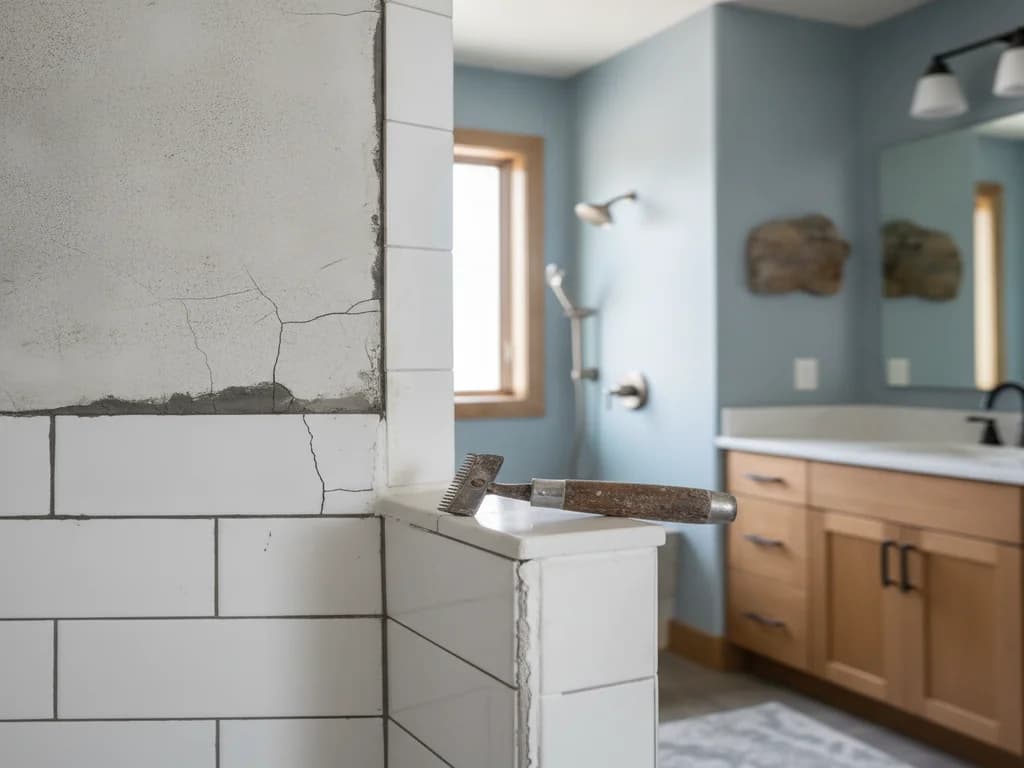
- Recurring grout cracks in the same spots signal movement in the assembly; grout that fails randomly from age signals maintenance.
- Cracked or spider-webbed fiberglass cannot be reliably patched back to service — the unit is done.
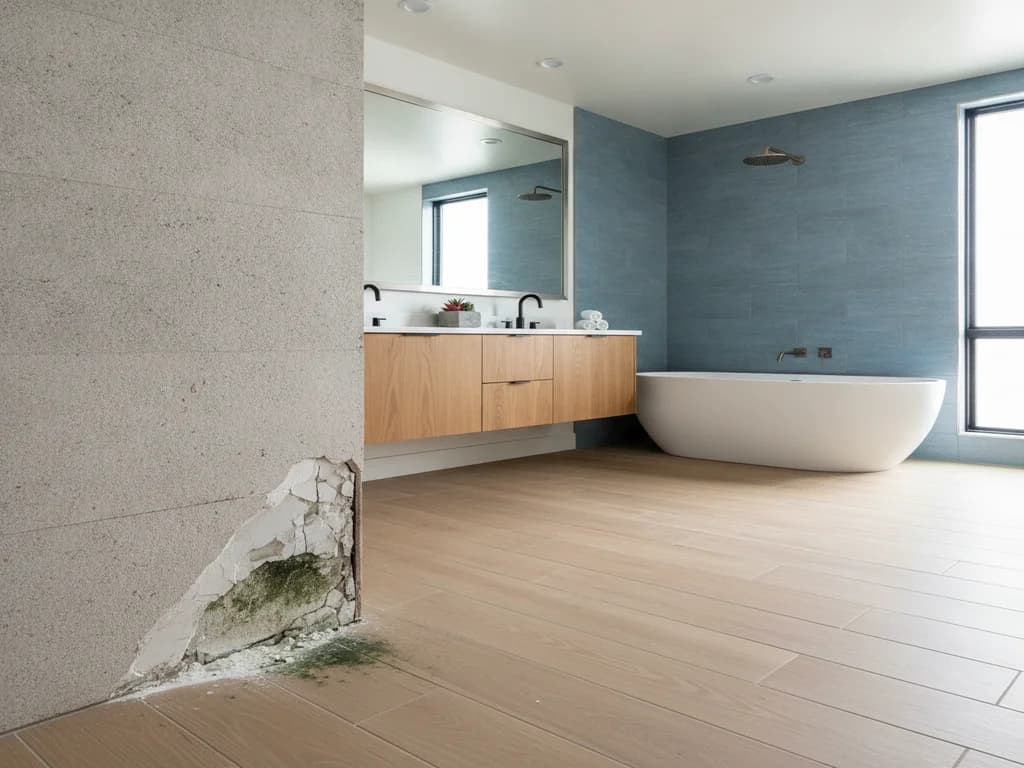
- Stains on the ceiling below, a musty smell, or soft drywall outside the shower mean water has already escaped; act on the leak, not the cosmetics.
- If mobility needs are changing, replacement is the moment to solve them — a curbless entry cannot be retrofitted onto a failing pan.
The honest heuristic: judge the system, not the surface
A shower is two things wearing out on different clocks. The surface — grout, caulk, fixtures, glass — wears visibly and renews cheaply. The system — the pan, the waterproofing membrane, the backer board, the valve in the wall — wears invisibly and renews only by demolition. The replace-or-repair question is really the question of which clock has run out.
That is why a shabby-looking shower can be structurally fine while a decent-looking one is quietly failing. Stained grout on a sound, dry assembly is a maintenance item. Pristine tile over a pan that flexes is a replacement waiting for a leak to announce itself.
The signals below are ordered the way a contractor reads them: feel first, then water evidence, then age and material — with looks last, because looks alone never earn the demolition.
What are the signs a shower needs to be replaced?
Work down this table honestly. The left column describes wear a sound shower accumulates; the right column describes failure. One clear right-column entry usually decides it.
| What you notice | Maintenance or repair | Replacement signal |
|---|---|---|
| Grout | Discolored or aging evenly across the shower | Cracking repeatedly along the same lines or at the floor-wall corner |
| Shower floor | Dull finish, hard-water film | Flexes, crackles, or feels spongy underfoot |
| Walls | Surface mildew that cleans off | Tiles that sound hollow, move, or sit over soft drywall |
| Fiberglass/acrylic unit | Faded or yellowed but intact | Cracks, spider-webbing, or flex at the floor |
| Leaks | Caulk joint failed once at the curb or corner | Ceiling stains below, musty smell, or leaks that survive re-caulking |
| Drain | Slow drain that clears with cleaning | Water seeping around the drain body or a floor that stays damp |
Hollow-sounding tile and repeating grout cracks both point to movement or moisture behind the tile — the layer you cannot patch from the front.
The pan and the waterproofing: where showers actually fail
Tile is not waterproof — grout absorbs water by design, and the membrane behind the tile is what keeps the building dry. The Tile Council of North America’s methods all assume that hidden layer is intact. When it fails, water wicks into framing and subfloor for months before anything shows, which is why the first visible symptom is so often a stain on the ceiling of the room below rather than anything in the shower itself.
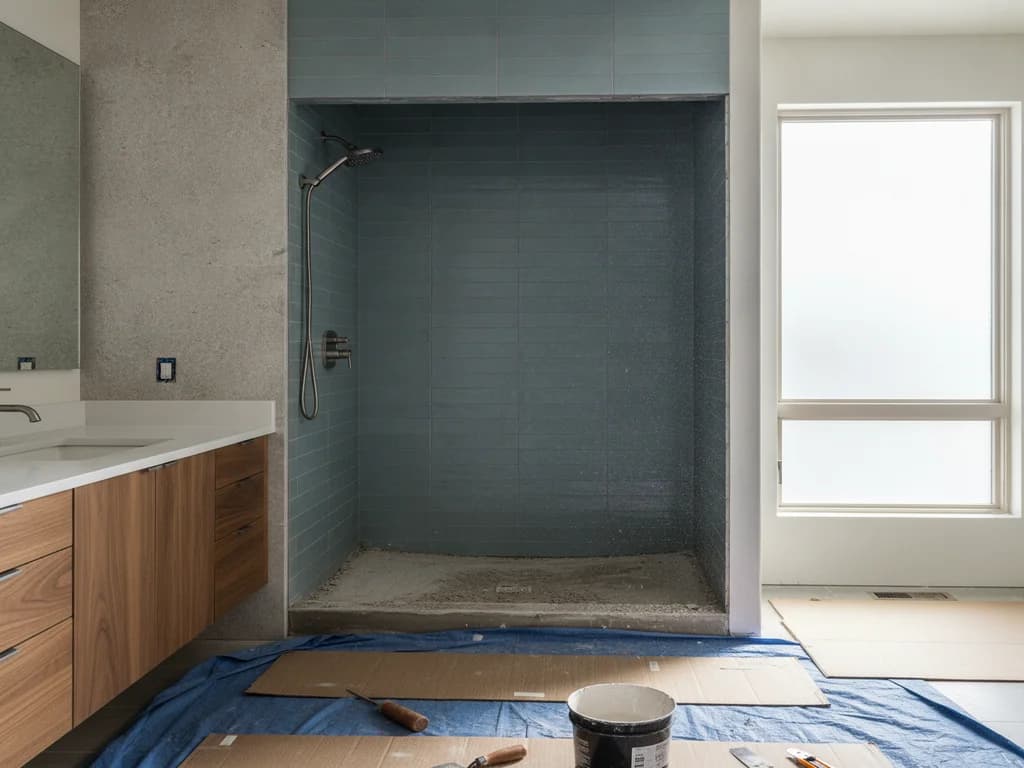
The pan is the highest-stakes piece. A mortar-bed or membrane pan that has cracked, or a preformed pan whose support has washed out, moves under body weight — that flex is the crackle you feel underfoot, and every cycle opens the failure further. A failed pan cannot be repaired from above; the floor comes out, and in most cases that decision cascades into the lower wall tile too.
If you are seeing the downstream evidence — stains, smells, swollen trim outside the shower — start with signs of bathroom water damage to gauge how far it has traveled. And if the question is whether the tile can stay while the pan is redone, replacing a shower pan without retiling gives that honest, usually-disappointing answer.
When maintenance or a targeted repair is enough
Plenty of tired showers do not need replacing. Grout that has aged evenly on a dry, solid assembly can be raked and regrouted; failed caulk joints get cut out and redone; a worn valve cartridge or showerhead swaps without touching tile. These are legitimate fixes when the structure underneath is sound — what a professional regrout involves is covered in replacing bathroom grout.
Fiberglass and acrylic units have their own maintenance tier: yellowing, dullness, and hard-water film — a fact of life with Treasure Valley water — are cosmetic. The unit keeps working. It crosses the line when the material cracks or the floor flexes, because patched structural cracks in fiberglass reopen.
The test that keeps repair money honest: a repair is worth it when it addresses the actual failure and the rest of the assembly has life left. Regrouting a shower whose pan is flexing is spending money to hide the evidence.
When replacement wins
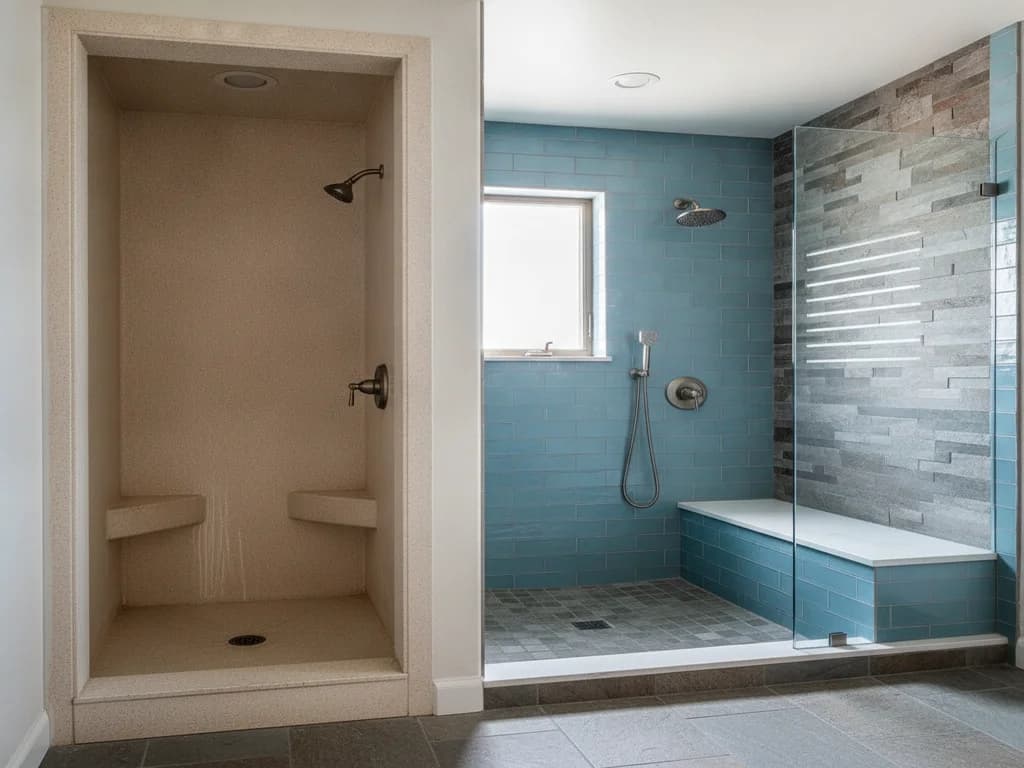
Replacement wins on any structural failure — pan flex, soft walls, a cracked unit, leaks below. It also wins on accumulation: when the grout, the caulk, the valve, and the door are all at end of life at once, sequential repairs cost real money and still leave you with an old shower. Builder-grade showers from the Valley’s 1990s and 2000s construction booms are hitting exactly that stage, often all at the same age in the same neighborhood.
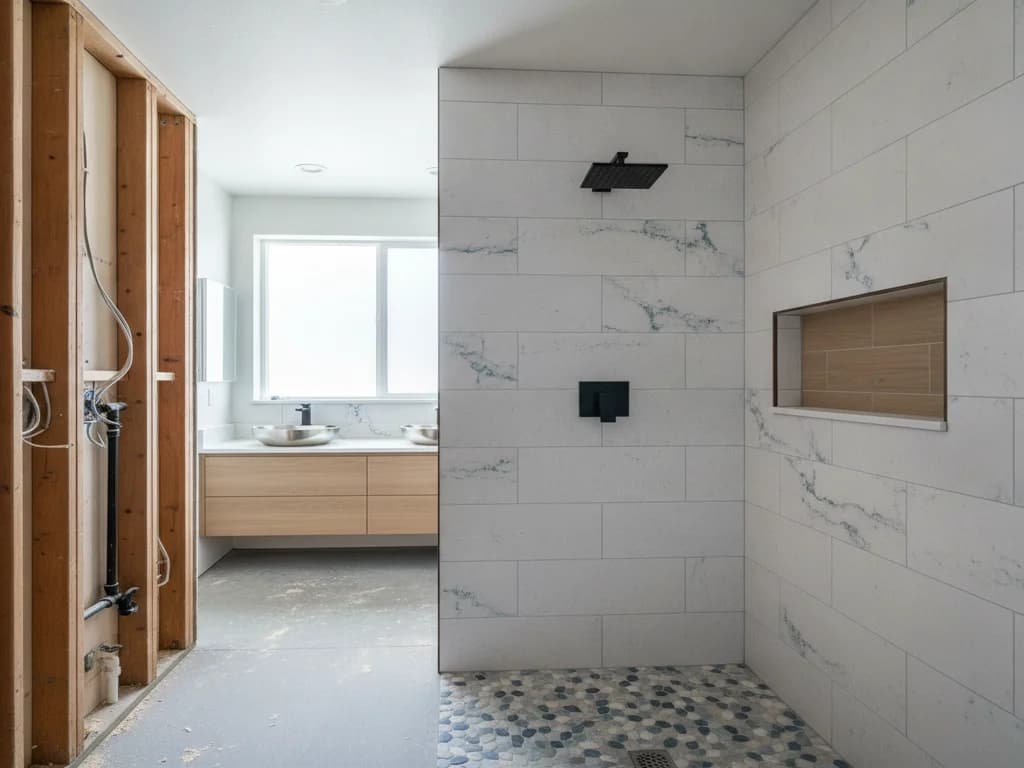
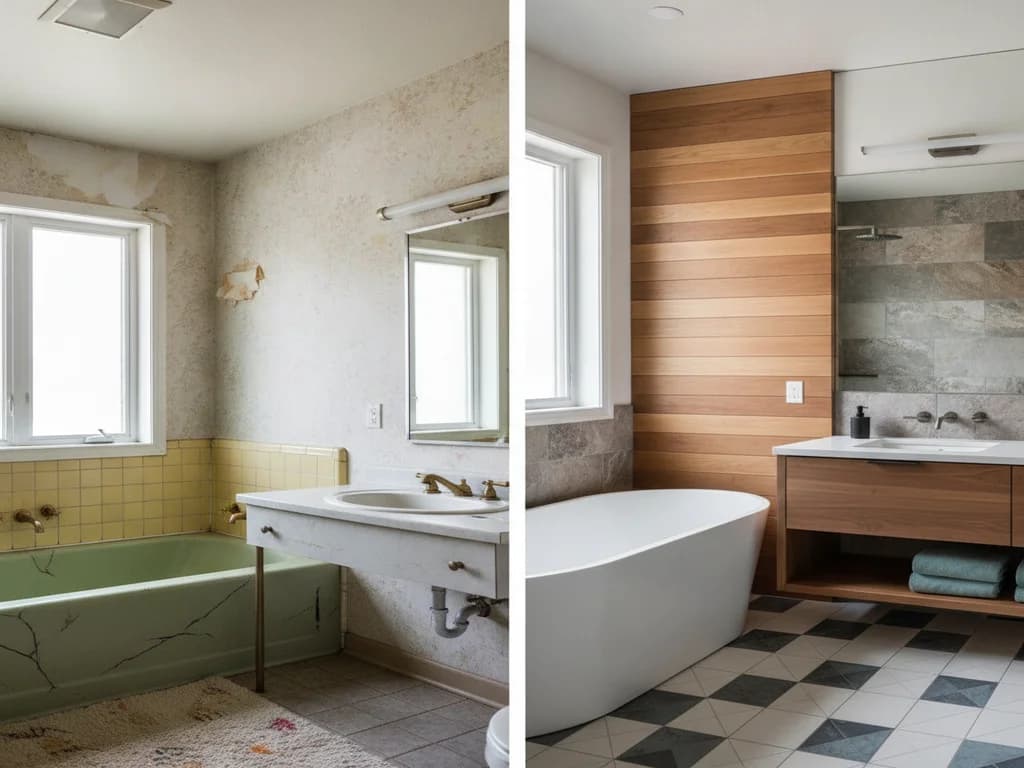
What replacement looks like depends on what is there now. A one-piece or prefab unit coming out in favor of something better is covered in replacing a fiberglass shower; a tiled shower being rebuilt with modern membrane waterproofing is covered in replacing shower tile. Either way, the valuable part of the new shower is the part you will never see — the waterproofing system going in behind the finish.
On cost: a full breakdown of what shower replacement runs in Boise is coming as its own guide. Until then, be skeptical of single-number estimates — scope swings widely with size, tile, glass, and what the demolition reveals — and get bids itemized.
When mobility needs change the answer
One more signal has nothing to do with failure: who uses the shower. A high curb, a narrow glass door, and no place to sit age worse than any grout line. If someone in the house is starting to negotiate with the shower — stepping carefully, gripping the door frame — that is a replacement signal in its own right, because safety features bolt on poorly but build in beautifully.
Replacement is the one moment a curbless entry, a bench, blocking for grab bars, and a handheld fixture cost almost nothing extra, since the floor and walls are already open. The CDC’s fall-prevention work identifies bathrooms as a primary fall location for older adults, which is why we treat this as a now-or-never design question on every replacement, covered fully in aging-in-place bathroom ideas.
Do not re-tile over a shower you might rebuild in two years
The most expensive path is the double project: cosmetic work now, structural replacement soon after. If the pan flexes, the walls sound hollow, or mobility needs are visibly approaching, put the money toward the rebuild — a fresh grout job does not carry over, and neither does a new door sized to the old opening.
How a contractor would call it
The on-site check is short: stand in the pan and feel for movement, tap the walls for hollow spots, read the grout for repeating crack patterns, look for water evidence below if there is access, and run the valve. Ten minutes separates a maintenance list from a replacement conversation.
The honest outcomes: renew grout, caulk, and fixtures on a sound shower and revisit in a few years; replace now when the pan, walls, or unit have structurally failed; and treat leaks below the shower as urgent regardless of how the shower itself looks. If your shower is throwing right-column signals, a free estimate will tell you which conversation you are actually in.
Ready to plan your Boise bathroom?
Licensed & insured · 3-year workmanship warranty
Frequently asked questions
- How long does a shower last?
- The finish and the system age differently. Grout and caulk need attention on a years-long cycle regardless of quality. The waterproofing system behind a tiled shower is built to last decades when installed correctly, while builder-grade fiberglass units generally fatigue sooner — flex and cracking mark the end. Age alone is a weak signal; a well-built 30-year-old shower can outlast a badly built 10-year-old one.
- Can I just regrout my shower instead of replacing it?
- Yes — if the assembly under the grout is sound. Regrouting renews a dry, solid shower whose grout has simply aged. It does not fix anything: if grout keeps cracking along the same lines, if tiles sound hollow, or if the floor flexes, the movement or moisture causing it lives behind the tile, and new grout will fail the same way. Diagnose why the grout failed before paying to redo it.
- Why does my shower leak even after re-caulking?
- Because the leak is probably not at the caulk. Water that shows up below or beside a shower despite fresh caulk is usually escaping through a failed pan, a failed membrane, or a plumbing connection inside the wall — paths caulk never touches. Repeated caulk failure at the same joint also signals movement in the assembly. Both point to the waterproofing system, which means diagnosis, not another tube of caulk.
- Is it worth replacing a fiberglass shower with tile?
- Often, yes — when the unit has cracked or the bathroom is getting a broader update anyway. A tiled shower built on modern membrane waterproofing outperforms and outlasts a builder-grade unit and transforms the look of the room. The honest counterpoint: a new acrylic unit is the budget path and a legitimate one when the goal is function over finish. The swap process is covered in our replacing-a-fiberglass-shower guide.
- Does replacing a shower require a permit in Boise?
- Usually, once the work goes past cosmetics. Replacing the valve, altering drain plumbing, rebuilding waterproofed walls, or converting the shower’s footprint is permitted, inspected work in Boise and neighboring Treasure Valley cities. A like-for-like fixture swap sits closer to the repair line, but scope has a way of growing once demolition starts — your contractor should confirm with the local building department before work begins.
- Should I wait and fold the shower into a full bathroom remodel?
- If the shower is merely dated and dry, waiting is free and bundling saves money — one mobilization, one permit, one disruption. If the shower is leaking or the pan is failing, waiting is not free: escaped water damages subfloor and framing on its own schedule. Fix active failures now; save the cosmetic ambitions for the remodel.
Sources
- Tile Council of North America (TCNA)
- This Old House — Bathrooms
- EPA — Mold
- CDC — Older Adult Fall Prevention
Claims and figures are drawn from the sources above and provided for general guidance; your project may vary. Photography is illustrative of design concepts. For a fixed price on your specific bathroom, request a free estimate.