Updated July 6, 2026 · 9 min read
By Boise Bath — bathroom & shower remodeling in Boise & the Treasure Valley
The short answer
The clearest signs of bathroom water damage are ceiling or wall staining, soft or spongy flooring, a persistent musty smell, failing or missing caulk, and loose or cracked tile. Cosmetic surface issues can be repaired, but soft floors, spreading stains, and musty odors usually mean moisture is already behind the wall and warrant opening it up.
Key takeaways
- Water damage shows up in a predictable order — first at seams and surfaces (caulk, grout, paint), then in structure (subfloor, studs) once moisture has been getting behind them for a while.
- A soft or spongy floor and a persistent musty smell are the two signs that most often mean the damage is already structural, not cosmetic.
- The EPA’s guidance is that “the key to mold control is moisture control,” and that water-damaged areas should be dried within 24–48 hours to prevent mold growth.
- Failing caulk and loose tile are the early, catchable signs; ignoring them is usually what lets a repair-sized problem become a remodel-sized one.
- This post is about reading the signs of water damage specifically — a narrower question than the broader “is it time to remodel?” checklist.
What the signs of water damage are actually telling you
Bathroom water damage almost never announces itself with a burst pipe and a puddle. Far more often it shows up slowly and quietly — a stain that wasn’t there last month, a floor that gives a little underfoot, a smell that a good cleaning doesn’t fix. Each of those is a symptom, and each one points to roughly where the water is and how long it’s been getting there. Learning to read them is the difference between catching a problem while it’s still a caulk-and-grout repair and discovering it after it’s become a subfloor-and-studs rebuild.
The pattern is fairly consistent: water damage tends to appear first at the seams and surfaces — the caulk lines, the grout, the paint — because those are the parts of the assembly designed to keep water out, and the first to fail. Only later does it reach the structure behind them: the subfloor under the tile, the studs and framing inside the wall. So the sign you’re looking at is also a rough clock. A little failing caulk is early. A spongy floor and a musty smell are late.
The five signs below are ordered roughly from surface to structure. For each, we’ll name the likely underlying cause and say plainly whether it’s typically a contained repair or a signal that a fuller remodel — opening the wall to see and dry what’s behind it — is warranted.
How this post differs from two related ones
This post is narrowly about the signs of water damage — what you’re looking at and what it means. Our 17 waterproofing mistakes post covers the construction-side failures that cause water damage in the first place (useful if you’re evaluating a contractor’s work), and our broader signs you need a bathroom remodel checklist treats water damage as just one of many remodel triggers alongside safety, function, and value.
1. Staining and discoloration
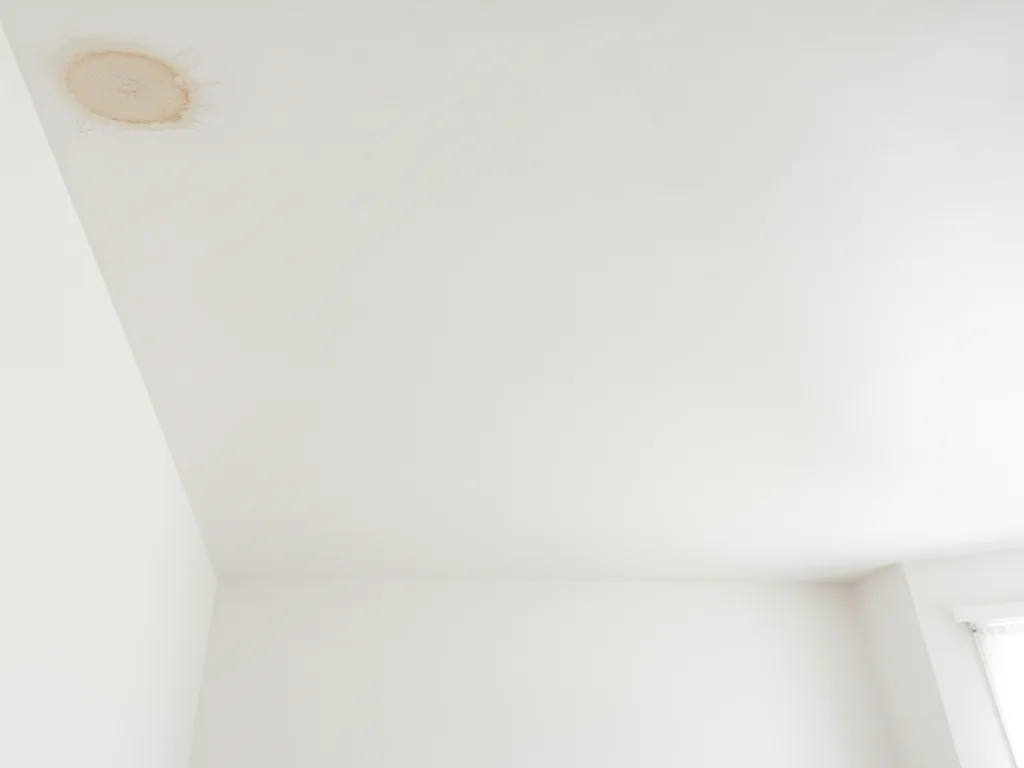
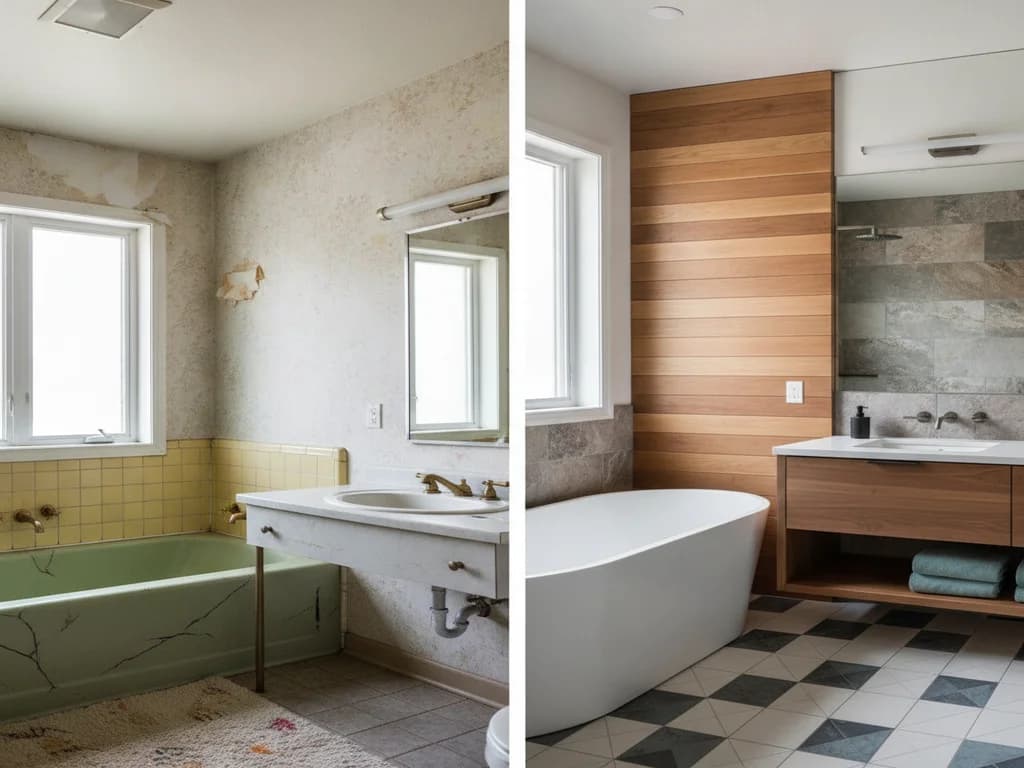
Brownish rings or blotches on a ceiling or wall, bubbling or peeling paint, and wallpaper that’s lifting at the seams all point to the same thing: water is reaching a surface that’s supposed to stay dry. A stain on the ceiling below an upstairs bathroom usually means a leak from the fixture, drain, or supply line above. Bubbling paint or lifting wallpaper on a bathroom wall — the kind pictured in the before-and-after below — means moisture is getting into the wall assembly and pushing the finish off from behind.
A stain is one of the more readable signs because you can often trace it. A stain directly under a shower or tub points at the enclosure’s waterproofing or the caulk. A stain on a ceiling points upward at whatever plumbing runs above it. What a stain can’t tell you on its own is how far the damage has spread behind the finish — a small stain can sit over a much larger wet area. If a stain is small, dry, and not growing, it may reflect a past event that’s already resolved; if it’s spreading, darkening, or reappearing after you paint over it, the source is still active and the wall likely needs to come open.
2. Soft or spongy flooring
A bathroom floor that flexes, gives, or feels spongy underfoot is one of the more serious signs on this list, because by the time you can feel it, the damage has usually already reached the structure. The tile or vinyl you’re standing on is only the surface; underneath is the subfloor — typically plywood or particleboard — and, as Bob Vila’s reporting on under-floor water damage puts it, that base material “absorbs water and begins to deteriorate and become uneven.” A floor that has gone soft is telling you the subfloor is rotting — we trace why bathroom floors go soft source by source in its own article.
This is rarely a surface-only fix. Water that has soaked a subfloor has usually been getting there for a while — often from a failed seal at the base of a toilet or shower, or from moisture wicking down through failed grout and tile. Addressing it properly means pulling up the finished floor to expose, dry, and often replace the affected subfloor before anything new goes down. If you’re feeling movement or sponginess, treat it as a “remodel now, don’t tile over it” signal rather than something to monitor.
3. A persistent musty smell
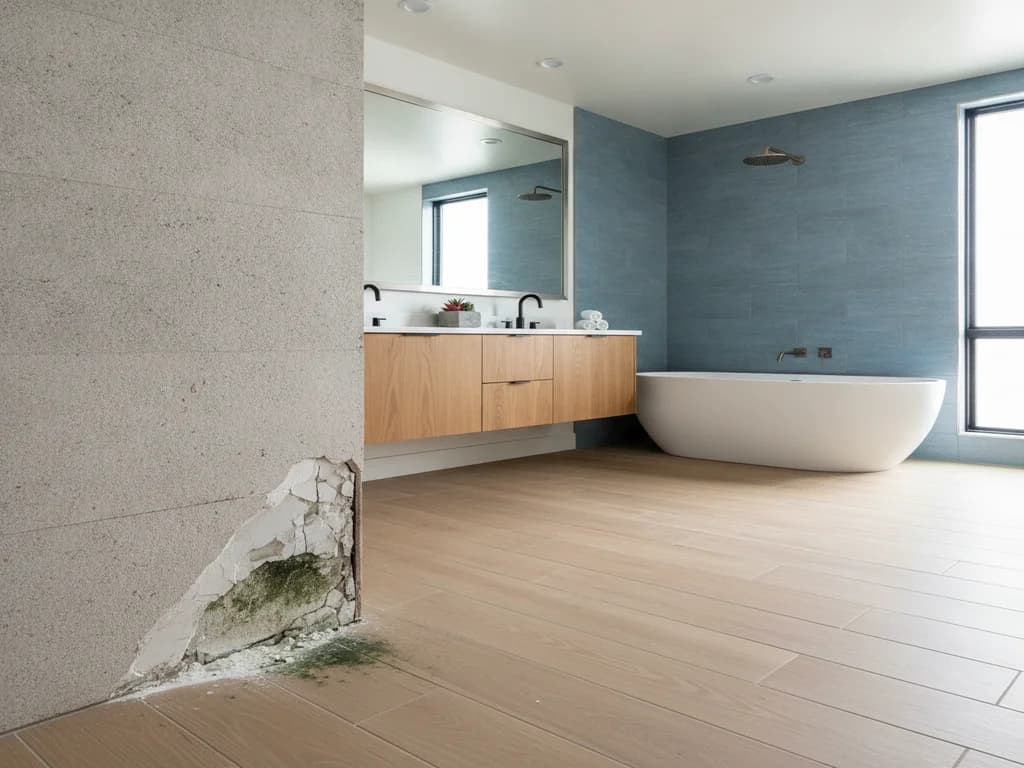
A musty, earthy smell that lingers after you’ve cleaned — and especially one you notice more than see — is a sign that moisture is trapped somewhere it shouldn’t be, feeding mold on materials behind the surfaces. The CDC notes that indoors, mold “will grow where there is moisture, such as around leaks in roofs, windows, or pipes,” and that it grows readily on exactly the materials a bathroom is built from — “drywall, carpet, fabric,” “paper, cardboard, ceiling tiles, and wood.” A musty smell with no visible mold usually means the growth is happening out of sight: behind the wall, under the floor, or inside the vanity cabinet.
The practical takeaway here is structural, not medical. The smell matters because it’s evidence of sustained hidden moisture, and sustained hidden moisture is what quietly degrades framing and substrate. The EPA’s guidance is direct: “the key to mold control is moisture control,” and water-damaged areas should be dried within 24–48 hours to prevent mold from taking hold. A one-off musty note after a long shower is ventilation; a smell that never fully leaves is a source that hasn’t been found. Good bathroom ventilation reduces everyday humidity, but it won’t fix a leak that’s already wetting materials inside the wall.
4. Failing or missing caulk
The flexible caulk line where a tub or shower meets the wall or floor is a wear item — it’s meant to seal a joint that moves slightly with use and temperature, and it doesn’t last forever. When it yellows, shrinks, cracks, or pulls away and leaves a gap, water stops being turned away at the seam and starts running behind the surround, into the studs and framing. Catching this is one of the genuinely good-news signs on the list, because failing caulk spotted early is a small, cheap fix before any real damage is done.
The catch is that caulk failure is easy to ignore, and ignoring it is often the first link in the chain that ends in a rotted subfloor or a stained ceiling below. A missing or gapping bead at a wet joint means assume water is getting behind it. If the caulk is simply old and the surfaces behind it are still sound, re-caulking is a maintenance task; if water has already been tracking through the gap for a while, you may be dealing with the soft floors or musty smell above, and the fix gets bigger. Our caulking guide covers where these seams fail and how they’re meant to be sealed.
5. Loose or cracked tile
Tiles that shift, sound hollow when tapped, or have cracked and missing grout are usually telling you the bond underneath has already been compromised by moisture. Grout is not waterproof, and once water gets through failed grout to the layer beneath, it works on the adhesive holding the tile down. As the under-floor reporting notes, tile water damage shows up as “discolored grout lines or loosened tiles due to the weakening of adhesive bonds” — the trapped moisture causes “the adhesive bond that holds these floorings in place to weaken.” A tile that lifts off is a tile whose substrate is wet.
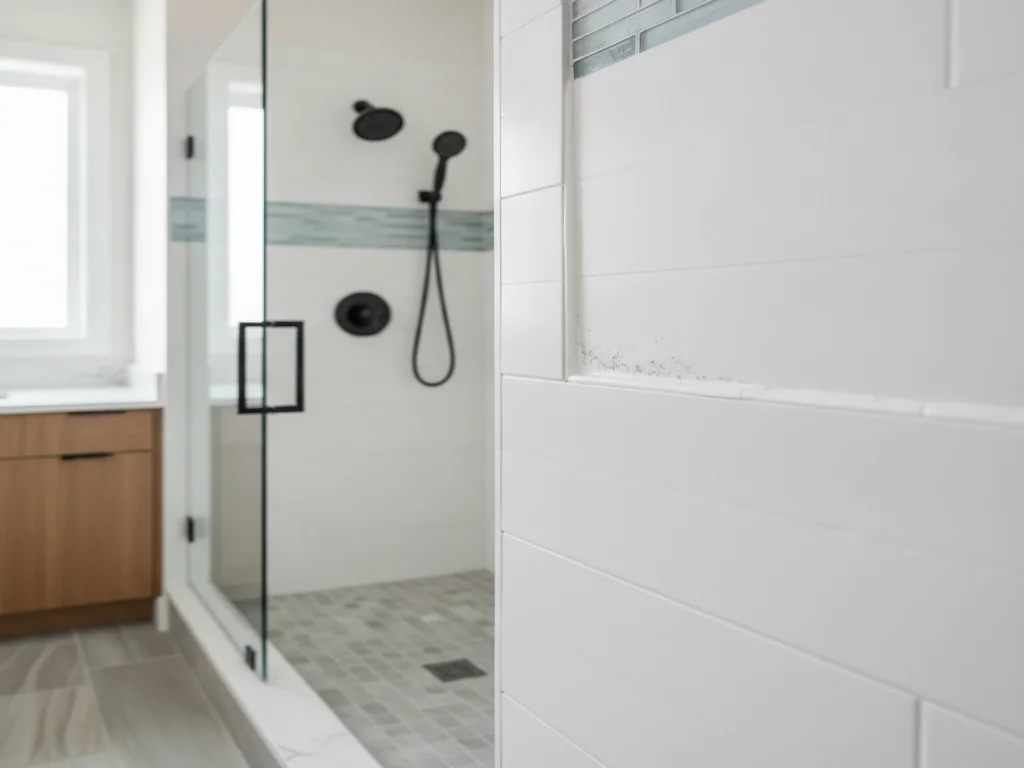
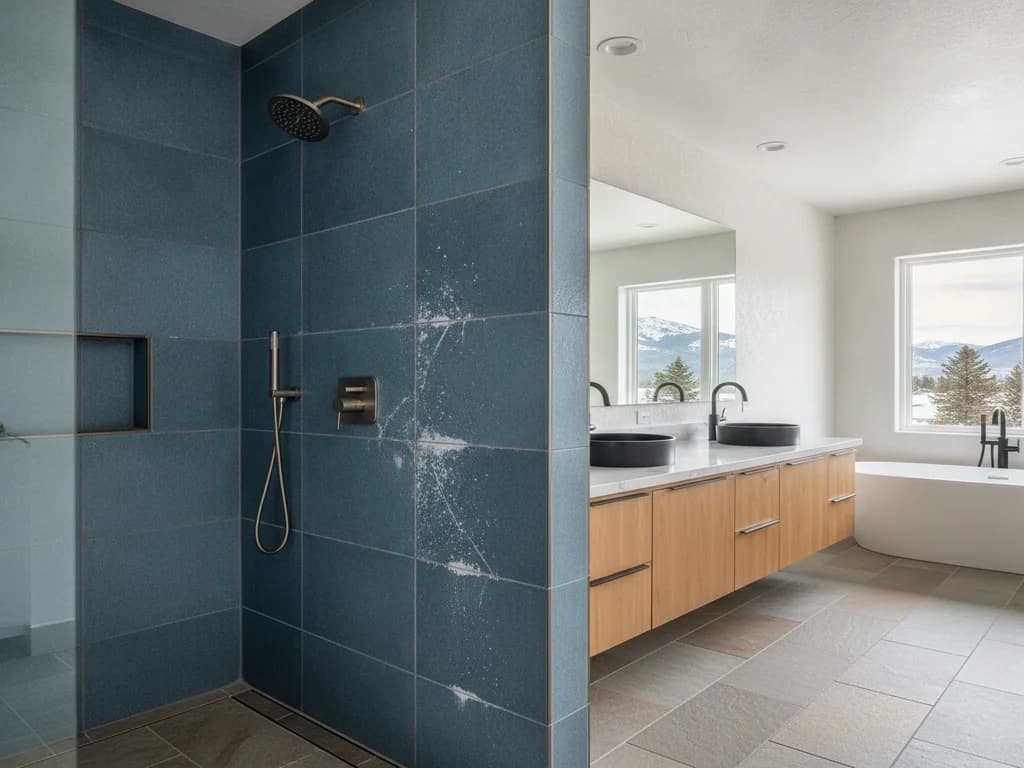
Cracked grout on its own can sometimes be raked out and repaired if it’s caught early and the substrate is still sound. But loose or drummy tile — tile that has detached from what’s under it — generally means the problem is below the surface, not at it, and patching the visible grout won’t reach it. On a shower wall, staining that streaks along the grout lines, like the mineral-like pattern pictured below, is worth having a professional evaluate in person; on its own a photo doesn’t prove active damage, but that pattern is a reasonable prompt for a closer look. When tile is moving, plan on opening the assembly to find out what the water has done to the wall or floor behind it.
Repair now vs. remodel now: reading severity
Not every sign means the same thing. The rough rule is that surface signs caught early are repairs, while signs of moisture that’s already reached the structure are remodels. The table below sorts the five signs by what they usually mean — though any sign that keeps coming back after a repair is a source that hasn’t truly been fixed, and that always warrants opening things up.
| Sign | Likely cause | Usual scope |
|---|---|---|
| Failing / missing caulk | Worn seal at a moving wet joint | Repair — re-caulk if surfaces behind are sound |
| Cracked grout (tile still tight) | Grout wear letting water reach the substrate | Repair if caught early and substrate is dry |
| Staining / bubbling paint | Water reaching a finish from behind | Repair if isolated and dry; open wall if spreading |
| Loose / drummy tile | Moisture has weakened the tile bond | Remodel — open the assembly to inspect and dry |
| Soft / spongy floor | Subfloor absorbing water and rotting | Remodel — replace affected subfloor |
| Persistent musty smell | Trapped moisture feeding hidden mold | Remodel — find and dry the source |
General guidance, not a diagnosis — an in-person assessment is the only way to confirm how far a given sign has spread.
What to do when you spot the signs
If what you’re seeing is early — a bead of failing caulk, a bit of cracked grout, an isolated dry stain — the move is to fix the source promptly and keep an eye on it, because the whole point of reading these signs is to act while the problem is still small. If what you’re seeing is a soft floor, a smell that won’t leave, or tile that has come loose, the honest answer is that the damage is likely already behind the surface, and the responsible fix involves opening things up to see and dry what’s there before rebuilding.
The reason this matters financially is that hidden water damage is one of the most common ways a remodel’s scope grows mid-project — you can’t price rot you haven’t exposed yet, which is exactly why it shows up in our rundown of bathroom remodel hidden costs. Finding it deliberately, on your terms, is almost always cheaper than finding it by accident later.
If you’ve spotted one or more of these signs and want a professional to tell you whether it’s a repair or a rebuild, request a free estimate. We’ll assess what the sign is actually telling you and give you an honest scope — not every musty smell is a gut job, and not every soft spot is minor.
Ready to plan your Boise bathroom?
Licensed & insured · 3-year workmanship warranty
Frequently asked questions
- How can I tell if bathroom water damage is behind the wall or just on the surface?
- Surface signs like a bit of failing caulk or an isolated, dry stain often reflect a contained problem. Signs that point behind the wall include a soft or spongy floor, a musty smell with no visible source, loose tile, and stains that spread or reappear after painting over them. Those usually mean opening the assembly to inspect and dry it.
- Does a musty bathroom smell always mean there’s mold?
- Not always, but a musty smell that lingers after cleaning is a strong sign of trapped moisture, and the CDC notes mold grows readily on bathroom materials like drywall and wood wherever moisture sits. The practical concern is structural: a persistent smell means a moisture source hasn’t been found and dried, which is what quietly damages framing and substrate over time.
- Is a soft bathroom floor something I can just tile over?
- No. A soft or spongy floor means the subfloor underneath has absorbed water and is deteriorating, so tiling over it just hides an active problem and the new surface will fail too. The correct fix is to remove the finished floor, expose and dry (usually replace) the affected subfloor, then rebuild — which is why a soft floor is a remodel signal, not a repair.
Sources
- EPA — Mold and Health (moisture control)
- CDC — About Mold (moisture and where mold grows)
- Bob Vila — Signs of Water Damage Under the Floor
Claims and figures are drawn from the sources above and provided for general guidance; your project may vary. Photography is illustrative of design concepts. For a fixed price on your specific bathroom, request a free estimate.