Updated July 5, 2026 · 9 min read
By Boise Bath — bathroom & shower remodeling in Boise & the Treasure Valley
The short answer
The most common hidden bathroom remodel costs are rotted subfloor, corroded or old supply plumbing, outdated electrical, mold behind tile, notched or drilled floor joists, and code-required upgrades (permits, GFCI, venting) triggered once walls open. None are guaranteed, but Today's Homeowner and NerdWallet both recommend a 10–20% contingency because at least one commonly appears.
Key takeaways
- A bouncy floor or dark staining near the toilet or shower is the classic sign of rotted subfloor — a common discovery once old flooring comes up.
- Today's Homeowner (2026) prices mold remediation at $500–$1,500, plumbing leak repair at $150–$800, and old electrical updates at up to $2,500 on average.
- Permits and code-required upgrades (plumbing, electrical, mechanical/venting) are triggered by what the remodel touches, not by the room's size — see the City of Boise's own permit guidance for what qualifies.
- NerdWallet lists demolition and water-damage repair as costs that surface only once the room is opened, which is why they are absent from most upfront quotes.
- A 10–20% contingency, recommended by Today's Homeowner, is the standard way to plan for these without it derailing the rest of the budget.
Why do bathroom remodels find surprises behind the walls?
A bathroom is the wettest room in the house, which means it is also the room most likely to be hiding water damage nobody could see until the tile or flooring comes up. The tile, the vanity, and the fixtures are all priced up front because they are visible. What is not priced up front is what is behind them — and that is where a solid quote can still grow mid-project.
This matters most in Boise's older neighborhoods — the North End, the Bench, and other homes built well before current plumbing and electrical codes existed. A remodel on a house from that era is statistically more likely to uncover at least one of the items below than a remodel in a home built in the last two decades, simply because more decades means more time for small leaks, old materials, and outdated wiring to accumulate unnoticed.
None of the 8 items below are guaranteed to happen in your bathroom. But contractors plan for at least one of them showing up on almost every full remodel that opens walls or floors, which is exactly why a contingency line exists in every honest bid.
The rule that protects your budget
Today's Homeowner recommends setting aside 10–20% of your total budget for unexpected repairs. That single line item is what keeps any one surprise below from forcing you to cut something that actually matters to the finished room.
1. Rotted subfloor
This is the most common hidden discovery in a bathroom remodel. Years of small leaks around a toilet base, tub, or shower pan can rot the plywood subfloor underneath without ever showing on the surface — until the old flooring is pulled up. A bouncy or soft-feeling floor, or dark staining near the toilet or shower, is the classic warning sign before demo even starts. Replacing rotted subfloor is a straightforward repair once it is found, but it is not something a quote can price before the old floor comes up.
2. Old or corroded supply plumbing
Older Boise homes — especially in the North End and Bench neighborhoods — sometimes still carry original galvanized steel supply lines, which corrode from the inside over decades and restrict water flow long before they visibly leak. When a remodel opens the wall around a tub or shower valve, finding a section of old, corroded pipe is common enough that most contractors plan for it. Today's Homeowner (2026) prices a typical plumbing leak repair at $150–$800; a larger section of old supply line found mid-remodel scales from there depending on how much has to be replaced.
3. Outdated or insufficient electrical
Bathrooms built or last updated decades ago often predate GFCI protection or simply were not wired for the lighting and ventilation a modern remodel adds. Today's Homeowner (2026) prices updating old electrical at up to $2,500 on average. This is also one of the clearest code triggers: adding outlets, fixtures, or rewiring requires an electrical permit under most municipal codes, including Boise's — see our Boise permit guide for specifics.
4. Mold and hidden water damage
Water damage is one of the most common problems found once a bathroom remodel opens up, and it often travels with mold once moisture has been trapped behind tile or drywall for long enough. Today's Homeowner (2026) prices mold and mildew remediation at $500–$1,500. Because mold spreads along whatever moisture reached, the true cost depends on how far it traveled — which is unknowable until the wall is open.
5. Notched, drilled, or damaged floor joists
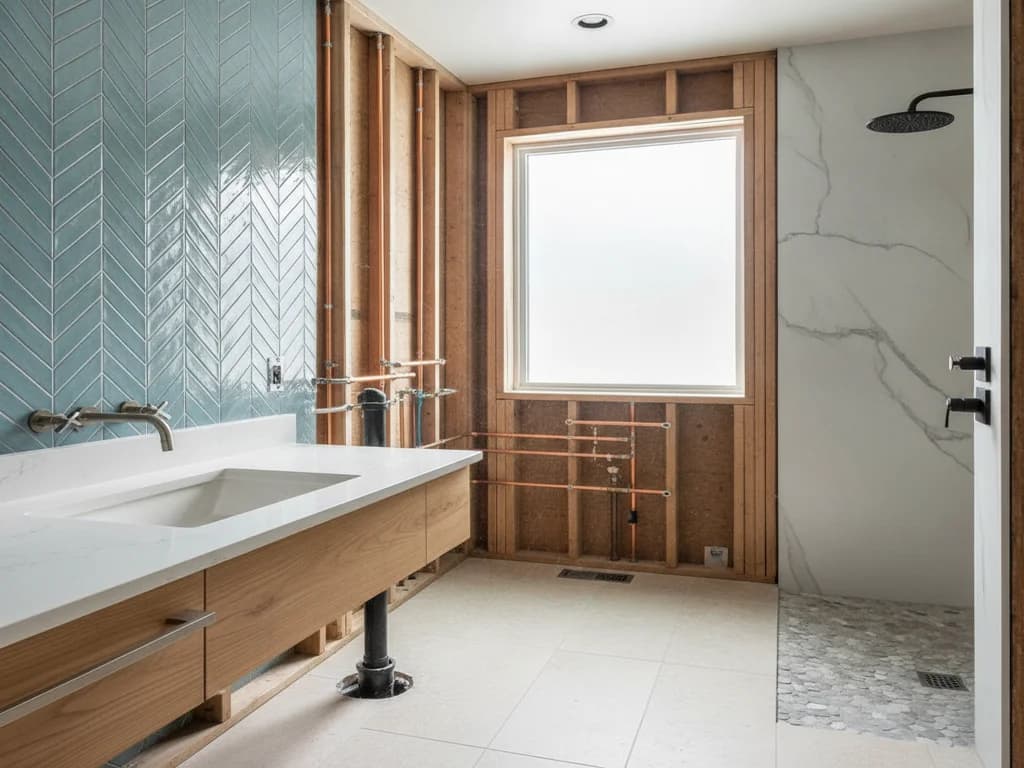
It is common to find floor joists that were cut, drilled, or notched over the years to route plumbing or wiring — sometimes beyond what the framing can safely tolerate. Reinforcing a joist is a manageable fix once it is found, but like subfloor rot, it is not visible or quotable until the floor is opened, and it is one of the reasons a "simple" refresh can turn into a bigger structural repair once work begins.
6. Ventilation and code-required upgrades
Modern building codes require bathroom exhaust air to vent directly outdoors rather than into an attic or crawl space, and a remodel that touches the ceiling or exterior wall often has to bring an old, non-compliant vent run up to current code. ENERGY STAR separately notes that a properly sized, efficient exhaust fan protects the room from the moisture that causes the very problems above — mold, rot, and corrosion — so this is one hidden cost that is also cheap insurance against several others on this list.
7. Permits triggered by what the remodel touches
Permit costs are not fixed by the size of the remodel — they are triggered by scope. The City of Boise requires a plumbing permit for relocated pipes or new fixtures, an electrical permit for new circuits or rewiring, a mechanical permit for venting work, and a building permit if sinks, tubs, or showers are relocated or if structural walls change. A remodel that starts as a cosmetic refresh can cross into permit territory the moment a hidden problem (like corroded supply lines or a moved drain) forces a plumbing change — see our full Boise permit guide for what qualifies and what does not.
8. Demolition and disposal beyond the original scope
NerdWallet's 2026 cost data separately lists demolition ($1,000–$2,300) as its own line item, distinct from the finish work. When hidden damage is found — rotted subfloor, a joist that needs sistering, an old vent that has to be rerouted — the demolition scope usually grows with it, since reaching the problem often means removing more of the existing floor or wall than originally planned.
The 8 hidden costs at a glance
Not every remodel finds every item below — most find one, some find none, and older homes tend to find more than one at once. This table is meant as a planning reference, not a prediction for your specific bathroom.
| Hidden cost | Typical range | Source |
|---|---|---|
| Rotted subfloor repair | Scales with area affected | Today's Homeowner |
| Old/corroded plumbing repair | $150–$800 (typical leak repair) | Today's Homeowner |
| Outdated electrical update | Up to $2,500 on average | Today's Homeowner |
| Mold/mildew remediation | $500–$1,500 | Today's Homeowner |
| Joist reinforcement | Scales with damage found | General framing practice |
| Ventilation/code upgrade | Varies by scope | ENERGY STAR, City of Boise |
| Added permits | $100–$1,000 (building), plus trade permits | City of Boise, NerdWallet |
| Extra demolition/disposal | $1,000–$2,300 baseline, scales up | NerdWallet |
Ranges reflect typical repair costs when an issue is present, not the likelihood of finding it. A 10–20% contingency, per Today's Homeowner, is the standard way to plan for whichever items (if any) appear.
How to budget for what you cannot see yet
You cannot price what is behind the wall before it is open, but you can plan for the likelihood that something will be. Today's Homeowner's recommended 10–20% contingency is the standard tool for this — set it aside before the project starts, and it absorbs whichever of the 8 items above (if any) actually shows up, without forcing a cut somewhere that matters to the finished room.
Our Boise bathroom remodel cost guide covers the upfront pricing side of the budget, and a full bathroom remodel with us includes an in-person assessment before we finalize scope, specifically so fewer of these surprises turn into mid-project change orders. Request a free, itemized estimate to start that conversation.
Ready to plan your Boise bathroom?
Licensed & insured · 3-year workmanship warranty
Frequently asked questions
- What are the most common hidden costs in a bathroom remodel?
- The most common are rotted subfloor, old or corroded supply plumbing, outdated electrical, mold behind tile, damaged floor joists, and code-required upgrades like venting and permits triggered once the walls or floor are opened. None are guaranteed, but at least one commonly appears in older homes.
- How much should I budget as a contingency for hidden bathroom remodel costs?
- Today's Homeowner recommends setting aside 10–20% of your total remodel budget as a contingency for unexpected repairs. That range is meant to absorb whichever hidden issue — subfloor, plumbing, electrical, or mold — shows up, without forcing you to cut a decision that matters to the finished room.
- Does finding hidden damage always require a permit?
- Not always, but it often does. In Boise, relocating plumbing, adding or rewiring electrical, or altering structural framing all require a permit under the City of Boise's building code, even if the original scope of your remodel was purely cosmetic. Finding corroded supply lines or a damaged joist can push a cosmetic refresh into permit territory.
Sources
- Today's Homeowner — Bathroom Remodel Cost (2026)
- NerdWallet — Bathroom Remodel Cost (2026)
- ENERGY STAR — Ventilating Fans
- City of Boise — Homeowner's Guide to Residential Construction
Claims and figures are drawn from the sources above and provided for general guidance; your project may vary. Photography is illustrative of design concepts. For a fixed price on your specific bathroom, request a free estimate.