Updated July 16, 2026 · 8 min read
By Boise Bath — bathroom & shower remodeling in Boise & the Treasure Valley
The short answer
A soft or spongy bathroom floor almost always means water has reached the wood subfloor and it is swelling, delaminating, or rotting. The most common sources are a leaking toilet wax ring, failed tub caulk, and shower-threshold splash. It will not firm back up on its own — the wet decking has to be found, dried, and usually replaced.
Key takeaways
- Softness underfoot is a subfloor symptom, not a flooring symptom — the finish floor is riding on swollen or rotted decking below.
- The rot follows the water sources: a crescent around the toilet, a strip along the tub edge, and a patch at the shower threshold are the three classic patterns.
- By the time a floor feels soft, the leak has usually been active for months — plywood and OSB take sustained wetting to lose stiffness.
- A rocking toilet plus a soft ring around it is the single most common combination, and it points to the wax-ring seal or the flange.
- Softness that extends wall to wall, or a floor that visibly sags, can mean joist damage — a structural repair, not just new decking.
- The leak gets fixed first, always. New subfloor over an active leak is the same failure on a delay.
What a soft bathroom floor is actually telling you
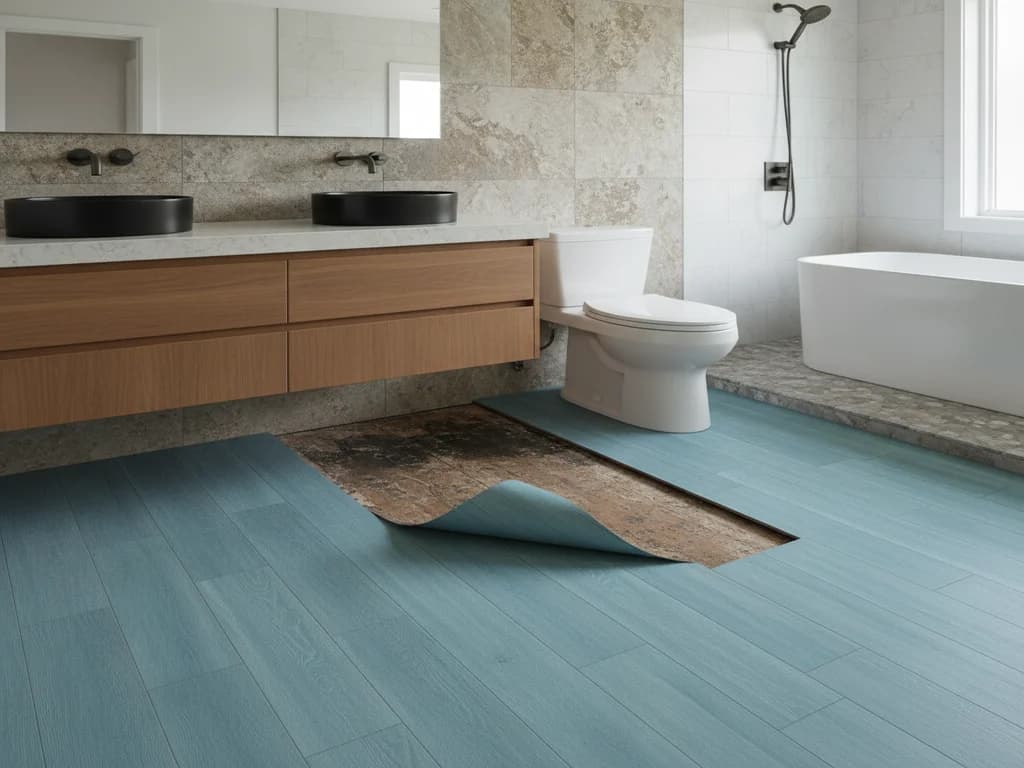
Flooring does not go soft. Tile, vinyl, and laminate are all rigid materials — when the floor gives under your heel, what is flexing is the wood structure underneath: the plywood or OSB subfloor, and in bad cases the joists below that. Softness means that wood has been wet long enough to swell, delaminate, or rot, and it has lost the stiffness it was installed with.
That timeline matters for how you should read the symptom. Subfloor panels shrug off a single splash; they fail from repeated or continuous wetting over weeks and months. So a floor that feels soft today is reporting a leak that started a while ago — and per the EPA, mold can establish on damp wood within 24–48 hours, which means the moisture problem and the air-quality problem usually arrive together.
The good news is that bathroom subfloor damage is predictable. Water comes from a short list of fixtures, so the rot shows up in a short list of places. Mapping where the floor is soft tells you, with decent reliability, what is leaking.
The rot map: where softness shows up and what each spot means
Press around the room with your heel or a fingertip and note where the floor gives. Each zone has a usual suspect.
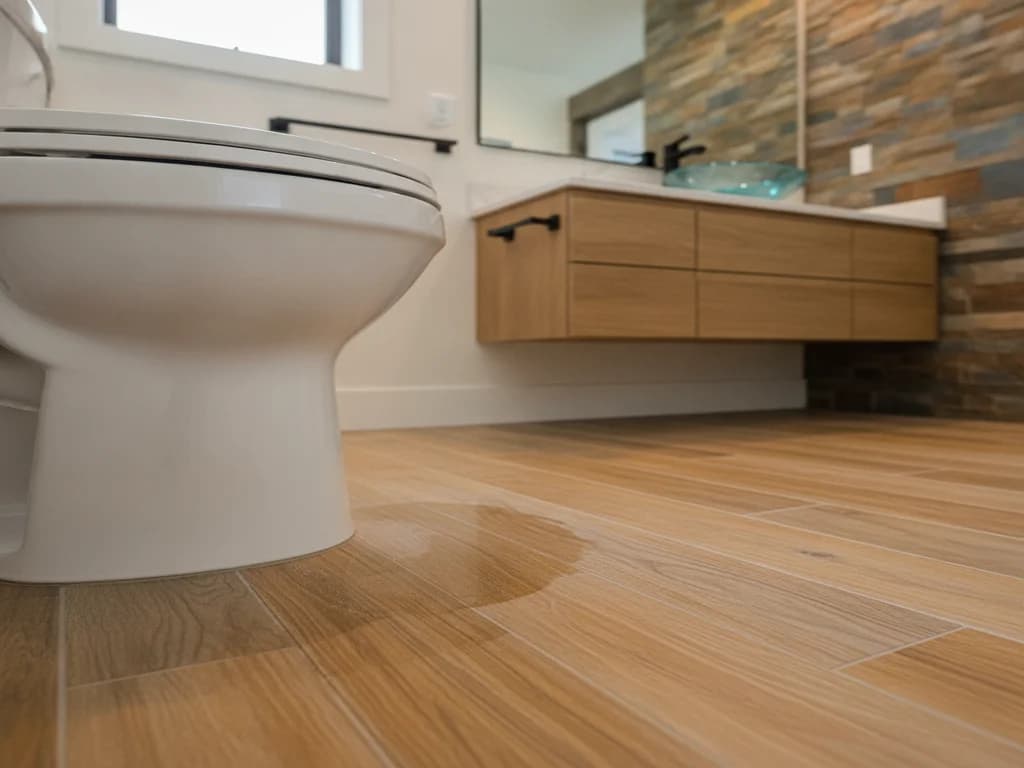
- A crescent or ring around the toilet — the most common pattern by far. A failed wax ring, a cracked or corroded flange, or condensation running off the tank wets the decking in a halo around the flange. If the toilet also rocks, the swollen or rotted wood has let the flange bolts lose their grip. Our breakdown of a toilet leaking at the base covers that failure in detail.
- A strip along the tub edge — aged or split caulk at the tub-to-floor joint lets daily splash wick under the flooring. The soft zone runs parallel to the tub, usually widest near the faucet end where the most water lands.
- A patch at the shower threshold — water escaping past a curb, a leaking door sweep, or a failed pan liner corner wets the decking just outside the shower. If this spot is soft, read our guide to the signs of a leaking shower, because the threshold is often just the visible edge of a larger pan problem.
- Under or beside the vanity — a slow supply-line weep or a drain connection dripping inside the cabinet. This one hides longest because the cabinet base conceals the wet decking.
- Random middle-of-the-room softness with no fixture nearby — the outlier. Think plumbing routed under the floor, a leak traveling along the subfloor from another source, or in older homes, decking that was undersized for its joist spacing from day one.
How bad is it? A severity triage
Not every soft spot is a torn-out floor. The honest scale runs roughly like this:
Minor — one localized soft spot, no sag visible, no staining on the ceiling below (if there is a room below). The decking is swollen or delaminated in a small area. This is typically a cut-and-patch repair: the damaged section comes out, new decking goes in, and the flooring above gets redone.
Moderate — softness across a wider area, a toilet that rocks, dark staining or a musty smell, flooring that is discoloring or lifting at the edges. Expect more decking to come out than the soft zone suggests; wet wood extends beyond where it flexes. This is the territory covered in our guide to replacing a rotten bathroom floor.
Serious — the floor visibly dips or slopes, softness spans much of the room, or you can see water staining on framing from below. At this point the rot may have reached the joists, and the job graduates from decking replacement to structural repair. It is also the point where fixing the floor alone stops making sense — more on that below.
The one symptom that should skip the wait-and-see phase
A toilet that rocks on a soft floor. The rocking works the wax seal, the working seal leaks more, and the leak feeds the rot in a loop that only accelerates. If the toilet moves and the floor around it gives, have it pulled and the flange area inspected now — this failure compounds weekly, not yearly.
Why you cannot see the damage from above
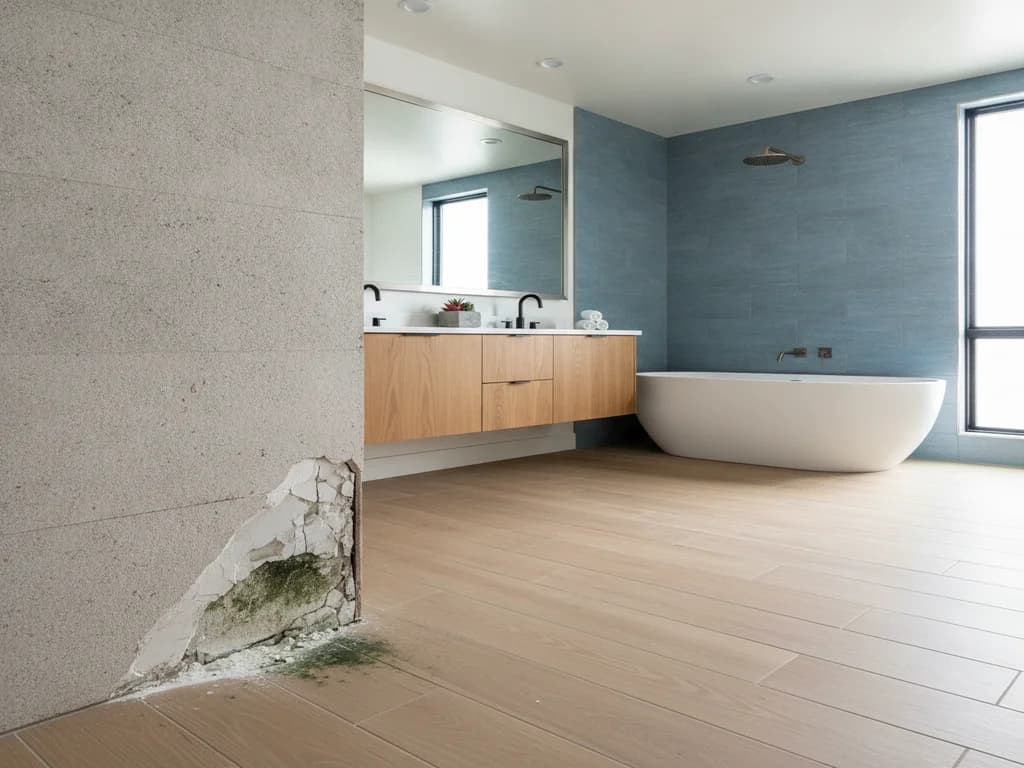
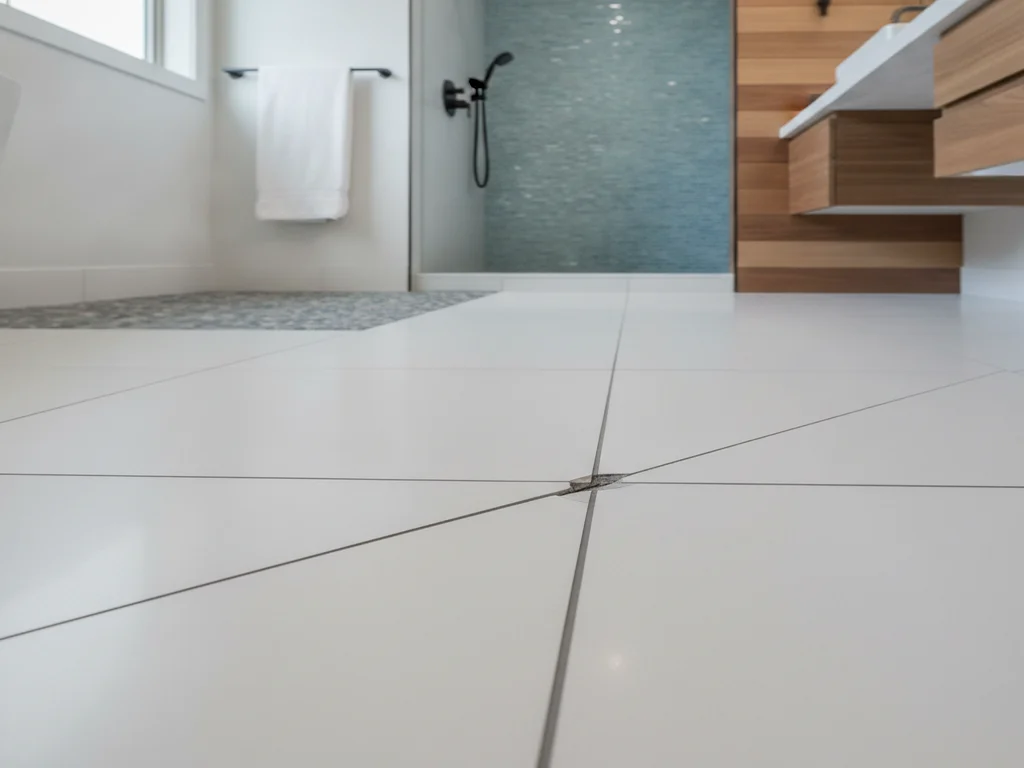
The frustrating part of subfloor rot is that the finish floor hides almost all of it. Vinyl and laminate are vapor-tight lids: water that gets beneath them cannot dry upward, so the decking stays wet and the surface looks fine. Tile is worse — the tile and mortar bed stay rigid over surprisingly rotten wood, right up until grout lines crack or tiles pop loose, which is why a soft floor and cracking tile often turn out to share a cause.
That is also why the visible symptoms lag so far behind the damage. Discolored flooring edges, a musty smell, grout cracks, a rocking fixture — each of these usually means the wetting has been under way for months. The full symptom checklist is in our rundown of the signs of bathroom water damage.
If there is a room below the bathroom, check its ceiling — a stain or bubbled paint under the fixture zone is often the earliest external evidence and tells a pro roughly where to open up.
What a professional inspection actually involves
Diagnosing a soft floor is mostly about finding the water path, and a contractor has three moves you do not.
First, a moisture meter. Pin or pinless readings across the floor map the wet zone precisely — including where it extends beyond the soft area — and distinguish an old, dried event from an active leak. Second, pulling the toilet. Ten minutes of work exposes the flange, the wax ring, and the most rot-prone decking in the room for direct inspection. Third, opening a small section — lifting flooring at the worst spot or cutting an inspection hole from below — to see the decking and joist condition directly.
The inspection answers the two questions that set the scope: is the leak still active, and how far does the damage run? Everything about the repair — and the price — follows from those two answers.
Repair or remodel? How the decision actually falls
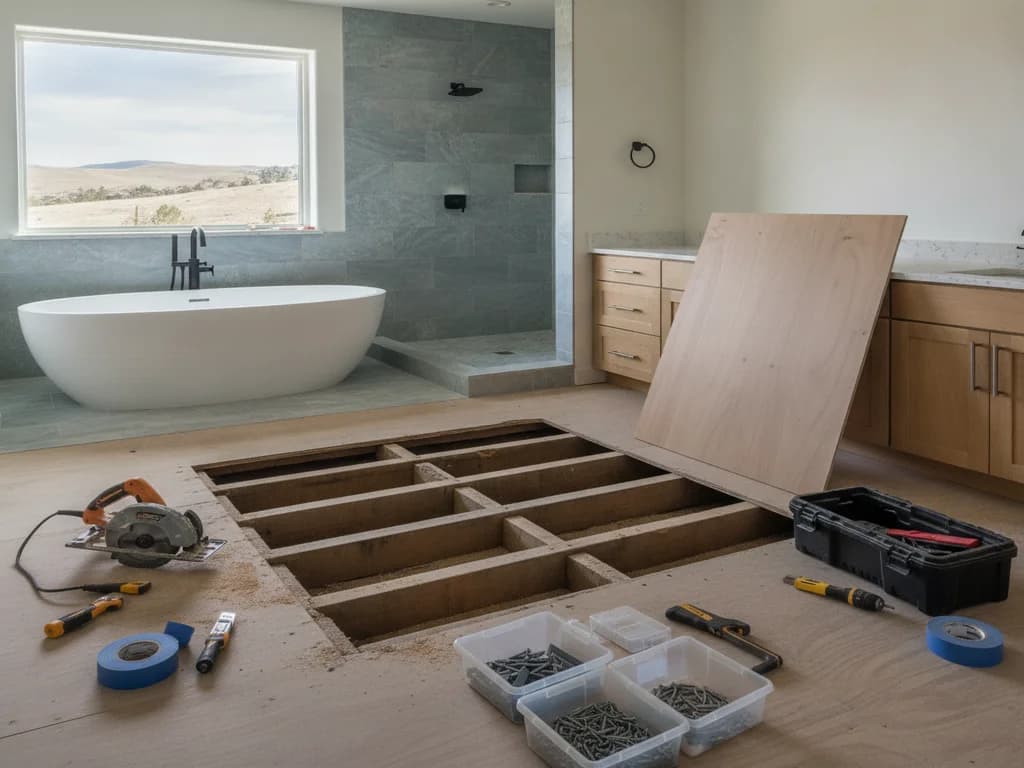
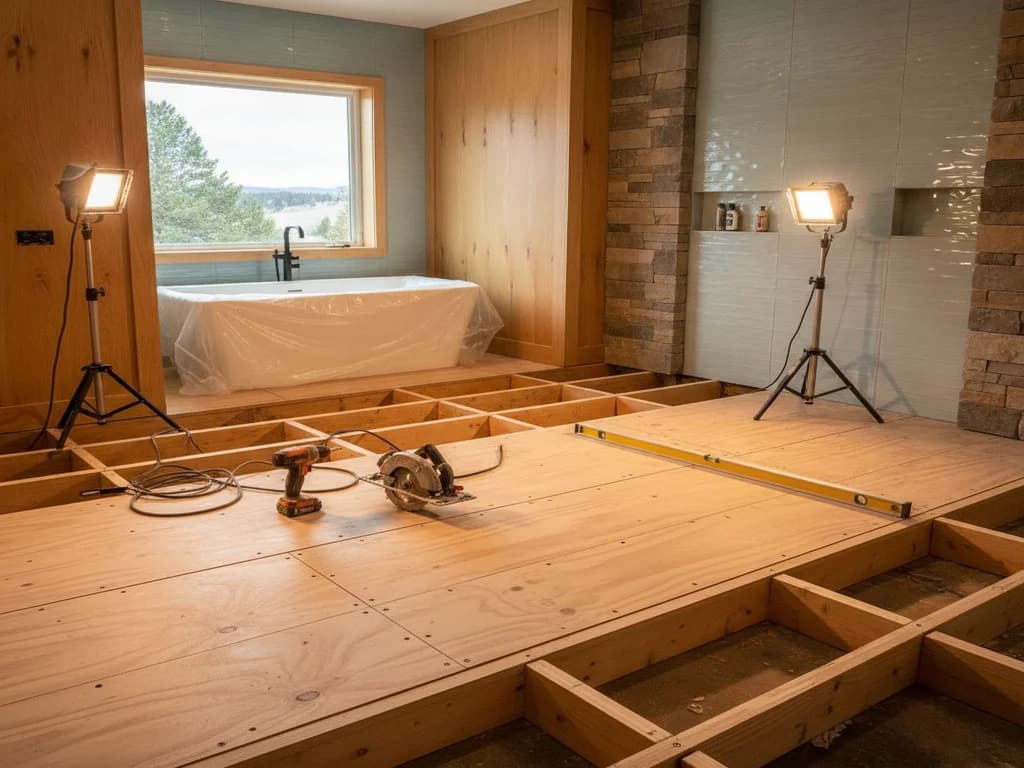
The repair path is straightforward when the damage is contained: fix the leak, cut out the compromised decking back to sound wood and solid bearing, install new subfloor, and rebuild the finish floor. What that involves step by step is covered in our guide to replacing a bathroom subfloor, and the budget side — typically in the high hundreds to a few thousand dollars depending on extent and flooring type, per HomeAdvisor cost data — lives in the subfloor replacement cost guide.
The math changes when the damage is broad. If most of the floor is coming out anyway, the toilet is already pulled, and the tub or shower caused the leak in the first place, you are a meaningful fraction of the way into a full bathroom remodel — demolition is a large share of that project, and the rot just did some of it for you. Rebuilding the same aging bathroom on top of brand-new decking is a legitimate choice, but it should be a choice, not a default.
The honest dividing line: contained damage with a fixable leak favors repair; widespread damage, joist involvement, or a failing shower or tub as the source favors folding the fix into a remodel, so the water problem and the room get solved once, by one contractor, under one warranty.
Ready to plan your Boise bathroom?
Licensed & insured · 3-year workmanship warranty
Frequently asked questions
- Why does my bathroom floor feel soft near the toilet?
- A soft ring around the toilet almost always means the wax-ring seal or the closet flange has been leaking, wetting the subfloor in a halo around the drain. Tank condensation can contribute in humid months. If the toilet also rocks, the swollen decking has loosened the flange connection. The fix starts with pulling the toilet to inspect the flange and decking — not recaulking around the base, which just hides the evidence.
- Is a soft bathroom floor dangerous?
- It is a structural warning worth taking seriously. A small soft spot will not drop you through the floor, but softness means the decking has lost stiffness, and rot that reaches the joists compromises real load capacity. The practical risks in the meantime: a rocking toilet that leaks more, mold establishing in the wet cavity, and damage spreading into adjacent rooms. Treat it as a schedule-the-inspection problem, not an emergency evacuation — but do not park it for a year.
- Will a wet subfloor dry out and firm up on its own?
- Only in a narrow case: a one-time wetting, caught fast, with the flooring opened up so the wood can actually dry. Under vinyl or tile, trapped moisture has no path out and the decking stays wet indefinitely. And drying only helps wood that swelled without rotting — decking that has delaminated or gone punky has permanently lost its strength and needs replacement regardless of how dry it gets.
- How much does it cost to fix a soft bathroom floor?
- It depends almost entirely on extent and what sits on top. A contained patch under vinyl is the low end; broad decking replacement under tile — which means redoing the tile — is the high end, and joist repairs add structural work on top. Published cost guides such as HomeAdvisor put typical bathroom subfloor repairs in the hundreds-to-few-thousand-dollar range. Our bathroom subfloor replacement cost guide breaks down the drivers.
- Can I just put new flooring over a soft subfloor?
- No — and most flooring warranties and manufacturer instructions prohibit it. New flooring needs a flat, sound, dry substrate; laid over soft decking it will flex, telegraph the damage, and fail early, and it seals the wet wood in so the rot and mold keep working. The damaged decking has to come out first. Covering it costs you the new floor and the repair you were avoiding.
- How do I know if the joists are damaged too?
- Warning signs: the floor visibly sags or slopes rather than just flexing underfoot, softness spans a large area, or you can see staining or dark wood on the framing from a basement or crawl space below. A contractor confirms by probing the joist tops where they meet the wet decking — rot concentrates there. Joist damage changes the job from decking replacement to structural repair, so it is the first thing worth ruling out.
Sources
Claims and figures are drawn from the sources above and provided for general guidance; your project may vary. Photography is illustrative of design concepts. For a fixed price on your specific bathroom, request a free estimate.