Updated July 16, 2026 · 8 min read
By Boise Bath — bathroom & shower remodeling in Boise & the Treasure Valley
The short answer
Bathroom tiles crack or come loose for four main reasons: a floor that flexes more than tile can tolerate, poor mortar coverage under the tile, no crack-isolation or uncoupling membrane over a problem substrate, and missing movement joints. One impact crack is cosmetic; a spreading line of cracks or hollow-sounding tiles means the installation itself is failing.
Key takeaways
- Tile is rigid and brittle by design — it never cracks without a cause underneath, so the crack is a symptom, not the problem.
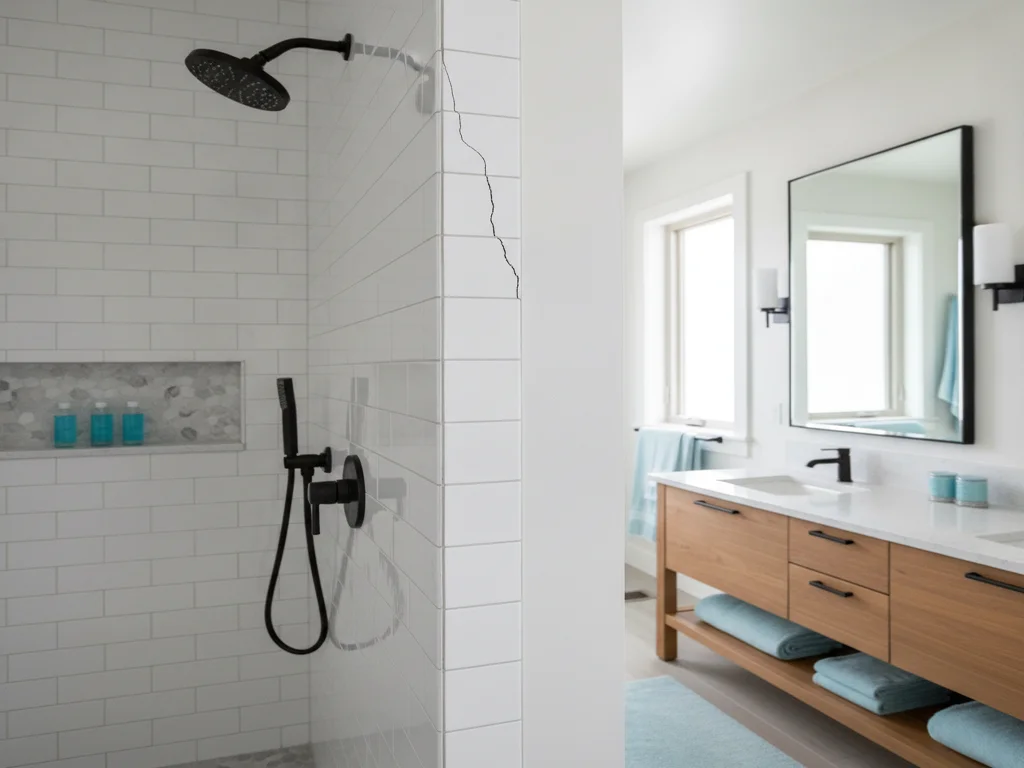
- A straight line of cracks marching across multiple tiles points to the structure below: a flexing subfloor, a panel joint, or a crack in the substrate telegraphing through.
- Hollow-sounding tiles have debonded from the mortar and are cracks waiting for a point load — tap-testing with a coin maps the failure before it is visible.
- Industry standards (TCNA) require the floor structure to deflect no more than L/360 for ceramic tile — bouncy floors fail tile no matter how good the tile work is.
- Grouted-tight corners and tub edges with no flexible joint are a leading cause of cracked tile and grout at plane changes.
- One cracked tile from a dropped bottle is a spot repair; a pattern of cracking or spreading hollow spots is an assembly failure that a spot repair cannot fix.
Start here: tile never cracks without a reason
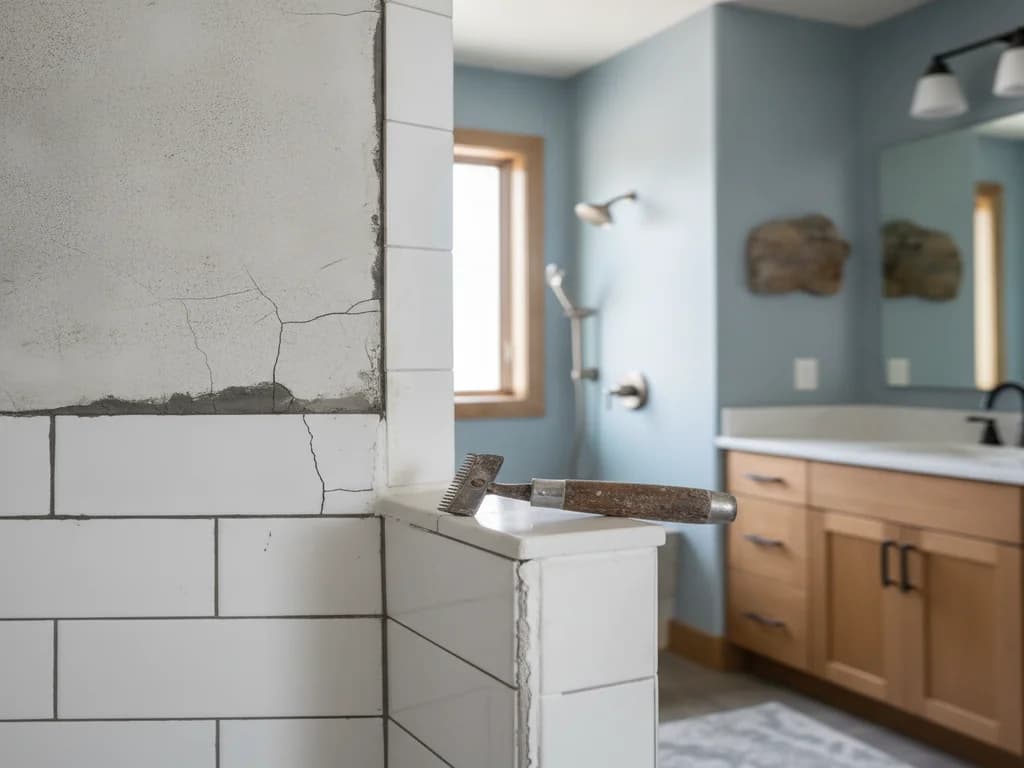
Fired ceramic and porcelain are enormously strong in compression and almost totally inflexible. A properly supported tile can carry a piano; the same tile bridging a small void snaps under a heel. So when tile cracks or lets go, the useful question is never "what is wrong with the tile" — it is "what moved, or what stopped holding, underneath it."
That framing sorts nearly every cracked or loose bathroom tile into four causes: the structure flexes too much, the bond under the tile was never complete, the substrate cracked and telegraphed through, or the assembly had no room to move. Each leaves a different fingerprint, and reading the fingerprint tells you whether you are looking at a one-tile repair or a floor that needs to come up.
Before the causes, one clarification of scope: if your symptom is cracking grout with sound tile, that is its own diagnosis — covered in why grout keeps cracking. This page is about the tile itself.
Cause 1: The floor flexes more than tile can tolerate
Tile assemblies have a hard engineering limit. The Tile Council of North America (TCNA) standards require a floor structure that deflects no more than L/360 — the span divided by 360 — under load for ceramic tile, and a stiffer L/720 for natural stone. A floor that bounces noticeably when someone walks past the vanity is telling you it may not meet that bar.
Deflection failures have a signature: cracks that run in lines, often following a joist bay or a subfloor panel joint, and that appear months to years after installation as the flexing slowly fatigues the assembly. Grout cracks usually arrive first, then hairline tile cracks along the same lines.
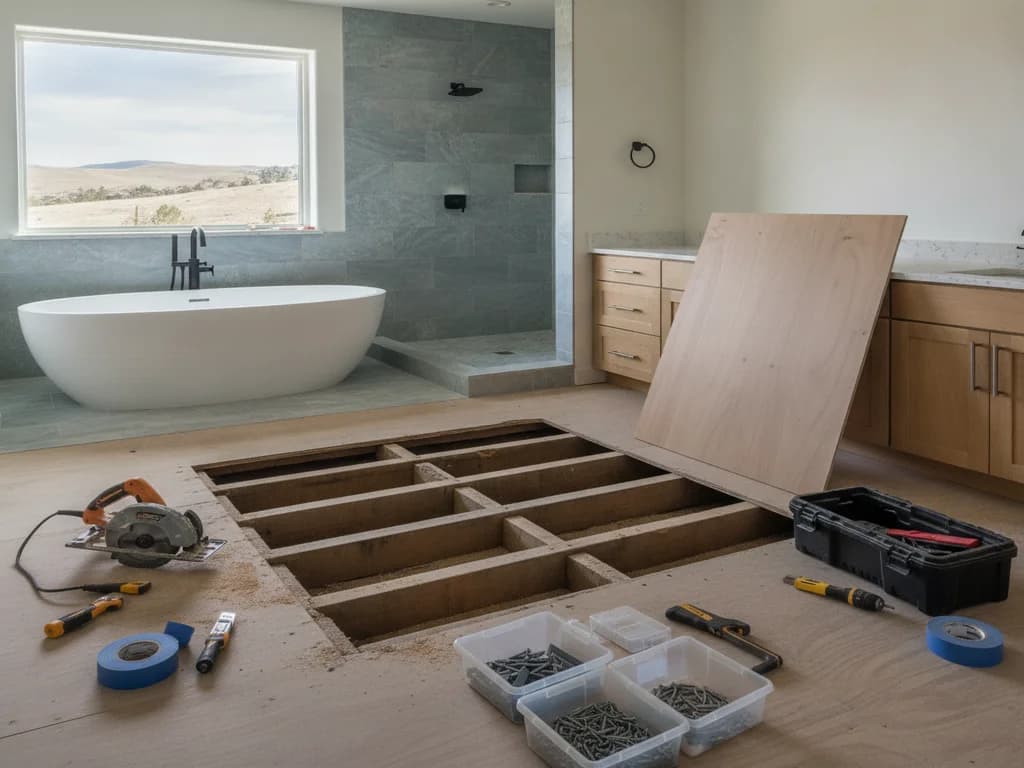
Common Treasure Valley versions: older homes with undersized joists or a single layer of thin decking, and remodels where heavy tile went over a floor built for carpet or sheet vinyl. No repair from above fixes deflection — stiffening the structure (thicker or added decking, sometimes joist work) is the fix, which is why a deflection diagnosis usually converts a tile repair into a floor rebuild.
Cause 2: Bond failure — the tile was never fully attached
A tile is held by the mortar bridging it to the substrate, and the industry minimum is real coverage: TCNA and the National Tile Contractors Association call for at least 80% mortar contact in dry areas and 95% in wet areas like shower floors, with no voids at corners. Tiles installed with a few dabs of thinset — or set after the mortar skinned over — hold for a while, then let go.
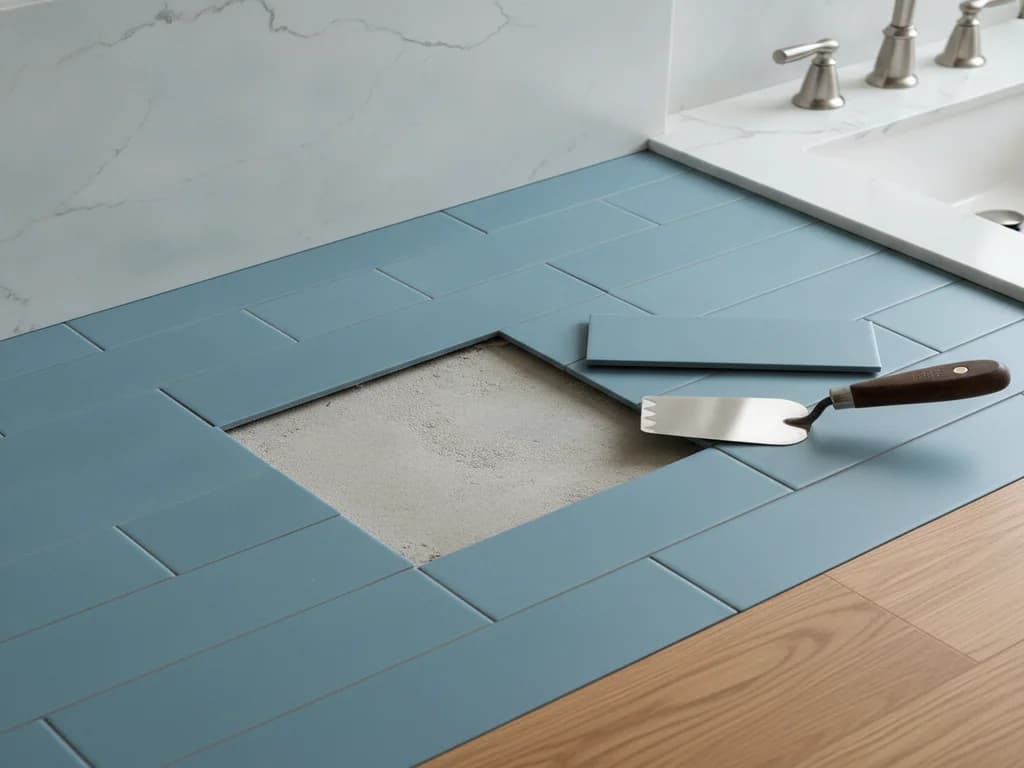
Debonded tile announces itself by sound before sight. Tap across the floor with a coin: well-bonded tile sounds solid and dull, debonded tile sounds hollow. A hollow tile is not broken yet, but it is bridging a void, and the next point load — a dropped shampoo bottle, a chair leg — cracks it.
Bond failures also cluster where installation is hardest: cut tiles at edges, corners of large-format tile that did not get back-buttered, and shower floors where the installer rushed. If hollow spots are isolated, replacing those tiles properly is legitimate — our guide to replacing cracked bathroom tile covers what that repair involves. If half the floor sounds hollow, the installation failed wholesale.
The two-minute tap test
Tap every tile with a coin and mark the hollow ones with painter's tape. A few isolated hollows near edges: watch them, or repair proactively. Hollows in a spreading cluster, or under the main walking path: the bond is failing progressively, and water through any crack that opens will accelerate everything beneath it.
Cause 3: No membrane over a substrate that moves or cracks
Concrete slabs crack — routinely, and mostly harmlessly. But tile bonded directly to a slab inherits every crack: as the slab hairline opens, the crack telegraphs straight up through the tile above it, producing a crack that wanders across the floor ignoring grout lines. Wood substrates have their own version, where panel edges and seasonal movement concentrate stress in lines.
The industry answer is a crack-isolation or uncoupling membrane between substrate and tile — systems like Schluter DITRA and comparable sheet or liquid-applied membranes exist specifically to absorb small substrate movement so it never reaches the tile. Skipping the membrane over a cracked or crack-prone substrate is one of the most common corners cut in budget tile work, and it is invisible until the floor cracks.
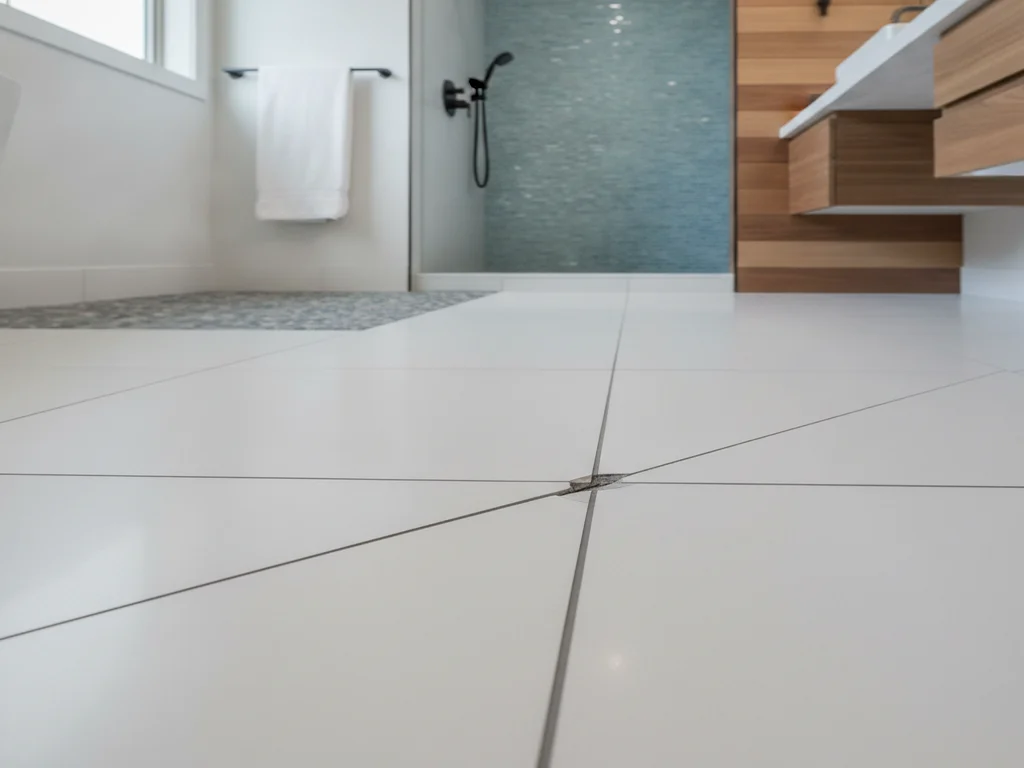
The fingerprint: a continuous crack crossing several tiles and grout joints in a wandering line, often matching a slab crack if you could see beneath. A spot repair over the same unbridged crack just re-cracks — this failure is fixed by membrane plus new tile over the affected zone, or a full re-tile done right. It is also one of the classic bathroom tile mistakes that shows up a year after the pretty photos.
Cause 4: No room to move — missing movement joints
Tile assemblies expand and contract with temperature and humidity — modestly, but relentlessly. TCNA detail EJ171 requires soft, flexible joints at the floor perimeter, at plane changes like the tub edge and wall corners, and at intervals across large floors. Those joints are the assembly's expansion room.
When an installer grouts the corners hard and tiles tight to the walls instead, the floor becomes a compressed panel with nowhere to go. The stress finds the weakest points: grout shears at the corners first, then tiles near the perimeter crack or — in the dramatic version — "tent," popping loose and lifting off the floor in a ridge.
This cause is the easiest of the four to spot: cracking concentrated at edges, corners, and the tub or shower transition, with the field of the floor mostly sound. It is also the most fixable — the hard-grouted joints get cut out and replaced with a color-matched flexible sealant, and damaged perimeter tiles get replaced individually.
Severity triage: cosmetic, contained, or systemic
Reading your floor against those four causes, the honest severity scale looks like this:
- Cosmetic — one tile cracked by a known impact, everything around it solid and dull-sounding. A spot replacement, ideally from your leftover box of tiles. No urgency beyond looks — unless it is in a shower, where any open crack is a water path.
- Contained — a few hollow or cracked tiles at edges or one corner, or corner cracking from missing movement joints. Repairable with targeted tile replacement plus fixing the local cause (soft joints where grout should never have been).
- Systemic — cracks in lines across the floor, spreading hollow zones, or tenting. This is deflection, a telegraphing substrate, or wholesale bond failure, and replacing individual tiles is throwing good tile after bad. The floor needs to come up and the cause needs the fix.
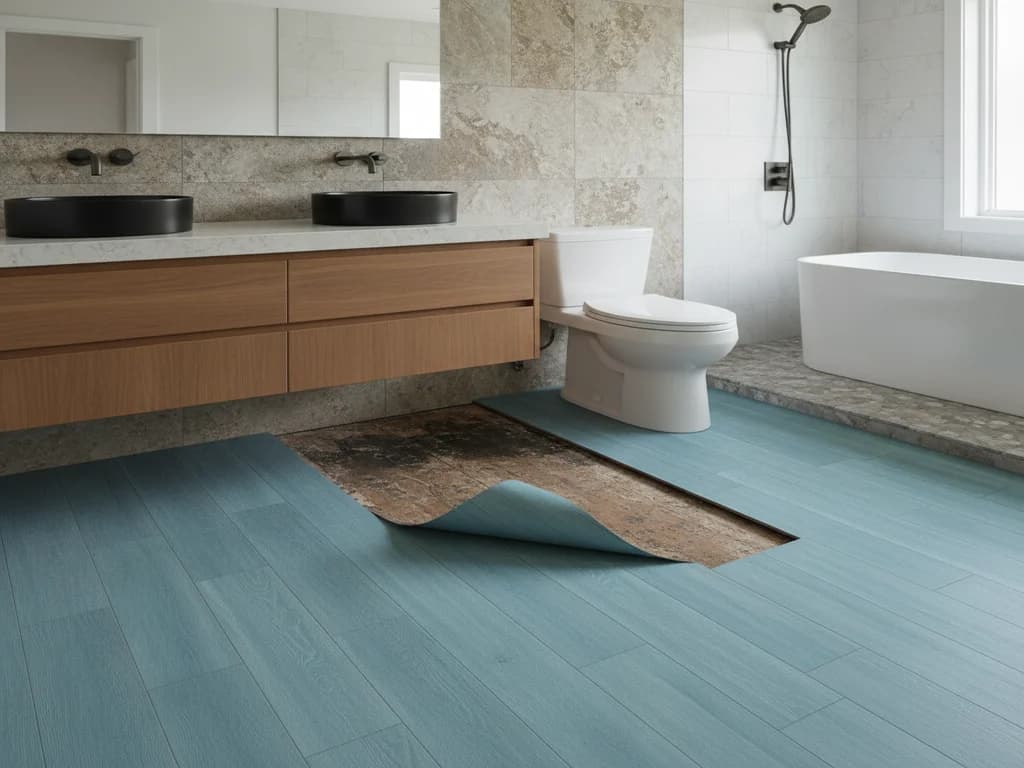
- Compounding — cracked tile plus a soft floor underfoot. Water has been getting through the cracks into the structure; now you are in soft floor and subfloor territory, and the tile is the smaller half of the project.
What a pro inspection adds, and the repair-vs-remodel call
A contractor diagnosing cracked tile works the causes in order: bounce-test the floor and check the framing and decking spec against the tile (deflection), tap-map the whole floor (bond), read the crack pattern against grout lines (telegraphing), and check every plane change for hard grout (movement joints). If there is any softness or staining, a moisture meter comes out, because water damage under tile changes the scope entirely.
The repair-vs-remodel logic follows the diagnosis. Impact damage and movement-joint fixes favor repair. Systemic causes favor rebuilding the floor — and if the floor is coming up anyway in an older bathroom, doing it as part of a remodel means the new tile goes over a substrate that is flattened, stiffened, membraned, and jointed to current standards, instead of inheriting the old floor's problems.
One honest caveat on spot repairs: matching existing tile is a real constraint. Discontinued lines, dye-lot differences, and years of wear mean even a perfect repair can read as a patch. If your tile is long discontinued and the damage is more than a tile or two, price the repair against a re-tile before defaulting to the patch — the regrout-or-retile decision guide walks the same logic.
Ready to plan your Boise bathroom?
Licensed & insured · 3-year workmanship warranty
Frequently asked questions
- Why did my bathroom tile crack with no impact?
- A crack with no impact means something moved beneath the tile: a flexing subfloor, a substrate crack telegraphing through, or an assembly installed with no movement joints and nowhere to expand. The crack pattern is the clue — straight lines follow structure, wandering cracks follow slab cracks, and edge or corner cracking points to missing flexible joints. Impact cracks, by contrast, radiate from a visible point.
- What does a hollow sound under tile mean?
- A hollow sound means the tile has partially or fully separated from the mortar beneath — it is bridging a void instead of resting on full support. Hollow tiles are not broken yet, but they crack under the next concentrated load, and in wet areas the void can hold water. Isolated hollow tiles can be replaced individually; spreading hollow zones mean the mortar bond is failing across the installation.
- Can I just replace one cracked tile?
- Yes, when the cause was an impact and the surrounding tiles are solid — a pro cuts out the grout, breaks out the damaged tile carefully, and sets a replacement. The catches: you need a matching tile (this is why installers say keep spares), and if the crack came from movement or bond failure below, the new tile inherits the same conditions and cracks the same way. Diagnose first, patch second.
- Is cracked tile in a shower more urgent than on a floor?
- Yes. Tile and grout are not the waterproofing layer, but they are the wear layer that sheds most water before it reaches the membrane — an open crack in a shower sends water into the assembly every single day. Over a sound membrane that is a maintenance problem; over an old or marginal one it is how pans and walls fail. Repair shower cracks promptly rather than seasonally.
- Why are my floor tiles lifting or "tenting"?
- Tenting — tiles popping loose and ridging upward — is compression failure. The tiled surface expanded, had no movement joints to absorb it, and buckled at the weakest line, like a road on a hot day. It is most common on slabs and in installations grouted tight to every wall. The fix is re-setting or replacing the affected tiles and cutting in the perimeter and field movement joints the installation always needed.
- How flat and stiff does a floor need to be for tile?
- Industry standards are specific: TCNA guidelines call for structural deflection no greater than L/360 for ceramic tile (L/720 for stone), and large-format tile requires substrate flatness within roughly 1/8 inch over 10 feet. Most tile failures trace back to a floor that missed one of those numbers. This is why a good tile bid includes substrate prep — and why the cheapest bid often skips exactly that line.
Sources
- Tile Council of North America (TCNA)
- National Tile Contractors Association
- Schluter Systems
- HomeAdvisor — True Cost Guide
Claims and figures are drawn from the sources above and provided for general guidance; your project may vary. Photography is illustrative of design concepts. For a fixed price on your specific bathroom, request a free estimate.