Updated July 16, 2026 · 7 min read
By Boise Bath — bathroom & shower remodeling in Boise & the Treasure Valley
The short answer
A single cracked tile from impact can be spot-replaced: the pro cuts out the tile, removes old thinset, sets a matching tile, and regrouts — typically roughly $150–$600 per Angi and HomeAdvisor. But cracks that run across multiple tiles, follow a line, or sit over flexing floor mean the substrate is the problem, and replacing tiles one by one just feeds the crack.
Key takeaways
- One crack with a known cause — a dropped bottle, a point impact — is a spot repair; cracks in a line across several tiles are a substrate problem.
- Spot-replacing a tile typically runs roughly $150–$600 per Angi and HomeAdvisor cost guides; the tile itself is the cheap part.
- Matching is the real obstacle: tile lines get discontinued fast, and even the same tile from a different production run can read as a mismatch.
- Pros harvest replacement tiles from hidden spots — under vanities, inside closets — when the original is discontinued.
- If more than a small fraction of the field is cracked, hollow-sounding, or loose, replacing the field beats chasing repairs.
Can you replace just one cracked tile?
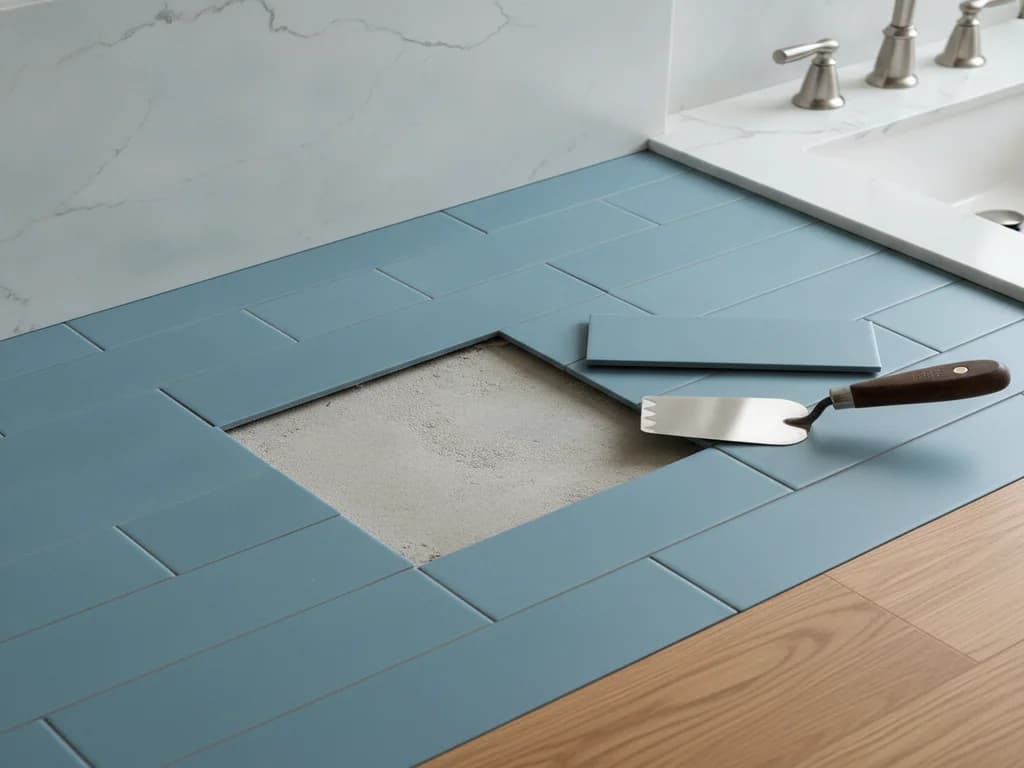
Yes — a competent tile setter can cut out a single cracked tile without disturbing its neighbors, and when it goes well, the repair disappears. The grout joints around the damaged tile are ground out, the tile is broken up and removed from the center outward, the old thinset is scraped flat, and a matching tile is set and grouted.
The honest version of that sentence has two conditions attached: you need a matching tile, and the crack needs to be a one-off rather than a symptom. Those two conditions are where most cracked-tile stories get complicated, so they get their own sections below.
When both conditions hold, a spot repair is quick and cheap relative to any alternative — typically roughly $150–$600 including labor, per Angi and HomeAdvisor cost guides, with small jobs often carrying a service-call minimum that dwarfs the material cost.
Why did the tile crack in the first place?
Before repairing anything, look at the crack itself. A crack radiating from a single point — often with a small chip at the center — is impact damage: something hard hit it, the tile lost, and the substrate is probably fine. That is the good kind.
A crack that runs in a straight line across two or more tiles, follows a grout joint and then jumps through tiles, or shows up alongside hollow-sounding or loose tiles is telling you the problem is under the tile: a flexing subfloor, a cracked slab, a skipped membrane, or a bad thinset bond. Replace the tile and the substrate will crack the new one on the same line.
Diagnosing which failure you have deserves more space than this article gives it — the short version is that impact cracks get repaired, pattern cracks get investigated. Some of the classic causes appear in our roundup of bathroom tile mistakes worth avoiding the second time around.
The one-tile test
Tap the tiles around the crack with a coin. A sharp, solid sound means they are well bonded; a hollow sound means the bond has failed and the crack is a preview. Hollow neighbors turn a spot repair into a field decision.
Spot repair or replace the field?
The decision usually comes down to three questions: how many tiles are affected, whether the substrate is sound, and whether you can match the tile. One or two cracked tiles over a solid substrate with a match in hand is an easy spot repair. A floor with cracks in several places, hollow spots, and no matching tile available is a floor at the end of its life.
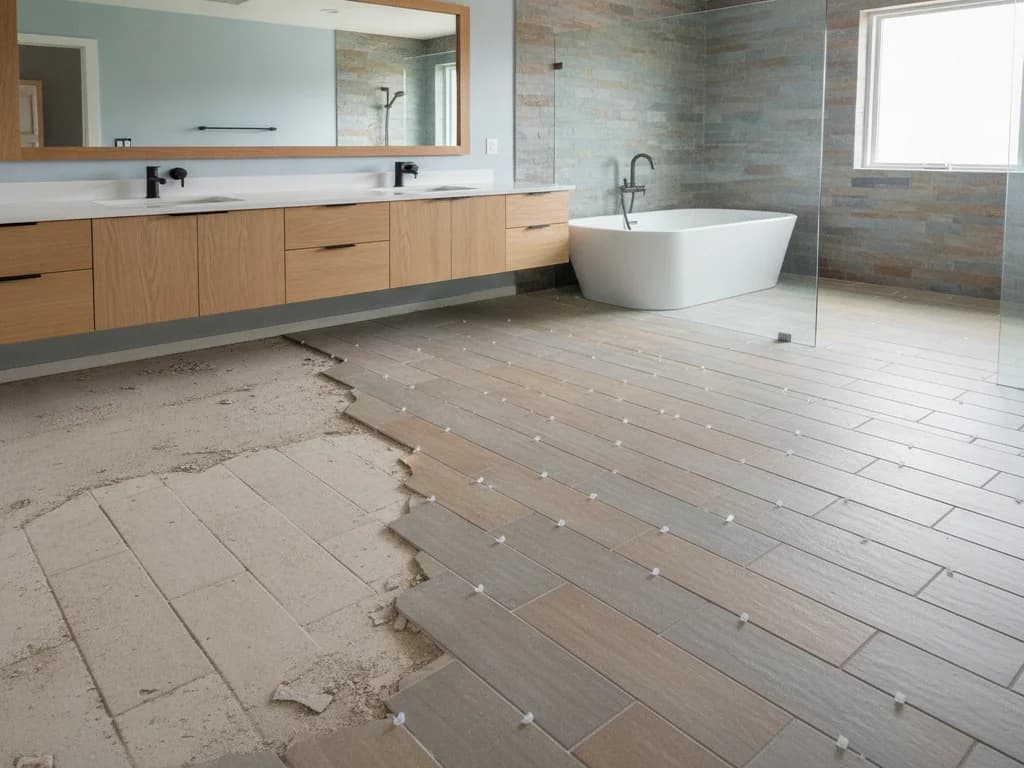
There is a middle ground worth knowing about: replacing a section. If the damage is confined to one area — say, in front of the vanity — and you cannot match the tile, some layouts allow an intentional contrast band or inset rather than a full tear-out. It is a design solution to a supply problem, and it works better on floors than on walls.
| Factor | Spot repair makes sense | Field replacement makes sense |
|---|---|---|
| Cracked tiles | 1–2, impact-caused | Several, or cracks in a line |
| Neighboring tiles | Sound, tight bond | Hollow-sounding, loose, or lipping |
| Tile match | Spares or current stock available | Discontinued with no harvest spots |
| Substrate | Solid, no flex or movement | Flexing subfloor, cracked slab, failed bond |
| Age of installation | Newer, otherwise in good shape | Old, dated, or already patched before |
The discontinued-tile problem
Here is the part nobody warns you about: tile lines turn over fast. A tile installed even five years ago has a real chance of being discontinued, and bathroom tile from the 90s or early 2000s — the 4×4 almond and bone squares in thousands of Treasure Valley builder homes — is long gone from any shelf.
Even finding the "same" tile is not a guarantee. Tile is produced in dye lots, and a new run of the same SKU can vary noticeably in shade and even size. On a wall at eye level, a slightly-off tile reads as a patch forever.
Pros have a few honest moves here. The best is leftover stock — check your garage and attic, because good installers leave spares. Next best is harvesting: pulling an intact tile from somewhere invisible, like under the vanity toe-kick, inside a closet, or behind an appliance, and using it for the repair while the mismatched new tile goes in the hidden spot. Tile-matching services and salvage sellers exist for older lines, but at some point the hunt costs more than a better floor. If you end up shopping fresh, our guide to choosing bathroom tile covers what to buy — including ordering enough overage that the next crack is a non-event.
What does replacing cracked tile cost?
Tile repair costs typically land around $150–$600 for small jobs per Angi and HomeAdvisor cost guides, driven mostly by labor and minimum service charges rather than the tile itself. A single-tile swap sits at the low end; repairs involving several tiles, substrate patching, or shower locations climb from there.
Field replacement is a different budget entirely — a new tile floor is priced per square foot, and the drivers are the tile you choose, demolition, and substrate prep. The factors behind that number get a full breakdown in our guide to bathroom tile installation cost factors.
One rule of thumb holds across both: paying twice is the expensive path. A cheap repair over a failing substrate, or a field replacement that skips fixing the flex underneath, buys the same crack back within a couple of years.
Cracked tile in a shower is a different animal
A cracked tile on a bathroom floor is mostly a cosmetic and trip concern. A cracked tile inside a shower is a water problem: the crack is a path through the tile layer, and what happens next depends entirely on the waterproofing behind it. A shower built with a proper membrane can tolerate a cracked tile for a while; one built with tile straight over drywall cannot.
That is why pros treat shower cracks with more urgency and more skepticism — the repair is the same, but the inspection behind it matters more. If a cracked shower tile comes with soft walls, persistent mildew, or staining on the other side of the wall, you are past spot-repair territory and into rebuild territory. When the shower is otherwise due for an update, folding the repair into a proper custom tile shower rebuild means the waterproofing gets done right once.
When a crack is a reason to remodel
Nobody remodels over one tile. But a cracked, dated floor with no matching tile, hollow spots, and grout that is failing anyway is a floor you will fight indefinitely — and every repair puts new money into a surface you do not love. If the honest repair path is "replace the field," it is worth pricing the floor you actually want at the same time, since demolition and prep cost the same either way.
What the process looks like
- 1
Diagnose the crack before touching it
The pro inspects the crack pattern, taps surrounding tiles for hollow spots, and checks the floor for flex. Impact cracks proceed to repair; pattern cracks get a substrate investigation first.
- 2
Source the replacement tile
Leftover stock, current inventory, a harvested tile from a hidden location, or a deliberate contrast choice — the match is confirmed in the room’s light before any demolition starts.
- 3
Isolate the damaged tile
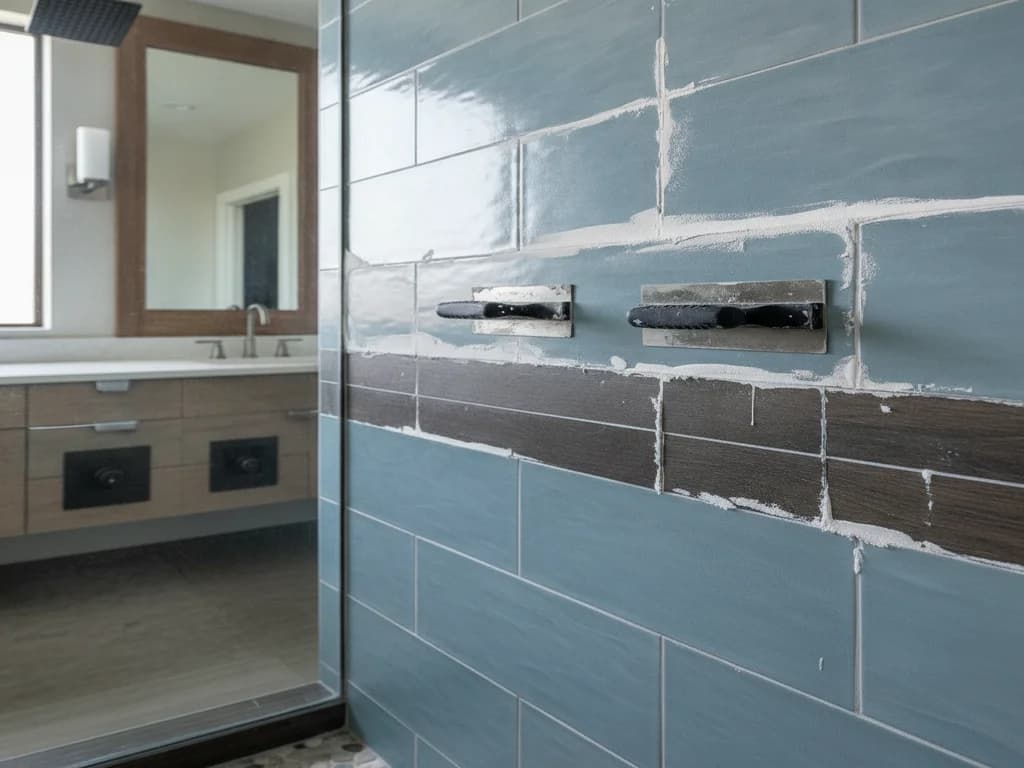
Grout joints around the cracked tile are cut out with an oscillating tool or grout saw so the removal cannot chip or loosen the neighbors.
- 4
Remove the tile and old thinset
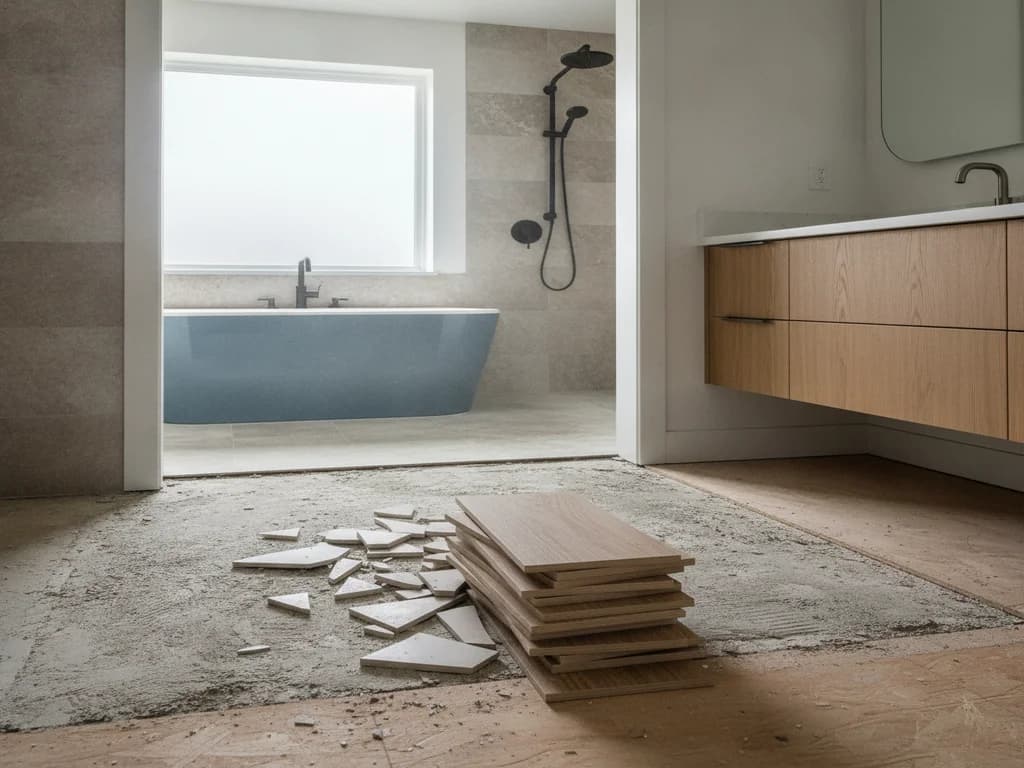
The cracked tile is drilled or scored and broken out from the center toward the edges, then the old thinset is chiseled and scraped until the substrate is flat and sound.
- 5
Inspect and prep the substrate
The exposed patch is checked for cracks, moisture, and bond quality — the one chance to confirm the spot repair is actually a spot problem — then primed or patched flat as needed.
- 6
Set, grout, and seal
The replacement tile is back-buttered and set level with its neighbors, and after the thinset cures the joints are grouted to match — the step where color-matching aged grout takes a practiced eye.
Ready to plan your Boise bathroom?
Licensed & insured · 3-year workmanship warranty
Frequently asked questions
- Can a cracked tile be repaired without replacing it?
- Hairline cracks can be filled with color-matched epoxy or paint-style repair kits, and on a low-traffic floor tile that can be an acceptable cosmetic fix. It is temporary in wet areas — filler does not restore the tile’s strength or water resistance — so for shower walls and floors, replacement is the durable answer.
- How much does it cost to replace one cracked bathroom tile?
- Small tile repairs typically run roughly $150–$600 per Angi and HomeAdvisor cost guides. Most of that is labor and the trip minimum rather than the tile. The price climbs when the tile is hard to source, the substrate needs patching, or the tile sits inside a shower where waterproofing has to be inspected and respected.
- What if my tile is discontinued?
- Check for leftover boxes from the original install first. If none exist, a pro can harvest an intact tile from a hidden spot — under a vanity toe-kick or inside a closet — and put the closest available match in the concealed location. Tile-matching and salvage services carry older lines, and if nothing works, a deliberate contrast inset beats an almost-match.
- Why do my bathroom tiles keep cracking?
- Recurring cracks point below the tile: a subfloor with too much flex, a cracked concrete slab, missing movement joints, or a poor thinset bond. Tiles are rigid — they crack when what is under them moves. Replacing individual tiles will not stop it; the substrate issue has to be diagnosed and corrected, or every new tile inherits the same stress.
- Is a cracked shower tile an emergency?
- Not an emergency, but not a wait-a-year item either. A crack in a shower is a water path through the tile layer, and the waterproofing behind it is what stands between the crack and rotting framing. Seal it temporarily with clear silicone if needed, and have it repaired soon — with the substrate checked while it is open.
Sources
- Tile Council of North America (TCNA)
- National Tile Contractors Association
- Angi — Cost Guides
- HomeAdvisor — True Cost Guide
Claims and figures are drawn from the sources above and provided for general guidance; your project may vary. Photography is illustrative of design concepts. For a fixed price on your specific bathroom, request a free estimate.