Updated July 16, 2026 · 7 min read
By Boise Bath — bathroom & shower remodeling in Boise & the Treasure Valley
The short answer
Regrouting means removing the old grout to roughly half its depth or more, cleaning the joints, and packing in new grout — it works when the tile is well bonded and the waterproofing behind it is intact. If tiles sound hollow, walls flex, or moisture shows on the other side, new grout only hides an active failure. Sound installations regrout well; failed ones need rebuilding.
Key takeaways
- Grout is not waterproofing — cement grout is porous, and every properly built shower assumes water reaches the membrane behind the tile.
- Regrouting works when tiles are solidly bonded and the substrate is dry and firm; it is purely cosmetic over a failed installation.
- Hollow-sounding tiles, flexing walls, persistent mildew, or staining behind the wall mean regrouting will not fix the real problem.
- A real regrout removes old grout to depth before new grout goes in — smearing new grout over old fails quickly.
- Movement joints (where walls meet floors or each other) get flexible sealant, not grout — regrouting those corners guarantees new cracks.
What does regrouting actually involve?
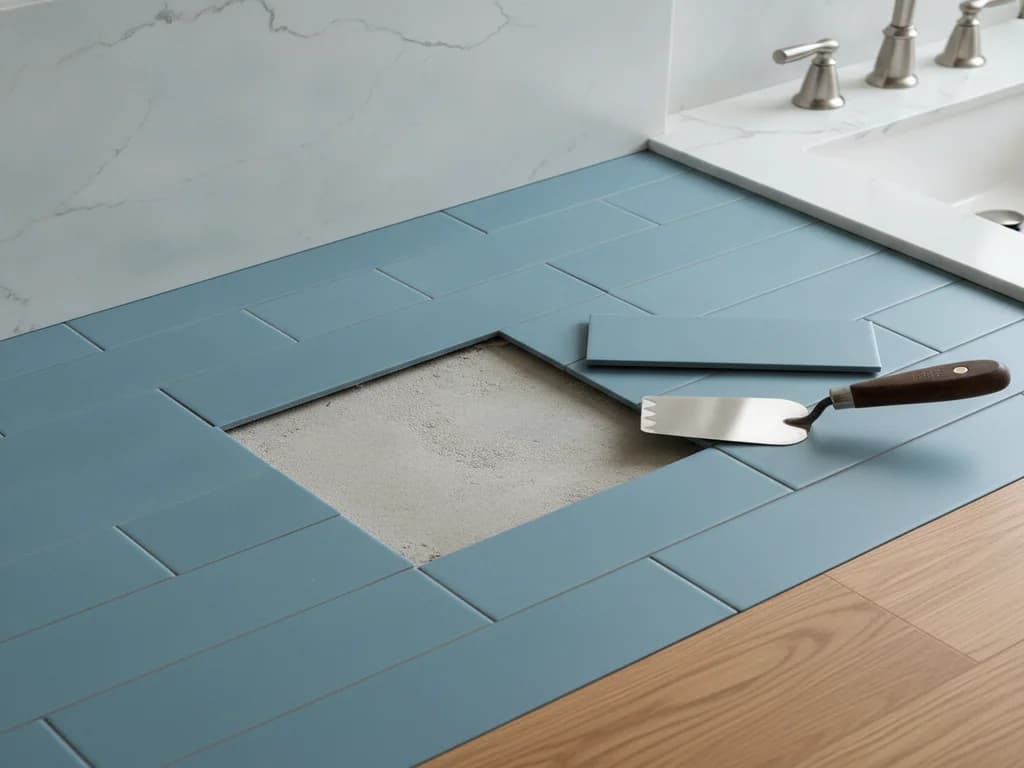
A real regrout is a removal job first and a grouting job second. The old grout is cut out of the joints — with carbide blades or an oscillating tool — down to roughly half the tile depth or more, so the new grout has enough body to bond and cure as a solid mass. Then the joints are vacuumed, cleaned, and packed with fresh grout, and the changes of plane are caulked.
That removal step is what separates a professional regrout from the weekend version that fails. New grout smeared over old grout is a veneer a millimeter thick: it has nothing to grip, it cures weak, and it flakes out within months. Industry guidance from the Tile Council of North America treats grout as a packed, full-depth joint filler — not a surface coating.
Done properly on a sound installation, the result is dramatic. Grout is usually the first thing to look old in a bathroom, and fresh joints make ten-year-old tile read as new.
When does regrouting genuinely work?
Regrouting is the right call when the problem is the grout itself: stained joints that no cleaning revives, surface cracking and crumbling from age, or grout that was poorly mixed and never cured hard. The tell is that everything around the grout is healthy — tiles are tight, nothing moves underfoot or under hand pressure, and there is no sign of moisture where it should not be.
It is also the right call after a successful repair. If a plumbing leak was fixed and the tile survived, or a few tiles were replaced, regrouting the field ties the repair together visually. The same goes for replacing a cracked tile — the fresh grout around one new tile rarely matches aged grout, and regrouting the surrounding area is how the repair disappears.
On floors outside the shower, regrouting is even lower-risk, since the joints see cleaning water rather than daily soaking. A tired but solid tile floor is one of the best candidates in the house.
When is regrouting lipstick on failed waterproofing?
Here is the uncomfortable truth about showers: grout was never the waterproofing. Cement grout is porous — water passes through healthy grout, and a correctly built shower handles that with a membrane or waterproof backer behind the tile. So when a shower is failing, the grout is usually the messenger, not the cause.
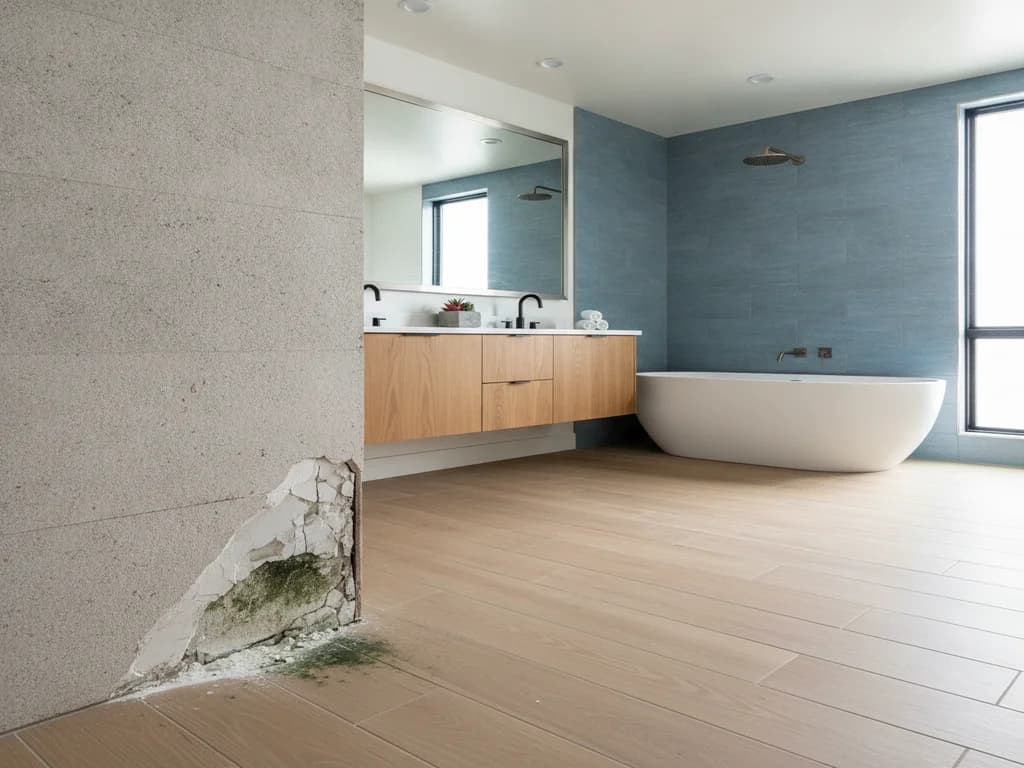
The failure signs are consistent. Tiles that sound hollow when tapped have lost their bond, usually because the substrate behind them is wet or deteriorating. Walls that flex under palm pressure mean the backer is soft. Mildew that returns within days of cleaning, grout that recracks in the same joints, a musty smell, or staining on the wall or ceiling behind the shower all say water is already past the tile layer and living in the structure.
Regrouting that shower produces a genuinely convincing before-and-after photo and changes nothing behind the tile. The water keeps moving, the framing keeps absorbing it, and in a year or two the new grout cracks along the same lines — except now the hidden damage is a year or two worse. If those symptoms sound familiar, start with the signs of bathroom water damage and get the wall opened and diagnosed instead. When the assembly behind the tile is done, the fix is a rebuild with proper waterproofing — the core of what a custom tile shower install gets right from the studs out.
The test that saves you a wasted regrout
Tap the field with a coin and press on the walls. Solid sound and zero flex: regrout with confidence. Hollow tiles or spongy walls: stop — the money belongs in diagnosis and rebuilding, not in new grout over a wet wall.
Which grout should go back in?
A regrout is the one moment you get to upgrade the joint material without touching the tile, and the choice matters more in showers than anywhere else. The short version: cement grout is the familiar, economical default and needs periodic sealing; epoxy grout costs more and demands more skill to install, but it is essentially stainproof and waterproof at the joint line — a meaningful upgrade in a heavily used shower and in hard-water households, which describes most of the Treasure Valley.
The full trade-off — cost, workability, stain resistance, and where each one earns its keep — is covered in our epoxy vs cement grout comparison. Whichever direction you go, insist the corners and changes of plane get flexible sealant rather than grout; our bathroom caulking guide explains why those joints must move.
| Joint type | What goes in | Why |
|---|---|---|
| Field joints (tile to tile) | Cement or epoxy grout | Rigid joints between bonded tiles |
| Changes of plane (corners, wall-floor) | Flexible sealant, not grout | These joints move; grout there cracks |
| Tile to tub or shower base | Flexible sealant | Fixture and wall move independently |
| Movement joints in large floors | Flexible sealant | Absorbs expansion across the field |
Why does grout keep cracking in the same places?
If your grout has already been patched once and cracked again in the same joints, the pattern is the diagnosis. Grout that fails repeatedly at corners and plane changes was installed where sealant belonged. Grout that cracks in straight runs across a floor points to movement underneath — deflection or a missing movement joint. Both causes deserve a proper look before any regrout, because fresh grout in a moving joint is a subscription, not a repair.
The distinction matters for scope, too: sealant-in-the-corners is a quick fix a regrout includes anyway, while structural movement is a substrate conversation. A good tile contractor will tell you which one you have before quoting the pretty part.
What does regrouting cost relative to retiling?
Regrouting is priced mainly on labor — the removal is slow, careful work — and typically lands at a fraction of what demolishing and retiling the same area costs. Per Angi’s cost guides, professional regrouting commonly runs in the range of roughly $10–$25 per square foot, while a full retile carries demolition, substrate work, new tile, and installation on top of each other.
That gap is exactly why the sound-installation test matters so much. Over healthy tile, regrouting is one of the highest-value moves in a bathroom. Over a failed shower, it is money spent delaying a rebuild you will fund anyway — plus interest, paid in wet framing.
Keeping the new grout looking new
Fresh cement grout should be sealed once cured, and resealed periodically — epoxy skips this entirely. Beyond that, the routine is simple: squeegee or towel-dry shower walls, run the exhaust fan, and clean with pH-neutral products rather than acidic or bleach-heavy ones that eat grout from the surface down. The full routine, including what hard water does to joints and glass, lives in our tile and grout care guide.
What the process looks like
- 1
Verify the installation is worth regrouting
The pro taps the field for hollow tiles, presses walls for flex, and checks for moisture signs behind and below. This inspection is the whole decision — regrouting only proceeds over a sound assembly.
- 2
Remove old grout to depth
Using carbide grout saws or an oscillating tool, the old grout comes out to at least half the tile depth — full depth where joints are failing — without chipping tile edges. This is the slow step that determines how long the new grout lasts.
- 3
Strip failed caulk at plane changes
Old caulk and any grout wrongly placed in corners, along the tub, and at the floor line is cut out completely, since new sealant only bonds to clean joints.
- 4
Clean and prep the joints
Joints are vacuumed and wiped free of dust and residue, and the surface is checked once more for anything the removal exposed — the last off-ramp before new material goes in.
- 5
Pack the new grout
Grout is worked diagonally into the joints with a float until they are full and dense, then struck to a consistent profile. Epoxy grout follows the same motion on a stricter clock — its working time is short and unforgiving.
- 6
Wash, cure, caulk, and seal
The haze is sponged off in timed passes, the grout cures, plane changes get fresh flexible sealant, and cement grout is sealed once fully cured. The shower goes back into service after the manufacturer’s cure window, not before.
Ready to plan your Boise bathroom?
Licensed & insured · 3-year workmanship warranty
Frequently asked questions
- Can you put new grout over old grout?
- Not durably. New grout needs joint depth to bond and cure as a solid mass — a thin skim over existing grout has almost no grip and typically flakes out within months. A proper regrout removes the old grout to roughly half the tile depth or more first, which is most of the labor and most of the reason professional regrouts last.
- How do I know if my shower needs regrouting or retiling?
- Check what the grout is attached to. Tiles that sound solid when tapped, walls with no flex, and no moisture signs mean the installation is healthy and regrouting will hold. Hollow-sounding tiles, spongy walls, returning mildew, or staining behind the shower mean water is past the tile layer — that shower needs diagnosis and rebuilding, not cosmetics.
- Is grout what keeps water out of a shower wall?
- No — cement grout is porous, and water passes through even healthy joints. A properly built shower relies on a waterproof membrane or backer behind the tile to manage that water. This is why regrouting cannot fix a leaking shower: the grout was never the barrier, so replacing it does not restore one that failed behind the tile.
- How much does professional regrouting cost?
- Professional regrouting commonly runs roughly $10–$25 per square foot per Angi’s cost guides, driven by the slow labor of removing old grout without damaging tile. That is typically a fraction of demolishing and retiling the same area — which is why regrouting is excellent value on a sound installation and poor value on a failed one.
- Should corners and the tub joint be grouted or caulked?
- Caulked, always. Corners, wall-to-floor transitions, and the tile-to-tub joint are movement joints — the surfaces on each side move independently, and rigid grout there cracks on schedule. Flexible, mildew-resistant sealant absorbs that movement. If your grout keeps failing in the same corners, this is almost certainly why.
- How long does a regrout last?
- Over a sound installation, a quality regrout should last many years — comparable to the original grout’s lifespan, and longer if you upgrade to epoxy, which resists staining and water absorption at the joint. Longevity depends on the removal being done to depth, movement joints getting sealant, and routine care like sealing cement grout periodically.
Sources
- Tile Council of North America (TCNA)
- National Tile Contractors Association
- Angi — Cost Guides
- Custom Building Products (RedGard)
Claims and figures are drawn from the sources above and provided for general guidance; your project may vary. Photography is illustrative of design concepts. For a fixed price on your specific bathroom, request a free estimate.