Updated July 16, 2026 · 7 min read
By Boise Bath — bathroom & shower remodeling in Boise & the Treasure Valley
The short answer
Replacing the floor around a bathtub means removing the damaged flooring and any rotted subfloor at the tub perimeter, fixing the moisture source, and rebuilding. If damage stops a few inches from the tub, the tub can usually stay; if the subfloor under the tub apron is soft, the tub comes out. Typical repairs run roughly $500–$3,000 depending on subfloor scope, per Angi and HomeAdvisor cost guides.
Key takeaways
- Floor damage at the tub edge is a symptom — the caulk joint, tub drain, or supply lines are the usual sources, and the source gets fixed first.
- The tub can often stay if the soft spot ends a few inches from the apron; damage running under the tub means it has to come out.
- Cut-in subfloor patches work, but the patch must land on joists and match the existing subfloor thickness exactly.
- Tub-perimeter repairs typically run roughly $500–$3,000 depending on how much subfloor is involved, per Angi and HomeAdvisor.
- If the tub has to come out anyway, you are already paying for most of the demolition a tub-to-shower conversion requires.
Why does the floor around a bathtub fail first?
The strip of floor along a tub takes more water than any other part of the bathroom. Splash-out over the tub rim, a failed caulk joint where the tub apron meets the floor, and drips from wet feet all land in the same 12-inch band — and they land there every day for years.
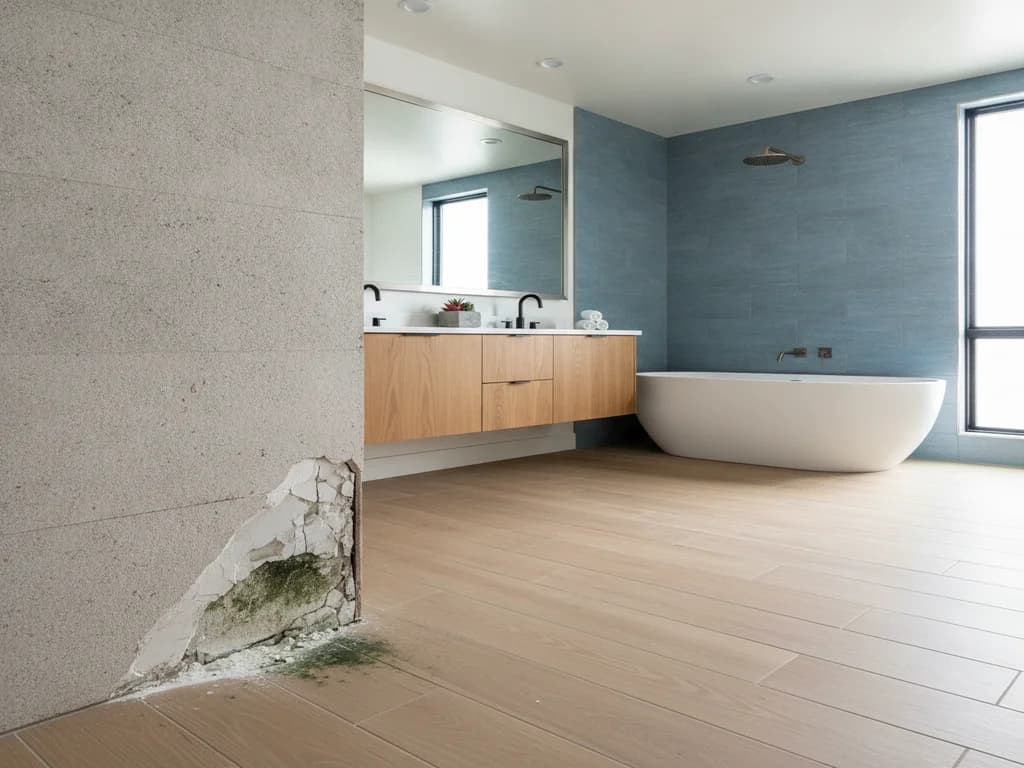
Slow plumbing leaks make it worse. A tub drain or overflow gasket that seeps a little with every bath wets the subfloor from below, where you cannot see it. By the time flooring cups, darkens, or feels spongy at the tub edge, the subfloor underneath has usually been wet for months.
That is why pros treat a bad floor at the tub as a symptom, not the problem. Replacing flooring over a wet, rotting subfloor — without finding the water source — buys a year or two before the same failure returns.
How do you tell how far the damage goes?
Scope is the whole game with tub-perimeter damage, and it determines whether the tub stays or goes. A contractor will probe the floor with a screwdriver or awl along the tub apron, check for deflection underfoot, and look below from a crawl space or basement ceiling if the house allows it.
Discoloration and softness that stop a few inches from the tub usually mean splash and caulk failure — surface water working down through seams. Softness that continues under the tub apron, staining on the ceiling below, or a musty smell from the access panel points to a drain or overflow leak, which means the damage extends where you cannot see it.
Moisture meters help, but the honest answer is that final scope is confirmed during demolition. Good contractors bid the visible repair and tell you up front what a subfloor surprise adds — not the other way around. If you are seeing stains, smells, or swelling elsewhere too, run through the signs of bathroom water damage before assuming the tub edge is the only issue.
Mold is part of the scope
Subfloor that has stayed wet grows mold, and the EPA recommends addressing moisture and mold together — cleaning visible growth without stopping the water source guarantees it returns. Expect any honest repair to include drying and treating the framing, not just swapping wood.
Can you replace the floor without removing the tub?
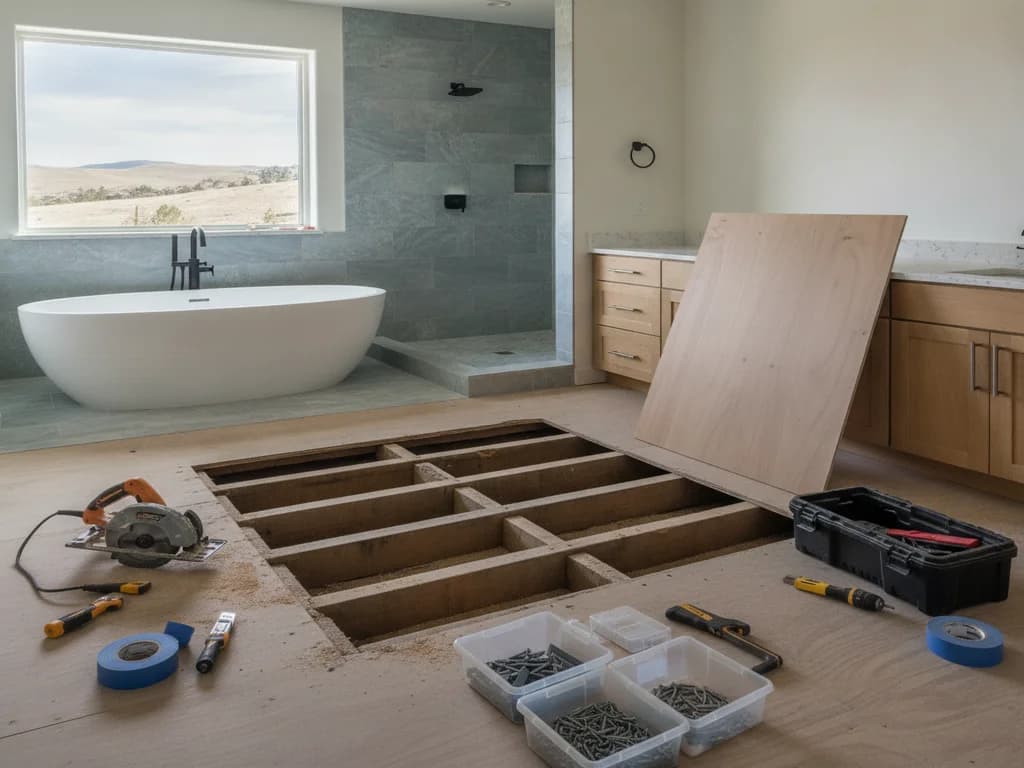
Often, yes — and this is the scenario every homeowner hopes for. If the subfloor damage ends before the tub apron, a pro can cut out the bad section, patch the subfloor, and run new flooring up to the tub with a clean caulked joint. The tub never moves, the tile surround stays, and the plumbing stays connected.
The catch is what the flooring transition looks like. Flooring normally runs under a tub apron slightly, so a keep-the-tub repair means cutting the new flooring precisely to the apron line. With sheet vinyl or LVP this is straightforward. With tile, the cut line lands under a caulk joint and disappears. A careful installer makes this invisible; a rushed one leaves a gap you will stare at forever.
One honest caveat: if your flooring is discontinued and the damage sits mid-room, a keep-the-tub repair may still mean replacing the whole floor to avoid a patchwork look. At that point the flooring cost is the same either way — only the tub decision remains. Our guide to replacing bathroom flooring covers the full-floor version of this project.
When does the tub have to come out?
Three findings force the tub out. First, rot that runs under the tub — a tub full of water weighs several hundred pounds, and it cannot sit on compromised framing. Second, an active leak at the drain, overflow, or supply that can only be accessed by pulling the tub (not every home has an access panel). Third, a steel or cast-iron tub that has rusted through at the base, which is its own leak source.
Pulling a tub is real work: the surround is opened at the tub flange, the drain is disconnected, and the tub comes out — sometimes in pieces if it is cast iron. That demolition is most of what a tub-to-shower conversion requires anyway, which is why contractors will honestly raise the option. If you rarely bathe and the tub must come out regardless, converting to a walk-in shower turns a repair budget into an upgrade. Our article on replacing a bathtub with a walk-in shower walks through that decision.
If you love the tub, none of this forces a conversion — a new tub or the same tub reset on rebuilt framing is a perfectly good outcome. The point is to make the call once, with the floor open, instead of paying for demolition twice.
What does replacing the floor around a tub cost?
Costs track scope. Subfloor replacement generally runs roughly $500–$800 for a typical repair area, with larger or joist-involved repairs climbing past that, per HomeAdvisor’s True Cost Guide. Angi’s cost guides put general water-damage restoration at roughly $1,300–$6,100 depending on severity and how much drying and treatment is involved.
On top of the structural repair comes new flooring for the repaired area or the whole room, plumbing fixes if a drain or supply line caused the damage, and tub reinstallation if it came out. A contained keep-the-tub repair with modest flooring often lands near the bottom of those ranges; a pull-the-tub repair with full flooring replacement stacks several of them.
The one number that matters most is invisible: what the leak would have cost next year. Wet framing does not stabilize — it spreads to joists, and joist repairs are where budgets break.
| Scenario | Tub stays? | Typical scope | Relative cost |
|---|---|---|---|
| Caulk failure, surface damage only | Yes | Flooring patch or replacement, recaulk | $ |
| Subfloor soft at tub edge | Usually | Cut-in subfloor patch + flooring | $$ |
| Rot extends under tub | No | Pull tub, rebuild subfloor, reset or replace tub | $$$ |
| Joist damage below | No | Structural repair + everything above | $$$$ |
Relative costs; actual pricing depends on flooring choice and plumbing findings. Ranges above per Angi and HomeAdvisor cost guides.
What flooring holds up best next to a tub?
Whatever you rebuild with, choose flooring that shrugs off standing water: porcelain tile over a proper underlayment, or a quality waterproof LVP. Sheet vinyl works on a budget. Solid hardwood and laminate next to a tub is how this article gets read twice.
Just as important is the joint where floor meets tub — a flexible, mildew-resistant sealant, not grout, and inspected yearly. Our bathroom caulking guide covers why that joint fails and how it should be done. Homes with kids who bathe daily, common in newer Meridian and Kuna builds, put more water on this joint than any other household.
Repair now or fold it into a remodel?
A contained repair with a tub you like is worth doing on its own — fix the source, patch the floor, done. But if the tub is coming out, the surround is dated, and the flooring is being replaced anyway, you are already most of the way into a bathroom remodel’s demolition budget. Pricing both options costs nothing: get the repair bid and the remodel bid side by side, and decide with real numbers instead of paying for the same tear-out twice.
What the process looks like
- 1
Find and fix the water source
The contractor confirms where the water came from — failed caulk, tub drain, overflow gasket, or supply line — and repairs it first. Skipping this step is how the same floor fails again.
- 2
Remove flooring across the damaged area
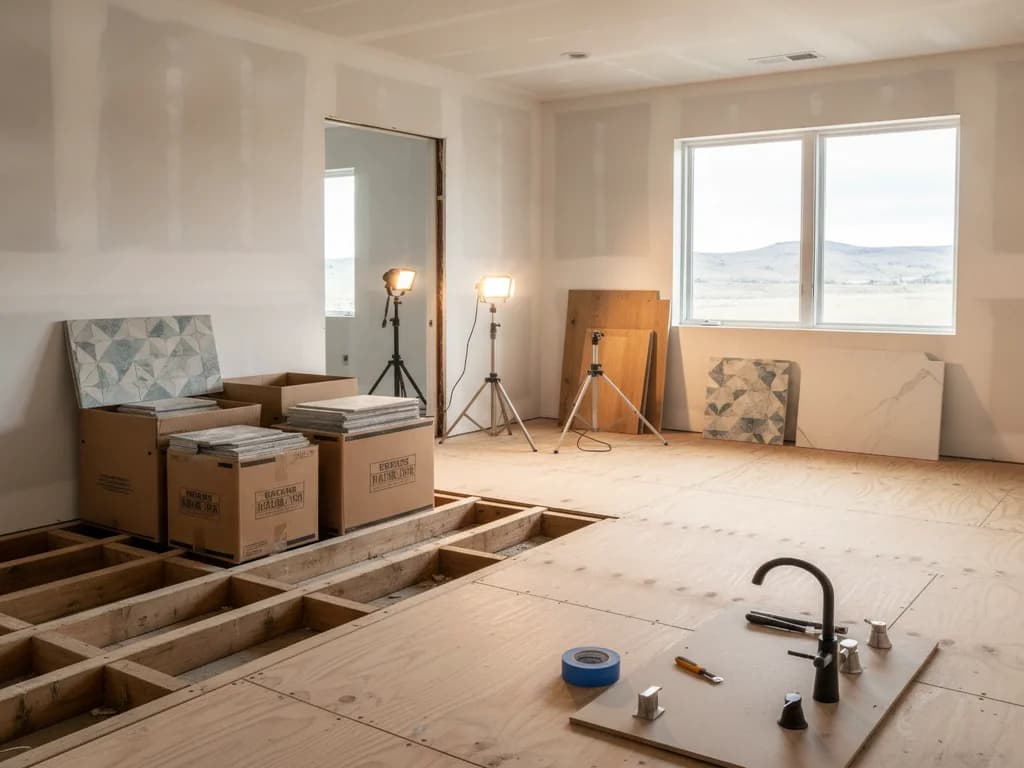
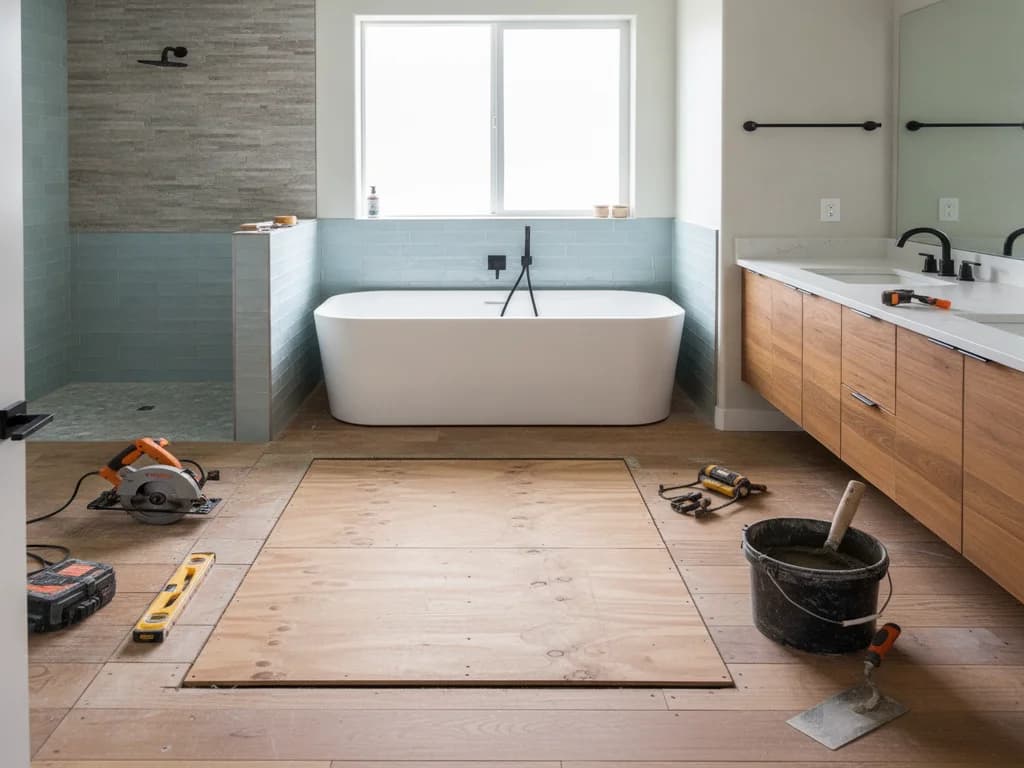
Flooring comes up past the visible damage until clean, dry subfloor appears on all sides. Edges are cut straight so the patch has solid backing.
- 3
Assess the subfloor and framing
With the subfloor exposed, the crew probes for rot, checks joists below, and confirms whether damage runs under the tub. This is the moment the keep-the-tub or pull-the-tub call gets made for real.
- 4
Dry and treat the structure
Wet framing is dried — with fans or dehumidifiers if needed — and any mold-affected wood is cleaned, treated, or replaced before anything gets covered.
- 5
Rebuild the subfloor
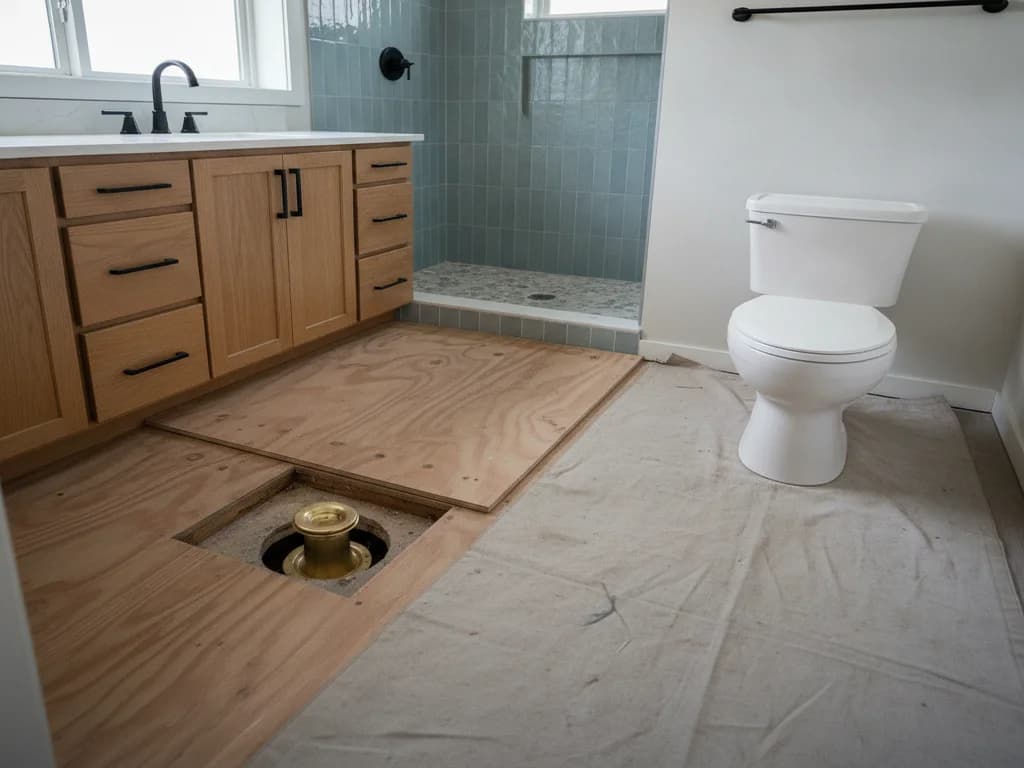
New subfloor sections are cut to land on joists, matched to the existing thickness, glued and screwed so the patch never squeaks or telegraphs through the new floor.
- 6
Install flooring and reseal the tub joint
New flooring goes down over appropriate underlayment, cut cleanly to the tub apron, and the tub-to-floor joint is sealed with flexible sealant — the joint that started this whole story.
Ready to plan your Boise bathroom?
Licensed & insured · 3-year workmanship warranty
Frequently asked questions
- Can you replace the floor around a bathtub without removing the tub?
- Yes, when the subfloor damage stops short of the tub apron. A pro cuts out the damaged section, patches the subfloor on solid joist bearing, and runs new flooring to a clean caulked joint at the tub. If probing shows softness continuing under the tub, it has to come out — a tub full of water cannot sit on rotted framing.
- How do I know if the subfloor under my tub is rotted?
- Warning signs include a spongy feel along the tub edge, flooring that is darkening or lifting at the apron, a tub that seems to have settled or tilted slightly, stains on the ceiling below, and a persistent musty smell. A contractor confirms with a probe test and, where possible, a look at the framing from below.
- How much does it cost to fix a water-damaged floor around a tub?
- Subfloor repairs typically run roughly $500–$800 for a standard area per HomeAdvisor, while broader water-damage restoration ranges from about $1,300–$6,100 per Angi, depending on severity. Add flooring, plumbing repair, and tub reinstallation as scope grows. A contained keep-the-tub repair lands near the low end; pulling the tub stacks several line items.
- Why is the floor next to my bathtub soft?
- Usually one of three things: a failed caulk joint letting splash water reach the subfloor, a slow leak at the tub drain or overflow gasket wetting the floor from below, or years of splash-out on flooring that was never waterproof. Softness means the subfloor is already wet and decaying — it will not firm back up on its own.
- Should I convert to a shower if my tub has to come out anyway?
- It is worth pricing. Pulling the tub, opening the surround, and rebuilding the floor is most of the demolition a tub-to-shower conversion needs, so the repair budget already covers real remodel groundwork. If you bathe regularly or it is your only tub, resetting or replacing the tub is the better call — resale generally favors keeping at least one tub in the house.
Sources
Claims and figures are drawn from the sources above and provided for general guidance; your project may vary. Photography is illustrative of design concepts. For a fixed price on your specific bathroom, request a free estimate.