Updated July 16, 2026 · 8 min read
By Boise Bath — bathroom & shower remodeling in Boise & the Treasure Valley
The short answer
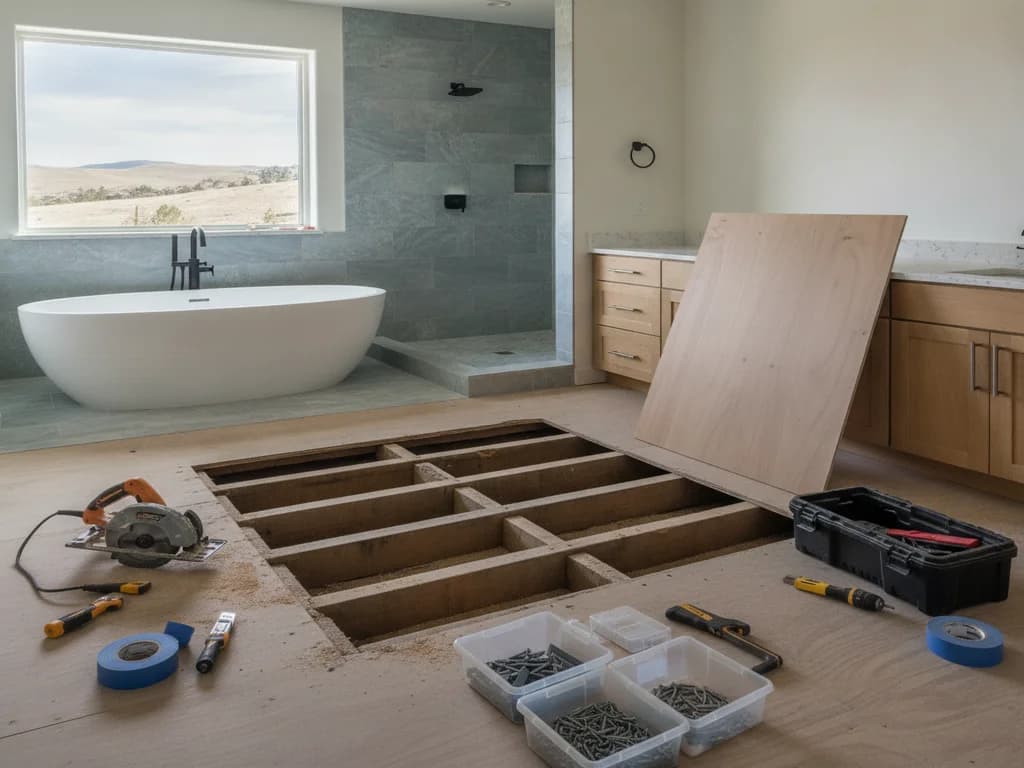
Replacing a rotten bathroom floor means rebuilding the assembly, not one layer: the finish floor and underlayment come out, damaged subfloor is cut back to sound framing, rotted joists are sistered or replaced, and the whole stack is rebuilt. Depending on how deep the rot goes, repairs commonly run roughly $500–$5,000+, per Angi and HomeAdvisor cost guides.
Key takeaways
- Rot is an assembly problem — by the time the finish floor shows damage, the subfloor beneath it is involved, and sometimes the joists.
- The leak gets found and fixed before anything is rebuilt; new wood over an active moisture source rots on the same schedule as the old.
- Repair scope comes in three tiers: finish floor only, finish plus subfloor, and finish plus subfloor plus framing — each roughly doubles the invoice.
- Rotted floors commonly hide mold; cleanup guidance for anything over about 10 square feet comes from the EPA.
- Bathroom floor rot repairs commonly run roughly $500–$5,000+ depending on how many layers are involved, per Angi and HomeAdvisor cost guides.
What does "rotten bathroom floor" actually mean?
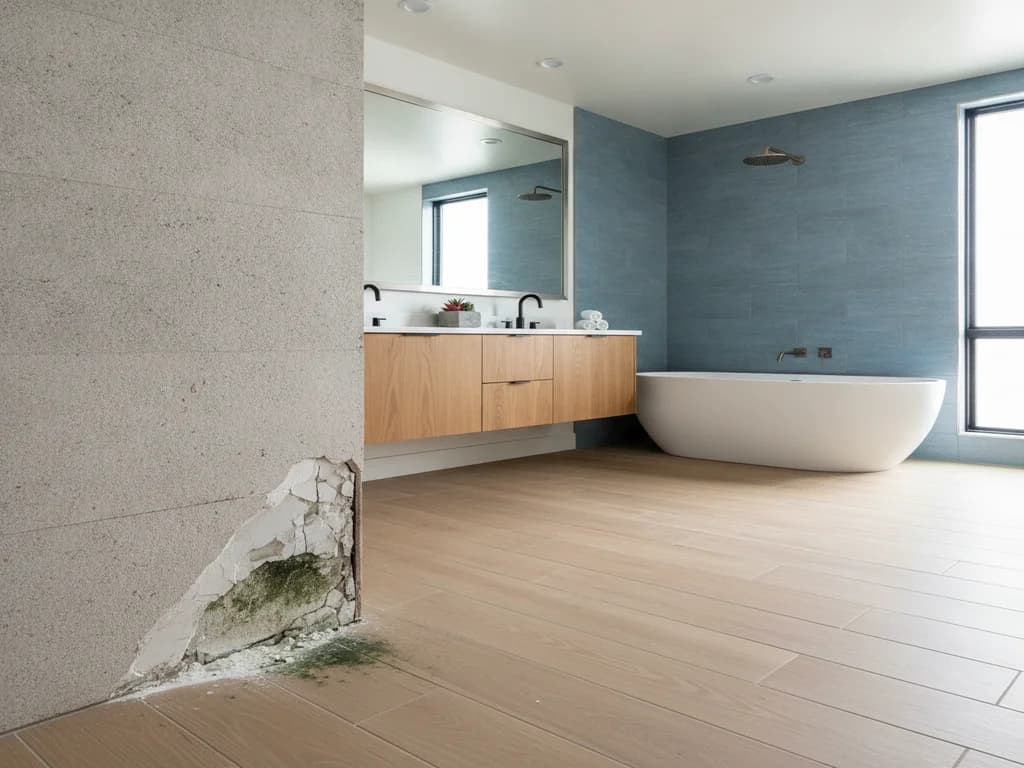
A bathroom floor is a stack: finish flooring on top, underlayment or tile substrate beneath it, a structural subfloor panel under that, all carried by joists. Wood rot is fungal decay that needs sustained moisture — so by the time rot is visible or a floor feels mushy underfoot, water has been moving through that stack for months or years.
That is why "replace the rotten floor" is almost never a one-layer job. Vinyl that is lifting or tile with cracking grout lines is the symptom; the wet, delaminating subfloor is the disease; and in long-running leaks, the joist tops are the complication. A proper bid prices the assembly, then adjusts as demolition reveals how deep the damage goes.
Where is the water coming from — and why does that come first?
Every rotten floor has a source: a toilet seal weeping at the flange, a tub or shower perimeter with failed caulk, a slow supply or drain leak inside the floor, or chronic condensation in a poorly ventilated room. Finding and fixing that source is step zero — a rebuilt floor over an unfixed leak simply restarts the clock.
Tracing the source is its own diagnostic process — staining patterns, moisture-meter readings, and crawl-space evidence each tell part of the story. Our guide to the signs of bathroom water damage walks through what each symptom means and how pros narrow down the culprit.
No rebuild before the leak is dead
A contractor who quotes a floor replacement without identifying the moisture source is quoting a temporary repair. The source diagnosis belongs in the bid, in writing, before demolition starts.
How deep does the rot go? The three scope tiers
Once demolition opens the floor, the damage lands in one of three tiers — and the tier determines most of the cost:
| Tier | What is damaged | What the repair includes | Typical cost range* |
|---|---|---|---|
| Surface | Finish floor and underlayment only; subfloor dries sound | New underlayment and finish floor after drying and source repair | Roughly $500–$1,500 |
| Structural panel | Subfloor delaminated or decayed; joists sound | Subfloor cut back to sound framing and replaced, then full stack above | Roughly $1,500–$3,500 |
| Framing | Joist tops or full joists decayed | Joist sistering or replacement, then subfloor and finish stack | Roughly $3,000–$5,000+ |
*Ranges per Angi and HomeAdvisor cost guides; actuals vary with room size, access, and finish material.
What does subfloor and joist repair involve?
The subfloor layer is cut back to the centerlines of sound joists past the last moisture reading — the mechanics, material choices, and OSB-versus-plywood decision are covered in detail in our guide to replacing a bathroom subfloor.
Framing repair is where a floor project earns its "structural" label. Joists with shallow surface decay are dried, treated, and sistered — a matching new member glued and bolted alongside the original to restore full bearing. Joists rotted through are replaced outright, which means temporary support and, in Boise, potentially a permit conversation with the city for structural work; City of Boise Planning & Development Services is the authority on where that line sits.
Most Treasure Valley homes with wood-framed floors sit over a crawl space, which is good news twice: the underside of the damage can be inspected honestly before the bid, and framing repairs can often be staged from below with less demolition upstairs.
What about mold under a rotted floor?
The same sustained moisture that feeds rot feeds mold, and opening a long-wet floor frequently exposes it. Small, contained growth is routinely handled during demolition with containment and cleanup; the EPA's guideline is that areas beyond roughly 10 square feet warrant professional remediation practices — containment, HEPA filtration, and proper disposal.
The practical takeaway: budget flexibility for what demolition reveals, and treat a musty smell as data. Designing the rebuilt bathroom to resist regrowth — ventilation, sealed penetrations, waterproof surfaces — is covered in our guide to mold-resistant bathroom remodeling.
What does the full replacement cost?
Across the three tiers, rotten-floor repairs commonly run roughly $500–$5,000+, per Angi and HomeAdvisor cost guides. The wide range is honest: the same symptom — a soft, discolored floor — can sit on top of one wet panel or three rotted joists, and nobody knows which until the floor is open.
Two line items surprise homeowners most. First, demolition and disposal are real costs, especially with tile — our demolition cost guide breaks that down. Second, fixtures: the toilet always comes out for a floor rebuild, and tubs or vanities sometimes do, adding plumbing labor on both ends of the job. This is the "discovery scope" pattern we detail in hidden remodel costs.
Repair the floor, or remodel the room?
A rotted floor forces most of the demolition a remodel would need anyway: finish floor gone, toilet pulled, sometimes the vanity out. When the bathroom around it is dated — and long-term leaks correlate strongly with older bathrooms, particularly pre-2000s Boise housing stock — completing the room while it is open is often the better spend than restoring a dated bathroom layer by layer.
The honest framing: a newer bathroom with one failed seal deserves a clean repair and nothing more. But if you were already living with a bathroom you dislike, the rot just paid for the demolition phase of a full bathroom remodel. Owners of older homes can see what that typically involves in our guide to remodeling older Boise homes.
What the process looks like
- 1
Trace and eliminate the moisture source
The leak — fixture seal, supply, drain, or chronic condensation — is identified, repaired, and verified dry before rebuild pricing is finalized. This is the step that makes the repair permanent.
- 2
Pull fixtures and demolish the finish floor
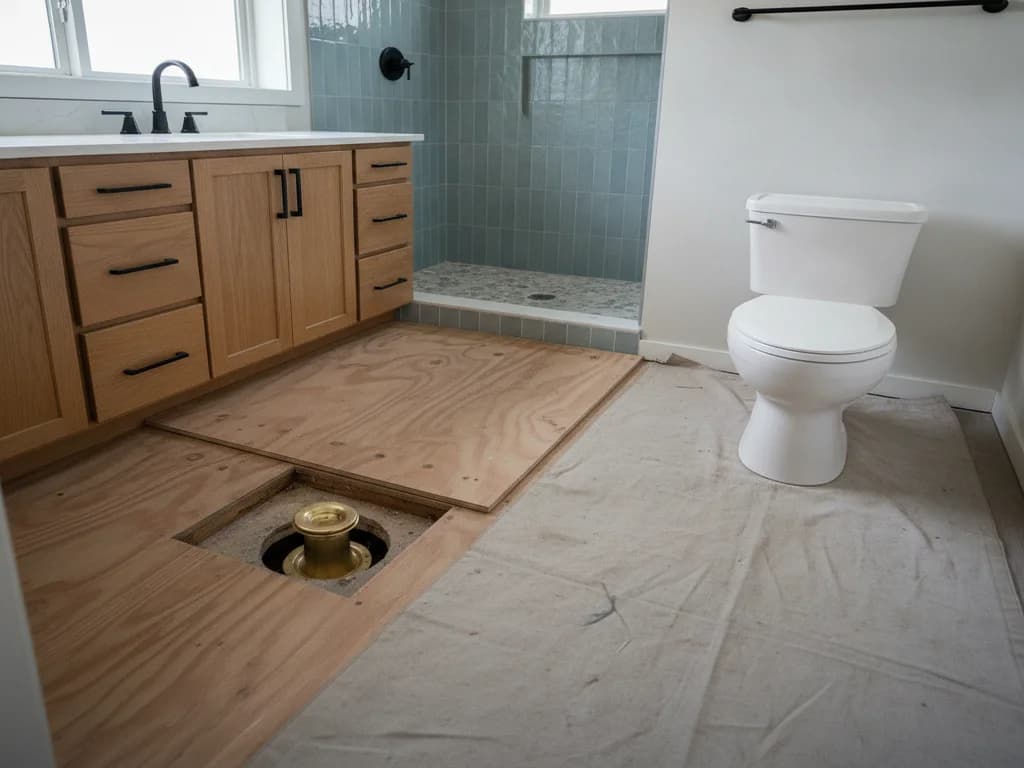
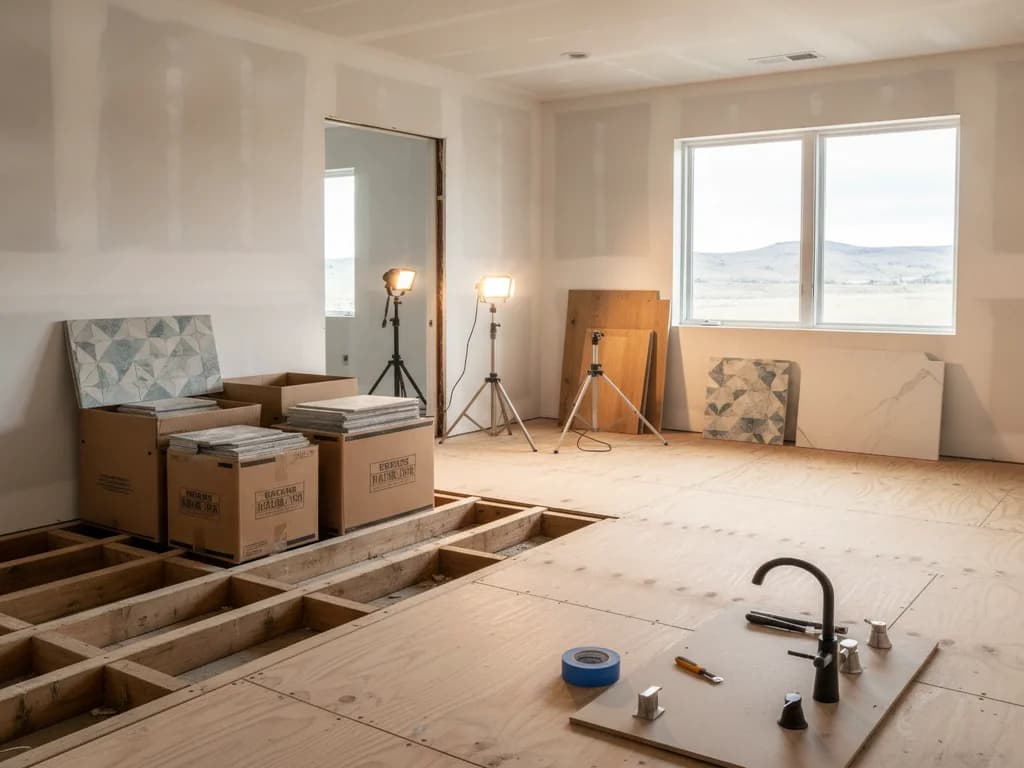
The toilet comes out (and tub or vanity if the damage runs under them), then finish flooring and underlayment are removed across the affected zone and disposed of.
- 3
Open and assess the structure
Subfloor is probed and moisture-mapped, then cut back to sound panel on joist centerlines. Exposed framing is inspected from above and from the crawl space to classify the repair tier.
- 4
Repair the framing
Decayed joist tops are treated and sistered with new lumber; joists rotted through are replaced under temporary support. Any exposed mold beyond small areas is contained and remediated per EPA guidance.
- 5
Rebuild the subfloor deck
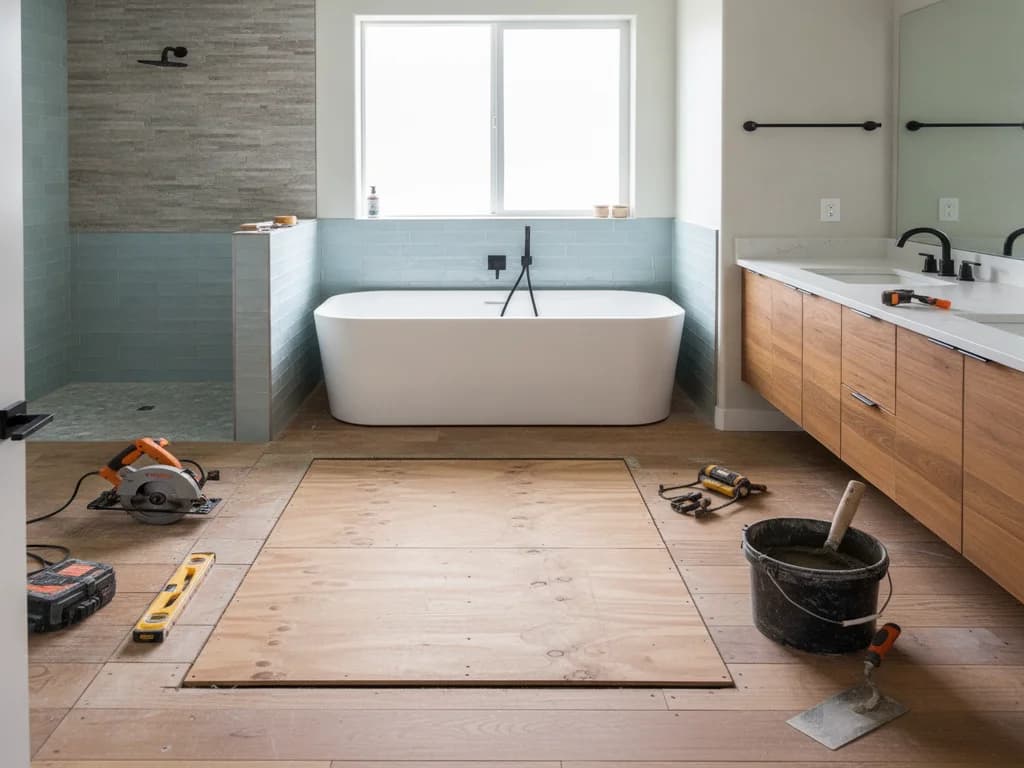
New tongue-and-groove panel matching the original thickness is glued and screwed to joists and blocking, seams flushed, and the deck checked flat for the finish floor.
- 6
Rebuild the finish stack and reset fixtures
Underlayment or tile substrate, finish flooring, and trim go back in; the toilet flange is set to the new floor height and fixtures are reinstalled with new seals and supply lines.
Ready to plan your Boise bathroom?
Licensed & insured · 3-year workmanship warranty
Frequently asked questions
- How much does it cost to replace a rotted bathroom floor?
- Commonly roughly $500–$5,000+, per Angi and HomeAdvisor cost guides, depending on how many layers are involved. Surface-level damage with a sound subfloor sits at the bottom of the range; repairs that reach the joists sit at the top. Finish flooring choice and fixture removal add their own costs on top of the structural work.
- Is a rotted bathroom floor dangerous?
- It can be. Rot progressively weakens the panel and framing that carry the tub, toilet, and you — heavily decayed floors can deflect noticeably and, in advanced cases, fail locally under a fixture. Rot also indicates sustained hidden moisture, which brings mold risk. A spongy or visibly sunken floor deserves prompt professional assessment, not monitoring.
- Can you replace a rotted bathroom floor without replacing the joists?
- Often, yes. In many repairs the rot is contained to the subfloor panel and the joist tops are shallow enough to treat and sister rather than replace. The determination is made after demolition, with the framing exposed and probed. Full joist replacement is the minority case, reserved for members decayed through their depth.
- How long does a rotten floor replacement take?
- A subfloor-tier rebuild in one bathroom typically runs two to four working days: demolition and drying, framing check, new deck, then the finish stack and fixture reset. Add time for joist replacement, mold remediation, or tile finishes that need cure time. A version folded into a full remodel follows the remodel timeline instead.
- Will homeowners insurance cover a rotted bathroom floor?
- It depends on the cause. Policies commonly cover sudden, accidental water damage — a burst line — but exclude damage from long-term leaks and deferred maintenance, which is what most rot is. Review your policy and document the source when the floor is opened; your contractor's photos of the damage and its cause are useful either way.
Sources
- Angi — Cost Guides
- HomeAdvisor — True Cost Guide
- EPA — Mold
- Journal of Light Construction
- City of Boise — Planning & Development Services
Claims and figures are drawn from the sources above and provided for general guidance; your project may vary. Photography is illustrative of design concepts. For a fixed price on your specific bathroom, request a free estimate.