Updated July 16, 2026 · 8 min read
By Boise Bath — bathroom & shower remodeling in Boise & the Treasure Valley
The short answer
Grout keeps cracking for four repeatable reasons: rigid grout was used where a flexible joint belongs (corners, tub edges, plane changes), the floor flexes underfoot, tiles have debonded and shift under load, or the grout was mixed or cured wrong. Regrouting only fixes the last one — cracks that return in the same spot mean movement, and movement needs its own fix first.
Key takeaways
- Cement grout is rigid and has almost no ability to stretch — any movement between tiles cracks it, by design, so recurring cracks are a movement report.
- The number-one culprit is grout where caulk belongs: industry standards (TCNA) call for flexible sealant, not grout, at every plane change — corners, tub and shower edges, floor perimeters.
- Cracks along one line in the field of a floor point to deflection or a subfloor panel joint moving beneath the tile.
- Grout cracking around a tile that sounds hollow means the tile has debonded — the grout is failing because the tile moves, not the other way around.
- Grout that crumbles and powders everywhere at once usually was mixed too wet or cured too fast — the one case where regrouting alone genuinely solves it.
- Regrouting over a movement problem buys months, not years; the same crack returns in the same place.
The pattern that tells you everything: where does it crack?
Cracked grout is one symptom with four different diseases, and the location of the crack is the fastest diagnostic there is. Before anything else, walk the bathroom and note exactly where the grout fails: inside corners and edges, one line across the field, a halo around specific tiles, or everywhere at once.
That map matters because grout is a rigid cement product with essentially no flexibility. It does not stretch, and it is not supposed to — its job is filling joints between tiles that do not move relative to each other. When something does move, even a hair, the grout above that movement cracks. Every time. Which is why regrouting a moving joint is a subscription, not a repair.
Below are the four causes, ranked by how often they turn out to be the answer, each with its signature location.
Cause 1: Grout where a flexible joint belongs
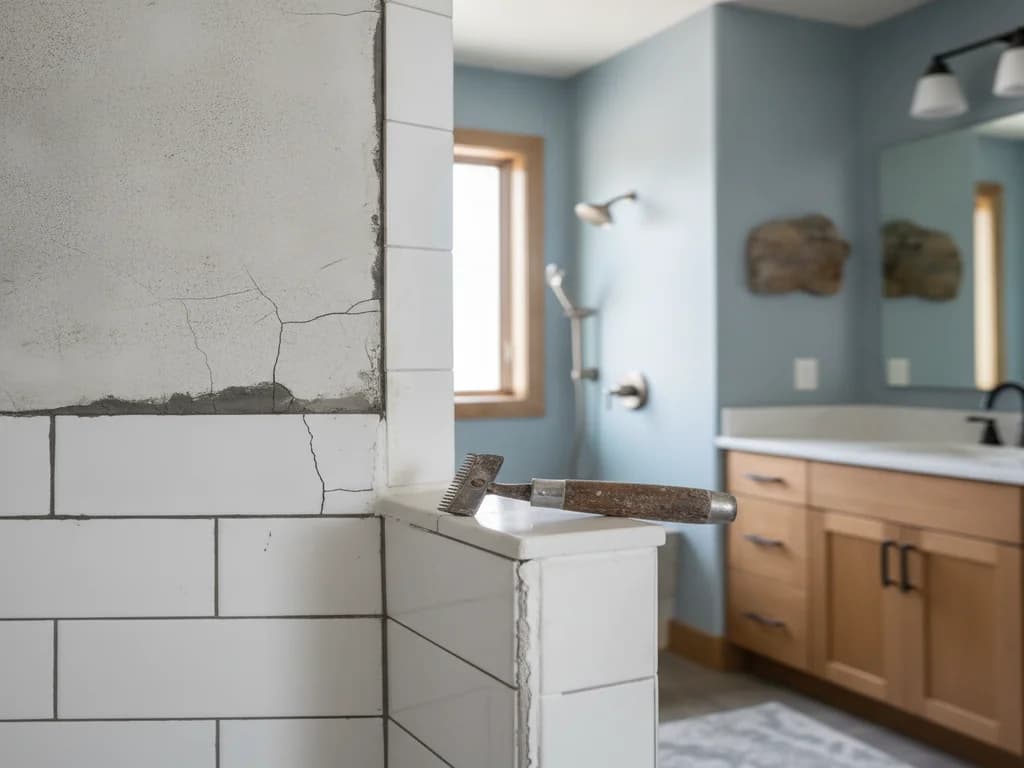
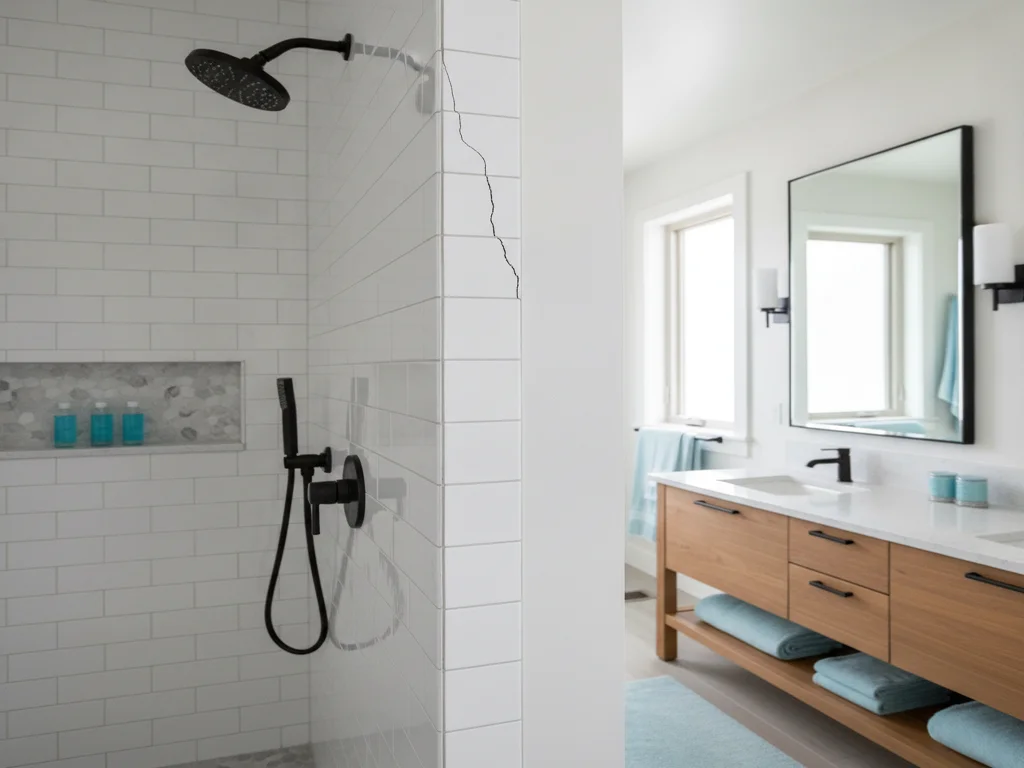
The most common cause of recurring grout cracks in bathrooms is grout installed at a "change of plane" — where the wall meets another wall, where the wall meets the tub or floor, where the shower curb meets everything. Those joints move constantly: framing shifts seasonally, a tub flexes when it fills with water and 150-plus pounds of bather, floors and walls expand at different rates.
Industry standards are unambiguous here. Tile Council of North America (TCNA) movement-joint details call for those plane changes to get a flexible sealant — a quality caulk or silicone — rather than grout, precisely because rigid grout cannot survive the movement. An installer who grouted the corners tight built a joint guaranteed to crack, usually within the first year or two.
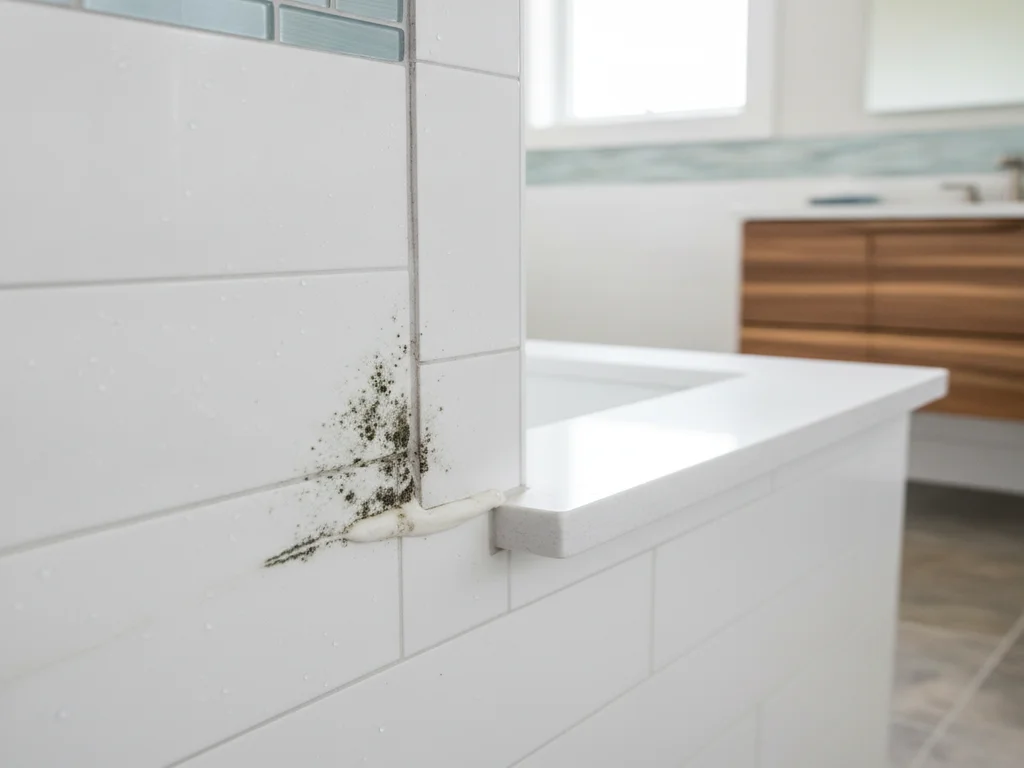
The signature: cracks concentrated at inside corners, along the tub-to-tile joint, and where floor meets wall, while the field grout stays sound. The fix is not more grout — it is removing the grout from those joints and replacing it with color-matched flexible sealant, which manufacturers like Custom Building Products and LATICRETE make to match their grout lines exactly. If your caulk lines have their own problems, our guide to why shower caulk keeps mildewing covers that side.
Cause 2: The floor moves under the tile
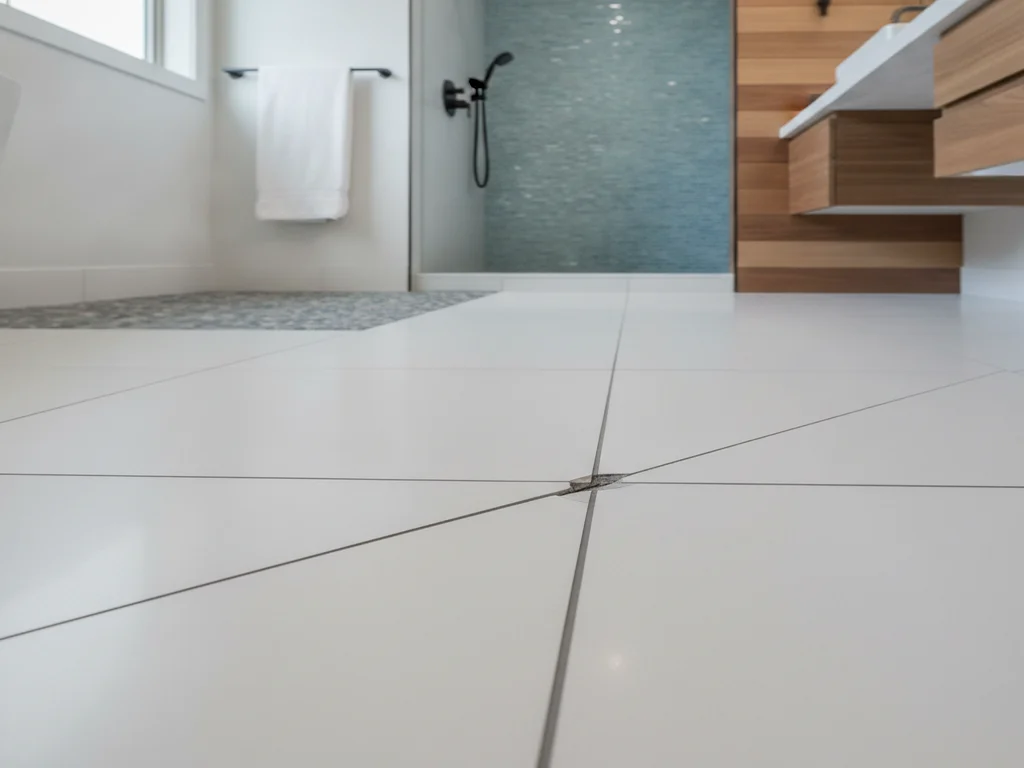
Grout cracking in lines across the field of a floor — not at edges, but marching across the middle of the room — points below the tile. Either the floor structure deflects underfoot more than a tile assembly tolerates (TCNA standards cap it at L/360 for ceramic), or a subfloor panel joint beneath the tile is moving and the movement is telegraphing up through the grout line above it.
Grout is the canary here: it is the weakest, thinnest part of the assembly, so it cracks first. Left alone, the same movement eventually fatigues the tile bond and then the tile itself — the full progression is covered in why bathroom tiles crack or come loose.
The tell that separates this from a grout-quality problem: the cracks are directional and repeatable. They follow a line, often a joist bay or the seam between subfloor sheets, and they return in exactly the same line after regrouting. No grout product fixes this, including epoxy — a stiffer grout over a moving floor just cracks with sharper edges.
Cause 3: The tile itself has let go
Sometimes cracking grout is the innocent bystander. When a tile debonds from its mortar — poor coverage on install, water degradation, substrate movement — it starts shifting microscopically under every footstep, and the grout bordering it shears. The grout halo cracks not because the grout failed but because it is the only thing still holding a loose tile in place.
The test takes ten seconds: tap the tiles around the cracked grout with a coin. A hollow, drummy sound against the solid thud of neighboring tiles means the tile has separated. Cracked grout plus hollow tile is a tile repair, not a grout repair — the tile needs to come out and be re-set properly, which is exactly the scope of replacing cracked bathroom tile.
This cause deserves urgency in showers: a debonded tile with cracked grout is an open water path into the assembly, and water behind tile accelerates every other failure mode, from further debonding to the wall going soft.
The regrout trap
Regrouting is satisfying, cheap, and visible — which makes it the default response to any grout crack. But grout only cracks twice in the same place for a structural reason. If you have already regrouted a joint once and the crack came back, stop regrouting and start diagnosing: tap the tiles, check whether the crack sits at a plane change, and feel the floor for flex. The third regrout will not outperform the second.
Cause 4: The grout itself was bad — mixed, chosen, or cured wrong
The one cause where grout is genuinely the problem. Cement grout is chemistry: too much water in the mix (or too much sponge water during cleanup) weakens it dramatically, leaving grout that cures soft, powdery, and crack-prone everywhere. Fast, hot, dry curing — common in our dry Boise summers when a bathroom window is left open over fresh grout — starves the cement of the moisture it needs and produces the same brittle result.
Choice matters too. Unsanded grout in joints wider than about 1/8 inch shrinks as it cures and cracks down the center of the joint — the classic wrong-product failure our sanded vs. unsanded grout guide exists to prevent. And old grout simply wears out: decades of cleaning and soaking erode cement grout until it cracks and powders from age alone.
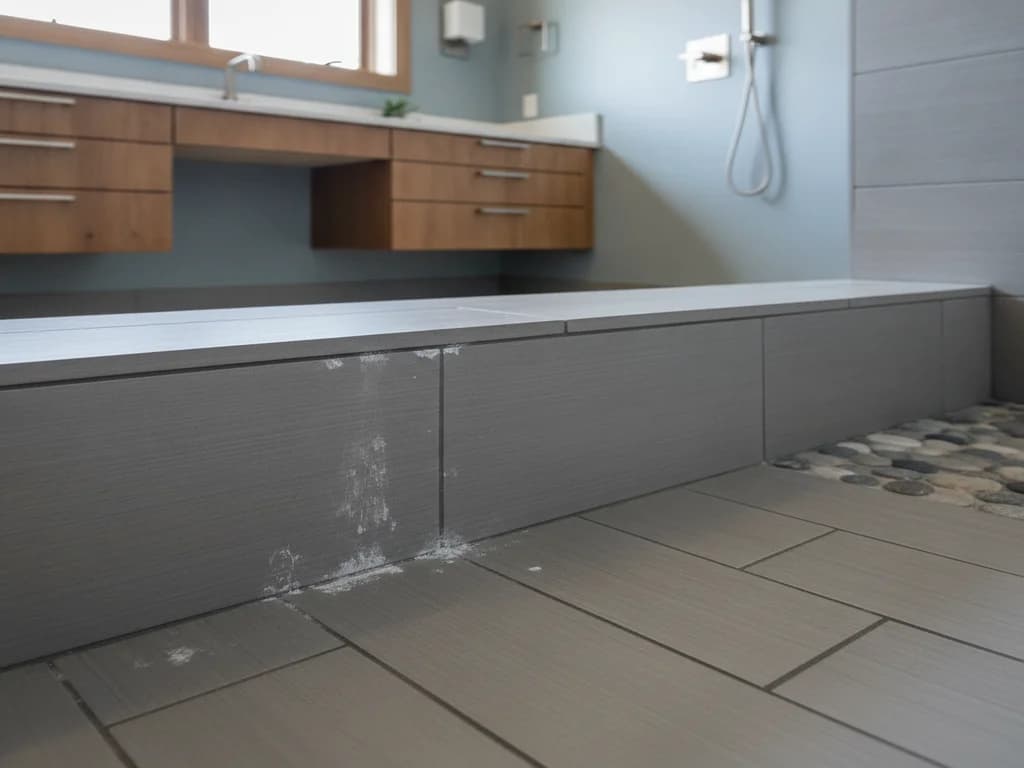
The signature is distribution: quality problems show up everywhere at once — crumbling, powdering, hairline cracks across the whole installation — rather than in one repeating location. This is the one profile where regrouting genuinely is the fix, because the substrate and tile underneath are sound; only the grout failed.
Severity triage: annoyance, water path, or structural symptom
Ranked from live-with-it to act-now:
- Cosmetic — hairline cracks in aged grout on a dry-area floor, tiles all sound solid. A regrouting candidate on your schedule, not the grout's.
- Water path — any cracked or missing grout inside a shower or along a tub. Grout is not the waterproofing layer, but it is the first shed layer; open joints feed water into the assembly daily. Worth fixing promptly, and worth checking what is behind it.
- Movement symptom — cracks that returned after regrouting, cracks in lines across a floor, or cracks bordering hollow tiles. The grout is reporting a tile or structure problem; fix that first or budget to fix this forever.
- Compound symptom — cracked grout plus a spongy floor, staining, or a musty smell. Water has been through the open joints long enough to reach wood; you are now in soft-floor and subfloor territory.
Regrout, repair, or retile: making the honest call
A pro sorting this out works the same sequence this article does: map the crack locations, tap-test the bordering tiles, press the plane changes for hard grout where sealant belongs, and bounce-test the floor. Ten minutes of diagnosis prevents the most expensive mistake in this category — paying for a full regrout over a movement problem.
The decision tree from there: quality-failure grout over sound tile means regrout, and upgrading the material while you are there is worth considering — the epoxy vs. cement grout comparison covers when the stain-proof, denser option earns its premium. Plane-change cracks mean cutting those joints out and sealing them flexibly, a small targeted job. Hollow tiles or moving floors mean tile or structural work first, grout second.
And when the grout is failing broadly in a shower that is 20-plus years old, step back before commissioning the perfect regrout: the honest comparison is regrout cost against what those years have done to everything behind the grout. Our regrout-or-retile decision guide walks that math without the sales pitch.
Ready to plan your Boise bathroom?
Licensed & insured · 3-year workmanship warranty
Frequently asked questions
- Why does my grout keep cracking in the shower corners?
- Because corners are movement joints and grout cannot move. Walls, tubs, and floors all shift slightly and independently — seasonally and every time the shower is used — and industry standards call for flexible sealant at those plane changes, not grout. Grouted corners crack on a schedule. The fix is removing the corner grout and replacing it with color-matched silicone or siliconized caulk, which flexes instead of cracking.
- Is cracked grout a sign of foundation problems?
- Rarely — bathroom grout cracks overwhelmingly trace to local causes: grouted plane changes, floor deflection, debonded tiles, or weak grout. That said, grout is a sensitive crack detector, so widespread directional cracking that lines up with cracks elsewhere in the house (drywall corners, doors that stopped closing) is worth mentioning to a contractor. On its own, a cracked grout line in one bathroom is a bathroom problem.
- Can I just regrout over cracked grout?
- Not literally over it — new grout needs the old joint raked out to a proper depth to bond and cure correctly; a skim coat over cracked grout fails fast. And regrouting only holds if the crack cause was the grout itself. Cracks at corners, over hollow tiles, or along lines that flex will reopen through brand-new grout. Diagnose the cause first; regrout when the answer is genuinely grout quality or age.
- Does cracked grout mean water is getting behind my tile?
- It can. Grout is not the waterproofing layer — a membrane behind the tile is supposed to do that — but grout sheds most of the water before it gets that deep. An open crack in a shower lets water into the mortar bed and against the membrane every day. Over sound waterproofing that is survivable; over old or marginal waterproofing it is how failures start. In wet areas, treat open grout joints as prompt repairs.
- What is the best grout that will not crack?
- There is no crack-proof grout, only grout matched to a stable installation. Epoxy grout is denser, stain-proof, and more crack-resistant than cement grout, but even epoxy cracks over a moving floor or a debonded tile — and being harder, it is more work to remove when it does. Fix the movement first; then choose between epoxy and quality cement grout based on stain resistance and budget rather than crack hopes.
- How much does fixing cracked grout cost?
- It scales with the diagnosis. Cutting out and re-sealing plane-change joints is a small targeted job; a full shower or floor regrout is a day-plus of labor, with published guides like Angi putting typical regrouting in the low hundreds to around a thousand dollars depending on area. If the cause is debonded tile or a flexing floor, the honest cost is the tile or structural repair — the regrout alone would just be rent.
Sources
- Tile Council of North America (TCNA)
- National Tile Contractors Association
- Custom Building Products (RedGard)
- LATICRETE
- Angi — Cost Guides
Claims and figures are drawn from the sources above and provided for general guidance; your project may vary. Photography is illustrative of design concepts. For a fixed price on your specific bathroom, request a free estimate.