Updated July 16, 2026 · 6 min read
By Boise Bath — bathroom & shower remodeling in Boise & the Treasure Valley
The short answer
Use sanded grout for joints 1/8 inch and wider — the sand prevents shrinkage cracking — and unsanded grout for joints under 1/8 inch, where it packs tighter and holds on walls. Most bathroom floors take sanded; polished stone, glass tile, and tight rectified joints take unsanded to avoid scratching.
Key takeaways
- Joint width decides the grout: sanded for joints 1/8 inch and wider, unsanded for narrower — this follows how cement grouts are standardized, not brand preference.
- The sand is structural: it keeps wide joints from shrinking and cracking as the cement cures. Unsanded grout in a wide joint will crack; it is a when, not an if.
- Sanded grout can scratch glass tile, polished marble, and soft honed stone — the one place unsanded wins regardless of joint width.
- Unsanded grout is stickier and hangs on vertical joints better, which is why wall tile with tight joints almost always gets it.
- Both are cement grouts and both need sealing; epoxy grout is the no-seal alternative and a separate decision.
- Rectified large-format tile with 1/16-inch joints is the main reason unsanded grout shows up on modern bathroom floors.
The verdict: the joint width decides, not you
Sanded versus unsanded is the rare remodel decision with an actual rule. Cement grouts are standardized around joint width: sanded grout is made for joints 1/8 inch and wider, unsanded for joints narrower than that. The Tile Council of North America’s installation standards are built around this split, and every grout manufacturer prints it on the bag.
The rule exists because the sand is doing a job. Cement shrinks as it cures, and in a wide joint that shrinkage becomes cracks unless aggregate holds the mass together. In a narrow joint, sand does the opposite of helping — the grains bridge the gap and keep the grout from packing full depth.
So the decision tree is short: measure the joint, check the tile surface for scratch risk, and the grout picks itself. The rest of this article covers the exceptions and where each one lands in a real bathroom.
What the sand actually does
Sanded grout is portland cement, pigment, and fine silica sand. The sand is aggregate — the same role gravel plays in concrete. It gives the cured joint body, resists shrinkage, and stands up to foot traffic, which is why floors with normal joints always get sanded grout.
Unsanded grout drops the aggregate, leaving a smooth, almost creamy cement paste. Without sand it packs completely into joints as tight as 1/16 inch, clings to vertical surfaces instead of slumping, and cures glass-smooth. The cost of that smoothness is shrinkage: put it in a 1/4-inch joint and it will crack and pit as it cures, no matter how carefully it was mixed.
Neither is the premium product — they are siblings tuned for different gaps. If you are comparing cement grout against the genuinely different chemistry, that is epoxy vs. cement grout, a separate decision about stain resistance and sealing, not joint width.
Sanded vs. unsanded: the side-by-side
The whole comparison in one table:
| Factor | Sanded grout | Unsanded grout |
|---|---|---|
| Joint width | 1/8 inch and wider | Under 1/8 inch (down to about 1/16 inch) |
| Why | Sand prevents shrinkage cracking in wide joints | Packs fully into narrow joints; no sand to bridge the gap |
| Typical bathroom use | Floors, mosaics with standard spacing, most shower floors | Wall tile with tight joints, rectified large-format tile |
| Vertical surfaces | Workable but heavy — can slump in wide wall joints | Sticky and slump-resistant — the wall-tile default |
| Scratch risk | Can scratch glass tile, polished marble, soft honed stone | Safe on delicate surfaces |
| Texture when cured | Slightly gritty, concrete-like | Smooth, dense finish |
| Sealing | Yes — it is a cement grout | Yes — same chemistry, same sealing schedule |
Joint-width thresholds reflect TCNA-referenced standards for cementitious grouts; always confirm the range printed on the specific product.
Where each one belongs in a bathroom
Bathroom floors usually take sanded grout. Standard floor tile is set with 1/8-inch to 3/16-inch joints, mosaic sheets come spaced at 1/8 inch, and both are squarely in sanded territory — with the durability bonus that matters underfoot. Shower floors, almost always mosaic, are sanded-grout country too.
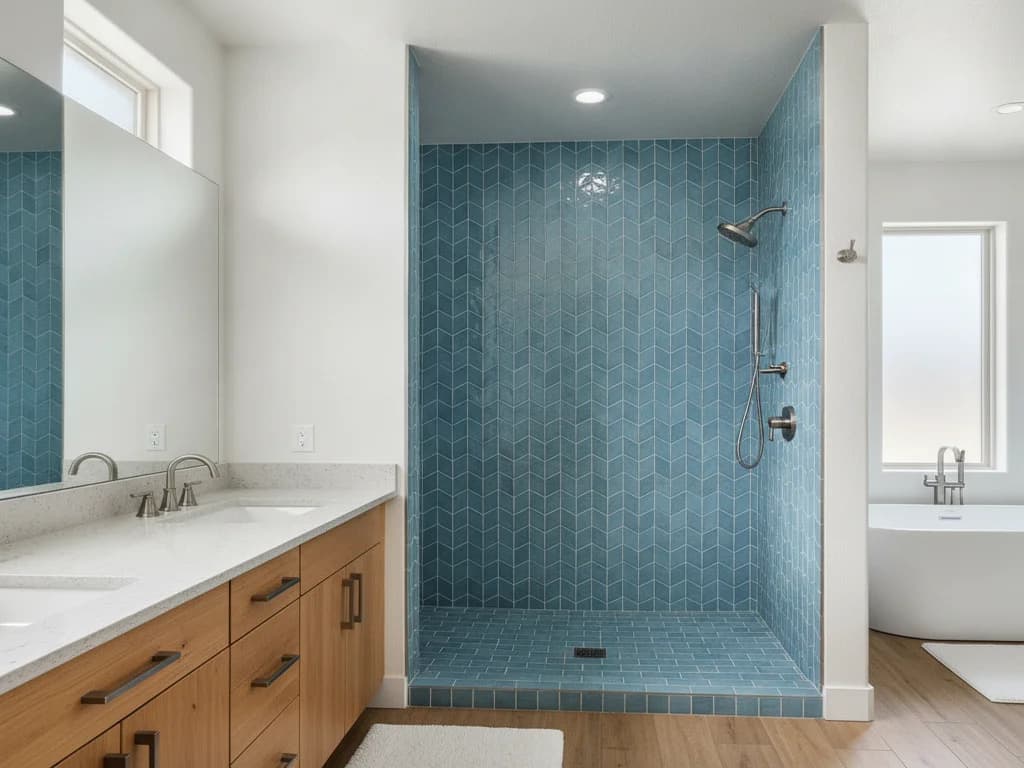
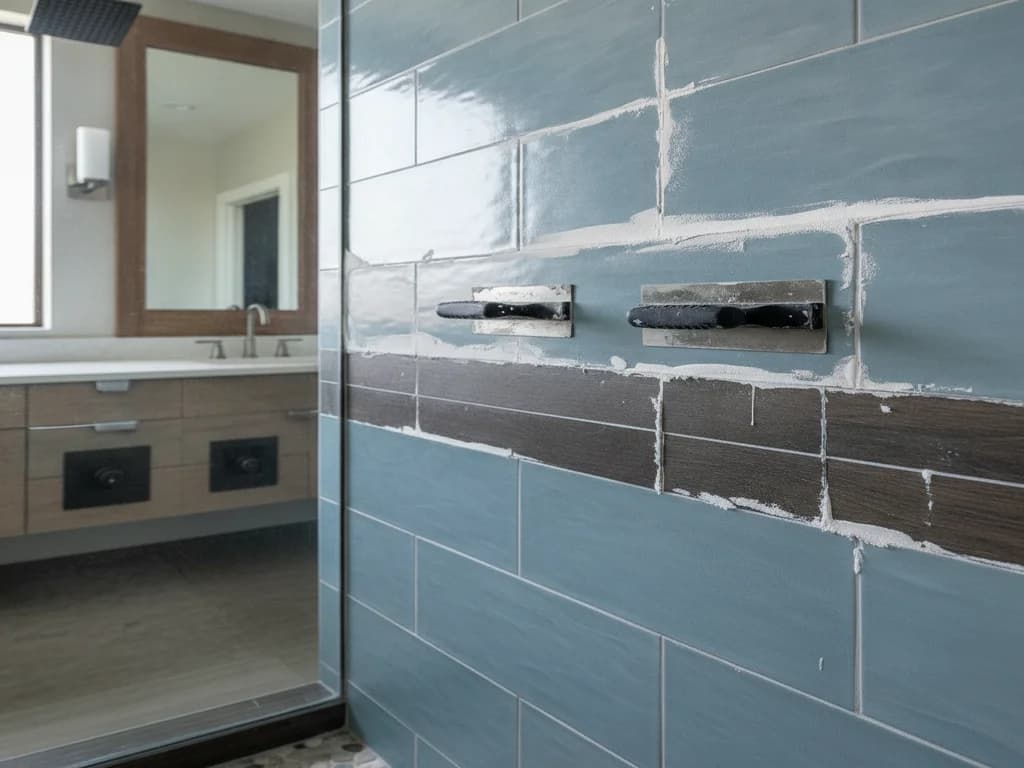
Walls split by tile choice. Classic subway tile and handmade-look ceramic often run 1/8-inch joints — either grout qualifies at the boundary, and installers usually go unsanded on walls because it hangs better and wipes smoother. Rectified large-format tile, with its machined edges and 1/16-inch joints, requires unsanded, full stop.
The boundary case — exactly 1/8 inch — goes to sanded on floors for durability and unsanded on walls for workability. And if your existing grout is the problem rather than the plan, the honest starting point is whether to regrout or retile before choosing what goes in the joints.
The scratch-risk exception: glass, marble, and soft stone
One exception overrides the joint-width rule: surface hardness. The silica in sanded grout is hard enough to scratch glass tile, polished marble, and softer honed stones as it is floated and sponged across the face. The damage happens during installation, is permanent, and shows worst on dark polished surfaces.
For these tiles, installers use unsanded grout even at 1/8-inch joints, or step up to an epoxy or high-performance grout the tile manufacturer approves. This is a spec worth confirming in writing on any project involving glass mosaic or polished stone — it is a cheap question that prevents an expensive, unfixable mistake.
It also cuts the other way: gritty sanded grout in a tight polished-marble joint is a double error — wrong width and wrong surface. Tile and grout get chosen together, which is why choosing bathroom tile should settle joint size and grout type in the same conversation.
Grout was never the waterproofing
Sanded or unsanded, cement grout is porous — water passes through every grout joint in your shower by design. The waterproof layer is the membrane behind the tile, not the grout on top of it. If grout is cracking, staining, or staying dark long after showers, that is a symptom worth diagnosing before cosmetically regrouting over it.
Maintenance: the same, because the chemistry is the same
Sanded and unsanded grout age identically — both are cement, both are porous, and both need sealing after installation and periodic resealing after that. Neither resists stains or hard water better than the other; the differences end once the joints cure.
Treasure Valley hard water is the local complication: mineral film builds on grout lines regardless of type, and aggressive acid cleaners erode cement grout while they dissolve the scale. Routine care with pH-neutral cleaner and a sensible sealing schedule — covered in tile and grout care — is what actually extends grout life.
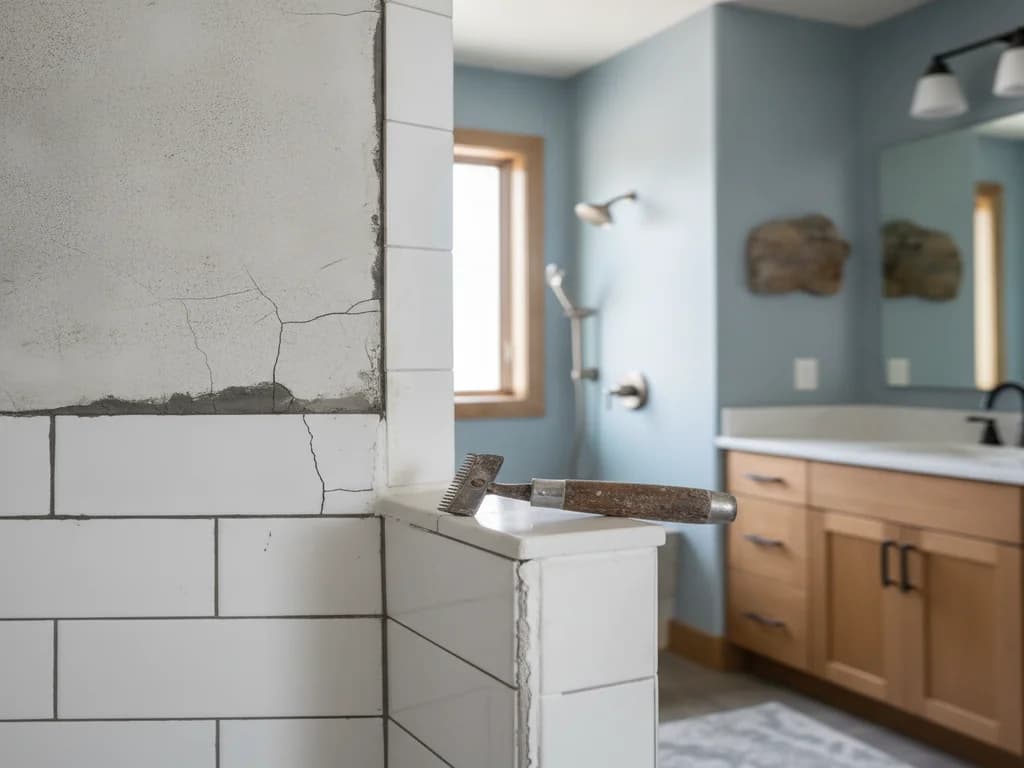
When grout is beyond care — crumbling, deeply stained, or missing in spots — replacing bathroom grout covers what a professional regrout involves and when it makes sense versus retiling.
Which should you choose?
Match the grout to the joint and the surface:
- Bathroom floor, standard 1/8-inch+ joints: sanded — durability underfoot and no shrinkage cracks.
- Shower floor mosaic: sanded — standard spacing and constant water traffic both point the same way.
- Rectified large-format tile at 1/16 inch, walls or floors: unsanded — sand physically cannot pack those joints.
- Subway or wall tile at 1/8 inch: unsanded for workability and a smoother wiped finish; sanded also qualifies at the boundary.
- Glass tile, polished marble, honed soft stone — any joint width: unsanded or a manufacturer-approved alternative; sanded scratches.
- Stain-prone areas where sealing feels like a chore: read epoxy vs. cement grout — that upgrade question is separate from the sanded/unsanded rule.
Ready to plan your Boise bathroom?
Licensed & insured · 3-year workmanship warranty
Frequently asked questions
- Can I use unsanded grout on 1/8-inch joints?
- Yes — 1/8 inch is the boundary where both grouts qualify, and unsanded is the common choice on walls because it clings better and wipes smoother. On floors at 1/8 inch, most pros go sanded for wear resistance. Below 1/8 inch, unsanded is required; above it, sanded is. Only the boundary is a judgment call.
- What happens if you use unsanded grout in wide joints?
- It cracks. Cement shrinks as it cures, and without sand as aggregate a wide joint of unsanded grout pulls away from the tile edges, pits, and develops hairline cracks — often within weeks. The fix is raking out the failed grout and regrouting with the right product, which costs far more than the bag of sanded grout would have.
- Does sanded grout really scratch glass tile?
- It can, and the damage is permanent. The silica sand is hard enough to leave fine scratches on glass, polished marble, and soft honed stone as the grout is floated across the surface during installation. Glass mosaic and polished-stone projects should be grouted with unsanded or a manufacturer-approved epoxy — confirm this spec with your installer before grouting day.
- Is sanded or unsanded grout better for shower walls?
- It follows the joint width like everywhere else. Most shower wall tile — subway at 1/8 inch, rectified large-format at 1/16 — ends up with unsanded grout, which also handles vertical application better. Wider-set wall tile takes sanded. Neither makes the shower more waterproof; the membrane behind the tile does that job, not the grout.
- Do sanded and unsanded grout both need sealing?
- Yes — they are the same porous cement chemistry, so both need sealing after installation and resealing on a maintenance schedule. Hard water areas like the Treasure Valley are harder on grout lines, which makes the sealing schedule matter more. If you want grout that never needs sealing, that is epoxy grout — a different product and a different price tier.
Sources
- Tile Council of North America (TCNA)
- Custom Building Products (RedGard)
- LATICRETE
- This Old House — Bathrooms
Claims and figures are drawn from the sources above and provided for general guidance; your project may vary. Photography is illustrative of design concepts. For a fixed price on your specific bathroom, request a free estimate.