Updated July 16, 2026 · 6 min read
By Boise Bath — bathroom & shower remodeling in Boise & the Treasure Valley
The short answer
Metal edge trim is the default in modern bathrooms — it protects tile edges, comes in finishes that match your fixtures, and works with porcelain lines that offer no bullnose. Choose bullnose for traditional looks when your tile line makes it; reserve mitered edges for premium projects where the labor budget allows.
Key takeaways
- Every exposed tile edge needs a finish — raw cut porcelain shows an unglazed core and chips easily, so “no trim” is not one of the options.
- Bullnose is a matching tile with a rounded finished edge; it reads traditional and seamless, but many porcelain and rectified lines simply don’t make it.
- Metal profiles (the Schluter-style family) install with the tile, protect the edge mechanically, and come in finishes that can echo your plumbing hardware.
- A mitered edge — field tile cut at 45 degrees and joined — is the cleanest look and the most labor, with a corner that is sharper and more chip-prone in daily life.
- Tile availability usually makes this decision for you: if the line has no bullnose, the choice is metal or miter.
- Cost direction: bullnose costs more per piece than field tile, metal profiles are a modest materials add, and mitering is a labor line item.
The verdict: metal for modern, bullnose for traditional, miter for premium
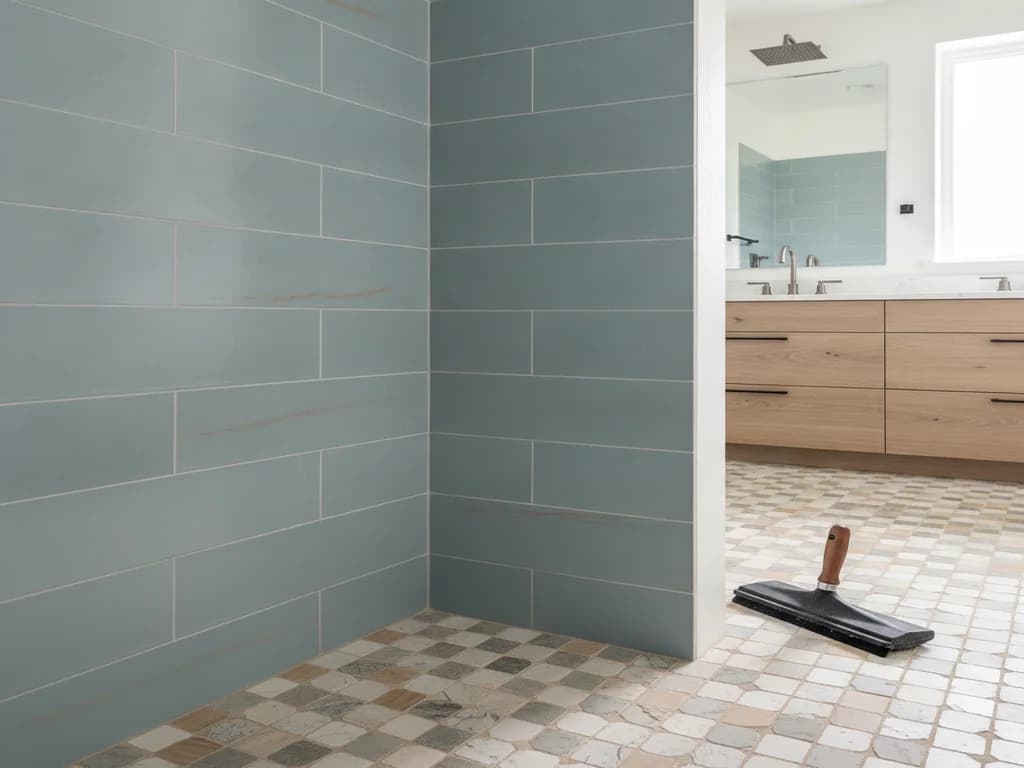
Tile edges are one of those details nobody thinks about until the quote arrives — and then they define whether the finished bathroom reads builder-grade or custom. Wherever tile stops against paint — the end of a wainscot, the outside of a shower, a niche, a curb — that exposed edge has to be finished somehow.
The short version: metal profiles are the modern default and the only universal option, because they work with any tile. Bullnose is the traditional answer and still the softest-looking one, but only when your tile line actually offers it. Mitered edges are the premium move — beautiful, minimal, and priced like the labor they are.
Which one fits your bathroom is partly style and partly what your tile allows — and it is worth settling during tile selection, not discovering at install week that your porcelain has no matching trim.
Why exposed tile edges need finishing at all
A factory tile edge on a glazed ceramic or porcelain tile is finished on the face only. Cut or exposed edges show the tile’s body — a different color than the glaze on most porcelain — and present a sharp, chip-prone corner at exactly the height hips, laundry baskets, and vacuum cleaners find it.
Rectified tile raises the stakes: its edges are ground square and crisp for tight joints, which makes an unfinished exposed edge look even more abrupt. And in showers, edge treatments do double duty, closing the tile assembly neatly where it meets the surrounding wall.
This is why every professional tile bid includes an edge plan. If a quote doesn’t mention how edges terminate, that is a question worth asking — unfinished edges are one of the classic bathroom tile mistakes that photographs badly forever.
The three options, honestly described
Bullnose is a trim tile from the same line as your field tile, with one edge rounded and glazed at the factory. It turns the corner gently and matches perfectly, because it is the same tile. The catch is availability: ceramic lines usually offer it, but a large share of porcelain — especially rectified, imported, and wood-look lines — never made bullnose at all. Where it exists, expect to pay noticeably more per piece than for field tile.
Metal edge profiles — Schluter’s Jolly, Rondec, and Quadec are the names most people meet, and other manufacturers make equivalents — are extruded metal strips set into the thinset as the tile goes in. The visible face caps the tile edge in anodized aluminum, stainless, or brass-tone finishes. They protect the edge mechanically, come in heights matched to tile thickness, and are the only option that works with literally any tile.
A mitered edge uses no trim piece at all: the installer bevels two tiles at 45 degrees and joins them so the tile appears to fold around the corner. On through-body or color-body porcelain it is seamless and beautiful. It is also skilled labor at every linear foot, and the finished corner is a fine glazed point — the most elegant option and the most vulnerable one to a hard knock.
Bullnose vs. metal vs. mitered: the side-by-side
Here is the whole decision in one table:
| Factor | Bullnose tile | Metal profile | Mitered edge |
|---|---|---|---|
| Look | Soft, rounded, traditional | Crisp line; reads modern | Seamless — tile appears to wrap the corner |
| Works with any tile | No — only lines that make it | Yes | Best with through-body or color-body porcelain |
| Edge protection | Good — glazed rounded corner | Best — metal takes the impact | Weakest — fine corner can chip |
| Cost direction | Higher per piece than field tile | Modest material add | Labor-priced — the premium option |
| Design flexibility | Matches tile only | Finishes can match fixtures and glass hardware | Invisible by design |
| Typical use | Traditional baths, ceramic subway installs | Modern baths, niches, curbs, any porcelain | High-end showers, niches, benches |
Profile types, finishes, and sizing follow manufacturer specifications (e.g., Schluter Systems); availability of bullnose varies line by line.
Style, finish-matching, and the places edges show up
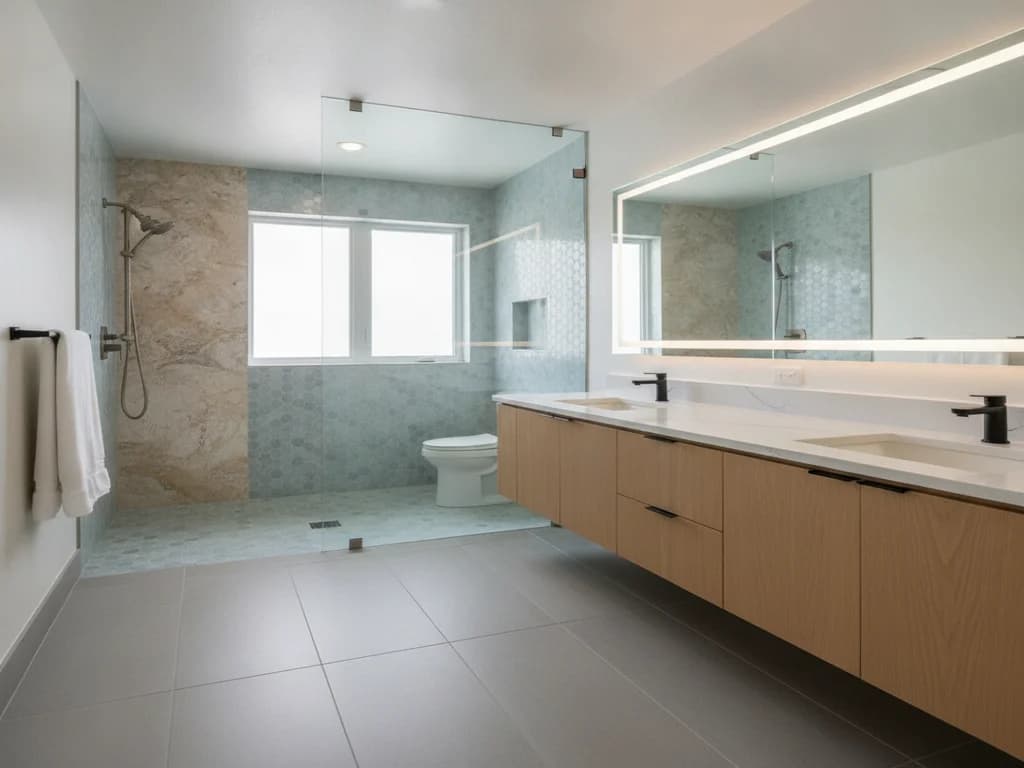
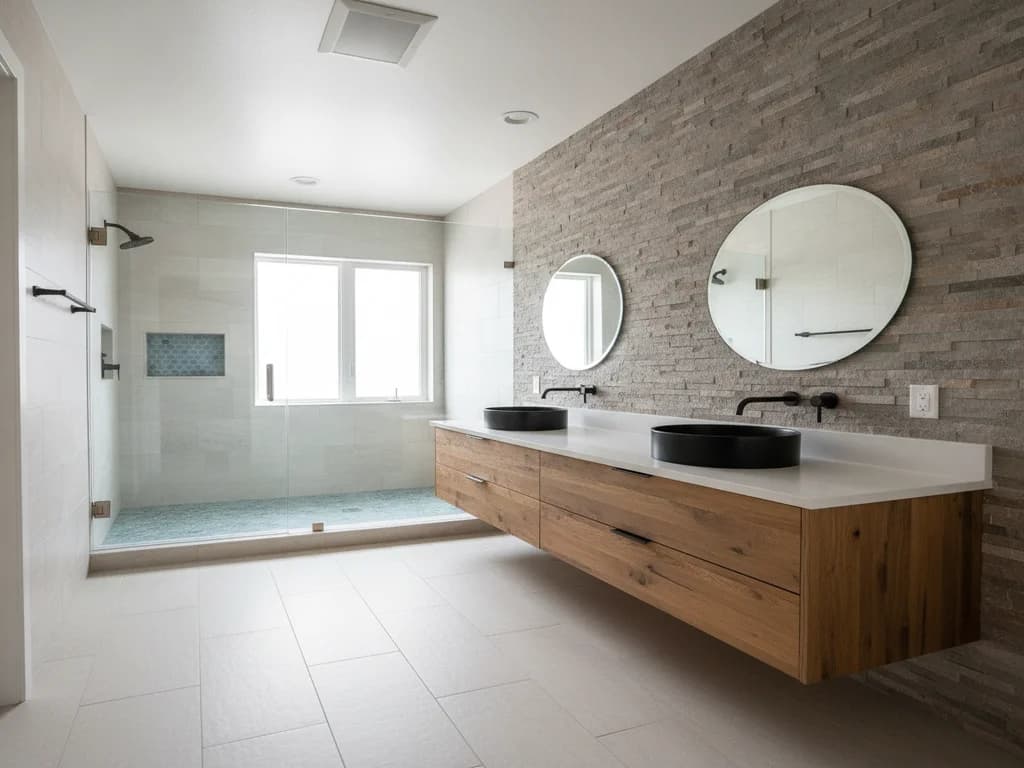
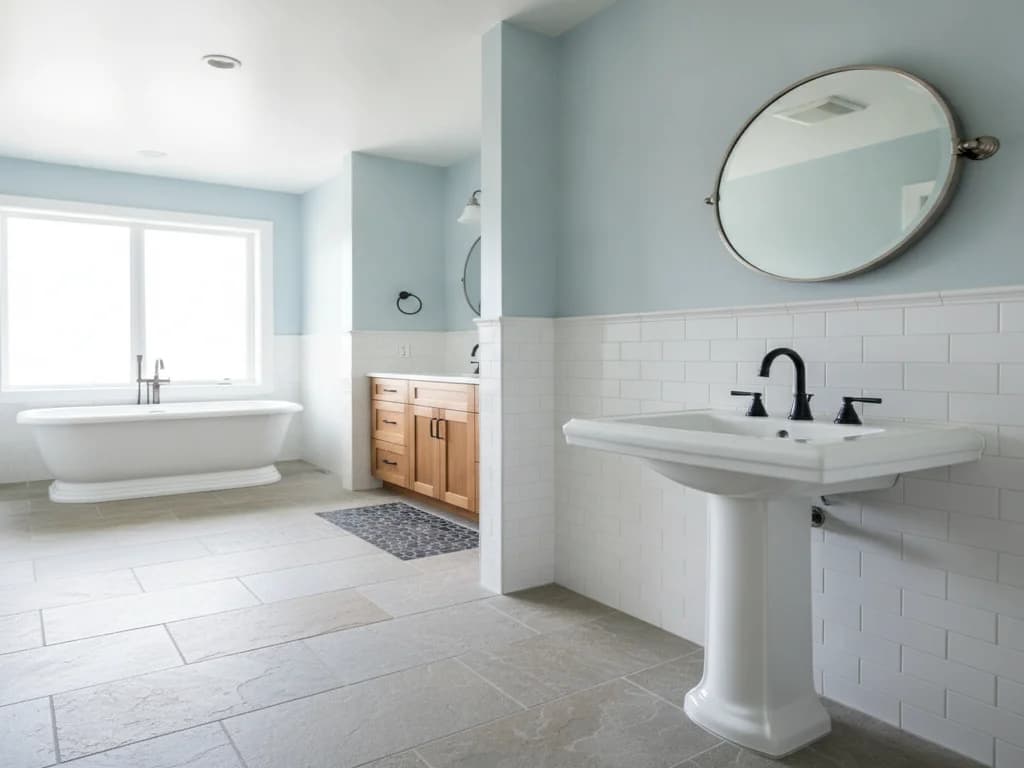
Style is the easy filter. A classic subway-and-hex bathroom wants bullnose — metal trim on traditional tile reads like a wrong note. A large-format, matte-porcelain bathroom wants metal or miter — rounded bullnose on crisp rectified tile softens exactly the lines you paid for.
Metal profiles bring one underrated advantage: finish coordination. Brushed-nickel trim alongside brushed-nickel fixtures, matte-black trim echoing a matte-black shower frame — the edge becomes a deliberate accent line rather than a compromise. Manufacturers offer enough finishes that trim can either disappear or articulate the design.
Then count your edges. A typical shower has more of them than you expect: outside vertical edges, the curb, and every niche — a niche alone has up to twelve finished edges, which is why niches are where mitered work or preformed metal corners earn their cost. Planning these terminations belongs in the tile layout plan, where edge counts and trim lengths get real numbers.
Confirm bullnose availability before you fall in love with a tile
The most common edge-trim surprise: choosing a porcelain line, designing around bullnose, and learning at ordering time that the line doesn’t make it. Rectified, imported, and wood-look porcelain frequently offer no trim pieces at all. Ask about matching trim on day one — if the answer is no, your options are metal profiles or mitering, and both are easier to budget before the bid is signed.
Durability over the years
Metal wins the durability contest without much argument. Anodized aluminum profiles shrug off the impacts that chip tile corners, and in a family bathroom — or a rental — that protection compounds over the years. Their weakness is cosmetic: cheap profiles can dent, and finishes can scratch, though quality anodized trim holds up well in normal bathroom service.
Bullnose is glazed tile, so it wears like the rest of the wall: essentially forever, unless struck hard enough to chip — and a chipped bullnose is a tile replacement, not a touch-up. Mitered corners are the most delicate; the joined edge is a fine point of glaze and body that a dropped shampoo bottle can chip, and repairs mean cutting out and re-mitering tiles.
Hard-water spotting, worth mentioning for the Treasure Valley: textured metal finishes and polished chrome-look trim show mineral film faster than brushed finishes. It wipes off with the same routine care as your fixtures — another small argument for matching trim finish to hardware you already maintain.
Which should you choose?
Let the tile line, the style, and the budget make the call:
- Traditional bathroom with a ceramic line that offers trim: bullnose — the classic look, matched perfectly, no metal in sight.
- Modern bathroom, rectified or large-format porcelain: metal profiles — crisp lines, edge protection, and finishes that coordinate with fixtures.
- Tile line offers no bullnose (most porcelain): metal profiles by default; miter if the budget wants the seamless look.
- High-end shower with niches and benches in color-body porcelain: mitered edges where they show, metal where they don’t — the common pro compromise.
- Kids’ bath, rental, or high-traffic edges: metal — the one option that gets more attractive the harder the room gets used.
- Still choosing the tile itself: settle edges alongside the field tile in how to choose bathroom tile — the trim decision is easiest before the tile is locked in.
Ready to plan your Boise bathroom?
Licensed & insured · 3-year workmanship warranty
Frequently asked questions
- Is metal tile edge trim cheaper than bullnose?
- Usually, yes. Bullnose is specialty tile priced well above field tile per piece, and a shower perimeter plus a niche adds up to a lot of pieces. Metal profiles are sold in lengths and typically land as a modest materials line. Mitering flips the math — the material is free field tile, but the labor makes it the most expensive edge of the three.
- What do you do when your tile has no bullnose?
- Use a metal edge profile or a mitered edge — this is the exact situation metal trim exists for. Much of today’s porcelain, especially rectified and wood-look lines, offers no trim pieces at all. A profile in a finish matched to your fixtures caps the edge cleanly; a miter hides the termination entirely if the budget supports the labor.
- Does metal tile trim look cheap?
- Quality profiles in a deliberate finish read as a design choice, not a shortcut — matte black or brushed nickel trim echoing the fixtures is a standard move in current bathroom design. What reads cheap is mismatched trim: shiny chrome strip on a warm traditional bathroom, or a profile that sits proud of the tile because the height was wrong. Finish and sizing are the whole game.
- Are mitered tile edges worth it?
- In the right places, yes — a mitered niche or bench in color-body porcelain is the cleanest detail in tile work, with no trim line at all. The costs are real: skilled labor at every beveled foot, and a finished corner that chips more easily than metal-protected edges. Most premium projects miter the visible showpiece edges and use metal profiles everywhere else.
- Can you add edge trim after tile is installed?
- Not properly — metal profiles anchor under the tile in the thinset bed, so they install with the tile, not after it. Retrofitting an exposed raw edge means surface-applied trim adhered over the edge, which looks like what it is. If an existing installation has unfinished edges, the durable fix is rebuilding that edge run — worth folding into a larger [wall tile replacement](/guides/replacing-bathroom-wall-tile) rather than patching cosmetically.
Sources
- Schluter Systems
- Tile Council of North America (TCNA)
- National Tile Contractors Association
- This Old House — Bathrooms
Claims and figures are drawn from the sources above and provided for general guidance; your project may vary. Photography is illustrative of design concepts. For a fixed price on your specific bathroom, request a free estimate.