Updated July 16, 2026 · 7 min read
By Boise Bath — bathroom & shower remodeling in Boise & the Treasure Valley
The short answer
Glazed porcelain is the best bathroom floor tile — dense, nearly waterproof, and tougher than ceramic or stone. Choose a matte or textured finish with a wet DCOF rating of 0.42 or higher, 12×24-inch tiles for the main floor, and 2-inch or smaller mosaics on shower floors for grip.
Key takeaways
- Porcelain beats ceramic and natural stone for bathroom floors: it absorbs less than 0.5% water by industry definition, wears harder, and needs no sealing.
- The slip number to know is DCOF: 0.42 or higher wet, per the ANSI standard TCNA references, is the baseline for a floor that gets walked on wet.
- Matte and textured finishes are the floor pick; polished tile belongs on walls — it is slick wet and shows every hard-water spot.
- On the main floor, 12×24-inch tile is the modern default: fewer grout lines, current look, and it makes small bathrooms read larger.
- On shower floors, small mosaics win — more grout joints per square foot means more grip and easier sloping to the drain.
- Color-body or through-body porcelain hides chips better than cheap glazed tile with a white core — a spec worth asking about, not a brand.
The short answer: matte glazed porcelain, sized to the zone
If you want one line to take to the tile store: matte glazed porcelain, DCOF 0.42 or better, 12×24 on the main floor, small mosaic on the shower floor. That combination is what most professional bathroom floors in this market are built from, and the rest of this article explains each piece of it.
This is a tile-only ranking. If you are still deciding between tile and everything else — LVP, sheet vinyl, engineered options — that whole-market comparison lives in best bathroom flooring. Here, we assume tile has won and rank the choices inside it.
The picks below go category by category: material, finish, slip rating, and size by zone. Categories, not brands — a mid-range porcelain with the right specs beats a designer tile with the wrong ones every time it gets wet.
Best material: porcelain, and it is not close
Porcelain is ceramic’s denser sibling — fired harder from finer clay until it absorbs less than 0.5% of its weight in water, the threshold that industry standards referenced by TCNA use to define porcelain at all. That density is the whole story: near-zero absorption in the wettest room in the house, a surface hard enough to shrug off decades of traffic, and no sealing, ever.
Standard ceramic is the budget understudy — fine on walls and serviceable on the floor of a half bath, but softer and more absorbent, which is why the porcelain vs. ceramic comparison tilts to porcelain wherever water and traffic combine. Natural stone is the premium wildcard: beautiful, but porous, sealing-dependent, and often slick — a maintenance commitment more than a performance upgrade on a bathroom floor.
Within porcelain, one spec separates good from cheap: the body color. Glazed porcelain with a white core shows every chip; color-body and through-body porcelain run the surface color into the tile, so wear and the rare chip stay camouflaged. It is a question worth asking about any tile you shortlist.
Best finish: matte or textured — and the DCOF number that proves it
Slip resistance has an actual measurement: DCOF, the dynamic coefficient of friction. The ANSI standard that TCNA references sets 0.42, measured wet, as the minimum for level interior floors expected to be walked on when wet — which describes every bathroom floor ever built. Manufacturers publish the number on the spec sheet; you just have to look.
Finish is how tile gets there. Matte and lightly textured glazes carry the grip; polished and glossy surfaces generally don’t, which is why polished tile is a wall material wearing floor-tile packaging. Polished floors also broadcast hard-water spotting — a daily reality with Treasure Valley water — while matte finishes hide it. The full trade-off lives in matte vs. polished tile.
Texture has a ceiling, though. Aggressively structured “outdoor-rated” textures grab dirt and mop lint in a bathroom and are overkill indoors. The sweet spot for a bathroom floor is a smooth matte or micro-textured glaze that clears 0.42 wet — grippy underfoot, wipeable in practice.
Check the DCOF spec before you buy — not every floor tile passes
Plenty of tile sold in floor sizes carries a wet DCOF below 0.42, especially polished and lappato (semi-polished) finishes. The number is on the manufacturer’s spec sheet, and a tile shop can pull it in a minute. On a bathroom floor — the room where you step out of a shower dripping — this is the one spec that is a safety issue rather than a style choice.
Best sizes: large on the main floor, small in the shower
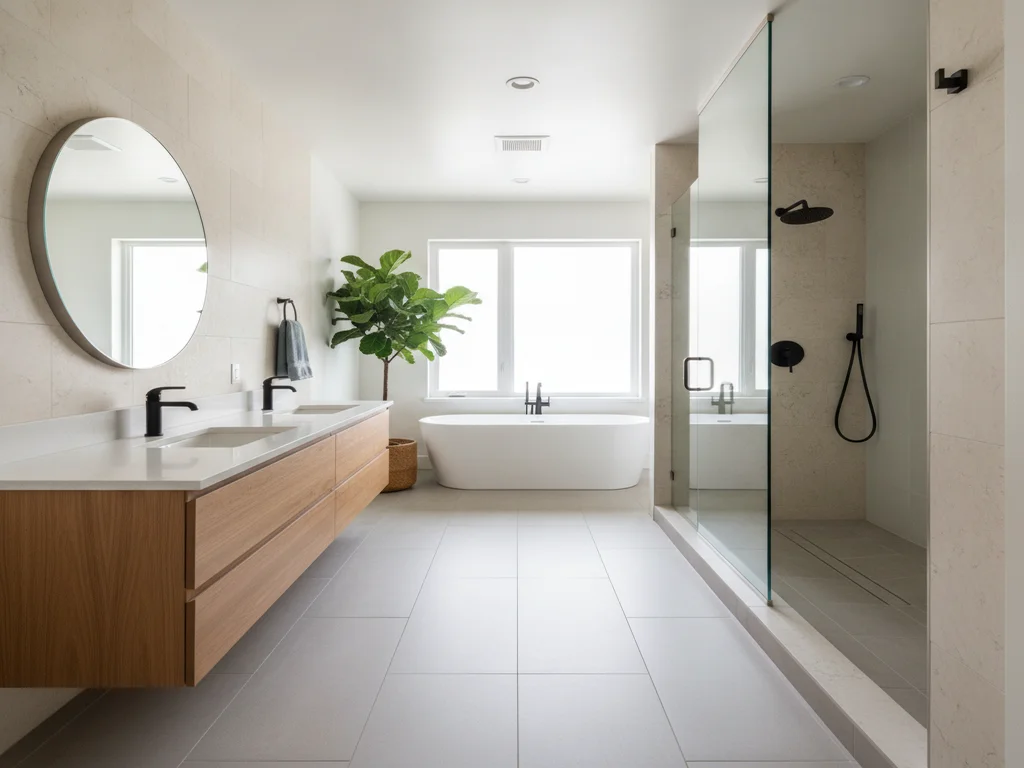
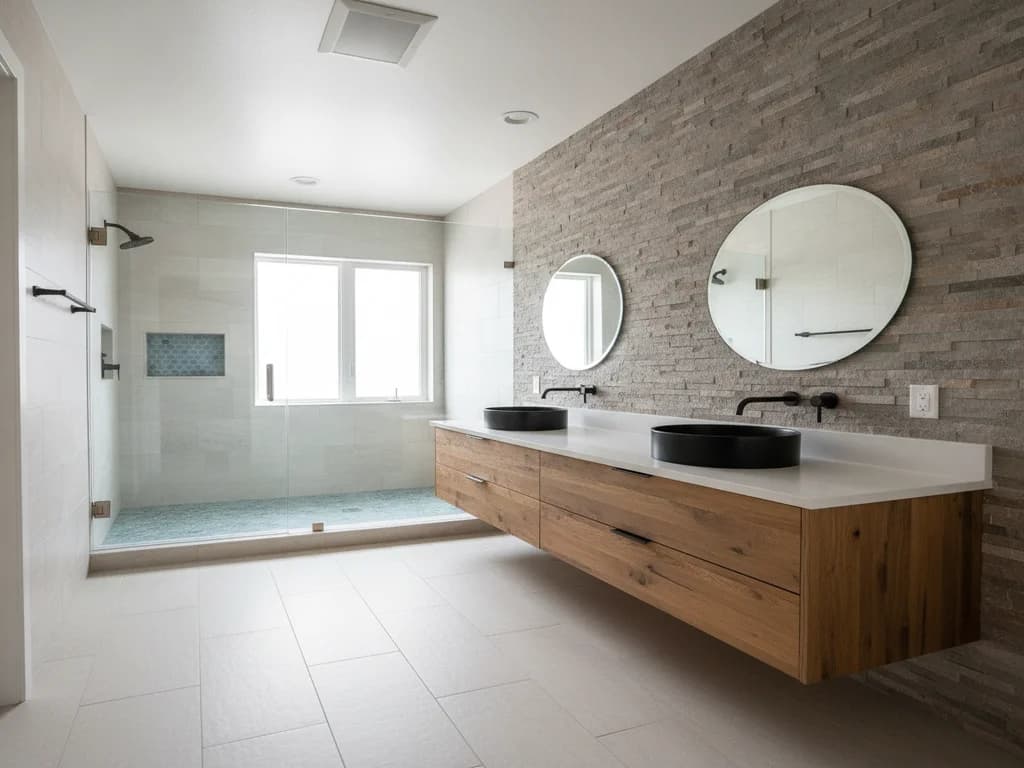
On the main floor, 12×24-inch porcelain is the modern default for good reason: fewer grout lines to clean, a current rectangular format that makes small bathrooms read larger, and wide availability at every price point. Squares of 12×12 read dated in current design; very large formats (24×48 and up) look spectacular but demand a dead-flat substrate and cost more to set properly.
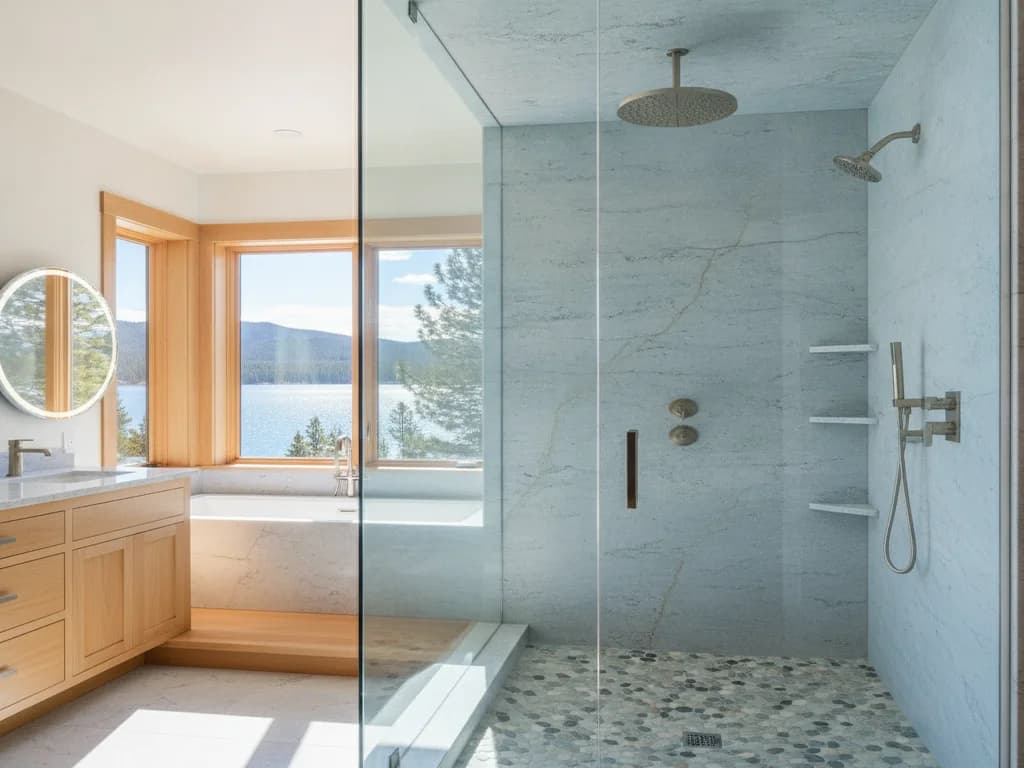
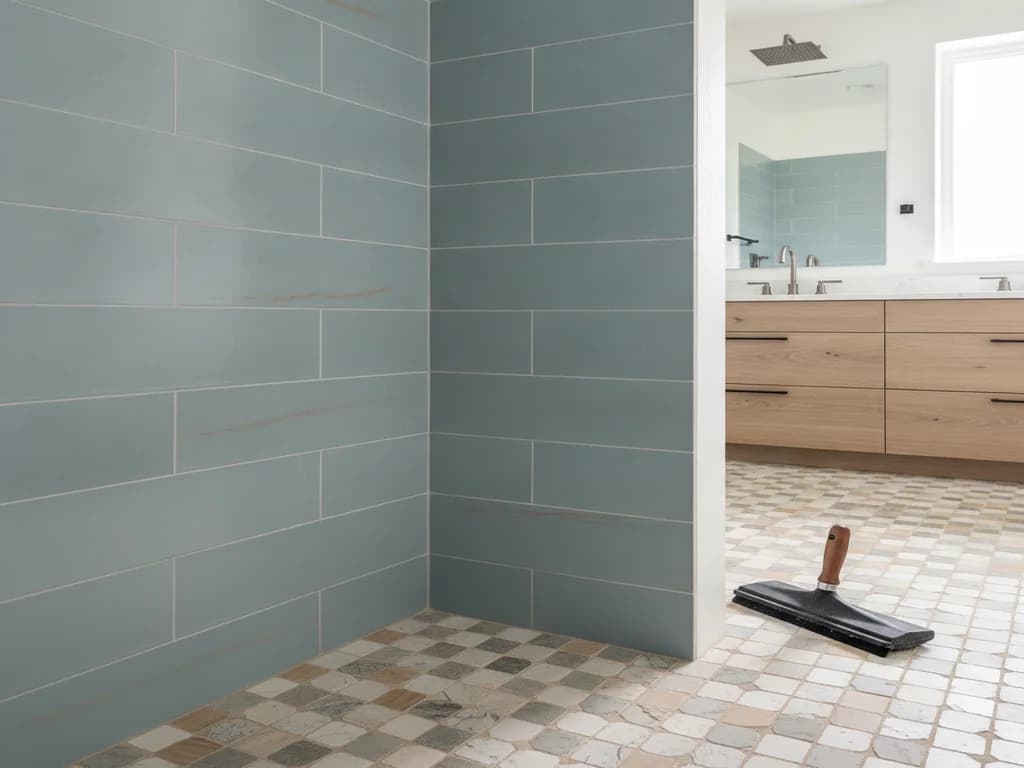
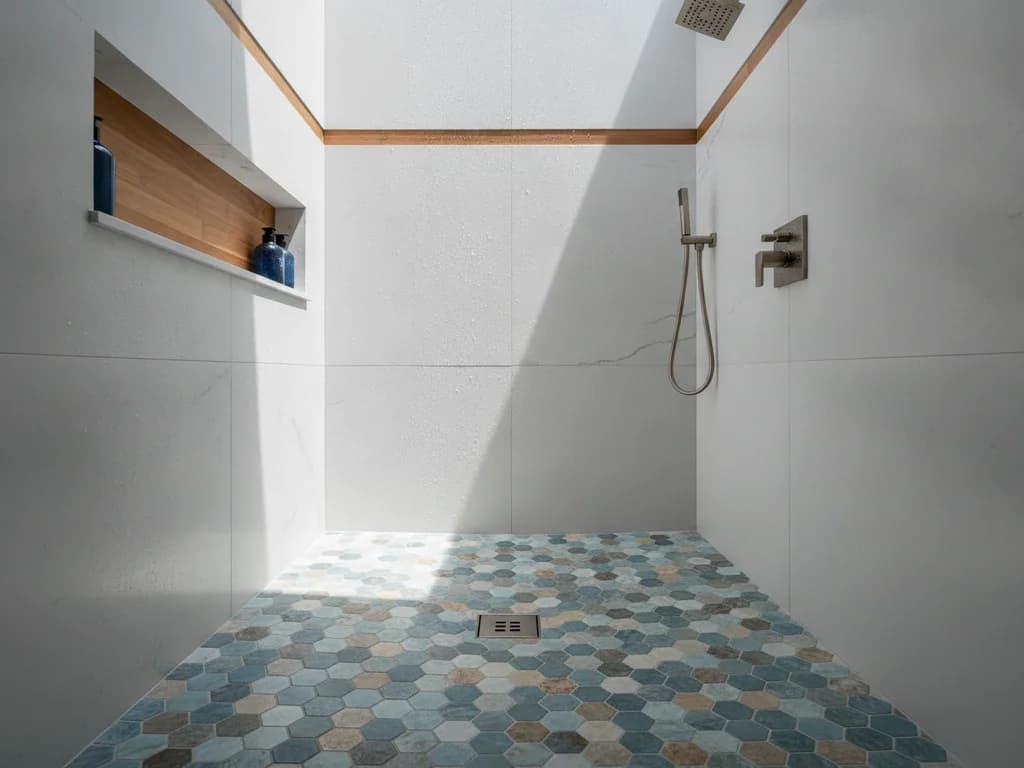
On the shower floor, the logic inverts. Small mosaics — 2-inch squares, hex, or penny rounds, sheet-mounted — put dramatically more grout joints per square foot underfoot, and every joint is grip. Small tile also follows the floor’s slope to the drain without lipping, which large tile physically cannot do around a standard center drain. This is why shower floors are mosaic country even in bathrooms tiled large everywhere else.
The full size conversation — including where large-format works and where it fights the room — is covered in large-format vs. small tile. The zone rule is the reliable shortcut: big tile where the floor is flat and dry, small tile where it slopes and drains.
The picks by category
Every recommendation above, in one table:
| Category | Best pick | Why | Skip |
|---|---|---|---|
| Material | Glazed porcelain (color-body preferred) | Under 0.5% absorption, hardest wearing, never needs sealing | Soft ceramic on wet floors; unsealed natural stone |
| Finish | Matte or micro-textured glaze | Carries slip resistance; hides hard-water spots | Polished/glossy on any floor |
| Slip rating | Wet DCOF ≥ 0.42 (per ANSI standard, via TCNA) | The published baseline for floors walked on wet | Any floor tile without a published DCOF |
| Main floor size | 12×24 inch | Fewer grout lines; current look; flatters small rooms | 12×12 squares (dated); oversized formats on wavy subfloors |
| Shower floor size | 2-inch or smaller mosaics | Maximum grip; conforms to drain slope | Anything large-format around a center drain |
| Grout pairing | Sanded, sealed — or epoxy for stain resistance | Floor joints are 1/8 inch+; see the grout rules | Unsanded in wide floor joints |
DCOF threshold per the ANSI slip-resistance standard referenced by TCNA; absorption threshold per the industry definition of porcelain. Always confirm specs on the manufacturer sheet for the exact tile.
What to skip — and the honest caveats
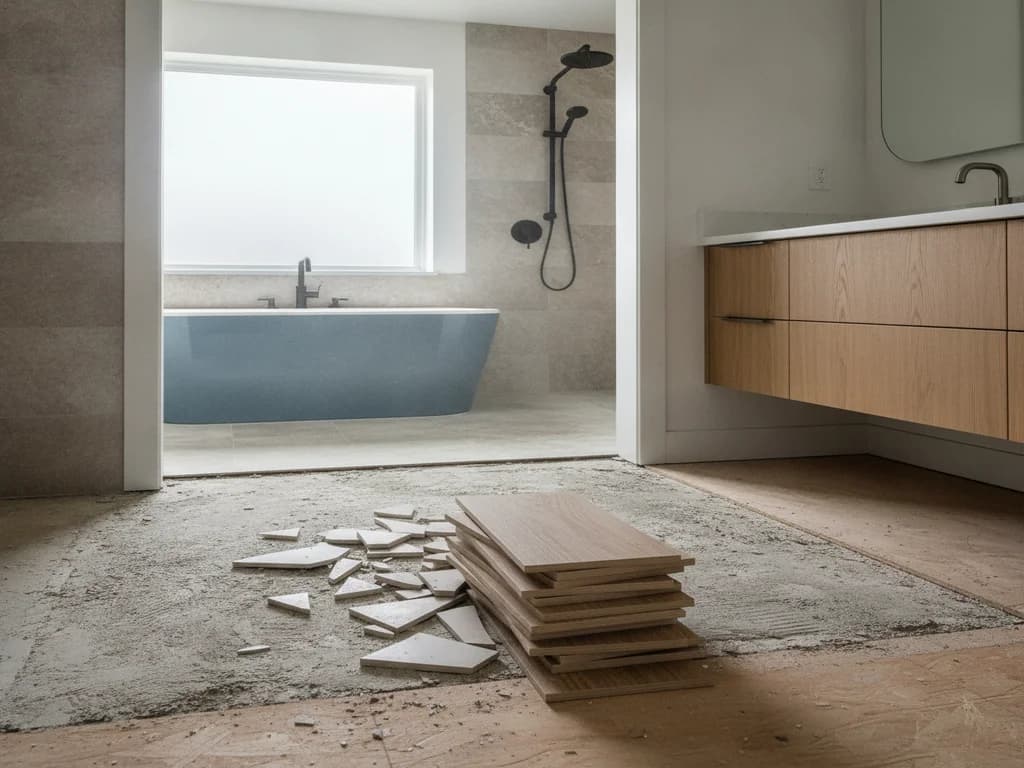
Skip polished tile on floors, tile with no published DCOF, and bargain glazed tile with a bright white body that will flash every chip. Be cautious with natural stone underfoot: marble and limestone are soft and porous, and even sealed stone asks for maintenance porcelain never will — the marble vs. porcelain comparison covers that trade honestly. Wood-look porcelain, by contrast, is a legitimate pick: real porcelain specs wearing hardwood’s look in the one room hardwood shouldn’t go.
Two caveats keep this honest. First, installation quality outranks tile choice — flat substrate, correct thinset coverage, and sound floor prep decide whether a great tile performs. Second, tile is the cold flooring, which in Idaho winters is a real daily-life consideration; porcelain pairs perfectly with heated floor systems, and the heated bathroom floor guide covers whether that upgrade earns its cost.
Grout is the other half of the floor’s surface, and floors at standard joint widths take sanded grout — the sanded vs. unsanded rules explain why, and epoxy grout is the upgrade path where staining is the worry.
Matching the pick to your bathroom
The category picks, applied to real situations:
- Standard full bathroom remodel: 12×24 matte color-body porcelain, DCOF ≥ 0.42, sanded grout sealed — the reference spec most quotes should resemble.
- Curbless or walk-in shower zone: small hex or square mosaic in the same palette as the main floor — grip and drainage where the water is.
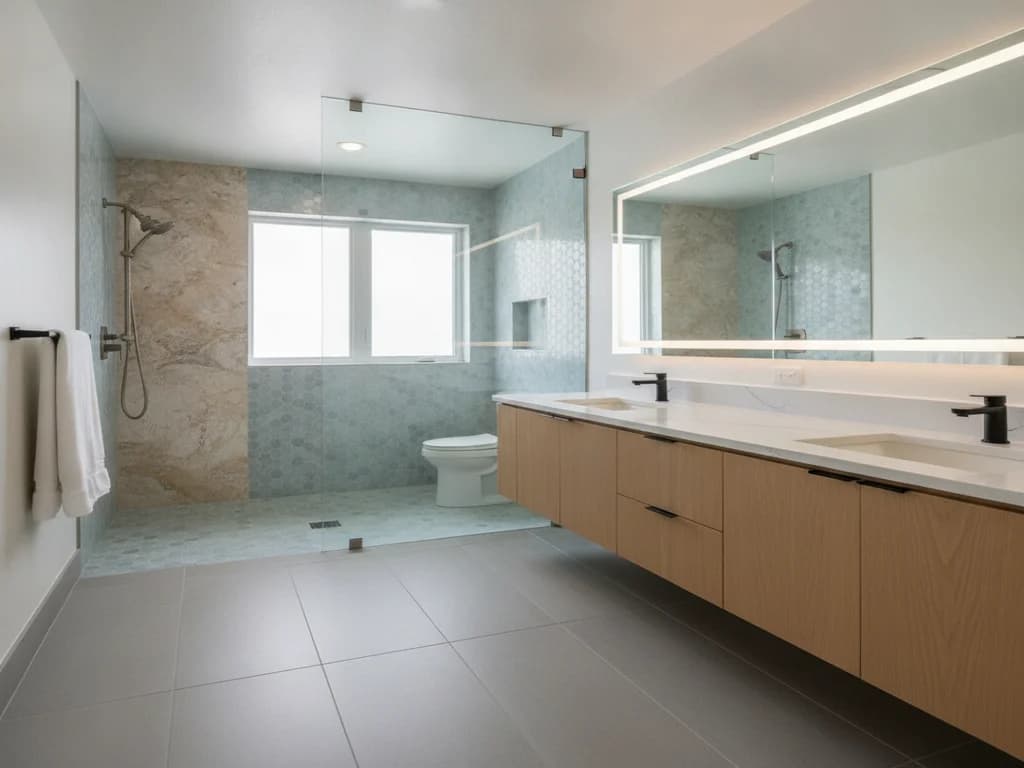
- Small bathroom that needs to feel bigger: keep 12×24 in a light tone and run it shower-to-door in one plane; shrinking the tile shrinks the room.
- Household with kids or aging-in-place plans: prioritize the DCOF spec over everything aesthetic, and consider micro-textured finishes — grip is the feature.
- Hardwood look without hardwood risk: wood-look porcelain planks, matte finish — porcelain specs, no water anxiety.
- Still weighing tile against LVP or vinyl entirely: start at best bathroom flooring — this article assumes tile already won that comparison.
Ready to plan your Boise bathroom?
Licensed & insured · 3-year workmanship warranty
Frequently asked questions
- Is porcelain or ceramic tile better for bathroom floors?
- Porcelain. It is fired denser — absorbing under 0.5% water by the industry definition — which makes it harder-wearing and effectively waterproof, while standard ceramic is softer and more absorbent. Ceramic remains a fine wall tile and a serviceable floor in low-traffic half baths, but where water and foot traffic combine, porcelain is worth its modest premium.
- What DCOF rating do I need for a bathroom floor?
- A wet DCOF of 0.42 or higher — the minimum in the ANSI slip-resistance standard TCNA references for level interior floors that get walked on wet. Manufacturers publish the value on the tile’s spec sheet. Plenty of tile sold in floor sizes doesn’t clear it, particularly polished finishes, so it is worth confirming before purchase rather than after the first wet-footed slip.
- What size tile is best for a small bathroom floor?
- Larger than instinct suggests — 12×24 inch is the usual answer. Fewer grout lines read as more continuous floor, which makes a small room feel bigger; small tile everywhere does the opposite. The exception is the shower floor, which needs 2-inch or smaller mosaic for slope and grip regardless of how compact the room is.
- Are glossy tiles OK on a bathroom floor?
- On the floor, no — polished and glossy finishes are slick when wet and typically fall short of the 0.42 wet DCOF baseline, and they show every hard-water spot besides. Glossy tile belongs on walls, where it bounces light beautifully and slip is irrelevant. If you want sheen underfoot, a satin or lappato finish that still publishes a passing DCOF is the compromise — check the sheet.
- Is wood-look tile good for bathrooms?
- Yes — wood-look porcelain is one of the best answers to wanting warmth in a wet room. It carries full porcelain specs (near-zero absorption, no sealing, hard wearing) while real hardwood in a bathroom is a moisture gamble. Choose a matte finish with a passing DCOF, and expect plank formats to demand a flat substrate for lippage-free results.
- Do I need different tile for the shower floor than the bathroom floor?
- Usually, yes — a size change even when the material stays the same. Shower floors slope to a drain, and small mosaics (2 inches or under) follow that slope and add grip through their dense grout joints; large tile cannot do either around a standard center drain. Most designs keep one palette and switch format at the shower line, which reads intentional rather than mismatched.
Sources
- Tile Council of North America (TCNA)
- National Tile Contractors Association
- This Old House — Bathrooms
- Consumer Reports
Claims and figures are drawn from the sources above and provided for general guidance; your project may vary. Photography is illustrative of design concepts. For a fixed price on your specific bathroom, request a free estimate.