Updated July 6, 2026 · 8 min read
By Boise Bath — bathroom & shower remodeling in Boise & the Treasure Valley
The short answer
Matte and textured tile belong on wet floors — Daltile's guidance requires a DCOF of 0.42 or greater and does not recommend polished finishes anywhere exposed to water. Polished and glossy tile still earns a place on dry walls and accents, where it reflects light and reads more luxurious, but shows scratches and stains more readily than matte does.
Key takeaways
- ANSI A137.1 requires a DCOF of 0.42 or greater for tile "recommended for use in a level interior space intended to be walked upon when wet," per Daltile's own testing guidance.
- Daltile is direct about the finish trade-off: "Matte tile flooring generally offers the safest option for the floor, especially in areas that may become wet. Glossy or polished finishes tend to be less slip-resistant."
- Daltile's DCOF page goes further on wet-area use specifically: it "does not recommend polished surfaces in any areas that may be subjected to water, oil, or grease exposures."
- Polished tile carries a real maintenance cost beyond slip risk — Daltile's own care guidance notes "special care should be considered on Polished Tiles, as they will be more prompt to fine scratches as well as stains," and recommends sealing before grouting.
- Glossy tile earns its keep somewhere: Bob Vila notes "glass mosaics will reflect light around the walls and ceiling, which in turn creates the illusion of a deeper, wider, and overall larger room" — a real reason to use it on a wall, just not underfoot.
The short answer
Matte and polished are not interchangeable style options — they perform differently in ways that matter most exactly where a bathroom is wettest. The honest rule is simple: keep any floor that gets walked on wet in a matte or textured finish, and save polished or glossy tile for dry vertical surfaces where its shine can do its actual job.
This post goes deep on one step
Our how to choose bathroom tile guide walks through the full five-step decision — role, durability class, size, finish, then grout. Finish is step four there, covered briefly. This post is the deep dive on that one step: matte vs. polished, specifically.
Slip resistance: the number that actually governs the floor decision
Every floor tile marketed for a wet, level interior space has to clear a specific bar. Per Daltile's own testing guidance, "ANSI A137.1 requires tile flooring products to have a DCOF of 0.42 or greater if recommended for use in a level interior space intended to be walked upon when wet." That is not a marketing claim — it is the industry test standard a tile has to pass before a manufacturer can recommend it for that use at all.
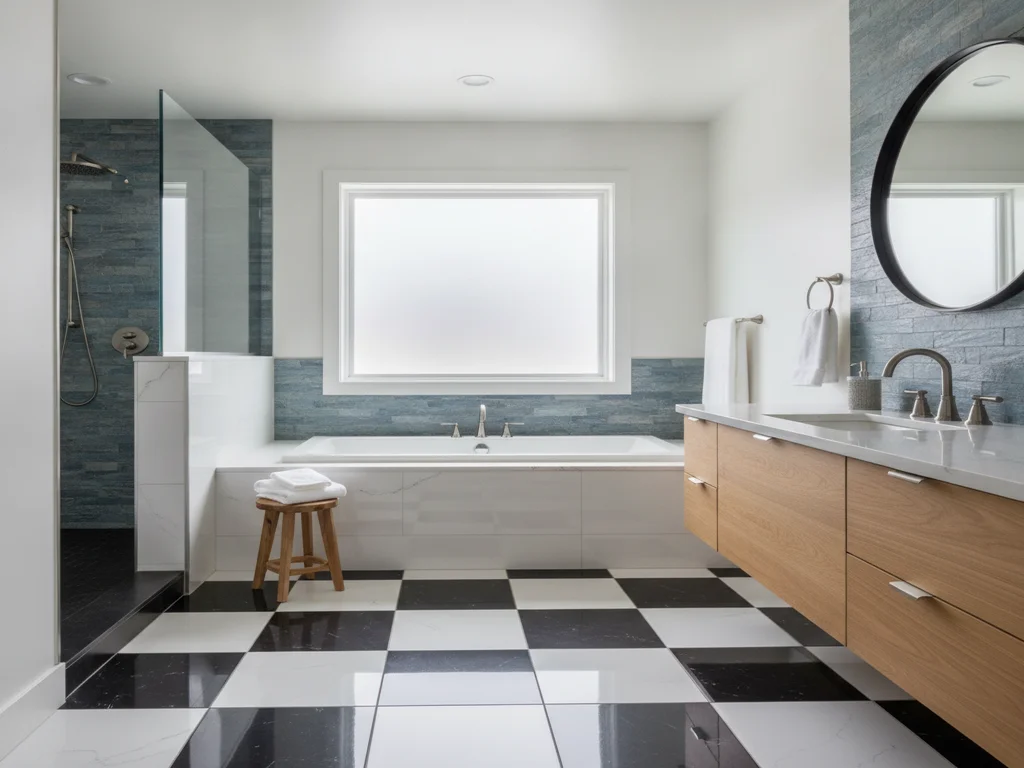
Polished and semi-polished finishes struggle against that standard almost by definition, because polishing works by making the surface smoother — which is also what reduces its grip. Daltile's guidance on choosing floor tile makes the resulting recommendation explicit: "Matte tile flooring generally offers the safest option for the floor, especially in areas that may become wet. Glossy or polished finishes tend to be less slip-resistant." The same testing page goes a step further specifically on wet exposure: Daltile "does not recommend polished surfaces in any areas that may be subjected to water, oil, or grease exposures" — not a soft preference, a direct non-recommendation.
Maintenance and everyday wear
The slip question gets the most attention, but finish also determines how a tile ages day to day. Daltile's own care and maintenance guidance is specific about the trade-off: "Special care should be considered on Polished Tiles, as they will be more prompt to fine scratches as well as stains." That same guidance recommends sealing fully polished or polished-glaze porcelain with a penetrating sealer before grouting, because the polishing process creates a micro-porosity on the tile face that can trap grout haze and staining material if left unsealed.
Matte and textured tile carry a different maintenance profile — Daltile's guidance notes textured surfaces "may contain structure or micro texture for slip resistance and visual enhancement," which is the same texture that keeps a floor grippy. The trade-off is that a textured surface can hold onto grit in a way a glass-smooth one doesn't, so it benefits from the same pre-sealing or grout-release step Daltile recommends across matte, textured, and polished porcelain alike. Neither finish is maintenance-free; they just fail in different, predictable ways — polished toward visible scratching and staining, textured toward needing an occasional deeper clean.
Light play: where glossy actually earns its cost
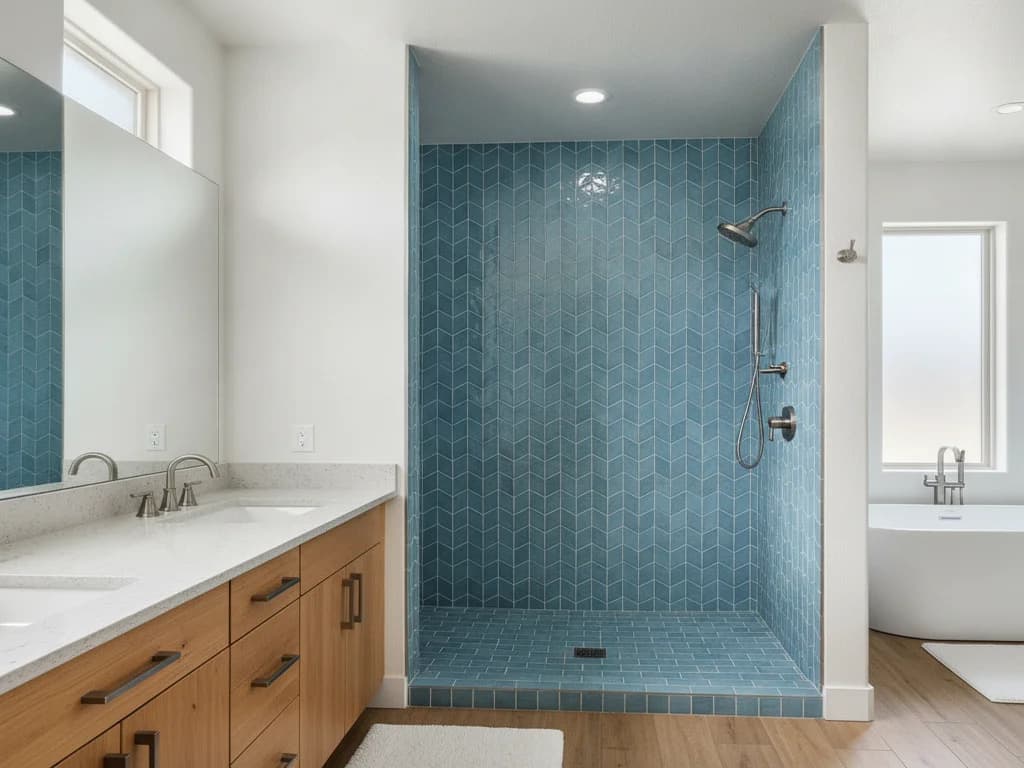
Polished and glossy tile isn't a mistake — it's a tool for a specific job, and that job is light. Bob Vila's guidance on tiling a small bathroom is direct about the effect: "glass mosaics will reflect light around the walls and ceiling, which in turn creates the illusion of a deeper, wider, and overall larger room." That is a genuinely useful trick in a small or windowless bathroom, and it is the real reason a glossy finish reads as more luxurious in a showroom — it is doing something a matte surface simply can't.
The same guide is just as direct about keeping that effect off the floor: "While glossy tiles and polished stone can look very luxurious, skip these materials for bathroom flooring. The sheen of these surfaces are slick to the touch — add a splash of water outside the tub or excess soap in the bottom of your shower, and they can be downright slippery." That is the whole matte-vs-polished decision in one sentence: use the shine where it makes the room feel bigger, keep it off the surface your feet are actually on.
Where each finish actually belongs
Once slip resistance, maintenance, and light are all on the table, the room-by-room breakdown is straightforward. The pattern holds regardless of tile material (porcelain or ceramic) — it is a finish decision layered on top of whichever material you've already chosen for durability, which our porcelain vs. ceramic tile comparison covers separately.
| Surface | Recommended finish | Why |
|---|---|---|
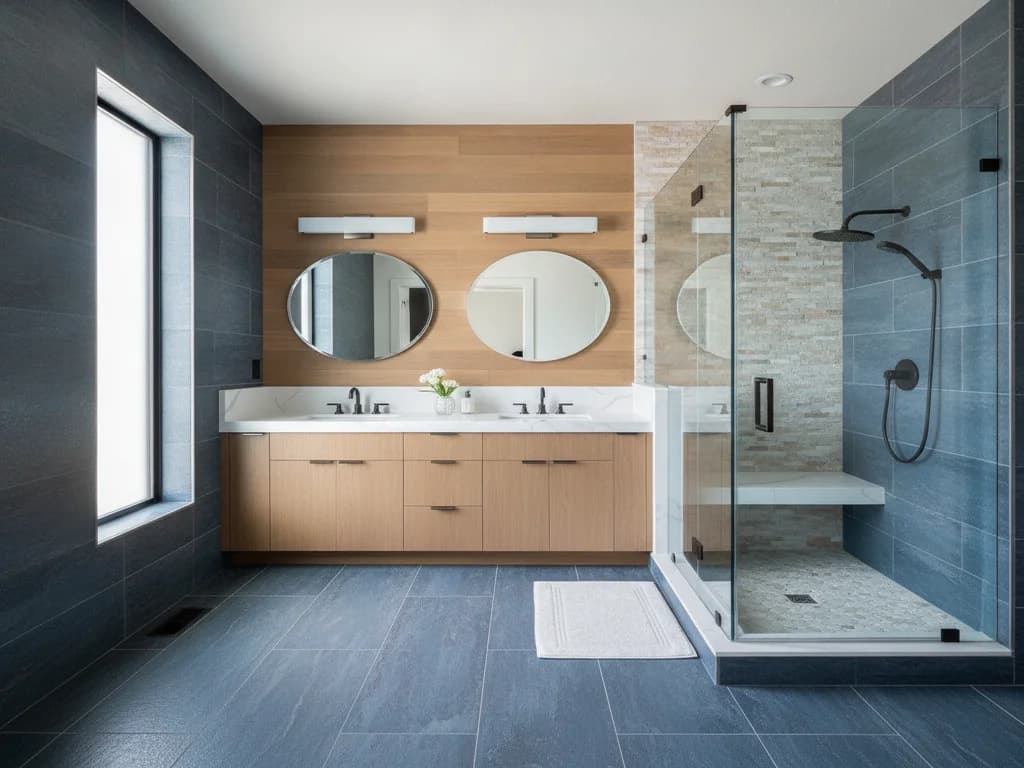
| Shower floor | Matte / textured | Constant wet exposure; Daltile does not recommend polished tile here |
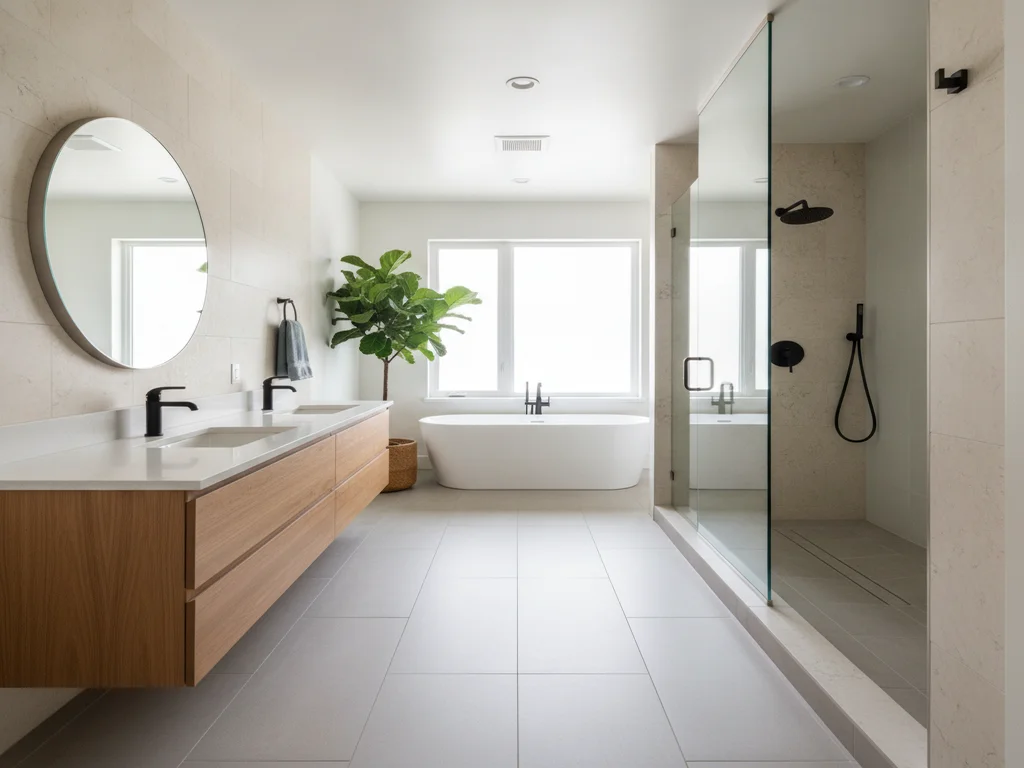
| Bathroom floor | Matte / textured (DCOF 0.42+) | Walked on wet regularly; matte is Daltile's stated safer default |
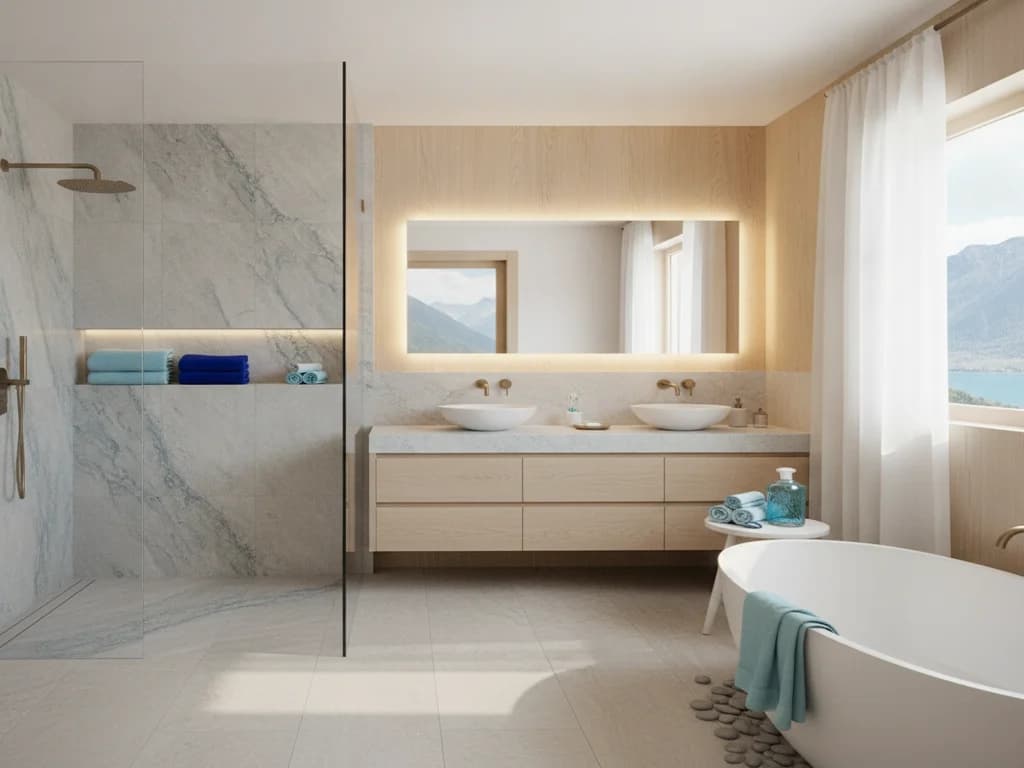
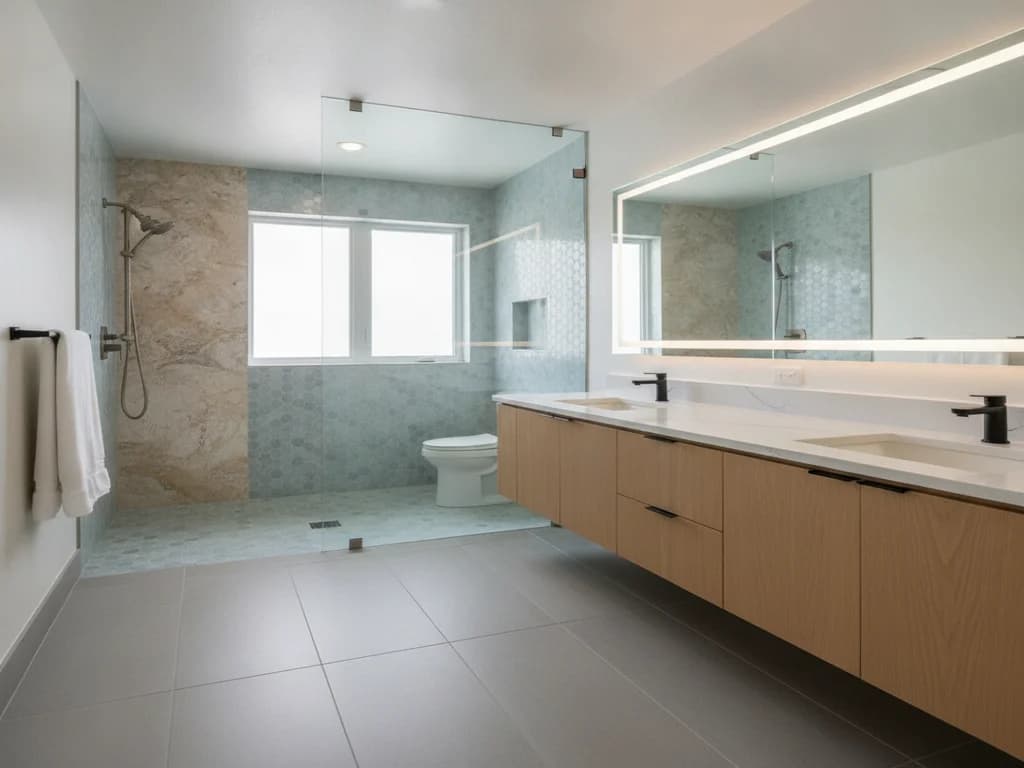
| Shower walls | Either — glossy adds light and pattern | Not walked on; slip resistance isn't the deciding factor |
| Vanity backsplash / accent wall | Glossy / polished | Dry surface; glossy reflects light and reads as a premium finish |
The bottom line
Matte and polished tile are not competing for the same job — one is built to be walked on safely when wet, the other is built to bounce light and look expensive on a wall that never gets stepped on. Matte or textured tile, checked against a DCOF of 0.42 or higher, is the non-negotiable choice for any floor in the room. Polished and glossy tile still belongs in the plan — just on the walls, backsplash, or accent surfaces where its shine can do its job without becoming a hazard.
Working through this alongside pattern and layout decisions for a full tile plan? Explore our custom tile and stonework services for help getting the finish, format, and pattern right together, floor and walls both.
Ready to plan your Boise bathroom?
Licensed & insured · 3-year workmanship warranty
Frequently asked questions
- Is matte or polished tile better for a shower floor?
- Matte or textured, without exception. Daltile's own DCOF testing guidance does not recommend polished surfaces "in any areas that may be subjected to water," and its floor tile guidance states plainly that "matte tile flooring generally offers the safest option for the floor" while "glossy or polished finishes tend to be less slip-resistant."
- Does polished tile need more maintenance than matte tile?
- In different ways. Daltile notes polished tile needs "special care... as they will be more prompt to fine scratches as well as stains," and recommends sealing it before grouting. Matte and textured tile resist scratching and staining better but can hold onto more everyday grit in their surface texture, which occasionally needs a deeper clean.
- Can you use polished tile anywhere in a bathroom?
- Yes, on dry vertical surfaces. Bob Vila notes glossy tile like glass mosaic "reflects light around the walls and ceiling," making a small bathroom feel larger — a real benefit on a shower wall, vanity backsplash, or accent wall. The same guide is direct that it should be skipped on the floor, where the same sheen "can be downright slippery" when wet.
Sources
- Daltile — DCOF AcuTest: Testing Slip Resistance
- Daltile — How to Care for and Maintain Ceramic and Porcelain Tile
- Daltile — Finding the Right Floor Tile
- Bob Vila — The Dos and Don'ts of Tiling a Small Bathroom
- Tile Council of North America — installation standards
- Natural Stone Institute — Relevant ASTM Standards (slip resistance ANSI A326.3)
- TCNA — Handbook for Ceramic, Glass & Stone Tile Installation
Claims and figures are drawn from the sources above and provided for general guidance; your project may vary. Photography is illustrative of design concepts. For a fixed price on your specific bathroom, request a free estimate.