Updated July 5, 2026 · 9 min read
By Boise Bath — bathroom & shower remodeling in Boise & the Treasure Valley
The short answer
The most popular bathroom tile patterns are large-format tile (fewest grout lines, easiest care), herringbone (movement and drama on floors or accent walls), basketweave and hexagon (classic texture and geometry), and penny round (understated, grippy floors). Choose by where it goes — floor, wall, or accent — and how much visual movement you want, not by trend alone.
Key takeaways
- This list is about which pattern to choose; our bathroom tile mistakes guide covers execution errors within any pattern — the two are deliberately separate questions.
- Large-format tile remains the lowest-maintenance, most seamless-looking choice for 2026, per Fixr, with fewer grout lines to clean.
- Herringbone reads as the most dramatic pattern and works best with rectangular tiles at roughly a 2:1 or 3:1 length-to-width ratio.
- Hexagon, basketweave, and penny round patterns suit shower floors and accent walls more than they suit large open floors.
- Movement joints and slip-resistance requirements apply no matter which pattern you choose — pattern and installation quality are two separate decisions.
Is this about which tile pattern to pick, or how to install it?
This list is specifically about the first question: which layout pattern fits your bathroom and your style. If you already know the pattern you want and are worried about how it is executed — soft joints, slip resistance, grout choice, lippage — that is a separate concern covered in our bathroom tile mistakes checklist. A beautiful pattern installed with the wrong movement joints or grout will still crack or trap water; a straightforward pattern installed correctly will hold up for decades. Pick the look here, then use that guide to make sure it is built right.
Patterns below are grouped by how much visual movement they add — from the quietest, most classic layouts to the boldest geometric statements — so you can match the pattern to how much attention you want the tile itself to draw.
How to use this list
Choose one pattern for the floor and, at most, one more for an accent wall or shower niche. Two confident patterns in a considered palette read as designed; three or more competing patterns read as busy.
What are the quietest, most timeless tile patterns?
1. Straight lay (grid) lines rectangular or square tiles up edge to edge in a clean grid — the simplest pattern to install and the easiest to keep timeless, especially with a bold color or textured finish doing the visual work instead of the layout. 2. Stack bond takes the same idea further, aligning tiles perfectly both vertically and horizontally for a more architectural, contemporary look, per American Olean's pattern guide. 3. Running bond (brick joint), where each tile joint lands at the center of the tile above and below it, is the classic subway-tile layout — a casual, familiar pattern that works laid horizontally or, increasingly, in a vertical stack for a more current feel.
All three are safe, cost-effective choices that let the tile size, color, and finish carry the design rather than the pattern itself. They are also the easiest patterns to keep looking sharp over time since there is no complex intersection geometry to get slightly out of alignment.
| Pattern | Visual movement | Best tile shape | Best for |
|---|---|---|---|
| Straight lay / stack bond | Minimal | Square or rectangular | Timeless, low-key floors and walls |
| Running bond (brick joint) | Low | Subway rectangles | Classic walls, easy DIY-friendly layout |
| Herringbone | High | Narrow rectangles (2:1–3:1) | Feature walls, statement floors |
| Basketweave | Medium-high | Paired rectangles + squares | Shower walls, vintage-inspired floors |
| Hexagon | Medium-high | Hexagonal | Floors, especially with a border accent |
| Penny round | Medium | Small circles | Shower floors, understated texture |
| Large-format | Minimal | Oversized rectangles/squares | Open floors and walls, low maintenance |
Which patterns add the most drama and movement?
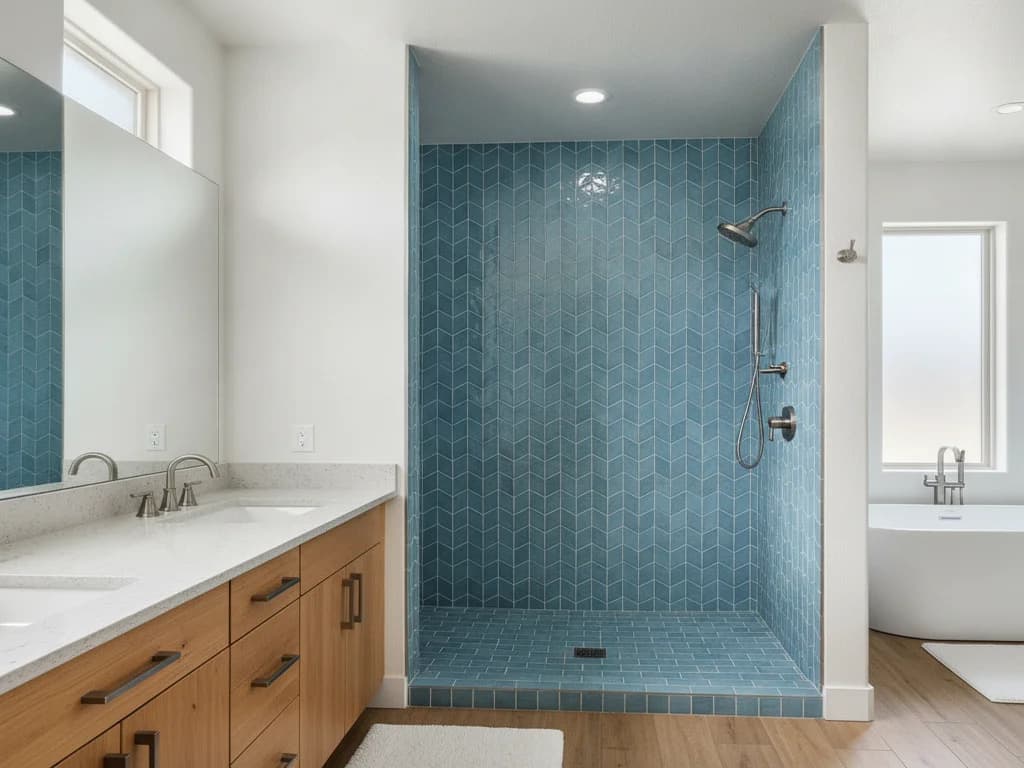
4. Herringbone is the pattern Fixr and American Olean both single out for 2026 — tiles set at 45-degree angles in a zig-zag that reads as instantly more designed than a straight layout. It works best with narrow rectangular tiles at roughly a 2:1 to 3:1 length-to-width ratio (common sizes run 2×4, 3×6, and 4×12 inches); skinnier tiles read more refined and suit smaller spaces, while wider tiles make a bolder statement. Fixr puts ceramic herringbone installation at roughly $9–$30 per square foot, reflecting the extra layout and cutting work compared with a simple grid. Its close cousin, chevron — shown on the accent wall in the hero image above — uses tiles with angled ends that meet point-to-point in a continuous V, reading slightly sleeker and more contemporary than herringbone's staggered zigzag.
5. Diagonal layout rotates a standard square tile 45 degrees rather than changing the tile shape at all — a low-cost way to add movement, and one that American Olean notes can make a small bathroom feel more open since the eye follows a longer diagonal sightline across the room.
What about basketweave and geometric patterns?
6. Basketweave alternates pairs of rectangular tiles with squares to mimic a woven texture — American Olean describes it as adding "movement and texture while still feeling timeless." Bob Vila's shower-tile advice specifically calls out basketweave marble on the wide walls of a walk-in shower as a way to create an intimate, inviting feel, which makes it a strong candidate for a shower accent wall rather than a full-room floor. 7. Checkerboard, alternating two tile colors in a simple grid, is a bolder geometric option — striking in a powder room or as a floor accent, but one to commit to deliberately since it reads as a strong style statement rather than a neutral backdrop.
Are hexagon and penny round tiles a good choice?
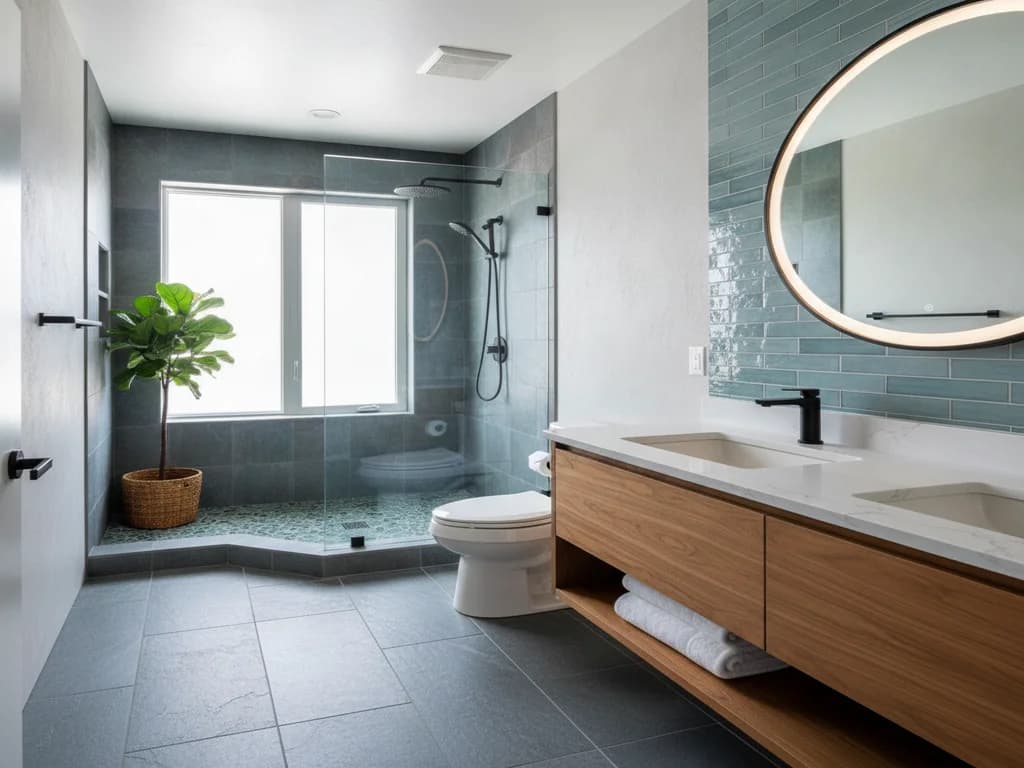
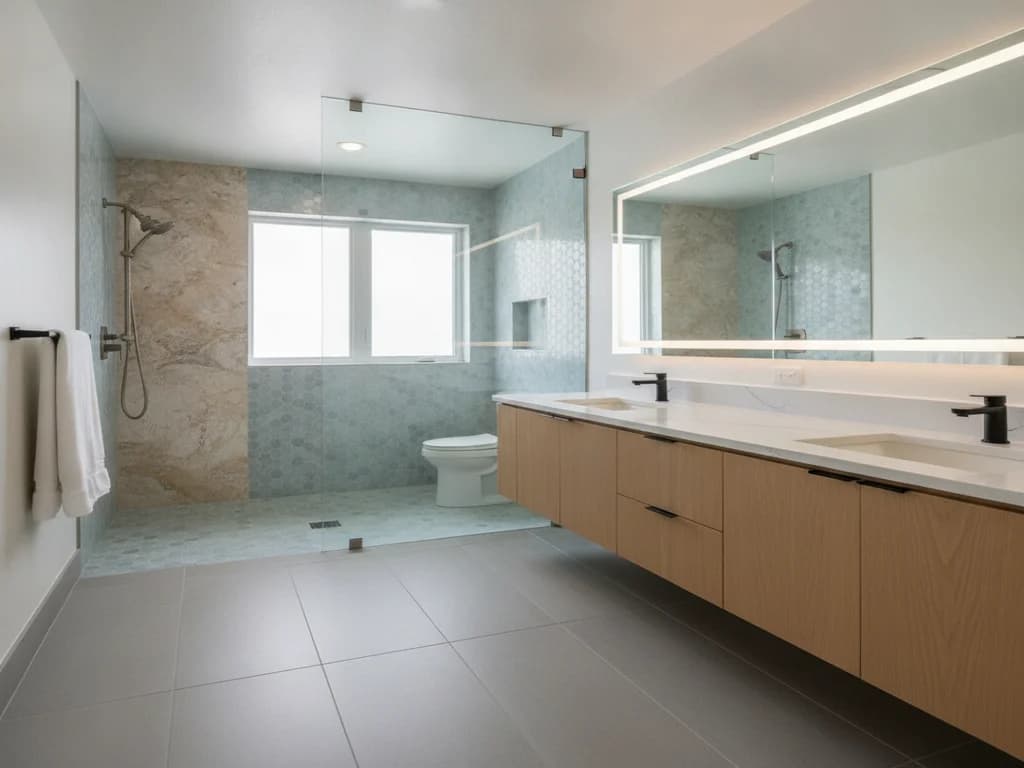
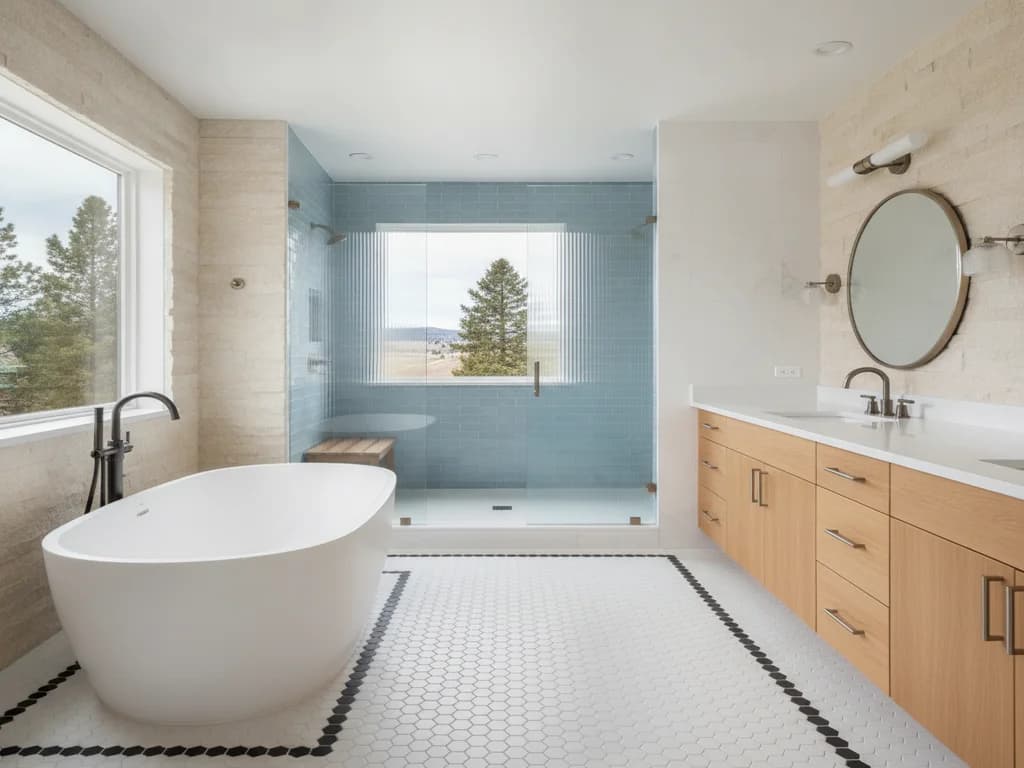
8. Hexagon tile is one of the most enduring bathroom floor choices, and Bob Vila notes it works in both simple all-white schemes and more complex multi-color patterns, often finished with a contrasting border. Smaller hexagons (roughly 1–2 inches) suit a shower floor where slip resistance and drainage matter more, while larger formats (4–8 inches) work well on open bathroom floors and walls. 9. Penny round tile — small circular mosaics — is, per Bob Vila, "neat and tidy without drawing attention to itself," a quietly textured option that pairs especially well with matte black fixtures and a neutral gray, white, or sand palette.
Both patterns use small-format tile, which means more grout lines than a large-format floor — a real consideration for cleaning, and one more reason to see our most durable bathroom materials guide if long-term upkeep is the deciding factor.
Why is large-format tile still the most popular choice?
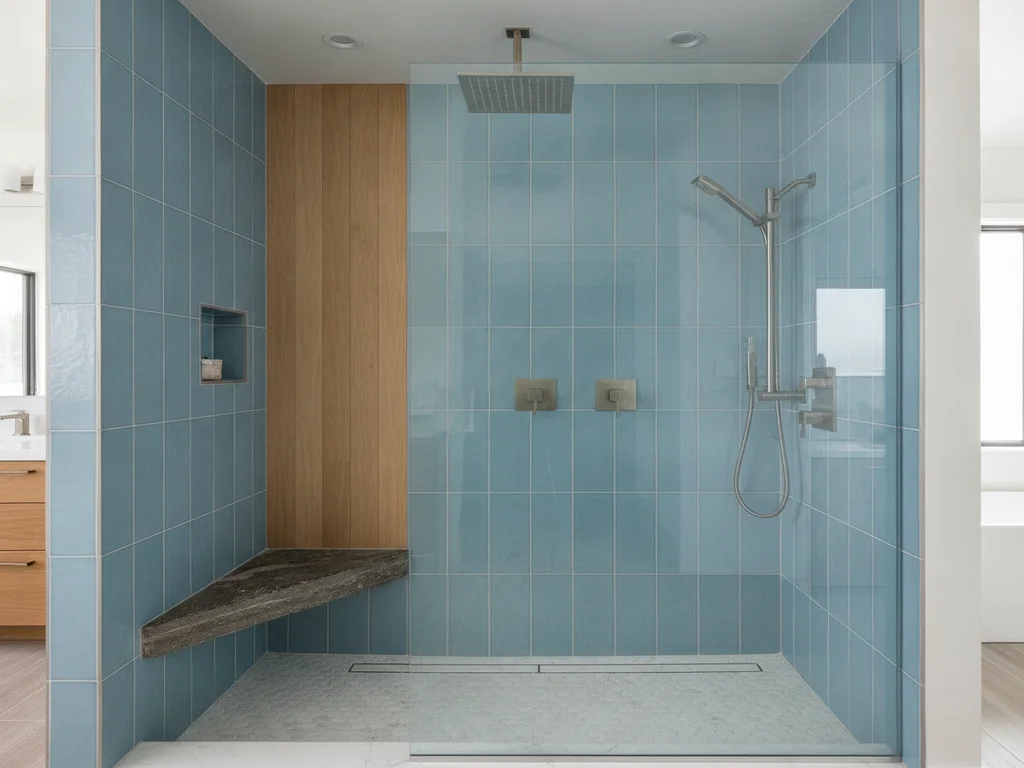
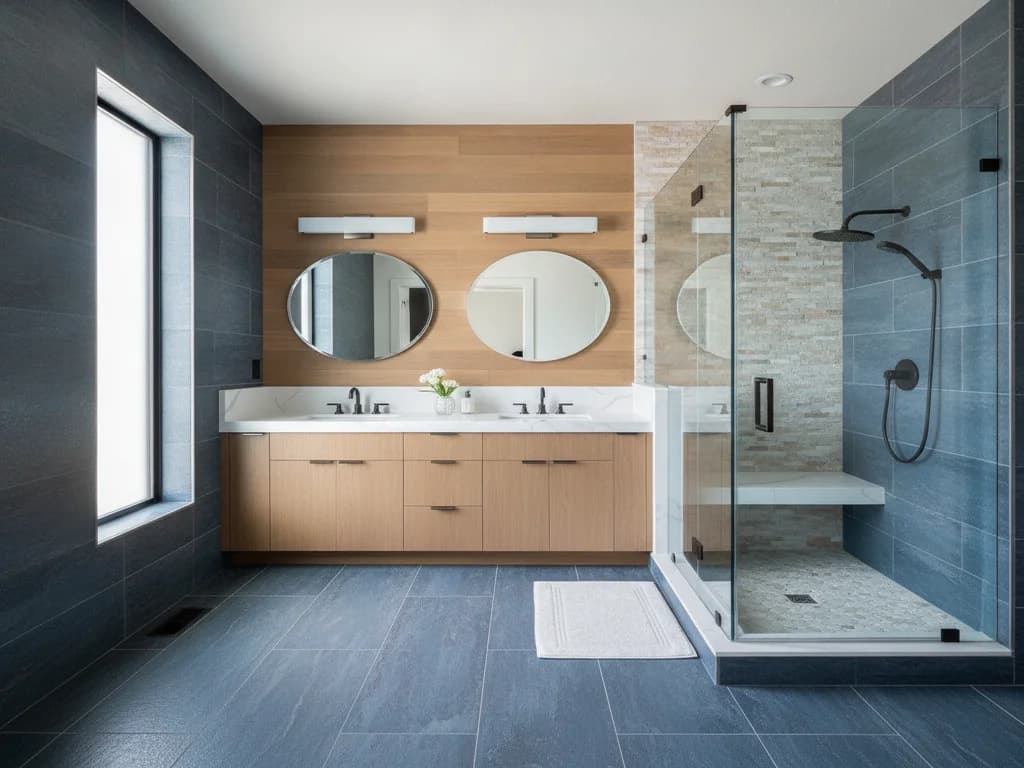
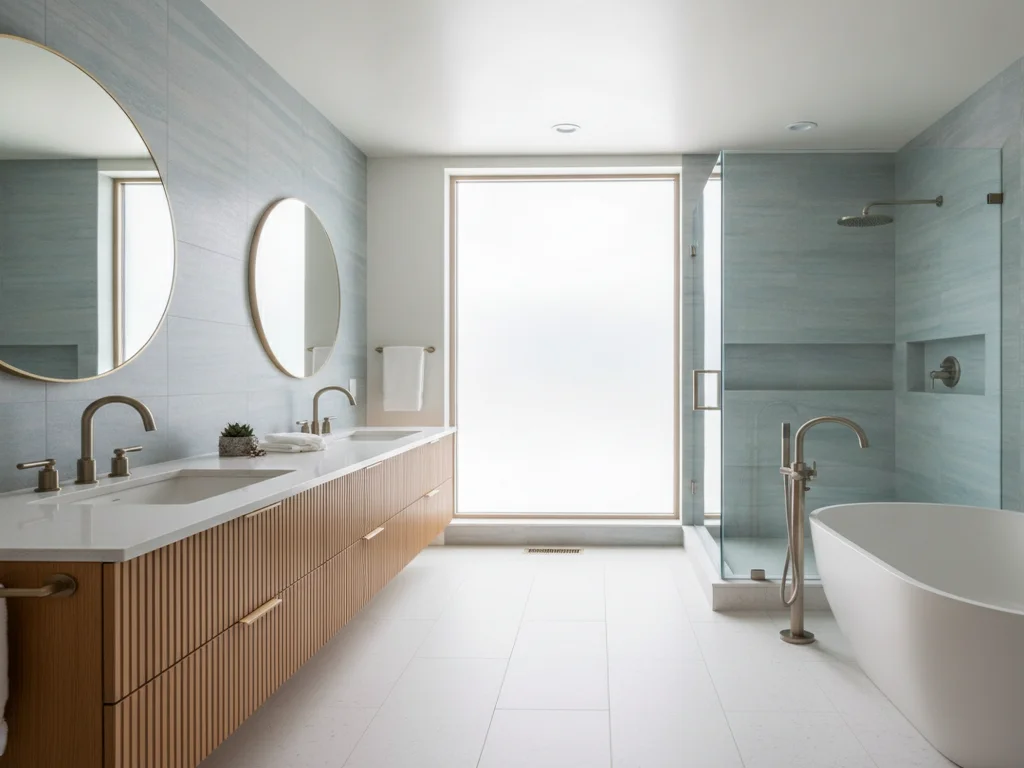
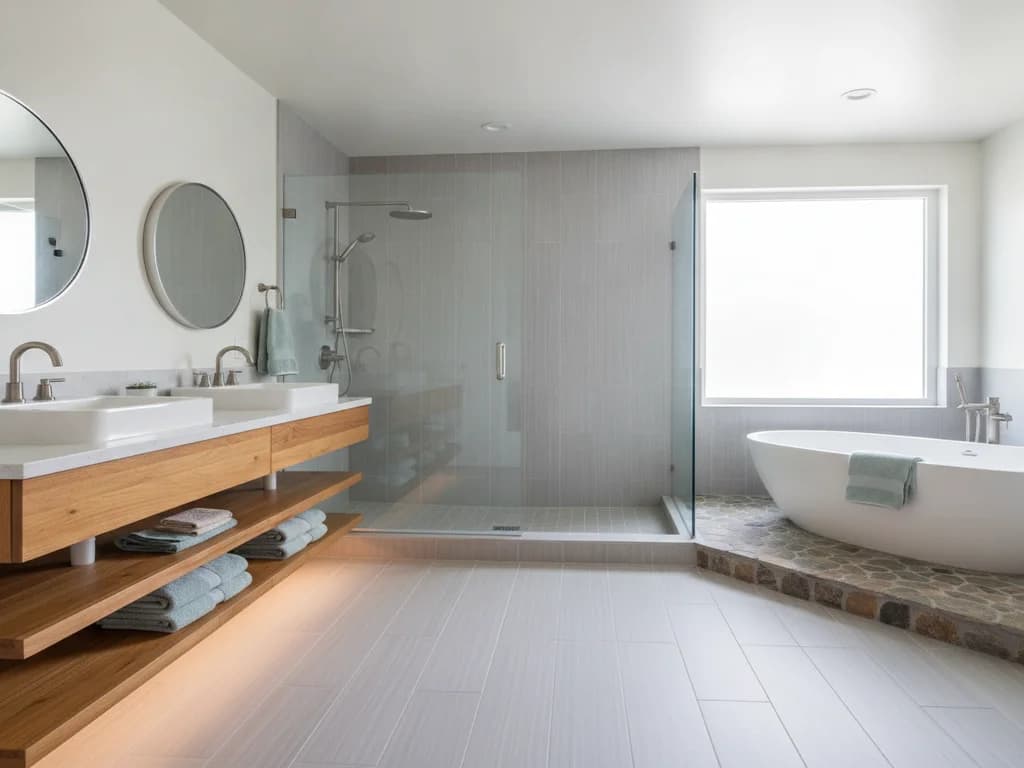
10. Large-format tile remains the dominant pattern choice for 2026 per Fixr, and the reasoning is practical rather than just aesthetic: fewer grout lines create a more seamless, modern look and, in Fixr's words, are "much easier to maintain — less grout means less scrubbing." Fixr's figures put ceramic large-format tile installation at roughly $15–$30 per square foot. It suits bathrooms of any size, and in a small bathroom, minimizing grout lines is one of the more reliable ways to make the room feel larger without changing the layout.
11. A 1/3 offset (grid offset) layout is the large-format-friendly alternative to a straight lay, staggering joints by a third of the tile's length for a slightly more natural, less rigid look — American Olean recommends it especially for wood-look or stone-look large-format tile, where a perfectly repeating grid can look artificial.
Should you mix patterns in one bathroom?
12. Pairing a bold accent pattern with a quiet field pattern is how most professionally designed bathrooms actually use these ideas — a hexagon or herringbone floor with a simple large-format or subway wall, or vice versa, rather than one pattern doing everything. 13. A picture-frame border — a contrasting tile outlining the perimeter of a floor pattern, as with a hexagon field and a dark border — is a controlled way to add a second pattern without competing busyness.
Whichever combination you choose, the execution details matter as much as the pattern itself: pattern layout and centering should be planned before any tile is set, and movement joints belong at every change of plane regardless of pattern — see the Tile Council of North America for the technical standard, and our tile mistakes guide for how that plays out in a real bathroom. A custom tile and stonework install is where pattern choice and correct execution come together.
Ready to plan your Boise bathroom?
Licensed & insured · 3-year workmanship warranty
Frequently asked questions
- What is the easiest bathroom tile pattern to install?
- Straight lay (grid) and running bond (brick joint) are the simplest and most forgiving patterns, since tiles line up edge to edge or with a basic half-offset. Herringbone and basketweave require more precise cutting and layout planning, which is reflected in higher installation costs.
- What tile pattern makes a small bathroom look bigger?
- Large-format tile with minimal grout lines and a diagonal layout of standard square tile are the two patterns most likely to make a small bathroom read as larger — fewer visual breaks and a longer diagonal sightline both trick the eye into perceiving more space.
- Is herringbone tile hard to maintain?
- Herringbone itself is no harder to clean than any other pattern in the same tile and grout — the maintenance difference comes from tile size and grout width, not the layout. Choosing a larger-format rectangular tile in a herringbone pattern reduces the number of grout lines compared with a small mosaic version.
Sources
- Fixr — Bathroom Floor Tile Ideas 2026
- American Olean — Tile Pattern Layouts: A Guide to Classic & Creative Designs
- Bob Vila — 20 Shower Tile Ideas That Make a Splash
- Tile Council of North America — installation standards
- Tile Council of North America — Handbook for Ceramic, Glass & Stone Tile Installation (movement joints)
Claims and figures are drawn from the sources above and provided for general guidance; your project may vary. Photography is illustrative of design concepts. For a fixed price on your specific bathroom, request a free estimate.