Updated June 30, 2026 · 10 min read
By Boise Bath — bathroom & shower remodeling in Boise & the Treasure Valley
The short answer
The small bathroom ideas that actually work focus on layout and sightlines: swap a tub for a curbless corner shower, hang the vanity and toilet on the wall, use a pocket door, run large-format tile and continuous flooring, and trade curtains for clear glass. These moves reclaim floor space and make tight Boise bathrooms feel noticeably larger.
Key takeaways
- Layout changes — curbless showers, pocket doors, wall-hung fixtures — reclaim more space than decor ever will.
- Visual continuity (large-format tile, one flooring run, clear glass) makes a small bath read bigger.
- Light, cohesive palettes and oversized mirrors expand perceived space without construction.
- Recessed niches and wall-mount faucets remove the bulk that crowds tight rooms.
- In older Boise homes, a tub-to-shower conversion is often the single biggest space win.
What actually makes a small bathroom work?
The single biggest mistake in small-bathroom remodels is treating the problem as decorative when it is really about layout. A fresh coat of paint and a new mirror are nice, but they do nothing about the fixture that swings into your knees or the tub you step over every morning. The bathrooms that genuinely work harder are the ones where the floor plan, sightlines, and visual weight were rethought first — and the finishes chosen to support that.
The 20 ideas below are ordered by impact: layout moves that physically reclaim space, then visual tricks that expand how big the room feels, then fixture and detail choices that remove bulk. Each gets a quick "best for…" verdict. This is the make-small-spaces-work hub, so it stays in its lane — storage-system depth lives in our storage guide and vanity styles in our vanity guide, and this article links out rather than repeating them.
Start with the layout
Before you shop tile, ask one question: can the layout change? Reclaiming even a few inches of floor — by converting a tub, hanging fixtures, or reworking a door swing — does more for a small bathroom than any finish. Decide the bones first, then dress them.
How do you make a small bathroom feel bigger?
Two forces are at play in a small bathroom: actual square footage and perceived space. You expand actual space by removing or shrinking what eats the floor; you expand perceived space by reducing visual interruptions so the eye travels uninterrupted. The most effective remodels do both — a curbless shower reclaims real floor and removes a visual barrier at the same time.
The principles that drive perceived size are simple: continuity (fewer material changes), light (bright, cohesive palettes and good fixtures), reflection (generous mirrors), and openness (clear glass instead of curtains). Keep those four in mind as you read and every idea below will make more sense.
Layout ideas that reclaim floor space
These are the heavy hitters — changes to the plan itself that give you back usable room.
1. Convert a tub to a corner or curbless shower. 2. Replace a swinging door with a pocket or barn door. 3. Hang the vanity on the wall. 4. Choose a wall-hung or compact toilet. Each removes a chunk of floor footprint or door-swing area. Best for: any bathroom under about 40 square feet, where every reclaimed inch is felt daily.
Should you swap the tub for a shower in a small bathroom?
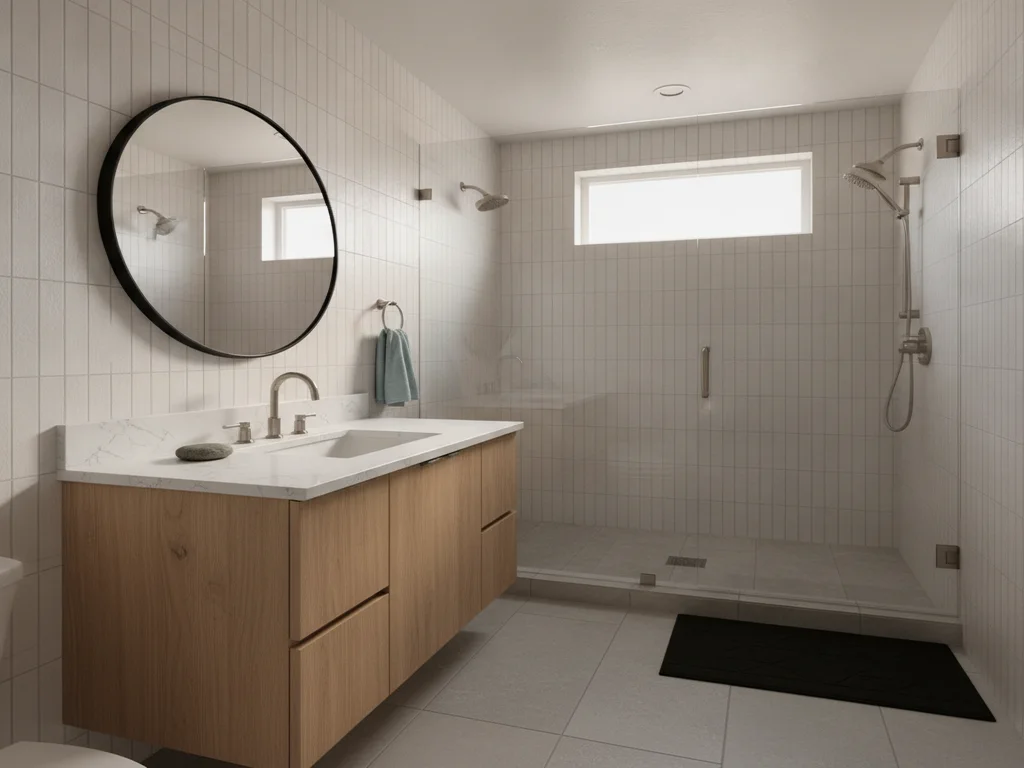
1. Swapping a rarely used tub for a corner or curbless shower is usually the single biggest space win in a small bath. A standard tub occupies roughly 13–15 square feet of footprint; a well-designed corner or curbless shower with clear glass returns much of that to open floor and removes the visual wall the tub creates. Curbless, in particular, lets the floor tile run straight into the shower so the eye reads one continuous surface.
The honest trade-off is resale: a home with no tub at all can be a harder sell to families, so if it is your only bathroom, weigh that carefully. We unpack exactly that decision in deciding between a walk-in shower and keeping the tub. When you are ready to act, a tub-to-shower conversion is the service that makes it happen. Best for: secondary and primary baths where the tub goes unused.
Can a pocket or barn door free up usable space?
2. A pocket door slides into the wall cavity and eliminates the roughly 9 square feet a standard 30-inch door sweeps through — space you can give back to the vanity, the shower, or simply the feeling of openness. A barn door achieves a similar swing-free result on the wall surface when the wall cannot be opened up for a pocket. Best for: bathrooms where the door currently collides with a fixture or forces an awkward layout. Note that a pocket door needs an uninterrupted wall cavity, so it is worth checking framing and plumbing early.
Why do wall-hung vanities and toilets help small baths?
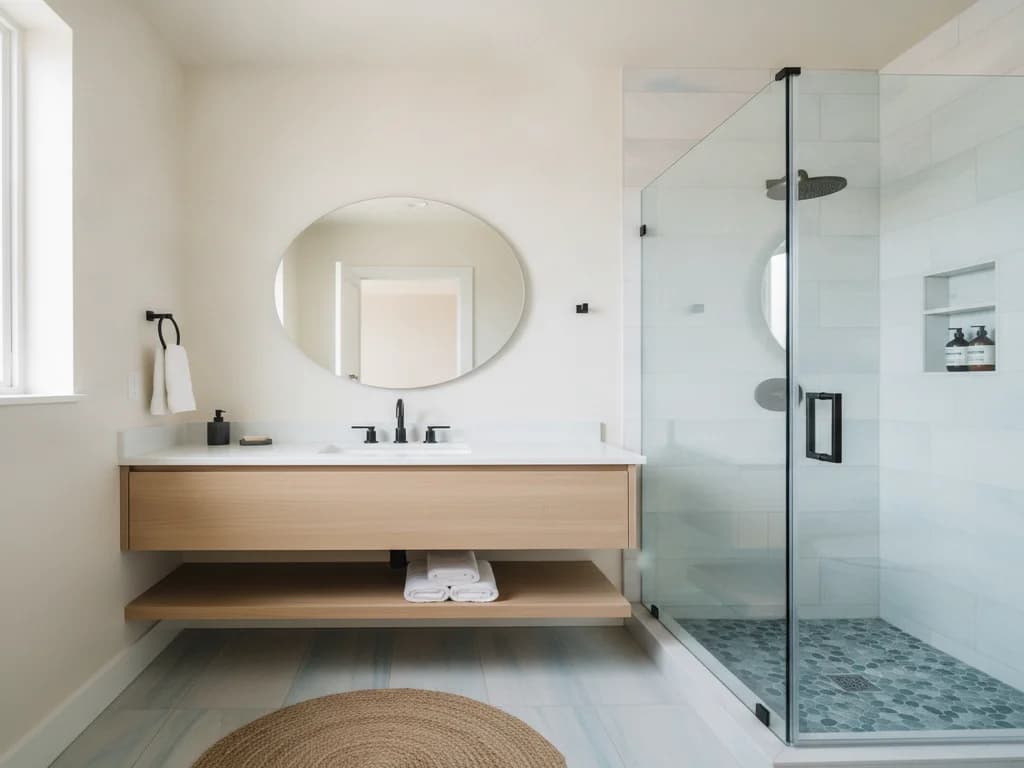
3. A wall-hung (floating) vanity and 4. a wall-hung or compact toilet both expose floor beneath them, and visible floor reads as more space. The continuous run of tile under a floating vanity tricks the eye into perceiving a larger room, and it makes the floor far easier to clean — no base to mop around. Wall-hung toilets hide the tank in the wall and let you adjust the bowl height. Best for: contemporary and transitional small baths; if a wall-hung toilet’s in-wall carrier is impractical, a compact, round-front floor model is the simpler alternative.
How should you rethink the layout of a 5x7 bathroom?
The classic 5×7 (about 35 square feet) is Boise’s most common small full bath, and it rewards disciplined planning. Keep the plumbing wall where it is when you can — moving the toilet or shower drain adds cost fast — and work within the fixture triangle of toilet, sink, and shower. The NKBA’s planning guidelines and the International Residential Code both specify minimum clearances (for example, at least 21 inches of clear space in front of a toilet and lavatory, and a minimum 15 inches from a toilet centerline to any side wall or fixture). Designing to those numbers, not past them, is what keeps a small bath comfortable rather than cramped.
In a 5×7, the highest-yield moves are usually: convert the tub to a curbless shower along the short wall, float the vanity, and pocket the door. Best for: the standard hall or guest bath in most Treasure Valley homes built before the 2000s.
Visual tricks that expand a small bathroom
Once the layout is sound, these no-construction (or low-construction) moves make the room feel larger than its footprint.
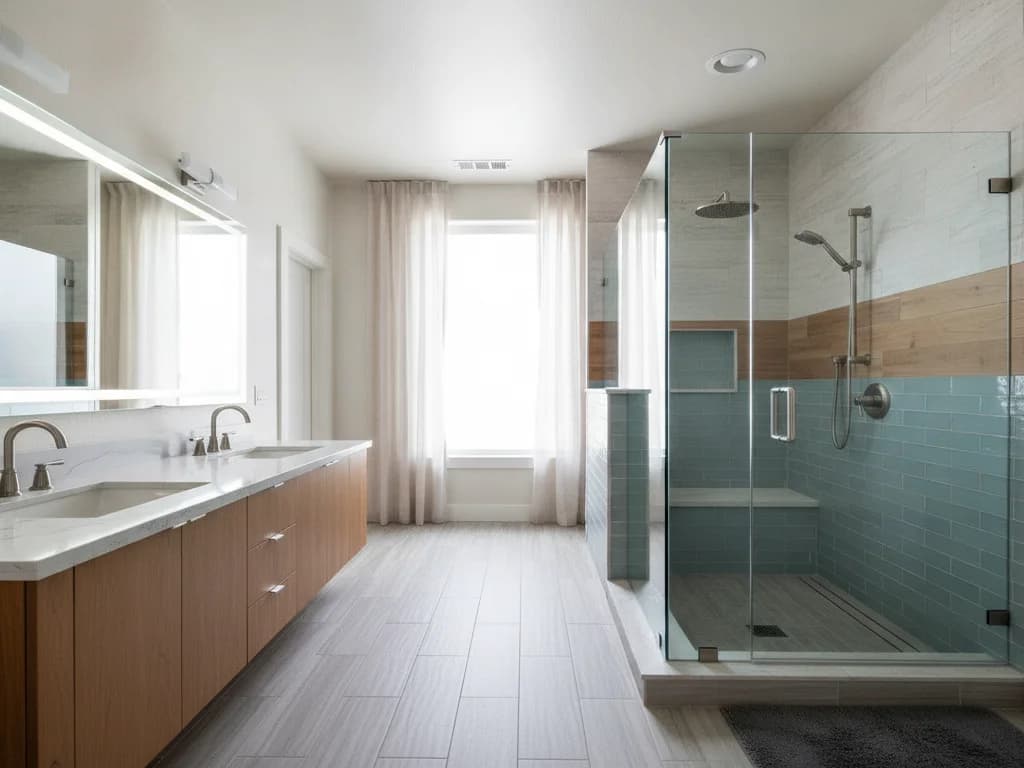
5. Large-format tile. 6. Continuous flooring into the shower. 7. A wall-to-wall mirror. 8. A light, cohesive palette. 9. Clear glass instead of a curtain. Each reduces a visual interruption. Best for: every small bathroom — these are the highest-return finish decisions you will make.
Does large-format tile make a small bathroom look bigger?
5. Large-format tile is one of the most reliable small-bath tricks. Fewer tiles mean fewer grout lines, and fewer grout lines mean fewer visual breaks for the eye to register — so the surface reads as one calm plane rather than a busy grid. Counterintuitively, big tiles make a small room feel larger, not smaller. They are also easier to keep clean, which matters in a heavily used family bath. For the material trade-offs behind the look, see choosing shower wall materials and the best bathroom flooring — and for sizes, patterns, and layouts picked specifically for compact rooms, our roundup of tile choices that flatter tight spaces. Best for: walls and floors alike in compact rooms.
Should flooring run continuously into the shower?
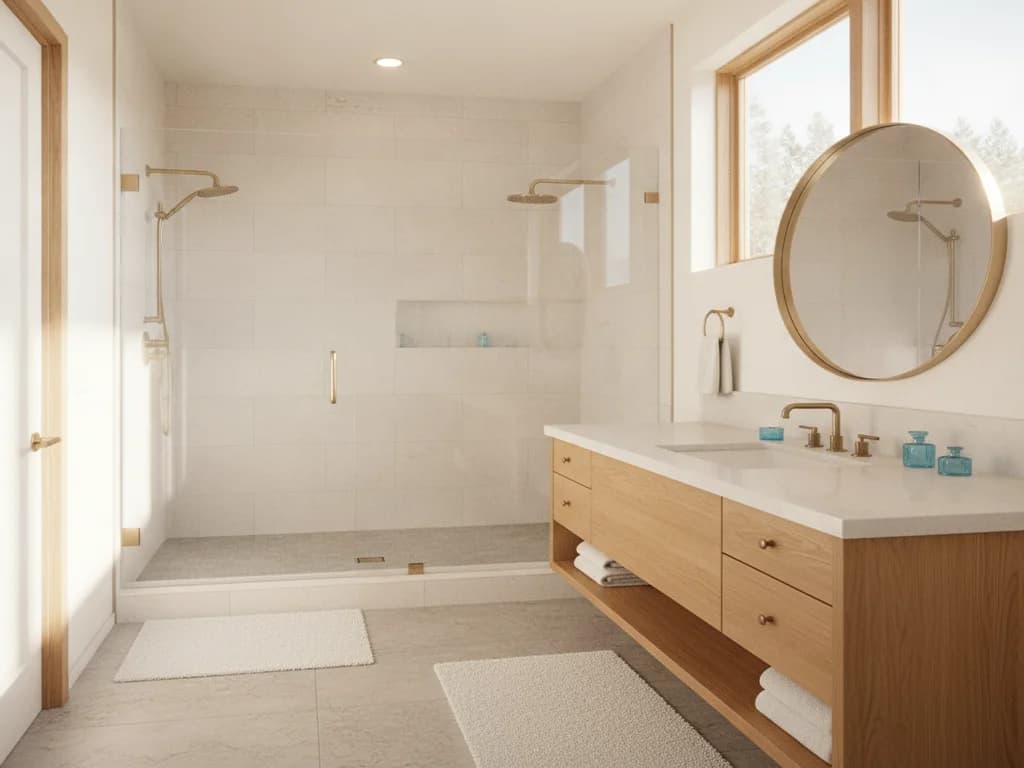
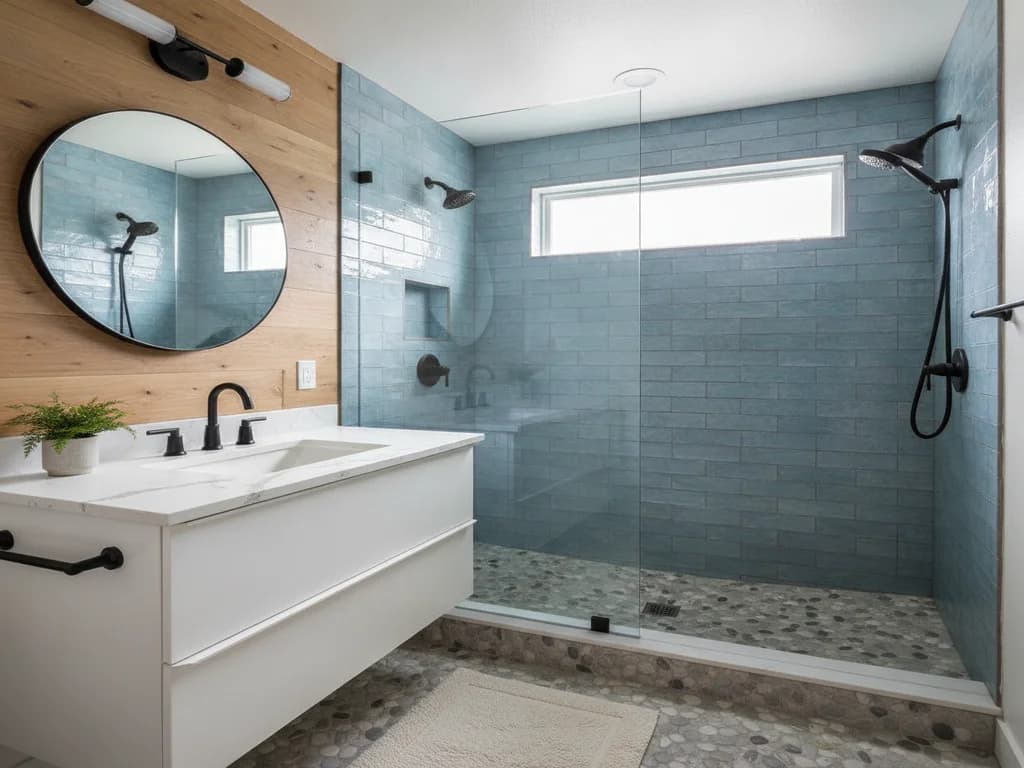
6. Running one flooring material straight into a curbless shower removes the threshold and the material change that visually chop a small room in two. When the same tile flows from the door to the back of the shower, the eye reads a single, larger floor. It pairs naturally with the tub-to-shower conversion and the curbless layout above. Best for: curbless shower designs where waterproofing and slope are handled correctly from the start.
How big should the mirror be in a small bathroom?
7. Go as large as the wall allows — ideally a mirror that spans the full width of the vanity or even the whole wall. A generous mirror doubles the visual depth of the room and bounces light around, which is the cheapest square-footage you will ever buy. A frameless edge-to-edge mirror reads more open than a small framed one. 8. Pair it with a light, cohesive palette (more on color below) so the reflection reinforces the sense of openness. Best for: any small vanity wall, especially in low-light baths.
What colors make a small bathroom feel larger?
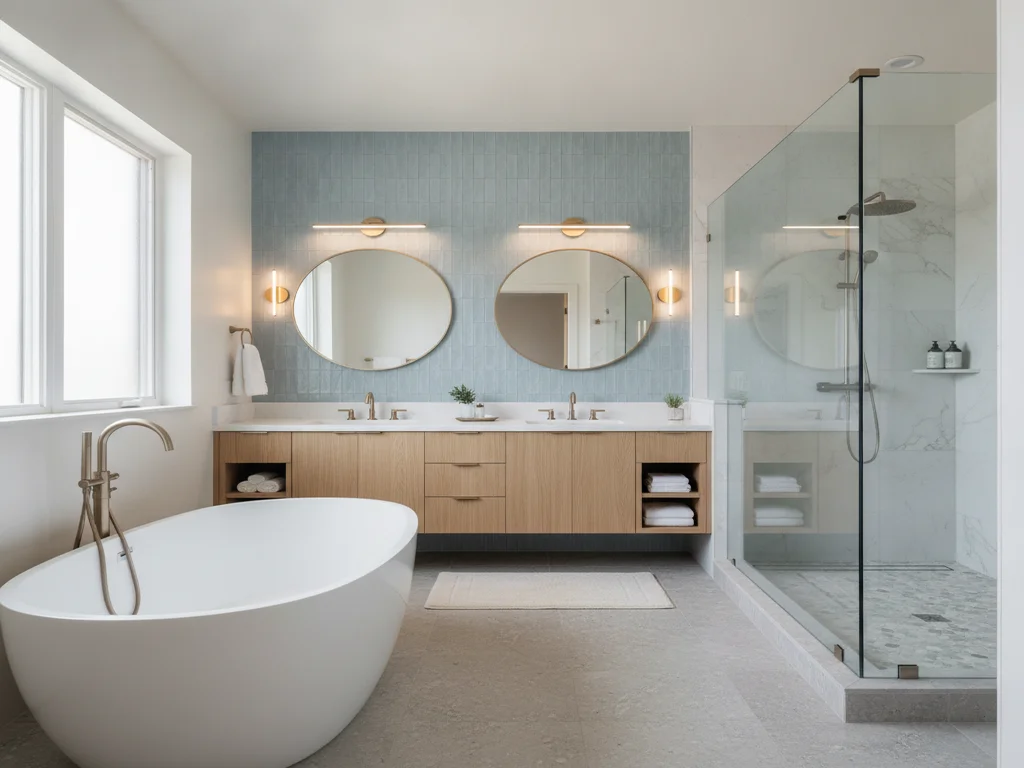
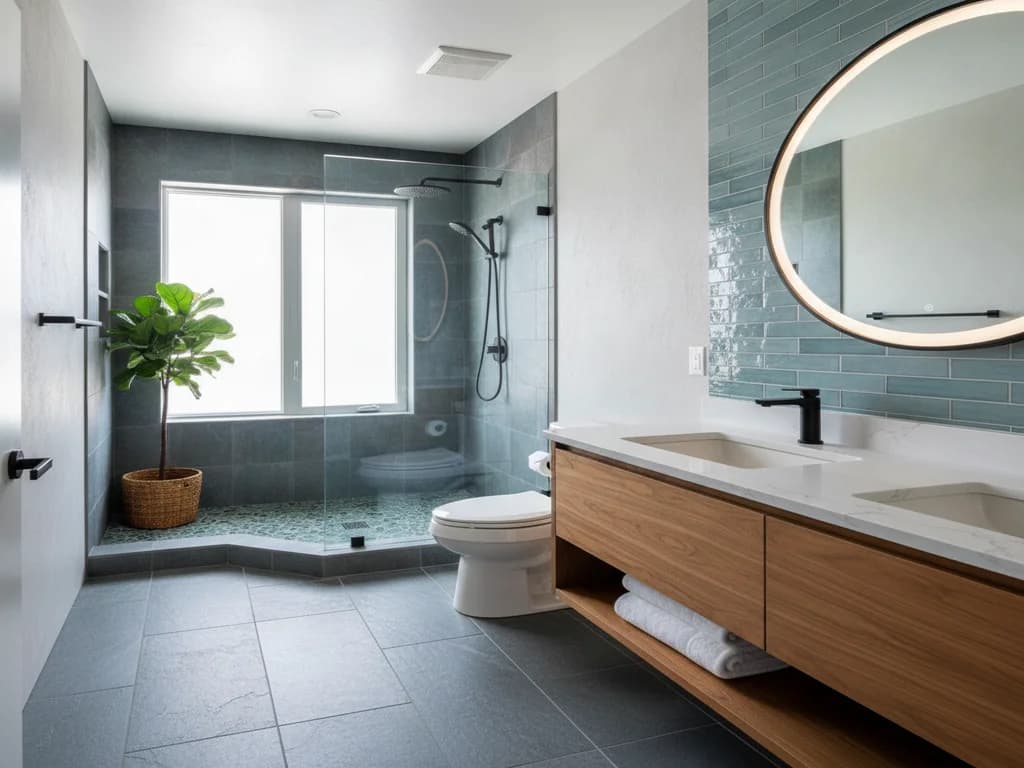
8. Light, low-contrast palettes — soft whites, warm neutrals, pale greens and blues — make walls recede and a small room breathe. The trick is cohesion: keeping wall, tile, and vanity in a tight tonal range avoids the chopped-up feeling that shrinks a space. That does not mean it has to be boring; a single muted accent keeps it from going flat. We keep the full palette playbook in the colors and combinations that work so this stays focused on space. Best for: small and north-facing baths that need to feel airy.
Fixture & detail ideas for tight spaces
The last layer is about removing bulk — the protruding shelves, oversized fittings, and dim lighting that crowd a small room.
9. Clear glass instead of a curtain. 10. Recessed niches instead of shelves. 11. A wall-mount faucet. 12. Brighter, layered lighting. Each reclaims either physical or visual space. Best for: finishing a small remodel so it feels intentional rather than merely smaller.
Are recessed niches better than shelves?
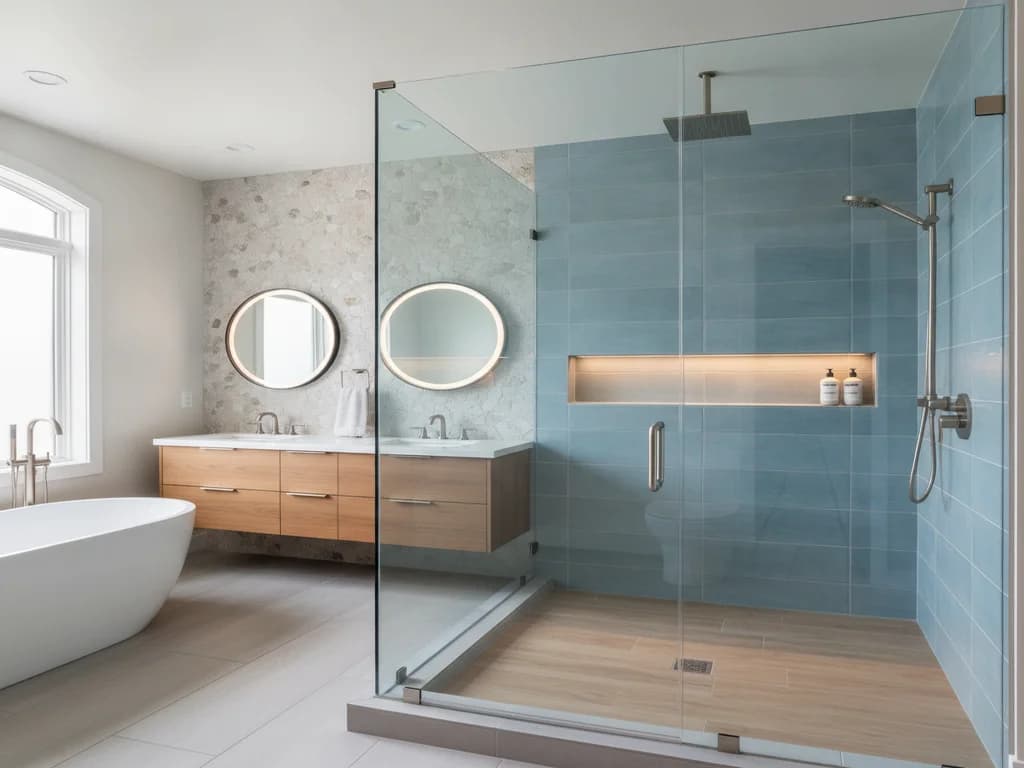
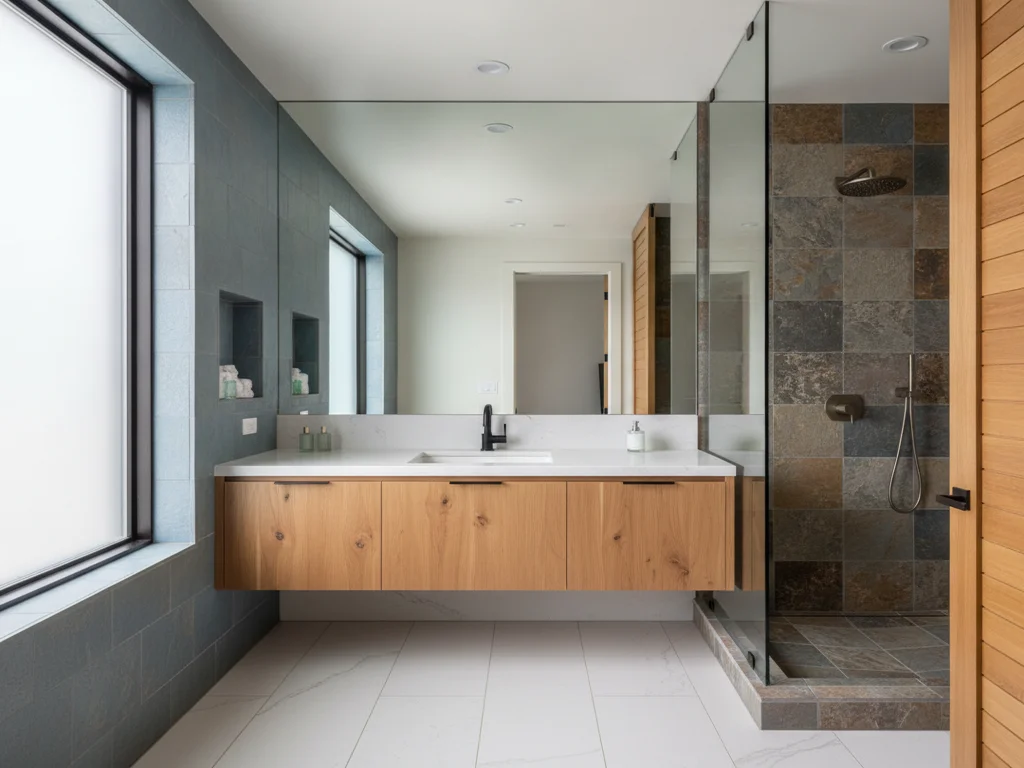
10. A recessed niche stores shampoo and soap inside the wall cavity, so nothing protrudes into the shower to catch a shoulder or shrink the space. Protruding caddies and corner shelves do the opposite — they add visual bulk exactly where the room can least afford it. Align the niche with your tile layout so its borders land on grout lines, and it reads built-in rather than added-on. For dedicated storage strategy beyond the shower, see storage ideas that disappear into the walls. Best for: every small shower; a single chest-height niche covers most needs.
Should you use glass instead of a shower curtain?
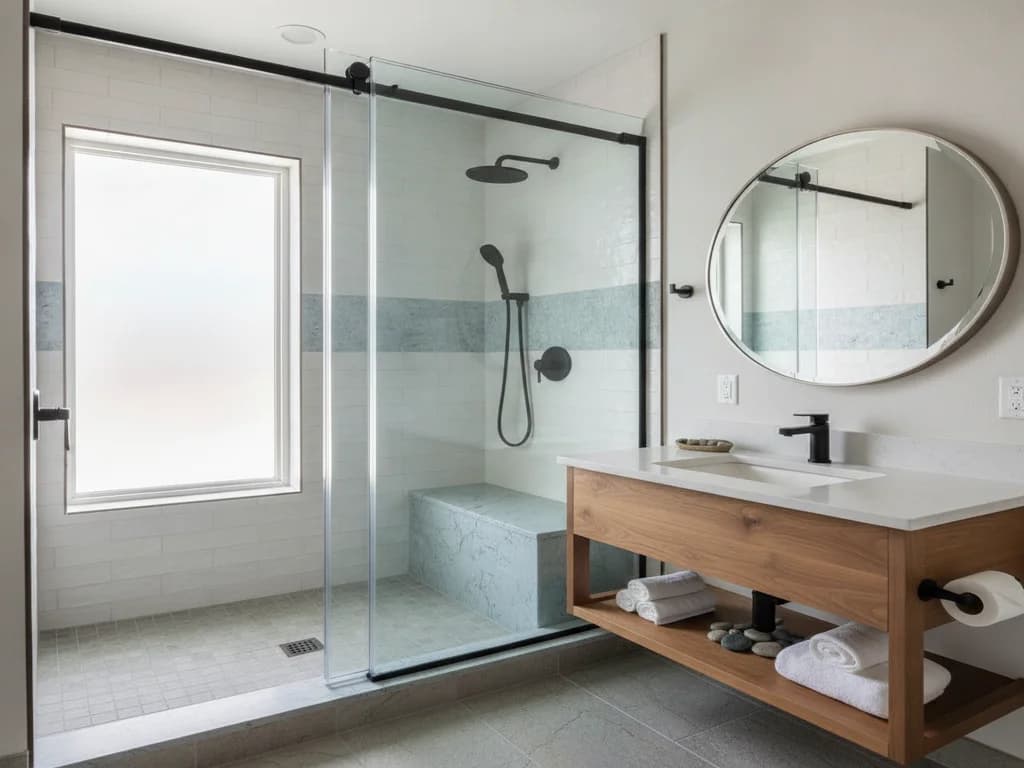
9. A clear glass panel or enclosure lets the eye travel all the way to the back of the shower, so the room reads to its true depth instead of stopping at a curtain. A fixed glass panel (a "splash guard" with no door) is often enough for a curbless layout and keeps things even more open. Clear glass also shows off the tile you invested in. Choose a hydrophobic coating to fight the Treasure Valley’s hard-water spotting. Best for: any small shower where a curtain currently halves the visual space.
What lighting helps a small bathroom?
11. A wall-mount faucet clears the vanity deck and lets you use a shallower sink, buying back inches in a narrow room. 12. Layered lighting — a bright task layer at the mirror plus a recessed ambient layer — eliminates the shadows that make a small bath feel like a closet. Even adding a second light source transforms how large a windowless bath feels. Best for: dim, single-fixture bathrooms common in older homes; pair with the large mirror above for maximum lift.
Small-bath ideas for older Boise homes
Boise’s housing stock makes small bathrooms common. North End and Bench-era homes frequently have original 5×7 baths or narrow galley layouts squeezed between bedrooms, and mid-century builds across the valley often have a single cramped hall bath shared by the whole house. These rooms usually have good bones and worth-keeping character — the goal is to modernize function without erasing it.
In these homes, the tub-to-shower conversion is repeatedly the biggest win: many original tubs are rarely used, and reclaiming that footprint for a curbless shower opens the whole room. Pocket doors solve the chronic door-swing conflicts of tight mid-century plans. And because plumbing is often on a single wall in these layouts, keeping fixtures where they are controls cost. Treasure Valley hard water also argues for matte finishes and coated glass so the new bath stays looking new.
Which idea should you start with?
If you do just one thing, change the layout — and in most small Boise baths that means converting the tub to a curbless or corner shower and, where possible, switching to a pocket door. Those two moves reclaim the most real space. Layer in the visual tricks next: large-format tile, a continuous floor, a big mirror, clear glass, and a light palette. Finish with niches, a wall-mount faucet, and better lighting to remove the last of the bulk.
Because this guide deliberately skips pricing, send budget questions to what a small bathroom remodel costs in Boise, or request a free design estimate to get specifics for your room. You can also browse the design gallery to picture these moves in a finished room.
Ready to plan your Boise bathroom?
Licensed & insured · 3-year workmanship warranty
Frequently asked questions
- What is the best layout for a small bathroom?
- Keep plumbing on one wall, work within the toilet-sink-shower triangle, and respect code clearances (about 21 inches of clear space in front of fixtures). In most small baths, converting the tub to a curbless shower, floating the vanity, and using a pocket door is the highest-impact layout.
- How do you make a small bathroom look bigger?
- Reduce visual interruptions: use large-format tile, run flooring continuously into the shower, install a wall-to-wall mirror, keep a light cohesive palette, and replace a shower curtain with clear glass. Together these tricks make a tight bathroom read noticeably larger without adding square footage.
- Is a walk-in shower or a tub better for a small bathroom?
- A walk-in shower usually wins on space, removing the visual barrier a tub creates and reclaiming floor. The exception is if it is your only bathroom and you need a tub for resale or children. We compare the decision in detail in our walk-in shower vs. tub-to-shower guide.
- What is the smallest size for a walk-in shower?
- A functional walk-in shower generally starts around 32x32 inches, with 36x36 inches more comfortable. Corner and curbless designs make the most of tight footprints. A designer can fit a usable shower into surprisingly small spaces while keeping required clearances around it.
- Should you use a pocket door in a small bathroom?
- Often yes — a pocket door eliminates the roughly nine square feet a standard door swings through, freeing space for fixtures or openness. It does require an uninterrupted wall cavity, so framing and plumbing should be checked early. A barn door is the alternative when the wall cannot be opened.
- What flooring makes a small bathroom feel larger?
- Large-format tile in a light tone with minimal grout lines makes a small floor read as one continuous plane, which feels bigger. Running the same flooring straight into a curbless shower removes the threshold break entirely. See our bathroom flooring guide for material trade-offs.
Sources
- NKBA — bathroom planning guidelines (clearances & layout)
- ICC — International Residential Code (fixture clearances)
- ADA.gov — clear floor space references
Claims and figures are drawn from the sources above and provided for general guidance; your project may vary. Photography is illustrative of design concepts. For a fixed price on your specific bathroom, request a free estimate.