Updated June 30, 2026 · 9 min read
By Boise Bath — bathroom & shower remodeling in Boise & the Treasure Valley
The short answer
The most reliable bathroom color combinations pair a calm base with one secondary tone and a small accent: warm white with oak and brass, soft greige with matte black, sage green with cream, navy with white and natural wood, or charcoal with warm gray. Lighter palettes open up small baths; deeper tones suit well-lit rooms.
Key takeaways
- Build palettes around a 60-30-10 balance: dominant base, supporting tone, small accent.
- Warm neutrals and nature-inspired greens read as both current and timeless.
- Light, low-contrast palettes make small bathrooms feel larger; deep tones need good light.
- Coordinate wall color with vanity finish and metal fixtures so the room reads cohesive.
- In north-facing or low-light Boise baths, warm undertones counteract cool, flat light.
How do you choose a bathroom color combination?
A bathroom that feels pulled-together almost always follows the same quiet rule: one color does most of the work, a second supports it, and a small accent provides the spark. Designers call this the 60-30-10 balance — roughly 60% a dominant base (walls and large surfaces), 30% a secondary tone (vanity, tile, or a feature wall), and 10% an accent (metal finishes, textiles, a single bold element). Get those proportions right and almost any combination reads as intentional.
The 17 combinations below are organized by mood — warm neutral, cool and spa, classic high-contrast, moody and dramatic, nature-inspired, and bold accent — and each carries a "best for…" verdict tied to room size and light. This article stays in its lane: it is about color relationships, not which tile or material to buy. For the latter, see choosing shower wall materials and tile.
The 60-30-10 shortcut
Pick your base, your supporting tone, and one accent — then stop. Most bathrooms that feel "off" have too many competing colors. Three is plenty; the discipline is what makes a palette read timeless rather than busy.
How does light and room size affect color choice?
Color never exists in a vacuum — the same paint looks airy in a sun-filled room and dreary in a dim one. Two variables decide what will work: how much natural light the bathroom gets, and how big it is. Light, low-contrast palettes make small or dark baths feel larger and brighter because pale walls recede and bounce light. Deeper, saturated tones — charcoal, forest, navy — look rich and enveloping but need either good natural light or strong layered lighting to avoid feeling like a cave.
Undertone matters as much as the color itself. A north-facing room receives cool, flat light that can turn a "neutral" gray cold and grim; a warm-undertoned neutral counteracts that. South- and west-facing rooms get warmer light that can carry cooler colors comfortably. Reputable paint makers’ undertone guidance is worth consulting before committing — it is the difference between the swatch and the room.
Warm neutral combinations
Warm neutrals are the safest timeless territory — current now, and unlikely to feel dated in a decade. They flatter most lighting and pair with nearly any fixture.
1. Warm white + oak + brass and 2. greige + matte black are the two anchors of this group. Both build a calm, light-filled room with just enough contrast to feel designed rather than bland. Best for: small and north-facing baths, and anyone who wants a low-risk palette that ages gracefully.
Warm white + oak + brass — why it always works
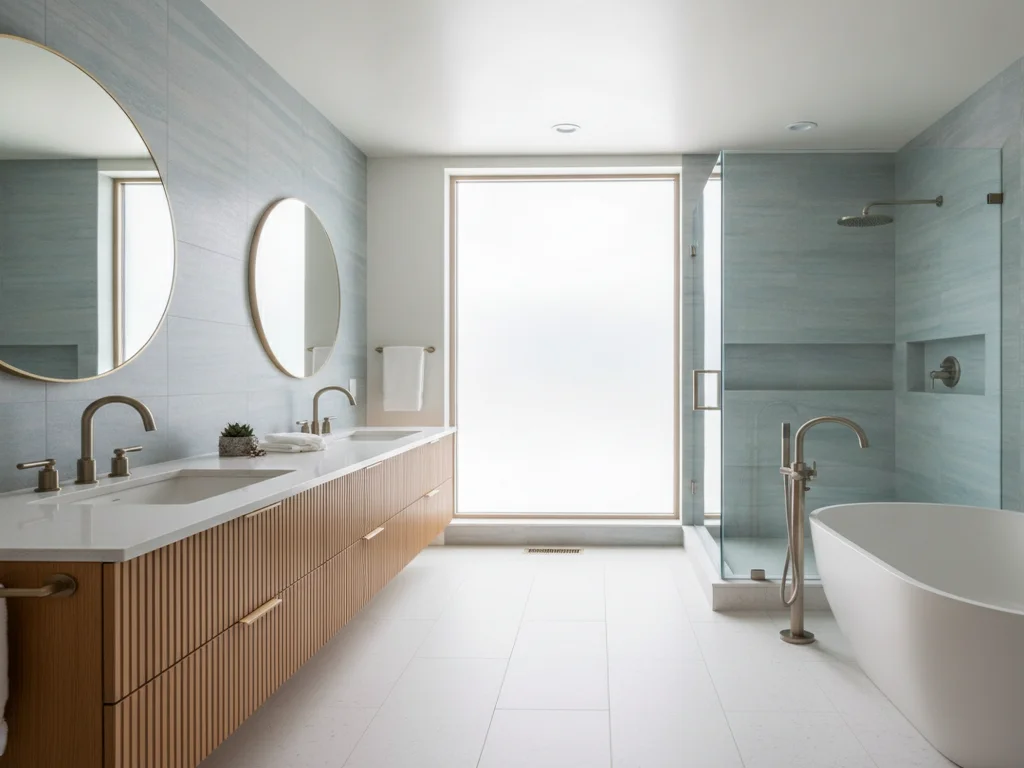
1. Warm white walls, a natural oak vanity, and brass (or unlacquered gold) fixtures is arguably the most reliable bathroom palette there is. The warm white keeps the room bright and open, the oak adds organic warmth and grain so the space never feels sterile, and brass brings a soft glow that polished chrome cannot match. It is timeless because every element is a natural, warm tone — nothing here belongs to a single trend year. Best for: small baths, north-facing rooms, and homeowners who want airy warmth. The brass accent also hides Treasure Valley hard-water spotting better than chrome.
Greige + matte black — soft warmth with grounding contrast
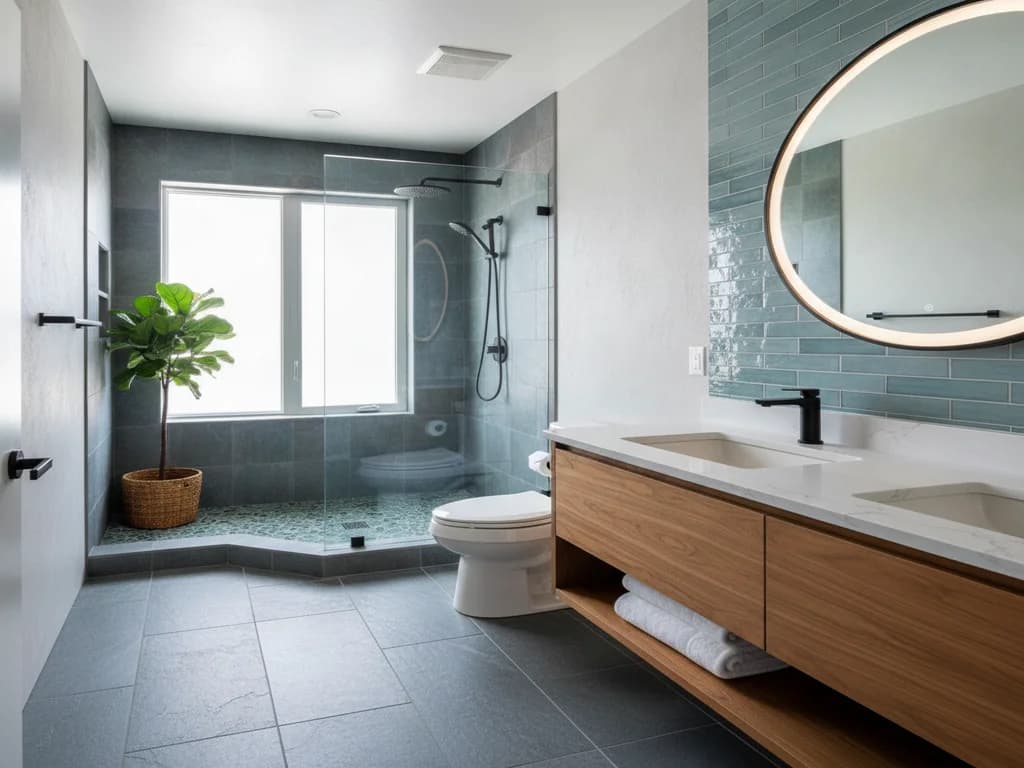
2. Greige walls (a warm gray-beige) with matte black fixtures and hardware delivers the warm-minimalist look that defines current bathrooms. Greige is the forgiving middle ground — warmer than gray, cooler than beige — and matte black grounds it with crisp, modern contrast without the coldness of chrome. Add a wood or white vanity to keep it from feeling heavy. Best for: transitional and contemporary baths of any size; the matte black is especially practical here because it conceals hard-water spotting. For coordinating the metal across the room, see matching fixture finishes to your palette.
Cool & spa combinations
Cool palettes evoke a calm, spa-like serenity — restful blues and soft greens that feel clean and watery, fitting for the room.
3. Soft blue + white + chrome and 4. sage green + cream are the spa cornerstones. Both lean restful and airy. Best for: bathrooms you want to feel like a retreat; the lighter versions also work in small rooms, though deep blues and greens want good light.
Soft blue + white + chrome — clean spa feel
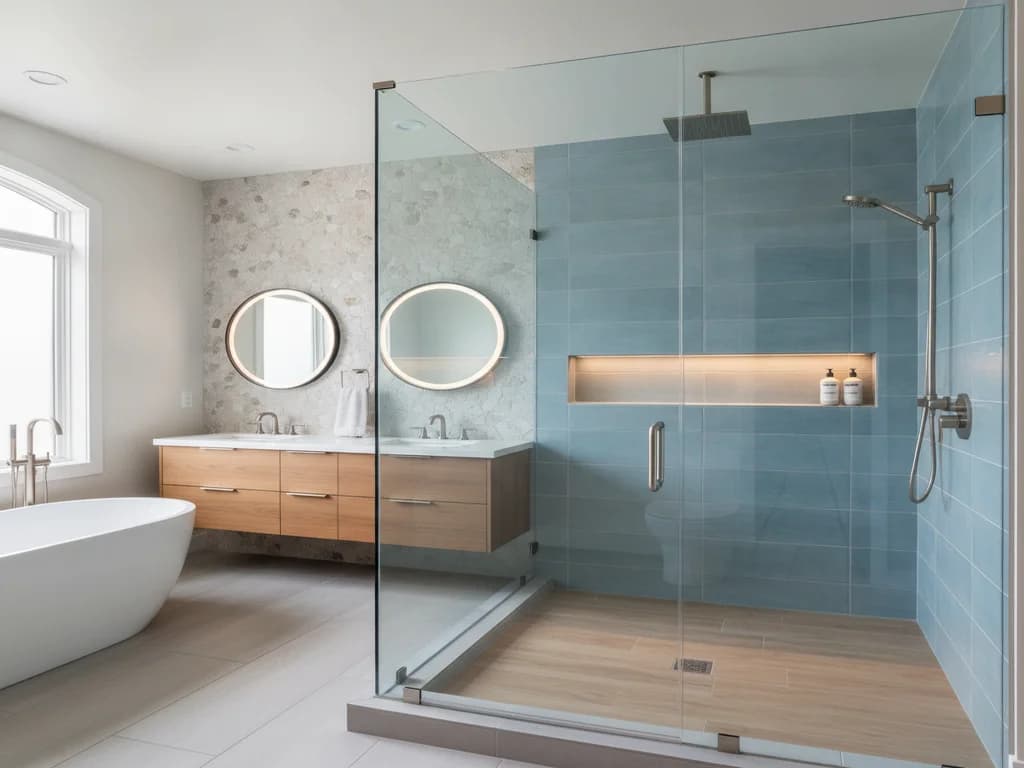
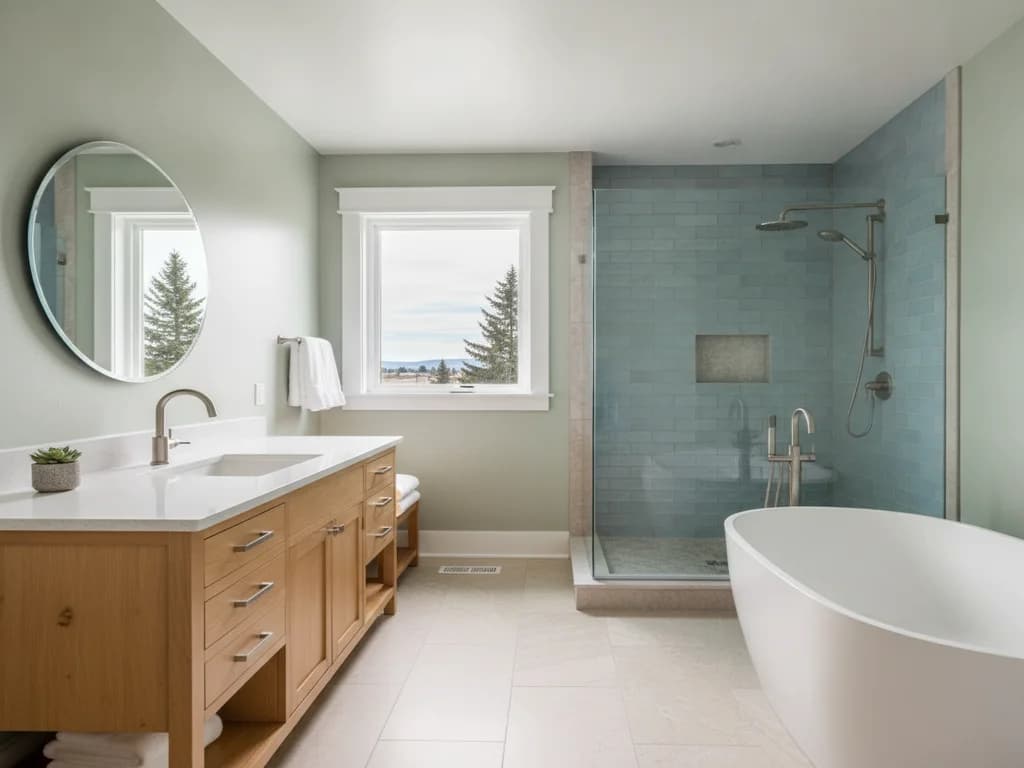
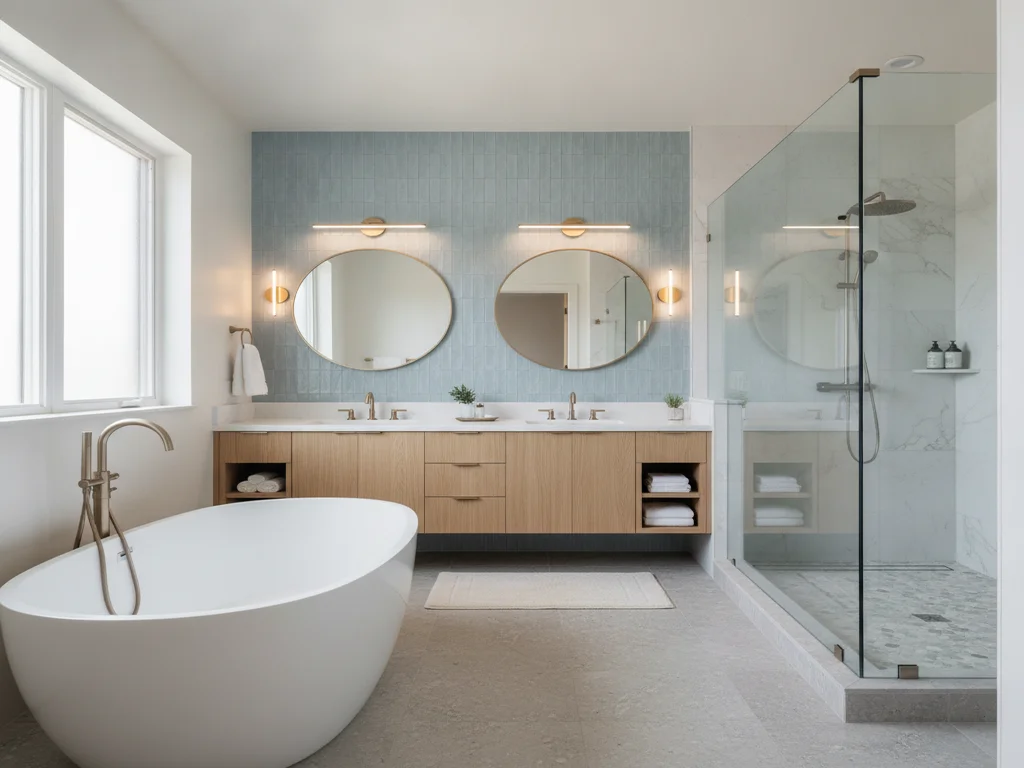
3. A soft, dusty blue paired with crisp white and polished or brushed chrome is the classic clean-spa palette — fresh, calm, and effortlessly bathroom-appropriate. White keeps it bright; the muted blue adds just enough color to feel intentional without committing to a strong hue. Keep the blue soft and grayed rather than primary to keep it timeless. Best for: family and guest baths, and small rooms when the blue stays pale. In a north-facing room, nudge the white and blue slightly warm so the cool light does not make them feel chilly.
Sage green + cream — restful nature palette
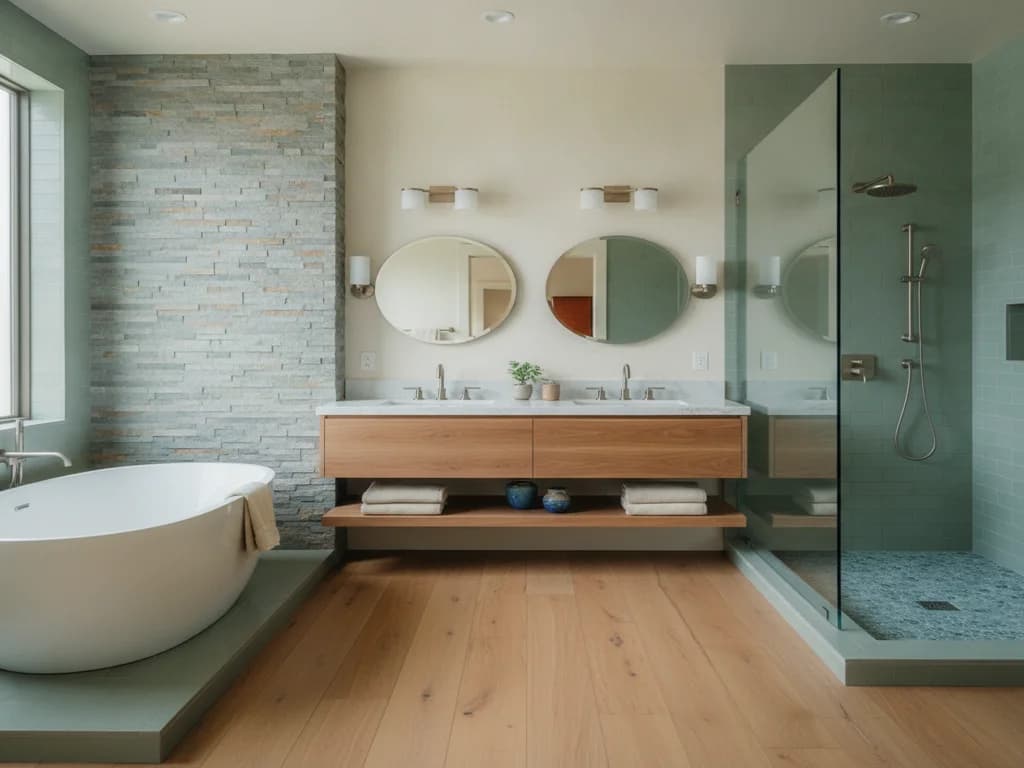
4. Sage or soft olive green with cream and natural wood accents is one of the most-loved palettes of the moment, and it has staying power because green reads as a natural, organic tone rather than a fashion color. Sage on the vanity with cream walls feels restful and grounded; reverse it for sage walls in a well-lit room. Pair with warm metals — brass or aged bronze — for a nature-led, spa-calm result. Best for: powder rooms, primary baths, and anyone wanting color that is gentle and timeless at once.
Classic high-contrast combinations
High-contrast schemes are graphic, crisp, and resale-safe — they have looked good for a century and will keep doing so.
5. Navy + white + natural wood and 6. black + white + brass are the enduring classics. Both deliver punch through contrast rather than color saturation. Best for: rooms with reasonable light; the white keeps them from feeling heavy even in mid-size baths.
Navy + white + natural wood — timeless and resale-safe
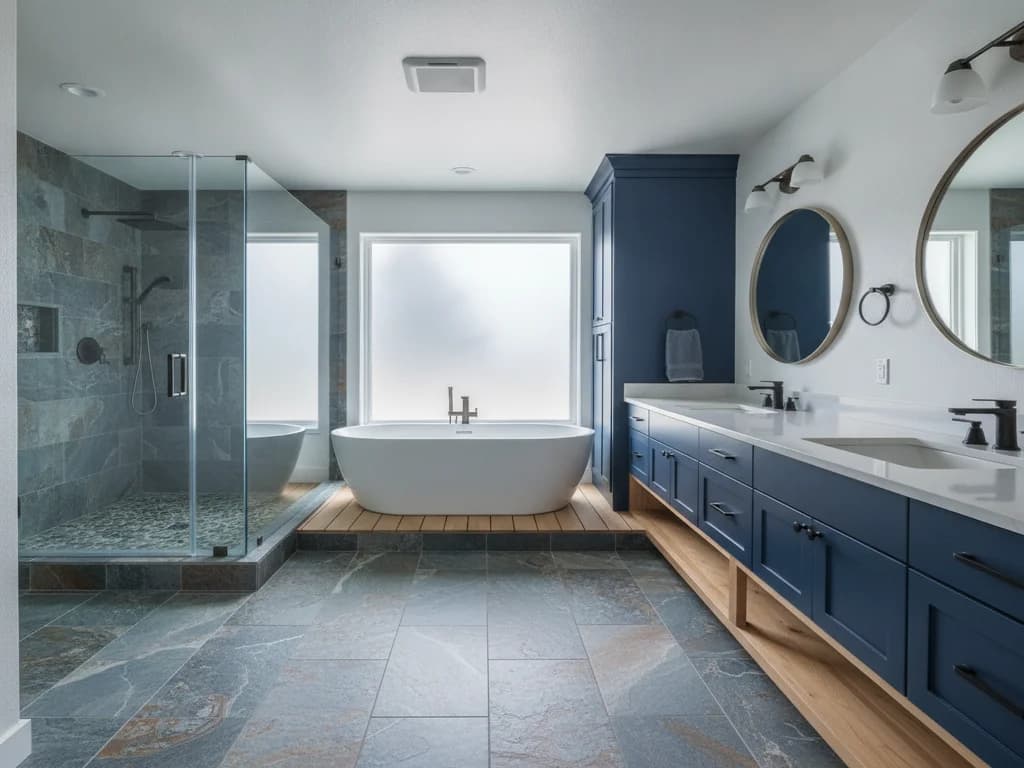
5. Navy paired with white and a warm natural wood is about as resale-safe as a palette gets — navy is the rare "color" that behaves like a neutral, reading classic in nearly any home. Use navy on the vanity or a feature wall, keep the walls and tile white for brightness, and warm the whole thing with an oak or walnut element. The contrast feels crisp and confident, never trendy. Best for: primary and guest baths, traditional and transitional homes, and anyone planning to sell down the road. NAHB buyer-preference data consistently shows neutral, classic finishes hold the broadest appeal.
Black + white + brass — graphic classic
6. Black, white, and brass is the timeless graphic palette — think a white room with black accents (hardware, framing, a hex floor) and brass as the warming third element that keeps it from feeling cold or stark. The brass is what elevates it from utilitarian to elegant. It works in everything from a vintage North End powder room to a modern build. Best for: powder rooms and baths where you want high impact with a small footprint of color. Keep the black to accents in a small room so it does not close the space in.
Moody & dramatic combinations
Deep, enveloping palettes turn a bathroom into a jewel box — dramatic and modern, best deployed where light cooperates.
7. Charcoal + warm gray and 8. deep green + brushed gold are the moody anchors. Both feel rich and contemporary. Best for: well-lit rooms or small powder rooms used as a deliberate dark statement; avoid in dim, windowless baths without strong layered lighting.
Charcoal + warm gray — modern depth
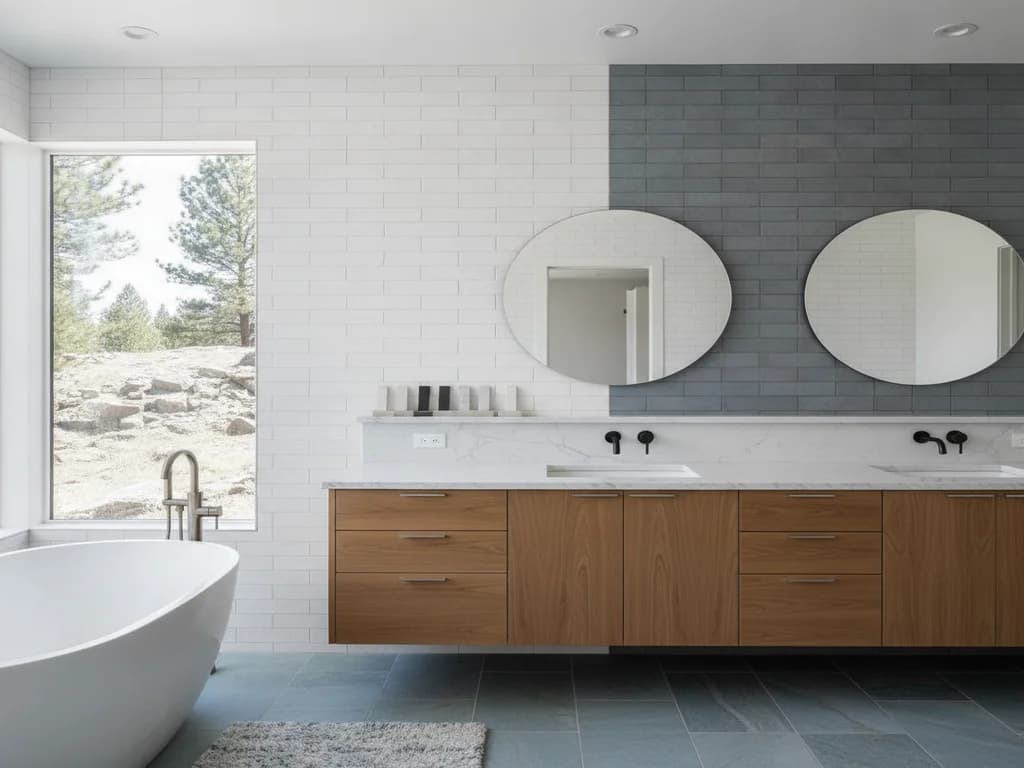
7. Charcoal paired with a warm mid-gray gives a room modern depth without going fully black. Charcoal on the lower half or the vanity, warm gray above, and a metallic accent creates a sophisticated, tonal look. The key is keeping the grays warm so the room feels enveloping rather than cold and industrial. Best for: primary baths with good natural light, or a small powder room embraced as a moody statement. Pair with strong, layered lighting — moody palettes live or die by it.
Deep green + brushed gold — rich and enveloping
8. A deep forest or emerald green with brushed gold fixtures is a rich, enveloping combination that feels both luxurious and grounded in nature. The green reads as a sophisticated near-neutral, and brushed gold warms it into something jewel-like. It is most striking color-drenched in a powder room — walls, vanity, and trim in the same deep green. Best for: powder rooms and well-lit primary baths used as a bold, timeless-leaning statement. Brushed gold also resists hard-water spotting better than polished finishes.
Nature-inspired & earthy combinations
Earthy palettes borrow from the landscape — warm, organic, and easy to live with year after year.
9. Terracotta + cream + wood and 10. stone gray + olive lead this group. Both feel grounded and warm. Best for: rooms where you want organic warmth; the lighter terracotta and stone-gray versions suit small baths, while richer applications want some natural light.
Terracotta + cream + wood — warm earthiness
9. Terracotta or clay tones with cream and natural wood brings a warm, sun-baked earthiness that feels welcoming and timeless. Use terracotta as an accent — a tile, a painted vanity, textiles — against cream walls and wood, rather than drenching the room, to keep it warm rather than overwhelming. The palette flatters warm light beautifully. Best for: guest baths, powder rooms, and homes with a Southwest or organic-modern leaning. It is an especially good fit for warm Boise foothills daylight.
Stone gray + olive — grounded neutral
10. A warm stone gray paired with muted olive green is a grounded, nature-led neutral that feels calm and current without being cold. Stone gray on the walls, olive on the vanity (or vice versa), and warm metal accents create a quiet, sophisticated room. Because both are muted and warm-leaning, the combination is forgiving across different light. Best for: primary and family baths, and homeowners who want subtle color rather than a statement. It is one of the most flexible palettes here.
Bold accent combinations
For color confidence with low risk, anchor a neutral room and let a single bold element carry the personality.
11. Neutral base + one bold accent wall or vanity is the strategy here — and it covers several looks at once. Best for: the color-curious who want impact without committing the whole room; it is also the easiest palette to refresh later.
Neutral base + one bold accent — low-risk color
11. Keep walls, tile, and the bulk of the room in a calm neutral, then introduce one confident accent — a deep-blue vanity, a single emerald or terracotta feature wall, a boldly patterned floor. Because the accent is contained, it delivers personality without the commitment (or risk) of a fully saturated room, and it is easy to change in a few years if your taste shifts. This is the smartest way to use bold color in a bathroom. Best for: anyone who loves color but wants resale flexibility; ideal for vanities and single feature walls. 12–17. Any of the secondary or accent tones above — sage, navy, charcoal, terracotta, brushed gold, matte black — can play the bold accent role against your chosen neutral, giving you a wide set of low-risk combinations to pull from.
Which colors are best for a small bathroom?
In a small bathroom, lean light and low-contrast: warm white, soft greige, pale sage, dusty blue, or cream as the dominant tone, with accents kept small and the whole palette tightly coordinated. Cohesion is the trick — when wall, tile, and vanity stay in a close tonal range, the eye reads one continuous space instead of a chopped-up one, and the room feels larger. Save the deep, moody combinations for powder rooms used as a deliberate jewel-box statement.
Color is only part of making a small bath feel bigger; for the layout and visual-trick side, see color tricks for small bathrooms, which covers large-format tile, mirrors, and continuous flooring alongside palette.
Which palette fits your home and Boise light?
Start with your room’s light and size, then pick the mood. North-facing and low-light baths — common in older North End and Bench homes — want warm undertones (warm white + oak, greige + matte black, terracotta + cream) so the cool, flat local light does not turn them dreary. Rooms with bright foothills daylight can carry cooler spa palettes or deeper, moody tones without feeling dark. Match the palette to your home’s overall style for a cohesive whole, and coordinate the metal finish across fixtures so the 10% accent reads deliberate.
For how these palettes intersect with this year’s direction, see the colors trending this year; for the tile and surfaces that carry them, choosing shower wall materials and tile. When you are ready to make it real, a full bathroom remodel brings the palette together, or browse finished Boise bathrooms to see combinations in context.
Ready to plan your Boise bathroom?
Licensed & insured · 3-year workmanship warranty
Frequently asked questions
- What is the best color combination for a bathroom?
- There is no single best, but the most reliable is warm white with a natural oak vanity and brass fixtures — bright, warm, and timeless. Other dependable combinations include greige with matte black, sage green with cream, and navy with white and wood. Match the palette to your room’s light and size.
- What colors make a small bathroom look bigger?
- Light, low-contrast palettes make a small bathroom feel larger — warm white, soft greige, pale sage, or dusty blue as the dominant tone with small, coordinated accents. Keeping wall, tile, and vanity in a close tonal range lets the eye read one continuous, larger-feeling space.
- What are the most timeless bathroom colors?
- Warm neutrals (warm white, greige, cream), nature-inspired greens (sage, olive), and classic navy read as timeless because they behave like neutrals rather than trend colors. Paired with natural wood and warm metals, these palettes look current now and are unlikely to date in a decade.
- How do you combine two colors in a bathroom?
- Use the 60-30-10 balance: let one color dominate about 60% of the room, a second support at about 30% (vanity, tile, or feature wall), and reserve roughly 10% for an accent like metal finishes. Two-tone schemes such as navy and white or greige and black work especially well this way.
- What color goes with brass or gold fixtures?
- Brass and gold pair beautifully with warm whites, greige, sage and deep green, navy, and terracotta — anything with a warm or natural undertone. The warm metal adds a soft glow that flatters these palettes and, as a bonus, hides hard-water spotting better than polished chrome.
- Are dark colors a good idea for a bathroom?
- Dark colors like charcoal, deep green, and navy can look rich and dramatic, but they need good natural light or strong layered lighting to avoid feeling closed-in. They work best in well-lit rooms or in small powder rooms embraced as a deliberate jewel-box statement.
Sources
- NKBA — color and finish trend guidance
- NAHB — What Home Buyers Really Want (color & finish preferences)
- Sherwin-Williams — color & undertone guidance
Claims and figures are drawn from the sources above and provided for general guidance; your project may vary. Photography is illustrative of design concepts. For a fixed price on your specific bathroom, request a free estimate.