Updated July 16, 2026 · 7 min read
By Boise Bath — bathroom & shower remodeling in Boise & the Treasure Valley
The short answer
Choose grout color with one decision first: blend or contrast. Grout within a shade or two of the tile makes the surface read as one plane and hides wear; contrasting grout turns the layout into a graphic grid — and shows every alignment flaw. On floors, skip white: mid-tone grays and greiges hide traffic and stay presentable for years.
Key takeaways
- Blend or contrast is the whole decision — everything else is picking the right shade within your answer.
- Blending grout (within a shade or two of the tile) makes tile read as one continuous surface and forgives both dirt and minor layout imperfections.
- Contrasting grout turns the installation into a graphic grid — striking with subway tile, and unforgiving of any crooked joint.
- White grout on a bathroom floor is a maintenance commitment almost nobody keeps; mid-tone gray or greige floors stay presentable for years.
- Grout dries lighter than it looks wet, and joint width changes how loud the color reads — judge from a dry sample against your actual tile.
- Color longevity depends on chemistry as much as shade: cement grout fades and stains over time in ways epoxy does not.
Why grout color matters more than you think
Grout is 5 to 10 percent of a tiled surface by area, but it controls how the other 90 percent reads. The same white subway tile becomes a calm, seamless wall with white grout and a bold graphic grid with charcoal — one tile, two entirely different bathrooms. Because grout is chosen last, often from a rack at the counter in two minutes, it is where otherwise well-planned bathrooms go sideways.
It is also close to permanent. Tile can be regrouted, but it is tedious, dusty work that risks chipping edges — for practical purposes you are choosing a color for the life of the tile. That is a good argument for spending ten deliberate minutes on it, which is about what the framework below takes.
If you have not settled the tile itself yet, do that first — our guide to choosing bathroom tile covers material and size — because grout color is chosen against a specific tile, not in the abstract.
The one decision: blend or contrast?
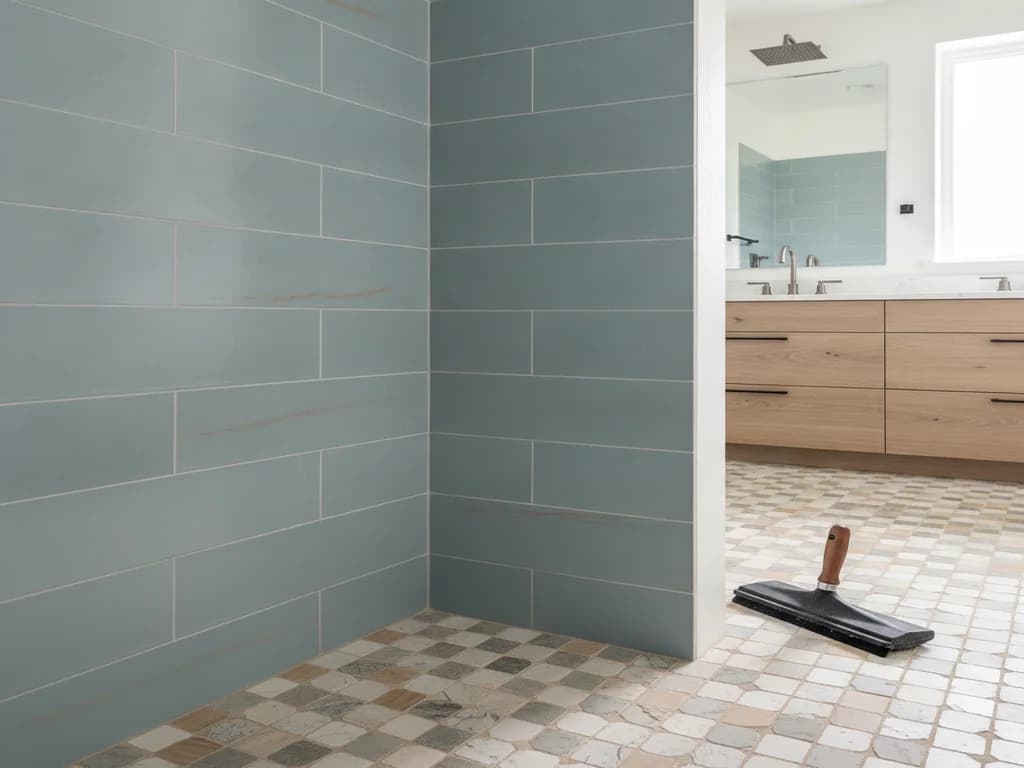
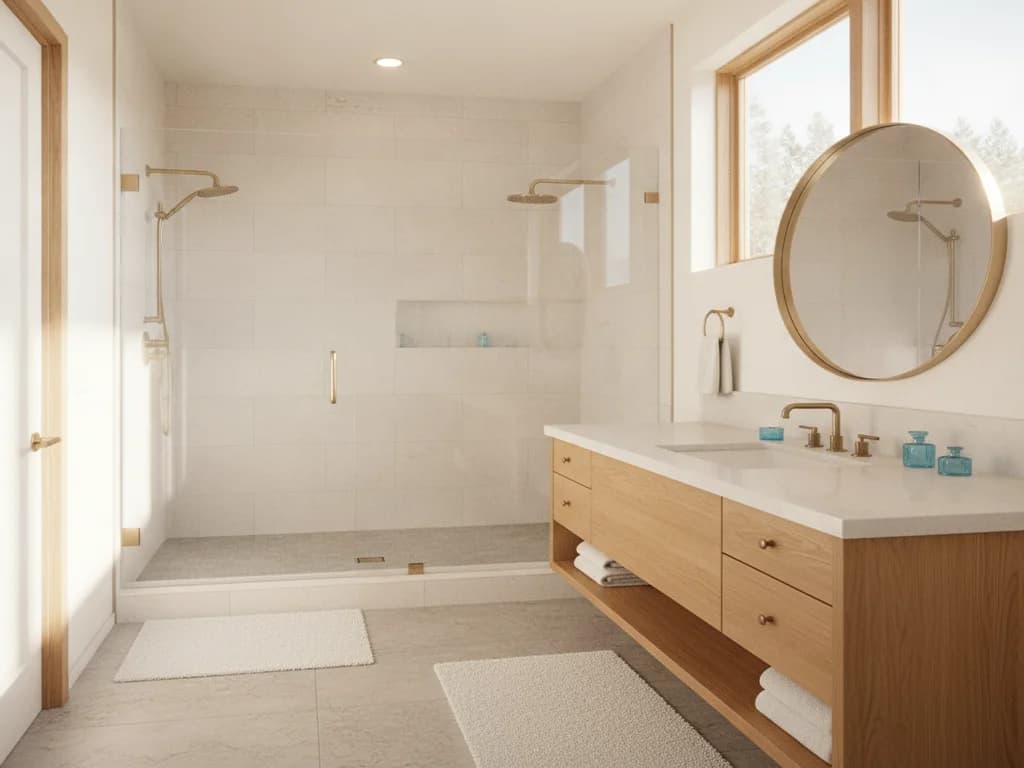
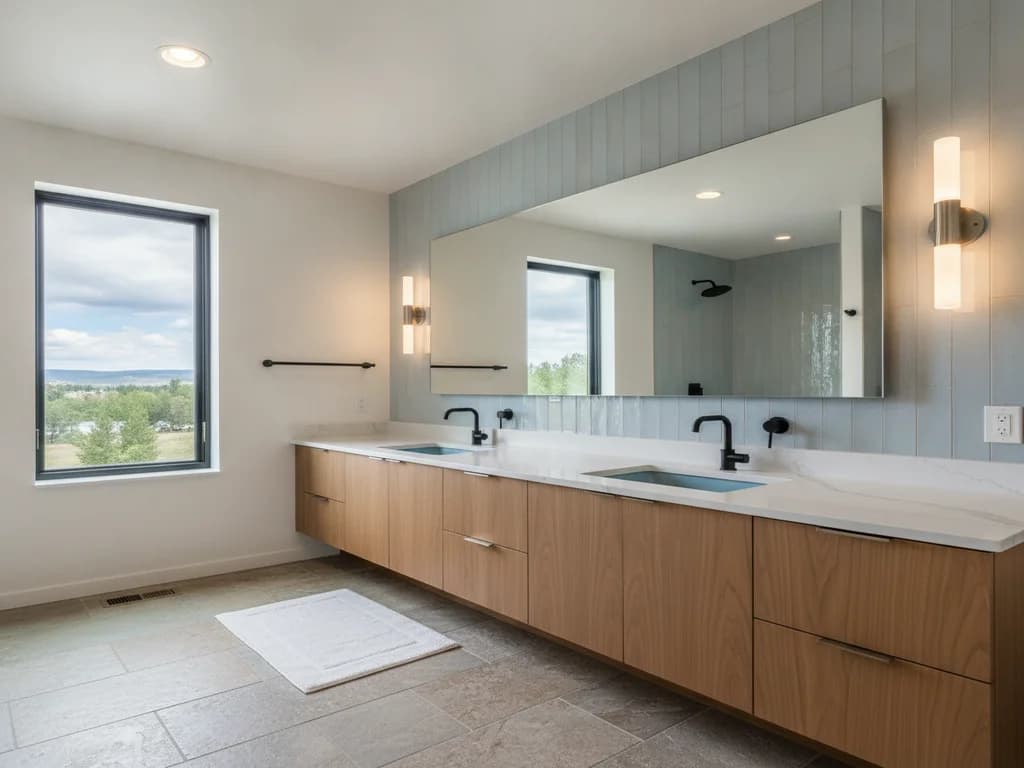
Blending means picking a grout within a shade or two of the tile — white-on-white, warm gray with greige porcelain, beige with travertine tones. The joints visually dissolve, the tile reads as one continuous plane, and the room feels larger and calmer. Blending is the forgiving choice twice over: it hides everyday dirt shifts, and it hides the small layout imperfections that exist in every real-world installation.
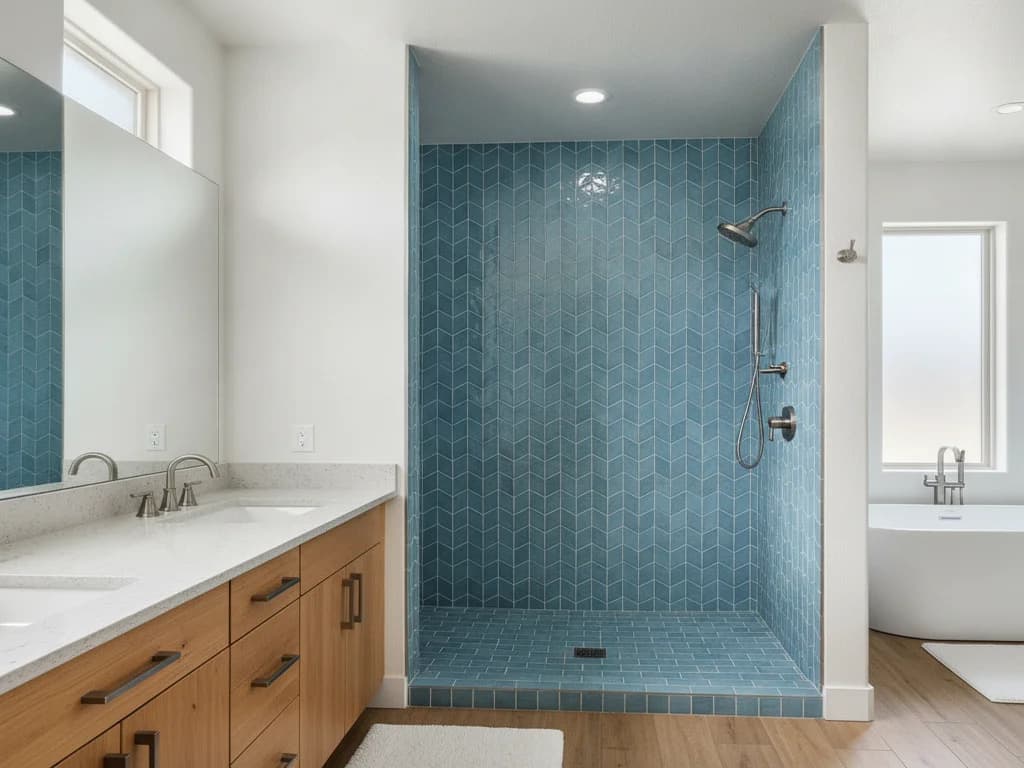
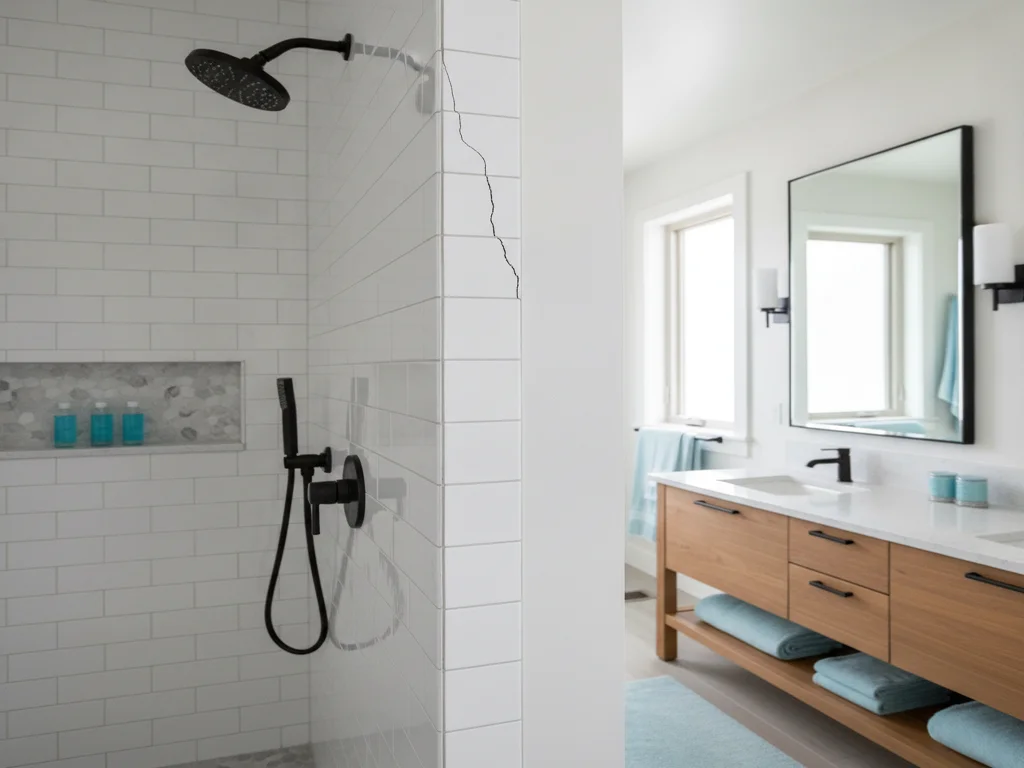
Contrasting means deliberately opposing the tile — dark grout on light tile or the reverse. The grid becomes the design: every joint is a drawn line, which is exactly why dark-grouted white subway tile is a fixture of classic and modern bathrooms alike. The cost of the look is precision: a contrasting grid highlights every joint that wanders an eighth of an inch, so it demands flat walls, consistent spacing, and a tile setter who works to tight tolerances — the kind of workmanship standards bodies like the Tile Council of North America publish specifications for.
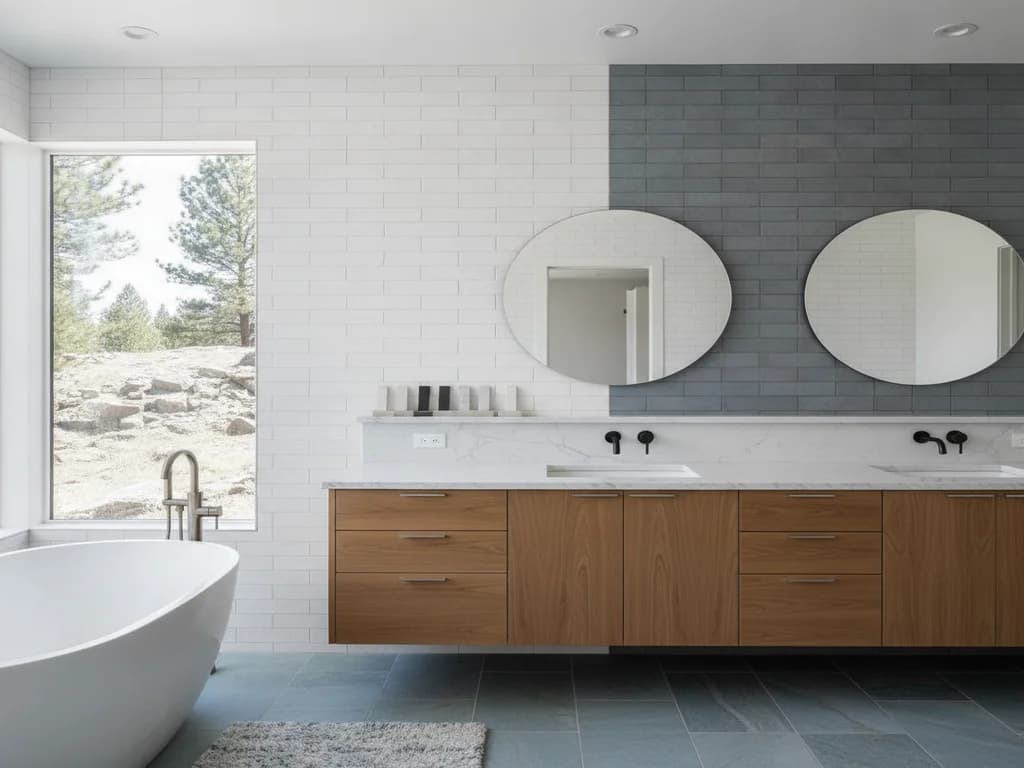
A useful default: blend on large surfaces you want calm (shower walls, floors), and save contrast for one deliberate moment — a wainscot, a niche, a single accent wall. Contrast everywhere stops being a statement and starts being noise.
The white floor grout trap
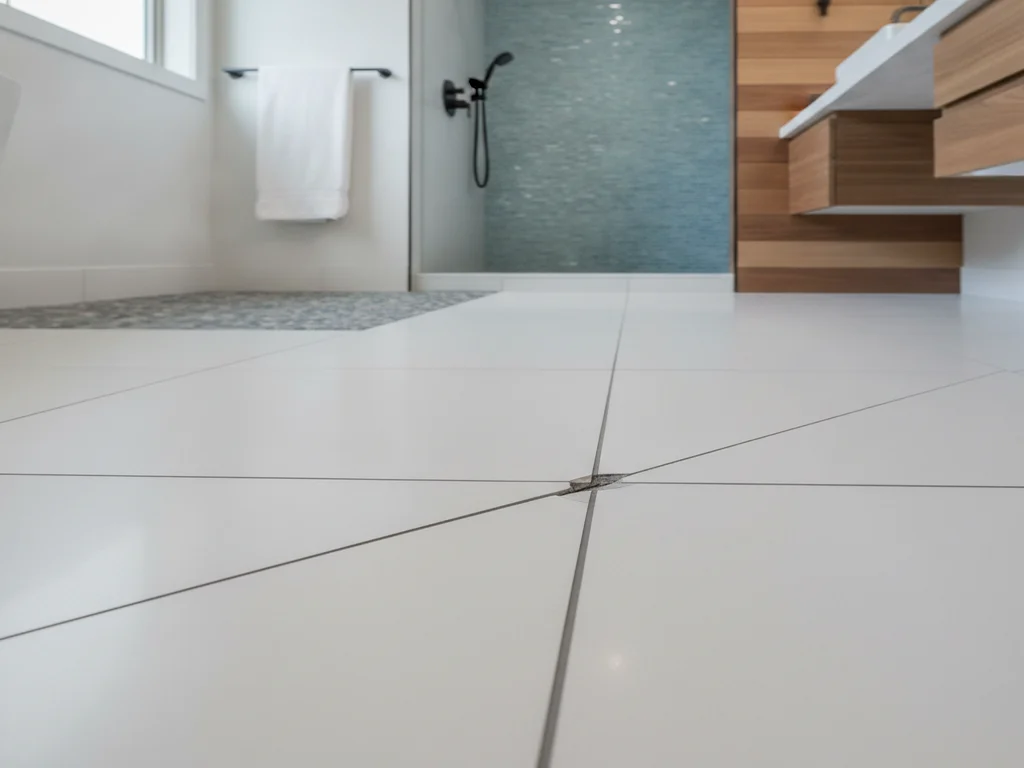
White or near-white grout on a bathroom floor is the single most regretted grout decision, and it is worth naming plainly: it will not stay white. Floor grout sits slightly recessed, so it collects what shoes, feet, and mop water carry, and cement grout is porous enough to absorb it. The joints nearest the door and toilet darken first, producing the blotchy, traffic-mapped look that no amount of routine mopping reverses.
Sealing helps — a penetrating sealer applied after cure and renewed periodically slows staining considerably, and our tile and grout care guide covers the maintenance schedule honestly. But sealing is a subscription, not a cure, and most households let it lapse.
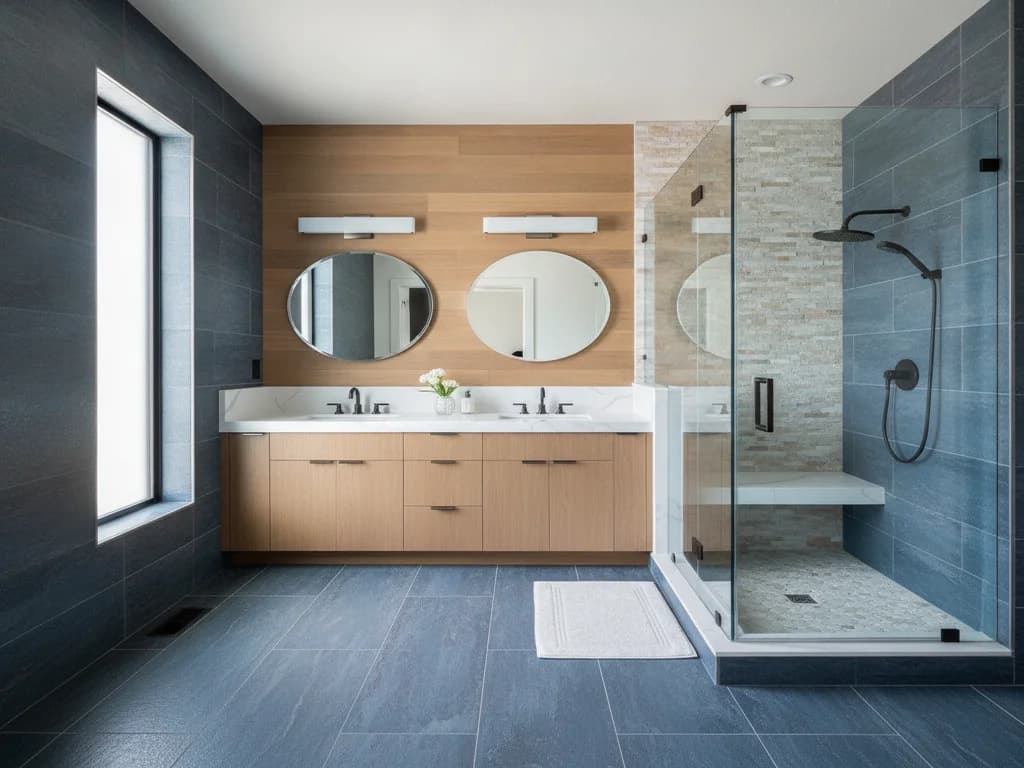
The practical alternative costs nothing: a mid-tone gray, greige, or taupe floor grout, which reads nearly as light against most tile but camouflages years of real life. If a bright white joint line matters to the design, put it on the walls, where gravity is on your side.
The floor-grout rule of thumb
On floors, choose grout the color the floor will actually be in five years, not the color of the tile on day one. A mid-tone gray or greige joint looks intentional forever; a white joint looks perfect for six months and tired after that.
How joint width and tile size change the answer
The same grout color reads differently at different joint widths. A contrasting grout in a tight 1/16-inch joint draws fine pinstripes; the same color in a 3/16-inch joint draws bold lines. Large-format tile with narrow, blended joints all but disappears into a monolithic surface — a big part of why oversized porcelain dominates current shower design — while small tile, like penny round or mosaic, is mostly joints, so the grout color effectively becomes the surface color.
Joint width also determines the grout type: wider joints need sanded grout, narrow ones unsanded, and the two carry pigment slightly differently — the full breakdown is in sanded vs. unsanded grout. With mosaics, remember to judge the grout color at mosaic scale: a charcoal that looks sophisticated next to one 12-inch tile can turn a penny-round floor nearly black.
Lighting is the last variable. Grout, like paint, shifts with the room’s light — a warm greige can go pink under warm bulbs, and a cool gray can go blue in daylight. Judge samples in the actual bathroom, ideally under the lighting you plan to install; if that decision is still open, our lighting color temperature guide pairs naturally with this one.
Wet grout lies: judging color accurately
Freshly mixed cement grout is dramatically darker than its cured color — grout dries one to two shades lighter, which is why the color on the bag insert and the color in the bucket disagree. Manufacturers like Custom Building Products publish cured-color charts and offer sample sticks precisely because the wet color misleads.
The reliable method is physical and boring: get cured samples of your two or three finalists, lay them against your actual tile in the actual room, and look at them at morning and evening. Photograph the pairings — the camera flattens undertones in a way that makes mismatches obvious. Ten dollars of samples prevents the most permanent regret in the room.
One more longevity note: shade is only half of what you are choosing — chemistry is the other half. Cement grout, even sealed, slowly shifts color as it absorbs life; epoxy grout locks its color in and shrugs off staining, at a real cost premium and a fussier install. The full trade-off lives in epoxy vs. cement grout; the short version is that a color you love is easier to keep in epoxy.
Quick answers for common tile situations
- White subway tile: white or warm off-white grout for classic-calm; charcoal or dark gray for the graphic look — commit to one, as medium grays read indecisive here.
- Wood-look porcelain planks: match the darkest tone in the plank so joints vanish and the "wood" illusion holds; contrast breaks the illusion instantly.
- Marble and marble-look tile: blend with the base color (usually a warm white or pale gray) — veined stone with contrasting grout fights itself.
- Colored or patterned cement-look tile: pick a neutral pulled from inside the pattern; introducing a new color at the joints adds noise.
- Bathroom floors, any tile: mid-tone gray, greige, or taupe unless you will genuinely maintain a sealer schedule.
- Mosaic and penny round: treat the grout as the field color — sample at full scale before committing.
What the process looks like
- 1
Decide blend or contrast for each surface
Walk the design surface by surface — shower walls, floor, accent — and call blend or contrast for each. Default to blend on large surfaces and floors; spend contrast on one deliberate feature. This one call eliminates 80 percent of the rack.
- 2
Pull two or three cured samples per surface
Get manufacturer sample sticks or cured color chips for your finalists — never judge from wet grout or a printed chart. Stay within one color family; you are choosing a shade, not reopening the design.
- 3
Judge samples against your tile, in your light
Lay each sample against the actual tile in the actual bathroom, in daylight and under the bulbs you will use. Photograph the pairings and look for undertone clashes — warm grout on cool tile is the most common miss.
- 4
Sanity-check the maintenance
For each pick, ask what it looks like in year five. Light floor grout demands a sealing schedule; heavily contrasting shower grout shows soap film sooner. If the answer depends on maintenance you will not do, shift one shade toward forgiving.
- 5
Confirm joint width, grout type, and chemistry
Your tile setter confirms joint width, which sets sanded versus unsanded, and you decide cement versus epoxy — chemistry determines how long the color you chose stays the color you chose. Verify your exact color exists in the product line you settled on.
- 6
Record the brand, line, and color name
Write the manufacturer, product line, and color name into your project file and keep the label. Future repairs and regrouting depend on matching it exactly — grout colors are not interchangeable across brands, and matching from memory fails.
Ready to plan your Boise bathroom?
Licensed & insured · 3-year workmanship warranty
Frequently asked questions
- Should grout be lighter or darker than the tile?
- Neither is correct universally — it depends on whether you want the tile to read as one surface (grout within a shade or two of the tile, lighter or darker) or as a grid (deliberate contrast). On floors, slightly darker than the tile is the practical default because it hides traffic. Avoid the mushy middle: near-matches that miss read as mistakes.
- What grout color goes with white subway tile?
- The two strong answers are white-to-warm-off-white for a seamless classic look, or charcoal-to-dark-gray for the graphic grid look. Both are proven; medium gray splits the difference and reads indecisive. Contrast demands a precise layout, since dark joints highlight any wandering line — budget for careful installation if you go dark.
- What is the best grout color for a bathroom floor?
- Mid-tone gray, greige, or taupe — roughly the color of the floor after five years of real life. White and near-white floor grout stains along traffic paths and around the toilet no matter how good the tile is, and only a disciplined sealing schedule slows it. Mid-tones look intentional indefinitely with ordinary cleaning.
- Why does my grout look darker than the sample I picked?
- Usually one of three reasons: you judged the color wet (cement grout cures one to two shades lighter, so a wet batch looks darker than the chart), the joints are still curing (full cure color takes days), or the grout absorbed water or sealer unevenly. If cured grout is blotchy rather than uniformly dark, that points to inconsistent mixing water — an installation issue worth raising.
- Can I change my grout color without retiling?
- Yes, two ways. Grout colorant — essentially a bonded epoxy paint for joints — recolors sound grout and is a legitimate refresh for structurally good but stained or dated joints. Full regrouting removes the top layer of old grout and repacks new color; it is tedious and dusty but far cheaper than retiling. Neither fixes cracking or failing grout, which signals movement underneath.
Sources
Claims and figures are drawn from the sources above and provided for general guidance; your project may vary. Photography is illustrative of design concepts. For a fixed price on your specific bathroom, request a free estimate.