Updated June 30, 2026 · 9 min read
By Boise Bath — bathroom & shower remodeling in Boise & the Treasure Valley
The short answer
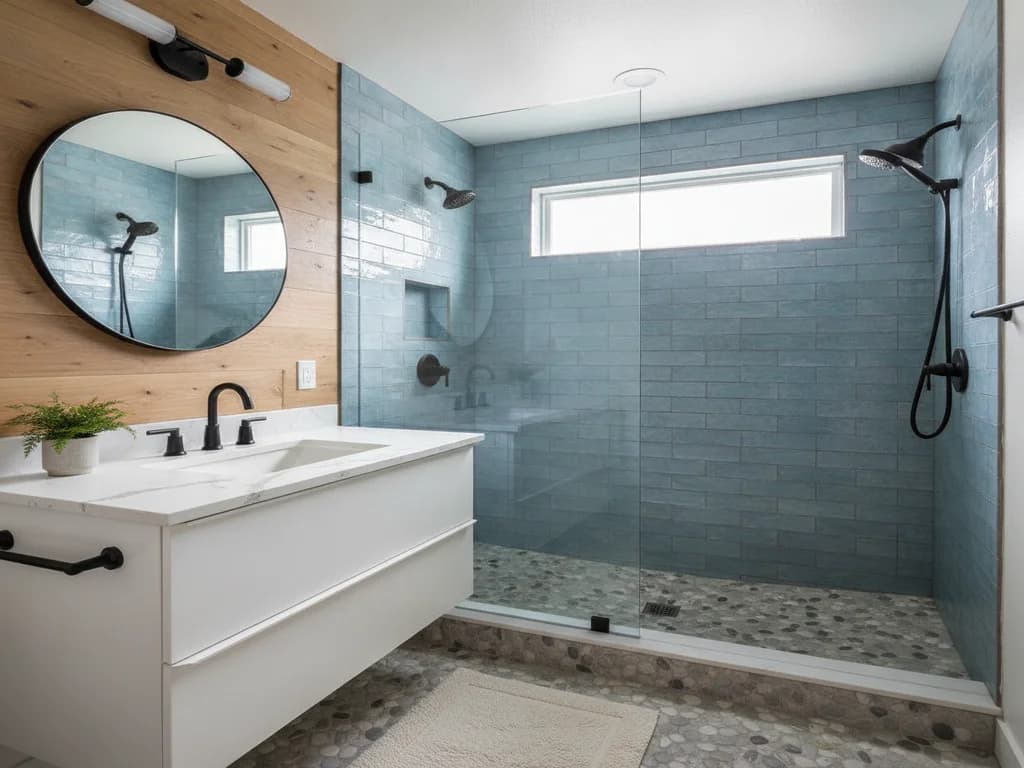
For small bathrooms, the best tub-to-shower conversion ideas reuse the existing tub alcove: a walk-in shower with clear or low-iron glass, large-format tile, a recessed niche, and a slim or fold-down bench. Corner, neo-angle, and curbless layouts reclaim floor space and make a tight bathroom feel noticeably larger and brighter.
Key takeaways
- Most conversions fit the existing 5-foot tub alcove — no need to move plumbing or walls.
- Clear or low-iron glass and large-format tile make a small converted shower feel bigger.
- Recessed niches and fold-down or slim benches add function without stealing floor space.
- Corner, neo-angle, and curbless layouts reclaim room in tight bathrooms.
- Keep at least one tub in the home if resale or young children are a concern.
Why convert a tub to a shower in a small bathroom?
In a tight or single-bathroom home, a rarely-used tub is expensive real estate. A standard 5-foot tub takes up the same floor as a generous walk-in shower, but most of that footprint sits unused while the step-over wall makes the whole room feel boxed-in and dark. Swapping the tub for a shower reclaims that space, opens up the sightlines, and turns a chore-to-clean basin into something you actually use every day.
There is also an accessibility angle. Stepping over a 15-inch tub wall is one of the most common ways people slip in a bathroom — the CDC reports that falls are the leading cause of injury among older adults, and a step-free shower removes that hurdle. The big trade-off is the keep-a-tub-for-resale question, which is real and worth thinking through; we hand that decision to a dedicated guide on whether to keep a tub or convert to a shower and the dollars to our Boise bathroom remodel cost guide. What follows is purely the design side: 15 ideas tuned for small and standard alcoves.
How to use this list
Pick one layout, one glass approach, and one or two space-savers (a niche, a slim bench, a curbless floor). In a small bathroom, restraint reads as polish — and a simpler shower is far easier to keep clean.
Can you convert a tub to a shower in the same footprint?
Most of the time, yes — and that is exactly why this swap is so popular in older Boise and Bench-era homes. The classic 5-foot alcove that holds a standard tub is almost the perfect size for a walk-in shower, so the conversion can reuse the existing three walls, the drain location, and the supply lines without moving plumbing or opening up the room.
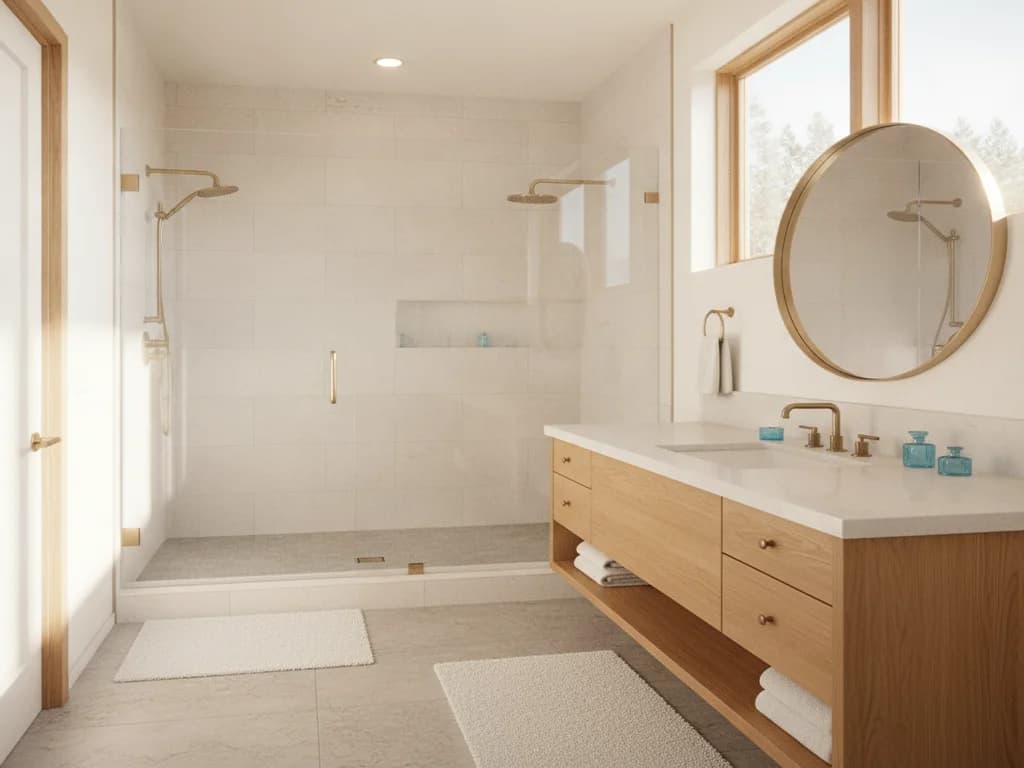
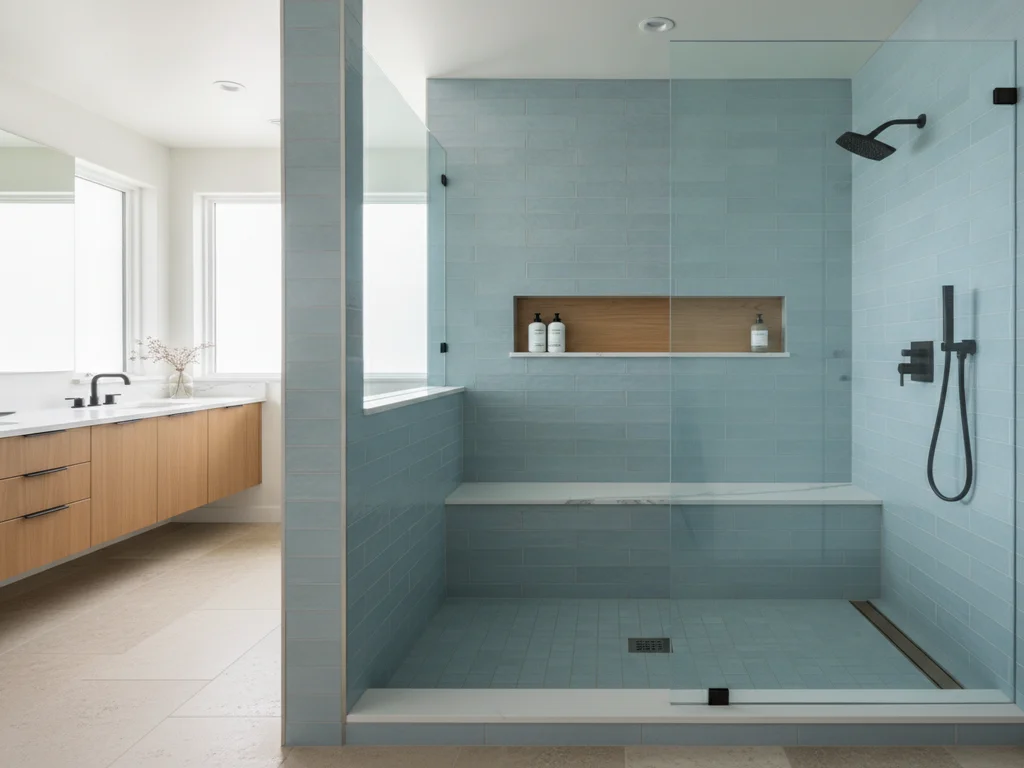
1. The same-footprint alcove conversion is the workhorse idea: keep the 60-inch alcove, swap the tub for a low-profile or curbless shower pan, run tile to the ceiling, and add a glass panel and door. It is the least disruptive, most budget-friendly route, and in a single-bathroom home it keeps the project short.
The footprint can flex when it needs to. If the bathroom layout allows, the alcove can be widened, a closet behind it borrowed, or the drain relocated for a different shape — but in a small bath, working within the existing alcove is usually the smart move. When you do want the room to feel bigger, you change perception, not square footage, which is what the next ideas are about.
What shower layout fits a small bathroom best?
The layout you choose sets how the finished room feels and how well it contains spray. In a standard alcove you have four practical directions, and the right one depends on whether you are reusing the tub recess or reworking a corner.
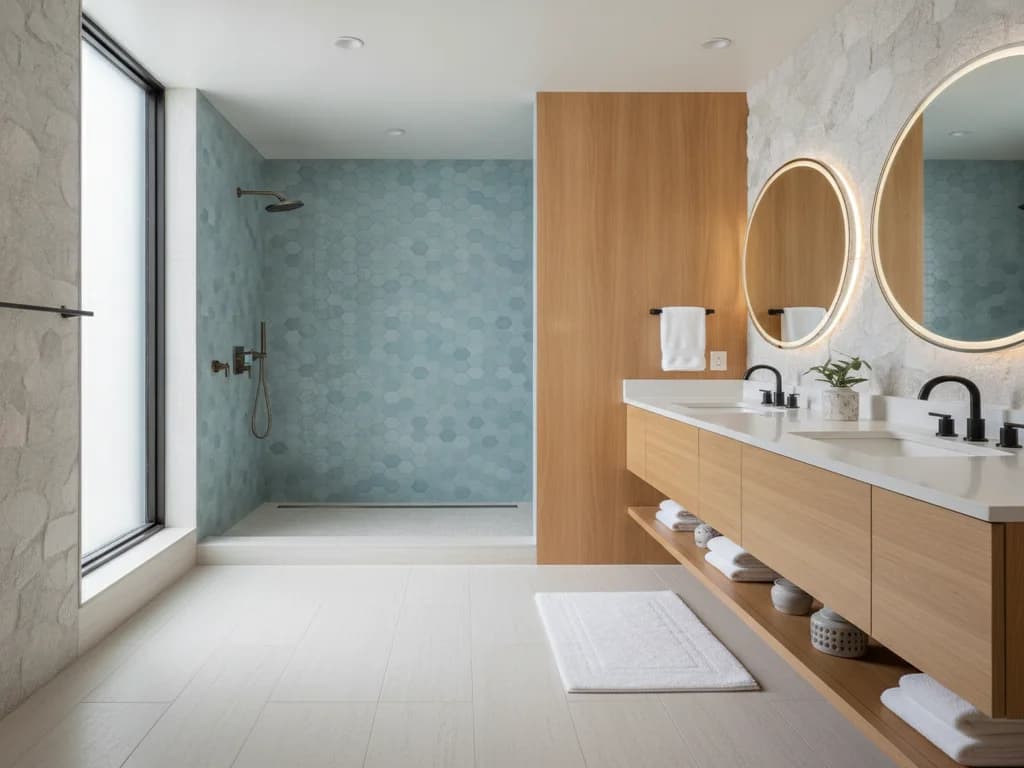
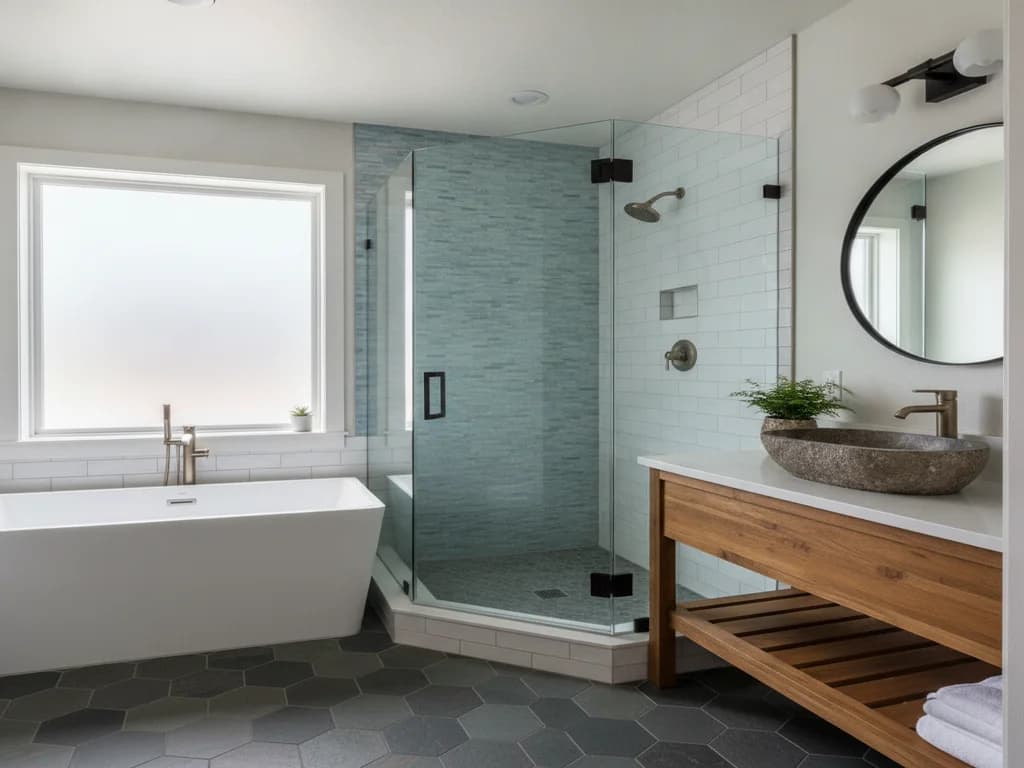
2. The alcove walk-in keeps the existing three-wall recess with a glass front — the simplest conversion and the one that feels most like a clean, modern upgrade of what was there. 3. The corner shower tucks the enclosure into two walls with a glass return, which frees up the rest of the floor and works well when the old tub wall was making the room feel cramped. 4. The neo-angle shower uses an angled front across a corner to shave the footprint further — ideal for the tightest powder-room-adjacent baths. 5. The curbless conversion drops the threshold entirely so the bathroom floor flows straight into the shower, which is the single best trick for making a small room read as larger.
| Layout | Space feel | Splash control | Best for |
|---|---|---|---|
| Alcove walk-in | Clean, familiar | Excellent (three walls) | Direct same-footprint swaps |
| Corner | Opens the floor | Good (two walls + return) | Freeing up a cramped center |
| Neo-angle | Smallest footprint | Good (angled front) | The very tightest baths |
| Curbless | Feels largest | Needs careful slope + drain | Open look and accessibility |
Curbless layouts rely on correct floor slope and a linear or low-profile drain to contain water — a detail worth getting right.
How do you make a converted shower feel bigger?
Small bathrooms reward visual tricks more than square footage. The goal is to remove anything that chops the room into pieces and to keep light and the eye moving freely.
6. A continuous floor that runs the same tile from the bathroom into a curbless shower erases the boundary line and makes the whole room read as one space. 7. Light, low-contrast colors on walls and tile bounce light and push the walls back visually, while a single darker accent keeps it from feeling flat. 8. Floor-to-ceiling tile draws the eye upward and makes the ceiling feel taller — a big payoff in a compact bath. For more space-saving moves beyond the shower itself, see more small-bathroom remodel ideas.
Which glass option preserves sightlines?
Glass is where a small conversion is won or lost. The old tub usually came with an opaque curtain or a frosted folding door that walled off a third of the room. Clear glass gives that space back to your eye.
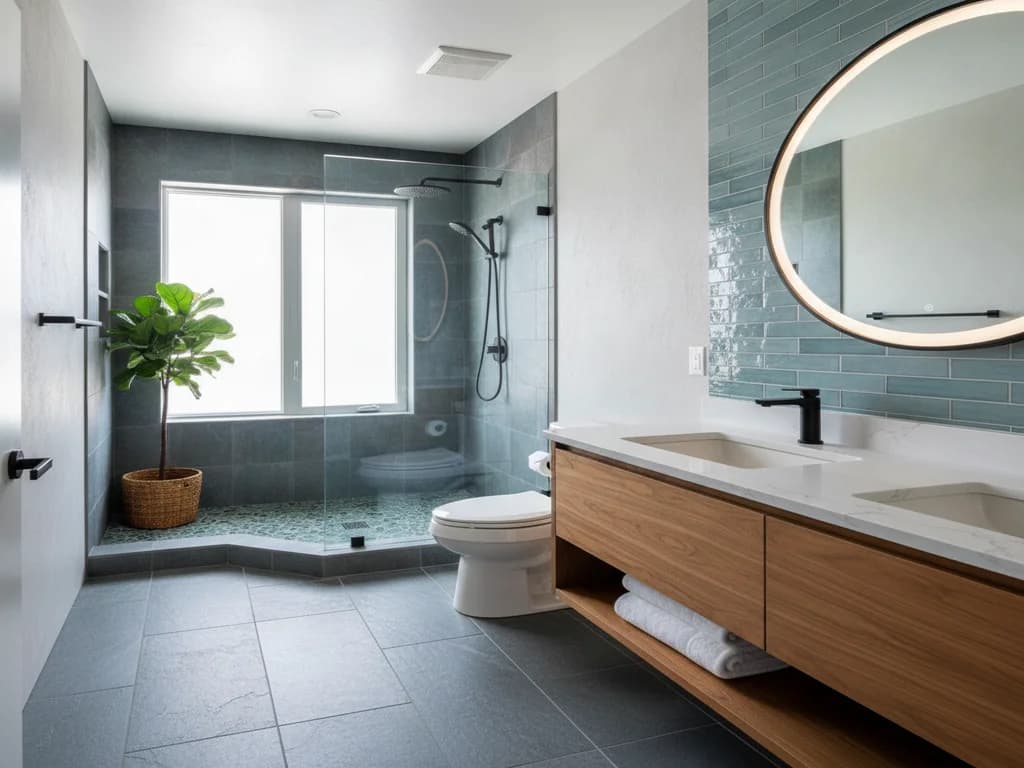
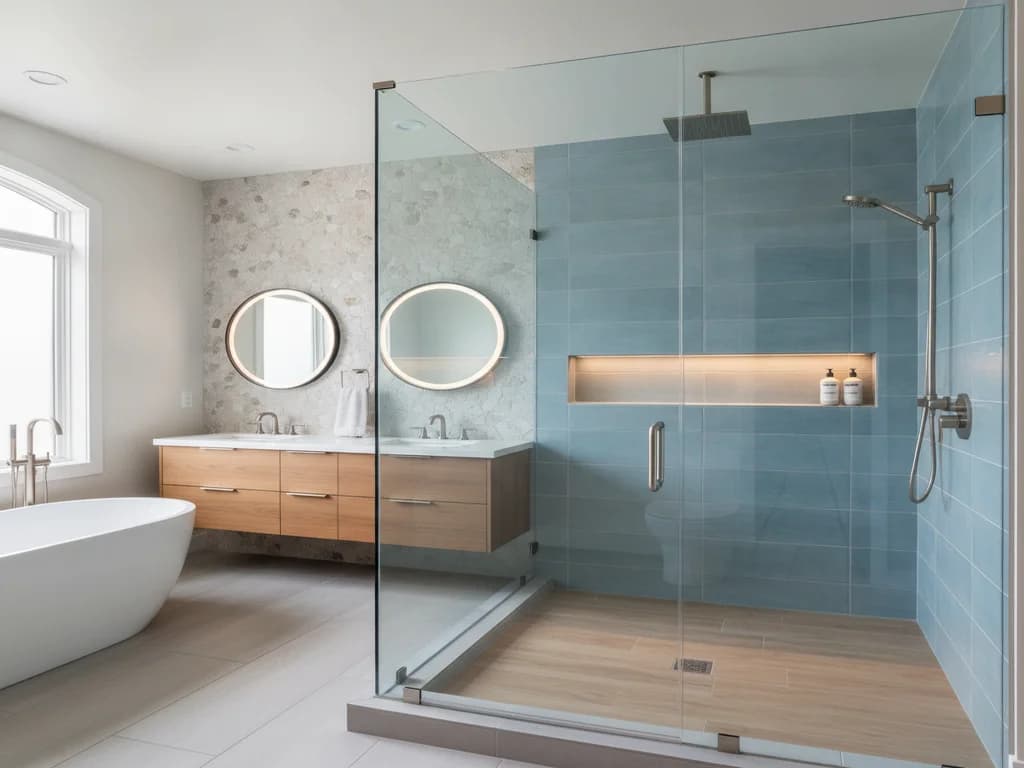
9. A single fixed glass panel (sometimes called a walk-in or splash panel) blocks spray on the open side while leaving the rest of the entry open — the most spacious-feeling option in a small bath. 10. Clear or low-iron glass instead of frosted or rain-pattern keeps sightlines intact; low-iron in particular drops the faint green tint of standard glass for a truly clear look. 11. A sliding or barn-style door removes the swing path a hinged door needs, which matters when the door would otherwise clear the vanity or toilet. For the full range of choices, see our guide to shower door types. Whatever the style, ask about a hydrophobic coating — it sheds water and resists the mineral spotting that comes with the Treasure Valley’s moderately hard water.
Where do niches and shelves go without crowding?
Converting from a tub means losing the tub deck where bottles used to live, so storage has to be built back in without eating floor space — which is exactly what recessed details do.
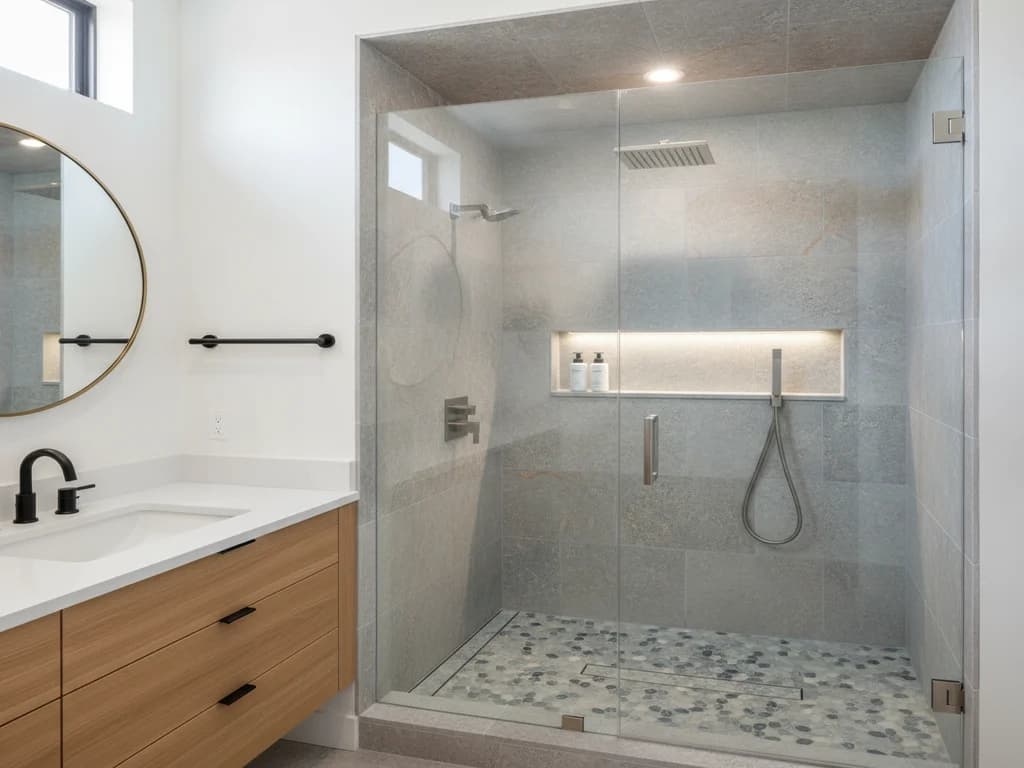
12. A recessed niche set into a non-exterior wall at chest height keeps shampoo and soap off the floor and looks built-in rather than bolted-on. In a small shower, a single well-placed niche beats several scattered ones. Align it with your tile so the borders land on grout lines, and keep it on the wall away from the showerhead so it stays drier. For storage ideas across the rest of the room, see our bathroom storage ideas.
Is there room for a bench?
Even a tight conversion can usually fit a seat, and a bench earns its keep for shaving legs, holding products, and future accessibility.
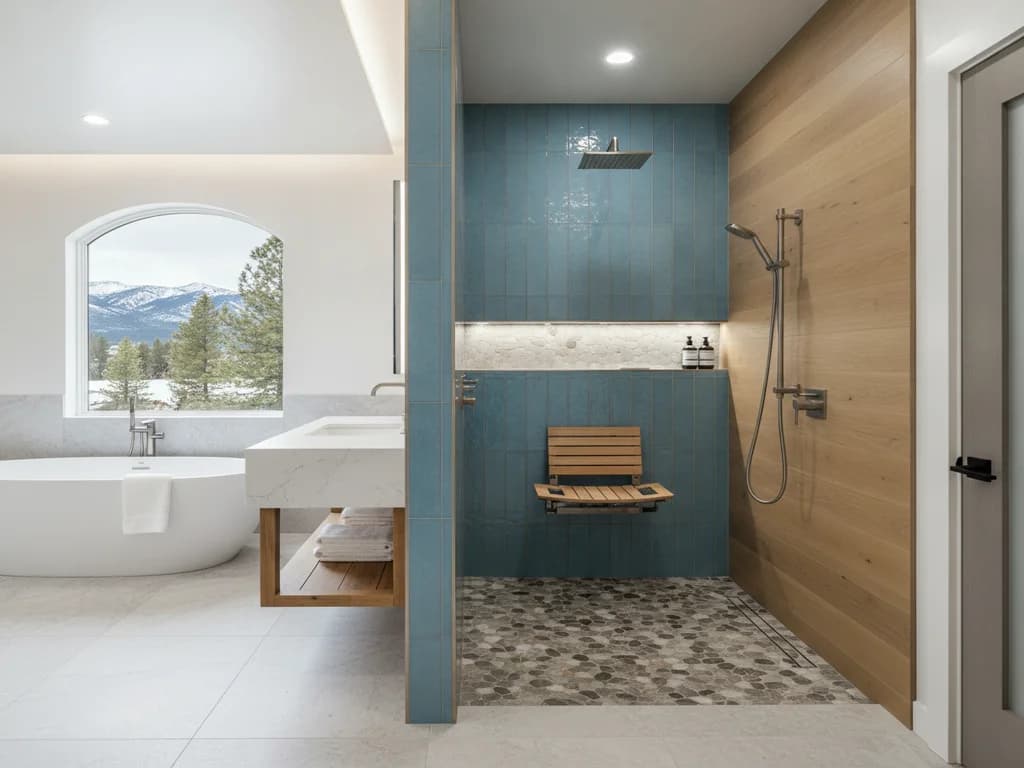
13. A fold-down teak or phenolic bench mounts to the wall and folds flat when not in use, so it takes zero floor space the rest of the day — the ideal choice for the smallest showers. 14. A slim floating bench built across one end keeps sightlines open underneath and makes the floor easier to clean, while quietly future-proofing the bathroom. A bench also pairs naturally with grab-bar blocking, which costs little to add during the conversion and supports aging-in-place bathroom ideas down the road.
Should a small conversion be curbless?
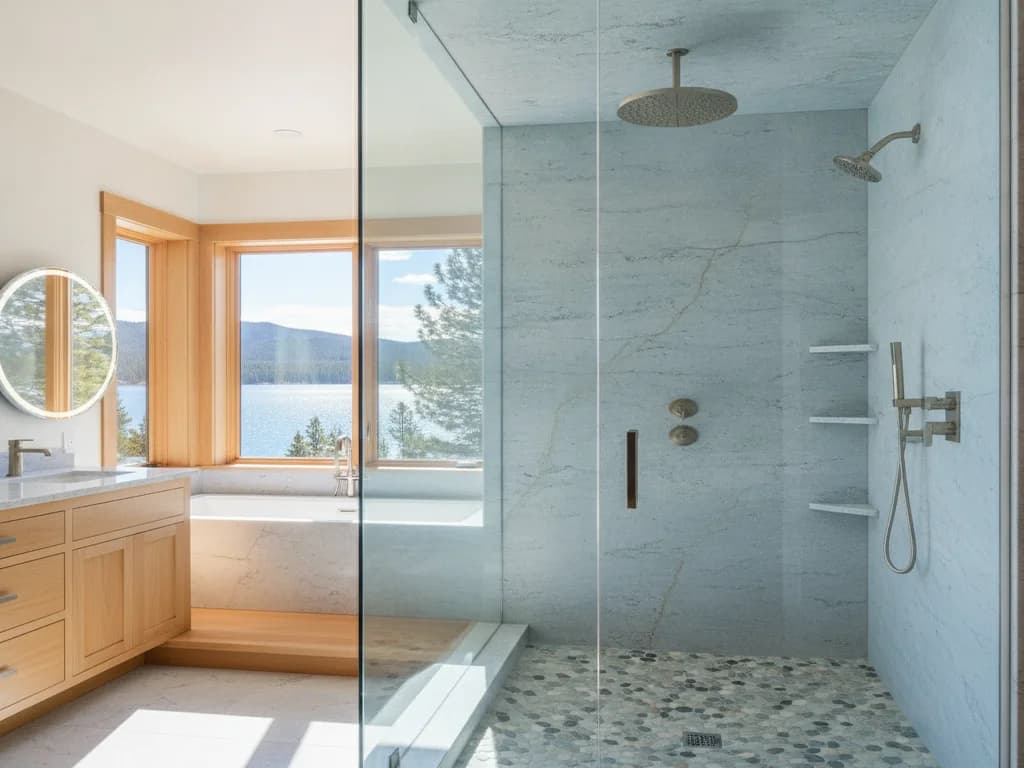
15. The curbless (zero-threshold) conversion is the most impactful single move on this list for a small bathroom. Removing the curb lets the floor run unbroken into the shower, which makes the room feel larger, eliminates the trip hazard of a step, and reads as distinctly modern. It does ask more of the install — the floor needs correct slope to the drain and reliable waterproofing — but it is well-established practice; systems like those documented by Schluter exist specifically to make curbless showers watertight. If a fully curbless floor is not feasible in your layout, a very low-profile threshold gets most of the look and access benefits. See more on the look and feel in our curbless shower ideas.
What tile makes a small converted shower shine?
Tile choice can make a 5-foot shower feel custom or cramped. The pattern and scale do most of the work.
Large-format porcelain (think 12×24 or larger) is the safest pick: fewer grout lines means less visual busyness and far less to scrub, and it quietly reads upscale. Vertically oriented tile or a vertical stacked layout pulls the eye up and exaggerates ceiling height. Light grout matched closely to the tile keeps the wall looking like a continuous surface rather than a grid, which is what makes a small shower feel calm and roomy. For the trade-offs between tile, panels, and solid surfaces, see the best shower wall materials.
How do you light a small converted shower?
A converted alcove can easily turn into a dim cave if it keeps the old single ceiling fixture. Layered light fixes that.
A wet-rated recessed downlight directly over the shower keeps the enclosure from feeling like a dark box, and a small LED strip inside a niche or under a floating bench adds a soft glow that makes tile look its best at night. Where the layout allows, borrowed natural light — a small window, a glass-block panel, or simply a clear glass front that lets the room’s existing light reach the shower — does more for a small bathroom than any fixture.
What about accessibility in the conversion?
A tub-to-shower conversion is a natural moment to build in accessibility, whether for now or for later. Removing the step-over tub wall is itself the biggest gain, since the CDC identifies falls as the leading cause of injury among older adults and the bathroom is a common spot for them.
A low or zero curb, a sturdy bench, slip-resistant floor tile, and blocking in the walls for future grab bars are inexpensive to include during the remodel and far costlier to retrofit afterward. None of it has to look clinical — done well, these features read as clean, modern design. Our aging-in-place bathroom ideas go deeper if that is a priority.
Should you keep a tub somewhere in the house?
Here is the honest caveat. Converting your only tub to a shower can hurt resale and day-to-day livability, because many buyers — especially families with young children — still want at least one bathtub in the home. If the bathroom you are converting is the home’s only full bath, think hard before removing the tub, or plan to keep a tub in another bathroom.
If you have a second bathroom with a tub, or the home is suited to buyers who do not need one, converting your cramped main bath to a shower is usually an easy win. This is genuinely a decision, not a slam-dunk — we lay out the resale and lifestyle trade-offs in full in our guide on whether to keep a tub or convert to a shower.
A quick gut check
Only one full bathroom and a young family or near-term sale? Lean toward keeping the tub. A second tub elsewhere, or a household that never fills the one you have? Convert with confidence.
What does a tub-to-shower conversion cost?
Cost depends on the layout, the glass, the tile, and whether the footprint stays put — a same-footprint alcove conversion sits at the affordable end, while a curbless rebuild with frameless glass and large-format tile costs more. We keep the dollar figures where they belong and updated, so for real numbers see what a tub-to-shower conversion costs in Boise. When you are ready for a number tied to your actual bathroom, the most accurate route is a free in-home estimate.
How do these ideas come together?
Budget-smart: same-footprint alcove walk-in + clear glass single panel + large-format light tile + a recessed niche.
Space-maximizing: curbless floor + continuous tile + sliding door + a fold-down bench.
Accessible-modern: zero-threshold corner layout + slim floating bench + grab-bar blocking + slip-resistant floor tile.
Any of these can be tailored to your bathroom by a tub-to-shower conversion build, or you can see finished Boise conversions in our gallery to get a feel for how the pieces look together in a real room.
Ready to plan your Boise bathroom?
Licensed & insured · 3-year workmanship warranty
Frequently asked questions
- Can you convert a tub to a shower in a small bathroom?
- Yes. The standard 5-foot tub alcove common in older Boise homes is almost the ideal size for a walk-in shower, so most conversions reuse the existing recess, drain, and supply lines. Clear glass, large-format tile, and a curbless or low-profile floor make the result feel larger than the tub it replaced.
- Does converting a tub to a shower hurt resale value?
- It can, if it leaves the home with no bathtub at all — many buyers, especially families with young children, want at least one tub. If you have a second tub elsewhere it is usually a safe upgrade. We cover the resale and lifestyle trade-offs in full in our walk-in shower vs. tub-to-shower comparison guide.
- How much does a tub-to-shower conversion cost?
- It depends on the layout, glass, and tile, and whether the footprint stays put — a same-footprint alcove swap is the most affordable route. For current Boise figures, see our bathroom remodel cost guide, and request a free estimate for a number tied to your bathroom.
- What is the best shower layout for a small bathroom?
- An alcove walk-in is the simplest same-footprint swap with the best splash control. A corner or neo-angle layout frees up floor space in the tightest rooms, and a curbless floor makes any small bathroom feel larger. The comparison table above weighs space feel, splash control, and best use for each.
- Can you do a tub-to-shower conversion without moving plumbing?
- Usually, yes. Reusing the existing tub alcove keeps the drain and supply lines in place, which is what makes same-footprint conversions the most budget-friendly and least disruptive option. Relocating the drain or widening the alcove is possible when the layout calls for it, but it is rarely necessary.
- Should you keep at least one bathtub in the house?
- If the bathroom is the home’s only full bath, or you have young children or a near-term sale, keeping a tub somewhere is the safer call. If you have a second tub or never use the one you have, converting is usually an easy win. See our comparison guide for the full decision.
Sources
- National Kitchen & Bath Association — design trends
- Centers for Disease Control and Prevention — older adult falls
- Schluter Systems — curbless shower systems
Claims and figures are drawn from the sources above and provided for general guidance; your project may vary. Photography is illustrative of design concepts. For a fixed price on your specific bathroom, request a free estimate.