Updated June 30, 2026 · 9 min read
By Boise Bath — bathroom & shower remodeling in Boise & the Treasure Valley
The short answer
Common shower door types include framed, semi-frameless, and frameless doors; sliding/bypass and pivot/hinged styles; plus neo-angle, bi-fold, barn-style, and fixed-panel doorless enclosures. Frameless looks cleanest but costs more; sliding doors save space; doorless panels suit walk-in showers. Choose by bathroom size, cleaning preference, and the look you want.
Key takeaways
- Frameless doors give the cleanest, most open look; framed are the most economical and water-tight.
- Sliding and bypass doors are best when there is no room for a door to swing.
- Doorless fixed panels suit curbless and walk-in showers but need a layout that controls splash.
- Glass coatings and clear or low-iron glass change both the look and the hard-water maintenance.
- Door type should match bathroom size, traffic, and how much cleaning you will tolerate.
How do you choose a shower door type?
A shower door does three jobs at once: it contains water, sets the visual tone of the room, and decides how easy the glass is to keep clean. The right pick balances all three against the one constraint you cannot change — the size and shape of your bathroom. Before you fall for a look, measure your swing clearance, note whether the opening sits over a tub or on a flat floor, and be honest about how much squeegee time you will actually put in.
The catalog below runs through 19 door and enclosure styles, grouped by the decision you are making — how the door moves, where it fits, and what glass goes in it. Each one carries a one-line "best for" so you can shortlist quickly. This guide stays in its lane: it covers doors and glass only and hands off choosing the right shower wall material, how showers are waterproofed, and pricing to our Boise bathroom remodel cost guide.
| Type | Look | Space needed | Cleaning ease | Best for |
|---|---|---|---|---|
| Framed | Defined, traditional | Swing or slide | Frame channels collect grime | Tight budgets, water-tight needs |
| Semi-frameless | Lighter, modern-leaning | Swing or slide | Fewer channels to wipe | Balanced budget and look |
| Frameless | Sleek, open, current | Swing clearance | Squeegee the glass | Bright, contemporary baths |
| Sliding / bypass | Streamlined, low-profile | None to swing | Bottom track needs attention | Tubs and alcoves, small rooms |
| Pivot / hinged | Wide, gracious opening | Generous swing arc | Easy face to wipe | Roomier walk-in showers |
| Neo-angle | Diamond corner footprint | Corner only | More seams and edges | Small or corner showers |
| Fixed panel / doorless | Open, gallery-like | Walk-in path | Easiest — no track or seals | Curbless and walk-in layouts |
How to use this list
Start with the master table to narrow to two or three door types that physically fit your space, then read those entries and the glass section. Pick one door style and one glass option — not five competing details.
Framed vs semi-frameless vs frameless — what is the difference?
This is the question most homeowners are really asking, and the three answers sit on a clear spectrum of metal, money, and maintenance.
1. Framed shower doors wrap every glass edge in aluminum framing. The frame supports thinner, lighter glass, seals tightly against leaks, and keeps cost down — the most economical, most water-tight option. The trade-off is a busier look and metal channels that collect soap film and need scrubbing. Best for: tight budgets and showers where a positive water seal matters most.
2. Semi-frameless shower doors frame some edges (often the stationary panel) but leave the moving door edge bare. You get a lighter, more open appearance and fewer channels to clean, at a middle price. Best for: a balanced budget that still wants a modern feel.
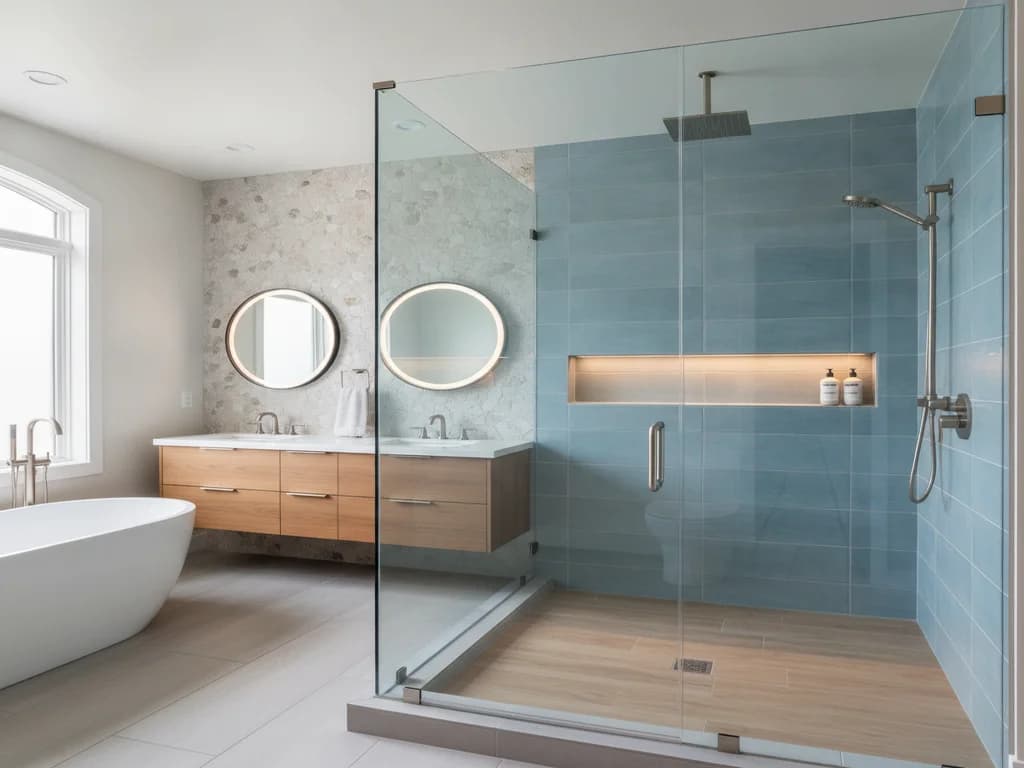
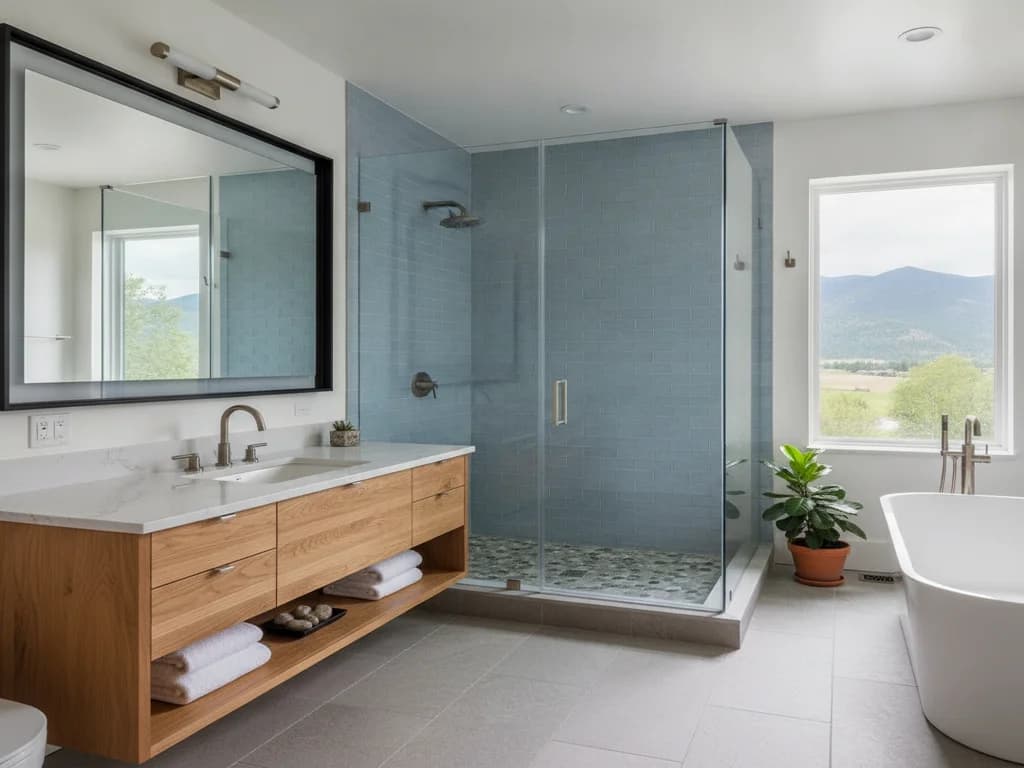
3. Frameless shower doors use thick tempered glass with only minimal hinges, clips, and a handle — no perimeter frame. The result is the cleanest, most open, most current look, and there are almost no channels to trap grime. The cost is higher, the glass is heavier (so blocking and hardware placement matter), and you commit to squeegeeing. Best for: bright, contemporary bathrooms where the glass itself is the design statement.
Are frameless shower doors worth it?
For most contemporary remodels, frameless earns its premium on looks and easy cleaning — the lack of a frame removes the spot that grime loves most, and the uninterrupted glass makes a room feel larger. They are not automatically the right call, though. Over a standard tub or in a very small alcove, a frameless swing door may not even fit the swing clearance, and the heavier glass asks for solid wall blocking behind the tile. If your priority is the lowest cost or the tightest water seal in a high-splash family bathroom, framed still wins. Match the door to the room, not to the trend.
What are sliding and bypass shower doors best for?
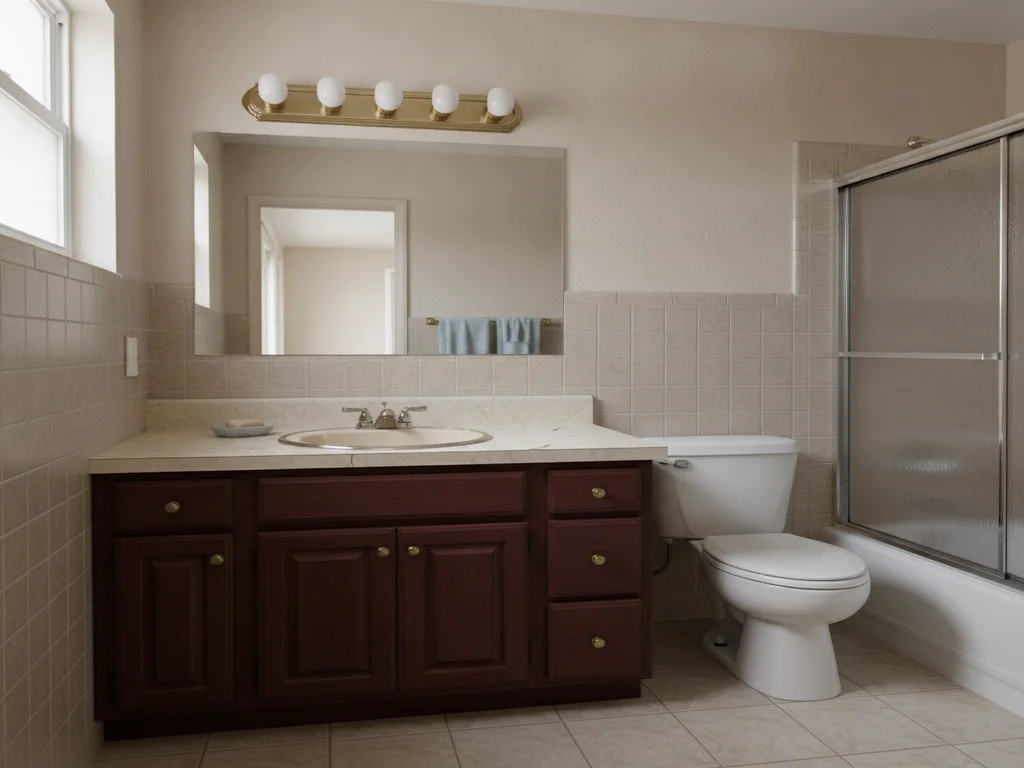
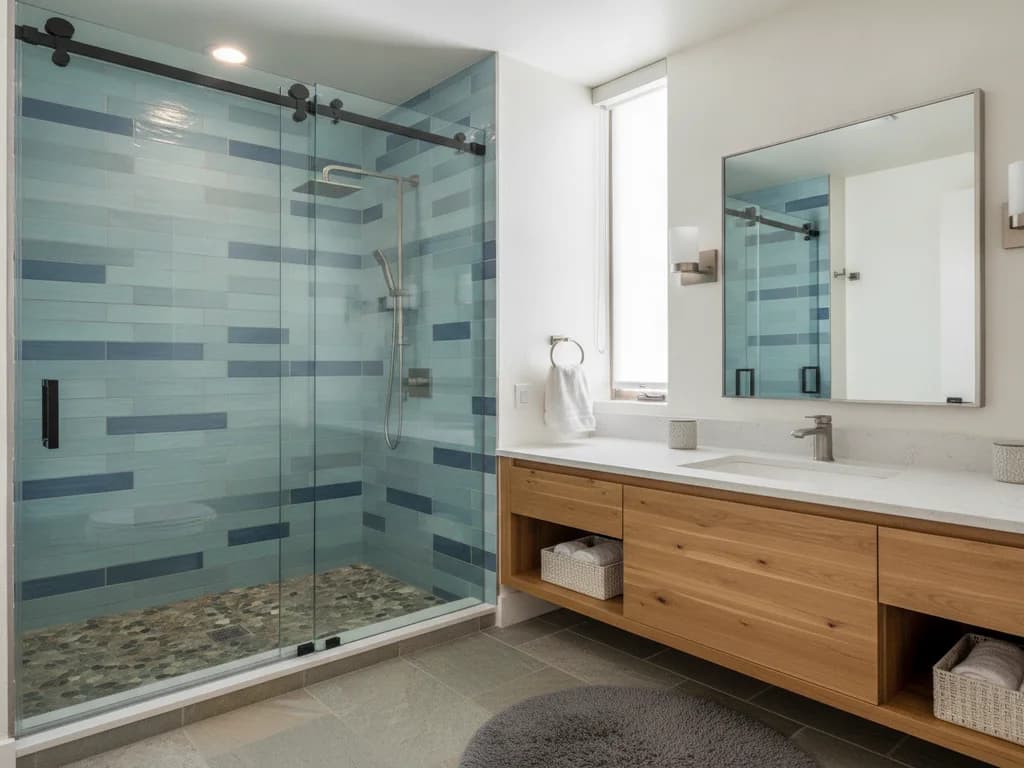
4. Sliding (bypass) shower doors run two or more panels on a top track so they glide past one another instead of swinging out. Because nothing projects into the room, they are the go-to over tubs and in alcoves where a swing door would hit a vanity, toilet, or wall — ideal for small and traffic-tight bathrooms. The trade-off is a bottom track (on many designs) that needs regular cleaning, and you can only ever open half the width at once. Best for: tub-shower combos and compact bathrooms with no swing room.
5. Barn-style (top-hung sliding) doors are a single large panel on an exposed roller track, styled after a sliding barn door. They deliver the space-saving of a slider with a frameless, architectural look and often no bottom track to scrub. The exposed hardware is the whole point aesthetically, so it has to suit the room. Best for: wider single openings that want a statement slider without a swing arc.
When should you use a pivot or hinged door?
6. Hinged (swing) shower doors are mounted on hinges at one side — to the wall or to a fixed glass panel — and swing open like a standard door, usually outward. They give a wide, gracious opening and an easy-to-wipe face, and they seal well. They need clear floor space to swing, so they suit roomier showers. Best for: walk-in showers with space to spare.
7. Pivot shower doors rotate on a pivot point at the top and bottom rather than side hinges, which lets the door open both inward and outward and span a wider opening than a typical hinge can carry. Best for: larger entries where you want a broad door that can swing either way.
What is a neo-angle shower door, and what about corner showers?
8. Neo-angle shower doors sit on a diamond-shaped corner enclosure — two angled side panels meeting a door that cuts across the corner. They tuck a real shower into a corner that would otherwise go unused, which is why they show up so often in the smaller, single-bathroom layouts common in older Boise homes. The trade-off is more seams and edges to seal and clean. Best for: small or awkward bathrooms where the corner is the only spot for a shower.
9. Pivot-corner (corner-entry) enclosures put the entry across a square or round corner with two doors meeting at the angle, so you step in diagonally. They make tight corners usable while keeping a symmetrical look. Best for: square corner showers in compact rooms.
What are bi-fold and barn-style shower doors?
10. Bi-fold shower doors are hinged in the middle so the panel folds back on itself as it opens, projecting only half as far as a standard swing door. That makes them a clever fix for narrow bathrooms where even a hinged door would block the walkway. The folding hinge adds a moving part and a seam to keep clean. Best for: very tight rooms that still want a swinging-style opening.
11. Quadrant (curved corner) enclosures use a curved sliding or hinged front on a rounded corner pan, softening the footprint and saving space in a corner. The curved glass is a custom item and a touch harder to source and clean. Best for: corner showers that want a softer, rounded line.
Can you skip the door entirely?
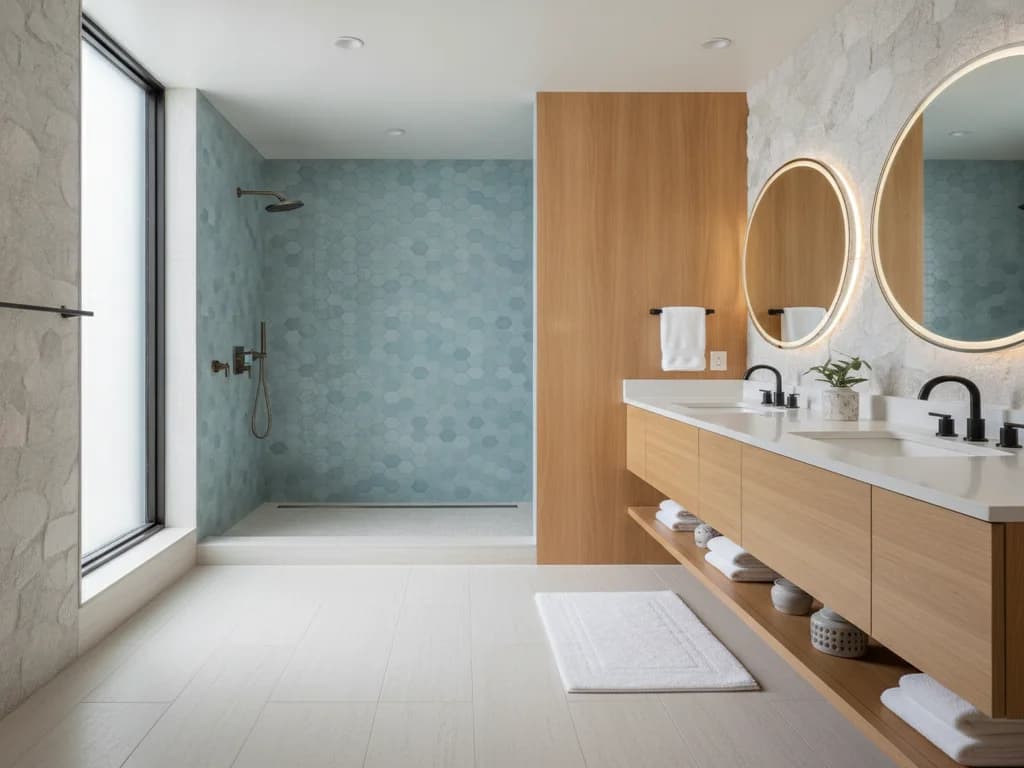
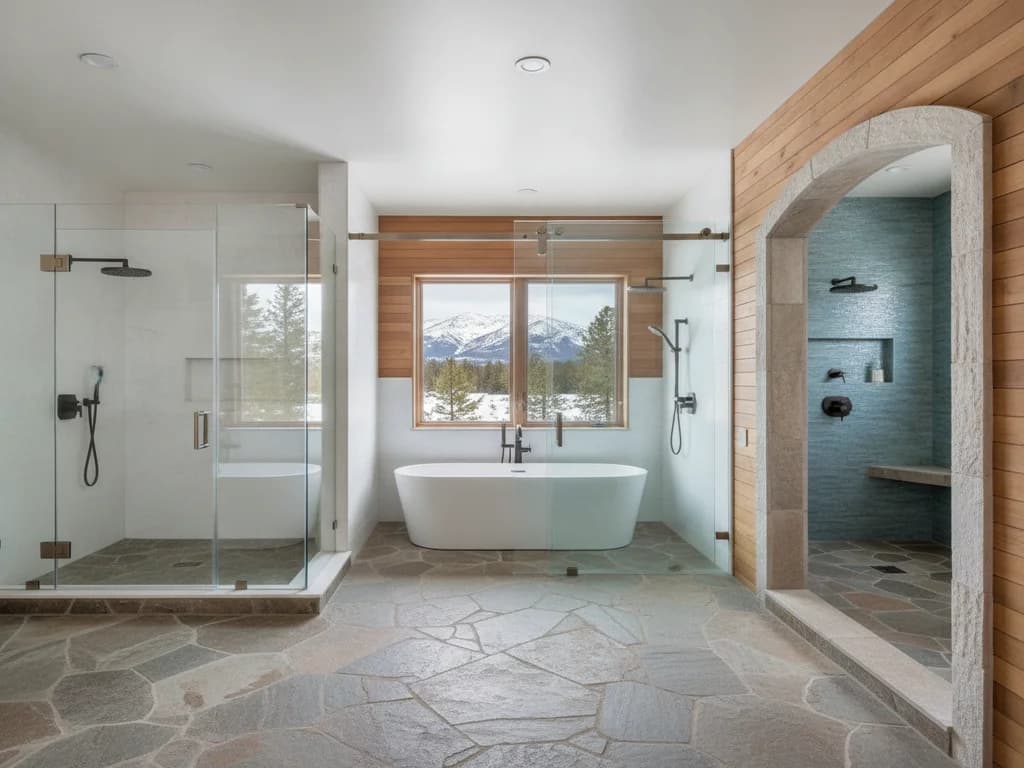
12. Fixed-panel (doorless walk-in) enclosures replace a moving door with one or two stationary glass panels that block splash while you walk straight in. With no door, hinges, seals, or track, they are the easiest enclosure to keep clean and the most open-feeling — but they only work when the layout keeps the showerhead away from the opening and the floor is sloped to a custom glass shower enclosure drain. Best for: curbless and walk-in showers in larger or accessible bathrooms.
13. Single fixed splash screen (walk-in panel) is a half-height or three-quarter glass screen, often used at the foot of a tub or beside a walk-in. It is the most minimal option and reads as barely there. Best for: open, spa-style layouts and tub-side splash control. For doorless design ideas in depth, see our curbless and doorless shower ideas.
What about steam showers and tubs?
14. Steam-tight enclosures are fully sealed, floor-to-ceiling glass enclosures — including a transom or ceiling panel and gasketed door — built to trap steam inside a steam shower. They are a specialty build with extra sealing and ventilation considerations. Best for: dedicated steam showers.
15. Tub (bath) screens are a single hinged or sliding glass panel mounted on the rim of a bathtub in place of a curtain, giving a tub-shower a cleaner, more open look while still blocking most splash. Best for: tub-shower combos that want an upgrade from a curtain without a full enclosure.
Shower door vs shower curtain — which is better?
A glass door costs more up front and asks for occasional cleaning, but it contains water far better, makes the room feel larger and more finished, and lasts the life of the remodel. A curtain is cheap, swaps out in seconds, and hides nothing structural — handy for a rental or a quick refresh, but it reads temporary and lets splash escape. For a remodel you plan to keep, glass is almost always the better long-term call; a curtain or the tub screen above is the budget bridge.
Which glass type should you pick?
Door style sets the shape; the glass sets the character and most of the upkeep. These are the variants worth knowing.
16. Clear glass is the default — bright, open, and the most popular choice — and it shows off your tile. It also shows every water spot, so it pairs best with a coating and a squeegee habit. Best for: showing off quality tile in a bright bathroom.
17. Low-iron (ultra-clear) glass removes the faint green tint standard glass has on its edges, reading truly colorless. It is the upgrade for thick frameless panels where the edge would otherwise look green. Best for: large frameless panels where color accuracy matters.
18. Frosted (obscure) glass is acid-etched or sandblasted for privacy while still passing light. Best for: shared or open-plan bathrooms that want privacy at the shower.
19. Rain (textured) glass has a rippled surface that obscures the view and hides water spots better than smooth glass, with a decorative texture. Best for: privacy plus a softer, pattern-forward look.
Two more options shape any of the above rather than standing alone: tinted or smoked glass (gray or bronze) for a darker, dramatic enclosure, and a protective hydrophobic coating baked onto the glass that sheds water and resists mineral buildup. In the Treasure Valley, where moderately hard water leaves spots quickly, that coating is one of the highest-value glass choices you can make.
What hardware finish suits your bathroom?
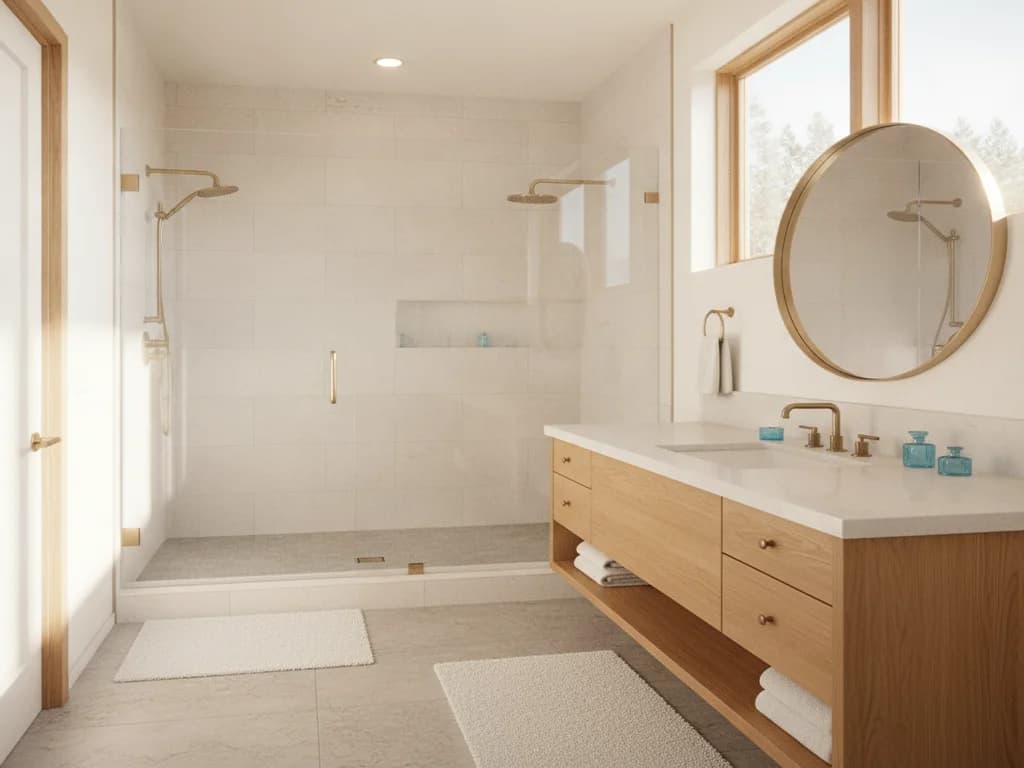
Hinges, handles, clips, and tracks come in finishes that should echo — not necessarily match exactly — your faucets and showerhead. Brushed nickel and matte black are popular because they hide water spots far better than polished chrome, a practical edge with hard water. Brushed gold and bronze suit warmer, transitional rooms. Frameless doors show very little hardware, so the finish you do see should be a deliberate accent; framed and semi-frameless doors show more metal, so the finish carries more of the room.
Which shower door is best for a small bathroom?
In a compact bathroom, the binding constraint is swing clearance, so lean toward styles that need none: a sliding or bypass door over a tub or alcove, a neo-angle or corner-entry enclosure that claims an unused corner, a bi-fold that folds out of the walkway, or a doorless fixed panel if the layout allows. Pair any of them with clear or low-iron glass to keep the space feeling open. For more space-saving moves throughout the room, see our small-bathroom layout tricks.
How do you keep shower glass clean in hard water?
Treasure Valley water is moderately hard, so glass will spot if you let it. Three habits handle most of it: choose a hydrophobic coating that sheds water, keep an inexpensive squeegee in the shower and use it after each rinse, and favor brushed or matte hardware finishes that disguise the spots that do form. Rain or frosted glass also forgives spotting better than smooth clear glass if you would rather not squeegee. Avoid harsh acidic cleaners on coated glass — they can wear the coating down faster.
How does the door interact with waterproofing?
A door only contains the water the enclosure behind it is built to handle. The pan slope, curb (or curbless threshold), waterproofing membrane, and the seal where glass meets tile all decide whether water stays in the shower — the door is the last line, not the whole system. Doorless and curbless layouts especially depend on a correctly sloped, fully waterproofed floor. For how that assembly works, see our guide to how showers are waterproofed.
Which door fits your Boise bathroom?
Older North End and Bench homes tend to have smaller, single-bathroom layouts where a neo-angle, corner-entry, sliding, or bi-fold door makes the most of tight square footage. Newer Meridian and Eagle master baths usually have the room for a frameless hinged door or a doorless walk-in panel that matches the openness of the rest of the house. Whichever way your home leans, match the door style to the space first and the look second — and plan the glass and coating for hard water from the start.
Want to see how the pieces look together? See finished showers in our gallery, or get a free estimate and we will spec an enclosure to your bathroom.
Ready to plan your Boise bathroom?
Licensed & insured · 3-year workmanship warranty
Frequently asked questions
- What are the most common types of shower doors?
- The most common are framed, semi-frameless, and frameless doors, plus sliding (bypass) and pivot or hinged styles. Neo-angle, bi-fold, barn-style, and fixed-panel doorless enclosures round out the choices. Framed is the most economical, frameless the most open-looking, and sliding the most space-saving.
- Are frameless shower doors better than framed?
- Frameless doors look cleaner and are easier to clean because there is no frame to trap grime, but they cost more and need heavier glass and solid wall blocking. Framed doors are more economical and seal tightly against leaks. The better choice depends on your budget, space, and cleaning tolerance.
- What is the best shower door for a small bathroom?
- Pick a style that needs no swing room: a sliding or bypass door over a tub or alcove, a neo-angle or corner-entry enclosure for an unused corner, a bi-fold that folds out of the walkway, or a doorless fixed panel if the layout controls splash. Clear or low-iron glass keeps the room feeling open.
- Do frameless shower doors leak?
- A well-designed frameless door manages water rather than fully sealing like a framed door, using a small slope, drip rail, and seals at the bottom and hinge side. Leaks usually trace back to a poorly sloped pan, missing seals, or a door hung over too small a shower — not the frameless design itself.
- Is shower glass required to be tempered or safety glass?
- Building codes generally require safety glazing — typically tempered or laminated safety glass — in and around showers and tubs because the glass is in a wet, hazardous location. Model codes such as the ICC family of codes (including the IRC) set these safety-glazing requirements. Always verify the specifics against the current code adopted in your jurisdiction.
- How do you keep glass shower doors from spotting?
- Choose a hydrophobic glass coating that sheds water, squeegee the glass after each use, and favor brushed or matte hardware that hides spots. Rain or frosted glass also disguises spotting better than smooth clear glass. These habits matter across the Treasure Valley, where moderately hard water spots glass quickly.
Sources
- International Code Council (ICC) — model building codes and safety glazing
- National Kitchen & Bath Association — shower enclosure design trends
- Kohler — shower doors and enclosure product documentation
Claims and figures are drawn from the sources above and provided for general guidance; your project may vary. Photography is illustrative of design concepts. For a fixed price on your specific bathroom, request a free estimate.