Updated June 30, 2026 · 9 min read
By Boise Bath — bathroom & shower remodeling in Boise & the Treasure Valley
The short answer
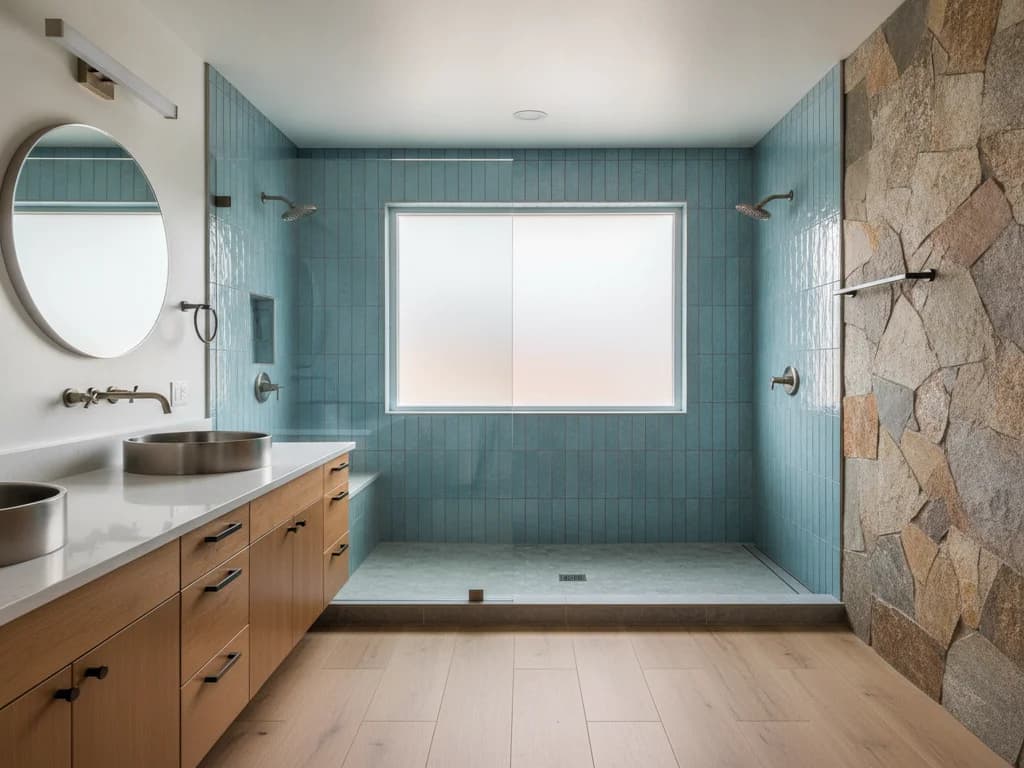
Curbless shower ideas use a continuous, sloped floor with no step-over, paired with a linear drain, large-format or continuous tile, and a doorless or frameless glass panel. The look is open, modern, and easy to clean — and it doubles as barrier-free access for aging-in-place and wheelchair-friendly bathrooms.
Key takeaways
- Curbless showers remove the step-over threshold, creating a seamless, larger-looking floor.
- A linear drain lets you run large-format tile right into the shower for a continuous look.
- Doorless and frameless glass keep sightlines open and emphasize the barrier-free floor.
- Curbless design serves both modern aesthetics and aging-in-place or roll-in accessibility.
- Done well, accessibility features like benches and grab bars can look intentional and high-end.
What is a curbless (zero-threshold) shower?
A curbless shower — also called a zero-threshold or barrier-free shower — has no raised lip or curb to step over. The bathroom floor runs straight into the shower on a gentle, almost invisible slope that carries water to the drain. Instead of a contained box you climb into, you get one continuous, open floor plane.
That single change does two things at once. Visually, removing the curb erases a hard boundary and makes the whole room read larger and more modern. Functionally, a flat entry is the most accessible way to enter a shower — no step, no edge, nothing to trip on — which is why curbless layouts have moved from niche accessibility solution to mainstream design choice.
The ideas below are grouped by the decisions you are actually making: the floor and drainage, the enclosure, the tile flow, the built-ins and grab bars, the lighting, and the aging-in-place touches. Pick one or two from each group rather than chasing every trend at once.
How to use this list
Curbless is a floor decision first. Settle the drain and slope direction, then layer on enclosure, tile, and comfort features. One confident focal point beats a dozen competing details — and it is far easier to keep clean.
Why are curbless showers so popular in Boise?
Two trends are driving demand across the Treasure Valley. The first is purely aesthetic: homeowners want the open, spa-like, gallery look that a flush floor and frameless glass deliver. The second is practical — a large and growing share of Boise, Meridian, and Eagle homeowners are remodeling to age in place, and a no-step shower is one of the highest-impact safety upgrades a bathroom can have.
The two motivations point at the same design. A curbless shower that looks beautiful for resale is the same curbless shower that lets someone with a walker or wheelchair roll straight in years later. That is the appeal: you are not choosing between style and access, you are getting both from one decision. If you want a layout built around your space, a custom walk-in shower can be designed curbless from the floor up.
Linear drain vs point drain — which look fits?
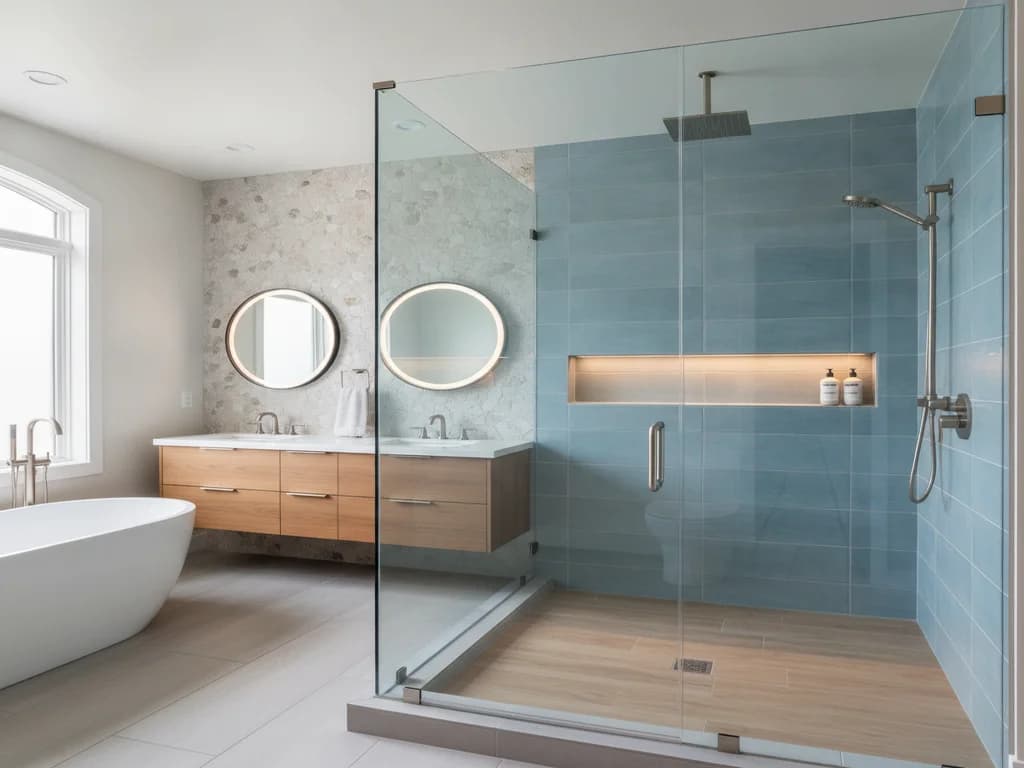
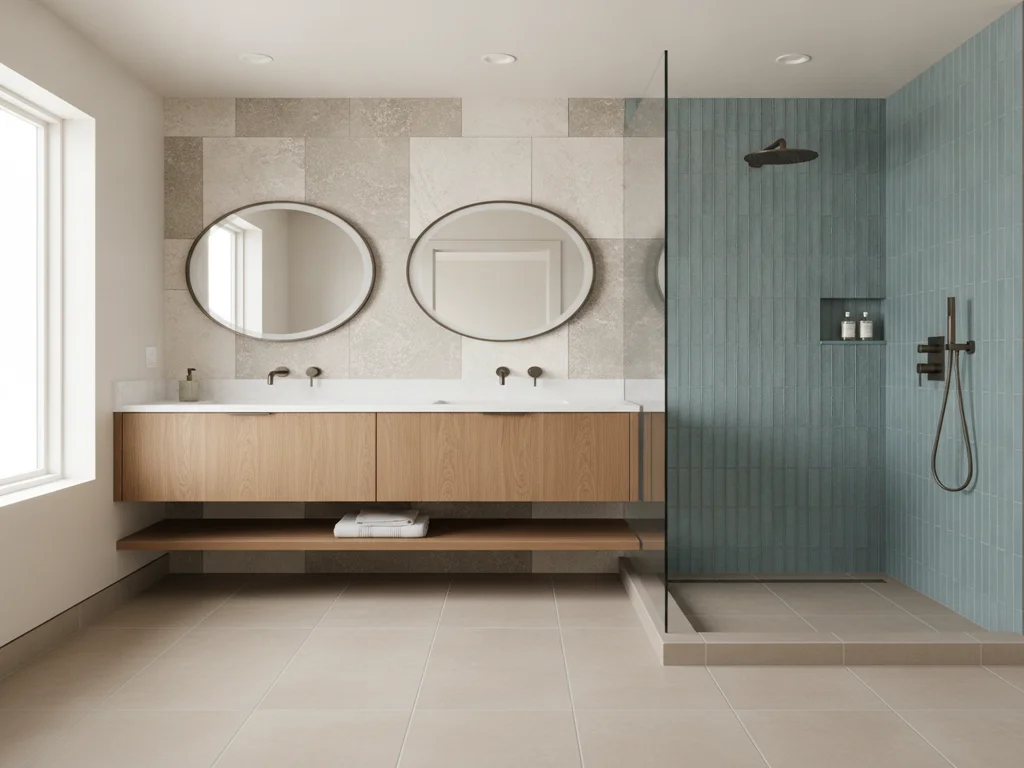
1. A linear drain is the signature move of modern curbless design. Because the floor only has to slope in one direction toward a single channel, you can run large-format tile right through the shower with almost no cuts — the cleanest continuous-floor look there is. Place the drain at the back wall or right at the entry for a near-flat feel underfoot.
2. A point drain sits in the center (or a corner) and the floor slopes toward it from four directions, which requires smaller tiles or mosaics that can flex into that subtle cone shape. It is the more traditional, lower-cost route and still works curbless — it simply reads busier and breaks up a continuous-tile look.
This is a design comparison, not an installation guide. The slope, membrane, and pan that make either option watertight belong to a different conversation — see how curbless showers are waterproofed for the build that actually prevents leaks.
| Drain type | Look | Slope feel | Tile size | Best use |
|---|---|---|---|---|
| Linear drain | Sleek, continuous, modern | Single-direction, nearly flat | Large-format, continuous | Curbless feature floors, roll-in access |
| Point drain | Traditional, more grout lines | Four-way cone toward center | Smaller tile or mosaic | Budget updates, smaller footprints |
Design lens only — drain slope and waterproofing method are covered in the shower waterproofing guide.
How do you make the floor flow seamlessly?
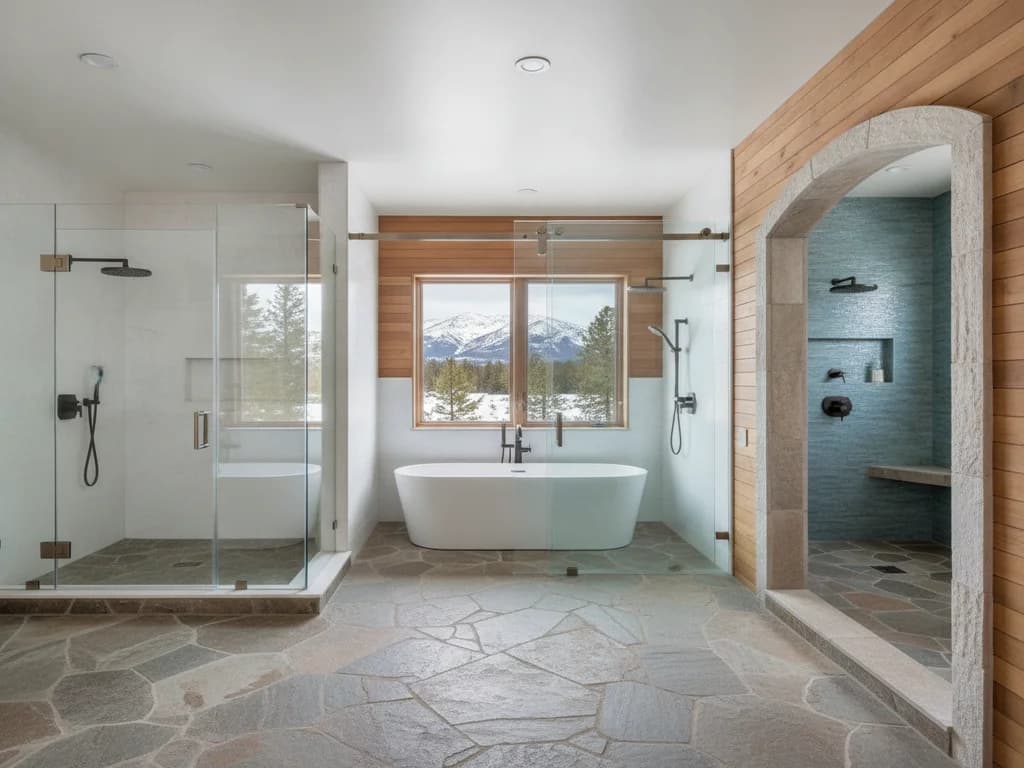
3. Run the same tile inside and out. The defining curbless trick is using one floor tile across the bathroom and straight into the shower, so the eye never registers a transition. A linear drain makes this easiest because the tile only bends in one direction.
4. Choose large-format tile to minimize grout lines and keep the plane reading as one continuous surface — it also cleans faster, a real advantage with the Treasure Valley’s moderately hard water.
5. Pick a slip-friendly finish. A flush floor is wonderful, but a wet flat surface still needs traction. Honed, matte, or lightly textured porcelain — or a small-format tile inside the shower zone, which adds grip from the extra grout — keeps the look intact while staying secure underfoot.
What enclosure works best with a curbless shower?
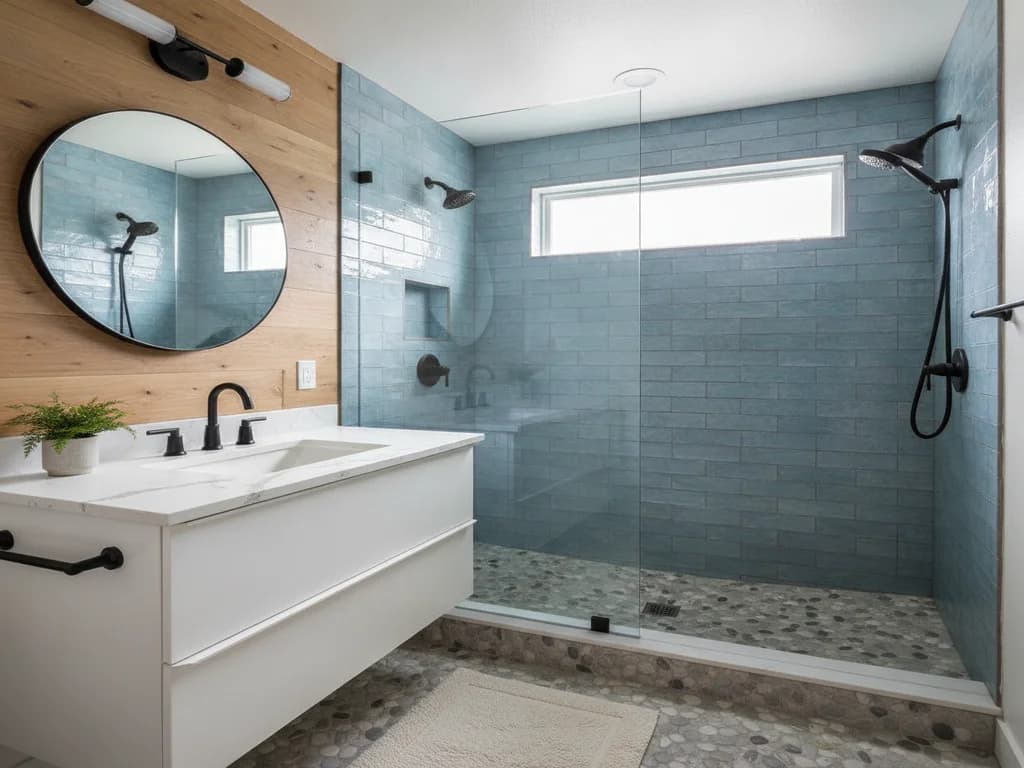
6. A single fixed glass panel (doorless walk-in) is the most popular pairing. With no curb and no door, the shower disappears into the room and stays effortless to clean — there is no track to scrub and nothing to swing open. 7. A frameless glass enclosure keeps hardware minimal and sightlines wide when you do want a door, letting the continuous floor stay the star.
8. Going fully open — no door, no panel, relying on a longer entry and good ventilation — gives the largest, most spa-like result and is the friendliest for roll-in access. To weigh swing doors, sliders, fixed panels, and fully open layouts side by side, compare shower door and panel styles.
How do you control splash without a curb?
9. Let the floor do the work. A correctly sloped, recessed shower zone plus a generously sized footprint keeps water heading to the drain and away from the rest of the room. 10. Place the showerhead deep — on the back or side wall, well away from the opening — so spray never reaches the entry. 11. Add a fixed glass return panel where the layout is tight, which blocks the main splash line without reintroducing a door.
Adequate ventilation matters too: a well-placed exhaust fan clears moisture so a doorless, curbless room dries quickly. The splash-control geometry is design; the watertight floor underneath it is method, and that lives in the waterproofing guide.
Can a curbless shower look luxurious?
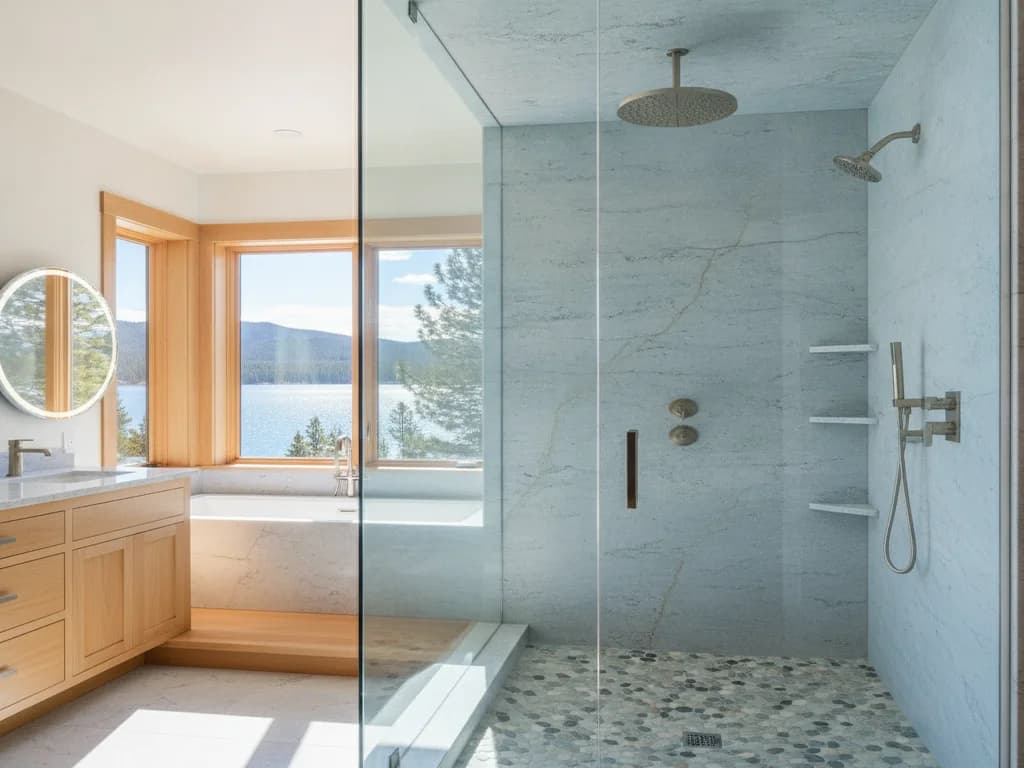
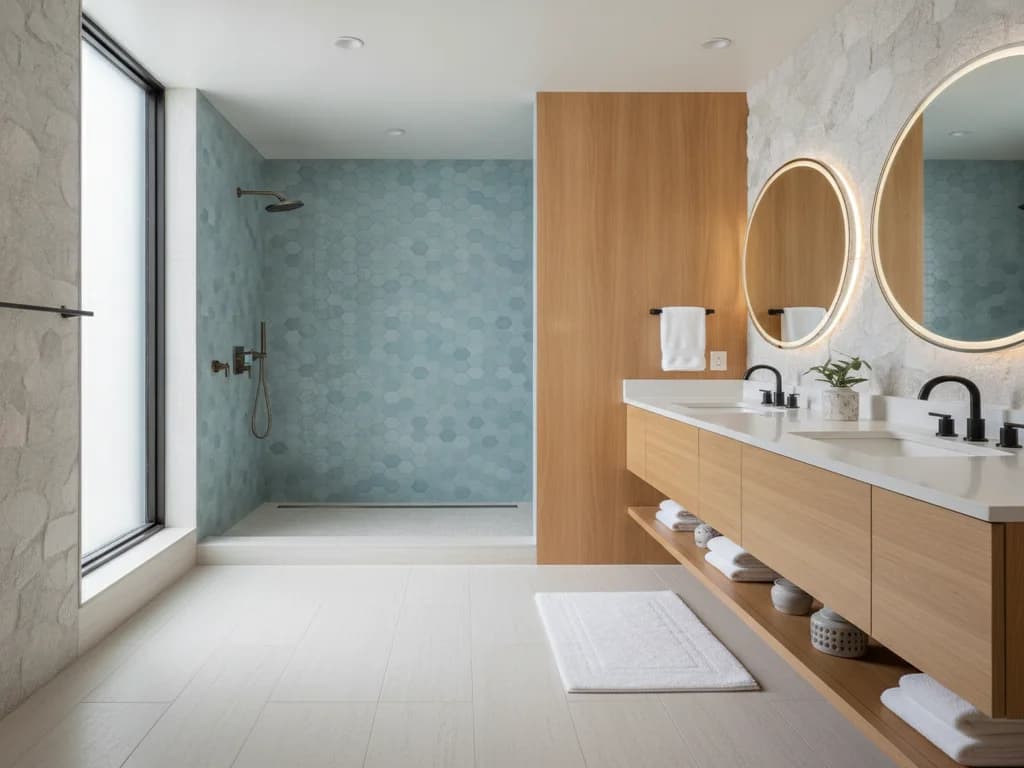
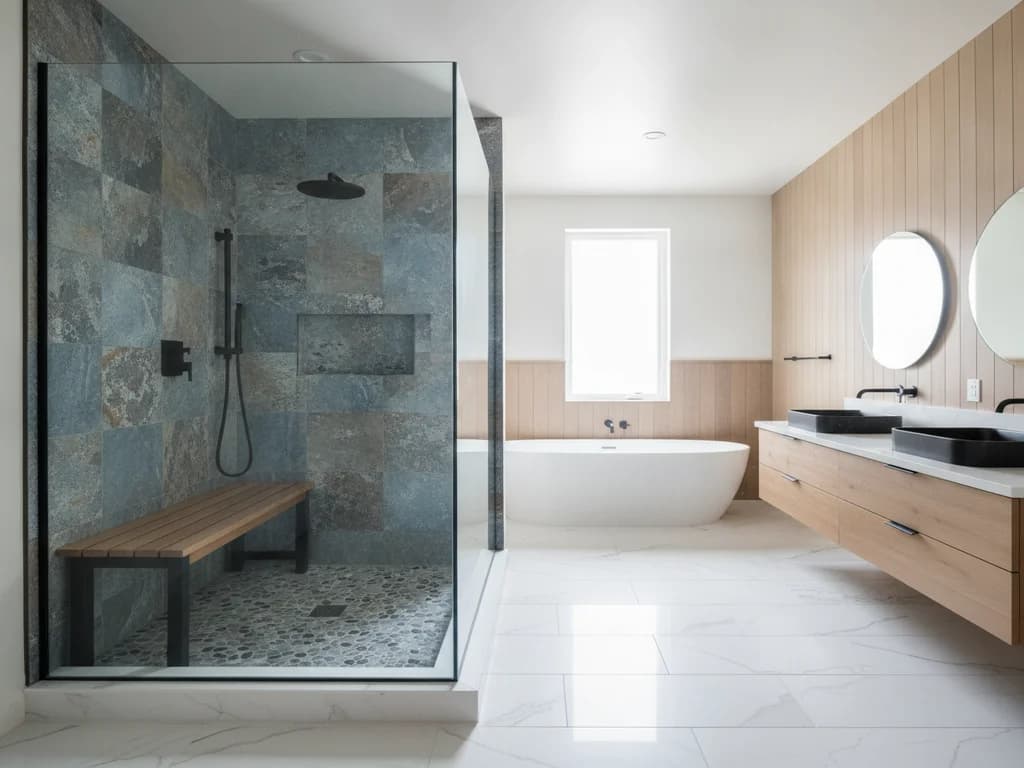
12. Lean into stone-look large-format tile for a quiet, high-end backdrop that carries the continuous-floor look up the walls. 13. Add a full-height tile accent or a lit recessed niche as a single focal point. 14. Finish with spa fixtures — a rainfall head paired with a handheld is the most-requested upgrade, and matte black or brushed nickel hides hard-water spotting better than polished chrome.
The beauty of curbless is that the luxury and the accessibility are the same details. A wide bench, an open floor, and a handheld on a slide bar read as spa amenities to one buyer and as genuine convenience to someone aging in place.
How do you integrate a bench attractively?
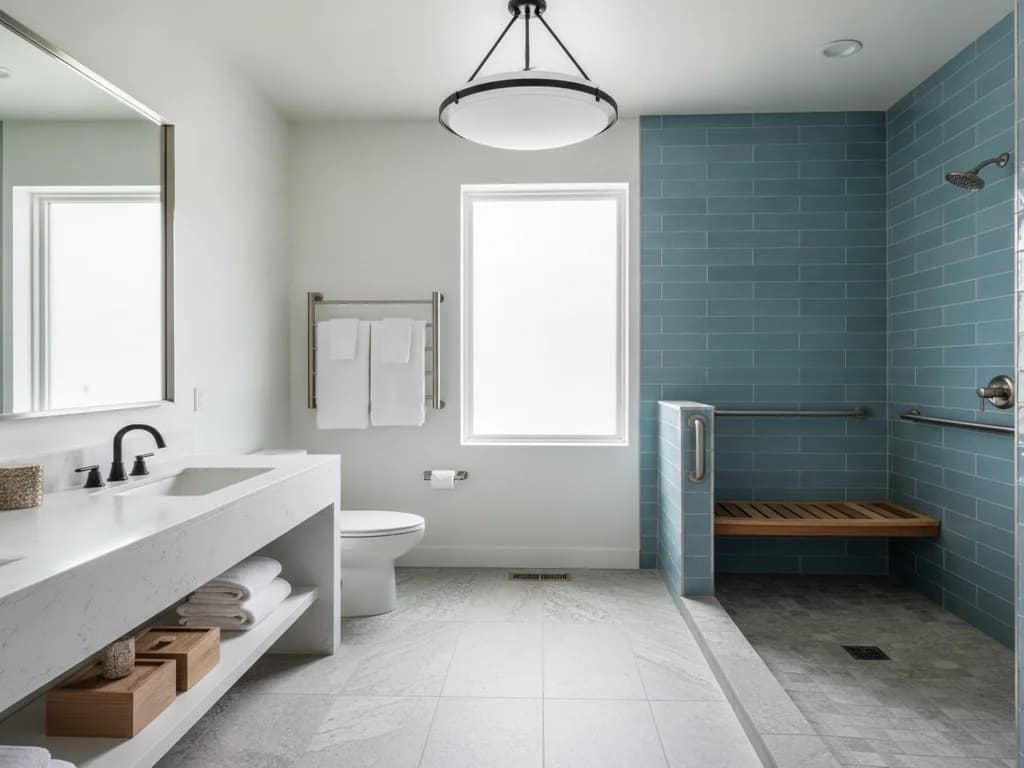
15. A floating or tiled-in bench gives you a place to sit, a shelf for products, and a leg-shaving spot without crowding the floor — and a floating design keeps sightlines and the continuous floor open beneath it. A slab-top or teak bench adds warmth against all that tile.
A bench is also one of the quietest ways to future-proof a bathroom: it reads as a design feature today and becomes essential support later. For more on planning a room around comfort and longevity, see our aging-in-place bathroom ideas.
How do grab bars look intentional, not clinical?
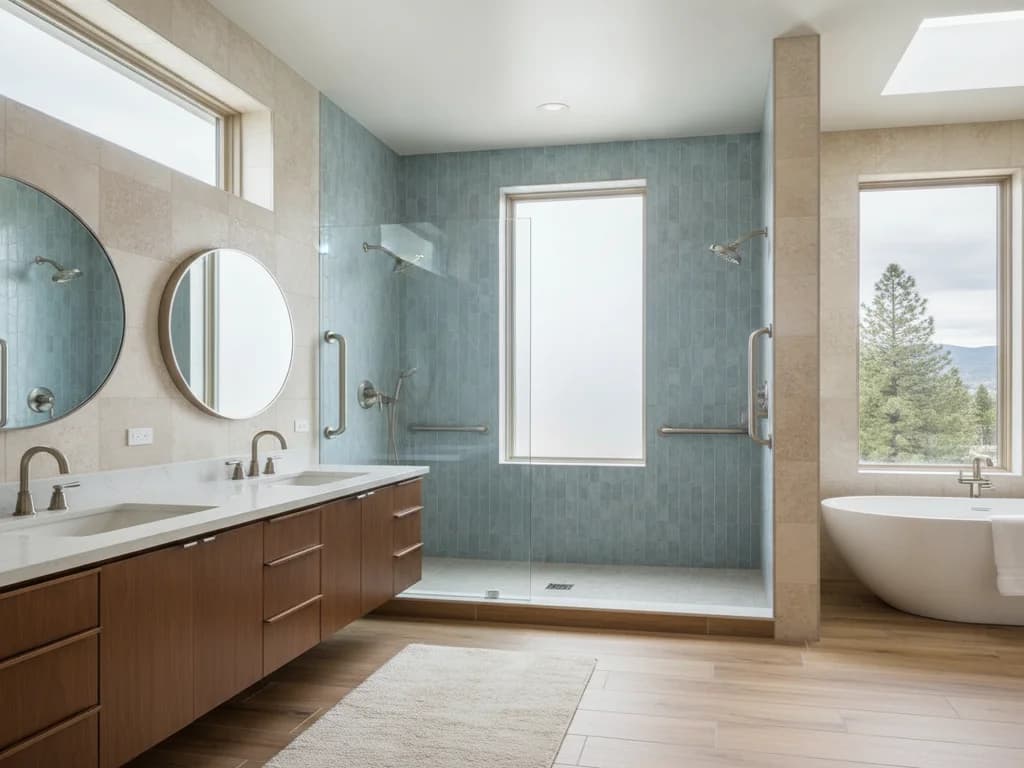
16. Choose designer grab bars in a finish that matches your fixtures, and they stop looking like hospital hardware entirely. Many double as towel bars, corner shelves, or a slide bar for the handheld, so the support is there without announcing itself.
Plan their placement with the rest of the layout — near the bench, at the entry, and within reach of the controls — so they look composed rather than added-on. Discreet wall blocking behind the tile during the remodel means bars can be placed exactly where they are wanted now or added cleanly later. For the broader approach to designing a room that ages well, our aging-in-place bathroom ideas go deeper.
Plan support before the tile goes up
The best time to decide where grab bars and a bench might go is before the walls close. Designed-in support always looks more intentional — and more elegant — than hardware retrofitted onto finished tile.
How does lighting enhance a curbless shower?
Lighting is what keeps an open, barrier-free shower from feeling like a dim recess. Recessed wet-rated downlights wash the tile evenly; an LED strip inside a niche or under a floating bench adds a soft glow that also serves as a gentle nightlight — a genuine safety touch for anyone moving through the bathroom at night.
Where the layout allows, a window or a frosted glass-block panel brings in daylight, which makes stone-look tile read its best and reinforces the open, continuous feel that makes curbless showers so appealing.
Are curbless showers good for accessibility?
Yes — a zero-threshold floor is the foundation of a roll-in, wheelchair-friendly shower, because there is no curb to clear. The ADA describes roll-in and transfer shower configurations and threshold limits for accessible facilities; you can review that guidance directly at ADA.gov. We reference it descriptively to inform good design — a home remodel is not a regulated public facility, so treat these as design principles rather than a compliance promise.
The safety case is real, too. The CDC reports that falls are the leading cause of injury among older adults, and bathrooms are a common location. A no-step entry, a sturdy bench, well-placed grab bars, and slip-friendly tile directly address that risk — which is exactly why curbless demand keeps rising across the Treasure Valley.
Designed for access, built to last
A curbless shower lets you plan for a roll-in or seated future now, without making the bathroom look medical today. Licensed, code-aware construction keeps the floor watertight while the room stays beautiful.
Do curbless showers work in small bathrooms?
They can be a small bathroom’s best friend. Removing the curb and the door erases visual barriers, so a compact room reads larger and more open. A single fixed glass panel, large-format tile run continuously across the floor, a linear drain, and a floating corner bench keep everything feeling spacious.
For more space-saving moves, see our small-bathroom layout tricks, and if you are reclaiming an unused tub to make room, our tub-to-shower conversion ideas cover how a curbless shower can take its place.
How do curbless showers fit older Boise homes and slab floors?
Feasibility comes down to the floor structure. Older North End and Bench homes are typically built over a raised floor with a crawlspace, which makes recessing the shower pan to create a flush entry relatively straightforward — the drain and slope can drop into the joist bay below. Newer Meridian and Eagle homes built slab-on-grade are a different design conversation: a true flush floor often means recessing or building up the surrounding floor so the slope has somewhere to go.
Both are very doable; they are just different starting points. This is a feasibility note at the design level — the actual pan, slope, and membrane work is covered in our shower waterproofing guide. Curious where it all lands budget-wise? See how much a Boise bathroom remodel costs.
Are curbless showers harder to maintain?
Day to day, they are usually easier. There is no curb to scrub, no door track to collect grime, and — with large-format tile and a linear drain — fewer grout lines to clean. A hydrophobic glass coating on any panel sheds water and resists the mineral spotting that comes with hard water.
The one non-negotiable is that the floor has to be built correctly, because the slope and waterproofing are doing all the work that a curb used to do. That is a reason to insist on proper construction, not a reason to avoid curbless — and it is exactly what the waterproofing guide walks through. To see how the look comes together in finished spaces, browse our gallery.
Ready to plan your Boise bathroom?
Licensed & insured · 3-year workmanship warranty
Frequently asked questions
- What is a curbless shower?
- A curbless shower — also called zero-threshold or barrier-free — has no raised lip to step over. The bathroom floor runs into the shower on a gentle slope to the drain, creating one continuous floor. It looks open and modern and provides step-free, accessible entry.
- Do curbless showers leak or flood the bathroom?
- Not when they are built correctly. A curbless floor relies on a properly sloped, fully waterproofed pan and a drain sized to the showerhead, plus good panel placement to control splash. The slope and membrane do the job a curb used to. See our shower waterproofing guide for the build that prevents leaks.
- Are curbless showers good for wheelchairs?
- Yes. A zero-threshold floor is the basis of a roll-in, wheelchair-friendly shower because there is no curb to clear. The ADA describes roll-in and transfer configurations for accessible facilities; we use that guidance to inform residential design rather than as a compliance guarantee.
- Do you need a linear drain for a curbless shower?
- No, but it is the most popular choice. A linear drain lets the floor slope in one direction so you can run large-format tile continuously for the cleanest look. A point drain also works curbless — it just slopes four ways and needs smaller tile, which reads busier.
- Can you add a curbless shower to an older home?
- Usually yes. Older Boise homes built over a crawlspace make it easy to recess the pan for a flush floor. Slab-on-grade homes need the floor recessed or built up so the slope has somewhere to go — a different design path, but very doable.
- Are curbless showers worth it?
- For most homeowners, yes. You get a modern, open, easy-to-clean shower that also serves aging-in-place and accessibility — two benefits from one decision. For how that translates to budget, see our Boise bathroom remodel cost guide.
Sources
- ADA.gov — accessible bathing and roll-in shower guidance
- Schluter Systems — curbless & linear-drain shower systems
- CDC — older adult falls
Claims and figures are drawn from the sources above and provided for general guidance; your project may vary. Photography is illustrative of design concepts. For a fixed price on your specific bathroom, request a free estimate.