Updated June 30, 2026 · 9 min read
By Boise Bath — bathroom & shower remodeling in Boise & the Treasure Valley
The short answer
The best small-bathroom storage ideas use vertical and recessed space: recessed shower niches and in-wall cabinets built between studs, full-extension vanity drawers, over-toilet shelving, and mirror-front medicine cabinets. Plan built-ins during a remodel so framing and plumbing accommodate them, then layer in baskets and shelves for flexible, clutter-free organization.
Key takeaways
- Think in zones — vanity, shower, walls, over-toilet, and door-backs each hold untapped storage.
- Recessed niches and in-wall cabinets steal storage from inside the wall without shrinking the room.
- Drawers beat doors: full-extension vanity drawers store more usably than open under-sink cabinets.
- Go vertical when floor space is gone — tall narrow cabinets and stacked shelving add capacity.
- Built-ins must be planned during framing, so decide storage early in a remodel.
Why is storage the hardest part of a small bathroom?
A compact bathroom asks a lot of a few square feet: it has to hold towels, toiletries, cleaning supplies, backstock, and the everyday clutter of grooming — all while staying easy to move around in. When the floor plan is tight, the obvious move (add a cabinet) eats the very space that makes the room livable. That trade-off is exactly why storage feels like the hardest problem to solve.
It is also the most common complaint we hear about older Treasure Valley bathrooms. North End bungalows, Bench-era ranches, and mid-century baths across the valley were often built with a single shallow vanity, a medicine cabinet, and not much else. The fix is rarely a bigger cabinet — it is using space you are not currently using at all: the wall cavities, the air above the toilet, the back of the door, and the vertical run up to the ceiling.
How do you find storage in a bathroom that feels full?
The most reliable method is to stop thinking about the room as one space and start thinking in zones. Walk the bathroom and audit five areas in order: the vanity, the shower or tub surround, the open wall area, the space over the toilet, and the backs of doors and cabinet fronts. Each zone almost always has untapped capacity, and tackling them one at a time keeps the project from feeling overwhelming.
As you go, split every idea into two buckets — storage you can build into the structure (and therefore should plan during a remodel) and storage you can simply add later. The build-it-in options give you the cleanest, most space-efficient result; the add-on options give you flexibility. The 23 ideas below are organized by zone, and we flag which ones need construction so you can plan accordingly.
How to use this list
Walk your bathroom zone by zone — vanity, shower, walls, over-toilet, doors. Pick one built-in per zone to plan during construction and one add-on you can drop in afterward. A few well-placed solutions beat a room full of competing organizers.
What storage can you build into the walls?
The single biggest opportunity in a small bathroom is the space you cannot see: the cavity between the wall studs. A standard interior wall has roughly three and a half inches of usable depth between studs, which is enough for a surprising amount of recessed storage that adds zero footprint to the room.
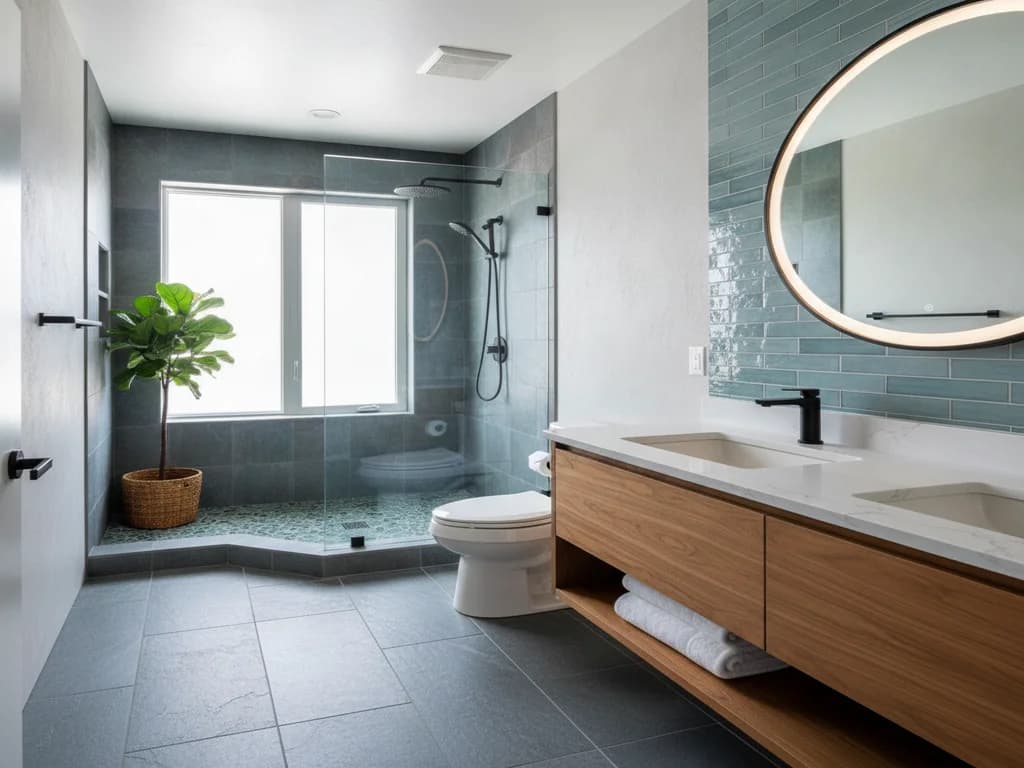
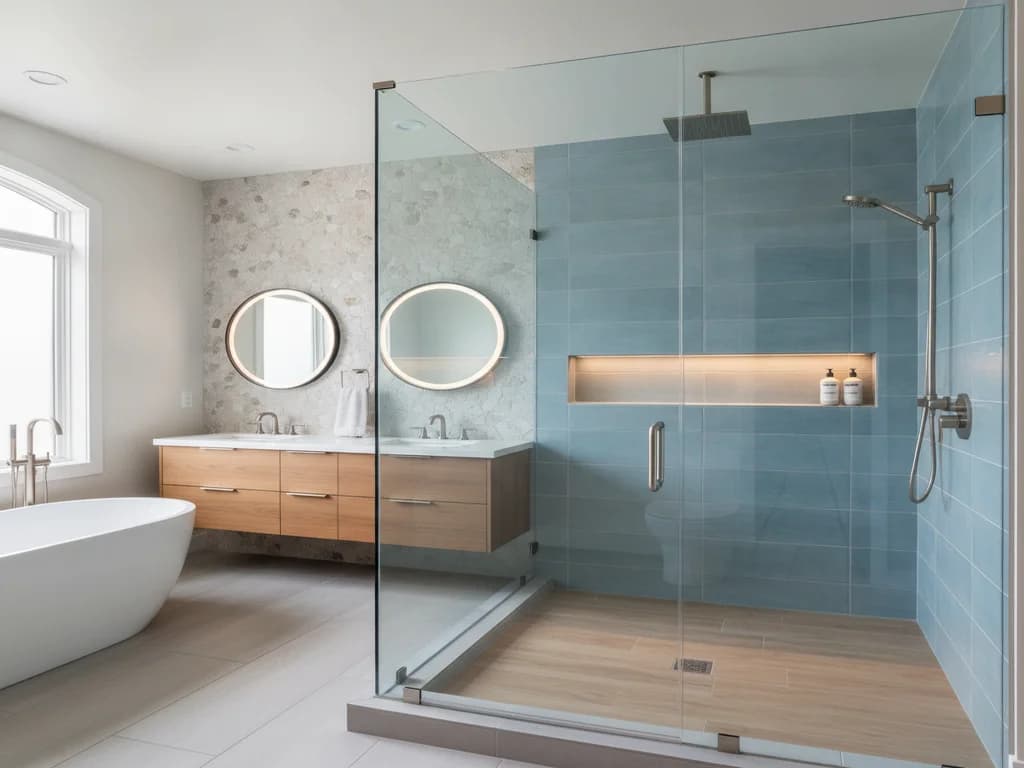
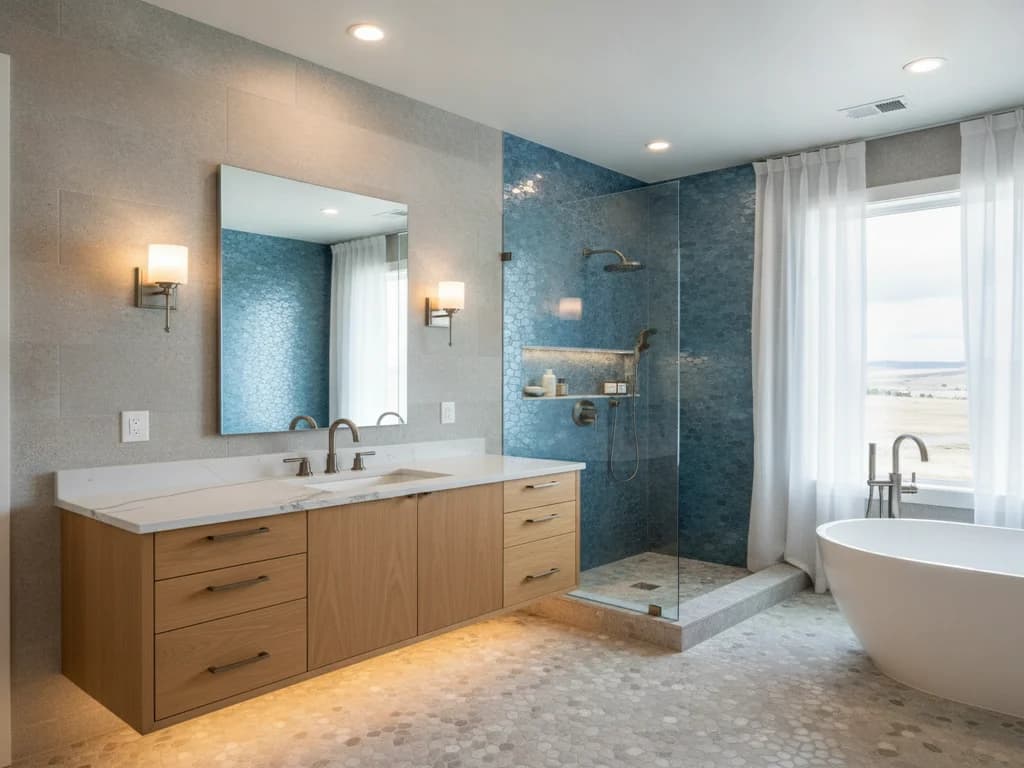
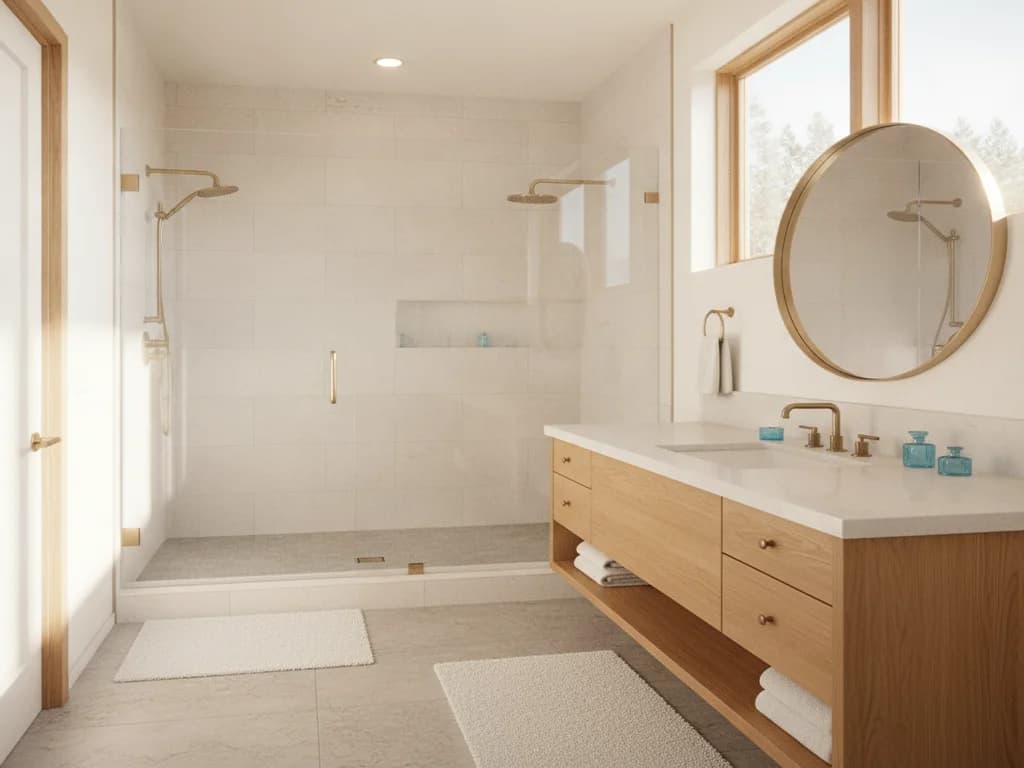
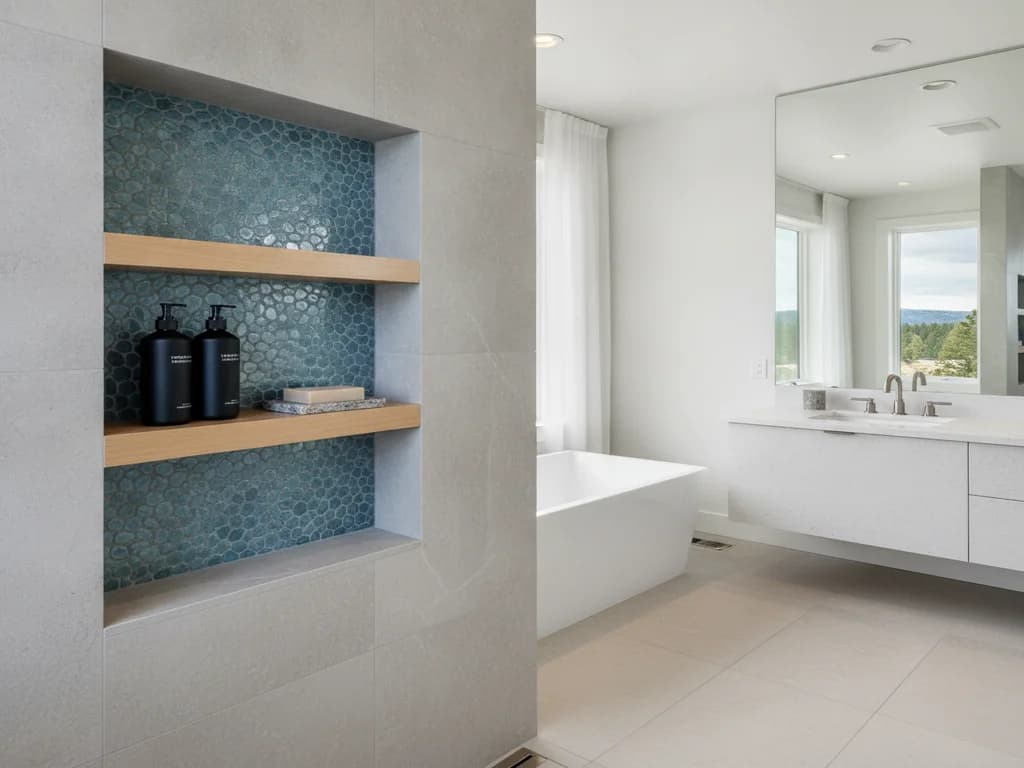
1. A recessed shower niche built into the tiled wall holds shampoo, soap, and razors without a single bottle on the floor or a tension caddy rattling on the showerhead. 2. An in-wall recessed cabinet between the studs near the vanity stores medicine, cotton, and small items flush with the wall. 3. Recessed open shelving in a non-wet wall — a shallow set of cubbies framed between studs — turns dead wall into display and storage for folded washcloths and decor.
Where should a recessed shower niche go?
4. Place a niche on a non-exterior wall where possible (so you are not interrupting insulation), at roughly chest-to-shoulder height where you actually reach for products. Size and locate it so its borders land on your tile grout lines — a niche that aligns with the tile layout reads built-in and intentional rather than tacked on.
Because a niche cuts into a wet wall, the waterproofing behind it matters as much as the tile in front of it. This is squarely the kind of detail that belongs in a full bathroom remodel, where the niche is framed, flashed, and waterproofed before any tile goes up. A double or full-width niche works well in larger showers; a single niche is plenty for a compact one.
Can you recess a cabinet between the studs?
5. Yes — a shallow recessed cabinet is one of the highest-value built-ins in a small bathroom. A mirror-front medicine cabinet recessed into the wall (rather than surface-mounted) gives you several inches of storage that disappear into the wall, and the mirror does double duty. 6. Over the toilet, a recessed cabinet between studs adds a tidy, flush-mounted cupboard where a bulky étagère would otherwise crowd the room.
The constraint is what lives inside the wall. Plumbing stacks, electrical, and structural framing can block a stud bay, and older homes sometimes have non-standard stud spacing. According to the International Residential Code, which most Idaho jurisdictions adopt, notching and boring of studs is limited to protect the wall’s structural role — so recessed boxes need to be planned around the framing, not cut in blindly. This is exactly why you decide on in-wall storage before construction.
How do you maximize vanity storage?
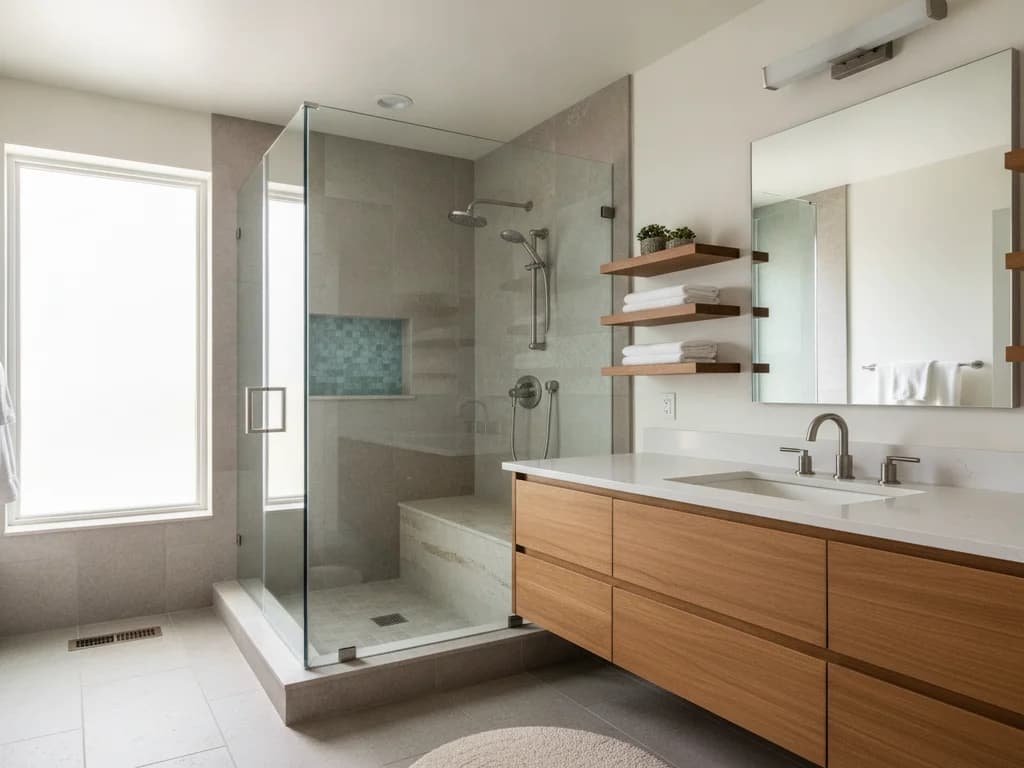
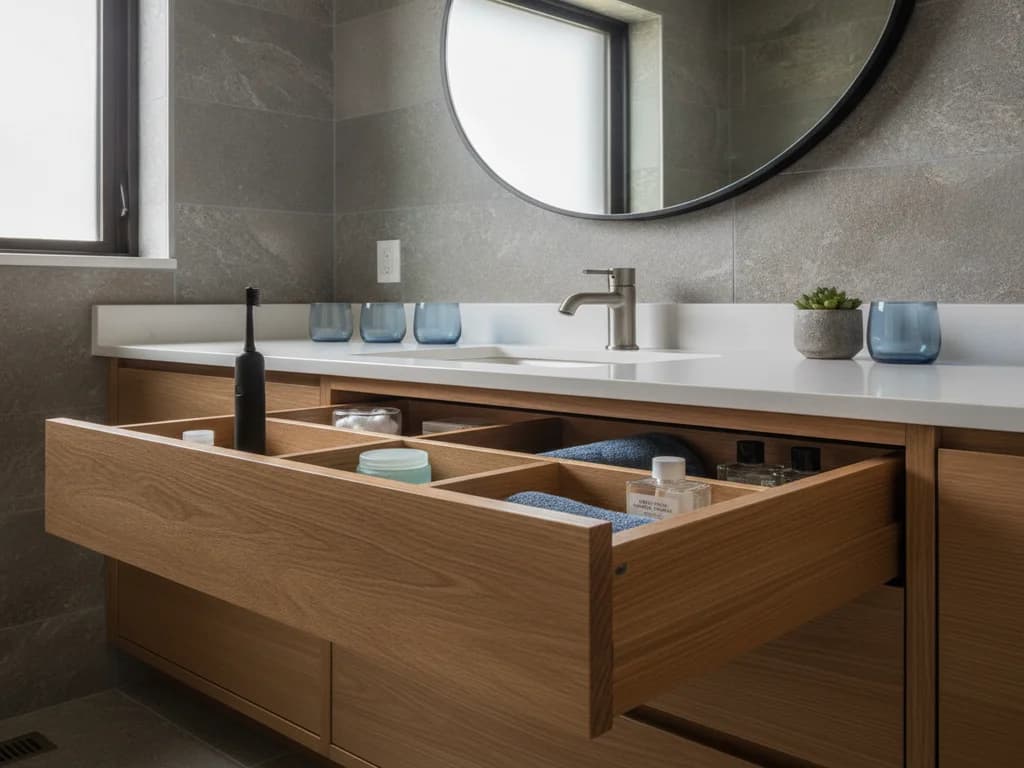
The vanity is the workhorse of bathroom storage, and the biggest upgrade is simple: choose drawers over doors. 7. Full-extension vanity drawers pull all the way out so you can see and reach everything, while an open under-sink cabinet buries items at the back behind the trap. Drawers store the same volume far more usably.
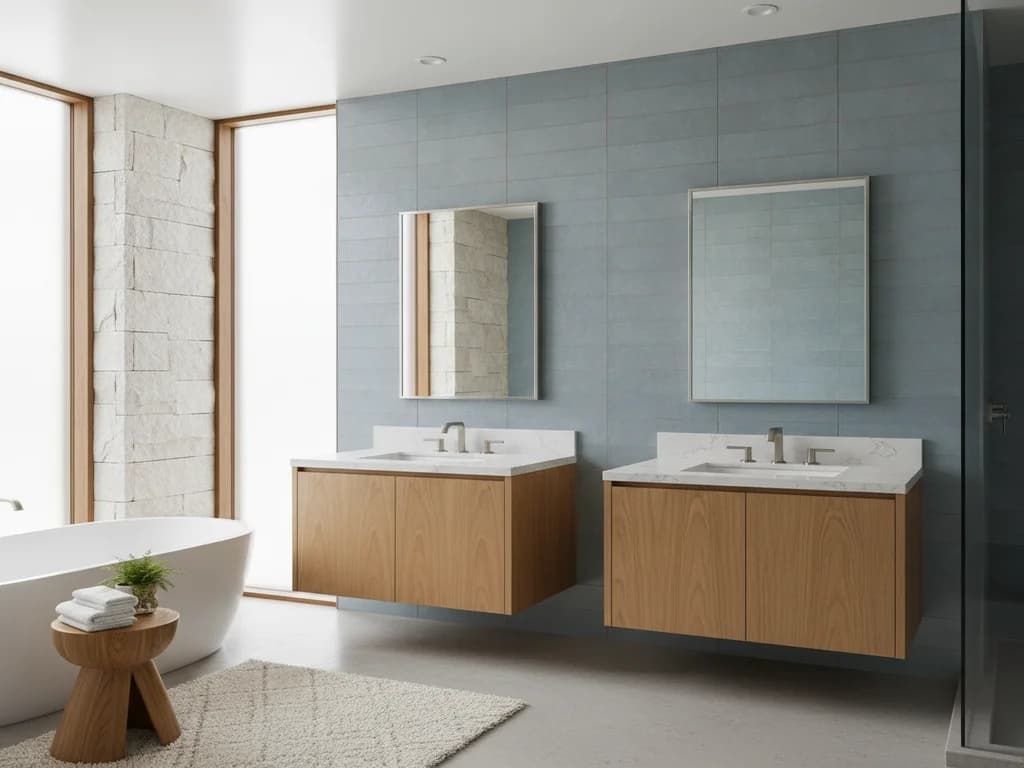
8. U-shaped or notched drawers are built around the sink plumbing — the drawer box wraps the P-trap so you keep drawer storage even directly under the basin, where a standard drawer would not fit. 9. A vanity tower (a tall, narrow cabinet rising from the countertop) adds vertical storage at the end of a vanity run without widening it. For how these vanity choices interact with style and configuration, see our roundup of vanity styles and configurations.
What goes in vanity drawer organizers?
10. Drawer dividers keep brushes, tubes, and tools from sliding into a single tangled pile. 11. A tip-out tray at the false drawer front below the sink reclaims that dead panel for sponges and small items. 12. An outlet drawer — a drawer with a power outlet inside — lets hair dryers and electric toothbrushes charge and store out of sight, keeping the counter clear.
These are inexpensive, high-impact additions. They are also a good example of storage you can add after the fact: most can be retrofitted into existing drawers, so they are easy to layer in once the cabinetry is in place.
What can you store over the toilet?
The wall above the toilet is the most-overlooked vertical real estate in any bathroom. 13. An over-toilet étagère (a freestanding shelving unit that straddles the tank) adds three or four shelves of storage with no installation. 14. Floating shelves mounted above the tank give the same capacity with a cleaner, built-in look. 15. A recessed or wall-mounted cabinet over the toilet hides backstock behind a door for a tidier result.
Keep the lowest shelf high enough to clear the tank lid for cleaning, and avoid storing anything heavy or breakable directly over the seat. Baskets on the shelves corral loose items and let you pull down a whole category at once.
How do you use wall space and go vertical?
When the floor is full, the answer is almost always up. 16. Floating shelves on an open wall add display and storage without the visual weight of a cabinet. 17. A ladder shelf leaning against the wall offers tiered storage and a spot to hang towels with zero installation. 18. A tall, narrow linen cabinet — even just twelve to fifteen inches wide — uses the full height of a wall for towels and supplies in a footprint most rooms can spare.
Stacking storage vertically also draws the eye upward, which makes a small bathroom feel taller. The trick is restraint: a couple of well-placed vertical elements read intentional, while every wall covered in shelving reads cluttered.
What about corners and awkward gaps?
19. Corner shelves turn a dead 90-degree junction into usable storage — especially in the shower, where a corner shelf or recessed corner niche keeps products off the floor. 20. A slim rolling cart slides into the narrow gap beside the vanity or toilet and rolls out when you need it. 21. An end-of-vanity tower or a slim pull-out fills the few inches between the vanity and the wall that would otherwise go to waste.
Compact and older baths are full of these in-between spaces. Measuring them honestly — and choosing storage sized to fit — often adds more usable capacity than trying to squeeze in one more full-size cabinet.
How do you store towels without a linen closet?
Most small bathrooms have no linen closet at all, so towels need a home in the room itself. 22. Wall hooks and a rolled-towel rack turn towels into both storage and decor — a row of hooks holds more than a single bar, and rolled towels in an open cubby or wall-mounted rack are easy to grab. Over-the-door racks add hanging space without touching a wall.
For backstock, a basket on a high shelf or in the vanity tower keeps spare towels nearby without a closet. Hooks have a practical edge in shared baths, too: more people can hang towels in less linear wall space than bars allow.
What storage hides in plain sight?
23. Dual-purpose pieces earn their keep in a tight room. A mirror-front medicine cabinet is storage disguised as a mirror. A shower or window bench with a lift-up lid hides cleaning supplies or spare towels under the seat. A mirrored cabinet over the sink combines the two jobs of reflecting and storing in one fixture.
These hidden-storage moves keep surfaces clear, which is the real secret to making a small bathroom feel calm. The less you see on the counter and floor, the larger and tidier the room reads — even if the actual square footage has not changed.
Planning a remodel?
Built-in niches and recessed cabinets have to be framed and waterproofed before tile goes up — they cannot be added later without opening the wall. If a remodel is on the horizon, decide your in-wall storage at the design stage.
What can you add to door-backs and under-sink gaps?
Two more zones hide easy capacity. An over-the-door organizer turns the back of the bathroom or vanity door into a shallow rack for bottles, brushes, and cleaning sprays. Under the sink, tiered or stackable shelving and pull-out bins reclaim the awkward vertical space around the plumbing that usually sits empty.
Both are pure add-ons — no construction required — which makes them ideal for renters or for squeezing more out of a bathroom you are not ready to remodel yet. Used together with a drawer vanity, they cover the daily-use items most households struggle to place.
Which storage needs a remodel and which doesn’t?
The dividing line is simple: anything inside the wall needs construction, and almost everything else can be added later. Recessed niches, in-wall cabinets, custom drawer vanities, knee-wall storage, and bench seats with lids are built during a remodel. Étagères, ladder shelves, baskets, drawer organizers, over-door racks, and rolling carts can be dropped in any time.
For the best result, plan the built-ins first and treat add-ons as the flexible layer on top. That way the permanent storage does the heavy lifting from inside the wall, and the add-ons handle the items that change as your household does. For broader space-making tactics beyond storage — mirrors, fixture scale, and lighting — see our small-bathroom layout tricks.
How do you plan storage before construction starts?
Built-in storage lives or dies at the framing stage. Before walls are closed up, the plumber and carpenter need to know where every niche and recessed box goes so they can route pipes and wiring around the cavities you want to keep open. Decide niche locations, recessed-cabinet positions, and drawer-vanity plumbing cutouts during design — not after the tile is on.
A good sequence is to map your zones first, mark the in-wall opportunities, confirm which stud bays are free of plumbing and structure, and finalize those before rough-in. The National Kitchen & Bath Association publishes planning guidelines for clearances and storage that are worth following so your built-ins fit the way you actually use the room. We keep dollar figures out of this guide on purpose — for budgeting, see how much a Boise bathroom remodel costs.
How does this work in older Boise homes?
Older homes around the Treasure Valley add a few wrinkles. Plaster-and-lath walls in North End bungalows are less forgiving to cut into than modern drywall, and stud bays in early-20th-century construction are sometimes shallower or spaced irregularly, which limits how deep a recessed cabinet can go. Knob-and-tube or rerouted plumbing inside the walls can also block bays you were counting on.
None of that rules out built-in storage — it just means the walls have to be opened and assessed before committing to a niche or recessed cabinet. In these homes, the practical play is to combine a few well-placed built-ins where the framing allows with smart add-ons everywhere else, and to respect the home’s character while modernizing how it stores everyday things. When you are ready to see how it all comes together, browse finished Boise bathrooms for inspiration.
Ready to plan your Boise bathroom?
Licensed & insured · 3-year workmanship warranty
Frequently asked questions
- How do I add storage to a small bathroom without making it feel smaller?
- Use space you are not currently using: recessed niches and cabinets built into the wall cavity, vertical shelving up to the ceiling, over-toilet storage, and the backs of doors. These add capacity without taking floor space, and keeping surfaces clear makes the room feel larger, not smaller.
- What is a recessed shower niche and where should it go?
- A recessed niche is a tiled cubby built into the wall cavity between studs to hold shower products. Place it on a non-exterior wall at chest-to-shoulder height, aligned with your tile grout lines. Because it cuts into a wet wall, it must be framed and waterproofed during a remodel.
- Are drawers or doors better for a bathroom vanity?
- Drawers are generally better. Full-extension drawers pull all the way out so you can see and reach everything, while items in an under-sink cabinet get buried behind the plumbing. U-shaped drawers even wrap the P-trap to keep storage directly under the basin.
- How can I store towels without a linen closet?
- Wall hooks hold more towels than a single bar in the same space, rolled towels fit in open cubbies or wall-mounted racks, and over-the-door racks add hanging room. Keep spare towels in a basket on a high shelf or in a tall vanity tower.
- Can you build a cabinet into a bathroom wall?
- Yes, a shallow cabinet can be recessed into the roughly 3.5 inches between wall studs — a mirror-front medicine cabinet is the classic example. The cavity has to be free of plumbing, wiring, and structural framing, so in-wall cabinets are planned during a remodel, not cut in later.
- What storage upgrades require a full remodel versus a quick add-on?
- Anything inside the wall — recessed niches, in-wall cabinets, custom drawer vanities, and bench seats with lids — is built during a remodel. Étagères, ladder shelves, baskets, drawer organizers, over-door racks, and rolling carts can be added anytime without construction.
Sources
- National Kitchen & Bath Association — bathroom planning guidelines
- International Code Council — International Residential Code (stud notching/boring)
- National Association of Home Builders — remodeling trends
- Tile Council of North America — Handbook for Ceramic, Glass & Stone Tile Installation (shower niche waterproofing)
Claims and figures are drawn from the sources above and provided for general guidance; your project may vary. Photography is illustrative of design concepts. For a fixed price on your specific bathroom, request a free estimate.